Summer ’25: VII – Dali (again) x Nanning

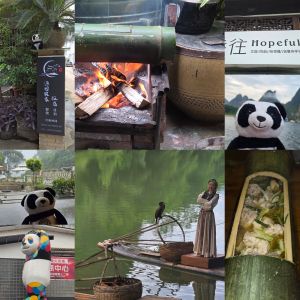
A cuddly panda left behind. It needed rescuing. A stop in Dali was a necessity. Between wanders to temples and another cable car ride, things were taken easy, in a way holidays should be taken. Slowly and steady.

Stomach bugs are horrid. Talking on the porcelain telephone to the Almight above between vomiting and laying liquid pooh at a dramatic rate is no fun. A day of rest and little else felt like a waste. Sometimes you have to stay still to move forwards. Such crappy days demand rest. And water. Lots and lots of water. No matter how much was drank and how much medicine, it didn’t seem to shift. Until it shifted. And then it took a day for an appetite to reappear.

Cable car ride two (Zhonghe ropeway) required dangling legs and the breeze in our hair. The climb upwards had close views of squirrels on treetops and butterflies drifting below. At the summit of the ride, midway up Cangshan’s slopes, the Zhonghe Temple spreads across, underneath a relatively level footpath stretching for miles in each direction. The Cloud Pass (or Jade Belt Road) pathway runs for 20km (12.5 miles). Crossing waterfalls, jutting views, and numerous pools of water make the walk through fresh air and greenery a pleasant one.

Yunnan is famous for its connection to Tibetan living, Buddhist beliefs, cats, and nature. The mountains, valleys, and produce of the region are all closer to nature than other Chinese provinces. Behind the commercial fronts, there is a more open conversation being had, and with that more freedoms. It is rare to see women smoking, same-sex relationships, or plentiful pet dogs and cats around China’s huge cities and metropolitan areas. In Yunnan’s Dali and Shangri-la, this is the norm. Old values and West met East refusing to let go. The attraction of Yunnan is visible and bold. Fresh air and nature invite tourism and migration. This Tibetan plateau is much more than a tourist spot. It makes you feel. Connection never switches off.

A journey to Nanning would break our return to Guangdong. A late night arrival and a late morning departure made finding a hotel close to the station essential to the plan. If you enjoy living underground like the Teenage Murant Ninja Turtles, then Geli hotel is for you. Located in the shiny expanse of the Nanning East Railway Station there is little reason to see daylight again. A choice of late nights foods, drinks, and delivery services help you to chill deeper underground.

The railway check in level is just above the lair, so be prepared for bright light when you choose to resurface. A decent room with an unusual view behind massive curtains. Expect comfortable beds and a decent rainforest effect shower. The toilet pumps are a tad loud, like the underground railway system, but sleep comes as easy as a fox in a den. With sleep in the bag our 1128 train to Guangzhou South was easy. The 17 minutes to transfer at the other end was a tad tight. All in all, we did it. We connected well. Job done.

From wanders on high to hours on trains, the pleasantries of travel made way for return.

Summer ’25: III – Bamboozled

Treated by family to a spot of travel and unwinding, we set off from a station nearly an hour from the place of residence.

In Guangdong, like many cities in China, you can drive by taxi for an hour and not leave the jurisdiction of that same city. Not even close. So, we arrived at station one, departed for station two, and arrived at station three in Yangshuo. 300 miles [482km] travelled across 2 hours and 42 minutes. Or further than London, and quicker than any British railway journey. Huizhou is massive at around 4,217 square miles [10,922 km²]. It is substantially large compared to neighbouring Dongguan, Shenzhen, and Guangzhou. A formidable region to navigate.

Badly Drawn Boy’s Everybody’s Stalking marked the train journey’s early moments through the tunnels of Guangxi. Through fine lyrics befitting the view out of train D1814’s window, the train rolled into the Karst-mountain surroundings of Yángshuò (阳朔). A quick lift from our hotel owner seen us dropped off at the digs, 阳朔源园饭店(20元人民币风景区店) 兴坪镇画山厄根底村76号, which is with Ergendi village. A bag of huángpí (黄皮) wampees (Clausena lansium) followed a delicious dinner. The grape-sized fragrant fruit, with a large seed core, sat well on a belly of bamboo-cooked sticky rice, some baby bamboo shoots, and pork sliced between taro. After seeing the cormorant fishing birds posing, the Li River (漓江Lí Jiāng) flower, and a multitude of tourist boats, nightfall followed a heavy storm. Bedtime soon followed.

Seems like many paradise regions become Piccadilly Gardens: that once flowery bowl of sunshine now covered in concrete and steel. The village of XingPing, near Yangshuo, has undertaken drastic growth in little over two decades, and really symbolised the idiom rén shān rén hǎi (人山人海) or people mountain, people sea. Allegedly the river Li below flows with over 215 cubic metres per sec9nd. The people on the shores seemed equally dense. Photographers, fashion people, tourists, local canvassers, and every manner of people seemed to congest the tiny footpaths of XingPing (兴坪) village.

We had a plastic bamboo raft trip upstream on the Li river, savouring the humongous Karst peaks and bends of the powerful river. More food, including a full chicken boiled in a soup within a bamboo tune followed. Plenty of wandering was had. Sadly, without speedy legs, the waterfall pond, Pubutang and Tiger Mountain Waterfall shall have to wait. Our train outwards to Guiyang was caught on time.

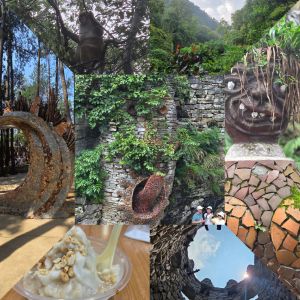
Guiyang straddles the eastern edge of the Yunnan-Guizhou Plateau and is apparently around 1100m [3600′] in altitude which may seem debatable as you traverse districts. The roads resemble Spaghetti Junction in Birmingham (England) with bridges crisscrossing lengthy tunnels and slopes throughout the surface routes. A decent subway and rail system serves the city and outer region. The Yelang valley was a pleasure to visit, a truly unique and hidden gem within China. Twenty years were taken for the recreation of an ancient culture. The stone sculptures and artwork are fantastic. Song Peilun’s vision is a highly recommended visit. Oh, and we saw a monkey at the Qianling Mountain Park, having clambered a large peak and being consumed by a passing storm. That was fun.

China Travels: Recap.

“It’s coming home. It’s coming home. Football’s coming home.” – England football chant during the Women’s European Cup.

There has been a huge gap since travel has been possible and plausible. Never spending more than a few days in Huizhou, Shenzhen, and just hours in Zhongshan since October 2021 had been quite challenging. Travel, during 2021 and 2022, in Guangdong was unthinkable. The suffocation of humidity and toasting heat above thirty-five Celsius seemingly spelled death for me. Unthinkable. I have zero tolerance to being baked alive.

I’ve been blessed since February 2014. I’ve stepped from my comfort zone in UK living and managed to live abroad for over 8 years. Not every year has had a roasting summer. With just summer 2020 spent in Dongguan, owing to an 8 day change of employer, I’ve not had to endure too many hot days. The air conditioner had never been far away. Green parks like Dalingshan Forest Park and Tongsha wetlands have proved useful for distraction. Summer 2022 wasn’t like that. I found myself on crutches and once again trapped in Guangdong, being cooked. Far from other provinces and cooler ait.

Northern China stretches far and wide from west to east and vice versa. Here, journeys into Ningxia province have proved adventurous. Inner Mongolia and the chills of Heilongjiang have been a stark contrast to the warm southern regions. Gansu was a pleasant surprise. The stifling summer heat, broken by northern breezes and a dryer sunshine.

Through the coastal east and lands of Nanjing, Shanghai and Suzhou, I’ve managed a few looks at a variety of urban and green vistas. Touching down in Shandong and Qingdao was a spiritual connection I welcomed. Thanks, Granddad George Acton, for making me curious about that naval city you once stayed within. The trip there proved colourful and now brings fond memories.

Western China, especially Yunnan, has warmed my heart and claimed my love. Sichuan and Qinghai have equally gripped my passion for the outdoors. Those vast mountain landscapes and green pockets and valleys could fuel a thousand stories. Each one with tales and wilderness to inspire.

In the core of China, Hunan was varied in appearance and home to the mighty Zhangjiajie Nature Park. Forget it being the backdrop to James Cameron’s blue movie Avatar! It’s stunning for millions of other reasons. Xi’an proved an intense city surrounded by history and bathed in glorious culture. Shaanxi and Shanxi provinces each had many highlights.

Guangdong and Guangxi are side by side, and Fujian sits to the east of the former. Here, weekends and short breaks have been spent. Vietnamese coffees, seafood, and wanders along coastlines have gripped attention. All within a short distance of Dongguan and very much accessible before the Covid-19 pandemic.

Of course no trip to China is complete without swinging by modern day capital Beijing. Comedic travel and radio presenter Karl Pilkington visited there in a few episodes of An Idiot Abroad. Like his views, I don’t really like the capital city. How a city of that size doesn’t have a plethora of top flight football teams, or a heartbeat like many other capitals I’ve visited is beyond me. It felt very much like visiting how I imagine North Korea to be. Not my kind of place. Gridlock, grid lines and authoritarian concrete landscapes are a travel turn off. There are historic gems but how much has been remade is open to debate. Even the Great Wall looks too new. Apart from the wild bits. They’re glorious!

Macau, I could live without. It’s okay for a few hours, but not my kind of place. Hong Kong was the global city of cities, but times have changed, and I suspect so has Hong Kong. Many refer to it as just another Chinese city, now lacking its once famed uniqueness. The velodrome, mountain trails, and Clockenflap music festivals are just a few of the many highlights.

One day, I hope to visit Tibet and Xinjiang. For now, those journeys remain on a to-do list. Never say never. And, in September 2022, I found myself back in the UK. I didn’t think I would return to China so soon. The border reopened to tourism and many visa types in March 2023. That change and another more needy necessity led me back to the charms of the People’s Republic of China. This large swathe of lands often offers many attractions still. Would I move back? Never say never. Right now? No.