Heroes.

Liam Gallagher uttered a typed racial slur on Twitter/X. The late great wrestler Terry “Hulk Hogan” Bollea wasn’t shy of controversy. Meat Loaf was anti-vaccination. Never before has it been clearer that heroes are just like you and I: flawed.

“Yeah, and he’s not even a very good one… But he’s out there alone, and he’s probably scared” – lead character of Superman (2025) about the dog Krypto

Heroes are hard to find. That is, of course, the reality. For every Lance Armstrong cheating the system, there are an army of unsung volunteers, health professionals, RNLI boat crews and support staff, and countless other examples of putting others ahead of themselves. Those who deliver aid to Palestine, operate health clinics in Ukraine, or pluck refugees from the deadly English Channel go above and beyond their calling. And not all heroes wear capes: see also, Mam.

“Any sort of bullying is a terrible thing, but I think online bullying is so much worse because it’s psychological bullying” – Dean Cain, actor
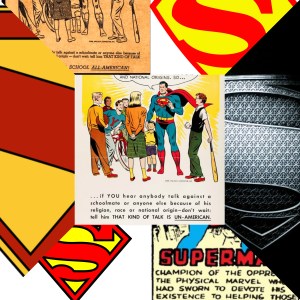
And that leads me neatly to the recent fictional superhero, the one of my many childhood dreams, and many play sessions: Superman. The recent movie of the same name has earned plaudits and created a strange debate. Labelled as ‘woke’ by, the lycra-wearing superhero was the creation of children of immigrants that headed to U.S.A. Joe Shuster (artist) and Jerry Siegel (writer) would have been all too aware of the atrocities facing their fellow Jewish people. Their empathy shone through one of fiction’s greatest assets. The latest movie incarnation left me spellbound. I left the cinema with a smile, for the first time in many years. It was a joyous love letter of a movie, by James Gunn and his production team. Absolutely full of geeky details and hope.

“Knock the ‘t’ off the ‘can’t'” – George Reeves, actor

Being from elsewhere and existing in an unfamiliar landscape was my choice when I moved to China in 2014. Unlike many who seek better places to live and survive, I had the choice. That choice took me back to Britain, a new Britain, less Great, more lost. One that had departed the European Union and seemed to be having (and still is) more internal battles than a U.S. civil war. Religion, race, nationality, and gender fill newspaper covers daily. Social media, seemingly unchecked, spouts mistrust, counter-science, and conspiracy theory. The consequences lead to a broken Britain.

“A hero is an ordinary individual who finds the strength to persevere and endure in spite of overwhelming obstacles.”- Christopher Reeve, actor and activist

If being woke is to champion the smaller person, to puff your chest out at bullies, and to want a better world, then count me in on Team Superman. #SupermanIsAnImmigrant (coined in 2013 by Define America and the Harry Potter Alliance) who now deny that ideal are an example of flip-flopping u-turns that former Prime Minister Liz “Lettuce” Truss would be proud of. Much alike the latest version of Lex Luthor, excellently portrayed by Nicholas Hoult, there lies a smudge of grey amongst the confused right wing views. Those contradictions make us human. Much like the David Corenswet version of Superman. Where Christopher Reeve made generations believe a man could fly, David Corenswet has restored belief in hope once again.

“Once you choose hope, anything’s possible.” –
Christopher Reeve

Sadly, every hero stands to fall on their sword, so choose your heroes wisely. I chose my Mam as my hero for good reason (and her supply of fig biscuits).

The Fog Of Guilt.

Are there many novels that celebrate and champion persistence? Do all cops in novels ignore authority and tackle the weight of bureaucracy through ignorance? Early reviews pointed me to a challenge.

Inspector Imanishi Investigates by Seichō Matsumoto is a post-World War II novel originally penned in 1989. The lead protagonist, unsurprisingly, is Inspector Imanishi. He is a world apart from the rebellious bulldozing Harry Bosch found in Michael Connelly’s novel series. Instead, Imanishi is methodical, modest, and clinically human in his approach. He persists without need of a lightbulb moment or an act of genius. At every turn Inspector Imanishi displays empathy. He listens. He feels the victims’ lives. He endures whilst remaining ethical and responsible. The fog of guilt lurks. Grief and shame wallow. The good Inspector appears to put himself in others’ shoes.

What happens when guilt becomes unbearable? Drawing on a contrast of a post-war reshaping metropolitan Tokyo and that of rural provincial Japan, this book uses geography, culture, and traditional etiquette to deliver the truth. Themes of memory and recollection, urban alienation, interconnectedness, societal and historical tensions. The slow movement of justice’s machine underlines the need for structure and hierarchy but appears to comment on a lack of urgency. What secrets live between city lights and village shadows? Can you bury a crime in a country still healing?

How well can you really hide from who you were? The plot features new names, misdirection, reinvented pasts to escape guilt, shame, and consequences shows disguise as social-cultural adaptation. In an ambiguous world, the detective is a constant: deeply moral. Rarely does a slow-burn of a book stand out, yet from the opening chapter to the conclusion, I was hooked. The jigsaw was essentially a lesson in the importance of detail. Like a cold-poured Guinness, “Good things come to those who…. wait.” The novel’s ending seemed more reflective than triumphant yet left me wanting more. Was reluctant justice enough? Does empathy make the best detective?

Matsumoto’s Inspector Imanishi Investigates is a novel celebrating persistence and realism. It is the antidote to flashy books filled with spectacle and glamour. The notes of fading traditional values give hints at a nation’s people suffering an identity crisis – or at least instability causing a social flux. I found myself pondering, how much of our world’s remembered reality was misremembered? Can patience solve what brilliance cannot? Is closure enough when lives have already been lost?

Rebellion #3: Confused

They fought for us. They thought for you. They won for freedom. They are one and true.

Now, we fight for ideals. We fight invaders. We fight refuge-seekers. Weren’t we once bastard crusaders?

The fickle and trickle of history. Surrounded by sinister hostility. Split lines and scorched earth. Rebounded in ability.

The boundaries expanded. The world was divided. The scars were sewn shut. The remainder decided.

There stood statues. Status removed in reflection. Pulled out shattered pews. Heading to a new direction.

We question the questioners. We squeeze the doubters. We exclude the opposition. We silence the shouters.

The man says we can. The woman says we cannot. The party toes the line. The leader cares, not one jot.

Vote for this. Decline that. Scream and shout about it all. Ignore that silly old twat!

You’re upset about raiders coming over seas. Afloat on makeshift dinghies. You ignore nameless children floating for fees. One less worry buried in the seas.

Clear mistakes without fault. Confused and dumbfounded has arrived. Homes gone, no roads left. Unsheltered and barely survived.

What if tomorrow we had to retreat? Would you put your feet in the same hot seat? Would your drum carry the same old beat? Where would you go for the last meal to eat?

Who would care if you were not there? What if your loved ones were forced underground? Where will this path go? Would you open your mouth with that ugly sad sound?

Humanity? I see. Believe me. Free?

Human Race.

Wasted energy just fizzled away. Wasted thoughts upped, up and away. Gone. Entropy, all said and done? Faded light in the thick darkness, a laser pen without power. No battery cell to zap outwards. Protons and neutrons inactive.

Plastic shreds, humanity on meds, ducks strangled by packaging. Gone. Waste management, and no fun? Carrier bags drifting in murky waters, a container without a rubbish bin. No recycling scheme to expand areas. Wrappers and sheaths defective.

Rubber tyres, telephone wires, headaches caused by noise. Gone. Bikes of thunder, and not one gun? Airplanes thunder overhead in shrouded skies, a siren without an emergency call. No laws to control the sounds. Banging fireworks completely reactive.

Grimy air, murky vision, stuffy noses full of dust. Gone. Smells of flowers, not by the sun? Machines clatter earth on stripped land, skies fill with ashes. No rule visited this land. This is all productive.

Do you remember trees?

What happened to the bees?

Rainbows and clouds vanished. Elephants and rhinos banished. Trees and grass diminished. Lakes and rivers finished.

Do you recall the smells of spring?

When did the birds last sing?

Dust filled the sky with pain. To see the horizon is a strain. No animals left with a mane. People struggling to stay sane.

How often did it snow back then?

Seasons. When?

The Human race. Who’ll be the winner?