你好/ Ní hǎo / Nín hǎo / Hello / How do,
‘If I could only find the words, then I would write it all down…’ (Read ’em and Weep lyrics by Jim Steinman/sang by Meat Loaf)
Where are the great writers? They are everywhere. Songwriters, scriptwriters, playwrights, newspaper correspondents, comedians, bloggers, and authors. Great writers are everywhere. I am nowhere near them. I just enjoy writing and have ambitions. The popular writers spill off shelves in major bookstores, on eBook devices, and fill newspaper reviews about their works. The modern classics and classics get published in varied and often colourful editions. Some copies get graphic novel versions or huge distorted modifications to lure in new and old readers alike. Books are wonderful and shouldn’t need a World Reading Day to attract a soul. Impressive braille, audiobooks and many other delightful formats, such as large print, keep penned words open to the widest possible audiences. And, then there are translations! Some of the Harry Potter novel serials have reached 80 or so languages, including Scots, Hindi, and Chinese.
‘muckle, beefy-boukit man wi a stumpie wee craigie’ (Mr Dursley in Scots, from Harry Potter and the Sorcerer’s Stone)
The novelists aren’t a bad place to start. I find Sir Arthur Conan Doye and H.G. Wells have caught my eye more and most from the considered classical writers. The Valley of Fear and The Sign of the Four are two of the former writer’s most gripping examples.
 Looking across the metaphysical divide at female writers, there are some wonderful writers in Mary Shelley (Frankenstein: or, The Modern Prometheus; Rambles in Germany and Italy in 1840, 1842 and 1843), Elzabeth Gaskell (Cranford), Val McDermid (Trick of the Dark), the Poet Laureate for Great Britain Dame Carol Ann Duffy, Enid Blyton (The Island of Adventure), Edith Nesbit (Think Five Children and It, and not Stephen King’s It), Agatha Christie (By the Pricking of My Thumbs), Betrix Potter (The Tale of Peter Rabbit and 22 other similar tales), and Judy Blume (Fudge-a-mania and books that hist topics such as masturbation, racism, bullying, menstruation, divorce and other such family topics). But, most importantly, when I pick up a book, it isn’t based on the author’s gender.
 In my childhood, my varied reading included Rudyard Kipling’s The Jungle Book; Jack London’s White Fang, The Sea Wolf; Colin Dann’s The Animals of Farthing Wood; Felix Salten’s Bambi; Aileen Fisher’s Now That Days Are Colder; Herman Melville’s Moby Dick; and a set of World Encyclopedias given to me by Mr Andrew Jones, in my final days in class 5AJ.
‘Now that days are colder, now that leaves are down, where are all the chipmunks at the edge of town?’ (Aileen Fisher’s Now That Days Are Colder)
 As I grew from size 9 shoes to size 12 shoes, I picked up such reads as Eoin Colfer’s Benny and Omar, and soon discovered Michael Crichton. J.R.R. Tolkien was read with vigour. The college years involved Roald Dahl’s complete works getting a read. Douglas Adams and George Orwell added to the vibrant multihued reading material. I even had a crack at the works of Robert Louis Stevenson and Charles Dickins. Amongst the known names, I recall reading two pieces that really caught my attention. The first was about CJD and prionic diseases. The title was rather welcoming, Deadly Feasts: The “Prion” Controversy and the Public’s Health by Richard Rhodes. There is a real detective feel to this book. It zips from cannibals in New Guinea, cattle globally, young people in America, Britain and France – and beyond. It really makes you think and carries a powerful warning about beef, and eating meat. That being said, I carried on eating meat after a year’s experiment as a vegetarian.
‘Don’t gobblefunk around with words.’ (Roald Dahl’s The B.F.G.)
 The second covered a dark period of recent history and journalist Philip Gourevitch’s We Wish to Inform You That Tomorrow We Will Be Killed With Our Families: Stories from Rwanda (the link directs to chapter one). The theme chronicles the 1994 Rwandan Genocide, in which an estimated 1,000,000 Tutsis and Hutus were killed. What shocked me, was how neighbours turned on themselves and the psychological effects followd. It skirts on the political challenges of survival. It is gripping and full of pain. I even had a crack at the complete works of one William Shakespeare. The dramas make for tough reading but nevertheless their importance and influence is beyond comparison.
‘At least fifty mostly decomposed cadavers covered the floor, wadded in clothing, their belongings strewn about and smashed. Macheted skulls had rolled here and there.’ (Philip Gourevitch’s We Wish to Inform You That Tomorrow We Will Be Killed With Our Families: Stories from Rwanda)
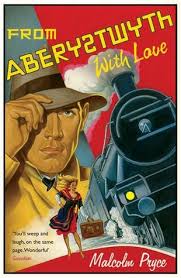 At university I switched into daydreaming mode and the movie popularity of The Lord of the Rings led to a re-read of everything J.R.R. Tolkien. Between daydreaming, textbooks and general procrastination of university work, I found little time for reading. There was always something shiny or distracting. However, I did read through the entire available works of Michael Crichton and the brilliant noir writer Malcolm Pryce – his Aberystwyth Mon Amour series being topical to my location.
‘That’s the trouble with people like you, Knight, you only know how to mock. How to break things. You don’t know how to create anything. You never did.’ (Malcolm Pryce, Aberystwyth Mon Amour)
 Jurassic Park had been on and off my bookshelf since my mother bought me an omnibus edition, with the novel Congo included. The distinctive movie red, yellow and black logo made for great artwork but within the text was something more appealing. Scientific facts mixed with imagination and fiction. Like every book I have read by the late Michael Crichton, there are technical descriptions crossing the genres of action (Prey), science fiction (Micro), thrillers (Disclosure), and medical fiction (Five Patients). One of my favourite pieces has been Eaters of the Dead [a tale of Ahmad ibn Fadlan’s own interpretation of his genuine voyage north and his understandings with and reflections of Vikings], however the posthumous release of the 1974 penned piece Dragon Teeth [fossil hunters in the historical fiction form] comes close. But then, Pirate Latitudes, as action goes is damn exhilarating. Whilst the movies and series versions of some of his works never live up to the style of his writing, I hope that those who watch them gain enough curiosity to pick up the books. 200 million book sales is too few for such a great writer.
‘All major changes are like death. You can’t see to the other side until you are there.’ (Michael Crichton, Jurassic Park)
 Following university, I dipped in and out of books like rain lashing the rooftops of Manchester. Ian Fleming’s great travel novellas sporting a certain James Bond gripped me for a while. Every shadow writer of that spy-battering ram has been read since. From BBC’s The Fast Show, comedy writer Charlie Higson has delivered great slices of young Bond novels for teenagers and a series called The Enemy. Well worth of a read. Madame Bovary by Gustave Flaubert should be reviewed by the #MeToo movement. Forget 50 Shades of Gray! George Orwell’s Nineteen Eighty Four actual reads as a documentary and doesn’t seem like fiction in one way! The entire works of Christoher Brookmyre was far more than an Attack Of The Unsinkable Rubber Ducks – more like All Fun And Games Until Someone Loses An Eye. Every book of his will grip you tight – don’t be fooled by his colourful covers.
“People are islands,’ she said. ‘They don’t really touch. However close they are, they’re really quite separate. Even if they’ve been married for fifty years.” (Ian Fleming, Casino Royale)
 In China, I have been limited to the works of Andy McNab (notably the Nick Stone and Tom Buckingham series) alongside other odds and ends found on bar book exchange shelves or tucked away collecting dust in book shops. I have found time to re-read Peter Pan, by playwright J.M. Barrie. Johnny Marr’s autobiography Set the Boy Free, War and Peace by Leo Tolstoy (which wasn’t to my enjoyment, and the riveting Moby Dick, by Herman Melville. The complete works of Jon Ronson (I thoroughly recommend The Psychopath Test) have been perused. The Welsh neo-journalist loves a good debunk or conspiracy to grip and twist until all the juices ooze out into the pages. Hunter S. Thompson (Hell’s Angels) would be proud of his works! I wonder if Jon Ronson has booked a firework-clad funeral for his future passing.
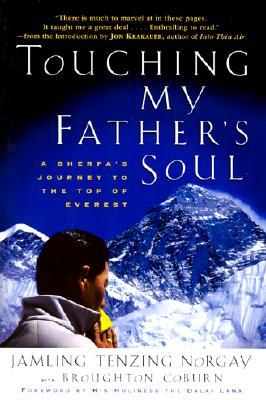 My obsession with Mount Everest has drawn me to a related selection of books. I read most of these in the shadow of the mountain during January 2017. The following works were all written following the 1996 disaster in which many climbers and sherpas lost their lives.
- Into Thin Air: Death on Everest – a well-known climbing disaster book by Jon Krakauer;
- The Climb by Anatoli Boukreev;
- Left For Dead: My Journey Home from Everest, penned by Beck Weathers;
- Touching my father’s soul: a Sherpa’s journey to the top of Everest, by Jamling Tenzing Norgay;
- Climbing High – a lesser known read by Danish Psychological Counselor and climber Lene Gammelgaard;
- The Other Side of Everest by Matt Dickinson.
If you piece together the events on the mountain based on the accounts and reports received soon after and long after, you will be no clearer as to what happened – other than it being a monumental mess of tragic proportions. The best of the bunch for me, was Jamling Tenzing Norgay’s account, as it touched on the spirituality and complexity of Sherpa and beliefs within the shadows of the highest mountain peak on our Earth. It also explored his relations and the effects of living in the following of his father Sherpa Tenzing Norgay.
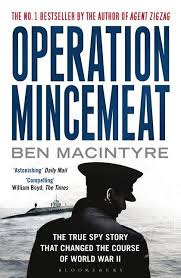 Since that rambling holiday to Nepal, I have picked up Ben Macintyre’s Operation Mincemeat at Murray’s Irish Pub in Dongcheng. Since then Double Cross, Agent Zig-Zag and just this week Rogue Heroes: The History of the SAS, Britain’s Secret Special Forces Unit That Sabotaged the Nazis and Changed the Nature of War have followed. For Your Eyes Only: Ian Fleming and James Bond, was a book I read in 2008 and didn’t enjoy quite as much as his other well-researched and fine-tuned storytelling. Facts and simple description, even criticism and questioning of reported myths bore at you like an angry wolf. They are real page turners, not bogged down by over-complicated technical terminology and wordings unnecessary. The Times columinist cuts a good read up and builds a remarkably fascinating picture of moments in history. I guess with an extra day of freedom each year, he has extra time to write. His birthday being on Christmas Day. Some other writers lose their focus and clutter text or fill pages for fun. Every page of Macintyre’s work is blessed by an assiduous and attentive hand. His mind has carved questions in reported stories and embellishments that others may have accepted. When it comes to knowns, he wants the reader not just to read, but use the full force of their frontal lobes. Next up, I will re-read Alice’s Adventures in Wonderland by Lewis Carroll. To pick that particulatr gem up will be like revisiting an old friend. Another good friend could even be Jonathan Swift’s Gulliver’s Travels. Not a single movie version has touched on the depth of that epic adventure!
再见/ Zài jiàn / Bài bài / Ta’ra / Goodbye
 AGAINST THE FLOW OF TRAFFIC - ACTON28.BLOG