End the battle. End all wars. Lay down all your tools of doom;
Tuck your weapons in your belts. Better still, melt them down.
Factories and dealers move away from producing death;
Instead create bridges and boats and border-fence cutting breath.
Let adversaries cuddle and hug down the local pubs;
Wage laughter and reunite the exiled in communal hubs.
Change your hearts and minds to gentle call;
End refuge, opening up nomadic homes for all.
Feed the rehomed homeless, give orphans homes;
Stop Idris Elba making films about childhood soldiers (on phones).
Respect the woman and the women and the girls;
Marginalise nobody, empower the disadvantaged
Equal rights for all not just the healthy and wealthy;
Deliver truth like mail,
Reconciliate
Bring mercy and compassionate use of power to every picnic
Respect all whether they choose faith or none at all
And stop using the word woke as a joke to soak
Up all your petty vibes and tirades you sad old gammon bloke.
Strive to be better and leave this world a better place;
That would be ace!
conflict
Wilfred’s Nature.
A company dressed head to toe in pain: fatigued by angry winds.
A far-off rumbling battle ignores the deadlier than bullets elements here.
The ferocious roaring winds build repeatedly dispatching misery, suffering, and pointlessness.
No protection: coverings withdrawn; hunted by the weather, we, the repressed, cower;
Our suppressed trenches the shape of graves.
We each imagine our death: isolated hope. Gone.
You’ve abandoned us. Betrayed us. YOU!
Our faith in You: departed.
Our soon to be omitted faces freeze. You witness us empty. Our minds swallowed.
Into the void march the many.
Faith forgotten and faded.
We the forgotten turn to soil.
Our voices scream no more. Tears boiled once dry within buried pockets.
You have cast us off. Obliterated. We the erased
Sensationalism
Phenomenally mad and angry,
they got themselves into a balmy.
The shouts and the screams,
Drowned out the dead dreams,
All because of another land’s army?
Strength
It seems that the strongest people make a little time and much effort to help others. Even when they carry their own problems. Such as someone suffering from mental trauma, yet still running a soup kitchen for the homeless. Mentally, physically, and stamina all weaved as one. The value of community and humanity at the forefront of their intentions.
“…young pioneers, men and women of magnificent intellectual and moral calibre, breaking stones and building roads under the blazing rays of the Palestinian sun” – Albert Einstein, letters to the Manchester Guardian
There are many scenarios whereby someone wants to help, thinks about helping, but is paralysed by their own situation. That person shows courage in heart and mind but feels incapacitated to do anything. I’m sure many ex-soldiers feel that way. To go from camaraderie and belief to applying for jobs at Asda or security jobs must be eye-opening. Lest we forget the sacrifices of the dead. Yet, the living return as remains.
Clout within the context of the mind can vary from mood to mood. Feelings set by durability depend on the firmness and flow of energy. Digging deep for your own personal fortitude can be taxing, especially when tested time and time again. The power of looking after your mental and physical health sometimes demands a giant-feeling step back, even if in reality it is a tiny shuffle backwards. That autonomy and power to choose can lend itself to stability that may lead to further tenacity.
“You know I just can’t believe things have gotten so bad in this city that there’s no way back. I mean, sure, it’s dirty, it’s crowded, it’s polluted, it’s noisy and there’s people all around who’d just as soon step on your face as look at you. But come on! There’s got to be a few sparks of sweet humanity left in this burned-out ‘burg and we just have to figure out a way to mobilize it.” – Dan Aykroyd as Ray Stantz, Ghostbusters II
Brute force and the strong arm of the law may represent toughness but that former of vigorous vitality is fit for only destructive occasions or conflicts. Matching the body, brawn, and backbone of an enemy intent on your destruction may be suitable for Israel taking on Hamas, but crossing that line to deliver hardiness, pith, and robustness on all citizens of Gaza is just pure evil. Don’t all human beings, especially children, deserve security? And, as humanity watches around the world, the lustiness of the right wing rises and erodes the stalwartness and stableness of many social systems. Substance and sturdiness crumble in the path of Russian wars on Ukraine and others. The steamroller slays steadiness.
“Brian: Look, you’ve got it all wrong! You don’t need to follow me. You don’t need to follow anybody! You’ve got to think for yourselves! You’re all individuals!
Crowd: [in unison] Yes! We’re all individuals!
Brian: You’re all different!
Crowd: [in unison] Yes, we are all different!
Man in crowd: I’m not…
Crowd: Shhhh…” – Monty Python’s The Life of Brian, script extract
Greedy rich elite carry financial stamina. See also: Amazon, Tesco, Coca Cola, and the list goes on. A force for good might be in there somewhere but can its muscle and nerve fend off the hefty demands of the profit margin? The Earth landscape of 2025 seems to be an era of A.S. (Actual Stupidity) battling Artificial Intelligence to see what physique can emerge from the ashes of stewed sinews stuffed in socks of soggy steel. Nothing says nationalism like a Union Flag on a lamppost in autumn. Or, demanding all wear a poppy for those who paid the sacrifice to fight fascism.
The potency of who shouts loudest or who shouts longest and for the greatest amount of time is silencing solid sound debate. As such the healthiness and verdure of society is suffering. When a country of people struggle and that pain is visual to a globe we all loose our vim, zip, and stoutness. Isn’t it time to resolve differences? Or, should we stand idle as grown men shout abuse outside hotels filled with asylum-seeking kids and women?
“Dear Sir, When a real and final catastrophe should befall us in Palestine the first responsible for it would be the British and the second responsible for it the Terrorist organizations build [sic] up from our own ranks. I am not willing to see anybody associated with those misled and criminal people. Sincerely yours, Albert Einstein.” – Albert Einstein, letters
Give peace a chance. Stop being knobheads. #StopBeingKnobheads
Bugged by a musical war.
There are cries of “keep politics out of music” by the same crowd who backed Live Aid in 1985 and its sequel in 2005. As those treated by nurses and doctors who have fled conflicts demand an NHS service at top performance. And Liam Gallagher, tweeting the untweetable on hate platform, X. What a weird time to exist.
“You can’t trust politicians. It doesn’t matter who makes a political speech. It’s all lies – and it applies to any rock star who wants to make a political speech as well.” – Bob Geldof
Bob Vylan by name, by character one who gets flack for drawing attention to a military force that kills kids and women indiscriminately. The cowardly IDF should go toe to toe with Hamas and stop the murder of the innocence. As for Hamas, they’re all nasty and need to give their head a wobble. Should we be getting worked up over Bob Vylan, Kneecap, et al? No. The sooner this war ends, the better, bur let’s be fair, this was a conflict of Britain’s creation, one that is bitter and historical, and no end appears in sight. The more bombing, the more it will drag through the next century. Hate breeds hate. Not a musician.
“Populism is dangerous.” – enjamin Netanyahu
Yet the media focuses on Ipswich duo Bob Vylan and Bobbie Vylan. The Bobs may have said their message in the wrong way and I’m sure they wouldn’t wish death on the I.D.F.’s individual members but as for an entire organisation, perhaps the downfall and end of the I.D.F. was their message. Backed by Massive Attack, Fontaines D.C., Irish soft-pop group Kneecap, Inhaler, and CMAT, it could be said that Bob Vylan were just doing what Jarvis Cocker has been doing for years: getting people talking. Anyone who thinks a musician was preaching to glamorous camping fans to uproot and take aim at the attack-minded Israel Defense Force is stupid. Surely?
“…slain by the putrefactive and disease bacteria against which their systems were unprepared.” H.G. Wells. War of the Worlds.
And war, what exactly is it good for? Edwin Starr said, “absolutely nothing”, and I agree wholeheartedly. It divides, it displaces, it distresses, it decimates cultures and people and humanity. It leaves gaping gaps, chasms of pain, and heartbreaking weaknesses. It is exploited and manipulated to the needs of the powers, dictatorship-like leaderships, and turns neighbours on each other. So, should we all stay silent about the United Nations-labelled genocide of Gaza and Palestine? Should we cheer as U.S. and Israel jets pass into Iranian skies and decorate the ground with a blanket of fireballs?
“Any story hits you harder if the person delivering it doesn’t sound like some news robot but in fact sounds like a real person having the reactions a real person would.” – journalist, Ira Glass
Every war and conflict displaces people. And where do they go? To the first people that welcome them. Be that Norway, Sweden, or the U.K., desperate people seek safety and sanctuary, even if their religion or ideals conflict with their place of refuge. And then, most people adapt, they blend in, and they thrive under conditions of opportunity. Or not. I recently was lucky enough to meet a Kurdish nurse who works for the N.H.S. in Greater Manchester. I felt privileged to be treated by her, a doctor, and a multinational team of workers there to improve the lives and health of many. My infected bites, like racism and xenophobia, an irritation that life does not need.
“I do not discriminate.” – Liam Gallagher, via X.
As I sit on the train, I am once again reminded of the lyrics, “in this world where we lice, there should be more happiness”. Spot on. Silence the bullets and bombs, let voices of love speak clearer and with more weight than a tweet or misguided message on stage. The time for talking is always. The time for action over inaction is always. So, what now? Are we as a species of humanity to be slain by the small-minded delivery methods of stage and social media?
“The first step to achieve something is to believe.” – Diogo Jota 4/12/1996-3/7/2025 [footballer (Liverpool, Portugal, Paços de Ferreira, Gondomar)]
1915
Guns have won
Childlike show
God listens no more
Debased figures rot
Angry
Shorter indented lines
sense of grim order
Monstrous ANGER claiming victory
Ripped from life. Unfriendly
Bittersweet
Disappointed nature of war. Unobservant
Ultimate victory of foes by cold steel
The devoutly religious with no time to pray
Ineffectual begging given no moment
Depressed
Order gives way to chaos loose unreachable
No survivors walk the squalid trenches
GOD cannot listen
Your voice unheard
Helpless
The unfolding scenes of death. Stripped away.
Erratic sounds in battle
Frequently breaking patterns.
Disruption coupled to disorder
Tortured
The pain goes on.
Amy Helen Bell’s Under Cover of Darkness: Review
The cover stood out. It had to read. I could not resist dipping beneath the cover of Under Cover of Darkness.
Amy Helen Bell’s Under Cover of Darkness slings the reader deep into wartime Britain. Loaded with intimate and authentic historical detail, the author’s power of research ploughs meticulously through an era of conflict plagued by rationing and air raids. Central to the storyline are compellingly genuine characters beating with a heartbeat of transformation, through loss and adaptability.
Inner conflicts hug danger like a hand grasping the wrong end of a knife-blade knowing that to let go would be disastrous. Turning over pages, a narrative of sacrifice, duty, and moral dilemmas emerge to test even the most devout in their resistance of desire and maintenance of responsibility. Are choices always clear?
Through a fusion of pacing, timing, and psychological tension, Amy Helen Bell’s world builds an edgy psychological tension. During our privileged era, the shifting roles of women during World War II created new opportunities for women. Bell capture’s a spirit and revolution in her story, exposing the complexity of newness and challenges faced by women, at that seismic time. For feminists and history buffs alike, this novel delves into the mean streets of London during a backdrop of fear and uncertainty.
This deeply human story sensitively connects the fragility of romance during conflict and the jeopardy of life’s end point seeming ever nearer. Nods to the psychological toll with trauma, resilience, and grief evident throughout the chapters. Ethical dilemmas integrate the human capacity for good and evil, without sounding preachy. That sense of resilience underlines community and togetherness offering hope amongst the doom and gloom.
Through skill and crafting, Bell’s writing style elevates the story beyond just another war story and showcases depth and range of storytelling through suspenseful character-driven narratives.
Hannah Pick-Goslar’s My Friend Anne Frank: Review
“Of the 120,000 Jews who lived in the Netherlands before the war, only 5,000 of us returned from either the camps or hiding.” – Hannah Pick-Goslar
Through reading My Friend Anne Frank, by Anne Frank’s reallife friend, Hannah Pick-Goslar, the text offered a unique perspective on Anne Frank’s legacy through the lens of their friendship. A slickly rich delivery in the form of memoir, loaded with heartfelt reflections that compliment Anne’s diary.
“I often feel Anne’s presence with me because I go around speaking about her very often.” – Hannah Pick-Goslar
Pick-Goslar uses her narrative as inspiration, layered in poignant heartbreak. The power of memory certainly ensures and in a world saturated by antisemitism and division, a fuller understanding of lost lives like Anne Frank, and the impact of absence wouldn’t go amiss. Touching anecdotes impart a close bond, evocative of a time of innocence swept up by severe tragedy. The deeper understanding of humanity lost in historical events crawls from the pages.
“I try to be compassionate, but I’m not sure it’s the result of war.” – Hannah Pick-Goslar
Several of my reading peers experienced the tales carried through Hannah Pick-Goslar’s My Friend Anne Frank. Upon feeding back to our book group, tears formed, and voices trembled. A more engaging and enlightened view of Anne Frank‘s legacy beyond her diary surely could not be found. Resilience and impact through shared memories that offer expansion to Anne Frank’s Het Achterhuis (republished later as The Diary of Anne Frank).
The author, Hannah Pick-Goslar, was one of several Verlorener Zug (“lost train”) passengers liberated by the Red Army. A broken railway bridge impeded the progress of the train to Theresienstadt ghetto for extermination. The luck led to survival. That survival allowed a story to live on.
“I approached the fence, but I could see through new gaps in the straw that the tents on the other side had been cleared out. Anne, Margot, Mrs van Pels, everyone was gone. Vanished. It was if they were never there.” – Hannah Pick-Goslar 12/11/1928 – 28/10/2022
FOR QUEEN & COUNTRY
Fought for Queen and Country
Drives a van for Asda
Battled sandstorms, landmines, and budgets readily
Pumping oil from near Basra
Why did they serve?
Away from family for months and days
Eddie Stobart rejecting tank commanders
Bodies fed on greedily by strays
Bills at the floor of the doors as bailiffs panders
Vulnerable as all.
Criminal courts ripping up old yarns
Furiously cashing in on earned medals
Looters dashing from farms to barns
PTSD, shellshock, forgotten jacketed, outcasted rebels
Witnessed the fall.
Owen, Sassoon, Armitage, Duffy, or Agard
Signed up with support lacking equipment
Stories lost, retold, or given little regard
Brutally shown reality of near-empty shipment
Exposed to much more.
War to war, always the same
For King, for Queen and service to crown
New players in the same old game
Faded uniform blends to funeral gown
The end begins.
The Parton and Moresby Memorial
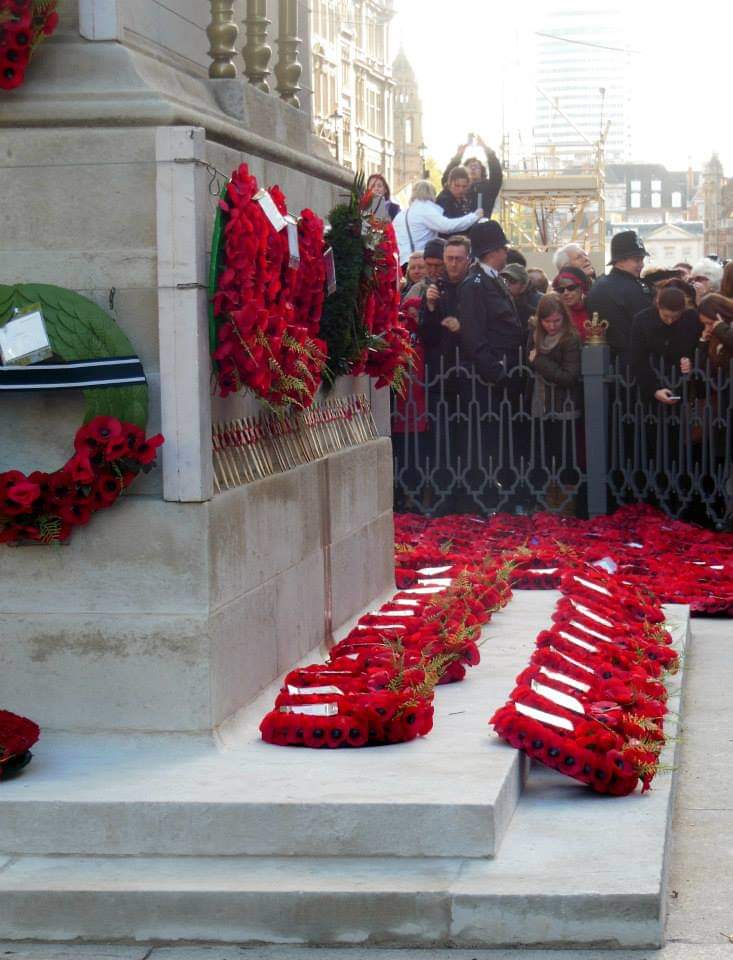
Today’s writing is from a guest. My best friend Danny Rudyard had been asked to write a speech for one of many forthcoming memorial services for Remembrance Day. So, here it goes, the passionate words and writing of my best mate (written in the picturesque Copeland Borough village of Parton):
Good morning Ladies and Gentlemen,
I am Danny Ridyard, I am a Soldier and adopted Partonian. Here’s a little history on me, so you know where I’m coming from. I served 12 years in the British Army starting as a tank driver, aged 17. I progressed through the ranks to command my own Challenger 2 Main Battle Tank. I gained numerous instructor level qualifications and completed 4 combat tours across 2 war zones. I fought in Operation Telic and Op telic 7 in Iraq And Operation Heric 16 and 17 In Afghanistan.
And I have a question for you: What is a War Memorial?
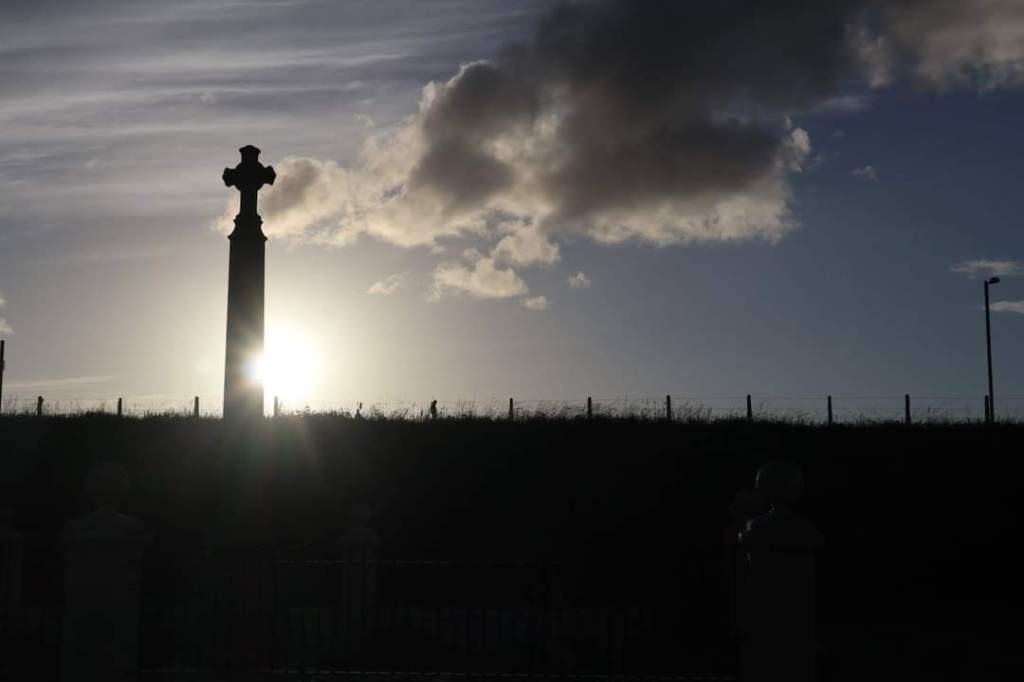
In our case it is an Ornamental gothic Cross, Made of Rubislaw grey granite. So, is it just stone and mortar stacked in a corner of a field that will remain forever England?
Absolutely not. I would argue that like many things in life, a memorial is much more than the sum of its parts. First and foremost, it is a symbol. A symbol of the tremendous sacrifice made by the community that was and honoured by the community that is Parton and Moresby.
It is a focal point for us all to honour those that came before us, those that answered our nations call to stand up to oppression and tyranny. The miners, the green grocers and the educators that became soldiers. Became the defenders of what so many of us now take for granted.
These 51 names you see before you belong to 51 husbands, fathers and sons of Parton and Moresby and like the monument that bears their names they are more than the sum of their parts they are their deeds; they are their courage, and they are rightly remembered by their nation on monuments across the length and breath of the country.
But more personably they are remembered by their successors in the community in which they lived and loved. This monument is not just a monument – it is our monument and it is every ounce the symbol it was built to be 100 years ago.
When you join the British Army you swear an oath of allegiance to Her Majesty The Queen, her heirs and successors. And in principle agree to live by a set of values these are known as ‘The Values and Standards Of The British Army’. They are remembered by the mnemonic ‘CDRILS’. They are:
Courage
Discipline
Respect for Others
Integrity
Loyalty
Selfless Commitment
These soldiers raised from our community that are remembered on our memorial will have sworn identical oaths, albeit to The King, they would have lived and ultimately died by these values and standards. I believe that we, as a community, can lay claim to these values, we have for 100 years, shown the Courage and the Discipline to maintain our monument, demonstrated the Respect for Others and shown the Integrity of our community by attending annual vigils and I know we will strive to continue the Loyalty to our forebears and through the sacrifice of our time and treasure we can show our Selfless Commitment.
By ensuring our monument is maintained and rejuvenated so that the sacrifices of our communities’ past can continue to be honoured by our present community and though our actions, the generations that follow us can be inspired to live up to the same, hard won, values and standards.
Our monument Reads: ‘This stone was erected by the inhabitants of PARTON & MORESBY’ Lets take a moment to digest that. It wasn’t a ‘mandated’ subscription organised by government that raised our memorial up. It was the ‘us’ of Parton and Moresby. It was the literal occupiers of, in some cases, the houses we now call home, they were the men and women that lived in Parton and Moresby, men and women like you and me that no doubt had a personal connection to the men that bore the names listed on our monument and keenly felt their absence. And they showed the strength of their character by handing down this legacy of memorial not for themselves but for those that gave their today for our tomorrow.
For our monument also reads:
They went to their duty; Young, strong & brave; They gave their lives for others; Themselves they could not save. FOR FREEDOM’S CAUSE.
That last bit is wrote in capitols and is surely an indication of how strongly our community holds the virtue of freedom. Thank you.
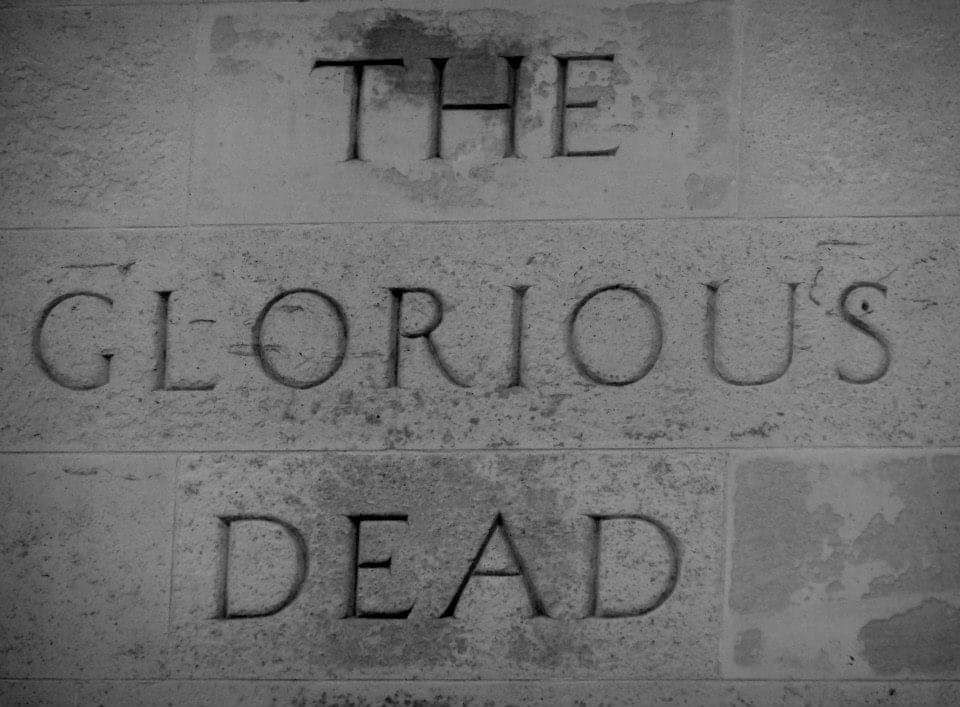
Lest we forget.



 AGAINST THE FLOW OF TRAFFIC - ACTON28.BLOG