An Inspector Keeps Calling

Toby Jones, now seemingly everywhere, went a tad crazed in the recent Indiana Jones and the Dial of Destiny. As Harrison Ford searched for the thermostat settings, our man Jones, Toby that is, acted impeccably. His rise to Hollywood from the University of Manchester has been truly Marvellous. Just as Toby floats in and out of Marvel superhero movies, he can be seen on local stories such as The Detectorists and true stories such as Neil Baldwin’s surreal biopic Marvellous. One radio production that does stand out is that of An Inspector Calls. The 2010 production has been lauded, and Inspector Goole, played by Toby Jones is just one character in a story as relevant now as it was when penned by John Boynton Priestley.

“Arthur Birling is a heavy looking, rather portentous man.” – An Inspector Calls, J.B. Priestley

J.B. Priestley was a man of all trades: novelist, playwright, screenwriter, broadcaster and commentator. Raised in Manningham, part of once industrial Bradford, Priestley grew up in the shadow of mill chimneys and his headmaster of a father. His mother passed away in J.B.’s toddler years, but by the time he had reached Belle Vue Boys’ Grammar School, his father had remarried. On the banks of the Bradford Beck river, up from Belle Vue Terrace at Bradford City’s historic valley parade, the young writer J.B. was well placed to see the social norms of those who attended either grammar school or state schools. The Great War and wounds interrupted his early foray into journalism. Survival of the war allowed this ambitious writer the chance to attend the University of Cambridge. Trinity Hall. Having Boris Karloff star in one of his novels adapted to a movie did no harm. J.B. Priestley found time between writing to barrage words towards writers Graham Greene, George Bernard Shaw and pretty much all of Ireland. His prejudice and opinions placed him well during World War II. Here his voice became a BBC mainstay, second only to Prime Minister Sir-to-be W.L.S. Churchill.

“…no longer competing but are working together – for lower costs and higher prices.” – An Inspector Calls, J.B. Priestley

Perhaps Churchill or his cabinet led to J.B. Priestley being removed from the airwaves, for one reason or another. Perhaps not. It led to new pathways for the aspirational writer. The 1941 Committee, charged with increasing efficient war efforts called. Actors, Lords, writers, evolutionary biologists, and prominent people explored ways for people to live after the conclusion of the way. Chairing the committee was J.B. Priestley. Later he formed the breakaway Common Wealth Party, in some ways a forerunner of the political party, the Liberal Democrats. Oddly that put him on George Orwell’s radar. Orwell, tasked with identifying writers with pro-communist leanings, labelled J.B. Priestley as questionable. J.B. Priestley was with his second wife, in the last few years of that marriage. By this stage, the play An Inspector Calls was causing quite a stir. The stage play had debuted in the Soviet Union in 1945. It would be almost a year before London’s New Theatre would stage this drama. Did World War II bring Britain’s classes together?

“When you marry, you’ll be marrying at a very good time. Yes, a very good time – and soon it’ll be an even better time.” – An Inspector Calls, J.B. Priestley

The morality play focuses slaps capitalism down, clutches at the hypocrisy of the middle-class, and stamps down on outdated Victorian social values. Capitalism and socialism can be viewed through Arthur Birling and Inspector Goole, respectively. Set in 1912, neglect and prejudice thread between the dialogue and consequent suicide of working class Eva Smith. She died a death by Donald Trump’s preferred form of CoViD-19 cure, disinfectant. Inspector Goole grills the Birling family over entries into the departed Eva Smith’s diary. Arthur the patriarch alongside cold, yet superior, Mrs Sybil and their offspring Sheila and LadBible.com reader Eric make up the cast, alongside their mate Gerald Croft. Edna is the Mrs Doyle of the family, brewing up for all. The play features gentlemanly chivalry befitting a James Bond movie without the action. There’s a mention or two of the poor deserving this, that, and the other.

“Fiddlesticks! The Germans don’t want war. Nobody wants war…” – An Inspector Calls, J.B. Priestley

An Inspector Calls raises many questions with respect to its interpretation and content. How does Priestley present Mr Birling in An Inspector Calls? How does Priestley use Mr Birling to get his ideas across in the rest of the play? Does this character change? Why does Mr Birling use certain language? The play moves through Eva Smith’s stages as a factory worker, a shop worker, near homelessness and as a pregnant and potential future mother-to-be. The latter stage of deceased is speculative. It is both a morality crime thriller and an intricate crafted play, requiring the reader or watcher to pay attention. The use of repetition, cliff-hangers, shock (“Burnt her inside out”), twists (“That was the police.”), pauses, gasps, asides, and fluent dialogue. What effect does this have on the audience? How does Priestley use language to create drama?

“There’ll be peace and prosperity and rapid progress everywhere.” – An Inspector Calls, J.B. Priestley

An Inspector Calls is a play often referred to as J.B. Priestley’s masterpiece. It has been staged beyond then BBC, as far as Iran, as translated by political activist and writer بزرگ علوی. Good luck reading his name! Bozorg Alavi, incidentally. Richard “I don’t believe it!” Wilson even produced a version with Hugh Grant fluttering his eyes in the Royal Exchange Theatre, Manchester. It is possible to encounter multiple versions and imaginings of this play. BBC Radio with Bob Peck, Hong Kong (浮華宴), Bengali and Russian (Inspektor Gull) movies exist. In the U.K., it forms a backbone of G.C.S.E. English Literacy. The theme of age and the age of the play are as relevant as ever. As are the themes of class and gender, if you look at state of current world politics. Do we look after each other in society? Ask this question in the U.K., Italy and Norway for perhaps very different responses. How do older and younger generations perceive one another? Do children reflect their parents? Or, have younger generations progressed, regressed or adapted to new conditions?

“If you don’t come down sharply on some of these people, they’d soon be asking for the earth.” – An Inspector Calls, J.B. Priestley

The dialogue is sharp and shocking, full of Titanic-sized dramatic irony, rank and status, as well as the obsession of money. Tragedy and hoaxes are banded about like rumour and jokes. Boris Johnson and his Conservative government during and after the 2019 CoViD pandemic would have been proud of the Birling family’s reaction and inaction. Business experience appears to bypass humanity, favouring ability to profit over the death of an innocent person. The finale of the play draws the viewer in, building tension and raises questions. Who was Inspector Goole? What was his involvement? What is social responsibility? The characters, themes, form, structure and language coupled with the plot blend to create a sharp and dark story. Similarly, do leaders in our society take responsibility for their behavior?

John Boynton Priestley (13th September 1894-14th August 1984)


Notes [From a Small Island]

Good morning/afternoon/evening/night / How do!

“I finished the last half of Lord of the Flies in a single afternoon, my eyes wide, my heart pounding, not thinking, just inhaling….My rule of thumb as a writer and reader–largely formed by Lord of the Flies–is feel it first, think about it later.” – Stephen King, author (It, The Mist)

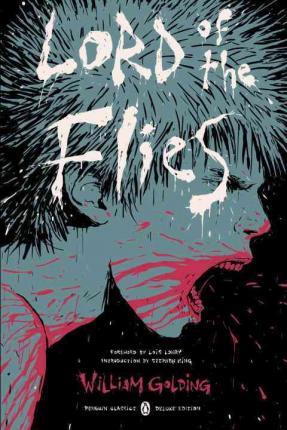
  • William Golding’s Lord of The Flies is a text visited by GCSE students both at home in the UK and their iGCSE counterparts around the globe. The striking cover of the Deluxe Edition released in 2016 by Penguin Classics really stands out. In fact, looking at the numerous editions of this novel, and there are a good span of releases, all the covers tell their own story and draw you as a reader to the opening of the covers. Not that you should treat a book by its cover. I guess the students of grades 6-8 selected this cover because of the visual. It pictures a character looking like a watermelon had exploded during his evening snack time. The introduction by Stephen King and foreword by Lois Lowry were too modestly placed to catch the eye.

I must confess that during my secondary school days of Reddish Vale High School, that our English classes did not visit the works of William Golding. However, I was vaguely aware from friends at other schools of the works. In fact, I made a point of reading it within the confines of the old Levenshulme Library. Because, it was a time when The Lost Boys movie was talk of the town, I’d often muddle the two tales but oddly I had never watched the vampire teenage horror movie.

Luna displayed detailed writing and explained her views accordingly. The introduction was relayed in a clear presentation. This allowed future teaching to be differentiated to her specific needs. Understanding the significance of phrases and descriptions, Luna has explained her answers clearly. Students were given the chance to collaborate and exchange views. During this opportunity Luna listened both carefully and gave her views in response using text-appropriate examples. Luna’s interpretation of the island from the Lord of The Flies was detailed, annotated accordingly and she could orally relay the symbolic locations within. When creating timelines of the story’s events Luna used a clear format, added comments and kept the work clear. Luna worked tirelessly to complete the revision activities in a way befitting the final unit exam. Luna displayed a sound understanding of the questions presented to her. She gave her efforts to the challenge and now needs to check the marks available and how to details the answers accordingly. If six marks are made available then three sentences with appropriate details and conjunctions is likely the minimum expected.

May used strong vocabulary and detailed writing with reference to the text Lord of The Flies. Her understanding was clear and set out in an organised fashion. May was able to orally discuss her following of the work with her classroom peers. May discussed many questions and possible answers in a small group before expanding her confident findings to the entire class. She went further in asking questions of her answers that led her to a deeper reflection of the novel, Lord of The Flies. From May’s interpretation of the island from the Lord of The Flies it was clear that she takes pride in her artwork. The neat and carefully set-out work allowed little room for misunderstanding. May’s use of timelines was varied and detailed, often using quotes and key points. May completed the revision tasks to a high standard ahead of the unit examination. For May to give suitable chances to gaining fuller marks, she must look at the point weighting and try to suitably apply points to each mark available. Overall her written answers are well structured and feature good levels of reference to the key text and her experience.

Nathan covered the key points of the early chapters and was unafraid to voice his opinion. He often placed questions about the predicament the characters within the story faced. He formed a good hypothesis about where he believed the plot would lead. Nathan could at times show his distaste towards the novel but he would also justify this well. The vocabulary-heavy text of a book written in a different land and time gave him opportunity to cast his answers, heavily coated in his thoughts. Nathan created a clear outline with finite detail throughout his map of William Golding’s imagined island. He explained the symbolism throughout and discussed his reasoning with peers. Nathan used timelines to good effect and displayed the relevant information accordingly. Nathan displayed an impassioned view within his review of the unit. Nathan must pay attention to the marks available and decide how to weight his answers accordingly. Extra paper had been made available. Not double checking the meaning and rereading a question cost Nathan 6 marks, which was highly unlike his previous work. He completed a clear and well organised exam paper with reasoning, opinion and clarity throughout.

Gabriel selected appropriate vocabulary and details for his initial analysis of Lord of The Flies. He confidently organised and produced text to support his views. Talking to write has helped him to set out his work well. Gabriel’s focus on the text fluctuated from a passionate advocate of the writing to that of someone who dislikes the descriptive content. His answers attributed the base points and did not shy from opinion. Firstly Gabriel made a draft of the island taken from William Golding’s novel Lord of The Flies. From this he neatened up and slotted his work together into a pleasing final output, full or relevant detail. Gabriel favoured an expanded format of timeline, rich in detail with appropriate quotations from the novel’s dialogue. Gabriel’s revision work was clearly drawn together and his use of comic illustrations was welcomed by the teacher. Gabriel must give all his attention to the marks available. This will allow him to decide how to weight his answers appropriately. Extra paper had been made available but was not requested.

Henry used a calm and steady tone to relay his outline of the early chapters within William Golding’s Lord of The Flies. He set his work out clearly and asked appropriate questions to his peers. Henry reflected the answers to match the questions using simplistic formats and clarity. He would benefit in the future from adding a little more passion and widening his vocabulary usage. Henry explained the symbolism of the island and went further by logging the symbolism within his notebook. He created a key to his work and could orally explain his positioning of the island’s features, referring to the novel throughout. Henry created numerous timelines at several stages of the novel and worked well to explain this to his peers. He led by example, sharing an exemplar of what was expected. Henry’s linear and concise writing in preparation for the final unit assessment was both careful and considerate to the need. To allow Henry to give attention to the marks available he must decide how to weight his answers appropriately. Extra paper had been made available but was not requested. Large gaps will cost marks.

Benny used his inquiring nature, his confidence and his collaboration skills in ways to support his early understanding of the novel Lord of The Flies. He has utilised his enthusiasm and curiosity to good effect, often displayed within his writing style. Benny’s timing at writing answers needs a little more urgency, however his spoken preparation work has been second-to-none. He articulates his thoughts with clarity and even questions them appropriately to refine his final work. Now, he needs to take more care in presenting those words on paper. Benny created an island with aid from researching the internet for other interpretations of the island’s shapes and features. He extracted and explained his choices, and noted several common representations led to a pattern. A little neatness goes a long way and Benny’s strive to turn cluttered work to tidy output was noted as a sign of his progression throughout this unit. Benny’s writing preparation for the final unit assessment was a little light in volume but his work to date has been adequate to show his overall understanding. Benny should give all his attention to the marks available. This will allow him to decide how to weight his answers accordingly. Extra paper had been made available but was not requested. Unlike other formative assessments Benny did not detail as in depth as before. He can do so much more. Next time he will deliver with more gusto.

Chael is laid back in character but hit his understanding. With a little more effort and careful checking he could develop clearer written interpretations of The Lord of The Flies. He is often highly enthusiastic and energetic, but requires a little more focus. Chael could deliver more. He must take more care in writing and checking his output. At times he can orally present a fantastic set of findings, but the material delivery of such words is mostly absent. More differentiated writing practice will allow him to develop. Chael researched island shapes, land features and attached them to his understanding of William Golding’s island. He noted the features mentioned in passing, as well as the central landmarks of the story. After some encouragement Chael set out a clear and detailed timeline of events. To the teacher it seems that Chael can fire out words like a machine gun, however, it is also apparent that he needs encouragement in checking, checking again and reviewing. This will reduce Chael’s potential final reflection content. Chael must pay attention to the marks available and decide how to weight his answers accordingly. Extra paper had been made available but was not used. The strength of his answers is smooth and clear, but he would benefit from using quotes or reference points.

Kingston has a very relaxed attitude to classwork and must understand that production of work is completely different to oral relaying of a text such as The Lord of The Flies. Whilst he said this was his second visiting to the text, he must understand that reading for pleasure and reading for deeper analysis and understanding are far removed from one another. Kingston sometimes is shy and unassuming. His opportunity to talk and prepare is frequent amongst the classes, yet silence stunts his chance. He must engage fully and find those word in his soul that are crying to get out. He is more than capable. Pick up a pen! Kingston needed pushing to complete this task. Finally at his own pace he completed a basic outline. He could explain the features and common landmarks of the island but did not write these down in his notebook. With encouragement he is capable of a good output. Kingston needed pushing to create and explain his chosen chapter of events. He produced the work after the deadline and needed support from classmates and the teacher to finalise his work. Kingston did some revision work but he is certainly capable of much more. Between not completing homework, some choice comments within his answers and a distinct feeling of idleness, Kingston has given less than all his efforts to this summative test. The teacher shall be setting targets and goals with Kingston to allow him to reach his full potential. 

The Lord of The Flies has since penetrated culture in innumerable ways. It’s even been reflected back at us through real-life situations such as Tongan boys trapped on a remote island. Historian Rutger Bregman documented this remarkable story in his book Humankind. These six boys

“Lord of the Flies is one of my favorite books. I still read it every couple of years.” – Suzanne Collins, author (The Hunger Games)

Thank you kindly for your time.

Goodbye! Ta’ra!