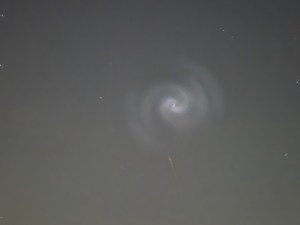
The awesome of the mysterious light, radiating through a fine mist, drifting towards me was mesmerising. The patterns like straps on a parachute ascending upwards like a triangle missing its uppermost plain.
I tried to video it and take photographs. Even as Panda, my dog, nudged me to throw his ball, I pondered, wondered, and questioned what it could be. I knew from the object’s translucent state, it couldn’t be a drone. The misty form transformed passing rays of light outwardly. I queried all my logic. It couldn’t be a weather balloon. Not even a burst one.
I watched as it appeared to disappear and pass directly overhead. Then reappear, fade, and appear once more. I could see satellites passing overhead, far above this unidentified floating object. And aircraft flashing way up high. Its course stayed true, from Moston toward Clayton, Manchester. I pinged an image and video to my space expert friend Dan. He has raised his twin boys on a diet of the outer limits and knowledge.
An excited reply came back, “Maybe a rocket launch. SpaceX? I’ll ask Alex.” One of the twins would know or have a better idea. The light orb appeared to fan out like that of a ship’s rudder. Was this a projection? A hologram? No visible beams could be seen in the very clear sky. Not even a cloud. For Manchester, without a cloud is a spectacle itself!
Alex and Dan came back by message, see SpaceX launch in Florida, a few who’s previous. And that’s when looking at they sky became ruined again. Mites danced in the highest of visible atmosphere. The satellite pathways of Starlink and so on. Hundreds and thousands. Many of which become visible all too often. What would our ancestors make of it?
From hunter-gatherers of old to modern and better equipped people, eyes to their skies has been normalised and led to discovery and theories, or stories and moments of magic. I’ll confess this fuel dump by SpaceX was enchanting. Until I thought about the waste. The atmospheric dumping of gases and liquids. What would be the consequences? My adopted cousin Anthony commented, “Elon is pissing on us all.” He’s right. The days of Mulder and Scully are limited.
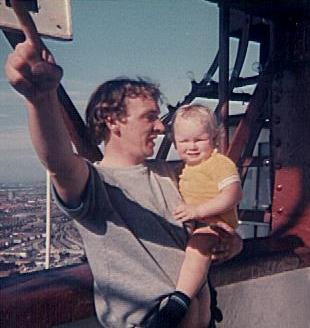
I wanted to write this on Dad’s birthday. I procrastinated. A habit I possibly learnt from Dad. Let’s talk about my Dad. He’s half of the reason why I exist. Now, where to begin? Last week, I had a video call with Dad on his birthday. He was sat on his lounge sofa and the frustrations of being unable to get out were etched on his face. Dad’s never been a mountain climber or a road cyclist, but he’s always been someone who enjoys the outdoors.
Dad, as father to Shaun, Tina, Asa and I, hasn’t always been perfect. Who amongst us, can say they are free from mistakes or poor choices? This is life, and the consequences of one action or inaction ripple like a stone crashing into a millpond. Things between Dad and I haven’t always been gloss paint or even matt, or emulsion. There have been paint spillages. I still love my Dad and I feel his love too. I’m lucky. I can’t imagine life without a Dad, and I truly don’t want to feel the loss of my Dad (or Mum): that would hurt too greatly.
Dad mentioned, in our last call, he’d been ‘cutting back Himalayan barbed-wire‘ or in layman’s terms, chopping the plants of blackberries. It was good to hear that the garden was once again embracing Dad. I grew up at Joyce Street allotments listening to City’s away games, or playing with our dog Pup on the nearby Broadhurst Park. Dad always seemed to have his allotment patch (and at times, two allotments).
Before my teenage days, I was acutely aware that Dad bodged things together. A loose panel fastened awkwardly here, and a piece of perspex draped there. Never quite fitting. Always in a place that served purpose. Not pristine, always functional. Dad would show me blackbirds nesting in his grey monolithic-looking shed. He’d feed me coriander and thyme, unwashed from a patch of ground. I would eat delicious tomatoes, rich in flavour, second only to my Granddad’s – and truth be told, not by much! I recall eating cucumbers, strawberries and planting potatoes, dancing with goats, finding old toys in impromptu concrete paths and losing races to my older brother Asa. The allotments were a good place to be. With Dad.
During the summers, sometimes he’d help at the Joyce Street Farm and I’d get to feed ponies, gain the trust of feral cats, collect chicken eggs, much out the horses and play with ducks. The goats were always my favourite. They’d be loaned out to allotment holders to go mow their plots or let out to feed on an adjacent banking of grass. Chickens and poultry would scatter up and down on a free range grass plain. Sometimes I’d stay there and enjoy the peace. Other times Pup and I would go bonkers and break the peace.
Dad with Granddad would take us to Tottington for cuttings and chrysanthemums. We’d go to Chester for seeds. It wasn’t unusual to serve Granddad leaning over walls taking a few freelance cuttings of his own, from other people’s gardens. Dad, Asa and I would walk ahead seemingly oblivious but totally aware. Other days and evenings we’d meet his friends, the legendary John ‘The Ghost’, Ernie at the farm, locals at the Working Man’s Club, etc.
Whether it was spam butties, salad from the allotment, a pie at Newton Heath market or reduced to clear food, I can’t say I ever went hungry. Boxes of broken biscuits at Manchester Victoria station or vanilla custard slices were probably where I got my sweet tooth. What I’d give to sit down with a shandy at Newton Heath Working Man’s Club, or Two Dogs Alcoholic Lemonade at the defunct Castle and Falcon, and talk with Dad.
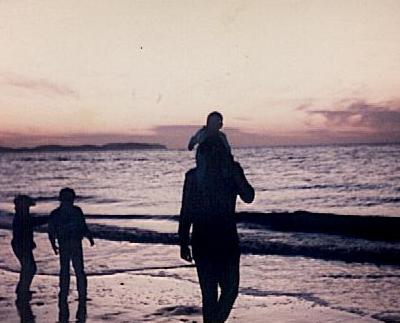
From an early age, caravan holidays have been a thing. Actually, since Nana and Granddad passed away, Dad has maintained a. succession of caravans in Morecambe. They’ve been a holiday home for family, neighbours and friends of the family. Ritz Carlton they’ve never been, but a stone’s throw from Morecambe’s famous Midland Hotel, they’ve always been cosy and convenient. Walking with dogs, Snowy, Suzie, Pup, Nomaz, Jerry, Nobby, Blue, and others, even cats Sky and Lucy, around the caravan park resort or along the beaches to Heysham have given a great sense of relaxation to many an Acton.
There’s no place like home. I miss Dad, equally as much as I miss my Mum and other tribe members. I live and work here in sunny Dongguan, and have no plans to leave here. I enjoy the challenges of my job far too much. I respect the freedom it affords me. I hope in this troubled year I can be home for Christmas. The COVID-19 pandenic has probably stopped a summer jaunt to Manchester. And even if I could go back, could I visit all the family at all their houses without myself being the risk of spreading this godforsaken virus?
Dad loves trains, and as a former painter and decorator of ‘anything but the trains’ he’d steam through stories about the places he’d been, witnessing snow on Winter Hill (in summer) and what painters do when watching paint dry. It took me a while to understand that the word crumpet wasn’t always food. These days the meaning would generate the #MeToo on Twitter. We’d visit steam trains or famous stations, as long as there was no cost. We’d ride in luggage cars, behind diesel trains or then speedy Intercity 125. Being sat on huge sacks of seaweed heading for Manchester’s gardens seemed normal to me. It was a pungent form of social distancing, far ahead of its time.
My Aunty Christine tells me Dad was a talented artist, and studied so. I’ve seen some of his works but it seems time has hidden them in Dad’s clutter. Uncle George, the youngest of Dad’s brothers and sisters, told many stories of them at Wembley, away games and Maine Road following the mighty Manchester City and occasional scraps with hooligan types. I could always see the family love in Aunty Irene’s eyes for Dad, but an awkwardness towards Dad’s habits. Our family, like many, has its quirks and oddities. I wouldn’t change it for the world.
One birthday, I pretended to sleep. I think I was disappointed that Dad hadn’t picked me up that weekend. Dad was supposed to pick me up every Saturday. My parents had divorced at, for me, an early age. I wasn’t in a broken home, thankfully, but the new norm for us all was different, yet not unheard of in Manchester. So, one night Dad opened my bedroom door and I was sleeping. But, I wasn’t. The gift was wonderful. I regret not sitting or waking up. I regret not hugging my Dad.
Gifts were always welcome. Books from the barrow at Manchestet Victoria Station, from Mum and Dad were always a treasure. Animal books, and adventures became habit. Over the years Mum would collect tokens and send off for hugely discounted books. I still have some here in China now. They’re both sentimental and functional. Dad would sometimes find stray Lego bricks and these little tokens (of an expensive luxury toy) fitted well. The two square road pieces with a helipad and three lanes were rarely out of use. I know that the once-paraffin barrel of Lego passed from me to Astrid and Paul, and then over to Shaun and Christina. So, a collection started by Mum and Dad has served well.
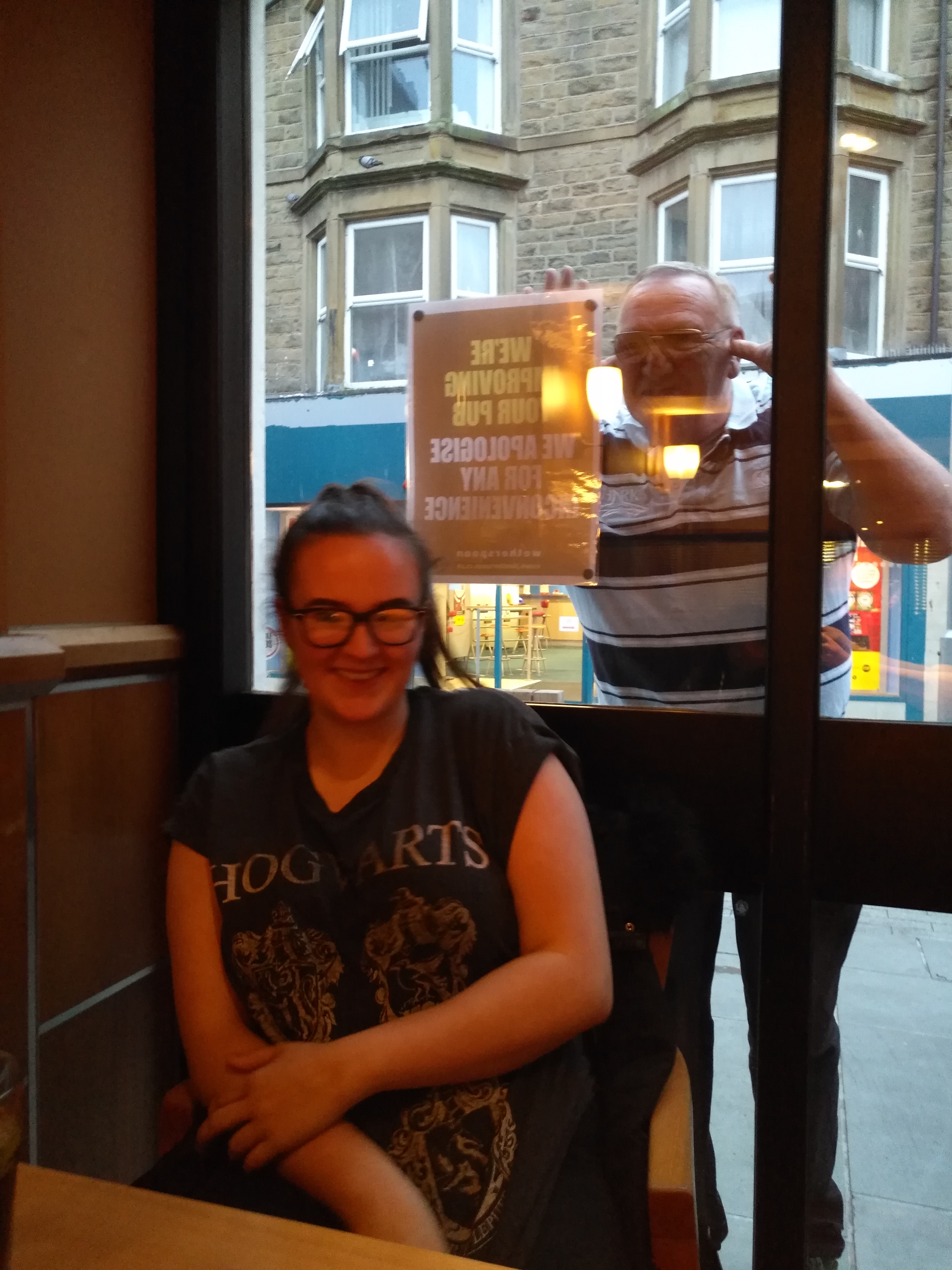
After completing the Morecambe Bay CrossBay run, I spotted Dad near the finish line and he took some photos of me looking shattered and void of energy. Cheers Dad! I was so happy to see Dad, that day, at Hest Bank. I think Christina and Shaun with there with the West Highland terrier Jerry. Either way after a mostly solo half-marathon distance through Morecambe Bay, it was a heartwarming sight. Also, it was at one of Dad’s favourite places, a sandy bank on the expanses of Morecambe Bay, complete with passing trains in close proximity.
There’s much more I can write about Dad. Perhaps I will one day.
Ronald Lindsay Johnson (24 September 1889 – 29 May 1917)
I knew of the Ronald Johnson Playing Fields long before FC United of Manchester went slicing into the earth around it. Located on Broadhurst Park, in Manchester’s Moston, I always recall the red brick cycling track within a fenced compound adjacent to the passing St. Mary’s Road. Discovering the Western Front Association website, I recently read about Ronald Johnson. Together with a profile on the Friends of Broadhurst Park, I started clicking left, right and centre.
Like many that saw battle in the horrors of The Great War, Captain Ronald Lindsay Johnson (picture courtesy of the Altrincham Guardian) died in action. He was just 28-years old. His shares at Johnson, Clapham & Morris engineers were put to use in creating a sports ground. Initially for employees it became a public ground in the 1930s following Johnson, Clapham & Morris’s move to Trafford Park. It has since seen cricket, football (notably Moston Juniors F.C.), school sports days, car boot sales, fun fairs and life.
I can still recall the damp earthly smells of the ground that measured around 8-acres, sandwiched between a primary school and number 335 St. Mary’s Road. The recreation area was in memorial to Captain Ronald Lindsay Johnson and opened on the 17th June 1922 (or 1925), with Ronald Johnson’s mother present. The cycle speedway track was unique to the area – and existed long before the Manchester Velodrome was created in anticipation of the 2002 Commonwealth Games. I wonder if any cyclist transitioned from there to the often named ‘medal factory’ in Clayton.
By 2011, F.C. United of Manchester were offered the land and their 4,400-seater stadium (for £6.5 million) followed. The name Broadhurst Park was naturally fitting, following a brief period as the Moston Community Stadium. The all-weather pitch has seen a Benfica B team all in a stone’s throw from what was once Moston Hall, and residence to local industrialist Sir Edward Tootal Broadhurst. The park itself a World War One donation to recognise victory.
The New East Manchester and Manchester City Council development, once the home of a metal working and fabrication business team, had been resisted by local residents. The loss of public open space coupled with inadequate parking provision seemed to be the main problems. 2,226 letters of objection (mostly locally sent) were beaten back by 5,635 letters (many outside of Manchester) of support. Manchester Council plodded on with a success at the Court of Appeal in March 2013. The covenant on the land has always been recreation – and for the people of Moston. The one thing I find upsetting is that there isn’t a plaque or statue to honour that for almost 90 years these fields held a different name – but perhaps it hasn’t been made yet, or notified well.
Significant contribution was made by the Football Foundation Community Facilities Fund, Sport England, F.C. United Community Shares scheme, fundraising, Manchester City Council loan and the Football Foundation Football Stadia Improvement Fund amongst others. F.C. Ted (see the link for reasoning about the name) moved in eventually. At an Annual General Meeting of FC United, 10 April 2014, the Ronald Johnson Ground was one of seven names proposed for the new ground. Sadly, the historic Ronald Johnson Playing Fields seemingly vanished. F.C. United played Benfica B to mark the date of Man United’s 1968 European Cup Final, the day Ronald Johnson ceased to live.
Ronald Lindsay Johnson (24 September 1889 – 29 May 1917)
Family: His parents were William Henry Johnson, died 1914 and Agnes Morton Johnson née Brown. Brother, William Morton Johnson, educated in Cambridge, died July 1916 (in military action, aged just 34 years old). Mother, opened the playing field in June 1922. Ronald was the youngest of six children.
Raised: Woodleigh on Bradgate Road in Dunham Massay
Studied: Summer Fields School, Eton. BA Classics (posthumous MA awarded), @ King’s College, Cambridge.
Lived: Australia, 1912 until August 1914 (at the Sydney branch of Messrs Johnson, Clapham & Morris)
Partner/Chairman: Johnson, Clapham & Morris’ Wire Works (engineers)
Served: As a junior in the Cadet Corps; then Officer Training Corps at Cambridge. Enlisted (2nd October 1914) in the 23rd Division [103 Brigade RFA], Royal Field Artillery. Commissioned as a 2nd Lieutenant.
Rank: Acting Captain and Divisional Trench Mortar Officer (DTMO). Entered the theatre of war from 27th August 1915 (landed Boulogne).
Medals: 1914-15 Star, British War Medal and Victory Medal
Responsibilities: co-ordinating the targeting and positioning of mortar batteries
Notable events: Survived a rifle bullet to the ear, 19th September 1916. Evacuated by H S Dieppe (hospital ship) but returned to service by 11th December 1916.
Cause of death: Pre-Battle of Messines (Flanders, Belgium) preparations. Hit by a German shell, near Zillebeke Lake by ‘Hill 60’. He died in transit on the way to the Field Hospital near Brandhoek.
Place of Rest: Brandhoek Military Cemetery, Belgium (Plot II, Row D, Grave 1).
Commemorated: Dunham (St. Mark’s) war memorial and the Kings College, Cambridge War Memorial.
Other than the Ronald Johnson Playing Fields, he was honoured with the naming of the Johnson Chemicals Labs, Adelaide University, Australia. He is also mentioned in the Cambridge University Book of Honour.



 AGAINST THE FLOW OF TRAFFIC - ACTON28.BLOG