Superman vs. Peter Pan

How do! / 你好 (nĭ hăo) / Namaste / Welcome!

“In the decade of the 1930s, even the great city of Metropolis was not spared the ravages of the worldwide depression. In the times of fear and confusion the job of informing the public was the responsibility of the Daily Planet. A great metropolitan newspaper, whose reputation for clarity and truth had become a symbol of hope for the city of Metropolis.” – Narration, by a boy, Superman: The Movie

Superman: The Movie made many of us believe a man could fly. Christopher Reeve’s warm portrayal of the extra-terrestrial sent to Earth was to many the greatest superhero of our generation. Well, all until Michael Keaton stepped in as the Dark Knight in Batman. Fast forwards to the 2000s and it seems that Marvel have serialised their comic arsenal to release a new character on a weekly basis. Even the latest Bad Boys (For Life) movie seemed to be swimming in CGI reminiscent of Marvel’s reign of fire.

“Dream, Believe, Dare, Do.” – Walter Elias Disney’s motto.

But, for those born in the late 70s and early 80s there will be a few of us that were treated to Christopher Reeve’s black lock of hair, a very-much clean-cut James Bond-type character. Director Richard Donner and Superman: The Movie squeezed over 300 million US dollars from the box offices, for a movie that cost but a sixth of that. 143 minutes of fantasy and fiction leapt out of the screen much like the scrolling title words and stars’ names. Filmed between the U.K., Panama, Switzerland and U.S.A., this movie was epic. The dark contrast of life being released from a dying planet, and evil being cast to the Phantom Zone, stemmed a story arc which leapt faster than a speeding bullet featuring comic and soft scenes amongst the pile-driving action. It was like watching a wrestling superstar cuddle a kitten.

“Some people can read War and Peace and come away thinking it’s a simple adventure story. Others can read the ingredients on a chewing gum wrapper and unlock the secrets of the universe.” – Lex Luthor; Superman: The Movie

Superman: The Movie claimed a few awards for best visual effects, a BAFTA (Most Promising Newcomer to Leading Film Roles; and Outstanding British Contribution to Cinema Award) and numerous nominations. John Williams and the London Symphony Orchestra’s score is dramatic and distinct. Mario Puzo’s story shuffles between serious issues and wastes little of the cast. Margot Kidder, Glenn Ford, Gene Hackman and Ned Beatty were big names. Terence Stamp would haunt many kids dreams for years to come. Marlon Brando was a global megastar and such was his feeling, he would never reappear in a Superman movie, as he was too buys suing for extra shares of the profits.

“Good form, Mr. Smee? Blast good form! Did Pan show good form when he did this to me?” – Peter Pan, Disney movie, 1953.

Mild mannered reporter Clark Kent starts life in The Daily Planet, before later appearing in cape and pants over his leggings. Many scenes were filmed at the world-famous Pinewood Studios. The Fortress of Solitude was on 007’s stage. British stunt double Vic Armstrong was there for Christopher Reeve for the first two movies.

“..children know such a lot now, they soon don’t believe in fairies, and every time a child says, ‘I don’t believe in fairies,’ there is a fairy somewhere that falls down dead.” – Peter Pan, by J.M. Barrie

undefined

Jerry Siegel and Joe Shuster created Superman. Richard Donner presented a snapshot of 1950s America, subtle humour in modern day Metropolis and the icy cold sci-fi realm of Krypton. The journey was created perfectly for the movies – and although the 2013 movie Man of Steel tried to start again. Jerome Siegel, just like Kal-El (Clark Joseph Kent and  Superman) used pseudonyms (Joe Carter and Jerry Ess) and was born to Jewish immigrants. This wonderful writer dreamed up Superman and with Canadian comic book artist Joseph Shuster by June 1938 Superman ascended into Action Comics #1. Until the 1980s the man of steel dominated the superhero genre of U.S. comic books.

“Stars are beautiful, but they may not take part in anything, they must just look on forever.” – Peter Pan, by J.M. Barrie

Superman drew on many influences. Sci-fi gave some great pointers. Fritz Lang’s 1927 move Metropolis birthed a city within Superman’s eventual realm. Douglas Fairbanks as Zorro influenced the look, although arguably, that caped crusader was closer to the caped crusader, Batman. The geeky barbershop-look of slapstick comedian Harold Lloyd and his mild-mannered persona gave us Clark Kent. Siegel and Shuster’s trawling of pulp fiction, comics and popular media expanded in so many details. Perhaps Peter Pan, as a character from so many stage performances had some influence in there. After all J.M. Barrie’s wonderfully complex character had kids leaping from seats and beds following earlier performances. Much like Superman: The Movie, Peter Pan made many believe that they could fly.

Lois: “Clark…says you’re just a figment of somebody’s imagination, like Peter Pan.” / Superman: “Clark?…Who’s that, your boyfriend?” / Lois: “Clark!? Oh, Clark. No, he’s nothing, he’s just, uh…” / Superman: “Peter Pan, huh? Peter Pan flew with children, Lois. In a fairy-tale.” Scene as Christopher Reeves plays Superman before he’s about to take Lois flying around the city of Metropolis. Superman: The Movie

Peter Pan is complex and rightfully so. The ninth of ten children, Sir James Matthew Barrie, 1st Baronet, had already lost two siblings before birth. This short-statured man from Kirriemuir in Angus, when aged 6, lost his older brother David the day before David would have turned 14 years old. With his mother’s favourite forever-absent, J.M. often imitated and tried to fill David’s place. By the age of eight, his eldest siblings were his teachers at the coeducational Glasgow Academy and six years or so later at Dumfries Academy. Somehow he managed to kick back against his conservative Calvinist Victorian family and crack in with his dream of writing. The University of Edinburgh beckoned, and he graduated with an M.A. in literature during April 1882. After some journalism, unpopular fiction and hard graft he turned his eyes to playwriting. By 1894 he was married and with a Saint Bernard puppy, and had worked with Sherlock Holmes’s creator Arthur Conan Doyle.

“Ostensibly a holiday entertainment for children but really a play for grown-up people” – Irish playwright George Bernard Shaw

The premiere date of 27 December 1904 of Peter Pan, or The Boy Who Wouldn’t Grow Up arrived. Neverland was with us all – and a stark contrast to late Victorian and early Edwardian times. The Peter Pan models were extended and adapted throughout the years and the novel Peter and Wendy was inevitably released in 1911, with illustrations by F. D. Bedford. The two previous novels The Little White Bird and Peter Pan in Kensington Gardens are two equally delightful run outs for the boy who wouldn’t age or grow up. There is another outing in When Wendy Grew Up – An Afterthought. After that, popular culture claimed Pan for a silent movie in 1924, before Disney came knocking in 1953. The thrills of mermaids, fairies, Native Americans and pirates gained global viewers. J.M. Barrie himself commissioned sculptor Sir George James Frampton (he did the lions outside of the British Museum and Dr Barnardo’s Memorial) in 1912. The May Day surprise was a gift to the children of London.

“The moment you doubt whether you can fly, you cease for ever to be able to do it.” – Peter Pan, by J.M. Barrie

Some years ago, I was lucky enough to wander through a dusk-lit Kensington Gardens and see the statue of Peter Pan. Six identical moulds were taken and can be found from Liverpool (U.K.), Canada’s Ontario to Camden, and New Jersey. St. John’s, Newfoundland, Brussels (Belgium) and Perth (Australia) complete the list of original replicas. There are multiple statues of various designs globally also. Great Ormond Street Hospital has its own interpretation and rightfully so. Ever since 1929, all the rights and copyrights were given to Great Ormond Street Hospital. The boy who would be a child forever could inspire and keep those in need, some company.

“When the first baby laughed for the first time, its laugh broke into a thousand pieces, and they all went skipping about, and that was the beginning of fairies.” – Peter Pan, by J.M. Barrie

J.M. Barrie died in Manchester, well Manchester Street, Marylebone, that London on the 19th of June 1937. This was a man who had had Jerome K. Jerome as a friend; had divorced in 1909 and the hugely influential Llewelyn Davies family. George, John, Peter, Michael and Nicholas. Perhaps J.M. Barrie wanted to be a child forever. Perhaps Peter Pan was pretending to want to be forever young or showing off to his beautiful Wendy. Wendy was mature enough to surely see his insecurities. She displays great compassions as Peter Pan struts around his gaff, Neverland and does almost anything he wants. The land of adventures are at his command. The Darling family take his attention a little, but it does feel that Peter Pan would soon grow distracted of them and return to Neverland to do whatever he feels. Peter Pan is the antihero, to the hero of Superman. The two are alike, yet so far apart. Superman is a simple and clear character, with little conflict within. Peter Pan is like me, selfish and confused, and searching for a never-ending youth to hide from everyday burdens like responsibility and grown-up stuff.

“To die would be an awfully big adventure.” – Peter Pan, by J.M. Barrie

Today, in China, it was Children’s Day and we watched the Disney retelling of Peter Pan, complete with lost boys, manipulation and an upset Captain Hook because Peter Pan had cut off his hand and fed it to a crocodile with a timepiece. Eton College-educated Captain Hook seems devoted to bringing Peter Pan down. The Neverland story goes on and on and on, with endless retellings and reinterpretations or works based on Peter Pan and company. The right to collect royalties in eternity under precise and explicit provisos in the Copyright, Designs and Patents Act 1988 mean that Peter Pan is the gift that keeps giving to Great Ormond Street Hospital. Superman, however, is the $5.48 billion cash card of DC Comics and Warner Bros.

“Never say goodbye because goodbye means going away and going away means forgetting.” – Peter Pan, by J.M. Barrie

If I could only find the words, then I would write it all down…

你好/ Ní hǎo / Nín hǎo / Hello / How do,

‘If I could only find the words, then I would write it all down…’ (Read ’em and Weep lyrics by Jim Steinman/sang by Meat Loaf)

Where are the great writers? They are everywhere. Songwriters, scriptwriters, playwrights, newspaper correspondents, comedians, bloggers, and authors. Great writers are everywhere. I am nowhere near them. I just enjoy writing and have ambitions. The popular writers spill off shelves in major bookstores, on eBook devices, and fill newspaper reviews about their works. The modern classics and classics get published in varied and often colourful editions. Some copies get graphic novel versions or huge distorted modifications to lure in new and old readers alike. Books are wonderful and shouldn’t need a World Reading Day to attract a soul. Impressive braille, audiobooks and many other delightful formats, such as large print, keep penned words open to the widest possible audiences. And, then there are translations! Some of the Harry Potter novel serials have reached 80 or so languages, including Scots, Hindi, and Chinese.

‘muckle, beefy-boukit man wi a stumpie wee craigie’ (Mr Dursley in Scots, from Harry Potter and the Sorcerer’s Stone)

The novelists aren’t a bad place to start. I find Sir Arthur Conan Doye and H.G. Wells have caught my eye more and most from the considered classical writers. The Valley of Fear and The Sign of the Four are two of the former writer’s most gripping examples.

superfudgeLooking across the metaphysical divide at female writers, there are some wonderful writers in Mary Shelley (Frankenstein: or, The Modern Prometheus; Rambles in Germany and Italy in 1840, 1842 and 1843), Elzabeth Gaskell (Cranford), Val McDermid (Trick of the Dark), the Poet Laureate for Great Britain Dame Carol Ann Duffy, Enid Blyton (The Island of Adventure), Edith Nesbit (Think Five Children and It, and not Stephen King’s It), Agatha Christie (By the Pricking of My Thumbs), Betrix Potter (The Tale of Peter Rabbit and 22 other similar tales), and Judy Blume (Fudge-a-mania and books that hist topics such as masturbation, racism, bullying, menstruation, divorce and other such family topics). But, most importantly, when I pick up a book, it isn’t based on the author’s gender.


now that daysIn my childhood, my varied reading included Rudyard Kipling’s The Jungle Book; Jack London’s White Fang, The Sea Wolf; Colin Dann’s The Animals of Farthing Wood; Felix Salten’s Bambi; Aileen Fisher’s Now That Days Are Colder; Herman Melville’s Moby Dick; and a set of World Encyclopedias given to me by Mr Andrew Jones, in my final days in class 5AJ.

‘Now that days are colder, now that leaves are down, where are all the chipmunks at the edge of town?’ (Aileen Fisher’s Now That Days Are Colder)

roald dahlAs I grew from size 9 shoes to size 12 shoes, I picked up such reads as Eoin Colfer’s Benny and Omar, and soon discovered Michael Crichton. J.R.R. Tolkien was read with vigour. The college years involved Roald Dahl’s complete works getting a read. Douglas Adams and George Orwell added to the vibrant multihued reading material. I even had a crack at the works of Robert Louis Stevenson and Charles Dickins. Amongst the known names, I recall reading two pieces that really caught my attention. The first was about CJD and prionic diseases. The title was rather welcoming, Deadly Feasts: The “Prion” Controversy and the Public’s Health by Richard Rhodes. There is a real detective feel to this book. It zips from cannibals in New Guinea, cattle globally, young people in America, Britain and France – and beyond. It really makes you think and carries a powerful warning about beef, and eating meat. That being said, I carried on eating meat after a year’s experiment as a vegetarian.

‘Don’t gobblefunk around with words.’ (Roald Dahl’s The B.F.G.)

wewishThe second covered a dark period of recent history and journalist Philip Gourevitch’s We Wish to Inform You That Tomorrow We Will Be Killed With Our Families: Stories from Rwanda (the link directs to chapter one). The theme chronicles the 1994 Rwandan Genocide, in which an estimated 1,000,000 Tutsis and Hutus were killed. What shocked me, was how neighbours turned on themselves and the psychological effects followd. It skirts on the political challenges of survival. It is gripping and full of pain. I even had a crack at the complete works of one William Shakespeare. The dramas make for tough reading but nevertheless their importance and influence is beyond comparison.
‘At least fifty mostly decomposed cadavers covered the floor, wadded in clothing, their belongings strewn about and smashed. Macheted skulls had rolled here and there.’ (Philip Gourevitch’s We Wish to Inform You That Tomorrow We Will Be Killed With Our Families: Stories from Rwanda)

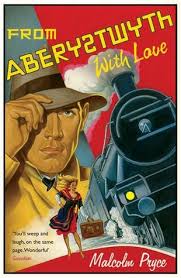
aberAt university I switched into daydreaming mode and the movie popularity of The Lord of the Rings led to a re-read of everything J.R.R. Tolkien. Between daydreaming, textbooks and general procrastination of university work, I found little time for reading. There was always something shiny or distracting. However, I did read through the entire available works of Michael Crichton and the brilliant noir writer Malcolm Pryce – his Aberystwyth Mon Amour series being topical to my location.

‘That’s the trouble with people like you, Knight, you only know how to mock. How to break things. You don’t know how to create anything. You never did.’ (Malcolm Pryce, Aberystwyth Mon Amour)

JurassicparkJurassic Park had been on and off my bookshelf since my mother bought me an omnibus edition, with the novel Congo included. The distinctive movie red, yellow and black logo made for great artwork but within the text was something more appealing. Scientific facts mixed with imagination and fiction. Like every book I have read by the late Michael Crichton, there are technical descriptions crossing the genres of action (Prey), science fiction (Micro), thrillers (Disclosure), and medical fiction (Five Patients). One of my favourite pieces has been Eaters of the Dead [a tale of Ahmad ibn Fadlan’s own interpretation of his genuine voyage north and his understandings with and reflections of Vikings], however the posthumous release of the 1974 penned piece Dragon Teeth [fossil hunters in the historical fiction form] comes close. But then, Pirate Latitudes, as action goes is damn exhilarating. Whilst the movies and series versions of some of his works never live up to the style of his writing, I hope that those who watch them gain enough curiosity to pick up the books. 200 million book sales is too few for such a great writer.

‘All major changes are like death. You can’t see to the other side until you are there.’ (Michael Crichton, Jurassic Park)

ducksFollowing university, I dipped in and out of books like rain lashing the rooftops of Manchester. Ian Fleming’s great travel novellas sporting a certain James Bond gripped me for a while. Every shadow writer of that spy-battering ram has been read since. From BBC’s The Fast Show, comedy writer Charlie Higson has delivered great slices of young Bond novels for teenagers and a series called The Enemy. Well worth of a read. Madame Bovary by Gustave Flaubert should be reviewed by the #MeToo movement. Forget 50 Shades of Gray! George Orwell’s Nineteen Eighty Four actual reads as a documentary and doesn’t seem like fiction in one way! The entire works of Christoher Brookmyre was far more than an Attack Of The Unsinkable Rubber Ducks – more like All Fun And Games Until Someone Loses An Eye. Every book of his will grip you tight – don’t be fooled by his colourful covers.

“People are islands,’ she said. ‘They don’t really touch. However close they are, they’re really quite separate. Even if they’ve been married for fifty years.” (Ian Fleming, Casino Royale)

psychoIn China, I have been limited to the works of Andy McNab (notably the Nick Stone and Tom Buckingham series) alongside other odds and ends found on bar book exchange shelves or tucked away collecting dust in book shops. I have found time to re-read Peter Pan, by playwright J.M. Barrie. Johnny Marr’s autobiography Set the Boy Free, War and Peace by Leo Tolstoy (which wasn’t to my enjoyment, and the riveting Moby Dick, by Herman Melville. The complete works of Jon Ronson (I thoroughly recommend The Psychopath Test) have been perused. The Welsh neo-journalist loves a good debunk or conspiracy to grip and twist until all the juices ooze out into the pages. Hunter S. Thompson (Hell’s Angels) would be proud of his works! I wonder if Jon Ronson has booked a firework-clad funeral for his future passing.
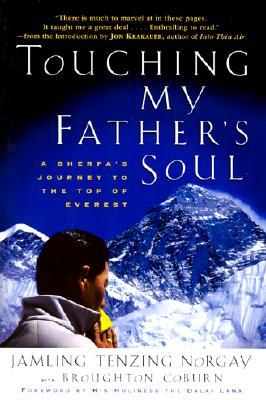

touchMy obsession with Mount Everest has drawn me to a related selection of books. I read most of these in the shadow of the mountain during January 2017. The following works were all written following the 1996 disaster in which many climbers and sherpas lost their lives.
“Ultimately, the Buddhist teachings say, misfortune happens less often to those whose motives are pure.”  (Jamling Tenzing Norgay, Touching My Father’s Soul: A Sherpa’s Sacred Jouney to the Top of Everest)
  • Into Thin Air: Death on Everest – a well-known climbing disaster book by Jon Krakauer;
  • The Climb by Anatoli Boukreev;
  • Left For Dead: My Journey Home from Everest, penned by Beck Weathers;
  • Touching my father’s soul: a Sherpa’s journey to the top of Everest, by Jamling Tenzing Norgay;
  • Climbing High – a lesser known read by Danish Psychological Counselor and climber Lene Gammelgaard;
  • The Other Side of Everest by Matt Dickinson.

If you piece together the events on the mountain based on the accounts and reports received soon after and long after, you will be no clearer as to what happened – other than it being a monumental mess of tragic proportions. The best of the bunch for me, was Jamling Tenzing Norgay’s account, as it touched on the spirituality and complexity of Sherpa and beliefs within the shadows of the highest mountain peak on our Earth. It also explored his relations and the effects of living in the following of his father Sherpa Tenzing Norgay.


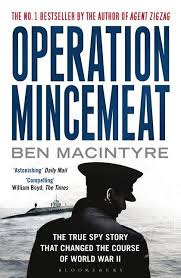
“Colonel Vivian had convinced himself that Ivor Montagu’s enthusiasm for Ping-Pong was a cover for something more sinister.” (Ben Macintyre, Operation Mincemeat: How a Dead Man and a Bizarre Plan Fooled the Nazis and Assured an Allied Victory)

mincemeatSince that rambling holiday to Nepal, I have picked up Ben Macintyre’s Operation Mincemeat at Murray’s Irish Pub in Dongcheng. Since then Double Cross, Agent Zig-Zag and just this week Rogue Heroes: The History of the SAS, Britain’s Secret Special Forces Unit That Sabotaged the Nazis and Changed the Nature of War have followed. For Your Eyes Only: Ian Fleming and James Bond, was a book I read in 2008 and didn’t enjoy quite as much as his other well-researched and fine-tuned storytelling. Facts and simple description, even criticism and questioning of reported myths bore at you like an angry wolf. They are real page turners, not bogged down by over-complicated technical terminology and wordings unnecessary. The Times columinist cuts a good read up and builds a remarkably fascinating picture of moments in history. I guess with an extra day of freedom each year, he has extra time to write. His birthday being on Christmas Day. Some other writers lose their focus and clutter text or fill pages for fun. Every page of Macintyre’s work is blessed by an assiduous and attentive hand. His mind has carved questions in reported stories and embellishments that others may have accepted. When it comes to knowns, he wants the reader not just to read, but use the full force of their frontal lobes.  Next up, I will re-read Alice’s Adventures in Wonderland by Lewis Carroll. To pick that particulatr gem up will be like revisiting an old friend. Another good friend could even be Jonathan Swift’s Gulliver’s Travels. Not a single movie version has touched on the depth of that epic adventure!

再见/ Zài jiàn / Bài bài / Ta’ra / Goodbye

Definitely Maybe Almighty

你好/ Ní hǎo / Nín hǎo / Hello / How do,

Chinese New Year had reached Manchester and the great city delivered a colourful display of culture. It has done so for many a year and shall forever more do so. This year a giant dragon filled St Ann’s Square and activities spread over the city. The Almighty Sometimes provided an afternoon’s entertainment. The Royal Exchange Theatre have always been a bold and open-minded kind of theatre. They are open to all and test waters that others wouldn’t even think about it.


The Almighty Sometimes, as penned by Kendall Feaver, had been converted from though to words to a stageplay excellently. Katy Rudd, as director, and her team dropped a monster of a show into the arms of the watching. Tackling both language and the use of medication to chemically castrate those who battle their imaginations and thoughts, this production had sharp-edged teeth. Norah Lopez Holden is a beautiful actress, and her character Anna has a mind more wide and dreamy than most. The actress sucks you into her head and the character is someone you attach to, instantly. A Mancunian spin and by local actress Julie Hesmondhalgh (who you soon forget as playing Hayley from Coronation Street) and Mike Noble’s nasal tones as Oliver support a cast with actress Sharon Duncan-Brewster portraying Vivienne – the child psychiatrist.

Lucy Carter’s lighting, the simple set design by Rosanna Vise and striking sounds by Giles Thomas enhance Vicki Manderson’s movement directions. The dialogue, much as the original script, is gripping. It plucks strings on the heart if the banjo and jabs away drumbeats using smashing drumstick movements. Every ounce of sweat was bled dry from the cloth of the ensemble and towards the interval I felt tears run. They ran again, at least twice. The labelled main character Anna draws you in and tortures you in a way as bipolar as beauty and the beast could only be. It hurts. It makes you love. It kicks out. It embraces you. Such torture and cuh pleasure. I f**king hate this show. I love it equally. Ever imagined being someone desperate for independence? And I mean painfully desperate. The spot by wit’s end identified as critical and inconsolable. That bursting recklessly easger point of extreme anxiety? Anna will take you there. Not only that but the complexities of mother, friends and lovers – even the so-called experts of mental health will all be sliced apart and left to questions. There is a spectrum that is so diverse – so broad – it will leave you without words, and just raw emotions. It will not leave you cold. Julie Hesmondhalgh has leapt from Accrington to the electronic screens, but on stage she is hypnotizingly charismatic and soon has you forgetting the New Order t-shirt. Her young daughter on stage, Norah Lopez Holden, is eloquent, powerful and engaging. She radiates passion in every line and action. Her Hispanic looks, with a Mancunian twang fade away as each line jabs out like a boxer’s right hook. She is exactly the reason I never attempted drama at secondary school, because I could never do what she does. Living overseas, in a reasonably western-free area, means I may not see another theatre production, of that calibre, in a while but I am more than inspired to hunt them down on that showing. Thank you for such a distressing yet astonishing experience. It was part-ballet, part walking on broken glass. It was close to home. Very.


The train from Manchester Airport to Barrow-on-Furness was cancelled. Instead it would head off from Manchester Piccadilly. This being an annoyance, an alternative route with delays was found, via Carlisle, instead of via Barrow-on-Furness. After a long while of scenery out of the window, the fourth train of the day rolled into Parton, a village north of Whitehaven. Here I’d catch up with Dan, Vanessa, Alex and Damian.

Catching up Dan, Vanessa, Damian and Alex proved to be a great experience. Between walking the four-year old twins to school, talking, playing and polishing off some rum, exploration of the local area was also called for. The Lake District Coast Aquarium in Maryport offers crazy golf, engaging talks, a variety of British marine tanks, a working conservation lobster hatchery and staff that know their marine biology. The layout is good for a few hours sandwiched around a walk alongside the historic Marport marina, harbour and promenade. This was certainly a place for families to visit! The centre has a café and there are numerous pub grub options in a short walking distance. A walk around Ennerdale Water, far off from Bassenthwaite Lake (the only actual lake in the Lake District) and wanderings around Whitehaven town centre also allowed for relaxation – although climbing mountains in high heels isn’t normally fun.


Abbot’s Hall Hotel is a Christian Guild property. The décor is dated yet classic and relaxing. The furniture and fittings follow a similar mould. The grounds are pleasant and it hosts a wonderful indoor heated pool. The café and restaurant are ample with nearby restaurants in Grange-over-Sands. Kents Bank train station is outside the gate, less than two minutes stride away. Beyond the treelines and up a windy road Kents Tower can be reached, offering wonderful views of Morecambe Bay and the Lake District’s southern mountain range. One night here was not enough. However, it proved a pleasant contrast from a trip to London the next day.


That London was the next stop on the tour of England. A quicker than expected passage across the famous London Underground gave an arrival at Broughton. Crossing just three streets and walking a few hundred yards allowed for safe arrival at Zoly Apartment (23 Tabard Street), as found on Booking.com. London awaited. The simple apartment needed an electronic code for the front door and a different one for the room. The facilities were modern and included an electronic tablet notepad filled with lots of useful bits and bobs. A kitchen and a good bathroom made for probably my favourite place that I have stayed in London, ever, apart from Paul Thomas’ place after an ill-fated journey from Norwich to Manchester, via That London.

Dinner at Nando’s on the banks of the River Thames, gave wonderful archway views from Southwark looking northwards. Underneath Blackfriars Road bridge, tucking into spicy chicken wings, wedges and a host of sides made for a comforting dinner, two nights out of three spent in That London. The Clink Street location is close to the historic Golden Hinde, London Dungeons and many other attractions. The location really is something.

Royal Observatory Greenwich followed by dinner at Nando’s and a speedy passage to Piccadilly Circus to enjoy The Comedy About A Bank Robbery. Firstly, the Criterion Theatre is a gem, sank beneath the streets of the City of Westminster. On entering from Piccadilly Circus, you grab your tickets at a quaint ticket booth before tip-toeing downstairs beyond the top tiers of the theatre seating, and then into the lower circle. Beneath are the stalls and the stage. The horseshoe-shaped theatre seats a little shy of 500 spectators. It opened in March 1874 as a concert hall and soon was converted to a theatre. Long gone are the dangerous gaslights and in their place is a modern interior with occasional hints at the venue’s first usages. Names of composers line the walls on the staircasing. Henry J. Byron, W.S. Gilbert, and other such playwrights who commanded the use of an initial letter have perfomed at this charming venue. In World War II, it was even a BBC safe and recording studio! Secondly, the production of The Comedy About A Bank Robbery is an absolute delight. Packed full of wit, charm, comedy – and a rich dialogue with fine vocals and production of the highest calibre. The Mischief Theatre have won awards – and toured the world for good reason. They are.

The final day or so in Manchester involved shopping, a birthday lunch for Dad and packing a stupendous amount of luggage (mostly gifts).


WRITE HERE, WRITE NOW.

More than 250,000 blogged words later… [208 Wix Posts + 77 WordPress posts = 285 posts]


再见/ Zài jiàn / Bài bài / Ta’ra / Goodbye


Under the fragrant bait you will find a hooked fish. Gǔlái fāng ěr xià, shéi néng bù tūn gōu?

W.M.D. problems

你好/ Ní hǎo / Nín hǎo / Hello / How do,

Oh. My. God. I write it this way, to exaggerate a point and a half. There is a huge problem in the world and we need to address it now. Get it out in the open. No more hiding in the shadows. The time is now. Right here, right now. No more. We can’t go on this way. Renunciation, disavowal, denial and abjuration may well all be good enough for President Trump but not for me. No, no, no. And not for us. Not for the greater good. There is a menace to society and it threatens our ways of life. So. Let us talk. Now. About, well, I best add a disclaimer because I know some of my readers have complained about my graphic levels of details. DON’T READ ON if you are eaily disturbed. Back the flip up, whilst we shatter the realms of acceptance for good. Your world will change after this. Are you ready? I don’t believe you are. Nobody is. Nobody ever has been. I imagine this matter inspired Depeche Mode’s Where’s the Revolution? Religions have fell for less. Question everything. Okay, let’s stop beating around the bush. Like Catholicism, it is time to discuss rubber… erasers, to be precise.


Nobody can deny the Hollocaust. It was a monstrosity of modern times. The horror cannot be joked about. So many people lost their lives. Anne Frank was one such example, aged, just 15. 15 years on this Earth is too little time. Thankfully her words were never erased for all to learn about. Her life lives on in the form of an educational legacy. Thankfully she never took an eraser to her writing and we are left with a glimpse into dark times and a beautiful young mind. Other key moments in humanity faced threats. The Mona Lisa has been x-rayed, studied to death, infra-red inspected and UV examined. Beneath the serene lips of La Gioconda is a previous work, evidence of Leonardo di ser Piero da Vinci’s inability to control himself with an eraser. Martin Luther King Jr may not have had a dream had he whipped out an ice cream-shaped eraser from the nearest Toys ‘r’ Us branch. Sir Winston Churchill loved writing. His scribbles, books and doodles were everywhere from his bunker and he led Britain against invasion and eradication before pushing on to defeat an enemy of freedom. As partitioning a figure as he may be, Churchill’s writing evaded the eraser and is mostly a fascinating look into an often complex and contadictive mind.

In class 1F there isn’t a more dangerous thing than the eraser. It is to my class as the nuclear warhead is to North Korea, Japan and America. This material and its rubbery consistency represent almost every argument and disagreement within the four walls of the classroom.

In bygone days, wax, bread crusts, sandstone, pumice and other coarse-pieces would wipe away mistakes from parchment to ancient almost-Powerpoint-like wall displays in cave dwellings. By 1770 and Mathematical Instrument-Maker Mr Nairne’s invention of the rubber, more people, with better education, meant more mistakes. The rubber had arrived. But it would take 69 years of perishable rubber problems before Charles Goodyear would fix it with curing, in vulcanisation. Not long after pencils had them attachecd to the end. The weapon was unleashed.

Some of these vinyl plastics, synthetic and soy-based gum devices come in a variety of shapes, sizes and colours. They started out erasing pencil-based mistakes before eradicating the odd inky blotch. Now these act as devices of conflict. Electric erasers, like an electric toothbrush, bringing to minds, a torture device more at home in a James Bond movie. In class 1F, these tools are used for gouging out eyeballs and enforcing turf boundaries. Until the batteries run out.

Erasers, whether missing, being projectile-launched from rulers, eaten, or lost are a huge problem to global security. I vote that all free nations launch their airborne outfits and bomb the shit out of those who hold erasers. Don’t take any chances.

#NUKEeraserESTABLISHMENTSnow


再见/ Zài jiàn / Bài bài / Ta’ra / Goodbye