Farewell friend.

I want to thank you.

Thank you for opening my eyes.

Opening my eyes to a new lens.

A new lens capturing moments of time.

Moments of time caressing tender memories.

Caressing tender memories that led to this day.

Led to this day when we said farewell.

Said farewell to you and thank you.

Thank you for being here.

Rest peacefully. Good night and God bless. 🕊 🐝

To P. or not to P.

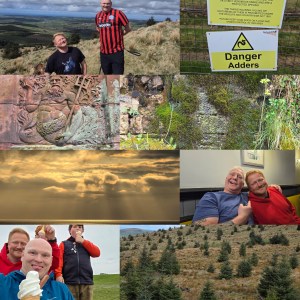
You are the first person I’ve seen love my Mam. Before you, I didn’t witness it, from outside the family. Without that security for my Mam, I wouldn’t have upped and travelled or lived overseas.

During Gran’s last days, you stood firmly by Mam’s side and took care of me and the siblings. Where others would have walked away, you remained. And since then, hurdle after hurdle, you’ve stood by our tribe. That doesn’t mean you have no faults, and you know that legendary grumpiness is acceptable, even if you’ve had to tolerate me trying to get you to see and hear the music that I choose to share.

You’ve left a great impression on me. I didn’t need a father figure or a step dad. I found you to be the positivity and heart for my Mam. You’ve taken Mam overseas to countless theatre shows, pottered with pottery, tinkered with theatre, and travelled around this green isle. Fond memories stretched from caravan holidays in Anglesey to York for Yorkshire puddings stuffed with everything under the sun. You’ve opened doors to strange worlds of ice music, penguins, and crappy musical adaptations of miracles on New York streets. I wouldn’t change the world for these experiences. And, you’ve encouraged my growth for passion in hiking and wandering. Even if my body is catching up with me!

I told you and truly mean it, I want you in our family and my family. Time won’t allow much more togetherness, but have bo regrets. It is what it is. Like you said, we can’t grab false hopes and expect miracles. We can make it known about peace and love and letting your life stay with those you’ll leave. I wish I’d called by and kicked you out of a slumber, but I can’t change the last few hectic weeks. It wouldn’t have made today any less unpleasant. I just hope we can talk over these coming days.

And yes, these last few weeks have been agonising, and communication has broken down, but that doesn’t excuse being there for one another. Mam is there for you, stronger than ever before, and I’m around for natters and hopes and dreams. Nobody wants to say goodbye. It isn’t goodbye. Not yet. Only when you’re ready. I don’t want you to suffer. Nor do I want you to worry about Mam. Your sister is always welcome. We’ll all be stronger together because you need to be celebrated and championed. I hope tonight that you find calmness and a good sleep before we all visit again. There’s still time for talking.

What is strength? Is it the power not to lash out when anger fills your veins?

Is strength an illusion? A label to wrap up fear?

Is strength useful? Or a blind to allow all else to carry on?

For what good is strength when hope feels distant? Is it an alarm to carry on the conversation?

Peace and love. 🐝 🕊

This is not an obituary! This is a letter from the heart. Thank you for being present in our lives.

Self-discovery lens.

We each have bad habits, and it isn’t my place to judge.

I ain’t ever smoked a cigarette, although I’ve breathed in far too many.

My not trying drugs is an issue I won’t ever budge.

Sometimes, my focus loses its antennae.

I am not an alcoholic although I do enjoy an odd drink.

I wouldn’t say I look to fight, even if I feel ready for a hit.

I like to avoid conflict, passing on kicking up a stink.

I can not tell a good joke or come across as full of wit.

I try to give more than I take. Whatever it may cost.

I prize friendship over profits.

I treasure memories but worry about opportunities lost.

I get frustrated at times. Throwing all kinds of fits.

“I’m not a racist but…” No. Not all all. I hate racism.

I’d like to protest but found my hands tied up.

I question capitalist ways, leaning my ears to socialism.

A bully bullies because they’re bullied and hold no club.

I am, however, a disappointment.

I am a disappointment.

I am.

Drawers.

At the bottom of the unit lies a spring-loaded drawer with all my deepest and darkest utterings and thoughts.

Above that, another drawer, less-sealed, more-opened to tuck away memories warm and cold.

On top of the metaphorically wooden system, a drawer for the here and now. It has future dreams, brewing, and stewing.

One drawer shut tightly contains a world of marvellous thoughts.

Above it is an open shelf of optimism. A sliding glass door keeps in contained. Often, it is open just a tiny sliver.

Sometimes, just sometimes, I can keep everything, but what I need closed.

Mostly, however, my drawers are left open with socks and underpants spilling all over the floor.

If I were Napoleon, I’d shut the drawers and nod off.

I’m not Napoleon.

Quintessentially Doves

Doves’ artistry is on display amongst the two tracks Renegade and Cold Dreaming. Until the romance of a Valentine’s Day album release, it appears just two doses of the Constellations For The Lonely are all that will be available. Each piece reminds us that whilst a road may seem bleak and unwelcoming, there is still beauty to be found in struggle and feelings.

The brooding intensity of Renegade’s conclusion pipes emotion. Jimi Goodwin’s distinctive tones overlay a bold and rhythmic track. It was used at a recent snooker competition, and on listening, it could be a tune heard at the Etihad Stadium or equally a doctor’s surgery. The driving energy of Renegade is rebellious, with the track title itself emotive to its Medieval Latin routes. As you’re drawn into the track, expect a touch of hypnotic intensity to circulate around you.

This gritty atmospheric anthem steadies introspective lyrics on a relentless sonic wave of self-determining propulsion. There’s the defiance of abandoning old ways in favour of urgency. Sharp percussion. Ethereal guitar work. This is a sound that is quintessentially Doves. A turbulence of inner conflict offers a chance to break free from self-imposed restraints or that of societal and fanbase expectations. Through warming lyrics, there is an echo of disconnection and yearned clarification. Trapped by doubts. Restlessness. Haven’t we all been there?

“Far from the hopes and dreams of crashing out too low” – RenegadeDoves

Cold Dreaming seems to tackle the quieter struggles. It strikes at detachment and longing for emotional connection. There’s a cinematic airy melody, expert drum work, and finiteness to the track. This deeply immersive track screams ambience, shimmering textures and draws on lush electronic-influences. There’s Northern Soul galore and a feeling of floating up and out into an otherworldly place. The soulful haunting tune could befit bands such as Mansun or numerous Northern English outfits.

At points, the tracks from Doves’ sixth studio album offer melancholic stillness, a space in the shadows of overthinking, and possible forgiveness from emotional numbness. There is a huge nod to Black Rivers, the project of Andy Williams and his brother Jez. Their post-Doves, pre-Doves band belongs as part of Doves. Much like the recovering and loved Jimi Goodwin remains present, even in the exile of recovery.

“Give me the strength I need to forgive” – Cold DreamingDoves

Doves have an uncanny track record of knitting and waving emotional landscapes in their sounds. Themes of solitude, inner struggle, and self-reflection are relevant in everyday life. The contrast of shades that we encounter in human experience is high volume. Here lies two tracks. Each allows solace and understanding to visit the listener, offering a place to navigate our own mental journeys. Do we truly know where all fights lead? We are surely vulnerable to not knowing. Is this struggle a sign of the growth of Doves? Or us? These tracks have felt like mirrors of late. Life is challenging, and like life, each track conveys emotional ambiguity. Bittersweet sense: should it dissolve in my grasp or be released as is the mature of fleeting time?

Words.

Letters jumbled together to make some sort of sense.

Until they don’t.

Some make you sit up straight, late at night, tense.

Go away, they won’t.

Some are favourites, warm and welcome.

Others are demanding.

A smattering of words you’ll see seldom.

Many are descriptive waterfalls of meaning.

They drop delightfully.

A few unlock secrets and ideas gleaming.

They drop frightfully.

Sentences and words arranged not from simplicity.

There to baffle you.

Newspapers spew words of publicity.

“Words can’t hurt you.”

The toxicity of a word’s elasticity.

Yes, they FUCKING can!

Ferociously delivered weapons of choice.

Venomous sounds.

All the way at you as one voice.

Good old words.

id est quod id est

The platinum Latin phrase of last week has to be, id est quod id est. Translation: it is what it is.

After an icy walk with the dogs, returning back for an episode of Brassic, and feet up, I noticed something missing. The black and white purr-box that has been cowering from the cold indoors almost every day, like a barometer, had not bugged me for a fuss. Between Panda GunDOGan, my Dad’s kangeroo-bollock-yapping-dog Blue and Sky the cat, my arms often get enough stroking exercises on a sofa.

Then I heard it. The faintest of faint meowing. I went upstairs, following the sound, zooming in on behind my bedroom door. For the first time, Sky had been locked in my room, signifying she’d snuck in after my shower. Unnoticed, sly Sky had spent several hours there. She wanted out. I opened the door. The door refused.

The door, flimsy at best, held firm. Its paneled front buckled slightly. The toughness of the bottom of the door scraping on carpet made me shudder. Sky had ripped the carpet up. And the underlay. And for good measure, the tacking that holds the carpet down. And the waterproof membrane off the back of the carpet. The door shifted a few centimetres. It was going nowhere fast.

Sky, sensing my frustration, upped her meowing game. Ear-piercing desperation, likely detectable on Mars as a signal of pleas for help. Then, the kind of constant whining only an upset can can muster. I computed my options. I had to push the door hard and fast past the fold. I’d damage the carpet, which I assumed was already a state.

I shoved, and Sky shot out a gap wide enough for a cat, yet too narrow for my 40-inch waistline and barrelled-chest. The door declined to open further. In a heat of rage, I shoved it, full shoulder. Newton’s second law. All 120kg of mass multiplied by acceleration. Full force.

The door shifted. I squeezed through a newer wider gap. The door’s hinges ached and screeched. I kicked the door shut and looked down at the damaged carpet and underlay. Fixable. Just. I tucked it in and noted it was not holding any longer. A repair for the future.

I went to open the door. The door held. It was jammed again. I was inside and wanted to be outside. My phone was ringing downstairs. A birthday video call for someone special. I tugged harder. Nothing. I applied more force. Off popped the door handle. An inconvenience. I yanked at the coat holders mounted on the door. They tore away. More than an inconvenience.

Panicking, I gripped the thin panel on the back of the door. It shifted slowly. Steadily, I exited the door. Later on, I tapped the carpet into a safer place. 

On reflection, id est quod id est, is a phrase that clearly signifies nothing can be done about a previous situation. It is what it is. How about the future? Unwritten? Let’s see.

Northern Rail

Points failure. Delayed.

Late from the depot. Cancelled.

Staff member unavailable. Denied.

Leaves on the line. Complained.

Due to a landslide. Declined.

Snow, ice, fog, and high winds. Failed.

Extreme heat and railway line buckling. Inconvenienced.

Overhead line equipment failure. Uncovered.

Signal failure. Terminated.

Poor Victorian planning ahead for population expansions. Unconvinced.

Heavy volumes of rail traffic.Backlogged.

Overrunning engineering works. Poorly planned.

Speed restrictions in place. Underdeveloped.

Trespassers on the line. Stupid.

Telecoms failure. Apologised.

Animals on the line. Departed.

Lineside fires. Transpired.

Death on the line. Expired.

Another tannoy apology by a robot. Delay repayed.

The good old commute.

Immigration.

Wouldn’t mind more migration and less borders.

Wouldn’t mind a little less bombing interventions overseas.

Wouldn’t mind peaceful values and ideals before responses get dished out.

Wouldn’t mind capitalism paying more taxes and seeking less havens.

Wouldn’t mind a shoulder to cry on.

Wouldn’t mind a living wage and more opportunities.

Wouldn’t mind fewer inequalities and a smidgen of hope.

Wouldn’t mind a hand of help reaching out to those who need it.

Wouldn’t mind thoughts before actions.

Wouldn’t mind understanding before judgement.

Wouldn’t mind smiles over frowns.

Wouldn’t mind less wealthy controlling corporations.

Wouldn’t mind a boom in small traders.

Wouldn’t mind dreams and dreamers discussing ideals and progress.

Wouldn’t mind more and more and more and more trees.

Wouldn’t mind water so clean you can paddle and drink in the freshness.

Wouldn’t mind the words and wisdom of the deceased generation that loved us all.

Wouldn’t mind no babies in hospitals, displaced by bombs, disease, and warmongering criminality.

Wouldn’t mind translators and cultural exchange bringing people closer.

Wouldn’t mind change.

How about you?

Christmas Eve

They’re sharing family Christmas photos;

Wishing you all well and greetings for the seasons.

Yet, here, without you, I’m incomplete.

My family’s come is shattered beyond reasons.

The glimmer of hope like the slim chance of snow on a warm winter’s evening;

The last bus approaches on a pathway surrounded by emptiness.

A lone blackbird sings beneath a damp lamppost;

Touched in the heart, I am not in all fairness.

I envy and feel bitter to those who have it all;

I feel happy for each and everyone enveloped in family.

Yet, here, without you, I’m still incomplete.

For too long now, I suffocate in calamity.

Wreaths hug doors and trees sparkle in light;

Hearing carols on the street, my stomach flutters.

Yet, there and here, I cannot find a way out;

I feel bleakness, struggling to rise from the gutters.

To be found.

I used to smile.

Instead, my face creases like contours from a map.


I used to laugh.

Now jokes pass over me like Arctic winds on the tundra.


I used to chuckle and gleam.

It’s all replaced by a seemingly eternal cold emptiness.


I used to preach hope.

But for all its worth, I let go of that dream.


Before today, I was strong.

I slink down beneath a door frame, unable to open the handle, and let myself in.


Before today, I sought new songs.

Yet now most seem overplayed and all the same: repeat after repeat after repeat.


Before today, I had ambitions.

They slipped away, leaving an endless string of survival day by day.


Before today, I loved the rain.

Now, I greet umbrellas and raincoats and wellies as sanctuary.


Where is the old me?

Lost, maybe.


To be found.

The Next Broadcast

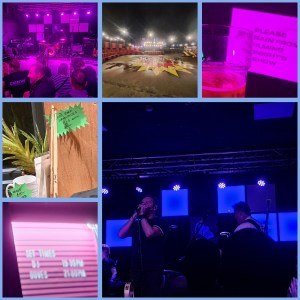
Doves have accompanied me for years. The band was mostly made up of Jimi Goodwin on guitar and often lead vocals, with drummer Andy Williams and his twin Jez on guitars. Martin Rebelski has for a long while provided keyboards and other bits and bobs. Yet, here we are, in 2024, with a new look lineup. How would they sound in Birkenhead’s Future Yards?

“Sure enough if you feel nothing
You’re better off this way
Gets to the point where you can’t breathe” – The Last Broadcast, Doves

Jimi is taking an extended hiatus as he “needs more time to recover.” Naturally, fans of Doves are there for Jimi and will be ready and waiting when Goodwin is ready. In light of this, the twin duo Williams’ brothers take central stage. Alongside Nathan Sudders on bass (who I’d seen in Nadine Shah’s band) and Jake Evans (Bad Lieutenant), the line-up started a pre-tour on Wednesday, November 27th in Stoke. The Friday would see Hebden Bridge, but the only ticket I managed was Birkenhead, sandwiched between those dates. No complaints at all!

“And as you make for the door this time you’re walking out
…out forever” – Renegade, Doves

Swept up by Lost Souls in 2000, the dreamy soundtrack to college studies were plaued between CDs like Badly Drawn Boy’s The Hour of Bewilderbeast and all other available audio distractions. The wholesomeness of sounds that stood out and warmed my studies helped me reach university and apply to work for Greater Manchester Fire and Rescue Services. Listening to Doves helped my mind decode that university was the intended choice.

“In satellite towns
There’s no color and no sound
I’ll be ten feet underground
Gotta get out of this satellite town” – Black & White Town, Doves

During my university years, The Last Broadcast helped me process my Grandad’s death. And then the death of my Gran’s partner Ernie, who I regard as my grandfather. Every hard moment had a song and some tracks were visited more than others. Words for comfort. Melodies for medicine. Even heading to see Manchester City would swiftly be showered by the foot-stamping Pounding. All the combined track energy and near-psychedelia sounds would transport you from a lonely student room in Aberystwyth to soundscapes far beyond the hills. Feeling like an imposter at university, lost in not belonging, the words hugged me and kept me grounded.

“Follow
Your own path from here
So don’t listen
To what they say” – Words, Doves

Hearing Here It Comes, I’m spellbound by the genre-crossing ambience and the simplicity of the backing sounds. The lyrics are magical. It’s reminiscent and inspiring in equal measure. Just like the rays of hope from the latest album track release, Renegade. There’s an unmistakable warmth and tone, despite the Piccadilly garden rains. By the time I’d graduated at university, Some Cities had fired volcanic-proportions of indie rock at the world. The track Snowden, complete with rhythm and magic, alongside the drive of Black And White Town, amongst others, propel your ears. The lyrics range from frustration to joy to wonder. I’m sure other bits are covered in equal measures.

Playlist for the night:

Firesuite, Carousels, Words, Cold Dreaming, Black and White Towns, Snowden, Renegade, Rise, Circle of Hurt, Sea Song, Mother Silverlake, 10:03, Pounding, Caught by the River, The Cedar Room, Here It Comes, Kingdom of Rust, There Goes The Fear.

Future Yards is a class venue, with friendly staff, a great sound system, ample ales and beers, decent food, and warmth. Seeing Doves perform there, after many years of radio silence, was an absolute privilege. So, where’s the next Doves experience? Manchester Aviva. Can’t wait. The superb Doves Music blog website is firmly back on my homepage. The Doves family are back. This next broadcast is more than wanted.

“There goes the fear again, let it go
There goes the fear, let it go” – There Goes The Fear, Doves

Thank you Doves, thank you so much, thank you for coming back. I truly feel energised after a tough few months and feel you’re with me, blessing my ears and touching my soul as the future unfolds. Thank you to Jez, Andy, Jimi, Martin, and the new beginnings.

Kristen Perrin’s How to Solve Your Own Murder: Review + Light Up Lancaster

How to Solve Your Own Murder by Kristen Perrin is a page-turner with a unique premise that sets it apart from other mystery novels. At first, the genre and title didn’t attract me. Once I’d opened the cover, the protagonist’s posthumous investigation is intriguing, and Perrin’s plot is full of clever twists and turns. The novel’s fast-paced and suspenseful narrative keeps readers engaged from start to finish. Perrin’s innovative approach to the mystery genre makes this book a highly enjoyable and memorable read. 

At times, I thought the book to be both gripping and inventive take on the classic murder mystery. However, I felt torn between changing a chosen book to read. At first, the story centres around the protagonist who, after her own untimely death, must piece together the clues to uncover her killer. It sounds cheesy and forced. Perrin’s writing is key to why I continued. The delivery is sharp and witty, with a plot that keeps readers guessing until the very end. That being said, it doesn’t leave too many imagined options.

The novel’s unique premise and well-developed characters make it a standout in the genre. Fans of mysteries and thrillers will appreciate the clever twists and the protagonist’s relentless pursuit of the truth. as it offers a fresh and intriguing spin on the traditional mystery narrative, Kristen Perrin‘s well crafted work stands out as a must-read for mystery enthusiasts looking for something different. A thought-provoking and compelling mystery told through the themes of identity, justice, and the afterlife. May contain deeper philosophical undertones.

If a soundtrack is needed for any future televised or silver screen production, then look no further than Rebekah Okpoti‘s haunting score for the Light Up Lancaster event installation in Lancaster Priory. Amongst the visuals by artists Jonathan Hogg and Nick Rawcliffe, a tone of menacing organ music filled the vast Lancaster Priory. The acoustics seemingly fit multiple genres of entertainment, and I reckon Kristen Perrin’s work deserves a soundtrack.

The Lancaster Priory’s Director of Music, Rebekah Okpoti, took inspiration from William Herschel, playing a tune overlaying an almost eye-lije triangle screen sinisterly reflecting kaleidoscopic journeys. The other town light installations varied in shape, sizes, and subtletkaleidoscopicy, much like the words of Kristin Perrin.

Amy Helen Bell’s Under Cover of Darkness: Review

The cover stood out. It had to read. I could not resist dipping beneath the cover of Under Cover of Darkness.

Amy Helen Bell’s Under Cover of Darkness slings the reader deep into wartime Britain. Loaded with intimate and authentic historical detail, the author’s power of research ploughs meticulously through an era of conflict plagued by rationing and air raids. Central to the storyline are compellingly genuine characters beating with a heartbeat of transformation, through loss and adaptability.

Inner conflicts hug danger like a hand grasping the wrong end of a knife-blade knowing that to let go would be disastrous. Turning over pages, a narrative of sacrifice, duty, and moral dilemmas emerge to test even the most devout in their resistance of desire and maintenance of responsibility. Are choices always clear?

Through a fusion of pacing, timing, and psychological tension, Amy Helen Bell’s world builds an edgy psychological tension. During our privileged era, the shifting roles of women during World War II created new opportunities for women. Bell capture’s a spirit and revolution in her story, exposing the complexity of newness and challenges faced by women, at that seismic time. For feminists and history buffs alike, this novel delves into the mean streets of London during a backdrop of fear and uncertainty.

This deeply human story sensitively connects the fragility of romance during conflict and the jeopardy of life’s end point seeming ever nearer. Nods to the psychological toll with trauma, resilience, and grief evident throughout the chapters. Ethical dilemmas integrate the human capacity for good and evil, without sounding preachy. That sense of resilience underlines community and togetherness offering hope amongst the doom and gloom.

Through skill and crafting, Bell’s writing style elevates the story beyond just another war story and showcases depth and range of storytelling through suspenseful character-driven narratives.

Hannah Pick-Goslar’s My Friend Anne Frank: Review

“Of the 120,000 Jews who lived in the Netherlands before the war, only 5,000 of us returned from either the camps or hiding.” – Hannah Pick-Goslar

Through reading My Friend Anne Frank, by Anne Frank’s reallife friend, Hannah Pick-Goslar, the text offered a unique perspective on Anne Frank’s legacy through the lens of their friendship. A slickly rich delivery in the form of memoir, loaded with heartfelt reflections that compliment Anne’s diary.

“I often feel Anne’s presence with me because I go around speaking about her very often.” – Hannah Pick-Goslar

Pick-Goslar uses her narrative as inspiration, layered in poignant heartbreak. The power of memory certainly ensures and in a world saturated by antisemitism and division, a fuller understanding of lost lives like Anne Frank, and the impact of absence wouldn’t go amiss. Touching anecdotes impart a close bond, evocative of a time of innocence swept up by severe tragedy. The deeper understanding of humanity lost in historical events crawls from the pages.

“I try to be compassionate, but I’m not sure it’s the result of war.” – Hannah Pick-Goslar

Several of my reading peers experienced the tales carried through Hannah Pick-Goslar’s My Friend Anne Frank. Upon feeding back to our book group, tears formed, and voices trembled. A more engaging and enlightened view of Anne Frank‘s legacy beyond her diary surely could not be found. Resilience and impact through shared memories that offer expansion to Anne Frank’s Het Achterhuis (republished later as The Diary of Anne Frank).

The author, Hannah Pick-Goslar, was one of several Verlorener Zug (“lost train”) passengers liberated by the Red Army. A broken railway bridge impeded the progress of the train to Theresienstadt ghetto for extermination. The luck led to survival. That survival allowed a story to live on.

“I approached the fence, but I could see through new gaps in the straw that the tents on the other side had been cleared out. Anne, Margot, Mrs van Pels, everyone was gone. Vanished. It was if they were never there.” – Hannah Pick-Goslar 12/11/1928 – 28/10/2022

An end.

Stones roll inwards;

                Passing fiercely;

                                Slamming down violently;

Smashing all in its pathway;

                Tossing and turning;

                                Without discrimination;

                                                Rupturing creation.

Turning solid shapes to shards;

                Presenting passage;

                                From life to the beyond;

Savage and cleansing constructs.

                                An end.

This land: home.

Vikings raided, settled, and persuaded;

Flags waved, distances faded.

Outliers passed over seas – islanders no more;

Old words and legends floated on seas of time.

Joy and separation folded together;

Historic sights of sites recalled;

Steps go up, and up, and up;

These dots of green on rock feed our souls.


                                This land: home.

Streets Apart I

Soap Street needs a wash.

High Street is looking low.

Bank Street took my dosh.

Fast Lane is moving slow.

Maine Road has closed down.

Swan Street is full of geese.

Paradise Close makes me frown.

Winter Hill, I wore no fleece.

The Road With No Name has a sign.

Sandylands is grassy still.

Bendy Lane runs in a line.

Calm House, what a thrill!

Scotland Hall Road, hall-less.

The Soapbox, stood down.

Ice Rink, only at Christmas.

Circus Walk, devoid of a clown.

Welcome to Manchester.

Now get out!

James Naughtie’s The Spy Across the Water: Review

Head of Zeus publishers release The Spy Across the Water by James Naughtie caught my eye through its cover. Between the covers unfurls an intricate web of intrigue via a fascinating yarn of espionage and loyalty. The backdrop of a familiar Cold War sees our protagonist’s pathways into a dangerous game of intelligence and counterintelligence. Trust is a rare commodity. However, through Naughtie’s evocative and gripping writing, tension rises and falls, maintaining a grip on the reader whilst bringing to life a Cold War era uncertainty.

Fans of Mitch Rapp (Vince Flynn), Jack Reacher (Lee Child), and James Bond (Ian Fleming) will find the characters make it a compelling read that will resonate with fans of spy fiction. Naughtie’s pace of plot plods along through intellectually stimulating layers of authentic tension and historical accuracy. This book, with lead Will Flemyng, is a must-read for anyone who enjoys sophisticated spy stories that challenge the mind and keep the reader engaged from start to finish. 

James Naughtie is a BBC special correspondent deeply knowledgeable in democracy and respected throughout his field, except for on X (Twitter) because nobody is respected there. Not even the dead.

Now, it’s time to find the previous books in the series… The Madness of July and Paris Spring shall follow, even though they’re prequels to the book I’ve just read.

Katie Flynn’s A Mother’s Secret: Review

Katie Flynn’s A Mother’s Secret is a heartwarming tale that delves deep into the themes of love, resilience, and family bonds. Set against the backdrop of World War II, the novel follows the life of a young mother struggling to protect her family and safeguard her secrets. Flynn’s evocative writing and well-drawn characters make for a compelling read that is both touching and inspiring. This book is a testament to the enduring strength of maternal love and the sacrifices made during challenging times. 

Interestingly, as I expected, the book’s author is a continuation of her work via her daughter. Katie Flynn’s enduring name lives through her daughter Holly. Holly rips into the work, delivering a glimpse of historical detail, life for the working classes, and the trials and triumphs of Wartime Britain. Katie Flynn, a pen-name of Norwich-born Judith Turner, passed away in 2019, after 82 years of life that threw a catalogue of books our way.

A Mother’s Secret draws tender attention to details, emotional struggles, and a secret with the odd unexpected twist. Love, loss, and redemption are portrayed in both a realistic and evocative way. Lessons about the strength required to confront and overcome past mistakes shine throughout the novel. The plot, however, lacks jeopardy in its delivery. That does no damage, as the focus of a mother’s love stands tall.

Katie Fforde’s Island In The Sun: Reviewed + Keane

Island in the Sun by Katie Fforde is a feel-good novel. I get why it’s popular. The age-old tried and tested niceties of its contents are visible from the cover to the blurb. It isn’t for me. That also applies to Keane, although this band does have some gorgeous tunes that are worthy of many playlists, including my own. If you like uplifting stories and music, pair up this novel with Keane’s Hopes and Fears.

“We’re spiraling; We’re tumbling down. We’re spiraling; Tied up to the ground.” – Keane lyrics, Spiralling

Usually, I would’t pick this kind of book up. Island in the Sun by Katie Fforde is a warm and enchanting story that transports readers to a beautiful, sun-drenched island. The book’s themes of love, self-discovery, and new beginnings are beautifully explored through the eyes of the protagonist, whose journey from uncertainty to confidence is both relatable and inspiring. The island setting serves as a perfect backdrop for the blossoming romance and the personal growth that occurs throughout the story. I also wouldn’t usually be found listening to Keane for too long.

Attending Keane’s 20th anniversary tour of their debut album, Hopes and Fears, was a pleasure. The tunes are melodic, the fans impassioned, and the band itself, divine. Tom Chapman, on lead vocals, alongside Tim Rice-Oxley and Jesse Quin, sit on the softer edge of rock, somewhere between indie and soul, and all the other gentle musical genres. Slow to mid-tempo rarely jump up beyond their distorted piano and instruments, but it works. Somewhere Only We Know is a gorgeous ballad. My sister Astrid was certainly enjoying the gig. She seemed to know every lyric instinctively. If ever Tom Chapman needs a break, Astrid is ready and waiting.

“I hold you in cupped hands; And shield you from a storm; Where only some dumb idiot; Would let you go.” – Keane, Sunshine lyrics

The Katie Fforde book is highly recommended for fans of feel-good romance novels, especially those who enjoy stories set in idyllic locations. It’s a perfect summer read for anyone looking to escape into a world of love and sunshine. I am not sure that I would pick this book up again. Much like the novel by Katie Fforde, the band Keane is sun-soaked, cheery, and filled to the brim with credible content. It is easy to imagine scenes of the book with the background music, This Is the Last Time. It doesn’t mean I won’t be revisiting the author’s or band’s works.

Katie Fforde’s Island in the Sun is a charming novel beautifully capturing both the themes of second chances and rediscovery. Richly drawn characters take a journey through a central landscape of warmth and magic. Dollops of personal growth land alongside love found at an older age. Expect whimsical blends of romance throughout vivid escapism. Much like the lyrics of Keane, satisfyingly atmospheric moments will occur. Perfect symmetry, indeed. Keane’s gig was postponed, much like the opening of Coop Live in Manchester. The wait was well worth it. An emotional Tom Chapman cut the stage-audience interactions perfectly, and on reflection, Keane delivered fantastically.

Essential viewing: The Death of Stalin

The Death of Stalin is a black comedy that perfectly encapsulates Armando Iannucci’s signature style, blending absurdity with biting political satire in a screen adaption of a graphic novel. La Mort de Staline, by writer Fabien Nury and illustrator Thierry Robin, deserves more recognition. Set in the chaotic aftermath of Joseph Stalin’s death in 1953, the film offers a darkly humorous look at the power struggles among the then Soviet leadership. Iannucci’s other notable works, such as The Thick of It and In the Loop, each  enjoy thematic similarities and differences.

In simple detail, The Death of Stalin follows the Soviet Union’s top officials as they scramble to fill the power vacuum left by Stalin’s sudden demise and death. The plot is infused with Iannucci’s sharp wit and keen eye for political absurdity, reminiscent of his previous stylish works. In The Thick of It and its film adaptation In the Loop, Iannucci dissects British and American politics with a similar ruthless humour, portraying politicians as self-serving and often inept. See also Boris Johnson et al. While Veep focuses on the American political system, it shares the same core of farcical incompetence and backstabbing, as seen in Real Life™.

Through an ensemble cast of The Death of Stalin features standout performances from Steve Buscemi as Nikita Khrushchev and Simon Russell Beale as the sinister Lavrentiy Beria. These characters are far greater morally ambiguous and menacing than the bumbling politicians of other works. While Malcolm Tucker (played by Peter Capaldi) is ruthless in his own right, his malevolence is played for comedic effect rather than genuine threat. The characters in The Death of Stalin are more multifaceted, with their comedic traits underscored by a palpable sense of danger. You wouldn’t invite any of them over for tea! Michael Palin and Paul Whitehouse blend in with a cast so strong that everyone and every moment could stand out, yet overall, the tapestry is enriched by presence in force.

Unlike the contemporary settings of Iannucci’s previous works, The Death of Stalin is rooted in a specific watershed historical period, which adds an educational layer to the satire. Iannucci balances historical accuracy with his comedic narrative, offering viewers a glimpse into a tumultuous time while maintaining his distinct style. This historical angle distinguishes the film from his other projects, providing a unique backdrop that enhances the absurdity of the characters’ actions.

The aesthetics and visual style of The Death of Stalin are more polished and cinematic compared to the handheld, almost documentary-like feel of The Thick of It. The production design authentically recreates 1950s Soviet Union, contributing to the film’s immersive quality. This attention to detail contrasts with the more contemporary and less stylized settings of Veep and The Thick of It, highlighting Iannucci’s versatility as a director.

Iannucci’s humor is dark and unflinching in The Death of Stalin, perhaps more so than in his earlier projects. The stakes are higher, with characters facing life-or-death consequences rather than just career setbacks. This adds a layer of tension absent amongst his television productions, where the political blunders are often played for laughs without such dire outcomes. The macabre humour in The Death of Stalin reflects the brutalised reality of Stalinist Russia yet still finds absurdity in the paranoia and sycophancy of its characters. As such this movie stands out.

This Armando Iannucci film grips through historical context, darker humour, and higher stakes. While it shares the sharp wit and satirical edge of his earlier works, the film delves far deeper into the sinister aspects of political power. Fans of his familiar comedic elements should also be prepared for a more intense and historically grounded experience. Iannucci successfully adapts his style to this new setting, slowly and carefully delivering a film that is harrowing and hilarious, solidifying his reputation as a master of political satire.

Review: Ancestors, Professor Alice Roberts

“And the past belongs to everyone.” – Professor Alice Roberts, Ancestors.

I must confess that this burgundy bestseller of a book sat on my shelf for far too long. Gifted by Mum and Paul, in Christmas 2022, it lay on a shelf devoted to books that I will read. Eventually.

Slowly and surely, like the remains of an ancient body arriving at the tip of an archaeological trowel, the book departed the shelf and found eyes upon it. Dusting down the top, it opened, unfurling mysteries, tales, and fables, alongside cutting edge sciences and graphic use of vocabulary.

Professor Alice Roberts first caught my attention on BBC’s Coast, and since then, a variety of television shows. I have a crush on her intellectual prowess and passion for her chosen field of expertise. I love how a bright spark seeks newness, raw knowledge, and extrapolates ideas, developing within a text or a show, or in the good Professor’s case, as a person.

Exploring neolithic, Iron Age, Bronze Ages, and a whole layer of timeliness, British history, human remains, personalities such as Pitt Rivers, and conflicting progressives explore our Before Common Era. Here, Roberts explains the dangers of assumption and the pitfalls of satisfying a narrative.

Final confession time. I spent time savouring this read over a few weeks, intertwining my reading amongst other books. Overall, essential reading is all about exploring a genre or topic of unfamiliar ideas. I am now neither expert nor amateur, but like an archaeologicalist digging ploughed Wiltshire soil, I have a sound glimpse into the past.