Holibobs 2026: CN v Fly tipping capital

“Stop, stop, talkin’ ’bout who’s to blame
When all that counts is how to change” – Born of Frustration, James.

Back in April, I started writing this: What have we become? Passing Asda in Eastlands, Manchester, I spy a band of kids picking up litter in the car park. A man uses a Go Pro to document and likely add the happening to social media. A woman in an Asda Foundation beams smiles. On walking to the far end of the car park, I discover a pile and spread of litter dumped in a disabled bay at tax-avoiding Starbucks. The rubbish could fill two bags. It is reflected in the coffee store’s whoring windows.

Nigel Farage, April 29: “This money was given to me so that I would be safe and secure for the rest of my life”.

Nigel Farage, May 14: “Frankly, it was given to me as a reward for campaigning against Brexit for 27 years.”

Where did the litter pickers at Kwik Save supermarket go? Many moons have passed since April. Resurrection of the mothballed writing begins now.

Over in Guangdong, the often nicknamed factory of the world, living conditions and the environment have drastically increased since I first stepped foot in Guangzhou in 2014. In just over a decade, the air appears fresher, even if the wrong side of 37°C. More tree-lined streets, cleaner water channels, more bins, less litter, and a plethora of electric car brands have helped. Dense populations and crowds will always place strain on facilities, as I found at the world’s worst toilet (the canteen in South China University of Agricultural 华南农业大学 AKA SCAU).

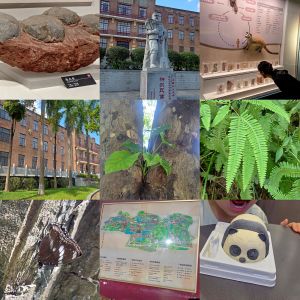
Being at SCAU to see the museum and some cows was an unexpected journey (driven by someone intent on lapping the huge campus on the lookout for invisible cows). Apparently the cows are headed around the campus in the morning and hunker down in barns during the hot day. Although autocorrect changed barns to Barnsley. Imagine the cows on Juneyao Airlines all piling on for a flight to The John Stones Barnsley International Aerodrome. That’d be some upset cattle at the in-flight meal: beef. The museum was simple enough and thr grounds green with star fruit trees and all manner of leaved species. Unlike the toilets that resembled a brown Tarantino scene.
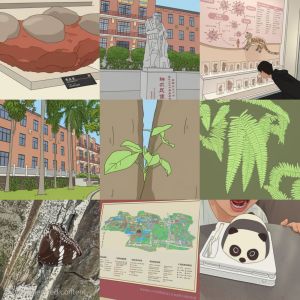
Graphic rendering of original content.

And back when I came to China, pizza, coffee and western food was rare outside of modern city centres or areas with heavy foreign populations. McDonald’s sadly was and remains everywhere. F*** you Ronald McDonald and your shit burgers. As China develops and grows at gargantuan rates, so do tastes. You can pass an Argentine restaurant in Huizhou’s suburbs or jog into a burger joint in Guangzhou, and pizza stalls aren’t too far away. Pulled along by 3 wheel, these mobile kitchens cam be found selling sushi, barbecue, teas, coffees, and oddities like tacos made of seaweed. What a wonderful world we live in! Or just eat pies.

P.S. Orange juice with Americano coffee is growing on me. Iced of course. And Manchester is the said Fly Tipping Capital. I defy anyone to say otherwise, having cycled many routes and seen many parkland areas of Manchester, we have a huge fly tipping and dumping problem.
Trees means more

I love trees, I try to share one a week. I try to connect with trees. Ever since the Sycamore Gap tree was illegally fell, people are worried that it’ll happen again. The fellers won. Those who chop down protected trees have won. The saws, chainsaws, and axes are worn by us now. That’s such a shame. Our trees need championing. They are great to hug.

Baby tree saplings seem to be in cages. Protected from vandalism and caged micro-sanctuaries. Bark, earth, and stones allow flowers and weeds to profit and flourish. The cages age and dent and twist away over time. The teenage trees burst through. There are many examples in many parks of trees escaping their youthful guards. In my local park, a Sycamore Gap has hit a staggering metre or so tall. Its small number of leaves wave in the breeze and offer a ray of delightful hope. Manchester’s parks are scattered around and it is good to see new trees. We need more.

Hugging trees is a connection that shouldn’t be laughed at. To feel the rough or smooth barks, so many different kinds, and all unique to that spot of that piece of tiny land. Some resemble each other. Many offer shelter to insects, preying spiders, lichens, mosses, and countless microscopic lives. As many juvenile humans detach from nature, trees offer coolness on hot days. That shade and cooling factor can be brought to streets and roads adding to carbon dioxide absorption. Adding much-needed oxygen production to areas that support life. Our climate is better regulated with trees at the heart.

Air pollution goes down with trees. Trees, with their roots, bond the earth and spils reducing spil erosion. They support wildlife habitats – some locally unique and others part of a wider global tapestry. That enhances biodiversity and allows support for the water cycle. The filters and layers of protection a tree offers are humongous. On top of that trees muffle sound and offer protection against noise pollution. Having a neighbour who has just chopped two trees down, I hear that difference. Tweeting birds happily perching has been replaced by a road a few hundred metres away. Whilst infrequently-heard, it is now an annoyance. Trees matter.

Alongside rivers, with or without beavers, trees add to flood risk reduction. A well-managed tree can offer property value increases. Just ensure no branches or roots opt to move in with you. And like the countryside, a tree offers landscape beauty. We often, as kids, draw a house with a chimney and a tree next door. We know the trees matter. The chimneys may disappear in time. Our mental well-being sees the benefit of trees. More trees now!

Many trees are fast-growing and can be replaced as fast as they are chopped, allowing for renewable resources if managed correctly. Trees can provide foods such as apples and pears, nuts, olives, and so on. Another layer to the environmentally sustainable lifestyle many of us crave. A park with trees offers recreation and outdoor life for our enjoyment. When did you last plant a tree?