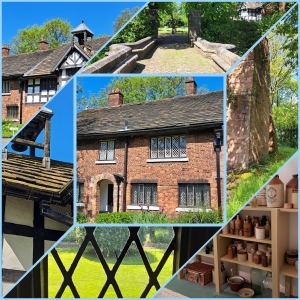
Platform 14.

Unmoving floor, a walkway without tread.

Far away and far off.  Platform 14.

Almost to the horizon, beyond a travelator.

Up stairs and along a fair way. Platform 14.

The timezones crossed often lead your way.

Rammed carriages versus spacious misplaced trains. Platform 14.

Visit the world, a gateway to Blackpool.

Delays, delays, delays… and freight passing. Platform 14.

Is the moon closer or the sun further?

Pass through the bowels of Piccadilly. Platform 14.

Exposed to the elements: a wind tunnel or a sauna.

A detached island left hanging outside. Platform 14.

“STAND BEHIND THE YELLOW LINE!”

Platform 14: visit Manchester some time.

Summer ’25: VIII – “Hello A.C., my old friend…”

Guangdong didn’t miss me. Nor I missed Guangdong. The mosquito feeding service resumed, probably, as the train doors slid open. “Attack! Attack! Attack!”

Luofushan is a big bulging expanse of subtropical mountain. Swallowed by managed parkland,  concrete and stone passages loop and weave its sides. Temples, museums, and a cable-car ropeway dot the landscape amongst entertainment options like a jungle chair ride and multiple fish food vending machines. Huizhou’s economy is further boosted by passionfruit and banana sales at the gate. Cold tofu desserts add other sweet options. Water is essential. The big expanse commands your appetite.

In regards of appetite, a giant chicken restaurant, for consumption of regular-sized roast chickens was the final stop of the day. The playground, climbing walls, balance wires, and swings afterwards tested hands and feet, and possibly full bellies too. A decent enough end to a day of bug-spotting (including bee eggs for sale – as food). The stadium-sized chicken restaurant was stupendously busy and barely a quarter of it was open. Must avoid a fully-booked attendance.

“No one can construct for you the bridge upon which precisely you must cross the stream of life, no one but you yourself alone.” – Friedrich Nietzsche, otrovert

Heated up, overly tired, and distracted, we headed up GaoBangShan again. My mood was odd, angry (and not just at City losing to Spurs), and I should not have gone out. The distant lightning storm to the west was not just a metaphor. I really was starting to feel upset that soon I’d be leaving to the U.K. My emotions and behaviour were inexcusable. Hot heads can’t cool in heat. I had to apologise for being petty and silly.

“When anger rises, think of the consequences.” – Confucius (孔子Kǒngzǐ)

Time slipped away fast and no sooner had I arrived back in Guangdong, it seemed I was on a plane heading for Manchester, via Cairo. Time really is precious.

“How did it get so late so soon? Its night before its afternoon. December is here before its June. My goodness how the time has flewn. How did it get so late so soon?” – Dr. Seuss, controversial author.

Summer ’25: 37:13 of railway travels.

There:

0838 Huiyang > Guangzhou South 1:18
1057 GZ South > Yangshuo 2:34

1321 Yangshuo > Guiyang North 3:07

1533 Guiyang East > Chengdu East 3:45

0909 Chengdu East > Guangtong 6:24
1622 Guangtong > Dali 1:08

1147 Dali > Shangri-la 4:19

22:35

And back again:

1200 Shangri-la > Dali 2:15

1413 Dali > Nanning 6:34

1128 Nanning > Guangzhou South 2:45
1430 GZ South > Huiyang 1:20

14:38

Summer ’25: VII – Dali (again) x Nanning

A cuddly panda left behind. It needed rescuing. A stop in Dali was a necessity. Between wanders to temples and another cable car ride, things were taken easy, in a way holidays should be taken. Slowly and steady.

Stomach bugs are horrid. Talking on the porcelain telephone to the Almight above between vomiting and laying liquid pooh at a dramatic rate is no fun. A day of rest and little else felt like a waste. Sometimes you have to stay still to move forwards. Such crappy days demand rest. And water. Lots and lots of water. No matter how much was drank and how much medicine, it didn’t seem to shift. Until it shifted. And then it took a day for an appetite to reappear.

Cable car ride two (Zhonghe ropeway) required dangling legs and the breeze in our hair. The climb upwards had close views of squirrels on treetops and butterflies drifting below. At the summit of the ride, midway up Cangshan’s slopes, the Zhonghe Temple spreads across, underneath a relatively level footpath stretching for miles in each direction. The Cloud Pass (or Jade Belt Road) pathway runs for 20km (12.5 miles). Crossing waterfalls, jutting views, and numerous pools of water make the walk through fresh air and greenery a pleasant one.

Yunnan is famous for its connection to Tibetan living, Buddhist beliefs, cats, and nature. The mountains, valleys, and produce of the region are all closer to nature than other Chinese provinces. Behind the commercial fronts, there is a more open conversation being had, and with that more freedoms. It is rare to see women smoking, same-sex relationships, or plentiful pet dogs and cats around China’s huge cities and metropolitan areas. In Yunnan’s Dali and Shangri-la, this is the norm. Old values and West met East refusing to let go. The attraction of Yunnan is visible and bold. Fresh air and nature invite tourism and migration. This Tibetan plateau is much more than a tourist spot. It makes you feel. Connection never switches off.

A journey to Nanning would break our return to Guangdong. A late night arrival and a late morning departure made finding a hotel close to the station essential to the plan. If you enjoy living underground like the Teenage Murant Ninja Turtles, then Geli hotel is for you. Located in the shiny expanse of the Nanning East Railway Station there is little reason to see daylight again. A choice of late nights foods, drinks, and delivery services help you to chill deeper underground.

The railway check in level is just above the lair, so be prepared for bright light when you choose to resurface. A decent room with an unusual view behind massive curtains. Expect comfortable beds and a decent rainforest effect shower. The toilet pumps are a tad loud, like the underground railway system, but sleep comes as easy as a fox in a den. With sleep in the bag our 1128 train to Guangzhou South was easy. The 17 minutes to transfer at the other end was a tad tight. All in all, we did it. We connected well. Job done.

From wanders on high to hours on trains, the pleasantries of travel made way for return.

Summer ’25: VI – Shangri-la III

The slow ride on the altitude-gaining train involved various stops. Passing loops. Halts. Two stations. Sales pitches along the railway carriage. Glorious views sandwiched by lengthy tunnels. More tunnels. A relaxed pace ride through even more tunnels. The usual high speed of China’s modern rail network suddenly felt more sedate. The 304km (189 miles) Dali to Shangri-la train ride didn’t whiz by, but the views between the tunnels were nonetheless fascinating. 4 hours and 19 minutes later, we arrived. My third time to purposefully visit Shangrila.

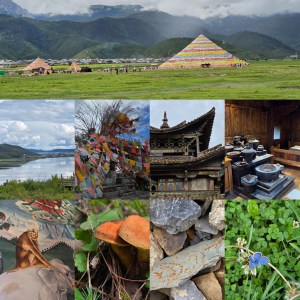
Departing straight into a local taxi (Didi滴滴) the flats of Xiānggélǐlā 香格里拉 spread out. A wide valley of farmland amongst mountains and foothills. Picturesque didn’t fit the description well enough. Cattle crossed the narrow road. Horses in lines moved with passengers on their backs. Many visitors wore Tibetan attire for photographs. Vast colourful prayer pyramids rose from the ground. Much was geared for photographers and travellers. Between the lines, the real Tibetan vibes and cultures intertwined a rapidly growing western front of China.

3km to the west of the railway station, a lodging was booked. The Lodge, Shangri-la Lao Shay Youth Hostel [香格里拉老谢车马店] is a dated yet cosy wooden lodge of three floors on the Napahai grasslands of Xiānggélǐlā at [石卡雪山纳帕海景区石卡路吉奴古村]. The sharp roof, underlay by two floors with fully-covered balconies, and timber towered over a small open courtyard. A secondary building, like a letter-L, stood to its left, housing an internal courtyard. The hotel’s names stretched across the side. A small faded sign erected at the roadside broke up a field of emptiness. In Tibetan the name looks better [སེམས་ཀྱི་ཉི་ཟླ།]. The barley wooden frames scattered by roadside and along the grasslands

A trip to the Shangri-La Alpine Botanical Garden (香格里拉高山植物园) didn’t disappoint. Seeing wild hares, a plethora of birds and insects, and countless plants filled the majority of an afternoon. The high-altitude 7,247 hectare garden of flora overlooked the expansive Napa lake below. The world first low and high altitude garden happens to be the Tibetan plain’s sole dedicated botanical garden. 30RMB well spent. We exited the park at 1830, slightly after the 1700 closing time. On returning, we walked to Gongbi Village Stop (贡比村站) and admired the drones flying iver the farmland spraying whatever it is on whatever was growing. Over the road the traditional hand methods tended to wheat fields.

Later, I’d research the longest tunnels and be shocked that a ten mile long tunnel we’d passed through didn’t even make China’s top 395 railway tunnels! The engineers of China have built incredible spans of bridges and underground tunnels, making it hard for you to comprehend or imagine the scale of the great nation of China. Its lands are 9.57 million km² (3.7 million miles). All of the land of Europe is 10.53 million km² (3.933 million miles²). And bigger than the USA. Only Russia (almost double) and Canada (by a smidgeon) are greater in size. Travelling in China really shows you how far and how diverse the landscape is, even if cities and towns take on a copy and paste feel. You’re never more than a mile from a Luckin Coffee (China’s equivalent to Starbucks or Costa Coffee). Other coffee shops are available.

Summer ’25: V – Dali

Dali Lannatai Coffee Cute Pet Hotel [大理兰纳泰式咖啡萌宠美宿] located on人民路下段东玉街51号 has a rather girthy name. Coffee and pets. What more do you need?! Turned out to be such a cosy place that we stayed twice – and even extended the second stay for a few nights. It did help that our Mancunian Panda teddy was left behind on the first stay. A rescue mission return was required.

A steep cable car up Cangshan took us close to the highest summit. At the top end, Ganton ropeway has paths leading to a lake view at Ximatan (3920m up) and many, many stairs. The cloud cover, damp, thinner air, and gentle breezy movement made walking a tad slippy but doable. Dali-Cangshan UNESCO Global Geopark is gorgeous but treacherous at parts. Steep rocks, sudden drops, and streams slice through the vast landscape offering ample opportunities to test gravity.

The ancient old town of Dali dispersed with its modernity amongst many nooks and crannies is quaint and wild. Party life sits alongside the classic. It feels freer than most Chinese cities and towns. It howls and it barks. Yet, with hotels that have star-gazing rooftops and hidden parks with orange-bellied Hiamalyan squirrels chewing on dropped nuts, the old and new work well together. Its cosmopolitan heartbeat is loud and quiet at the same time. There’s adventure outside the walls and discovery within. Cafes, artists, independent dealers of novel fashion, and mass-produced and much-copied formulas work for space. This synergy is harmony in action. Yet, even having visited in 2021, I could sense that in 2025, the growth and change of Dali was unsustainable and yet another characterless city will emerge. I hope I am wrong!

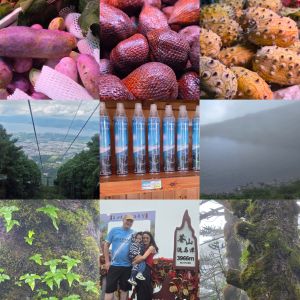
The amount of disposable oxygen canisters for sale on the ropeway concourse and single-use rain jackets, hoods, hats and more is worrying. Yes, oxygen may be needed but surely adapting and slowing your wandering is much more sensible. Altitude is not to be played with and rising a kilometre in Yunnan can be fatal if rushed. Any dizziness, lightheaded feelings etc can be alarm bells. Take it at a more gentle pace and don’t race to the top. Or not: just buy oxygen canisters.

I can understand hiring big waterproof rain and winter jackets but far too much has been geared for waste. Nature needs harmony and help. The litter levels were low on the pathways at the top but it was clear that far too many people ignore waste bins. This is a global problem. Not just China. Not just Manchester. Scenic streams and lakes need that crispness and freshness that only Mother Nature can bring. We must reconnect to the air, water, and plants that bring us so much comfort and essential conditioning for life. With that the air around Dali and Cangshan is lush and comfortable. Next, Shangri-la calls once again.

Yunnan, of course, was great for fruits. The fertile soils and close proximity of Vietnam and other nations (for swift importing) gave numerous chances to try new fruits. Nothing stood out. Apart from local blueberries and raspberries. The sharp Salak or snake fruit wasn’t that tasty. Nor a fruit that looked like a purple banana. God bless the Silk Road.

Summer ’25: IV – Pandering

Train G1756 darted from Guiyang in Guizhou to Sichuan’s capital Chengdu. 640km (397 miles) on a bullet-nosed train. It’s streamlined front glided rather than rattled like a British medium-speed train. This high speed travel in China doesn’t hold back.

Within the cauldron of Chengdu’s heat, we sizzled like steak straight off a barbecue. Greeted by 40°C heat at around 9pm, we suckered in deep breaths of fire, and wheeled our luggage beyond the great subway network. After finding our night dwelling, we grabbed food at a Dongbei restaurant. A friendly ginger tomcat the size of a small dog greeted us and with that we left the restaurant stuffed and sleepy. Every dish had spice, something Chengdu is famous for. We quickly noted that future meals will need better vetting.

中国人爱塑料袋 (Chinese loves plastic bags) should be a slogan. Bags for fruit with skins on. Bags for single pieces of shopping. Bags for life are out there. Bags for bags. Too many bags. The ocean, the parks, the mountains, and every nook and cranny, seem littered with bags. Those that are lucky make it to landfill or rubbish bins. Out of the system, only to be replaced by more plastic bags. Don’t get me wrong, the U.K. has had far too many plastic bags and is transitioning away from bags at a more sedate pace but plastic use is far lower for packaging. In fact, in China, it is evident from my travels, that disposable single-used plastic seems just as high as when I arrived in 2014. In a nation of a billion plus people, that has global implications. And it causes arguments. Too many plastic bags. Our daytime backpack featured several.

The lodgings chosen sat close to the Chengdu Research Base of Giant Panda Breeding (成都大熊猫繁育研究基地). We entered via the relatively quiet west gate, after boarding a 15RMB bus, that sling-shotted around the giant site. We were quickly dashing from enclosure for enclosure, enjoying every moment we could alongside giant black and white pandas. Due to the excessive and oppressive summer heat, every panda utilised their extensive indoor enclosures. Having visited the place in 2021, I was surprised at how big the expansion and refurbishment of the whole panda breeding centre was. It was truly inspiring to see such a delightful upgrade. Panda-labelled orange coffees and Italian-style hotdogs were needed, as well as copious amounts of water. Some walking was done. A day’s worth.

After exiting the red panda enclosures, we were hounded out of the park and departed for dinner and a rest. Many pandas seen. “Full mouths ate quiet mouths”, I uttered as we tucked into a buffet-style dinner. It had been a brilliant day out. The following day called for a visit to the Chengdu Natural History Museum, complete with many dinosaur fossils and stuffed animals. No stuffed pandas. People are funny about pandas and taxidermy. Seems every other animal is fair game but the national symbolised animal is prized too well for a stuffing. Cuddly toys, however, are everywhere. And huge sculptures. You name it and a panda is on it in Chengdu. Clothing: check. Cigarettes and alcohol: check. Umbrellas, magnets, books, and more: on it.

Summer ’25: III – Bamboozled

Treated by family to a spot of travel and unwinding, we set off from a station nearly an hour from the place of residence.

In Guangdong, like many cities in China, you can drive by taxi for an hour and not leave the jurisdiction of that same city. Not even close. So, we arrived at station one, departed for station two, and arrived at station three in Yangshuo. 300 miles [482km] travelled across 2 hours and 42 minutes. Or further than London, and quicker than any British railway journey. Huizhou is massive at around 4,217 square miles [10,922 km²]. It is substantially large compared to neighbouring Dongguan, Shenzhen, and Guangzhou. A formidable region to navigate.

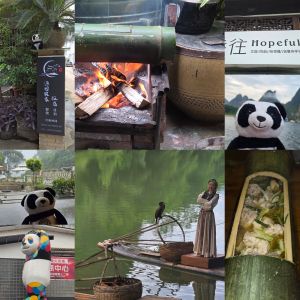
Badly Drawn Boy’s Everybody’s Stalking marked the train journey’s early moments through the tunnels of Guangxi. Through fine lyrics befitting the view out of train D1814’s window, the train rolled into the Karst-mountain surroundings of Yángshuò (阳朔). A quick lift from our hotel owner seen us dropped off at the digs, 阳朔源园饭店(20元人民币风景区店) 兴坪镇画山厄根底村76号, which is with Ergendi village. A bag of huángpí (黄皮) wampees (Clausena lansium) followed a delicious dinner. The grape-sized fragrant fruit, with a large seed core, sat well on a belly of bamboo-cooked sticky rice, some baby bamboo shoots, and pork sliced between taro. After seeing the cormorant fishing birds posing, the Li River (漓江Lí Jiāng) flower, and a multitude of tourist boats, nightfall followed a heavy storm. Bedtime soon followed.

Seems like many paradise regions become Piccadilly Gardens: that once flowery bowl of sunshine now covered in concrete and steel. The village of XingPing, near Yangshuo, has undertaken drastic growth in little over two decades, and really symbolised the idiom rén shān rén hǎi (人山人海) or people mountain, people sea. Allegedly the river Li below flows with over 215 cubic metres per sec9nd. The people on the shores seemed equally dense. Photographers, fashion people, tourists, local canvassers, and every manner of people seemed to congest the tiny footpaths of XingPing (兴坪) village.

We had a plastic bamboo raft trip upstream on the Li river, savouring the humongous Karst peaks and bends of the powerful river. More food, including a full chicken boiled in a soup within a bamboo tune followed. Plenty of wandering was had. Sadly, without speedy legs, the waterfall pond, Pubutang and Tiger Mountain Waterfall shall have to wait. Our train outwards to Guiyang was caught on time.

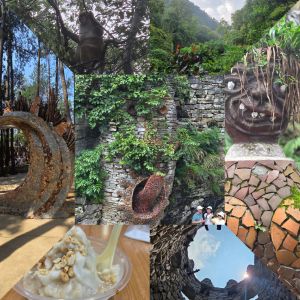
Guiyang straddles the eastern edge of the Yunnan-Guizhou Plateau and is apparently around 1100m [3600′] in altitude which may seem debatable as you traverse districts. The roads resemble Spaghetti Junction in Birmingham (England) with bridges crisscrossing lengthy tunnels and slopes throughout the surface routes. A decent subway and rail system serves the city and outer region. The Yelang valley was a pleasure to visit, a truly unique and hidden gem within China. Twenty years were taken for the recreation of an ancient culture. The stone sculptures and artwork are fantastic. Song Peilun’s vision is a highly recommended visit. Oh, and we saw a monkey at the Qianling Mountain Park, having clambered a large peak and being consumed by a passing storm. That was fun.

Summer ’25: II – Resurrection.

Kitted out with 20kg of luggage, first a tram then a train before midnight allowed Manchester International Airport to be reached. After an evening and afternoon sleep from 1600-2300, I felt refreshed and raring to go. I pottered around with my Greggs breakfasts and waited to fly.

Even as the alloted 0300hr check-in desk opening came, I still had energy to burn. My bags would rejoin me at Brussels Airport, having flew with Brussels Airlines. The world’s longest lines at passport control and the outbound gate were troublesome. The sign reading “last call” for boarding came and went. Without doubt, being second to last on the Hainan Airlines flight was nerve-wracking and not one to recommend Trip.com’s self transfer routes! I had to plead to move up the queue many times. I begged. I pleaded. I reached a wall of negative responses but managed to get there. I hate queue-jumping but I had to force the movement. Needs must!

Mickey 17, Gladiator II, and a few episodes of David Attenborough’s Asia wildlife documentary sandwiched attempts at sleep. The former of the two movies comes highly recommended for reasons of originality within the sci-fi genre. Also, fine acting from numerous characters and a fair dollop of wit gave the movie a largely good rating in my eyes. I rested as much as possible.

Landing at Shenzhen around 0500hrs on the Saturday after departing Manchester at 0600hrs on the Friday remained a good move. The timezone difference of 7 hours, a delayed departure from Manchester, and all the stress of Brussels lifted. I had made it: much thanks to family and friends for helping me to get there. Better late than never. One small step for reunification, one giant leap for family-kind.

The Fog Of Guilt.

Are there many novels that celebrate and champion persistence? Do all cops in novels ignore authority and tackle the weight of bureaucracy through ignorance? Early reviews pointed me to a challenge.

Inspector Imanishi Investigates by Seichō Matsumoto is a post-World War II novel originally penned in 1989. The lead protagonist, unsurprisingly, is Inspector Imanishi. He is a world apart from the rebellious bulldozing Harry Bosch found in Michael Connelly’s novel series. Instead, Imanishi is methodical, modest, and clinically human in his approach. He persists without need of a lightbulb moment or an act of genius. At every turn Inspector Imanishi displays empathy. He listens. He feels the victims’ lives. He endures whilst remaining ethical and responsible. The fog of guilt lurks. Grief and shame wallow. The good Inspector appears to put himself in others’ shoes.

What happens when guilt becomes unbearable? Drawing on a contrast of a post-war reshaping metropolitan Tokyo and that of rural provincial Japan, this book uses geography, culture, and traditional etiquette to deliver the truth. Themes of memory and recollection, urban alienation, interconnectedness, societal and historical tensions. The slow movement of justice’s machine underlines the need for structure and hierarchy but appears to comment on a lack of urgency. What secrets live between city lights and village shadows? Can you bury a crime in a country still healing?

How well can you really hide from who you were? The plot features new names, misdirection, reinvented pasts to escape guilt, shame, and consequences shows disguise as social-cultural adaptation. In an ambiguous world, the detective is a constant: deeply moral. Rarely does a slow-burn of a book stand out, yet from the opening chapter to the conclusion, I was hooked. The jigsaw was essentially a lesson in the importance of detail. Like a cold-poured Guinness, “Good things come to those who…. wait.” The novel’s ending seemed more reflective than triumphant yet left me wanting more. Was reluctant justice enough? Does empathy make the best detective?

Matsumoto’s Inspector Imanishi Investigates is a novel celebrating persistence and realism. It is the antidote to flashy books filled with spectacle and glamour. The notes of fading traditional values give hints at a nation’s people suffering an identity crisis – or at least instability causing a social flux. I found myself pondering, how much of our world’s remembered reality was misremembered? Can patience solve what brilliance cannot? Is closure enough when lives have already been lost?

Lately

The sight of the Duddon estuary around Foxfield has always tugged on my heartstrings. The rounded railway line hugs the coast and estuary like a wide horseshoe. It runs from Barrow-on-Furness to Millom and up the Cumbrian coastline. The Isle of Man lies out to sea, smothered in thick black clouds. A slight hue of pink gives a clue that sunset is somewhere towards Scotland. A crack of brilliant orange erupts along the northern horizon.

Geese honk and ducks quack as winds carry across the broad flat marshland. Occasionally trees jut out defiantly refusing to be swept away by countless vicious tides. Heather blooms in vivid yellow contrasting the slate skies of spring. Pockets of sky blue shine down on the isolated station of Green Road. A salty fragrance fills the air.

“I saw your message down the line
It gave me hope, it gave us time
So little
Time” – Doves, Strange Weather

There’s an eerie ambience to the region. As shadow on the western reaches of the Lake District. An area with less eyes upon it. The nuclear power plant at Seascale, just over twenty miles away, ensures Millom beach sees fewer visitors than other Cumbrian towns. Twenty six miles separate Whitehaven from Millom, yet little sign of tourism peers beyond the low coastal town. Hodbarrow Point lighthouse and an RSPB birding reserve gather a few feet on their travels. The remains of a windmill and a older lighthouse lurking over the headland. Remnants of another time.

Looking inland, hills dominant and mighty roll towards the many Lake District mountains. Black Combe lurks over the sleepy village of Silecroft. An algae-covered abandoned caravan shares a view back from the infrequently-visited station below. Swinside Stone Circle sits neglected to the east. Further north is Bootle. On a clear day, views from Black Combe are said to include England, Scotland, Wales, and Eire. Not bad.

RAF Millom Aviation & Military Museum parted ways with its collection and now houses His Majesty’s Prison Haverigg. Think Butlins and you’re on the right track. The jewel in the region is Ravenglass for Eskdale. Muncaster Castle and Ravenglass and Eskdale railway are delightful glimpses into the western Cumbrian life. They’re an escape from modernity into past worlds. Owls and narrow gauge steam trains. A Roman bathhouse is also worth a wander.

Wainwright’s walks may lay inland but every turn south of Seascale to Millom has something to offer. At Seascale there is also Greycroft stone circle. Less busy than the famous Stonehenge and more compact for photographers. Drigg’s dunes from Carl Crag to Kokoarrah Scar, its packhorse bridge, and clues to the WWII Royal Ordnance Factory can be found. Just ignore the Nuclear Decommissioning Authority low-level radioactive waste repository. Wasted land, indeed.

Only recently did a wander up Greenfield, near Oldham, across to the Trinnacles fill me with a warmth that is familiar. The need to share such views with loved ones is growing stronger each day. Whether at Dovestones reservoir or trudging along Cumbrian coastline, there is a hunger to live better and enjoy nature more freely. Seeing Dan, Van, Alex, and Damo made me hungry to spend time with good friends and family, as often as possible.

Chee

A trail of stones through the River Wye was the target. The locally famous Chee Dale stepping stones have long attracted walkers to the area. Chee Dale sounds like an incomplete name. Was it Cheese Dale? Is it Witch Edale? Perhaps it never was a Dale and was Cheadle? Either way, March’s final weekend involved a fair wander that Chee Dale gorge way into the Peak District.

Sitting roughly 7 miles from Buxton, the number 65 bus bridged that gap to Miller’s Dale (53.2552720, -1.7949950) and Wormhill Road. From here a sharp left, hugging the River Wye led on a craggy pathway with soggy bits toward Chee Gorge stepping stones and links to the Monsal Trail. There’s even abseiling at bridge 75. The gorges appear after a short but rough walk, with short up and down sections permeating the steep river embankment, often sandwiched alongside treacherous hillside banking.

Chee Dale is a green oasis of babbling Wye River brooks and tributaries. Rich with birdsong and imposing limestone cliff faces, lurking with peril overhead, yet surrounded by ash woodland and flowers of vital ecological importance. In the water beneath Dippers, Willow Warblers, and various waterfowl do the bird kingdom justice. Hopeful wildlife photographers hide under canvas and perch precariously for their captures.

External content: discretion advised. May contain footage of a terrifying bird.

Having headed on t’ line at Chee Tor Tunnel, the flat pathway led back toward Buxton. Chee Tor No.1 and its sequel No.2, and the spin off Rusher Cutting led to the end of the cycle trail, where an active line prevents further passing toward Buxton. Here it meant a short wander beyond Wyedale Car Park, turning right over a footbridge. The lack of curbside or space to stand as cars rushed passed was not for the faint-hearted! Keeping Panda, my dog, close by, we stop-started our walk until safe and beyond the rushing road.

The day culminated in 12.5 miles of wandering (20km). Plenty of sideways, backwards, and around-about routes eventually led on a pathway via a short stint on the A6 to Buxton. The wide valley leading uphill from the A6 to a farm overlooking the town appeared to be an old quarry route. Plenty of places to chuck a ball for Panda safely, after his early dips in the scenic River Wye.

A blend of former railway nostalgia, nature, heritage, and peace with a climax at the spa town of Buxton, complete with spring water tap, formed a good day out which was just a short train journey from Manchester. So, where next?

Northern Rail

Points failure. Delayed.

Late from the depot. Cancelled.

Staff member unavailable. Denied.

Leaves on the line. Complained.

Due to a landslide. Declined.

Snow, ice, fog, and high winds. Failed.

Extreme heat and railway line buckling. Inconvenienced.

Overhead line equipment failure. Uncovered.

Signal failure. Terminated.

Poor Victorian planning ahead for population expansions. Unconvinced.

Heavy volumes of rail traffic.Backlogged.

Overrunning engineering works. Poorly planned.

Speed restrictions in place. Underdeveloped.

Trespassers on the line. Stupid.

Telecoms failure. Apologised.

Animals on the line. Departed.

Lineside fires. Transpired.

Death on the line. Expired.

Another tannoy apology by a robot. Delay repayed.

The good old commute.

Guava plant pots

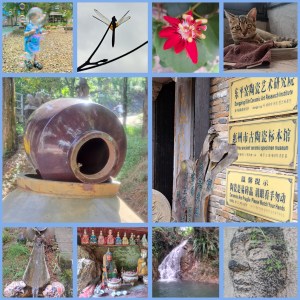
Never take a bull to a china shop. Equally, a toddler in a Chinese china museum and tourist spot is of little recommendation. Said toddler tumbling a plant pot into a fish pond, whilst trying to rip a leaf off a plant is quite an embarrassing happening.

Munching on hakka dim sum and 番石榴 Fān shíliú (Guava) with the sound of running water is quite relaxing. Even if the temperature is 33°C, with 75% humidity,  presenting a real feel temperature of 40°C. On top of that, your body melts, runs with sweat, and staying hydrated is a priority. Beyond these minor issues, the state of relaxation as birds tweet, red dragonflies fly past and and butterflies flutter between the bamboo tufts. Mosquitoes feast relentlessly. Relaxing.

Wandering around the extensive ceramic kilns, wood carving lodges, farm restaurants, and sculptured gardens was relaxing. The whole arena is fenced off and reasonably safe if you keep an eye on the deep water, fragile articles, and sharp bits all over the floors and walls. Complimentary kittens are provided in one of the toilets, and a local waterfall at temple XiHeGuMiao (西河古庙) is a pleasant stroll up a steep concrete road. Eagles and other wildlife like frogs, tree frogs, snakes, and mosquitoes can be seen.

The restaurant provides cabins, lodges, and open areas for a range of local food cooked well and enjoyed with the ambience of a dark evening. There are turtles, cats, and a happy dog. The centre and studios offer pottery experiences, fan making, and other activities for all. A few hours can be had away from city life.

Dongping Yao Ceramic Museum/ Dongping Kiln Cultural Scenic Spot, Huizhou City, Huiyang District, Huiyang District

Top Marks: GaoBangShan 高榜山

229.66m high isn’t much to an adult. But to a person of 83cm in height, it might as well be Mount Everest. That’s the gist of GaoBangShan mountain in Huizhou. A decent hill with a selection of pathways swoops around the summit. At the summit, a modern collection of Sinology, medicine experts, and important Chinese cultural architecture awaits.

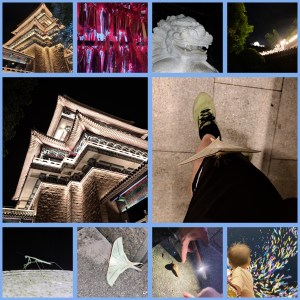
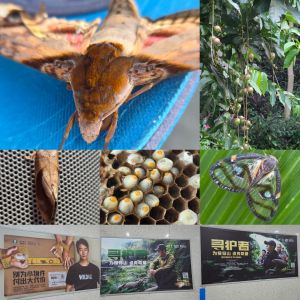
Under moon and floodlights, it is highly recommended to blow bubbles like a fan of West Ham Utd. Expect to see bats, moths of various sizes, and shapes. The odd preying mantis amongst the night insects (mosquitoes included) can be found hunting alongside geckos and amphibians.

Smells range from dirty bins to humid dank dark paths lined with fragrant tropical flowers. At the summit and several points, the usual food outlets sell overpriced food and drinks. Beyond the hundreds of steps, lighting and piped music fill the air opening to the northern skyline of Huizhou and its surroundings. Your heightened awareness grows under tree canopies. Their umbrella canvas with limited lighting along the lower pathways shades out the light pollution beyond the treetops. It cakes those who walk beneath in humidity.

The steps up are a struggle. They’re uneven, yet modern. Each step appears slippery, and with damp patches of leaves and giant snails throughout, they’ll test the best sporting footwear. The knobbly-bits of pebbles on some footpath interludes are equally perilous. All part of the parcel in a dark park walk. The dense foliage, abundant with local species, although manicured at the path edge, gives an authentic taste of more wilder parkland.

For a few hours of wandering, the park features toilets at the foot of the main gate pathways, a few temple structures, and benches here and there. It is a short distance from Xihu (West Lake) in Huizhou. Xiao Crocodile Lake and Luoshan mountain are visible from the rear of the mountain. The name GaoBang means something to do with first and study, I’m told. When the Chinese Gaokao exams happen, many family people and students come and ask for good luck. The moon over the hill looks pretty, and a nightwalk is most recommended, even in the heat of summer.

Address: 惠州市惠城區江南街道共聯東路紅花湖景區附近

Origins.

“This is a traditional children’s song.”

“It’s Take Me Home, Country Roads with Chinese words.”

“The rhythm is ancient and traditional.”

“It’s John Denver.”

“Don’t you like this old Chinese melody?”

“No, they sing it at Old Trafford. It’s from 1971.”

“No, it’s much older than that.”

“John Denver went to China?”

“Probably. It’s copied.”

“Possibly. Possibly not.”

“You don’t believe our culture. What about this next song?”

“Wolfgang Amadeus Mozart adapted to accommodate Twinkle Twinkle Little Star lyrics.”

“And the next song?”

“Jingle Bells, by James Pierpont. 1857. It was possibly a drinking song.”

Sea Burial.

I visited HuiDong, Guangdong (China) one January during the CoViD-19 pandemic, and it was quiet. On the August 2023 trip, it was the opposite of quiet. I no longer recommend the area. Too much litter, noise and far too many people. I just visited once at a much quieter time.

At 5.30am, on August 9th, a young kid was throwing sand at her pet duckling, and the duckling tried to escape. She put it in a carrier bag. One of her parents then stamped on it. To further this heinous crime against life, her parent tossed it into the sea. Plastic bag, dead duckling, and the shittest sea burial ever. That was a morning sunrise with Indigo spoilt by the grimness of an unwanted morning observation. I’d like to say that was all I witnessed during my time in Guangdong over the last decade. Similar crap happens on the U.K. I’m not naive enough to believe it doesn’t. The scale of bleakness and disposable life is grim: like painted turtles, flea-ridden kittens full of worms in small block cages and hamsters.

Beyond the disappointment, tree frogs, egrets, snails, and geckos made a change from legs being wrapped in sea plastic and watching bottles float out to sea. The sea could be seen as a glorious slumber of nature battling humanity’s demise. Our global oxygen provider and carbon dioxide sink act in a complex structure of processes so dependent on balance that any changes lead to stressed environmental twists. The tree frogs and egrets will know the difference. As will man. And woman. And LGBTQ+.

Henry VIII had his own purpose-made football boots, from Italian leather. That rough and ready game led to football and shirts being made and these days from recycled polyester materials. Not that the cost of recycled material ever shows in the cost of football shirts. Stood in a rock pool, looking at tiny crabs, anemones, and sea snails, I could feel the belting heat on my City shirt. The manufacturer Puma hadn’t accounted for Guangdong’s blistering humidity and heat, even in the shade of towering rocks. I pondered how the piles of plastic at the top of the beach could be used to produce future City kits. Or for team China. All it could take is a few lawmakers, employment of people to tidy and educate. Leave only footprints. Take only memories. Or not?

Beneath Everest.

Some time ago, I tried to imagine a show similar to Father Ted, filmed within Asia. I genuinely came close to emailing script writers and asking for tips. Then the idea faded. The absurdity of Buddhists in China behaving awkwardly didn’t sit right. The Communist surroundings wouldn’t remotely support humour on television. Yesterday, the thought came back. I pondered more. What if it was set in Nepal? In the valleys and foothills of Everest?

Imagine the beloved British-Irish sitcom Father Ted, reimagined in the serene, mystical mountains of Nepal. Instead of a small Irish parish, the setting is a remote Buddhist monastery. Meet Beneath Everest (working title), a comedy series that captures the hilarity and absurdity of monastic life in the Himalayas.

Nestled high in the mountains of Nepal, the Namche Khenpo Monastery is a place of tranquillity, spiritual study, and unexpectedly, a hub of comedic chaos. The monastery, with its ancient stupas, prayer wheels, and stunning views, is home to a group of eccentric monks whose daily lives are anything but serene. The valleys around the Khenpo Monastery are mostly impassible.

Head Monk Tashi is a middle-aged monk who was exiled to the remote Khenpo Monastery after a series of misunderstandings and minor scandals at his previous, more prestigious monastery in Kathmandu. See also Father Ted. Clever, somewhat cynical, and often frustrated with his lot in life, Tashi tries to maintain a semblance of order and dignity, despite the antics of his fellow monks.

Monk Karma is a young, naive monk who came to the monastery with the purest of intentions but often gets confused about Buddhist teachings and the basic principles of monastic life. He is innocent, kind-hearted, and endlessly enthusiastic, Karma’s misunderstandings and childlike logic are a constant source of humour.

Monk Dorje is an elderly, cantankerous monk who spends most of his time meditating or napping in a secluded corner of the monastery. Despite his outward appearance of spiritual dedication, Dorje has a fondness for rice wine and often spouts incoherent mantras. Grumpy, unpredictable, and occasionally wise, Dorje’s outbursts and peculiar habits keep everyone on their toes.

Ani Pema is the monastery’s cook and caretaker, a devout nun who believes in the sanctity of hospitality and the importance of offering tea to everyone, at all times. Cheerful, persistent, and slightly overbearing, Pema’s relentless insistence on serving butter tea and her exaggerated sense of duty provide endless comic moments.


Throughout the series, the show explores the daily routines of the monks, from morning meditations and teachings to dealing with local villagers seeking advice or blessings. Each episode features Tashi’s efforts to maintain spiritual discipline amidst the chaos caused by Karma’s misunderstandings and Dorje’s eccentric behaviour. Karma’s literal interpretations of Buddhist teachings lead to humorous situations, such as trying to meditate under water to find enlightenment or misunderstanding the concept of detachment and giving away the monastery’s prized possessions.

Periodic visits from the head lama or dignitaries from other monasteries add to the comedy, as Tashi scrambles to present an image of a well-run and devout monastery while keeping Karma and Dorje out of trouble.

The monks’ interactions with the local community, including helping with festivals, resolving disputes, and participating in cultural ceremonies, provide a rich backdrop for exploring Nepalese traditions and customs with a comedic twist.

The show would retain the heart and humour of Father Ted while offering a fresh, culturally rich setting. The serene yet unpredictable world of the Khenpo Monastery serves as a perfect stage for exploring themes of faith, folly, and friendship. As the monks navigate their spiritual journey amidst a whirlwind of comedic misadventures, viewers are treated to a delightful blend of laughter and life lessons, all set against the breathtaking beauty of the Himalayas.

Of course, I wanted to contact Graham Linehan and others to see if the idea had traction, but Graham is too busy being nasty and divisive. So, this idea lands here, ready to be buried. That being said, I could contact Channel 4 for their view. All production and scripting should be worked with a local crew and thoroughly ensure respect for Nepal and their people. So, it’s probably a tough job to bash out. Arthur Mathews could do it, I’m sure. Does anyone have a contact at Hattrick?

¡Hala Manchester!

Madrid, capital of Spain, longtime artistic city and short-term filmset of La casa de Papel. As much as I wanted to see the Spanish National Research Council (CSIC), I didn’t have time. Madrid was to be an in-and-out job, much like City’s thrilling three-all draw at the Estadi Santiago Bernabeu. Or, more appropriately, how my bank account is on pay day. In. Out. Done.

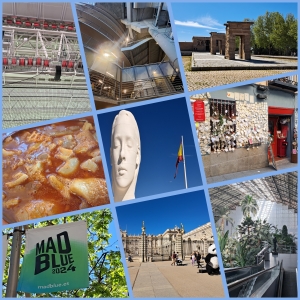
With that in mind, I met a few Blues for octopus on bread, alongside Callos a la Madrileña (a stewed tripe dish, cooked slowly for hours). With scrumptious food and a decent pint (or half litre) of Alhambra in the belly, I went for a wander. On the map, a temple had caught my eye.

Casa de Toledo isn’t in Toledo. It is in the Madrid area of Torrelodones. Sadly, a tad too far. The protected park by the Guadarrama River was too far out. Instead of planning a Bank robbery, I wandered to the Temple of Debod, which sounded quite mysterious. On arriving, with no information, I found a brick-by-brick relocated Egyptian tomb gifted by the Egyptian government to Madrid. Not a bad result of the Aswan Dam needing new space. This bizarre relocation overlooks the city of Madrid and a panoramic view of the majestic Palace area. Other bits are on view. On this occasion, the Simpsons, a panda, and a gorilla were nearby.

After this, a train from nearby sped towards Nuevos Ministerios metro station, followed by a stroll up to the football stadium. The Santiago Bernabeu is iconic and has been around since 1947. Maine Road, City’s mainstay for the 20th century, was built in 1923. Named after a former player and a benefactor, Santiago Bernabéu de Yeste once served under Francisco Franco’s Nationalists. The stadium had only a few years before bearing his name in 1955. Gone was the Nuevo Chamartín, and along came an iconic stadium. A recent refurbishment hadn’t been completed by the time Manchester City kicked off against Real Madrid in the 2023/24 quarter-finals of the UEFA Champions League.

The game itself was perilous at times, with moments of madness in defence for both teams sandwiching a handful of great goals. Phil Foden, J G, and Valvedare amongst the action. Bernardo Silva’s sublime freekick started the proceedings. The expected enclosure of the away stand was far from complete with a pre-match temporary power cut, taking the concourse lighting down. The alcohol-free offerings and limited snacks were overpriced and low in quality. Much like the tonnes of concrete dust around the “polished turd” of the Santiago Bernabeu stadium. The exterior is cased to look like an air-fryer or some such metallic pebble. Perhaps all the shopping trolley supply of Madrid was melted down for this external case. The steepness of the 4 (or 7 or 8) tiered away end allowed for a good view of pigeons landing below. Even their visit to the top two tiers needed supplementary oxygen.

The interior bowl of the Air Fryer Bernabeu looks impressive. It’s almost like a giant basketball-arena with a slightly bigger playing surface. The exterior lacks character and will no doubt reflect well under sunlight, but a metallic pebble broken by slats looks to me like a license to overheat. The dusty staircase, incomplete toilet and snack facilities, and decorations will no doubt look and feel better when complete. Until then, it’s a building site.

The four towers known as Paseo de la Castellana, near Madrid Chamartin railway station, does feature in the Spanish money heist series La casa de Papel. From here, I made my withdrawal. Bound for Alicante. Little did I know that City would be taken to extra time and eliminated from the Champions League in the following week. It is what it is.

Beryl Is Dead.

A scuff along my left inner calf. Just beneath that a short slash of loose skin. A sore knee. The result of a power-assisted pedal down an ill-fitting road. What started as a simple ser if errands had quickly escalated into a farce. All in the name of public and green transport.

Many people that I know argue that the best car driving experiences involve hire cars. The same can’t be said for Manchester’s new-ish Beryl bikes. The bee-crested Bee Network bikes have been around the city for some time. Their yellow livery and solid frames, like bees, give off a sense of warning. Many hit accelerate in their hire cars, and some give little care to how they return them. I pride myself on treating all in my possession as my own. I aimed to take this hire bike back safely.

Departing a bus stop in Ardwick, I ran my first errand, and toyed with the idea of a bus back to town and then across to Openshaw. I passed a rack of yellow bikes. I decided to download the Beryl application. I followed the instructions and was quickly away. I slowed past the site of the former Daisy Mill in Longsight. I sped on, deciding to swing via Gorton and then Openshaw before heading for Newton Heath. That was my first error.

The second error was not locking the bike, despite using the screen to lock it. The screen kept flashing with a lock bike message. Then I slid the black rear lock in place. It said I could park for 15 minutes. I gave myself 5 minutes in the shop. Within minutes, 4 phone warnings flashed up. The reasonable minutes per bike riding were okay. The £25 out of zone parking was not. It had not paused the journey. It ended the journey. I soon contacted team Purple on the Beryl application. Displeased was an understatement.

After some careless negotiation, enraged, with sore cold hands on a phone that refused to steady my nerves, I had negotiated my charges back. Just the charges. Not the journey fee. I left it a few days, and even now, 6 days later, I feel angry at such a poor experience. Use more environmental transport? Hmm. No thanks.

I’d managed a loop and ended almost where I’d started. Racking and placing the two locks onto the bumbling Bee bike, I became infuriated by the complexity of a simple enough ride. I’ve used similar services in Germany, China, Japan, and Denmark, yet here in my hometown, hiring a bike seemed as complex as spliting the atom.

加油曼城! C’MON CITY!

2024 will be a year of tidying, organising and shuffling. The below comes from a former page. It is now a post, archived, as my involvement with Shenzhen Blues has ended.

SHENZHEN BLUES 深圳曼城官方球迷会

First Official MCFC Supporters Club in Mainland China 中国内地首家曼城官方认证球迷会 [00164]

Our contact details: (feel free to drop us a line… 欢迎联络, 给我们留言…)

WeChat/Weibo: ShenzhenBluesTwitter: Shenzhen_Blues / www.shenzhenblues.cn / contactus@shenzhenblues.cn / Facebook: SZblues


(你可以躺在床上看比赛/ Watch the game in your bed)

现在来点完全不同的东西吧…  AND NOW FOR SOMETHING COMPLETELY DIFFERENT…

加我们项目负责成员的微信. Wechat :  our team members who can assist you


们是曼城 / WE ARE CITY

1深圳曼城球迷会将会继续分享全中国曼城球迷的各种照片和故事。它不仅是一个展现深圳球迷,更是展现世界所有球迷风采的同好基地。

Shenzhen Blues will share any photos and stories from City fans throughout China. It is a fanzine for all our fans and not just those in Shenzhen.

请分享我们深圳曼城球迷会的官方微信公众号或为它点赞。

Please like and share our official wechat account.
我们在尽力用中英双语呈现出更多信息

We try to have translated materials in English and/or Chinese.

也一定会有过去和现在的各种相关照片

There are always photographs from the past and present.

重要的信息会在这个群里发布,也会有其他部分相关信息

Important information is shared through this channel. There are often other little bits of interest too.

您也可以通过订阅的方式获取第一手的资料,欢迎各位订阅。

You can submit articles, photos or materials too. Please feel free to do so.

SZB BANNER

REALLY EASTLANDS M.C.O.S.C. in CHINA

SHARE YOUR O.S.C.

球迷会名称/Club name: / 球迷会联系方式/Club contacts:
微博或其他社交媒体链接/Weibo or social media links: / 微信账号/Wechat account:
关于我们/About us: / 最后,请分享一些照片。/Finally, please share some photos.
衷心感谢你们/THANK YOU KINDLY. 爱与和平。Peace and love.

SHENZHEN BLUES 深圳曼城官方球迷会

First Official MCFC Supporters Club in Mainland China 中国内地首家曼城官方认证球迷会 [00164]

Shenzhen was the location for the Blues friendly against Borussia Dortmund, which allowed supporters in the region to enjoy much more than the live matchday experience.

The tour was the perfect opportunity for the Club to connect with their Chinese fans and to celebrate this the Shenzhen Blues hosted a special event at their base – McCawley’s Irish Pub.

Tosin Adarabioyo, Angelino, Willy Caballero and Jason Denayer were the guests of honour as they took part in a Q&A and signing session.

The event carried extra significance as the Hong Kong and Melbourne branches were also in attendance as well as participants from City Football Schools’ project in Shenzhen, which made for a memorable coming together of City fans around the world.

With the Capital One Cup on display, supporters had a rare opportunity to capture a selfie with the famous trophy, while our Hong Kong branch’s support was recognised as they were presented with a commemorative plaque from Club Ambassador and City legend, Mike Summerbee.

Our Melbourne branch were an ever present during pre-season, and for member Wade Whitwell, the Shenzhen event topped off an incredible trip following the Blues. He said: “Shenzhen was a highlight of the pre-season tour for me. The great atmosphere in McCawley’s and sharing time with other Australians, the Hong Kong branch, the Shenzhen Blues and those from Manchester City made the trip to China so worthwhile.”

Similarly, Martin NG, the Hong Kong Branch Secretary, was delighted to have the opportunity to meet his City heroes.

“I feel very happy and proud to have taken part in this event and it was great to meet the players, who were all very nice”, he added.

You can see all the action from the event on Inside City 201.

See more: BlueMoon Forum (City China and SZBs post)


Xi’an: The Original Home of Football? Think Cuju (蹴鞠)

球迷会名称/Club name: 西安曼城球迷会 Xi’an Manchester City fans Association Club

球迷会联系方式/Club contacts: 阿圭罗的小媳妇儿 [Aguero’s Wife]

微博或其他社交媒体链接/Weibo or social media links: 西安曼城球迷会(微博名)
微信账号/Wechat account: 西安曼城球迷会(公众号)

关于我们/About us: 古称长安。长安城作为古代第一个人口破百万的国际化大都市,北濒渭河,南依秦岭,八水润长安。在这座古老的城市里,住着一群有着蓝色信仰的人们,这群人的存在给这座城市注入了新的活力,这就是我们——西安曼城球迷会。

不论你是土生土长的西安人,还是身在西安的异乡人,亦或是远在他乡的西安乡党,只要你信仰蓝月,我们都向你敞开怀抱。

Xi’an, is an ancient town, once known as Chang’an. Xi’an was one of the Four Great Ancient Capitals.
Xi’an is the original starting point of the Silk Road. Emperor Qin Shi Huang’s Terracotta Army is based here. Bordered to the north by the Weihe River, the southern Qinling Mountains and known for 8 rivers, the city has great diversity and history. The sky blue and white faith of City reached Xi’an in modern times and adds vitality to a City mostly know for its great food and castle walls. Whether you are a native to Xi’an, or a visitor to Xi’an, Xi’an’s OSC opens their arms to meet you and your love for the Blue Moon. No reds allowed.

Expect to eat: Roujiamo Chinese Hamburger (肉夹馍); Liangpi (凉皮); Paomo Mutton, beef, and Bread Pieces in Soup (羊肉泡馍); Biang Biang Noodles (油泼扯面); Jinggao Steamed rice cake stuffed with honey dates and black beans (甑糕).

Expect to see: Fortifications of Xi’an & Xi’an City Wall (西安城墙); Xi’an Bell Tower (西安钟楼); the Drum Tower of Xi’an (西安鼓楼); Mount Li (骊山); Mausoleum of the First Qin Emperor (Qin Shi Huang) (秦始皇陵); Terracotta Army (兵马俑); Shaanxi Galaxy (陕西银河); Shaanxi Guoli F.C. (陕西国力)Shaanxi Renhe Commercial Chanba F.C. (陕西人和商业浐灞)Shaanxi Dongsheng (陕西东盛); Xi’an Evening News (西安晚报); Qinqiang opera (乱弹).
Did you know? Arthur Gostick Shorrock [from Blackburn, Lancashire, England] and Moir Duncan founded the Sianfu Mission in 1892.

U.K. Twin cities & Towns: Edinburgh, Bury St. Edmunds & Birmingham

爱与和平/Peace and love


DONGGUAN EASTLANDS – MANCHESTER CITY O.S.C.

WE’RE REALLY HERE.

WHERE DO WE MEET? We have a junior club – and we have the more senior options. Sometimes we gather at Irene’s Bar (Dongguan); Murray’s Irish Pub (Dongcheng, Dongguan) & road trips to join the Shenzhen Blues, Huizhou Blues or Guangzhou Blues. Actually, there’re just two of us for now.

WHEN DO WE MEET? Please contact acton28 on WeChat.

WHO ARE WE? Perhaps the smallest collective of Manchester City fans in China, so far.

WHY HAVE A CITY O.S.C. IN DONGUAN? Dongguan is a massive City of around 10 million people and is dominated by basketball, however football is growing. The aim of Dongguan Eastlands is to raise attention of Manchester City and football in general. At the end of the day, build it and they will come. There is no harm in trying. Like Manchester’s past, this city of Dongguan is industrial. Busy worker bees are everywhere.

WHEN WERE WE FOUNDED? On hold. Membership problems.

NOT COMING SOON


Official WeChat: 曼城足球俱乐部 mcfcofficial / Official website: http://www.mancity.com / https://cn.mancity.com/

一线队赛程 / Fixtures

All my people, right here, right now, d’ya know what I mean?
Peak Reading.

K2, a nightclub in Wales, owned by Donald “Jock” Kane was the sister bar to Kane’s Bar. The Aberystwyth-based former semi-professional footballer and Green Legend of Aberystwyth Town had capitalised on a famous mountain’s name. Yet, around Ceredigion, no huge peaks could be seen. Snow-capped hills in winter, occasionally. It was here in the university town that I lifted a copy of Heinrich Harrer’s The White Spider. The text translated from German to English detailed the first successful attempted climb of the North Face of the Eiger, a mountain close to Bern in Switzerland. This 3,967-metre (13,015’) mountain includes a staggering 1,800-metre-high (5,900’) wall of rock and ice.  The southern face and glaciated region make for a pictureque and challenging adventure. It has long fascinated climbers, much like K2’s bar drew in students from Aberystwyth University. 

“The mountains are calling, and I must go.” – John Muir, Scottish naturalist and mountaineer, 1838-1914 

The nickname of Mordwand (a German pun based on death and the Germanic Nordwand, or North Wall) highlights how difficult and technical the Eiger’s North Wall is to aspiring climbers. Such is the beauty of the mountainous region that engineers tunneled a railway from Kleine Scheidegg in the top of nearby Jungfraujoch at 3,463 metres (11,362’). The highest altitude railway station in Europe passes through the Eiger mountain, stopping at the Southern face but sadly no longer serving the Northern face. Following The White Spider, I stumbled onto mountaineer Jon Krakauer’s Eiger Dreams. The writer had become quite popular for his outdoor-themed books Into The Wild and Into Thin Air. My fascination with climbers, adventures, and those big protrusions of alien rocks that top our planet had begun. In 2017, 2019, and 2020, I trekked on paths beaten by great mountaineers and experienced the majesty of the Himalayan peaks overhead. I dreamed and still dream of seeing K2 in Pakistan, yet feel it a tad dangerous to go for a wander. 

“Mountains have a way of dealing with overconfidence.” – Hermann Buhl, Austrian mountaineer (died aged 32, Chogolisa [乔戈里萨峰], Karakoram) 

Through videos, photographs, interviews, and books, I have been transported to the frostbitten weather-lashed 2nd peak of the Karakoram Mountain range: K2. One such award-winning and enthralling book, Buried In The Sky, was sitting neglected on my bookshelves for too long. Through journalistic writers Amanda Padoan and Peter Zuckerman, the text explores the reasoning behind the 2008 K2 disaster, the cost, the effects, and the hunger to climb. The book whisks you away, at an intense pace, through a combination of deep research and authentic accounts. It adds testimony to unsung heroes, cultures and people who otherwise shared limited voices at perilous heights and during the tragic aftermath that saw Jumik Bhote, Pasang Bhote and 9 other international climbers perish at the hands of the mountain. The book highlights the low success rate, high fatality rate, and why K2 is much more remote than the tallest mountain, Everest. Deservedly, it focuses on high altitude support crews and porters.

“We should be less afraid to be afraid.” – Emily Harrington, American professional rock climber and mountaineer (https://emilyharrington.com/

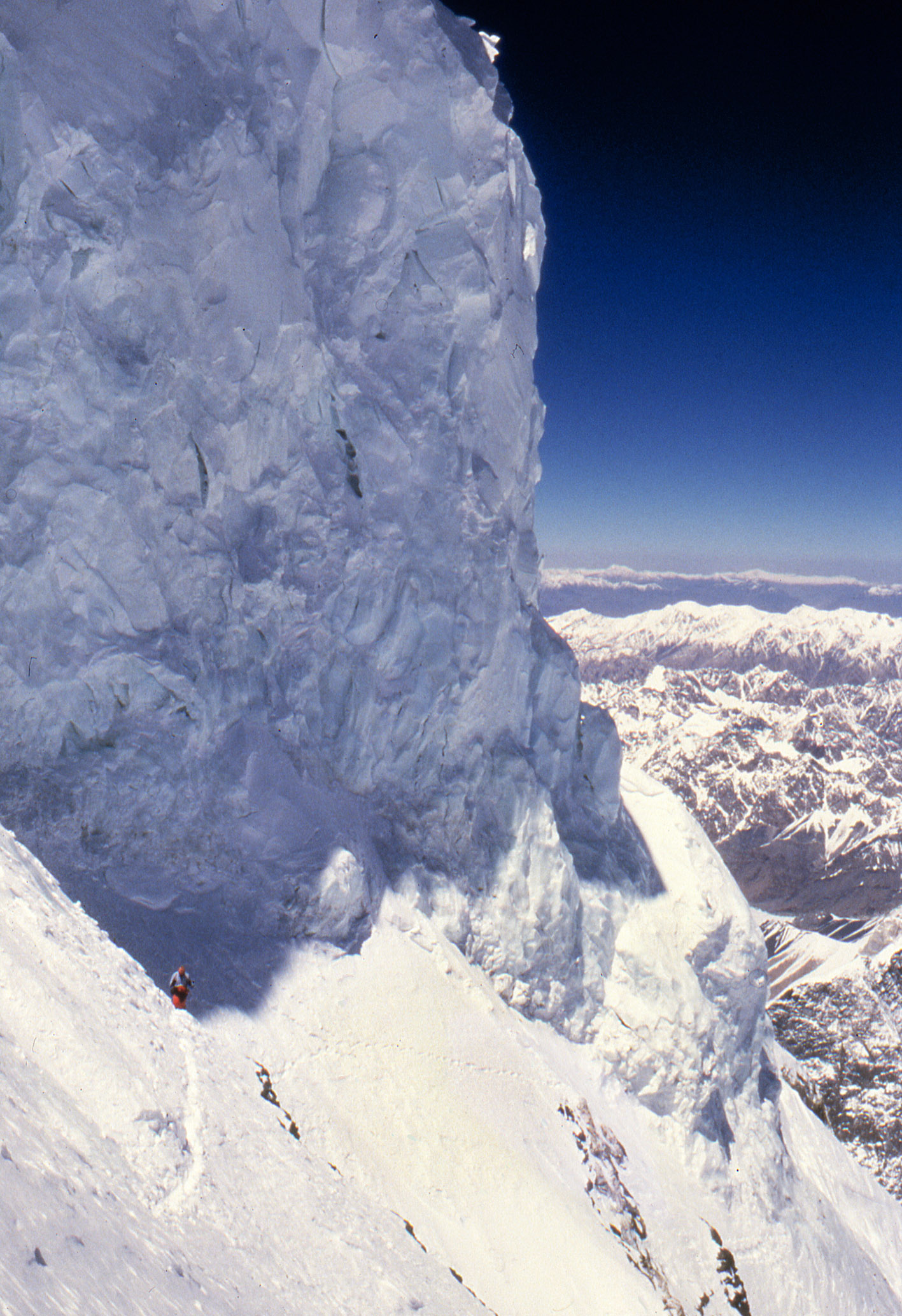
https://upload.wikimedia.org/wikipedia/commons/8/85/K2-above-Bottleneck.jpg High on K2: Seracs above the Bottleneck, CC BY-SA 3.0 Deed, by Rolf Kemp

Having put down that book, I lifted up a fellow-neglected-book-on-the-shelf. My friend Javier Felones always said that I should read Anatoli Boukreev’s account of the 1996 Everest disaster. I have ploughed through many of the books that have arisen from that notorious disaster. There are many. The mystery of events and the disaster are unclear. The dead remain dead. The disaster and understanding of those who lived through it or contradict others and their accounts tantalises many readers. Anatoli Boukreev’s account, written with G. Weston DeWalt, now offers my next excursion in reading for pleasure. 

Recommended further reading: 

Jon Krakauer: Into Thin Air (1997) 

David Breashears: High Exposure (1999) 

Beck Weathers: Left for Dead: My Journey Home from Everest (2000) 

Jamling Tenzing Norgay: Touching My Father’s Soul: A Sherpa’s Journey to the Top of Everest (2001) 

Ed Viesturs: No Shortcuts to the Top: Climbing the World’s 14 Highest Peaks (2006) 

Graham Ratcliffe (2013): A day to die for: 1996 : Everest’s worst disaster : one survivor’s personal journey to uncover the truth (2013)   

The Bear Necessities

Bern, baby Bern. What a glorious city with the river Aare horseshoe-shaped around the glorious Altstadt. The capital of Bern is as green as it is old-carved rocks. Sweeping views from the Bundehaus parliament buildings look out onto the distant Swiss Alps. Autumn leaves fall and mingle with stray butterflies, whilst the odd buzz of a bee makes a passerby question the seasons.

Starting with a walk from Newton Heath to Manchester at an ungodly hour, a steady train to Manchester Airport led to a wander to terminal three. Here, Ryanair had more priority boarding passengers than regular folk. A swift 7am flight to Cologne and Bonn Airport preceded a quick train to Köln, long before lunchtime. After an expansive and expensive salad, the train to Basel SBB station in Switzerland was equally hurried. The most part of the journey on flat land with the Rhein river close by and the foothills of the Black Forest gateaux mountains to the east.

Arriving at Bern for teatime meant a long day. Checking into the cosy Hostel 77, it would have been rude not to wander around the darkened old town in the evening. Spying a light show on the Bundeshaus parliament frontage and Manchester City’s travelling coaches were pleasant experiences but the haunting bells of

Outside of wanders around the UNESCO heritage medieval covered shops and fountains along the streets, a trip out of town by train to Thun was on the cards. The 101/100 zone tourist ticket covered two zones. A further 28 Swiss Francs covered the 6 zones of the journey. Within 30 minutes, it was possible to visit Thun and see the castle, many great Alpine mountain peaks, and the Eiger (from a distance). As a child seeing George Lazenby star as spy-womaniser James Bond, 007, the scenes from On Her Majesty’s Secret Service looked breathtaking. From a distance, I could imagine scenes from Ian Fleming’s text and varied Bond movies.

On my pocket, Anthony Horowitz’s With A Mind To Kill, didn’t get any reading time. The views from Thun and the exhibition of Manchester City’s under-19 team in the UEFA Youth League playing at the Stockhorn Arena was enough entertainment. The 10,000-seater stadium was about 8% full. Maybe 9%. I’m sure a statistician would question my maths. The four goals for City were as majestic as the surrounding views, and the Stockhornbahn AG-sponsored stadium was atmospheric. The young crowd enthusiastically cheering on both City and the hosts BSC Young Boys.

As Mike Summerbee and Nedum Onuoha, amongst others, watched on, the view of the Eiger and surrounds featured rainbows (perhaps Switzerland has pots of gold), clouds and glorious sunshine. The stadium is named after a cable car company named after a mountain and Fussballclub Thun 1898, who operate the stadium and put on a good show. Free entrance. Much needed.

The trip was, of course, to see Manchester City grace the hallowed AstroTurf of BSC Young Boys at the Wankdorf Stadium. The game was a bash. Manager Pep Guardiola shuffled his hand on the ground built over a Co-Op supermarket and a plethora of shops. The blue and whites made to work hard for their win left with three Champions League points and probably a few AstroTurf grazes. I don’t miss those days!

The joy of the light show at the Bundeshaus, a wander (or two) in Köln, a quick walk to the Wasserturm in Mannheim, and all the bits in between lasted from Tuesday to Thursday. So much to do. So much to see. So little time. Treasure life. Peace and love.

Thank Athens.

A stench of heated and dried piss, dead kittens, riot Police and crippling heat are just some of the things Athens offers. And graffiti. On the positive side, thousands of years of preserved cultures, warfare history, sports, and great cuisine are to be had.

Accommodation was booked via Airbnb. A basic room with access to a shower was all I needed. The lodging on 4-8 Delfon (Kalithea), once found after a lengthy walk, did the job. Although standing in the shower, I found the top of my head touching the ceiling. The shower itself is more of a half-bath with a seated step and a shower hose and head, unattached to the wall. The sink and toilet were more functional, thankfully. A kitchen, straight out of the stereotypical filmsets of U.S.S.R. rounded off the communal areas, with a small balcony hosting a decent washing machine. The bedroom, bland, but cosy had the necessary air-conditioning unit.

Beyond the Airbnb lodging, Athens offers ample walking opportunities and plenty of ruins. Ruins in subway stations. Ruins by the road. Ruins in parks. Ruins, modern and old. This ancient city has experienced quite a modern crash of its own. Successive economic nosedive, political turmoil, earthquakes, and a lack of tourism during the CoViD-19 pandemic have ensured that you’re never far away from another ruin, abandoned outlet or sign that things aren’t so well. Not that the U.K. is any better.

The constant summer sunshine and incessant heat are stark reminders of recent wild fires and how the climate of August 2023 isn’t quite balanced. With that in mind, I hopped from shadow to shadow, under every available tree like a kangaroo-sized squirrel. Breaking to drink more and more water, fruit juices, and some much needed nibbles allowed some respite from the overhead sun. Hadrian’s Library, exposed to the baking solar rays, allowed viewing of wild tortoises and the first proper gander in a closed area of ruins.

The impressive columns, shattered walls, and flooring of Hadrian’s Library are impressive. The baking heat under your feet equally of impact. With toes on fire, hopping around the views led to an eventual passage to Piraeus and the Super League fanzone by UEFA. Satisfied the fanzone was not too exciting, save for photo opportunities with a range of Treble-winning Manchester City’s silverware and the UEFA Super Cup, I scattered for a coastal wander of Piraeus. The relentless heat guaranteed a sit down, some great local scran, and a few beers. Following that, a game of football at the G.K. Stadium, involving City’s win over Spanish side Sevilla. The win, on penalties, concluded just after midnight. It was probably the first time I saw a football game live ending the following morning.

City had won the UEFA Super Cup of their debut. Fittingly, it wasn’t far from the historic Panathenaic Stadium (also known as Kallimarmaro, meaning beautiful marble). This flash stadium has origins as far back as 330BC, remodelled in 144AD, and was rebuilt in 1896 (two years after Manchester City’s name began) as the first modern Olympic Stadium. Every Olympic flame handover is completed here before travelling to the host country and city. Without the Olympic Games, there would have been no British Empire Games, then Commonwealth Games, and no events in Manchester during 2002. Manchester City may not have left Maine Road for the now Etihad Stadium. The UEFA Super Cup may not have been lifted. Cheers Athens for helping Manchester City progress.

Amongst other wanders of Athens, several football grounds (the churches of football fans) were visited. The impressive Agia Sophia Stadium actually had a church Chapel inside (next to the bookmakers and the bookmakers). As impressive as the A.E.K. Stadium was, the dilapidated stadium of Panathinaikos could easily be mistaken as heavily graffiti-covered ruins. The whole city of Athens, to be fair, is daubed with varying football teams and their tribal colours. Gate 13, the cheaper seats in years gone by, gives its name to a supporter group and hooligan outfit. The gravity of the dark graffiti is bleak. Leoforos Alexandras Stadium was opened in 1922 and probably had more gallons of spray paint on the outside than years of existence.

Whilst I get the homage to working class seating areas, I do not understand the need for violence at football. Gate 13 has a bizarre friendship with Dinamo Zagreb ultras. This likely contributed to Zagreb thugs fatally stabbing an A.E.K. fan, ahead of a Champions League game. Over 100 Croatians attended court in the aftermath of a bloody night. This happened at a game where away fans were actually banned in advance. Many others were injured and hospitalised. The game was postponed as a result. A.E.K. rightly questioned how the game could go ahead. Rest in peace, Michalis.

“There is) no place for violence and hooliganism in European football” – Margaritis Schinas, vice president of the European Commission & Greek politician

A diverse visit to Athens for ruins, football, and reflection concluded with an early morning taxi to the airport. I dropped my luggage off after checking in. It would be the best part of a week before Aegean Airlines would get my backpack back to me. Still, as with others going to see the football, at least I came back safe and sound. Nobody should go to see a sack of air being twatted around by foot, and not return.

Clammiest Climate?

Sweltering heat bombarded in through the air-conditioned doorway. Since departing Mancunia, fresh air hadn’t been experienced for the best part of a day. The Survivor was the title of an inflight movie, but instead of a pugilist’s survival at a Nazi concentration camp, it was not an instruction to survive humidity. Not that the two should ever be appropriate in comparison.

Guangzhou’s airport felt chaotic and unwelcoming, even at 11pm. The fingerprinting machines didn’t appear to work. After 4 attempts on different machines, I gave up. I declared my health and grabbed the necessary health code to allow me through a third checkpoint. At the fourth, I filled in the necessary immigration card and answered a few questions as I crossed into China. I picked up my backpack and noted that the top section was open. Some things had been removed. Later, I’d contact the airline and insurance company. At just before midnight, I didn’t fancy trying pigeon Chinese to speak to the Police or airport security.

As it was so late, the subway railway was closed. I gambled on a bus and managed to get to Tianhe Square, a 30-minute walk from Yicheng Hotel and Guangzhou East railway station. Without a local mobile number or WiFi access, I managed to get to the hotel and get my head down by 2.30 am. The relentless heat, a far cry from the fresh and cool Mancunian air I’d left behind. It seemed that Emirates Airways had whisked me away, with extra legroom, to a pressure cooker. Far from the warm kitchen in Manchester, where Mum and Paul prepared dinner, I’d left 18°C clear-ish skies for hostile hours of heat.

The calm air-conditioned flight featuring Fisherman’s Friends 2: One and All. Filled with beautifully shot scenes, witty lines, and emotionally energetic stories, the movie clasps attention like the Guangzhou weather suffocates breathing of those used to chillier climes. The things we do for hugs.

Dear UEFA…

Below is a draft letter:


ADDRESS TO: UEFA, CHAMPIONS LEAGUE, Football Supporters’ Association, City Official Supporters Club, Manchester City, City Matters, Fans Europe, TBC, etc…


RE: LETTER OF DISSATISFACTION

Dear Sir or Madam,

I wish to express my complete dissatisfaction of many aspects experienced before, during and after the UEFA Champions League final in Istanbul. I understand that UEFA has disclaimers and small print to cover some of these matters, but that is a poor excuse for the overall ineptitude on display. I politely request you review the matters below and apply strategies to future events to avoid such a wealth of embarrassment.


On arrival to İstanbul Sabiha Gökçen Airport, at 11:00am, I immediately stepped onto the first coach which said MAN CITY – Yenikapi. After less than an hour into the advised 1.5 hour [as advised via the UEFA fan app and uefa.com ] the coach’s engine was pumping smoke out. The driver pulled into a service station and said to “wait twenty minutes”. I didn’t mind it, and most supporters were understanding. We grabbed food and waited about an hour for a replacement coach. The coach did a tour of Turkey, passing the Atatürk Olympic Stadium, before heading back into the centre, missing turn after turn, whilst the driver kept asking passing motorists for directions. The coach arrived at the UEFA Champions Festival for 4:00pm. I entered the festival, used the toilet and went to find how when to get the coach to the stadium.

Time spent on a bus: 4 hours.


After joining a queue, exposed to direct sunlight coach 3 departed into traffic, arriving at the fan zone of the Atatürk Olympic Stadium. The temporary car park and pathways were unwelcoming but not a hindrance for the mobile. I did see several fans helping people pass over the uneven surface to the City fanzone. The queues for food at the fanzone and the lack of options to drink were unpleasant but expected with such large crowds at 7:00pm. I asked for an ice-cold Heineken® Original but couldn’t get one as the man serving advised that they’d ran out. I went to another tent and found a beer to enjoy, but couldn’t queue for food as the service was beyond reasonable.

Time spent on a bus: 2.5 hours.


After this, I walked through another security check. Yenikapi had two bag checks. The fanzone had two bag checks to enter. A further two bag checks was made before walking to the stadium along the ten-minute route. On entering the gate, I had my bag checked at three points. The final bag check, the man emptied my small A4 bag clumsily. He refused to allow a 50ml sunblock container, my smaller-than-phone-sized power bank and a small packet of rivaroxaban (with just 2 pills left). I snatched the latter back, which was wrestled from my hand by the steward, and asked to see a supervisor or boss, and that boss refused the permitted items. Bizarrely, they overlooked the loose coins in my bag. Using what little dignity, I had I picked the rivaroxaban from the rubbish bag and emptied a tablet into my hand and swallowed it. I needed it for the flight back on the next day. Two 20mg tablets of the anticoagulant decreases the risk of developing Deep vein thrombosis (DVT) dramatically. The steward and supervisor laughed at me and I walked away.

Before the game the service for food and water was acceptable, save the 5 Euro price of water for tiny-little plastic cups. I hydrated and purchased enough for the game. However, by half time I was severely dehydrated, dry and had a sore throat. I went to queue for water. After 15 minutes of half-time, I was still queuing and listening to the haggling of those selling water at the counter by block 332/331. I could hear City fans being offered a 1.5L bottle of Pepsi for 35 Euros! By the time Rodri scored on 68 minutes, I hadn’t been served. I’d missed the goal of the top-level competition in Europe and I couldn’t celebrate properly because I was past thirsty. Around the 75 minutes mark, I was served but had to argue the 10 Euro price of the advertised water at 5 Euros. The counter man said it was “bigger” than other water bottles earlier. I even had to haggle for Pepsi and paid 15 Euros because there was no hope of getting a drink later. This is a great shame. The region deserves a greater profile and the culture is amazingly diverse. This was not a good advertisement. This buffoonish fan experience was a yarn with little pleasant anecdote.

When Rodri scored, and I missed the goal, the server of the drinks and food even recorded the fan reaction of the crowd behind me, ignoring the angry and annoyed fans in front of him. Others behond the counter behaved similarly.

After the game, I tried to use the toilet to vomit, as dehydration curing by Pepsi hadn’t gone well. I rushed behind the signs in the Fanzone to find a plethora of campervans spewing with rancid faeces and urine. The vomit added to the tarmac of disgust.


The joy of seeing your club lift the trophy quickly became a reality call, that a bus journey was needed to get back to İstanbul Sabiha Gökçen Airport. Post-match buses to the airport were scattered around a toxic fume-pumping atmosphere of stationary cars and coaches. The waiting point was blocked by a bus unable to move, and only after forty minutes did a lesser-spotted steward advise that the bus was “somewhere down a road or in the car parks at the back”. He advised me to go look for the bus. Walking on uneven stones, through cars edging impatiently and leaving little room for movement, I became thankful that I did not bring my son to the game. This was no safe place for a family and a kid. Eventually, I jumped onto a bus with other fans. Here, the bus edged out of the car park during a two-hour period. On meeting other fans at the airport, I was told of people who had had their phones stolen, passports snatched, and other permitted items seized at the stadium.

Time spent on a bus: 4.5 hours.


Is it acceptable to spend 11 hours on shuttle buses? As, the premier cup of European nations, the UEFA Champions League is supposed to outshine every tournament in the region. On reflection, I truly believe the final to be the most underwhelming experience I have experienced. I compare this to remarkable cycling (track and road), rugby league, athletics, martial arts and other experiences that I, or friends and family, have attended over the last three decades. I do not expect a response, although one is certainly welcomed. I feel that UEFA’s Super Cup in Athens and future finals will be difficult to attend without worry and anxiety.

Key points:

1. Two concessions stands for the away end curve of the stadium.

2. Insufficient stewarding and staffing.

3. No simplified WiFi access for fans travelling overseas.

4. A lack of functioning toilets.

5. Gravel carpark and exposed fan zone areas with little shelter from sunlight.

6. Lengthy shuttle bus journeys without access to water or toilets.

7. UEFA branded tape on stadium steps came loose, causing a huge tripping hazard.


Yours faithfully,


J.R. Acton

Other notes: FSA survey completed.

City official dossier? Consider UEFA review?

No UEFA response, consider an ombudsman

A Gem by the Etihad

A pleasant and overlooked piece of Manchester’s diverse history. Fitted rooms, detailed and decorated with real artefacts and displays, echo the ambience of past and give our present an opportunity of reflection.

There are connections to Shakespeare, witchcraft, gardening, and nature amongst extensive grounds surrounded by the historic moat.

Throughout the visit, the historic walls, belfry, and varied facades make for good photography. The welcoming staff of volunteers are an asset to a hidden gem only a stones throw from the Etihad Stadium.

Manchester’s Metrolink is across the road at Clayton Hall stop, with the Ashton canal, and Clayton Hall in close proximity to allow more exploration. The hall is a must for historians, families, and those with a curious eye.

Visit https://claytonhall.org/ for more information.

The 500 & Something-th Post

Munich, Birmingham, and Manchester in a day. Added to that, Istanbul, Hong Kong, Dongguan, and Huizhou in just over a day or so. Beyond that, time in Guangzhou and Meizhou. Miles and Miles of carbon footprint with purpose. I’ll plant some trees, flowers and greenery, and do my bit. I wonder how much SpaceX do for offsetting their explosive test work. Can see Elon Musk in a pinny and holding a trowel. Do those bodies need burying?

Every journey needs a purpose, or every journey gives a purpose, dependent on your outlook. Along the roads and flight paths, I’ve come to understand the meaning of it all. Perhaps it is all about succession and passing on as much of your good as possible. Or 42. Give or take, our genes are their to be and exist tomorrow. Investing time and effort in developing a miracle second generation is magical. We’re just a moment in time, so why not give all we can give?!

Humans make mistakes. Humility is normal. Just ask any billionaire businessman and promptly discard their response. People, like mothers who adopt young orphan girls in Meizhou, giving much to support others, are who I want to learn from. I accept judgement from all, but reject all from being my judge.

So, I find myself writing, whilst on a train from Morecambe. In fact, I’m completing words first noted whilst on Munich a few weeks ago. Time has come and given me other distractions like mounting shelves, removing doubt, and wandering to the odd game of football, or five. In fact, today before a carvery lunch, Panda, Blue, and I walked around Heysham village and meandered around Morecambe’s southern flank of town. The 14°C coolness occasionally permeated by glistening rays of sun-shiiiine. Rather than shrivel up and burn as per my pale skin, I opted to walk and feel the delightful comfort of light.

As railway announcements offer routes to Rouse, Carlisle, London, and Manchester, I sit back, legs stretched, almost fastened to a metal bench. In my hands is a paperback copy of Mike Leaver’s Yeti Seeks Mate. The opening new chapters tie you down and pull you in. Everyone loves the excitement of a new chapter. Whilst the author sounds like the words my cleaver, he seems an intricate and clever wordsmith. That tale may be written, but others are just unfolding.

China Travels: Recap.

“It’s coming home. It’s coming home. Football’s coming home.” – England football chant during the Women’s European Cup.

There has been a huge gap since travel has been possible and plausible. Never spending more than a few days in Huizhou, Shenzhen, and just hours in Zhongshan since October 2021 had been quite challenging. Travel, during 2021 and 2022, in Guangdong was unthinkable. The suffocation of humidity and toasting heat above thirty-five Celsius seemingly spelled death for me. Unthinkable. I have zero tolerance to being baked alive.

I’ve been blessed since February 2014. I’ve stepped from my comfort zone in UK living and managed to live abroad for over 8 years. Not every year has had a roasting summer. With just summer 2020 spent in Dongguan, owing to an 8 day change of employer, I’ve not had to endure too many hot days. The air conditioner had never been far away. Green parks like Dalingshan Forest Park and Tongsha wetlands have proved useful for distraction. Summer 2022 wasn’t like that. I found myself on crutches and once again trapped in Guangdong, being cooked. Far from other provinces and cooler ait.

Northern China stretches far and wide from west to east and vice versa. Here, journeys into Ningxia province have proved adventurous. Inner Mongolia and the chills of Heilongjiang have been a stark contrast to the warm southern regions. Gansu was a pleasant surprise. The stifling summer heat, broken by northern breezes and a dryer sunshine.

Through the coastal east and lands of Nanjing, Shanghai and Suzhou, I’ve managed a few looks at a variety of urban and green vistas. Touching down in Shandong and Qingdao was a spiritual connection I welcomed. Thanks, Granddad George Acton, for making me curious about that naval city you once stayed within. The trip there proved colourful and now brings fond memories.

Western China, especially Yunnan, has warmed my heart and claimed my love. Sichuan and Qinghai have equally gripped my passion for the outdoors. Those vast mountain landscapes and green pockets and valleys could fuel a thousand stories. Each one with tales and wilderness to inspire.

In the core of China, Hunan was varied in appearance and home to the mighty Zhangjiajie Nature Park. Forget it being the backdrop to James Cameron’s blue movie Avatar! It’s stunning for millions of other reasons. Xi’an proved an intense city surrounded by history and bathed in glorious culture. Shaanxi and Shanxi provinces each had many highlights.

Guangdong and Guangxi are side by side, and Fujian sits to the east of the former. Here, weekends and short breaks have been spent. Vietnamese coffees, seafood, and wanders along coastlines have gripped attention. All within a short distance of Dongguan and very much accessible before the Covid-19 pandemic.

Of course no trip to China is complete without swinging by modern day capital Beijing. Comedic travel and radio presenter Karl Pilkington visited there in a few episodes of An Idiot Abroad. Like his views, I don’t really like the capital city. How a city of that size doesn’t have a plethora of top flight football teams, or a heartbeat like many other capitals I’ve visited is beyond me. It felt very much like visiting how I imagine North Korea to be. Not my kind of place. Gridlock, grid lines and authoritarian concrete landscapes are a travel turn off. There are historic gems but how much has been remade is open to debate. Even the Great Wall looks too new. Apart from the wild bits. They’re glorious!

Macau, I could live without. It’s okay for a few hours, but not my kind of place. Hong Kong was the global city of cities, but times have changed, and I suspect so has Hong Kong. Many refer to it as just another Chinese city, now lacking its once famed uniqueness. The velodrome, mountain trails, and Clockenflap music festivals are just a few of the many highlights.

One day, I hope to visit Tibet and Xinjiang. For now, those journeys remain on a to-do list. Never say never. And, in September 2022, I found myself back in the UK. I didn’t think I would return to China so soon. The border reopened to tourism and many visa types in March 2023. That change and another more needy necessity led me back to the charms of the People’s Republic of China. This large swathe of lands often offers many attractions still. Would I move back? Never say never. Right now? No.