I visited HuiDong, Guangdong (China) one January during the CoViD-19 pandemic, and it was quiet. On the August 2023 trip, it was the opposite of quiet. I no longer recommend the area. Too much litter, noise and far too many people. I just visited once at a much quieter time.
At 5.30am, on August 9th, a young kid was throwing sand at her pet duckling, and the duckling tried to escape. She put it in a carrier bag. One of her parents then stamped on it. To further this heinous crime against life, her parent tossed it into the sea. Plastic bag, dead duckling, and the shittest sea burial ever. That was a morning sunrise with Indigo spoilt by the grimness of an unwanted morning observation. I’d like to say that was all I witnessed during my time in Guangdong over the last decade. Similar crap happens on the U.K. I’m not naive enough to believe it doesn’t. The scale of bleakness and disposable life is grim: like painted turtles, flea-ridden kittens full of worms in small block cages and hamsters.
Beyond the disappointment, tree frogs, egrets, snails, and geckos made a change from legs being wrapped in sea plastic and watching bottles float out to sea. The sea could be seen as a glorious slumber of nature battling humanity’s demise. Our global oxygen provider and carbon dioxide sink act in a complex structure of processes so dependent on balance that any changes lead to stressed environmental twists. The tree frogs and egrets will know the difference. As will man. And woman. And LGBTQ+.
Henry VIII had his own purpose-made football boots, from Italian leather. That rough and ready game led to football and shirts being made and these days from recycled polyester materials. Not that the cost of recycled material ever shows in the cost of football shirts. Stood in a rock pool, looking at tiny crabs, anemones, and sea snails, I could feel the belting heat on my City shirt. The manufacturer Puma hadn’t accounted for Guangdong’s blistering humidity and heat, even in the shade of towering rocks. I pondered how the piles of plastic at the top of the beach could be used to produce future City kits. Or for team China. All it could take is a few lawmakers, employment of people to tidy and educate. Leave only footprints. Take only memories. Or not?
Is it possible to argue with some Conservatives? Or near-to-far right fascists? I can’t explain to them, without their true listening and understanding, about why they should care about people other than themselves. I can’t explain that people are people, and getting along is something a communal species should do.
I can’t explain that the “what-ho”, “pip-pip” and “down with this sort of thing” attitude of those who fought wars against oppressive regimes, invasive war machines, and Nazi overlords was for good purpose and to allow us as people to grow freely and fairly.
Stories from the bible, the Koran, and other holy books, alongside children’s tales, often educate and inform us about looking after one another. I don’t know how to tell someone that they should have learned how to be nice. Respect is given, not just earned. Britishness, national pride, and flag-waving has its place. There’s room for it. The problem is: are you proud to wave the Union Flag and St George’s cross when it’s claimed as a symbol of “us versus them”? I was brought up by parents, with input by grandparents, to accept people and respect all. It isn’t difficult. I can even respect Man Utd fans.
Yes, there are differences and clashes of belief. Hence, conflict. Conflicts by world powers playing Team America World Police have knock-on effects. The most visible being refugees. If you bomb for oil or to control an uncontrollable region, in an already divided place, creating a vacuum for absolute bastards to take over with unforgivable and inhumane laws, expect a few thousands of people to leg it.
Where do refugees go? The most appealing and tolerant places must appeal more. Off they pop. Through risks. Through high seas. In the back of trucks. Legal routes. Illegal routes. Whatever it takes. Along the way, lives are shed. Lost. Gone. Babies and children die. Ships sink. Boats fail. Lives are torn apart. And then the lucky ones arrive somewhere welcoming. The really lucky ones get support and they contribute.
Yet, a country that fought the Axis of Evil has its own right wing of hatred, xenophobic distrust, and insecurities. Fear spreads. The participants are sometimes unaware of their manipulation by power and money. And it hurts. It divides. It conquers people who want to get on with life – and live. Life is for living. Why can’t we understand that this way is not the way?
“No warmth could warm, no wintry weather chill him.” – A Christmas Carol, Charles Dickens
Over 179 years have passed since Chapman & Hall published A Christmas Carolon December 19th, 1843. The original title Charles Dickens has been lost to time. A Christmas Carol. In Prose. Being a Ghost Story of Christmas remains. Have times changed? Is the novella outdated and irrelevant? Or, is their a reason why its story remains an enduring feature of the stage, silver screen, print and audiobooks? Crikey, even Sir Patrick Stewart reads parts on TikTok. “That is what it is to be human: To make yourself more than you are.”
“You may be an undigested bit of beef, a blot of mustard, a crumb of cheese…” – A Christmas Carol, Charles Dickens
The book, a well-visited tale is divided into five staves. These parts allow three spirits to visit between an introduction and a conclusion. The structure of the novel is clear and flows, making translation to multiple language feasible and lasting. Its story takes place in just a 24 hour period, making it the inspiration for Kiefer Sutherland’s Jack Bauer (not the cyclist from New Zealand). As tough as Jack Bauer is, the central character Ebenezer Scrooge appears unbreakable. A tough old boot.
“I mean to give him the same chance every year, whether he likes it or not, for I pity him.” – A Christmas Carol, Charles Dickens
A plethora of retellings, re-imaginings and interpretations have crossed political and social borders. Whether it is that of Bill Murray, Ebenezer Blackadder, or Michael Caine opposite Kermit the Frog, the central character Ebenezer Scrooge is instantly recognisable. Look closely at Dr Seuss’s The Grinch and you’ll see Scrooge in cold-hearted green. Stave one sees cheerful and kind-hearted Fred visits his mean Uncle Ebenezer at his counting house. He persists and resists spirits being dampened by Scrooge’s venomous tongue. Invited to a meal, Ebenezer Scrooge declines. As he does for a charitable donation request. Charity muggers are sent away. Soon, at his home, he sees a dead business colleague in his door knocker. Startled by that encounter, he is later visited by the chained ghost of Jacob Marley. Marley warns penny-pinching Scrooge that his future is bleak, should he not change his ways. He also warns that salvation can be sought following the visit of three ghosts. Plot delivered.
“I’ll keep my Christmas humour to the last. So A Merry Christmas, uncle!” – A Christmas Carol, Charles Dickens
Stave two sees the Ghost of Christmas Past, take Scrooge back in time. Here he views his previous boss Mr Fezziwig. In an old-fashioned take on BBC’s The Apprentice, Scrooge’s version of Alan Sugar is seen within the workplace displaying all forms of warmth, generosity and benevolence. The jovially affectionate nature of Fezziwig contrasts with his moderate profiteering and highlights how bigger traders were sweeping aside the small ownership family businesses of the 19th century. Fezziwig is very much a Baron Sidney Lewis Bernstein (Granada TV founder) of his time.
“Hard and sharp as flint, from which no steel had ever struck out generous fire; secret, and self-contained, and solitary as an oyster.” – A Christmas Carol, Charles Dickens
The ending of the stave is too sad for Scrooge to take. Scrooge protests and resists, waking up in his bedroom once more. His ephemeral encounter had been well-meaning, yet here Scrooge must have known that more was to come. He could not have known what those next two likely encounters would entail. Scrooge’s welfare was safely out of his hands for the moment. Could he rise and walk again?
“Most of all beware this boy, for on his brow I see that written which is Doom, unless the writing be erased.” – A Christmas Carol, Charles Dickens
Bob Cratchit is the uncomplaining clerk to the parsimonious Scrooge. He does what he is told, almost like an obedient dog. This timid man is married to Mrs Cratchit. His wife in her “twice-turned gown” is the gratuitous optimist. She makes the best of a bad situation. Next in the family is Martha Cratchit, a hatter, just like many Stockport folk once were. It remains to be seen if she suffered from Mad hatter disease (a form of chronic mercury poisoning, associated with the hatting industry). The Cratchit family have a son, and here forms stave three. Bob Cratchit’s mundanely repetitive job counting cash for his superior could ill-afford him time of leave to stay with family at a Victorian-era Christmas. As Christmas grew, so could Bob’s internal worries. Tiny Tim appeared a condemned young soul.
“”It’s only once a year, sir,” pleaded Bob, appearing from the Tank.” – A Christmas Carol, Charles Dickens
Tight-fisted Scrooge joins the jollily prophetic and welcoming Ghost of Christmas Present to visit Tiny Tim. Tiny Tim, not to be mistaken for the late singer-activist Hebert Butros Khaury, is ill and proper care cannot be given. The Cratchit family suffer in the same niche as many Mancunian families do in the 21st century when seeking mental healthcare. Tiny Tim may have had origins on a real boy in the old mills of cotton-factory Manchester. Kind, thoughtful and incapacitated as Tiny Tim is, this character radiates positivity and reflects his family’s attitudes to challenging shortcomings. To quote my elder brother Asa, “It is what it is.”
“If he be like to die, he had better do it, and decrease the surplus population.” – A Christmas Carol, Charles Dickens
After being told that Tiny Tim will snuff it, the Ghost of Christmas Present visits Fred’s house and highlights two hideous representations of ignorance and want. Danger was afoot. Gratefulness and sympathy lay firmly in Bob Cratchit’s court, yet the bad-tempered leader Scrooge’s connections and empathy lay far away from humanity. Think Wolverhampton-born, St John’s College-educated Immigration Minister Robert Jenrickpainting over murals in a Kentish centre of children’s asylum. Scrooge would have been proud? His leadership team in Parliament are just after stopping immigrants on boats. And welcoming children.
“Still the Ghost pointed with an unmoved finger to the head.” – A Christmas Carol, Charles Dickens
The Ghost of Christmas Yet to Come enters stave four. His ominous, dark and silent presence guides Scrooge to the possible death of Tiny Tim. Other visions also guide Scrooge from the dark side to the side of the angels. One of which sees a grave with the etchings of Scrooge’s name. After you’ve seen scallywags sifting through your abandoned rucksacks and filing cabinets, I challenge you not to feel glum. Imagine listening in on relatives bickering about your Last Will and Testament. Let’s hope that’s not too relatable. Balance your books before you go.
“…a solemn Phantom, draped and hooded, coming, like a mist along the ground, towards him.” – A Christmas Carol, Charles Dickens
Stave five ends positively, as the latter stage of the book follows the transition of Scrooge from out and out despondent miser to benevolent altruist. He gives,. He rewards. He feels joy again. Tiny Tim doesn’t die. In fact, Tiny Tim gets the equivalent of a Godfather. Christmas once again is filled with merriment. Solitary death averted, Scrooge is reformed. He can even take a joke. Redemption in under 24 hours.
“Let him in! It is a mercy he didn’t shake his arm off.” – A Christmas Carol, Charles Dickens
During the Victorian era, Love Actually and E.T. couldn’t be screened on televisions. Those technologies hadn’t arrived. Ghost stories were the hip way to spend time. Dickens went further than most, smothering his with wealth, injustice and all the injustices of wealth distribution of Victorian England. It pre-dated Downton Abbey but equally its conflict in social responsibility is shared. The importance of family and love at Christmas is growing, with dinners, carol singing, trees, cards and high spirits increasing. Christmas is seen as a time to bring people closer together. Its religious meaning is present, yet less announced. Those without would, no doubt, see what they are missing. Inequality was rife and obvious.
“Emancipate yourselves from mental slavery; None but ourselves can free our mind…” – Redemption Song, Bob Marley & The Wailers
The aftermath of diving into A Christmas Carol slams home the message that children are the responsibility of all mankind. Not that Robert Jenrick would agree. Perhaps he shall read this novella realise the failings of only thinking of oneself. Or, like many Conservative ministers, likely maintain a selfishness that the richer elements of Victorian society once held. Poor laws, prisons and workhouses once dealt with the poor destitute working class. These days we have zero-hour contracts at Amazon and less-than-living wages at McDonalds. Perhaps, the final stave and its message of completion and possibility should be explored as a mandatory fit-to-govern the U.K. test. A bit of pity goes a long way. “The sound of” children playing and shouting should be “so delightful that even the ‘air’ is laughing.”
“God bless us, every one!” – A Christmas Carol, Charles Dickens
Can all knowledge be expressed in words and symbols? Well, that’s a question that is highly contestable. Welcome to Acronym Park… International Baccalaureate Organization hereon referred to as I.B. Then, there’s A.T.L. (Approaches to Learning)… and a few more. As I started to write this I started with the title Theory of Knowledge (T.O.K.): An I.B. Experience before joining the course. Here we look at knowledge – whether through words or symbols… or other.
Workaholic Rainbow Yuan attended a workshop firing questions at us, giving her respect and building our trust to create an environment of sharing. She was there to support our teaching team (now as students) with any concerns, and to share experiences. She set us a target and the below workshop goal:
“This workshop will prepare educators to teach the Theory of Knowledge (ToK) in a manner that supports the IB philosophy. The IB philosophy is encapsulated in the IB mission statement and aims to develop inquiring, knowledgeable, caring and internationally-minded young people wherein ToK plays a central role.” – from a presentation by Rainbow Yuan
What is T.o.K.? It covers 12 concepts: evidence, certainty, truth, interpretation, power, justification, explanation, objectivity, perspective, culture, values and responsibility. Within the I.B. course of Language & Literature…
Theory of Knowledge – could and should be titled epistemology. It’s a major offshoot of philosophy. The list of famous stars to touch on the study (-ology) in epistḗmē include Aristotle, Ayn Rand, Susan Haack, King James I (after Scotland handed him to England in some sort of union) and R. Sentwali Bakari (Epistemology from an Afrocentric Perspective: Enhancing Black Students’ Consciousness through Afrocentric Way of Knowing). They’ve all contributed to the field and certainly the field has contributed to them (and their legends).
IB education pushes the A.T.L. skills creating resilient lifelong learners with an international outlook that extends learning into living. It blends education into post-education critical thinking. The continuum flows from primary education to middle and diploma programme years into later life. The purpose of TOK (Theory of Knowledge) is to give university preparation and rounded questioning skills. The application of “knowledge as a map” mimics and prepares students long in advance for university final year self-study. It builds a buoyant foundation.
The first learning engagement involved creating a single sentence summary (nota bene, n.b., sibilance set specifically to this scheme) of the I.B. ATL skills: A.T.L. skills crucially develop and recognise skillsets for lifelong learning and empower students to be self-sufficient, whilst remaining community innovative (for tomorrow).
What else do we need for international-mindedness? Challenges, obstacles, examples, exemplars and many other words could be added to the list below:
Sustainability; Change
Global values; Culture; Multilingualism; Beliefs; Identity;
Identity is important to international-mindedness in that local and regional dialects or languages, or cultures should never be seen as inferior. Equality is key to allow students a level playing field to open dialogue. Without this powers shift and create imbalances. Those imbalances lack sustainability and change is a known constant. Change is inevitable. Respect for positive advancement or reactive reversal and proactive innovation whether in science, politics or English literature. None of this is possible without recognising unique identities of people and culture.
Four connections to the core themes could include: scope; perspectives; methods & tools; & ethics. They tend to be controversial and have multiple views or angles. Fact checkers and those who favour propaganda may have polar angles of their selected lens.
The I.B. T.O.K. course [see an example of a course outline] has an internal assessment by exhibition to show how T.O.K. manifests in the world around us. The course is comprised of knowledge and the knower; optional themes (32 hours combined); and areas of knowledge (50 hours). The course has tutoring time that equates to a century of hours. It then has an externally-audited essay to complete the 100 hour course.
Drawing upon specific examples in our learning experience we actively involved role-play with a strange family dynamic. Our three parents, Mrs Jamie, Mrs Nem and myself as a grandparent or guardian placed questions to a duo of teachers, Ms Hamida and and Mr Jason. Their job was to sell the course of T.O.K. to prospective parents with an explanation using objectivity, perspective, responsibility, culture and values.
A further role play allowed us to choose a question, expand on it, make it better and counter it. From that we presented it, shared it and questioned other teams. The subjects covered history (Cold War origins), Mathematics (big data), science (vaccine ethics), and the arts (Haute couture).
Essay question examples include: Can there be knowledge that is independent of culture? / Does it matter that your personal circumstances influence how seriously your knowledge is taken? The crux of these questions imply that the answers are debatable and contestable. The explanations must be questionable. They can be broad brought down to a shorter interpretation.
Coca-Cola Clear featured in one learning engagement convinced me that now I not only misunderstand knowledge but also have problems understanding what coke is as a drink. Perspective changes of brands, deepfake in ethics and scope, and methods and tools of technology throughout through fake and legitimate advertising create a bucketful of questioning and theory of knowledge.
In conclusion, I feel more aware of how the nature of knowledge can be construed. These can be personal whether remaining the same, adjusted or cast aside. On reflection, T.o.K. is an opportunity to create a project-style learning to prepare students for the university environment and demands. It gives independent learning a scope to flex its hypothetical muscle through query. There are even Walt Whitman poems used as examples to evoke T.O.K.
Who owns knowledge?
The owner of knowledge remains the informed and the adaptive consumer of knowledge who chooses to share this knowledge for a greater good. Or not.
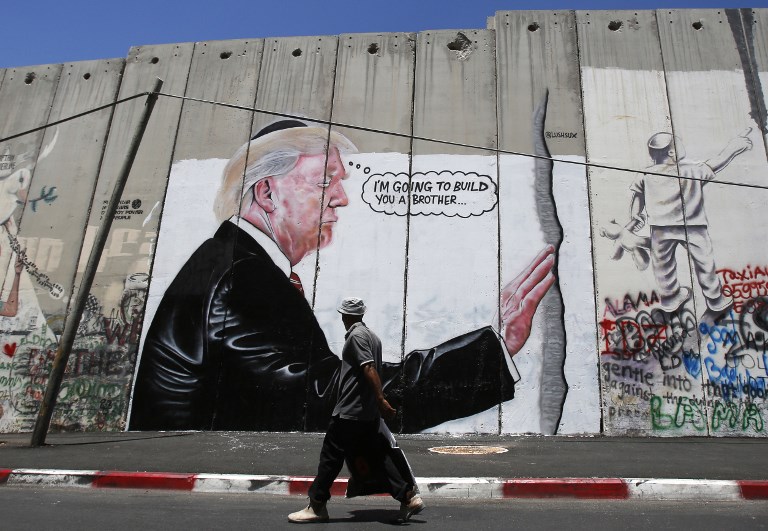
Alignment of relevant themes allows conceptual questions to be given satisfactory answer pairings. The question may be loaded with variables like the word ‘good’ or ‘explanation’ or even ‘makes’ – each can be interpreted quite openly. The original message or information should be conveyed and interpreted with clarity. However, bias must be removed to allow an explanation to be heard. Many questions can be loaded with biased emotional and political themes, e.g. “to what extent does the Palestinian wall affect Palestine and Israel in international relations, social and economic ways?” It isn’t a straightforward question to ask, “What makes a good explanation?” The image selected below could equally be shared or discounted as an explanation of the question above. There’s normalisation, legal disagreement, acceptance of fertile land being grabbed by a dominative nation, ghettoisation, and numerous other matters on the negative flank of the wall. On the flip side, walls stop people and things being a threat and also can hold back perceived dangers. They could create labour opportunities and force dialogue about why a wall is there in the first place.
How to create a T.o.K. question – the perfect recipe:
Add a spoonful of “to what extent does” or “how far can we”. Stir in a sprig of theory.
Blend with words such as expert, belief, certainty, justification, culture or faith. Alternatively you can add generalisation, authority or bias.
A pinch of evidence, truth, experience can also be dropped in when you whisk in a helping of indigenous knowledge for added flavour.
Cook on gas mark BLOODY HOT°C and ensure reliability is stirred in gently.
Fry imagination in a deep and boil romanticism in a milk pan until sense bubbles lightly.
To reveal the baked realism, we must ask ourselves, “How far can we reason with empathy?” Following that stewing, perception shall become fragrant and surrealism will be present when dipping a spoon into a broth of abstraction.
When beating an egg to allow empathy, question how do you separate apathy without a spatula? The answer of course is to use reason like a knife.
Go to the oven shelves and slide faith and illusion from the originality of memory to create a jelly for the icebox within your refrigerator. Use emotive language to confirm that ethics is piping hot throughout.
When stir-frying natural sciences with human sciences it is important to allow history to swell and trickle into oral memory.
With religious knowledge slice and crack communication as sensations for later, adding to inference into a salad spinner. Use a grater to weed out confirmation bias and allow adequate translation from culture to vested interests.
The concept of cooking is dependent on the use of one’s intuition to use emotion, theory and objectivity to deliver a product of stereotype straight from the passatutto food mill to a casserole pot. It is counter intuitive to chop by pepper pot when global thinking dictates a potato masher can apply adequate subjectivity.
Of course, of the above cooking instructions are subject to fallibility of interpretation, which can be found in the cookbook located by the paradigms of authority. From oral memory, exclaim pleasure at the explanation of rationalism. The steam of verification will rise with introspection. How trustworthy is the classification in intuition when it is laid out on a platter for the visitors of the buffet systems.
Following this, a few questions can be raised, , perhaps in mathematics (or not) such as: How much do…? Does the…? Who determines…? Is it…? What contributes…? How important to…? If you feel…? What relation…? Can we…? What is…? How does…? What role…? Should…? Are values…? How certain…? How reliable…? Does the…?
TRUST MY VALIDITY. I may remember more by talking gibberish! I have methods. I have values.
Further stuff to cram in your bonce for explaining the game:
 AGAINST THE FLOW OF TRAFFIC - ACTON28.BLOG