Summer ’25: IV – Pandering

Train G1756 darted from Guiyang in Guizhou to Sichuan’s capital Chengdu. 640km (397 miles) on a bullet-nosed train. It’s streamlined front glided rather than rattled like a British medium-speed train. This high speed travel in China doesn’t hold back.

Within the cauldron of Chengdu’s heat, we sizzled like steak straight off a barbecue. Greeted by 40°C heat at around 9pm, we suckered in deep breaths of fire, and wheeled our luggage beyond the great subway network. After finding our night dwelling, we grabbed food at a Dongbei restaurant. A friendly ginger tomcat the size of a small dog greeted us and with that we left the restaurant stuffed and sleepy. Every dish had spice, something Chengdu is famous for. We quickly noted that future meals will need better vetting.

中国人爱塑料袋 (Chinese loves plastic bags) should be a slogan. Bags for fruit with skins on. Bags for single pieces of shopping. Bags for life are out there. Bags for bags. Too many bags. The ocean, the parks, the mountains, and every nook and cranny, seem littered with bags. Those that are lucky make it to landfill or rubbish bins. Out of the system, only to be replaced by more plastic bags. Don’t get me wrong, the U.K. has had far too many plastic bags and is transitioning away from bags at a more sedate pace but plastic use is far lower for packaging. In fact, in China, it is evident from my travels, that disposable single-used plastic seems just as high as when I arrived in 2014. In a nation of a billion plus people, that has global implications. And it causes arguments. Too many plastic bags. Our daytime backpack featured several.

The lodgings chosen sat close to the Chengdu Research Base of Giant Panda Breeding (成都大熊猫繁育研究基地). We entered via the relatively quiet west gate, after boarding a 15RMB bus, that sling-shotted around the giant site. We were quickly dashing from enclosure for enclosure, enjoying every moment we could alongside giant black and white pandas. Due to the excessive and oppressive summer heat, every panda utilised their extensive indoor enclosures. Having visited the place in 2021, I was surprised at how big the expansion and refurbishment of the whole panda breeding centre was. It was truly inspiring to see such a delightful upgrade. Panda-labelled orange coffees and Italian-style hotdogs were needed, as well as copious amounts of water. Some walking was done. A day’s worth.

After exiting the red panda enclosures, we were hounded out of the park and departed for dinner and a rest. Many pandas seen. “Full mouths ate quiet mouths”, I uttered as we tucked into a buffet-style dinner. It had been a brilliant day out. The following day called for a visit to the Chengdu Natural History Museum, complete with many dinosaur fossils and stuffed animals. No stuffed pandas. People are funny about pandas and taxidermy. Seems every other animal is fair game but the national symbolised animal is prized too well for a stuffing. Cuddly toys, however, are everywhere. And huge sculptures. You name it and a panda is on it in Chengdu. Clothing: check. Cigarettes and alcohol: check. Umbrellas, magnets, books, and more: on it.

Summer ’25: III – Bamboozled

Treated by family to a spot of travel and unwinding, we set off from a station nearly an hour from the place of residence.

In Guangdong, like many cities in China, you can drive by taxi for an hour and not leave the jurisdiction of that same city. Not even close. So, we arrived at station one, departed for station two, and arrived at station three in Yangshuo. 300 miles [482km] travelled across 2 hours and 42 minutes. Or further than London, and quicker than any British railway journey. Huizhou is massive at around 4,217 square miles [10,922 km²]. It is substantially large compared to neighbouring Dongguan, Shenzhen, and Guangzhou. A formidable region to navigate.

Badly Drawn Boy’s Everybody’s Stalking marked the train journey’s early moments through the tunnels of Guangxi. Through fine lyrics befitting the view out of train D1814’s window, the train rolled into the Karst-mountain surroundings of Yángshuò (阳朔). A quick lift from our hotel owner seen us dropped off at the digs, 阳朔源园饭店(20元人民币风景区店) 兴坪镇画山厄根底村76号, which is with Ergendi village. A bag of huángpí (黄皮) wampees (Clausena lansium) followed a delicious dinner. The grape-sized fragrant fruit, with a large seed core, sat well on a belly of bamboo-cooked sticky rice, some baby bamboo shoots, and pork sliced between taro. After seeing the cormorant fishing birds posing, the Li River (漓江Lí Jiāng) flower, and a multitude of tourist boats, nightfall followed a heavy storm. Bedtime soon followed.

Seems like many paradise regions become Piccadilly Gardens: that once flowery bowl of sunshine now covered in concrete and steel. The village of XingPing, near Yangshuo, has undertaken drastic growth in little over two decades, and really symbolised the idiom rén shān rén hǎi (人山人海) or people mountain, people sea. Allegedly the river Li below flows with over 215 cubic metres per sec9nd. The people on the shores seemed equally dense. Photographers, fashion people, tourists, local canvassers, and every manner of people seemed to congest the tiny footpaths of XingPing (兴坪) village.

We had a plastic bamboo raft trip upstream on the Li river, savouring the humongous Karst peaks and bends of the powerful river. More food, including a full chicken boiled in a soup within a bamboo tune followed. Plenty of wandering was had. Sadly, without speedy legs, the waterfall pond, Pubutang and Tiger Mountain Waterfall shall have to wait. Our train outwards to Guiyang was caught on time.

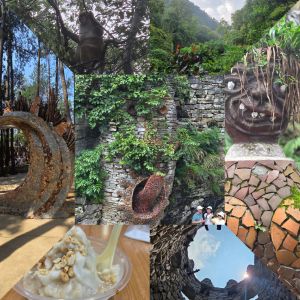
Guiyang straddles the eastern edge of the Yunnan-Guizhou Plateau and is apparently around 1100m [3600′] in altitude which may seem debatable as you traverse districts. The roads resemble Spaghetti Junction in Birmingham (England) with bridges crisscrossing lengthy tunnels and slopes throughout the surface routes. A decent subway and rail system serves the city and outer region. The Yelang valley was a pleasure to visit, a truly unique and hidden gem within China. Twenty years were taken for the recreation of an ancient culture. The stone sculptures and artwork are fantastic. Song Peilun’s vision is a highly recommended visit. Oh, and we saw a monkey at the Qianling Mountain Park, having clambered a large peak and being consumed by a passing storm. That was fun.

Summer ’25: II – Resurrection.

Kitted out with 20kg of luggage, first a tram then a train before midnight allowed Manchester International Airport to be reached. After an evening and afternoon sleep from 1600-2300, I felt refreshed and raring to go. I pottered around with my Greggs breakfasts and waited to fly.

Even as the alloted 0300hr check-in desk opening came, I still had energy to burn. My bags would rejoin me at Brussels Airport, having flew with Brussels Airlines. The world’s longest lines at passport control and the outbound gate were troublesome. The sign reading “last call” for boarding came and went. Without doubt, being second to last on the Hainan Airlines flight was nerve-wracking and not one to recommend Trip.com’s self transfer routes! I had to plead to move up the queue many times. I begged. I pleaded. I reached a wall of negative responses but managed to get there. I hate queue-jumping but I had to force the movement. Needs must!

Mickey 17, Gladiator II, and a few episodes of David Attenborough’s Asia wildlife documentary sandwiched attempts at sleep. The former of the two movies comes highly recommended for reasons of originality within the sci-fi genre. Also, fine acting from numerous characters and a fair dollop of wit gave the movie a largely good rating in my eyes. I rested as much as possible.

Landing at Shenzhen around 0500hrs on the Saturday after departing Manchester at 0600hrs on the Friday remained a good move. The timezone difference of 7 hours, a delayed departure from Manchester, and all the stress of Brussels lifted. I had made it: much thanks to family and friends for helping me to get there. Better late than never. One small step for reunification, one giant leap for family-kind.

Summer ’25: I – A Quest for Hope

Manchester rain made a welcome return on Saturday morning. The sky cried for my departure. The greyness of overhead lines, concrete, and new high rise towers did not clash with the constant matt grey of the leaking vast sky. Blue skies and sunshine had greeted Manchester for months on end. The summer school holidays had now arrived.

Getting to Manchester International Airport’s Terminal 2 early required a 05:25am wake up, an early bus, and the 07:18 train. Kitted with a 20kg rucksack and a lighter 8kg daysack, I ran through my head the things that I may or may have not forgotten. Despite attentive planning and packing, a snag of doubt sat firmly on my shoulder.

Juneyao Airlines, complete with cluttered and near unworkable website for check-in, would be my carrier. Other airlines are available. However, on arrival, my world fell apart. Blood emptied my face my legs became jelly, and the shock of being told my visa had expired hit me like a freight train. It was not a good day.

On the train back to Manchester, I shook in rage qnd worry. I trembled. I vomited. I went to the toilet in other ways. I was empty. Panic battled with sensibility. I struggled home in a zombie-like trance. I entered the house, dropped my rucksack and backpack, and crumpled up into a bawling sack of self-hate, anger, and shame.

On telling the family, I set about rebooting myself and explored resurrection for summer plans. I immediately logged onto Chinese Visa Application Service Centre Manchester’s website and lodged my visa application. A trip to the library was necessary to gain scanned electronic copies of every passport page. And everything seemed to upload.

Sunday:

A day in the garden digging up vineweed and Himalayan-barbed-wire-bramble, with plenty of worrying and questioning of myself. A few video calls and some Bosch Legacy on the telebox. A day of limbo sandwiched by buying some Lego Duplo at a charity shop in Failsworth and an evening of cheese, sauerkraut, and bacon Polish dumplings. That all followed noticing my visa application as not being present. However, it would not allow me to apply due to a previous application. I wondered if it would go well.

Monday:

08:00 – Visa application appear online at Manchester Chinese Visa Centre website.

10:00 –  query visa at Manchester Chinese Visa Centre. Visa application received.

11:46 – email request for further information.

12:00 – further information sent.

Pottering around town. Waiting. Limbo.

15:08 – application approved. Email to print with code and hand passport in.
I legged it from the book and coffee shop.

15:24 – printed documents at Manchester Central library.

15:27 – arrive to Manchester China Visa Centre. Attempt to hand off passport and documents. Man at desk, “I’m sorry we don’t accept applications after 15:00.”
I said, “It says 10:00 – 16:00.” He replies, “That’s wrong. We open again for application drop offs at 09:00 tomorrow.” Thanked man at desk.

I’ll be back. The quest goes on. 🐝

Wednesday:

Using the mandatory bonus free day, I headed to Warrington and met Little Big Sis’ Astrid for noodles and a movie. A good switch off from recent tension.

Tuesday:

08:35 – arrival at Chinese Visa Application Service Centre, Manchester. 5th in the queue.

09:00 – Service commences.

Thursday:

08:40 collection queue, position 2.

09:05 visa in hand, all grand.

Go to bed early (16:00/17:00), wake around 22:00/23:00.

Friday’s plan:

Depart for Manchester International Airport around midnight.

03:00 – Check in.

06:00 board flight to Brussels, Belgium. Sing a Vincent Kompany song and wobble my backside like Jeremy Doku skipping past defenders. Look out for former City player Émile Mpenza.

11:40 – board flight to China, in Brussels.

Let’s be fair, I’m not so sure U.K. leisure or family visit visas are as fast.

Holes in the Earth: A Wander

Manchester Victoria train station has a huge map on tiles. It’s part of the historic Lancashire and Yorkshire Railways station. Before split ticket applications. Before multiple rail network and ticket prices. Simpler times. A glorious end point, or a beginning, or an interchange. My Dad worked here many times. He fell off a ladder there too. Dad’s memory hasn’t been right since! Today, Friday, May 30th, a train departed at 07:21 to Leeds. Panda and I boarded it.

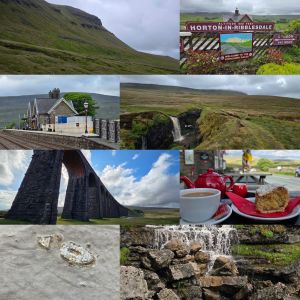
Hull Pot is surprisingly close to Horton in Ribblesdale village. A reasonable sub-hour wander up a gradual incline lined with stone makes for a decent ascent. The only difficult aspect was to turn left after around 5 minutes of leaving the B6479 (Pennine Way road) onto the Pennine Way footpath, just after Horton Beck, heading away from Brackenbottom. Head straight forward and ignore any left or right turns. Hull Pot is toward the hamlet of Foxup. Horton in Ribblesdale station has a small cafe and ample amounts of lodgings for walkers. We needed neither so trod onward and upward.

Hull Pot (91m/300′ long) is neither ceramic nor cannabis or belly. It is a quaint chasm (18m/60′ wide), opening into a gully (18m/60′ deep) of water and greenery, with thunderous cascading water pouring down a steep face of bare rock. The incredible flow of a visibly disappearing river thumped downward into a gap of glistening rock. Not the sort of place to dangle your legs unaided, yet certainly a place to watch every step. The next one may be your last. Watching Panda on a shortened lead warned me of how simple one step beyond could become fateful. Just a trip over the lead; And then a step to the right; Put your hands on your hips; and pray you don’t fall. No more Time Warp references. Sorry Richard O’Brien.

After the great view, heading as the crow flies towards the visible pathway up Pen-y-Ghent takes you away from Hull Pot‘s waterfall vista. Pen-y-Ghent, devoid of trees, shows the passage of time, weathered and individually steeply rising from a patchworked green landscape. Like Hull Pot, there are collapsed limestone features, just of rock, and streams like the one that submerges at Hull Pot only to re-emerge at Brants Gill Head. Sheep, and lambs during lambing season, are everywhere. They’re either looking for selfies or confused by Panda the border collie not trying to round them up. Today’s climb involved clouds and battering winds at the higher points, only to part for sunshine and calmness as I set off downward again. The view at the summit being somewhat shrouded by rolling clouds.

On the path downward, and barely yards from many passing feet sits another hole (Hunt Pot) in the ground. Again a waterfall slips into the broken gash of earth and a huge volume of water disappears from the ground above. Hunt Pot (60m/197′ deep) is a spot more than worthy of a good sit down, rest, and respite. Butties of radish and prawns, katsu coleslaw, and an avocado alongside a gallon of Vimto did the trick. I tucked into Ben Macintyre’s A Foreign Field, devouring a few pages as Panda rolled around in the grass. Photographs were taken of the hole and its waterfall, at which point, I decided the Ribblehead viaduct (detectable from the peak of Pen-y-Ghent) was now the walk’s targeted end point. That and the Ribblehead station, a few yards away.

Following the footpath, near parallel to the discernible flow of the River Ribble, Panda and I passed through farm fields, traversed High Birkwith, the wild flow of Coppy Gill, Brow Gill Beck, and the charming Cam Beck. Emerging onto Inman Lodge Road (B6479), turning right, the bends of Gauber Road reach Low Sleights Road (B6255) and The Station Inn (1879), at Ribblehead Viaduct. A brew, coconut cake, and a sit down were necessary. I’ve always found this area magical. It has an aura. It always calls me back. The oystercatchers, fossils, viaduct, green, and solace. My fortress of solace.

Batty Moss sits beneath the 24 spans of the Ribblehead viaduct. Modern diesel trains roll over this site and have done since the 2nd of August 1875. The picturesque bridge itself was constructed over half a decade. Over a 100 souls perished during its construction and remains of navvy camps can be found in close proximity. Thankfully smallpox, navvy brawls, and the perils of producing a 400m (440 yards) bridge are less of an issue for a rambler in 2025. The 32 metre-height (104′) may cause the odd person to stumble in awe, on a ground covered in natural potholes and squishy mosses. This sensation is often exasperated by steam locomotives crawling over the vast span of bricks and stone. After a wander seeking fossils within the bridge’s gigantic bricks, Panda and I wandered up to the old station at Ribblehead and hopped aboard a train to Leeds. Manchester Victoria was to be our final stop before home and bed. Feet up. Lovely day.

The 15 miles (24km) of walking can be found here (featuring: 2,464 ft/751m up & 2,231 ft/680m down).

Village Station

The driver of the taxi asked why I was heading out so early. I had told him the train time. He replied, I was “going to station with nothing there.” I said all was well. He repeated that the South station was bigger. The North station is new. Nothing there.

On arrival, I exited the car and strode into the mammoth station. The same station had been visible for miles before. It towered over fields and stood out against the distant mountain backdrop. Construction sights lay to the south. The future, planted over land. Towering carcasses of homes yet to be lived in.

The small station door opened to a gargantuan air-conditioned palace of seats and emptiness. Little life lurked within. A few stragglers ahead of their train sat in the bright space, gloomily surrounded by thoughts and little else. Two places to buy snacks and food shone light outwards. Little else, but the beaming display screens gave any sense of activity. A list of a dozen trains spaced throughout a long barren day highlighting the newness of it all.

After a brief wait, a mouthful of terrible coffee and a chicken-based something or other, I descended to the platforms below. Through one of four gates marked a route to the ten platforms beneath. Four future platforms failed to hide their newness and dust. My gate, 2B, stretched wide before passages led down shiny steps and a string of escalators beating the sound of passage.

The long platform stretched under the concrete mass above. Polished tiles on the footway stretched hundreds of yards each direction. A dozen railway train carriages could fit under here, ten times over. Each tenth of the station could welcome and bid farewell to hordes of people, masses of commuters, and reunite the long divided souls of relationships come and gone.

The platform edge, trimmed in white and yellow, displayed floor electronic information boards, guidance, and warned of peril beyond its edge. Each rail beneath and cable above a guide for the monstrous intercity trains. I watched as the smooth gliding train rolled seamlessly along rails into a wide pit beneath the station platforms. It crept to a silent halt. The few passengers boarded. I waited until last. I stepped on board. The journey begins.

Outside In.

Back to China? It was a certainty. A given ordained by Gods and the hands of destiny.

From Manchester International Airport to Istanbul, the first flight with Turkish Airlines was smooth. Smoother still if they’d allowed me the legroom I requested. Still, job done. The huge delay in Istanbul for the connecting flight allowed for opportunities to walk the vast airport and recharge a phone battery by cycle. Why not? When in Istanbul and delayed, take the time to unwind in your own way. If fate is there, do as you must.

Airborne and floating on science, the aircraft was sleepy to Hong Kong. As was I. Life on hold and destiny delivered by expert piloting, a movie was called for. Having watched Black Panther: Wakanda Forever, I needed something jolly and upbeat. Up step, the Billy Elliot of golfing movies, The Phantom of The Open. Talk about entertainment. A delightful movie ebbing and flowing with heart, wit, and polished acting. A truly remarkable tale based on a true story.

From a PCR test at Hong Kong International Airport to temporary digs in Mong Kok, fast forward to a 5.28am alarm bell. Up, up, and away. After a pleasant walk, the train from Kowloon awaited. Customs cleared simply. Checked in eventually. The train to Humen was fairly nondescript, as nondescript 300km/hour vehicles go. Next up, the Humen railway station to Humen Dongguan underground station, through dingy construction areas, and onto a 6RMB subway train to Xiping. Walking the short walk to Xiping Xi station, I clutched my 50RMB in notes that I still had from leaving China. With that, I boarded a train bound for Huizhou.

And that is where the story ends for now. So, what now?

XL

Lately the glasshouse whiteflies fly all around like shattered and scattered autumnal snowflakes. That’s during daylight. Not at 4.35am on a Monday morning. After just 4 hours of sleep, I departed for and then arrived at Manchester Airport, by bus and then train. I felt sleepy.

Walking through Terminal 3’s Customs they checked my toothpaste and deodorant in some kind of smear test. The need to stay fresh had to rule out that I’d joined Al Qaeda. Post-September 11th, 2001 has really made air travel irritating. My flight from Manchester to Katowice was smooth enough. Landing in Poland, I had to await the check-in desk to open. A walk outside revealed this Polish airport was closer to the Arctic Circle than the city of Katowice.

With two hours to go until take-off, I paid my bargain forty-eight quid boarding pass fee in Zlotys. Later Trip.com refunded this having not shared my data to the airline for the connecting flight. The wait was pleasant enough, at a modern and clean airport devoid of the failings of Manchester International Airport. The flight rumbled down a runway, complete with a toppled-over turboprop aircraft just in view. That positioning of a busted plane surely needs a review on TripAdvisor.

Landing in Dortmund, I walked through a crowd of Manchester City fans with shirts and things to sign. The odd Dortmund fan littered amongst them. I shuffled myself aside and watched as the reigning Premier League Champions dribbled through. Dressed in black sportswear, most of them looked like they were straight out of JD Sports. Waiting for that made me miss the bus to the city centre.

About an hour later I paid for my bus to town, and a fellow Blue who didn’t have cash to hand. European standards about card payments are so inconsistent and often inconvenient. Not that Great Britain is much better. I miss the convenience of the Wechat application in China and its ability to do anything, even issue toilet paper.

German efficiency is a phrase often banded about, with seriousness and wit. I found my apartment in the district of Funkenberg after a quick U-bahn-tram journey. A local dinner at a taverna of mushrooms and schnitzel quickly found its way to my belly before I went back for a good night of shut eye.

Having slept well, I checked out, darted to the Dortmund Haubtbahnhof at Königswall 15. I grabbed a coffee from a generic bakery chain and locked my bag away for 4 euros a day. I returned back to my locker after realising I’d locked my coffee in the locker, before crossing the road to the Deutsches Fußballmuseum. I like football. I like museums. I like Germany. The arrangement could have worked out well.

Sure enough the varied exhibits, mostly bilingual, were diverse, organised and engaging. A 3D holographic show, some nostalgia, loads of World Cup materials and a display on Women’s football feature throughout the museum but the 19 Euro charge in to see Paul the octopus encased and a sweaty Mario Götze World Cup winning boot seems excessive. England’s National Football Museum is suggested donation entry, but Germany has won four trophies to England’s one, so perhaps they’ve earned the right to price their security accordingly.

After the football museum, I had a ponder around the city of Dortmund, Germany’s eighth most populated city and noticed how many concrete and modern buildings there. In 1945, allied troops from the west flattened approximately 98% of homes, factories and other buildings of inner city Dortmund. Dortmund was Germany’s most bombed city in one night and one month. A month later the ground assault rolled through and Dortmund’s Nazi days were over.

Ballspielverein Borussia 09 e. V. Dortmund are one of Germany’s most successful and colourful football clubs. They also have handball, athletics, ice hockey and countless other sports because they’re a sports club with 145,000 active members and not just a footy club. Die Schwarzgelben play in black and yellow, resembling bees and have a fantastic fan base, even if they do sing You’ll Never Walk Alone.

Prior to the game friendly beer drinking, schnitzel and sausage tasting could be found outside the ground in picturesque settings, as well as every pub in town. The concourse in the ground was similar before, during and after City’s frustrated draw. The home team and fans celebrated their progression to the knockout stage. City took it in their stride.

The swift return to collect my bag at the railway station postmatch, followed a brusque walk to the central station. I grabbed it from the locker and went to get a sandwich for the late train at 23:30ish. The train went a whole stop, with everyone aboard experiencing a crush like stampede experience and sweating crazily. At Bochum it stopped and allowed an ambulance crew to attend to an emergency. Then another train arrived, also destined for Dusseldorf, as musical chairs started. Everyone wanted to be on the first train out.

The train arrived on Dusseldorf, close to 3am. I had a hotel booked for the next night, check in from noon. I was lucky and found a scenic spot by the Rhine until then. During my time in Dusseldorf I walked the banks of the Rhine, admired the architecture and increased my step count. Good food, great culture and a pleasant trip ended on a Thursday flight to Manchester.

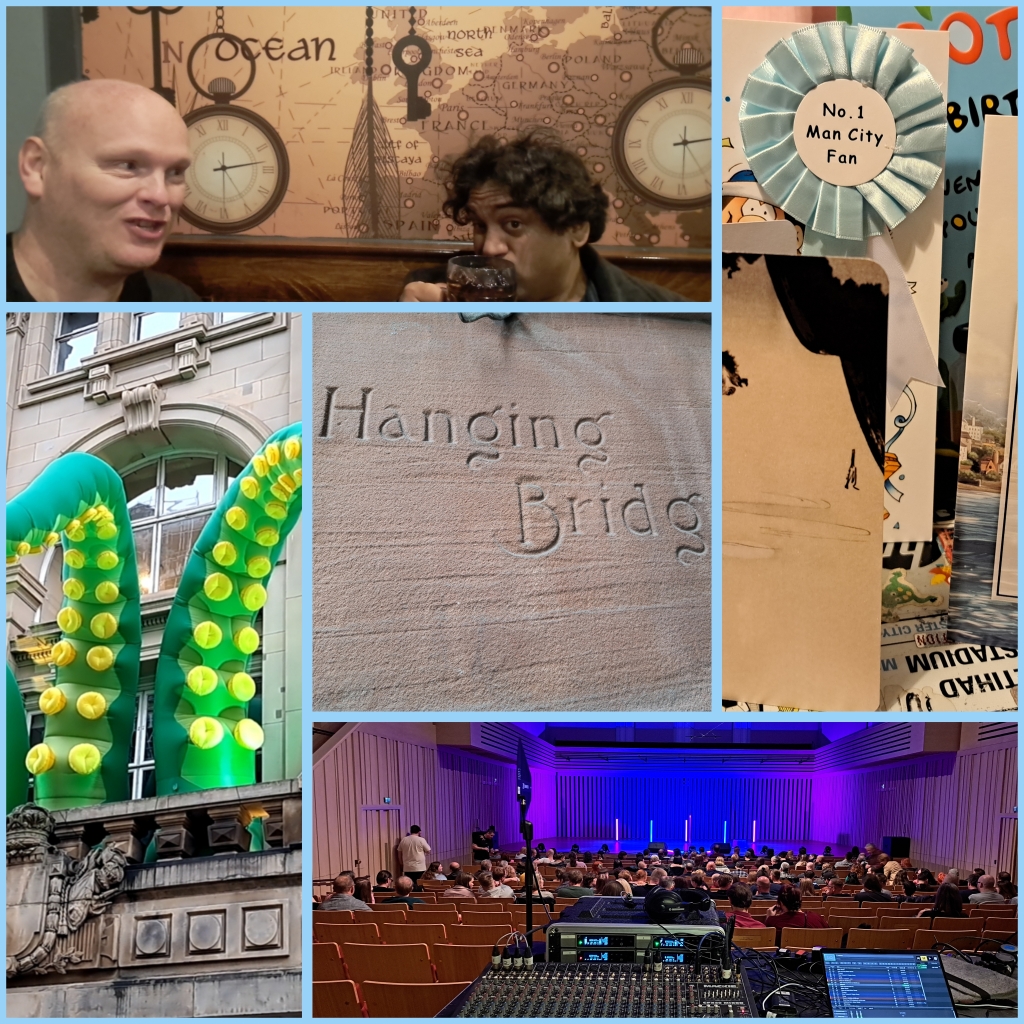
By Friday, I had added one to thirty-nine and reached forty (XL in Roman numerals). A pleasant Vimto ice cream with Brahma after coffee in The Rascals Cafe (Manchester Royal Exchange Theatre) with my sister Christina took up the afternoon. In the evening I met my Mum, Paul and Kat from Shenzhen Blues for dinner and to see comedian Nick Helm at The Stoller Hall. After getting back, I walked Panda and the pleasant day ended with slumber time. A happy birthday.

Step back: III.

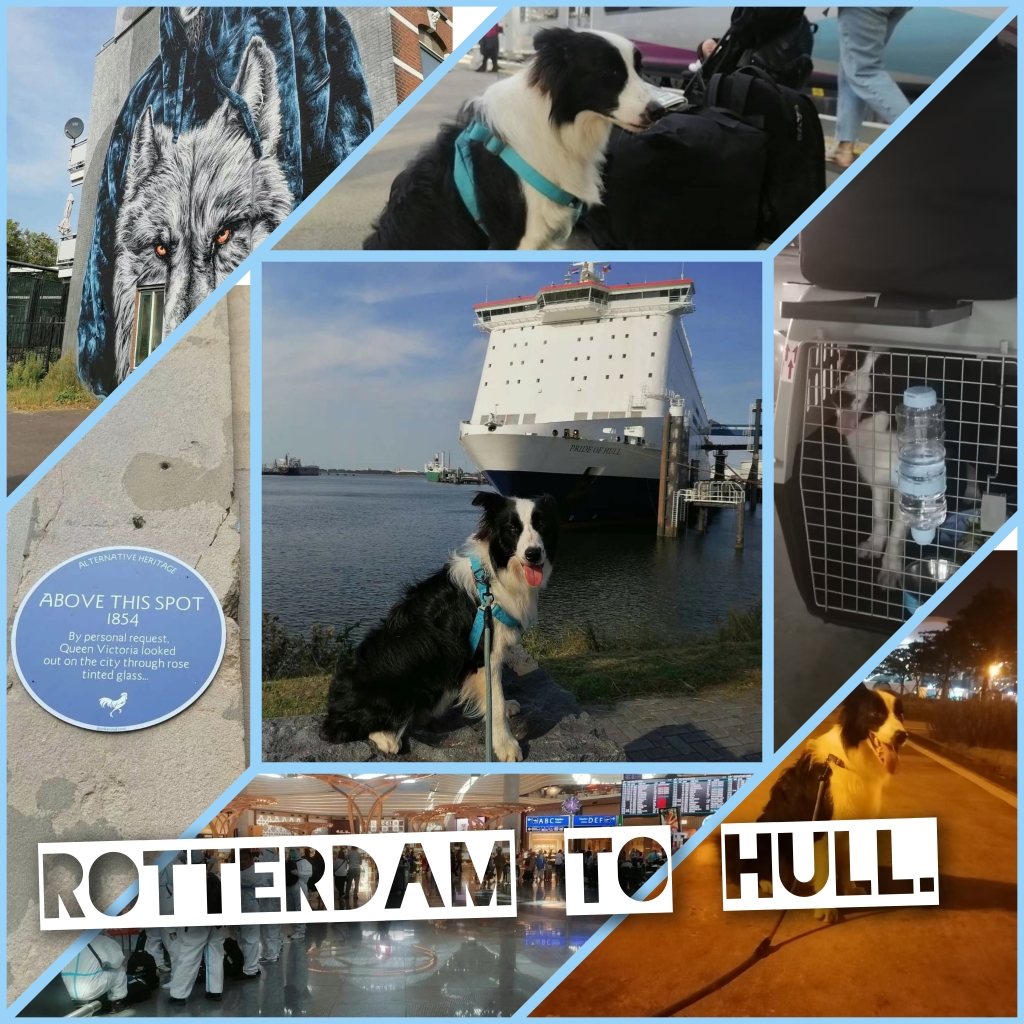
The taxi dropped Panda and I at the Rotterdam Europoort ferry terminal. A pleasant taxi ride with a talkative and kind driver had ended the worry of how to cart my 30kg and 10kg backpack, whilst ensuring Panda was safe on a leash. We arrived with ample time to allow Panda to water every bush and stone on the way to the terminal building. I was certain Panda appreciated this task.

Panda and I sat on a stone bench looking at the colossal MS Pride of Hull. Ferrying to or from Hull and Rotterdam daily, this Bahamas-registered tax-dodging haven of P&O ferries, has capacity to take 1360 people and about 250 vehicles. Christened by Cherie Blair, wife of Tony, this Italian-built ship has been active about 22 years. The WiFi didn’t work. Panda and I boarded and I checked him into the below-deck kennels. He wasn’t too pleased with me. Panda even snubbed a biscuit at the boarding reception.

So, once again, Panda was intentionally abandoned. He was left in his extra large kennel, neighboured by a zoo of dogs, each with its distinct yap and growl. Panda had had one heck of a journey. I felt immense pride in him and reminded myself to ensure he gets a jolly good walk in England, as soon as we were back and settled. Up the decks I climbed and went to my room for a sit down, after getting a new key card…

The Peninsular and Oriental Steam Navigation Company Ferries, or P&O Ferries had shamefully recently sacked all 800 staff across many ships. Whilst their new agency staff from the Philippines were friendly and warm, the company itself would not have been my choice, but for a lack of options. This was the only route. As was the on board cinema movie choice, Top Gun 2: Maverick. A flight movie on a ship isn’t a bad experience. A pint of Cornish Doom Bar, and a cider was also needed. An early night rounded off a simple sailing evening.

Waking in the box cabin, I didn’t know the sun had arisen, nor that land had been sighted. I quickly made myself ready and went to the deck’s Sun Lounger area. That name wouldn’t pass the trade descriptions act. Going outside I witnessed the grey openings of the river Humber and a British coastline that surely the Vikings must have thought ad being a bit off-putting. “Hey Knut, can’t be much worth seeing this way. How about we swing south for the Mediterranean?” Rhubarb wouldn’t have been introduced at that period of history. The onboard breakfast options were equally void of colour.

Eventually the ship docked and like everything British in the 21st century, something didn’t work. The offloading was to be by one route and not the usual walkway off. For foot passengers, had to wait for all vehicles to disembark. Panda, now retrieved and happy-go-lucky, boarded a bus alongside many foot passengers and I. The bus from the car deck went up a ramp, turned right, barely travelled a hundred yards and then emptied its belly of people and goods… with a patient cats and dogs. Her Majesty’s border forces checked Panda’s papers and off we went, onto British soil, or tarmacadam to be exact.

A tenner of a taxi ride later into the town station, and Hull witnessed bombings comparative to the 1940s Luftwaffe passing overhead. Panda deployed several loads right on the doorstep of the railway station main entrance. When you’ve got to go, you’ve got to go. Panda went. His bowel movements had been limited since Rotterdam on the previous afternoon, so he did very well to save it for later. Besides, the train we were booked on, was cancelled. So, why not relax, and let it go.

Having negotiated the chilly North Sea by ship, two trains would guide Panda and I through Yorkshire and over the Pennines to Manchester. All aboard.

Right to Return.

How do.

The following months are going to be difficult. The future is sat on a knife edge. The inevitable travel home for summer is not intended to be one way. The logistics, however, are impractical and almost unworkable.

A friend, Stephen, estimated costs for return to hit the best part of 5-6000GBP. God bless the economy seat options. I wonder if a seat in first class is much different. Others have mentioned 7-9000GBP. All those pounds could support a charity or something more worthwhile than a 30% occupied flight destined for China, far away from the intended city of stay. Even now China has no scheduled flights to or from the U.K. June is the loosely mentioned rumoured return. Even that was delayed from February. China isn’t ready for COVID-19 case increases? Well, it has flights to other countries with high caseloads. So, that doesn’t sound right. Political? Perhaps.

Regarding the next academic year, Tungwah Wenzel International School (TWIS) placed an offer to extend my stay there. I was touched and happy to receive it. Three years ago it would have been a great offer. The problem is that the world has changed. I had to place a counter offer. To commit to two more years here makes the uncertainty of return, high quarantine costs and extortionate flight prices untenable. If I’m supported and with understanding from my employer then all is good. Patience and planning will be key. If not; well, here lies uncertainty. The ball is in their court. I await their reply.

In the meanwhile provisional offers and begging messages are flooding in from LinkedIn, and an agent representative of a company offering Qualified Teacher Status (QTS) via ITT (Initial Teacher Training) in a school in Beijing. Doors are opening and hands are gesturing to come in. All this as the foundation for the Diploma Programme at TWIS is being laid and prepared for. A change of location isn’t something I desire.

I’m sat watching Gomorra, an Italian drama series deeply entrenched in the organised underworld of Naples. Currently, I’ve enjoyed a gritty trio of series and have the fourth installment under my scrutiny. As a fan of The Sopranos and its gripping characters from the get go, choosing to view Gomorra was a simple choice. Gerry, from Ireland, recommended this show for months on end. Many, especially in Napoli, argue the TV series (and spinoff movie The Immortal) glamorises violence and gangland culture but a viewer seeks entertainment. The script-writing is sharp and the direction flows. I thoroughly recommend the serial drama.

For now, I’m just planning a holiday to see family and friends. How I get back is anybody’s business. Whether I remain at TWIS now is debatable. I wish to stay but now that IB continuum has arrived, I know I’m easily replaced. Private education is all about the money. And money is cold and unforgiving. Just like COVID-19. It’s there, dividing and conquering. In these days, living without money is like trying to live without COVID-19. You’re in a bubble, isolating all. Outcast.

Outbound doesn’t look too complicated. Return costs are from 4077GBP upwards. Then, add quarantine costs for 21-28 days…

Ta’ra.

Ts & Cs

How do! 你好!

Life has so many pieces of small print, tucked under the seams, crammed into the crevices, and dropped into long forgotten pockets. They can be found as hints, messages and moments in our history. Some are beautiful, dutiful or testing. Most can be learned from, such is the way of life. The small print keeps coming though.

Rainham Steel and their hot flanged joists or cold circle angles being advertised at British football grounds has never ever made sense to me. Yet their imagery on football photography for years on end has stood out and crept into my psychology. The sign doesn’t have a phone number or website. Nothing. It stands out. No terms and conditions. Just a bizarre advert targeting football fans (in attendance or otherwise watching via television) who needs industrial standard steel. Rainham Steel have no clear purpose other than to be present through tradition and maintain their historical connections to the beautiful game. Now, where do I place my girders?

2021 started with optimism, way up in Yubeng village. Through a mixture of local hospitality, Oliver, Piotr and I finished a few days wander with a countdown below snow-capped mountains. It really recharged my mental batteries. Again in summer my passage followed the flow of Yunnan, as if swept a long by a calm river. That’s where I grabbed my first and only tattoo on date. No contract was mentioned. It was surprisingly easy to scar myself for exchange of cash.

A few days after leaving Yunnan for New Year and life’s finality was highlighted as City legend Colin Bell passed away. I never saw him play football. I lived off his video footage and stories from friends and family. I filled my heart with his warmth from a very reluctant biography. Somewhere at the back of my mind the joys of trekking clashed with the feeling of the passing of time. This is life. A condition of living is death.

Three cycle crashes in a year and one trip to hospital as a result of the latter crash brought me down to Earth. My first outpatient visit to an emergency room to patch up cuts and check some impact marks to bones happened. My first inpatient visit and night stays at hospital later in the year terrified me but left me thinking I need to improve my fitness and recover stronger than ever. Even if age is a small print, this challenge shouldn’t get the better of me. I’ll kick a ball again and find mountains to trek in 2022.

I now approach 8 years of life in China and Dongguan. That’s a hefty chunk of my thirties. It’s almost a quarter of my life. I’ve spent two Chinese New Year holidays in Dongguan and it looks like 2022 will be the same. This whole COVID-19 thing just drags on and on. Even my third jab (the booster) has left me lagging behind. I’m on analogue when all around me is on digital. Creased by politics, changing attitudes and a global pandemic of fear, working and living in China is increasingly less attractive. A new two year contract hasn’t been signed yet. I love the job but I must think deeply. There are many implications of signing.

The year 2021 has been quite mentally testing. Unable to travel to the U.K. to see family and friends, blighted by world news of fear, panic and that bloody virus, I’ve sought solace in gardening my balcony and giving a new home to Panda the Border Collie. The little fur ball of joy joins me on the sands of Huizhou to welcome 2022 in. Alongside his doggy girlfriend Sasha and her human slaves Miss Keisel and husband Charif (with student Amir and his sister Emma). Talking with them I feel that homesickness is strangling talent. If we want to leave China to visit family and friends, it seems to be mostly a one way ticket. So few who have left have returned and 2021 had more than its fair share of leaving events.

On the subject of leaving, Sergio Aguero, scorer of that 93:20 goal, amongst his many records and City’s all-time greatest scorer, announced he would leave City. Then he left. He was warmly welcomed at new club Barcelona but the optimism evaporated as he was soon forced to hang his boots up due to a health problem. 2021 wasn’t a great year for Sergio but he did bow out with 2020/21’s Premier League title and a Champions League runners up medal. The perfect ending doesn’t always happen. That’s for fairytales.

Great writers like Jim Steinman and Eric Carle passed away, having influenced countless souls on their life journeys. Their words accompanied me at Scholastic’s Guided Reading conference, throughout three I.B. training periods and some Jolly Phonics. At the end of the day, reading has got me to where I am in Tungwah Wenzel International School (T.W.I.S.) and I intend to do my best with the knowledge I want to share. Perhaps, guidance is my destiny. Only 2022 can tell.

Summer witnessed the departure of many international colleagues to pastures new. Not before Mr Oliver and I trekked around Shanxi, Shaanxi, Ningxia and Gansu together. Not a bad way to say, “Bon voyage!” And then Autumn flew by. The October holiday gave me chance for hiking and wandering but nothing amazing happened. 2022 could be that year. If only the bloody virus would fizzle out. The movies Outbreak and Contagion each hand happy endings. Rene Russo and Kate Winslet didn’t do bad. 2021, however, is the poorer cousin of 2020.

Discrimination and prejudice have risen; borders have increased with social segregation and some countries closing to others; lifestyle changes such as Zoom and a plethora of online teaching, working and scamming; and misinformation became the norm. Afghanistan went backwards as if to illustrate a world trend of fans being hit by turds. Glasgow held COP26 and the world climate crisis was averted. I think. It’s been a funny old year. The most important thing though, is to forget the traditional ways and go for something sustainable and new. The old ways led us here. Let’s go new for 2022.

Happy new year and all the best!

May 2002 deliver hope and dreams.

Ta’ra! 再见!

CITY: Similarities.

Good evening/晚上好

Walk into any Starbucks or anything McDonald’s and you pretty much know what you’re going to get. What if that model could be applied to cities? I live in Guangdong’s Chéngshì Qún (城市群) which is a city cluster or Megalopolis. From Guangzhou to Foshan to Dongguan to Shenzhen with Qingyuan and Huizhou nearby, there’s little escapism from a region also containing Hong Kong and Macau. Zhuhai, Zhongshan, Jiangmen and Zhaoqing add to the largest and most populated region of Earth. That’s a lot of Starbucks.

Last December I was lucky enough time visit Yunnan. I stopped by Shangrila city which was renamed from lesser exotic name like Zhongdian. The first place I travelled in 2020 was Suzhou. I’ve since traversed my way through eastern Shenzhen, walking 15km one day and 19km the next. In previous years I’ve visited Shanghai, Nanjing, Qingdao, Zhangjiajie, Beijing, Beihai, Guilin, Manzhouli, and other places taking me through many different provinces. Many Starbucks along the way.

The land is diverse here. The population is everywhere. The cities are like copy and paste versions of themselves. In summer, I visited Yingchuan, Xian, Chengdu, Xinning, Dali and the more places I passed through cities, the more I loathed cityscapes. Perhaps it’s the sudden and fast development of cities in China. They’re almost all modern. A population doesn’t grow from 540 million (1949) to 969 million (1979) to 1,374,620,000 people in 2020 without cities. Aside from a jump in the death rates (for sparrows too! Four Pests Campaign除四害; Chú Sì Hài) during the Great Leap Forward (大跃进 Dà yuè jìn, 1958-1962), China’s death rates have been steady. It’s birthrates slowed after the one child policy in the 1980s (to 2015). Of the population around 26% lived in cities during 1990. Following 2018, 59.2% of all people lived in cities and the or conurbations. McDonald’s grew and grew.

Of the roughly 102 cities of China, you can expect to see the same derelict and abandoned malls; matching apartment blocks rising like tombstones (less so now Evergrande ran a 355 billion USD debt); dense alleyways; laundry and cycles everywhere; lemon tea shops; fast food stalls; older wet and dry markets; strangled urban villages swallowed by expanding cities; modern architecture of the occupied sense – some rusting, some flappy and tatty, some shiny and unopened; or some older colony remnants. Don’t expect to see a temple devoted to Fǎlún Gōng (法轮大法) though. More likely a Burger King.

Expect a walking street or several. These high streets are often loud and feature the same range of sports or department stores. Jewelry etc. Same, same. The traditional gates, colours and lanterns give great character but battle against golden Ms and green and white goddess logos. Actually forms of cities in the West and East differs very little. It’s the older bits and the modern diversity that stands out. Not the segregation of tool shops, household ware and restaurants. But, cities need a bigger heart beat than Pizza Hut and Nike stores.

Whether the city is historic, a National Central City (国家中心城市), a Provincial Capital (省会城市) or one of the other several types, most cities lack appeal. They have bits and places worth seeing, but overall they’re towers, districts, factories and newness. Grid-lined of not. To the residents, and the communities within, they have hearts and character. But to the touring foreigner, most cities appear the same. They make good exits to proper local cultures, mountains and away from the norm.

“Citizens of the People’s Republic of China enjoy freedom of religious belief. No state organ, public organization or individual may compel citizens to believe in, or not to believe in, any religion; nor may they discriminate against citizens who believe in, or do not believe in, any religion.” – Article 36 of the Constitution of the People’s Republic of China (中华人民共和国宪法 Zhōnghuá Rénmín Gònghéguó Xiànfǎ, 1982)

The positive atheism here contradicts the multitude of religious hubs found in the U.K. They each bring their lack of character. Here in Dongguan, a Pizza Hut may fill that void. I recall Albania having a growing religious influence and so much colour and character around the culture it forms. Here in Guangdong, KTV is possibly that central axis. Being irreligious has its benefits. Being religious has its benefits. There are constitutional and Confucian beliefs and values. It’s a mixed bag. I don’t claim to understand or know what makes a good balance. I just know there are too many Starbucks here in China.

Maybe after a few decades, each city will develop more character and less commercial faces. Who knows?! There are signs now but everything seems almost the same. The same difference. And Beijing knows that identity is key. The more time I spend in and around cities, the more I question their sustainability for our minds, as well as the environment and culture. Are cities a problem?

To be continued…

再寄/So long

Stage XII: Serendipity x Terra

Nihao! 你好!Hello!

Lee Child mentioned in his novels, that his character Jack Reacher never goes back to a place he’s visited. It’s a state of mind. I’m not Jack Reacher. I’m too short and not as strong. I went back to Dali’s Ancient town in a car with Qiézi (茄子) and the trio of girls that set out with our driver in the first place. It had only been for two nights away, but such was the refreshment of the trek, it felt longer (in a good way).

I checked into the Jade Emu Hostel once again, who were so busy that they put me into a neighbouring hotel. A room is a room. Then it was time for a coffee at Movie Time Coffee Shop, surrounded by a chilled setting. Qiézi joined me for a cuppa and we talked a little. Two dogs, one tiny and one medium in stature had a fuss, before climbing all over us for hugs and attention. It was a pleasurable end to a good day.

The following morning I met QiéZi with Xiao Jie, one of the girls from the trekking, and we wondered to a set of temples (including Gantong temple and a nunnery) and trails on 苍山 Cāngshān, starting somewhere near Dali University (by Xuefu Lu). The gentle upwardly walks led to BuLuoSi temple and a view of numerous waterfalls. We didn’t return to Dali’s old Town (古城, Gǔchéng) but instead bypassed it to meet QiéZi’s good friends Lin and Spirlo. The once top 13 city (in terms of size – in the year 1000AD) is a sprawl of farms and villages along the Cāngshān range. Lin and Spirlo live at the far end of along road, and down an alley, in a lovely little farmhouse surrounded by gardens rich in vegetables.

We’d gone from orchids, rhododendrons, camellias and birdsong to a relaxed house filled with warmth and harmonies. The six cats with their talented masters of Lin (from Fujian) and her Greek husband Spirlo were great company. Plenty of conversation was had from talking about the didgeridoo to football to camping and trekking.

The final full day involved a filling breakfast of omelette and salmon at Serendipity cafe and diner. It did exactly what it said on the label filling my belly to the brim. Not a bad iced coffee indeed! Then, a wander to drink fruit juice, natter and following that a gander at the market on Sānyuèjiē (三月街) and all the marvelous oddities for sale. A fire festival is due in Dali around about now. After which a spot of planned spontaneity was called for, planned and put into action. A relaxing mix of sensations followed. I’ll write about that another time.

The day culminated with the eating of tiramisu at the Terra cafe. It was by far the best tiramisu I have ever experienced. Qiezi, Xiao Jie and I were eventually joined by Echo. As is very Echo, she broughta new friend along. Farola talked star signs and birth times (08:37, if you aren’t wondering). They ordered more tiramisu but by then I was stuffed like a well-fed teddy bear at a teddy bear factory. I’ve tried many and few have satisfied. It took me a while to realise that Terramisu wasn’t a spelling mistake but a variation on the cafe name in the food type! And, then Qiezi and Xiao Jie bid everyone goodbye. It could have ended there and then, but the magic carried on.

I was invited by both Qiezi and Xiao Jie to Lin and Spirlo’s farmhouse. Qiezi had taken the responsibility to feed their six cats. I pondered the difficulty of getting from there to Dali Railway Station. Echo asked me, “What’s stopping you?” She was completely right. Nothing was stopping me. I hugged Echo goodbye and I’m not ashamed to say a few tears formed in my eyes. Emotions can be high at times of homesickness and when you really appreciate great friends.

Leaving Dali behind, I feel like I will return. There’s much more to explore and within the whole province of Yunnan, there’s too much nature to ignore. I’ll probably be back. The final night lay on the ground staring at stars with Qiezi and Xiao Jie was special. Qiezi made a few very wonderful photos. Sharing the sights of five shooting stars in one night was a unique experience.

Home is where the heart is. Your heart doesn’t have to just be in one place, at one time, or with one person. Hearts are open. Making a connection irrespective of time and space is a wonderful experience. There needs to be more love and peace in the world. In the words of Qiezi, “Everyone is free spirited and an adventurer. Independent individuals but connected together.” It’s been a delightful and unique time in Yunnan. My heart feels warm and my head clearer than ever. Something will travel with me from these days that started in Dali and I leave behind a piece of my heart.

“We’ll meet again, don’t know where, don’t know when, but I know we’ll meet again some sunny day.” – Vera Lynn song We’ll Meet Again written by Ross Parker (Mancunian) & Hughie Charles (also born in Manchester)

Zaijian! 再见!Goodbye!

Stage X: Shangri-la Too

Nihao! 你好!Hello!

I awoke on Wednesday just after 05:30. I’d had about 5 hours sleep. The rooster may have fell under the category of an unwanted alarm clock. Bizarrely, I couldn’t nod off again. Yesterday evening had been quite subdued. I’d hung out with Echo and QiéZi (茄子) in their funky friend Cici’s juice and snack bar. Over blueberry and banana toasties it was decided that QiéZi and I would visit the legendary Tiger Leaping Gorge (虎跳峡/Hǔtiào Xiá) on the Jinsha River (Jīnshājiāng/金沙江) in Lijiang Naxi autonomous county (Lìjiāng Nàxīzú Zìzhìxiàn/丽江纳西族自治县). The chance to see more of Yunnan (云南) wasn’t something to pass up. Besides which QiéZi is a wise traveling companion.

Checking my phone at 05:45, I see we’ve grown to a group of 6 people and we’re headed to a trek somewhere near Shangri-La county (香格里拉县/Xiānggélǐlāxiàn). I have until the 3rd of August to play with, so as the Reverend Gallaghers said:

“You gotta roll with it
You gotta take your time;
You gotta say what you say;
Don’t let anybody get in your way.” – Roll With It, Oasis

So, I gave in to not being able to sleep more, grabbed a coffee at the cosy Song Sisters Bookshop and Cafe before departing the fantastic hospitality of The Jade Emu. Song and Dave are most welcoming owners and have knitted a fantastic community for those wishing to pass through, or stay a little longer.

Nomadic QiéZi arrived with the driver and we set off, with her friend Cici to collect two more friends. The journey began with a chattering driver, who gave so much information along the way, and recommendations. We stopped for hot corn and potatoes – although I declined the corn. The driver also provided yogurt and a selection of fruit. QiéZi gave me a coffee early on too, so a welcome toilet break arrived at an ideal time. No sooner had we left than we arrived, give or take four to give hours of driving.

Our group of six entered a restaurant and ate delicious breads, with a sweet cottage cheese and a meaty potato dish. A jolly day with a few games of wéiqí (围棋, sometimes called Go). The game involves black and white stones and is a territorial game of strategy. There are variations on the original but for this occasion, it was first to five in a row. Simple. Fun. Entertainment.

The evening involved sitting on our arses talking and planning tomorrow. The heavy rain brought about my several freakish weather fronts will challenge the next two days and any potential wanderings. The group have their eyes on Abuji Lake (阿布吉错). This may prove overambitious, but not every journey has to complete. Some off the beaten tracks lack tracks at times. The hard to find details for the trail aren’t exactly clear or enlightening. If the walking starts at Jiulong Yangchang (九龙羊场) then all is good.

Right now the courtyard of Desti Youth Hostel, complete with two big cute dogs isn’t a bad place to chill and await the next day. With a giant screen showing an Indian movie and a variety of games in a covered area, it’s a great place to be.

Zai Jian! 再见!Goodbye!

Stage IX: Dali (and the mysterious Aubergine)

你好!Nihao! Hello!

Salvador Dali has nothing to do with the Yunnan city of Dàlǐ (大理). The draw to Dali has been the art district, cycling, the coffee and cafe culture and my friend Echo. Also, wherever I’ve been in China, everyone mentions the comfortable weather of Yunnan.

Echo or Eck published a poetry little picture book recently. She’s made her nomadic home in Dali. Here she’s honing her artistic talent, existing comfortably and living happily. I dropped by (via Guiyang and Kunming) from Chengdu, Sichuan province to say hello. I told Echo I’d arrive on Sunday but Saturday afternoon, walking by the Terra coffee shop seemed as good a time as any. Yunnan is great for growing coffee and Dali has no shortage of coffee shops.

A good old chinwag and catch up preceded a walk through the ginnels of Dali’s ancient old town to a door in a wall. The door was open and smooth tempting beats were gently rolling out. Ducking below the low entrance, an Old-styled yard with greenery and tables greeted us. Echo’s friend (or should I say complication?) Yali and his brother were serving up delicious pizzas. The pomegranate tree nodded towards the range of locally-produced liquors. Here Echo introduced me to Myrtle Bee, a girl named QiéZi (茄子 or eggplant/aubergine). There were several others but my recollection for names had by now been overwhelmed.

Meanwhile my mouth had been delighted by a cream cheese and tomato pizza, followed by a further shared pizza with zucchini and deliciousness on top. The pesto dip was a smart move. A side salad featured a baked cheese and rocket lettuce. It was a bit too salty for my pallet, but overall very tasty. The funky beats faded and a disappointing bar called King Cat followed. The music wasn’t my cup of tea, but it saved wading through deep puddles and high-bouncing rain. After a later than expected hour, I arrived back to the Jade Emu China Australia International Youth Hostel, only to find my swipe card to enter didn’t work. The matter resolved itself and I slipped off into dreamland.

I didn’t need a sign for Cāngshān (苍山). The imposing green and cloud-kissed range of peaks. The Didi taxi driver from Dali railway station to the hostel had given ample chance to view the waving weaving green peaks. So, with a late rise and a belly full of good food, I set out for a waterfall recommended by a friend. On passing a set of small waterfalls, I headed up a track made by goats or sheep or possibly very narrow humans. The steep track disappeared and I soon found myself jutting between soft earth, trees and huge fluffy plants. By which stage I’d reached a ridge, with a very confuddled water turbine worker, who then directed me up a hidden pathway towards the top ridge. It was a tough but pleasant trail.

The undergrowth swept away to reveal a near-hidden valley tucked between two mountain ridge lines. I wandered down, dipped my feet, watched the butterflies and listened to the idyllic birdsong. One can definitely relax when clouds cuddle the mountains above, and gentle breezes softly drift around your chest whilst your feet are in chilly flowing waters.

Once again Busa called for dinner. Their second opening night led me to catch up once again with Echo, her Yali and other friends. The waitress Hazel, from Changde, took an interest in the book I was reading. A few days later, the tatty and soggy paper back was left for her to read. Echo’s friend QiéZi invited herself to my next walk the following day. Cāngshān (苍山) once again would be the wandering space.

With little barefooted QiéZi (who is no taller than 155cm), we set out towards the Cloud Jade pathway of Cāngshān. Passing the chair lift to our left, then our right, then left again we ascended. Stopping for Pu’er tea, a coffee and a snack at a park Police point seemed reasonably normal. The local boss had her grandson playing with leaves as she served a refreshing brew to us both. We left behind the options of hospitality and wandered paths here, there and everywhere. My pigeon Chinese and a relaxed mood made the afternoon to evening a satisfying and contented ramble.

By about 8pm, after almost eight hours of moving forwards, we descended through dark shadows and paths more at home in the deepest darkest parts of JRR Tolkien novels. Emerging from utter darkness, with only the company of fireflies, seemed to take a while but the adventure was nevertheless a great day out!

The next day (which is today, now) I decided this town needs a little more of my presence. I decided for the remainder of the holiday that I’d be here or there, but not so far from Dali. Why not? A place that puts a smile on your face and opens you to the nature around it, isn’t all bad! Ian Fleming penned some of his books in his Jamaican home of Goldeneye. Perhaps a few days in Dali and I may have found my Goldeneye.

However, a few hours later, I changed my mind. Have shoes, will walk. I will keep looking for answers and smiles.

Zai Jian! 再见!Goodbye!

Stage VIII: Chengdu & Don’t

你好! Nihao! Hello!

The first train from Chaka Lake station left on time. I’d spent an hour or so prior talking to a young your guide called Ethan. His tour group were busy exploring Chaka Lake. He kindly shown me the mine workers’ village and a nondescript shed that doubled up as a shop. Inside it was crammed with fresh vegetables, beers, spirits, dry foods and all the things life needs to survive. The dark shop had a big bottle of water and a bottle of lemon tea. That’s exactly what I wanted for the four hour train ride ahead.

As I went to pay, Ethan, born in Qinghai and a graduate of philosophy, beat me to it. He insisted. It’s hard to fight warmth and kindness from people at times. We sat on his your coach, complete with snoring driver, and talked about Buddhism, Confucius (孔夫子 Kǒngfūzǐ), Muslims (Hui), and harmonious people. He mentioned how one grandfather had fled persecution during the Cultural Revolution, on the advice of fellow villagers and how another had ridden his horse away from the late-World War II battlefield with Japan.

I changed at Xining for the second train. A sleeper carriage all the way to Chengdu (成都). I awoke, still with three hours to kill, flipped open Word By Word: The Secret Life of Dictionaries and half-read, half-day-dreamed. Alighting the train at Chengdu Railway Station, I emerged into a world of grey. Concrete and aged. My first impressions lacked enthusiastic joy. I headed down to the subway for a tube train to the Chengdu South Railway Station.

I departed the station’s subway via exit C, emerging into a barren building site. I turned right, trying to find a way to the other side of the surface railway. After about a kilometre of walking, I arrived at the Skytel hotel. I checked in without trouble, then headed out for an exploration of the city’s relics.

My initial impression of the city softened. Littered with monasteries, relics and life, the city of Chengdu became a green established city with limited construction (unlike many other cities) but sadly one that has far too many flyovers and cars. I visited a monument to Zhūgě Liàng (诸葛亮), the one time legendary military leader and prime minister of Shu Han (蜀汉) during the Three Kingdoms period. From there I tasted black ice cream from a black cone. No apparent explanation could be given. The Wuhouci (武侯祠) temple was okay but the modern Jinlin Ancient Street (锦里古街) around it was heavily commercial, in a way resembling so many other cities that have tourism at their hearts. The new version of an old style street is very much a photogenic tourist trap.

The biggest draw for tourists lies to the city’s northeast. The city of Chengdu is famous for the Chengdu Panda Research Base of Giant Panda Breeding Centre. It’s a kind of zoo limited to red pandas (the original panda) and a handful of aquatic birds… and Giant Pandas. The 58RMB ticket seemed a little harsh at first. Every enclosure had a sign saying that Giant Pandas can’t go outside in warm weather. For me it was no problem. For many other fare paying customers, they were angry on the border of irate.

On entering several internal enclosures, I managed to see a few scruffy Giant Pandas. Their housing having turned their white to grey and black to dirty. Usually Giant Pandas sit with their arse to the windows. Maybe to drowned out the think it on the glass by adults and kids alike. Tired looking security staff didn’t seem interested in keeping the noise down. Some opted for megaphone to make sure you didn’t stay still too long and enjoy the majestic mountain beasts.

Cameras and selfie sticks are all fair and good, but waving them around carelessly striking a Mancunian in the face will only result in an ouch and a tut. Said person then asked me to “小心” (xiǎoxin) which means be careful. It was entirely my fault to be stood still and swiped by a careless metal pole with an iPhone begging to be stamped on. But, instead I tutted. Tut!

I observed Sichuan Opera (四川歌剧院) on the way to meet a good friend Momo and also caught up with an organiser of the Dongguan World Cup for beers, a natter and midnight snacks. His former student friends were all policemen and lawyers. It was an interesting insight into Sichuanese language and culture. They were all so very friendly. Just like the Taoist people at Qingyanggong Temple (青羊宫) and Du Fu’s cottage (think Chinese Shakespeare). Most of the food I ate was not too spicy (微辣; wēilà) but often it was too oily and spicy. The midnight snack hotpot from a Chongqing boss (老板 lǎobǎn) was delicious, even though I’d ate earlier!

Sichuan pepper (花椒; huājiāo) isn’t too hot compared to Thai and Indian foods. It’s just a little more drying with a kind of mouth numbing effect. Although for one meal, passing a Scotts Fish & Chip shop I had to try it. For 110RMB, the large cod and chips with a drink didn’t disappoint at all! A huge Tibetan area by the Wuhouci temple also had my belly full far too much. Meeting Momo in Comfort Cafe (British-style) meant my two days in Chengdu featured a balanced diet of hot and bland. A good Ploughman’s is hard to find. Sorry, Comfort Cafe, I didn’t find it. The piccalilli wasn’t bad though.

Meeting a student who was travelling alone, I ended up exploring the Panda Museum at the Chengdu Panda Research Base of Giant Panda Breeding Centre with Jason. He explained how he was studying to be a soldier. I didn’t ask questions. Anyway, we tagged along together and ended up going to the immersive Jurassic World exhibition. The 168RMB allowed a wander through some animatronics and simulations. It wasn’t bad and took me back to the first Jurassic Park movie and book. A highly enjoyable contrast to other cultural parts of the days in Chengdu. Chengdu is truly a modern old city with a futuristic outlook.

Next stop: Dali (after a bloody noisy train journey… or three). It’d be nice if the obese woman and her young child that is full on slobbery would stop screaming down their phones. The phone calls are not really helped by the in-out, in-out nature of tunnels and mountains. Almost everyone around them is going on mad. I’ll just tut. Tut!

再见!Zai Jian! Goodbye!

Stage II: Shanxi’s Great Wall

晚上好 Good evening (or whatever time it is),

The Great Wall (长城) is massive. It’s length exceeds the distance around the U.K.’s total coastline (I believe). Fact check that at your heart’s content. Heading from Xi’an involved a night train on a soft sleeper bed. The room had old yellowing lights, grim grey walls and no power sockets. It was cost-effective to travel and bunk, than to bunk at a hotel then travel. The selected option had no shower and barely a place to brush your teeth in comfort. The on board restaurant car involved a selection of noodles, room temperature water or baijiu (rice wine).

Having finished Lee Child and Andrew Child’s The Sentinel, sleep was an easy choice. My former colleague Mr Oliver occupied the attention of an enthusiasm kid trying to charge his phone at a busted power point outside our bunker of a room. The lack of ventilation wasn’t so bad because our closest window slid down from time to time. Waking up at 01:30hrs due to a slammer of a man thumping down his suitcase, thrashing his shoes off and generally bumping everything with loudness wasn’t so bad. Until his eruptive snoring. Still, I fell asleep well.

From Taiyuan station we wandered to a bus station, Jiannan Bus Station, bagged tickets and sat down to eat in a Chinese equivalent of a greasy-spoon cafe nearby. The Shanxi pickles were good alongside egg pancakes and eggs. After an uneventful journey with a dab of xenophobia, we arrived at the mining region of Yangquan (coincidentally where I’m writing this now). Immediately a Didi taxi was booked to Niangziguan and the village of ShuiShangRenJia. The water village has multiple bubbling springs feeding babbling brooks and streams. Some pass through and under buildings. Our homestay had such a variety of flowing water over the roof and in the restaurant area.

The above was written yesterday evening and since then there has been an overnight train journey on hard seats. Think little old ladies spitting into metal pans, snoring and general discomfort. On the positive side, some fellow passengers made space for my rucksack and moved from my first seat. Mr Oliver and I drank a few McDonald’s-based beers, pretending to be customers at the American Embassy branch of Taiyuan. It passed some of the three-hour transfer time.

We have wandered through Guguan Pass and Ningzi Pass in recent days. Seeing the old stonework and some newer sections has allowed us to explore a few off the beaten track avenues. Some knee-deep in thorns and prickly bushes, with wasps the size of fighter jets buzzing by our heads. Some horsefly species surely must take their name from that of them being the size of a horse. Scorpions and centipedes have whipped by and so far been avoided. Although mites and spider bites have likely been experienced.

The jagged snaking Great Wall sections at Guguan are far more dramatic than that of Ningzi Pass. The protrusion at the latter have been remade in recent years but sit atop a splendid village and river landscape. At our lodge of choosing, the owners have decorated the walls with photos and artworks of the locality. The waterfall these days is hidden around a river-side theme park and tacky attractions. However, the Great Wall lines an ancient village.

Guguan is an oddity. The wall towers over a fantastic entrance gate. The ground is lined with centuries of horse and cart worn stones. Around the entrance, a highway slides through (under a section of bridge connecting The Great Wall). The scars of industry, mining and the Revolution periods of China’s new era shroud and strangle the Great Wall before releasing it’s higher levels to a combination of wild scrubland and farmlands.

The short stay in Shanxi was a pleasant one with local people gifting us refreshing cucumbers, crunchy crisp pancakes and an abundance of pleasantries. The food was excellent and varied. The people were generally warm and welcoming. The whole visit was delightful, despite the heat! However, I won’t miss the relentless thorn bushes (or the snarling dogs)!

Good night (or whatever time it is)!

Stage I: Xi’an

Departing Shenzhen International Airport for Xi’an city in Shaanxi province proved a problem. The 1050am flight was cancelled. That was a pretty hefty stumbling block. But, in checking the trains, Mr Oliver and I booked a long haul train from Guangzhou South to Xi’an via Zhengzhou East (wherever that is). We hopped in a Didi car and jumped on a high speed train from Dongguan’s Humen Railway Station.

Almost 11 hours later we arrived at Xi’an and used another Didi taxi car to take us to the Lemon Hotel. The wrong one. Turned out there are more than one, with similar names. We almost ended up at yet another incorrect Lemon Hotel. Bitter luck followed us to the right hotel though. Our reserved rooms with given away because we were late. So, we had a family room and checked out the next day rather annoyed.

We left our bags at left luggage, and gravitated towards to Xian city walls. The walls are around 14km around, although I didn’t do the maths. After just under three hours the circuit was completed. There was annoyingly a lot of sunburn. Oops. Major oops. The wall is a seriously good place to feel the city and get close to the historic grounds. However, most is quite commercial and bare. Nevertheless, the city walls and castle features are vast and photogenic.

Breakfast and dinner has been delightful. Xi’an really lives up to its reputation when it comes to variety and delicious foods! It seems everyone wants you to try something new or local. The belly may grow these days…

With the wall completed, and attempt to see the museum was abandoned due to sold out tickets. Some further walking was had followed by a park with an entertaining roller skating rink. Tomorrow, terracotta and upright old fashioned Action Men figures await.