Life (For Living)

It’s the pull and the push;

The sprinted finish rush.

The days are moving, the days with halts;

The bolt and jolt as nerves send volts.

The twists and turns as drama unfolds;

The seconds of voices delivering their scolds.

The wrestle of conscience whilst conscious;

The admitting of behaviours found stupendous.

The alterations of mindsets and the picking at nits;

The nagging, scriking, and getting on someone’s tits.

The feelings that flow like rivers so strong;

The knowing that we’ll get on fine, get along.

The possibility of possibilities that bubble up and fizz;

The rush, the speed of it, and that wanting to whiz;

The secondhand ticking as the stomach metabolises.

Nerves that swerve and give little of what is deserved;

Results dished out and served.

Only then will we know, which way it shall flow;

But, why oh why, does it feel so slow?

NPQ Literacy Lead: Notes

Reading is more than being able to say words out loud. Reading is the ability to process and understand a text. If the reader can’t decode or comprehend something they lose out. Those who don’t understand it, will not enjoy it. We must make sense of something, whether words, sentences or wider language aspects in order to have the key to access the content. To close word gaps, we must listen, engage and allow responses at every possible avenue. Giving opportunity to answer, question, respond to asides or talk with a partner can allow that moment of reflection or self-correction. Using modelling through sentence starters or stems gives students a step up onto a ladder that can serve as a basis for getting the output right. Alongside stories, rhymes, poems, sing-a-long opportunities, and conversation, there are various opportunities to drill, repeat and replicate or create. Students should be allowed freedom of expression to demonstrate a foundation of comprehension via discussion

The Chinese linguist Rèyīlā Dáwútí (热依拉·达吾提) recently has been confimed of “endangering state security”. As one of many intellectuals in China and its western province, she has been active as a director of her founded Minorities Folklore Research Centre. To many, this text alone, about an imprisoned anthropologist offers challenging textual content. To allow students to access this material, thinking aloud is essential. An educator must model the contents, perhaps explaining an impartial background to the region of Xinjiang Autonomous Region, or explaining how ethnic Uyghur people like geographer Tǎxīfǔlātí Tèyībài (塔西甫拉提・特依拜) and economists like Yīlìhāmù Tǔhèt (伊力哈木·土赫提) face extremely life-threatening situations for allegedly “splitting the state”. On the other hand, the educator can extend their tasks to see the points of view of the Chinese Communist Party and how those who undermine or critique policies could be seen as a danger to the state. Cases such as the hijacking of Tianjin Airlines Flight 7554, the Pishan hostage crisis, the 2010 Aksu (阿克苏市) bombing, July 2009 Ürümqi (乌鲁木齐市) riots, and the 2012 Yecheng (叶城) attack indicate the situation is not black and white. Students could collaborate with peers in a way where they discuss what they know, what they could research and how they could link it to other local or international situations. The educator could probe and question to allow students to demonstrate their understanding through talking to read and learn. These methods should be transformational in a student’s ability to take inferences from conversation. Inference skills in conversation can be transferred to reading. Rereading and processing a text helps. Repetition is key. Using predictions, clarifying skills and questions, modelling through talk gives opportunity to develop. 

Adults must have a positive attitude to reading. I know that my mother reads often and has always read a large variety of text. I know my fathe reads infrequently, yet has always worked hard to surround my siblings and I with books. Most have been of his interests, trains, birds and British places. Through these reading role models, I have formed a passion for reading. Well-trained teaching staff like Mr Andrew Jones (Chapel Street Primary School, Manchester) and Mr Tony Mack (Reddish Vale High School, Stockport) have always stood out in my memory. They have reinforced my reading habits, however, neither were heavily influential with the deep decoding, vocabulary, fluency and comprehension. That, came earlier in primary school at New Moston Primary School and Clayton Brook Primary School. At these primary schools, through a variety of echo reading, choral reading, partner reading and independent reading tasks, I developed my reading comprehension. The three primary schools I attended used fidelity to programmes, with clear intent, pace, and direction. Biff and Chip, amongst others allowed myself as a student to follow the pedagogy from the teaching teams. I recall targeted support for classmates and evidence of effective assessment. Targeting the next levelled reader or colour of books was always my aim as a youngster. In hindsight, I now understand why. Those self-inflicted aims and targets also stimulated my reward and pleasure in reading. 

The Education Endowment Foundation (EEF), a charity dedicated to smashing the gap between families on low incomes having access to education and doing better for themselves. Through evidence and support, the EEF improve teaching and learning opportunities. The EEF (another acroymn, sorry) note that robust training is essential for teachers, and how teachers manage their own responsiveness. The teacher should be matching student pace, responses, whilst responding to their needs. As with many education groups and foundations, they champion the need for engagement. If a class or lesson is more interactive and enjoyable, then by doing the work it is more likely to stick with the learner. Classes need adaptive teaching and learning because those adaptations shall scaffold and shape the learner’s access and focus. Keys open doors, but not all keys fit all locks. Educators must select appropriate keys. 

The best teachers know their pupils. They put knowledge into practice. They think over timing, assessment, resourcing (including additional targeted support), allowing time (“Go on, give it a little more time.”), expert delivery and teacher links to reality and the wider world. 

Vocabulary, knitted tight with all manner of bespoke definitions and its purposeful variations can either create an active interest or not. The words that can be used maybe fascinating and diverse, but education is not about churning out another Susie Dent or other such experts. Vocabulary does, however, need a degree of immediate interaction or repetition of use to allow deep processing. William Shakespeare played with words, coined new words, pairings and phrases. Those who used these intended or unintended mistakes and uses evolved over time. Prioritising vocabulary is natural. We use many tier 1 words (e.g., this, that and the other) frequently to access text. From that, tier 2 words (e.g. calf), allow us to access text, but these appear infrequently. Up above are the tier 3 words that are specific to subjects, e.g. globalisation. 

Mathew effect word-rich students become richer in knowledge. Word-poor students fall behind. This may be due to the quality of parents’ talk, or a lack of role models. Students may not have a bookshelf. They may be too distracted by TikTok or social media. The importance of allowing students opportunity to explore text through talk and stories allows exposure to greater depth of text and vocabulary. Through this students can become word-rich. Robust exposure to vocabulary will increase accessibility to text. It needs repetition to strengthen and embed. They should be hearing and seeing words over and over again. Imprinting vocabulary repetitively. Again and again. Literacy is a key that opens doors and opportunities. Without it, education is likely impoverished.  

Comprehension is not a simple matter. It is a combination of skills. It is the sum of many bricks in a pyramid. Comprehension makes the pinnacle. Beneath it, a duo of blocks including word reading and language comprehension. The lowest blocks, above the surface, include decoding, full word recognition, fluency, inferencing, comprehension monitoring and text structure. Under the ground a line of foundation blocks stop the pyramid going all Tower of Pisa. These include elements of phonological awareness, print knowledge, vocabulary, grammar and syntax. Thinking in big words, these cross all aspects of orthography, semantics, etymology, lexicon, executive function, morphology and syntax. Master all of these skills, knowingly or unknowingly and doors open to treasures within. 

English schools teach synthetic phonology from an early age. We simply champion it. It is first on the agenda. This allows chance for young learners to copy and prepare themselves for later phonics screening checks. With this in place, phonology leads to fluency. That consistent implement of accuracy and speed builds towards automaticity. This will likely boost motivation and increase overall comprehension. All of which can be visible indicators towards future success. Here a reader can develop prosody. Those appropriate stresses, intonations and variety in volume develop phrasing and pace smoothing. Gaps in knowledge need filling in, to prevent the crumbling of comprehension. To support this, a variety of methids can be applied. Understanding a student is important. Some may follow a mathematical process, some may be more literal. Books enable. As does conversation. Reading for Pleasure, is both a way to access and inspire students. This can act to model and scaffold, as well as act as a powerful influence. 

The Independent review of the teaching of early reading (Jim Rose, March 2006) compiled for the Department for Education & Skills recommended teaching and training in literacy as “building quality rather than capacity”. It identified five key competencies that children must be able to show before they can progress in their successful acquisition of reading skills. Without these, then secondary school reading content becomes a barrier. 

Do not discourage a student trying a difficult text. Let the student own their challenge.  

DFE Reading Framework 2023 “same alphabetic code” for all students 

Tim Rasinski advocates using song, poetry and games to teach and familiarise vocabulary within reading. The Bridge is a fluency bridge with phonics and comprehension as islands, with prosody and automacity as bridge foundations. 

Alex Quigley ‘Closing the Writing Gap’ / ‘Closing the Reading Gap’ / ‘The Confident Teacher’ 

Share the secret. Stimulate curiosity. Active their prior knowledge. Teach ‘keystone vocabulary’ / ‘read related texts’ 

Andy Taylor, F.F.T. reciprocal reading, C.P.D.s, developing vocabulary etc 

O.F.S.T.E.D. state daily reading is a non-negotiable and staff hear pupils read regulary. 

Christmas ’23

Eight miles there. Eight back. Clayton Vale, Ashton-under-Lyne canal, the old filled in Stockport canal, and the Fallowfield Loopline cycle path paved the way from home to home. A few roads, with the odd crossing, make for a largely traffic-free route. Perfect for the Panda dog walking tight to your legs, and more importantly, good for chasing a kicked or thrown ball. A good wander.

The battle against the big C rages on. Cancer is a horrid thing. It ruins families and strikes at the centre of health, in a way crippling and doesn’t let go. As one beats it, another battles. It claims life whilst brave faces tussle and show determination to win and live go fight another day. Keep battling. You can do it.

A platter of yummy foods, traditional at Christmas, was devoured between five mouths (Panda included). Paul and Mam always know their food. The former more than the latter. Mam did her best to keep us in baked beans and curries as kids. In fact, I’d go as far as saying as Mam has always been a culinary explorer. Mam tried her best and still does to introduce me, Paul Jr. and Astrid to new forms of scran. Corn, however, is still a big no. Paul, being a former chef, knows his onions, shallots, and all the other Allium members. I feel blessed to eat well. Astrid, predisposed, wasn’t around, but hopefully, we can catch up later this week and have some competitive eating.

Christmas 2012 was the last time I ate Christmas Dinner at Mam’s before last year (2022). Those intervening years in China have dampened my mood for Christmas. With new life and youth present, it has reminded me that this special time of year is perfect for celebrating together. 2024 will be much better. I feel it. I hope for it. Christmas Dinner in 2023 consisted of a platter of potatoes, Mediterranean-style vegetables, salmon, sprouts, carrots, chicken, and gravy. It wasn’t the traditional Christmas Dinner. But, sat with Dad nattering and an episode of Last of The Summer Wine, it was pleasant enough. Merry Christmas and a happy new year.

Christmas Day involved copious amounts of dog walking, reading, and generally communicating via the mobile phone to the point of near blindness. Boxing Day would lead to more walking. 16 miles in the legs deserved a drink. The last Christmas gift opened. Belgian beer, Bernardus Abt 12, at 10% volume, sank well. Cheers, Doddsy, for the plonk. The dark quadruple was rich in flavour and suitable for watching Hunter Killer, a disappointing middle-of-the-road Russian-American conflict movie. As paint by number action movies go, it did enough to get my nose back into Flann O’Brien’s The Poor Mouth. Translated text can sometimes be difficult, but the wit and heart of the stories shine through.

Be Thankful: Merry Christmas

Still here. Others aren’t.

Abused and unloved. Yet I’m not.

Lost souls. With someone, even if apart.

Some have no family. I’m lucky that I do.

Battling cancer and mental health. I’m supporting a few, and there in spirit.

Working and keeping services on point. A holiday from work.

Toxicity surrounding family. Tough at times, but love abounds.

Negative balances and mounting debts. With you all the way.

No hunger to celebrate. Spread love, not hate.

There is no passion for religion and belief. Take a moment to recuperate.

Lost hope, faith, and feelings. Give to others.

There’s only one way of life: Lift your spirits.

Stay positive.

Unseen Variable

It’s not the thing you see and know. It’s the thing they see and know.

It’s the shadow across broad daylight, revealed in radiant rays of newness

It’s the stillness of the pond on a windy day and what lies beneath.

It’s the calm skies ahead of a mighty mammoth of a storm.

It’s the drumming of Earth’s heart, rattling along lines far below the surface.

It’s the invisible rays passing from great solar storms passing through unknown to all.

It’s the grit under tyres and the silt beneath that spins the wheels above to new angles.

It’s the push of the wind against the flow of traffic slowing down the morning commute.

It’s sounds unheard yet given to the air, triggering an avalanche of unlocked actions.

It’s the soliloquy spoken softly to an absent audience ahead of silent auditions.

It’s an array of unseen variables that tangle hairs and twist cotton threads.

It’s not the thing you see and know. It’s the thing they see and know.

Lighthouses in a storm.

I’ll never be Benjamin Zephaniah. Nor will I be Jimi Goodwin.

I’ll never write a hit poem. Or sing to the crowds of Berlin.

I’ll never be a preacher on a hit TV show. Not one play developed.

I won’t start a foundation. I won’t wrap words up well-enveloped.

I won’t mourn who I didn’t know. I will pass on my condolences.

I won’t dwell on the passing of life. I will celebrate the old and look out for the new.

What I will be is: inspired.

What I will do: write more.

What I want to do: my very best.

What I feel: inspired.

Benjamin Obadiah Iqbal Zephaniah (né Springer; 15 April 1958 – 7 December 2023)

R(age)

Bouncing fists off walls.

Endless unappreciated failed triumphs.

Hurdles leaped, barriers removed, all in vain.

Boxes ticked, copies spoiled, followed by new processes.

Old processes retracted, money subtracted, and added, again and again and again.

No longer stopping, looking, and listening.

Hoping for a fight to be put my way.

Not sharing or caring.

Turning milk sour. With a stare.

Deleted. No longer there. Unsent messages.

No worries. No thoughts.

Switched to off.

Void.

Black.

Peak Reading.

K2, a nightclub in Wales, owned by Donald “Jock” Kane was the sister bar to Kane’s Bar. The Aberystwyth-based former semi-professional footballer and Green Legend of Aberystwyth Town had capitalised on a famous mountain’s name. Yet, around Ceredigion, no huge peaks could be seen. Snow-capped hills in winter, occasionally. It was here in the university town that I lifted a copy of Heinrich Harrer’s The White Spider. The text translated from German to English detailed the first successful attempted climb of the North Face of the Eiger, a mountain close to Bern in Switzerland. This 3,967-metre (13,015’) mountain includes a staggering 1,800-metre-high (5,900’) wall of rock and ice.  The southern face and glaciated region make for a pictureque and challenging adventure. It has long fascinated climbers, much like K2’s bar drew in students from Aberystwyth University. 

“The mountains are calling, and I must go.” – John Muir, Scottish naturalist and mountaineer, 1838-1914 

The nickname of Mordwand (a German pun based on death and the Germanic Nordwand, or North Wall) highlights how difficult and technical the Eiger’s North Wall is to aspiring climbers. Such is the beauty of the mountainous region that engineers tunneled a railway from Kleine Scheidegg in the top of nearby Jungfraujoch at 3,463 metres (11,362’). The highest altitude railway station in Europe passes through the Eiger mountain, stopping at the Southern face but sadly no longer serving the Northern face. Following The White Spider, I stumbled onto mountaineer Jon Krakauer’s Eiger Dreams. The writer had become quite popular for his outdoor-themed books Into The Wild and Into Thin Air. My fascination with climbers, adventures, and those big protrusions of alien rocks that top our planet had begun. In 2017, 2019, and 2020, I trekked on paths beaten by great mountaineers and experienced the majesty of the Himalayan peaks overhead. I dreamed and still dream of seeing K2 in Pakistan, yet feel it a tad dangerous to go for a wander. 

“Mountains have a way of dealing with overconfidence.” – Hermann Buhl, Austrian mountaineer (died aged 32, Chogolisa [乔戈里萨峰], Karakoram) 

Through videos, photographs, interviews, and books, I have been transported to the frostbitten weather-lashed 2nd peak of the Karakoram Mountain range: K2. One such award-winning and enthralling book, Buried In The Sky, was sitting neglected on my bookshelves for too long. Through journalistic writers Amanda Padoan and Peter Zuckerman, the text explores the reasoning behind the 2008 K2 disaster, the cost, the effects, and the hunger to climb. The book whisks you away, at an intense pace, through a combination of deep research and authentic accounts. It adds testimony to unsung heroes, cultures and people who otherwise shared limited voices at perilous heights and during the tragic aftermath that saw Jumik Bhote, Pasang Bhote and 9 other international climbers perish at the hands of the mountain. The book highlights the low success rate, high fatality rate, and why K2 is much more remote than the tallest mountain, Everest. Deservedly, it focuses on high altitude support crews and porters.

“We should be less afraid to be afraid.” – Emily Harrington, American professional rock climber and mountaineer (https://emilyharrington.com/

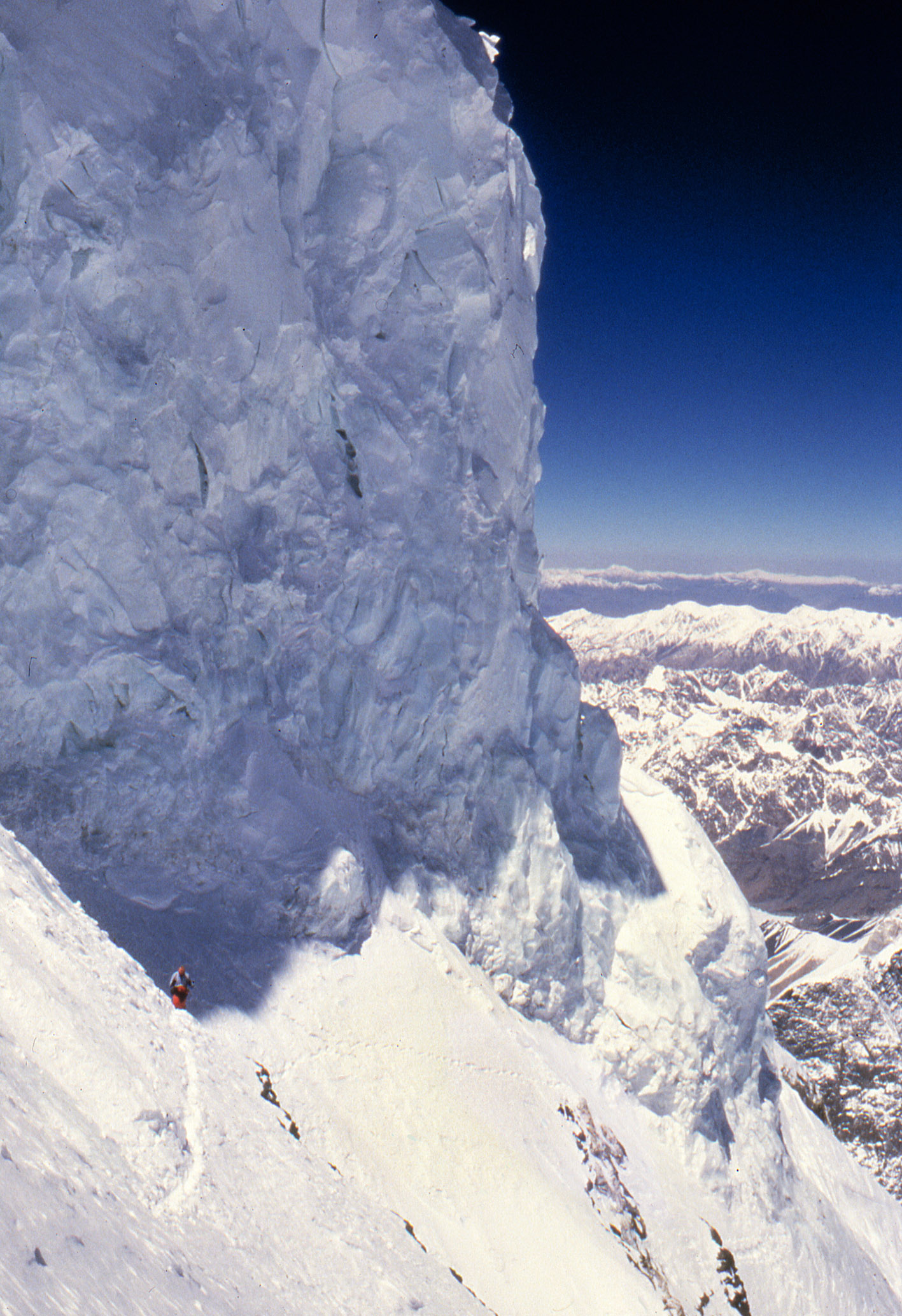
https://upload.wikimedia.org/wikipedia/commons/8/85/K2-above-Bottleneck.jpg High on K2: Seracs above the Bottleneck, CC BY-SA 3.0 Deed, by Rolf Kemp

Having put down that book, I lifted up a fellow-neglected-book-on-the-shelf. My friend Javier Felones always said that I should read Anatoli Boukreev’s account of the 1996 Everest disaster. I have ploughed through many of the books that have arisen from that notorious disaster. There are many. The mystery of events and the disaster are unclear. The dead remain dead. The disaster and understanding of those who lived through it or contradict others and their accounts tantalises many readers. Anatoli Boukreev’s account, written with G. Weston DeWalt, now offers my next excursion in reading for pleasure. 

Recommended further reading: 

Jon Krakauer: Into Thin Air (1997) 

David Breashears: High Exposure (1999) 

Beck Weathers: Left for Dead: My Journey Home from Everest (2000) 

Jamling Tenzing Norgay: Touching My Father’s Soul: A Sherpa’s Journey to the Top of Everest (2001) 

Ed Viesturs: No Shortcuts to the Top: Climbing the World’s 14 Highest Peaks (2006) 

Graham Ratcliffe (2013): A day to die for: 1996 : Everest’s worst disaster : one survivor’s personal journey to uncover the truth (2013)   

Return of the Bus Journey

No plan survives contact with the scheduled 76 bus. Nor the second timetabled bus. Arriving late into town meant one of two things. The 192 bus or a train. The train is the quicker option to Stockport. The price, a modest £5.30 one way, demanded a mortgage. The things you do to try to get to work on time. Cycling is off.

Having missed the 0748 Manchester to Bredbury train, I tried to slingshot ahead of the later service arriving to Bredbury at 0835. Sadly, the bus at Stockport’s Heaton Lane bus station was scheduled for 0835, too. Murphy’s Law. My cursed aching muscles and sudden varicose vein development on the right leg suddenly became weighted against a potentially exhausting bike ride to work the next day.

Having rang work to say I’d be late, I questioned how getting up earlier to arrive at work later made sense. This is Britain, formerly Great Britain. The new Manchester Bee Network for public transport is the least integrated and most underwhelming range of services known to mankind. People in Himalayan foothills have more reliable public transport options. Adding a rebrand to buses, trains, and trams in Manchester makes as much sense as being a Public Relations officer for Suella Braverman. Lifestyle choices, my arse.

Better late than never? I want to work. I enjoy my job. Today, however, I still feel worn down, lethargic, and done in. Still, it could be much worse. Jules Verne could turn this morning’s journey into an adventure. Likewise, it could be much better. Here’s to a blessed week.

Diary of my own metamorphosis.

Throat burns. Blood in mucus. Ears ring with tinnitus. Joints burn. Each knee and my ankle feel vulnerable. By sunrise, the test confirmed it. Monday night to Tuesday morning, a rancid blur.

Aches spread to muscles. Deep rasping cough. Aches. No taste. No smell. A headache like a spear into the cranium. Thudding heart. Cramps in calves, thighs, and arms. Sleep. Awake for soup. Struggle to keep it down.

Wednesday’s test once again shows it is still here. Cough syrup, useless. Painkillers fail to silence the drumming head. Up and down, burning pee, constant walks from bed to bathroom to bed.

Tortured night changes to grim day. Thursday, a day I was born on, gives no relief. I crave fruit and air and freedom. The twisted bug grips me. I test again. Not positive. Negative. Yet symptoms come and go, and ache me.

By evening I recall Kafka’s Metamorphosis, rewritten by Sissay. Missed it. Can’t go out. No focus. Not well enough for work, nor play. Rest. Recoup. Battle the symphony of the virus’s stampede through my head and body.

Friday comes soon. What next? Dear CoViD-19, what will you bring?

Icy Reception

Terje Isungset Ice Quartet used a range of frozen spots on stage. Icy mist drifted from their unique instruments. Ice sheet music played out to haunting and near primaeval melodies. Nature shone through every crispy note. The leader of the pack, Terje Isungset, added more than the name to his group. With a background in jazz and drumming, Terje slid through arrangements on various nontraditional ice pieces.

Mum, Paul and I went to the Royal Northern College of Music, on Oxford Road, Manchester. Thanks to me Mam, experiencing music made from frozen water and the sound of nature has hit my radar. The idea of a winter festival inspired musician having ice and his quartet dropped in the warm autumn streets of Manchester is bizarre. From Lillehammer’s waterfall to a place sat atop the mud that probably drifted from the nearby Medlock river is a tad surreal.

Sat with family, I thought about how lucky we are in Manchester, to experience peace, multiculturalism, and music from around the globe. Chilling out to chill out music from Erling Haaland’s country on a Friday night is a good way to unwind. The music, surprisingly, lifted a headache and allowed for a chance to sit down and switch off the mind.

The following morning Jack Frost had visited Manchester. I sat on a train to Lancaster, opening a new book. Buried In The Sky tells a tale of Sherpa climbers on the K2 mountain’s deadliest day. Page one…

Brother.

What’s done is done. Don’t waste time waiting to be carried on. Get out and join the run. Find that cloud that moves away for sun.

What isn’t done isn’t a dream turned to reality. More is the pity. Witty as you are, zitty as you may be. Cheer on City, sing a ditty. Don’t feel life is shitty.

Live it. Seek it. Find it. Whatever it is. Get out more. See more. Do more. It is what it is. Time flies in a whizz.

Spend it. Spend it wisely. It can be scary and lary or live it fully and happily. Get up early, even on a Saturday.

It’s how you spend it. Like comedy? Choose wit. Like music? Find your hit. Get out of your pit. Grab your true grit.

Choose to live. This life. Now. Friends will come and go. Some live long, and some live slow. You will love some, and some may know.

What are you waiting for?

FOR QUEEN & COUNTRY

Fought for Queen and Country

Drives a van for Asda

Battled sandstorms, landmines, and budgets readily

Pumping oil from near Basra

Why did they serve?


Away from family for months and days

Eddie Stobart rejecting tank commanders

Bodies fed on greedily by strays

Bills at the floor of the doors as bailiffs panders

Vulnerable as all.


Criminal courts ripping up old yarns

Furiously cashing in on earned medals

Looters dashing from farms to barns

PTSD, shellshock, forgotten jacketed, outcasted rebels

Witnessed the fall.


Owen, Sassoon, Armitage, Duffy, or Agard

Signed up with support lacking equipment

Stories lost, retold, or given little regard

Brutally shown reality of near-empty shipment

Exposed to much more.


War to war, always the same

For King, for Queen and service to crown

New players in the same old game

Faded uniform blends to funeral gown

The end begins.

Ex Nihilo


Something from nothing,

Yet nothing was something;

So something was

And therefore, nothing can be.


Omnipotent presence

Surely was something;

How can nothing birth something?

Why would something grow from nothing?


Ignorance and wrath in stark contrast,

Ever the contradiction;

Biased omnibenevolence to some,

With all powerful ignorance damning many.


The chicken, the egg, the old conundrum;

Which came first?

Faith in science and science in faith,

Each with parts unravelled.

The new book

Opening the cover beyond the title and an author’s name, ignoring the blurb in the rear, smelling the pages, and anticipating what lies within. The smell of books decomposing ever so slowly, losing their cellulose and lignin is known as bibliosmia. A book shed that information to me once. A bibliophile needs to know that. Some folk say books smell and attract us. It could be. I’d have to read about that to understand it.

The peaty, earthy, and slightly musty smell is neither a grotesque or pleasant smell. It is a familiar one. So, today, on my 41st birthday, I open Vince Flynn’s American Assassin. I’m unsure if I have seen the movie by the same name. It’s insignificant. All I know is that I want to read the book and feel the author’s words. My Aunty Christine rehomed this book with me. She recommended it. That was some time ago. Good things come to those who wait?

The nostalgia of feeling a book in your hand has made me ignore my Kobo e-reader, almost immediately after Mum gave it to me years ago. I’ve used it for reading literacy documents and nonfiction. That’s all. The bibliochor fragrance is all too tempting. Tiny dust mites, squashed spiders lost in the pages, and the odd note by a predecessor of a reader make books a fair journey into timelines and places beyond the text. Each book, even the crap ones, packs potential for a new world or inspiration to read more, write better, or seek new nostalgic texts.

Some books are unpardonable and need discarding. Some can not be put down. Some demand full attention, and some will sit silently awaiting the caress of a gentle reader. A few books will get battered and lay tattered. Many will touch hearts, and others may heal, or hug, or wrap amongst the DNA of the eyes upon the pages. Emotions and feelings from junior texts to deeper heavier lexile demands may equally challenge or relax a reader. The duality of opening a book and opening a door to a new story awaits.

Simon & Schuster, the publishers sits on the spine. The New York Times Bestseller awaits. So, prelude, page one… off we go… over to you, Vince Flynn. I’m ready to read.

Football is best live.

Football doesn’t belong on the internet, in a box on television, or confined to those who can afford premium seats. It’s a game, and as the song Boys In Blue by City says, “football is the game that we all live for”. It’s a simple concept of kick bag of air into a goal, whilst stopping t’other side from doing similar.

22 folk play, split over two teams, with stacks of substitutes, and influence from men, or women waving cards, flags, or sitting in a box room issuing instructions like a sinister James Bond villain. Usually, it has worse outcomes than global domination.

Games attended in 2023/24:

One. 15/7/23, 3pm, West Didsbury & Chorlton 2-1 1874 Northwich F.C., Step Places Stadium, friendly game

Two. 16/8/23, 10pm, Manchester City 1-1 Sevilla, UEFA Super Cup, Man City win 5 – 4 on penalties, Georgios Karaiskakis Stadium

Three. 19/8/23, Manchester City 1-0 Newcastle Utd, Premier League, Etihad Stadium

Four. 23/8/23, 7.45pm, Avro FC 0-1 City of Liverpool, Vestacare Stadium, Pitching In

Five. 25/8/23, 7pm, City EDS 4-4 Aston Villa, Academy Stadium

Six. 26/8/23, 12pm, City U18s 6-0 Blackburn Rovers, City Football Academy, Premier League U18

Seven. 27/8/23, Sheffield Utd 1-2 Manchester City, Premier League, Bramhall Lane

Eight. 2/9/23, Manchester City 5-1 Fulham, Premier League, Etihad Stadium

Nine. 16/9/23, West Ham Utd 1-3 City, Premier League, Elizabeth Stadium

Ten. 22/9/23, 7pm, City EDS 1-2 Chelsea, Premier League 2, Academy Stadium

Eleven. 23/9/23, Manchester City 2-0 Nottingham Forest, Premier League, Etihad Stadium

Twelve. 30/9/23, 3pm, Wolverhampton Wanderers 2-1 Manchester City, Premier League, Molineux

Thirteen. 8/10/23, Arsenal 1-0 City, Premier League, Emirates Stadium

Fourteen. 15/10/23, 3pm, City Women 5-0 Bristol City, Joie Stadium, FA Women’s Super League

Fifteen. 21/10/23, 3pm, Manchester City 2-1 Brighton, Premier League, Etihad Stadium

Sixteen. 25/10/23, 2pm, BSC Young Boys 0-4 Manchester City, UEFA Youth League, Stockhorn Arena

Seventeen. 25/10/23, 9pm, BSC Young Boys 1-3 Manchester City, Champions League, Wankdorf Stadium

Eighteen. TBC.

/////

Over time, I’m hoping to add previous seasons, starting with the historic 2022/23 season. We’ll see.

The Bear Necessities

Bern, baby Bern. What a glorious city with the river Aare horseshoe-shaped around the glorious Altstadt. The capital of Bern is as green as it is old-carved rocks. Sweeping views from the Bundehaus parliament buildings look out onto the distant Swiss Alps. Autumn leaves fall and mingle with stray butterflies, whilst the odd buzz of a bee makes a passerby question the seasons.

Starting with a walk from Newton Heath to Manchester at an ungodly hour, a steady train to Manchester Airport led to a wander to terminal three. Here, Ryanair had more priority boarding passengers than regular folk. A swift 7am flight to Cologne and Bonn Airport preceded a quick train to Köln, long before lunchtime. After an expansive and expensive salad, the train to Basel SBB station in Switzerland was equally hurried. The most part of the journey on flat land with the Rhein river close by and the foothills of the Black Forest gateaux mountains to the east.

Arriving at Bern for teatime meant a long day. Checking into the cosy Hostel 77, it would have been rude not to wander around the darkened old town in the evening. Spying a light show on the Bundeshaus parliament frontage and Manchester City’s travelling coaches were pleasant experiences but the haunting bells of

Outside of wanders around the UNESCO heritage medieval covered shops and fountains along the streets, a trip out of town by train to Thun was on the cards. The 101/100 zone tourist ticket covered two zones. A further 28 Swiss Francs covered the 6 zones of the journey. Within 30 minutes, it was possible to visit Thun and see the castle, many great Alpine mountain peaks, and the Eiger (from a distance). As a child seeing George Lazenby star as spy-womaniser James Bond, 007, the scenes from On Her Majesty’s Secret Service looked breathtaking. From a distance, I could imagine scenes from Ian Fleming’s text and varied Bond movies.

On my pocket, Anthony Horowitz’s With A Mind To Kill, didn’t get any reading time. The views from Thun and the exhibition of Manchester City’s under-19 team in the UEFA Youth League playing at the Stockhorn Arena was enough entertainment. The 10,000-seater stadium was about 8% full. Maybe 9%. I’m sure a statistician would question my maths. The four goals for City were as majestic as the surrounding views, and the Stockhornbahn AG-sponsored stadium was atmospheric. The young crowd enthusiastically cheering on both City and the hosts BSC Young Boys.

As Mike Summerbee and Nedum Onuoha, amongst others, watched on, the view of the Eiger and surrounds featured rainbows (perhaps Switzerland has pots of gold), clouds and glorious sunshine. The stadium is named after a cable car company named after a mountain and Fussballclub Thun 1898, who operate the stadium and put on a good show. Free entrance. Much needed.

The trip was, of course, to see Manchester City grace the hallowed AstroTurf of BSC Young Boys at the Wankdorf Stadium. The game was a bash. Manager Pep Guardiola shuffled his hand on the ground built over a Co-Op supermarket and a plethora of shops. The blue and whites made to work hard for their win left with three Champions League points and probably a few AstroTurf grazes. I don’t miss those days!

The joy of the light show at the Bundeshaus, a wander (or two) in Köln, a quick walk to the Wasserturm in Mannheim, and all the bits in between lasted from Tuesday to Thursday. So much to do. So much to see. So little time. Treasure life. Peace and love.

Weather the storm.

I don’t want to talk about someone in the past tense;

The here and now will do.

Hearing, lustening, feeling across the range of sense;

Being around people presently through and through.

Seeing memorials, farewells, and gatherings of goodbye;

Flowers lay, horse and cart pulling away.

Knelt down by stone, looking up at the grey sky;

Unspoken words not ever able to say.

Wretched dreams unlived and walks unwalked;

Guidance and advice, unable to be dispensed.

Nattering and talks left silent, untalked;

Unable to place arms, no hugs against.

Worry and fear of you no longer near;

Push it aside and stand tall together.

Until the time comes, we must live out every year.

Weather the storm whatever the weather.

The Embrace.

Feel. As much as it hurts.

Fear. For everything you dread.

Worry. About nothing and everything.

Carry. Wherever you go.

However much it hurts…

Lose yourself. But return right back.

Find yourself. Take time to bring love home.

Try yourself. Do it when you feel ready.

Love yourself. Without belief, hope can’t grow.

However much it hurts…

Be confused. Not everything features clarity.

Be afraid. The principles of life bind us.

Be connected. Separately, we feel weaknesses.

Be inspired. Endless possibilities rise with each new dawn.

However much it hurts…

Poetry for Teachers

EEF, ECT, ELA, EAL, EHCP;

SALT & PEP, TAF, with an EP.

OFSTED, EWO, SPL, PP, and AO;

TA, LSA, SGO, SLT, alongside SENCo.

PRU, DT, LEA, LA, or SEND;

Off to D&T, IT, via FE and ESOL;

Join the NEU, TUC, read the TES for TEFL.

ABE, BEd, BSc, BTEC and ND…

NPQ, C&G, CATs, LAO, and good old CPD.

Is education all about acronymns?

Pseudonyms, nymphs of letters and things.

In Memory of Francis Lee

Franny Lee was to many Blues, something to everyone. It’s hard to grow up in a City household or one of football and not know the greats of each club. Usually, it’s the big clubs. Often, the clubs who are making the most impact at the time. The name Franny Lee will be known to many Citizens.

As part of the treble trinity that was Bell, Lee and Summerbee, those who watched City from ’67 to ’74 will know of Lee. Those who followed City from 1994 will know Lee experienced an ill-fated spell as Chairman. His heart was there. City and the off-field conditions were not. Those who knew of the Maine Road to City of Manchester Stadium transition will know that Lee was involved behind the scenes. In fact, Lee sold his final shares in 2007 to Thaksin Shinawatra. Without Franny appointing Alan Ball, City may never have had fan favourites and legends in Georgi Kinkladze and Paul Dickov. Relegation and promotions may have happened differentl. Who knows.

The Forwards With Franny and We Want Franny badges have their place in time. What can never be argued against is that the former Bolton Wanderers player Francis Lee fell in love with City. Lee One Pen, as he was known for his penalty taking (and gaining) would have been a Video Assistant Referee nightmare had the game have had such technology then. Following retirement and games at Derby County (where he won the league), the ex-England forward went into business selling toilet rolls and other things.

Franny Lee cut an imposing figure on the field, and I can see why my Dad and Grandad rewatched VHS highlights and instilled my passion I to City’s history. At one time, growing up, history was all we had, but through players like Franny Lee, I could connect to glory long before 2011 arrived and City’s purchase power of Brasso became legendary once again.

I didn’t see him play, but I did say hello, get the odd signed bit, here and there. I listened to interviews on television as I grew into following City at an early age. Manchester City’s characters like Lee, and moments like the Ricky Hatton-style punch up with Norman Hunter, or those photos from the league win in Newcastle, will always stand out. And the shirt. Iconic. The style. The class. Footballers now don’t wear shirts in the same way. Franny Lee made the shirt his. Around 250 games with almost half as many goals is a statement statistic to be proud of, for any City player.

Born in Westhoughton, Franny Lee was drawn here. He never left. Not deep down. He’ll always be behind us. Even in absence. A true legend of the game. Eternally, one of our own.

Francis Henry Lee CBE (29th April 1944 – 2nd October 2023), always known as Franny Lee

How Wythenshawe Park Came To Be.

Listening to Pretty Boy blasting out of loud speakers in Wythenshawe Park, I wandered where the park’s beginnings began… and then I forgot the Noel Gallagher gig but was reminded of it whilst passing Shena Simon Campus in Manchester.

Lady Simon of Wythenshawe sounds an odd name. Yet, many Mancunians will have heard the name Shena Simon. Middle name Dorothy, perhaps. Her life spanned 21st of October 1883 through to 17th July 1972. To most Mancunians, and students of Manchester College, Shena Simon was just a campus of building name. A few may have known her as a politician, feminist, educationalist and writer. Born of London’s Croydon, Sheila moved to Manchester by the 1920s, following marriage to Ernest Simon, 1st Baron Simon of Wythenshawe.

Here Sheila Simon boycotted functions at the St Mary’s Hospital for Women because they had no female board member. From that, she became heavily involved in Manchester Council and social provision. In 1926, Wythenshawe Park was donated to the people, by herself and her husband. Over the years the Simon family pushed for accessible education and her family even have links to the funding of Jodrell Bank Observatory and the Lovell Telescope.

Gustav Heinrich Victor Amandus Simon, a German engineer, founded Henry Simon Ltd and Simon-Carves Ltd in 1878. His son Ernest Emil Darwin Simon was born a year later. By 1947, his son was elevated to Baron Simon of Wythenshawe, of Didsbury in the City of Manchester. This peerage allowed steerage to join the BBC Board of Governors. His son Roger, the 2nd Baron Simon of Wythenshawe was a left wing journalist who championed Campaign for Nuclear Disarmament. His other son Brian became a teacher and professor, after dabbling with Communism and soldiering.

Roger’s child, Matilda Simon, 3rd Baroness Simon of Wythenshawe was born as Matthew and underwent transgender surgery to become first openly transgender peer of the realm of the U.K. In recent years, as a former Green Party, the 3rd Baroness Simon has been involved with tree plantation in Marple Bridge. The name Shena Simon may not be the most well-known but just reading a few bits and bobs has led me to learn that Ernest’s older half-brother Ingo Heinrich Julius William Gustav Simon knows how to fill a birth certificate and that his expansive archery collection made it to Manchester Museum. So, next time I pass Shena Simon college I will be reminded of its links to Wythenshawe Park, Alan Turing sat behind it, and a diverse family lineage stretching from former-Prussia to Marple Bridge.

Manchester to Space

Sackville Gardens, alongside Sackville Street, is home to an unusual statue-bench. Since 2001, here sits the sculpted memorial of Alan Turing. Behind Alan Turing’s resemblance is Manchester College’s Shena Simon Campus. To his right shoulder is Canal Street parallel to the Rochdale canal and to his left Manchester University’s Sackville Street Building. Education and the gay community side by side. The actual statue’s funding fell short of the target and had to be cast as far afield as China (Tianjin Focus Company). At Turing’s feet lies a message, “Father of Computer Science, Mathematician, Logician, Wartime Codebreaker, Victim of Prejudice”. Across from both the Beacon of Hope and Turing is a little-glasshouse atop of the nearby Sackville Building.

Godlee Observatory is located within the realm of the University of Manchester. The astronomical building is perched on the tower of the French Renaissance-styled Sackville Street Building. Opened in 1902, after 7 years of construction, the building shares many famous names amongst its laboratories (e.g., Henry Royce) and libraries (e.g., J.P. Joule). Outside on the walls is a blue plaque to Ivan Levinstein. He went on to develop dyes and chemicals in Crumpsall and is very much a forerunner in synthetic dye manufacturing. Next time a river turns a funky colour, you may blame Manchester.

The building, home of the University of Manchester’s School of Electrical and Electronic Engineering (EEE), has a green dome and glasshouse on its roof. A stone’s throw from the statue-bench of Alan Turing, the dome is made of none other than papier-mâché. It’s not a bad material for a century plus of operation! Francis Godlee’s gift to the people of Manchester is currently under restoration. The winding ornate wrought-iron staircases up lead to a trap door and an impressive made in Dublin Grubb telescope. Now operated by Manchester Astronomical Society, there is no re-opening date. Godlee was drawn to Manchester in the times of cotton trading, manufacturing, and rounded character involved in community, cycling, and astronomy.

This month, the Zdeněk Kopal Memorial lecture is pencilled in to start at 19:30hrs on Thursday, October 19th, 2023, in Blackett Lecture Theatre (Schuster Building, Manchester University, Oxford Road). Lectures are held monthly and are free to attend. Alternative stargazing can be found in Salford at Salford Observatory (M6 7DZ). Or, follow the AuroraWatch website for Northern Lights (aurora borealis) sightings. Alan Turing’s statue holding an apple and in a way Sackville Gardens is part of the core of Mancunian culture and history. Needless to say, above the core, looking down and up over the city is the lesser known Godlee Observatory. Millions of souls have passed by beneath, and few know its story. Thanks to John Burns, a Nottingham Forest friend, for reminding me of this little-known dome.

Macintosh.

Heavy rain tonight! I didn’t get soaked. D’ya know why?

I was wearing me rain jacket. Me big coat.

If I wear it, it never rains.

The moment I wear shorts or sunglasses,

I’m soaked right through.

I swear my shorts attract clouds.

But, my big jacket. The one with all the pockets.

It has never felt a drop of rain.

That’s why the clouds moved by me on the ride home.

Hear My Problems Only

If I could stop myself feeling, would I tear it out of me?

No, but I would cut this feeling from me.

Dig deeper for focus on possible positives.

If I could remove all the reminders, and the memories to make it hurt less, should I try to silence all?

I need to feel. I need to know. I need to hang onto hope.

No matter how little remains.

If I could wake up tomorrow energised, refreshed, no longer tired and raring to go, would I sleep peacefully now?

I know I can. Yet I can’t. I should. But, I won’t.

I try to release the anger. The pain. The worry.

Should I desperately reach out for hope and determination, clutching it to my heart?

Kick back the snapping, snarling, scrappy black dogs at the feet of my bed.

Today ends soon. Tomorrow starts immediately. Onwards.

Tree Fall.

Amongst the space of a lonely field,

Towering into winds never before perceived,

For many a century, the wood stood unpeeled,

History’s hardest winds never before conceived.


This night, your great winds blew, relentlessly,

Shaking all umbrellas as they wandered,

And sweeping side to side shattered panes carelessly,

Macintosh jackets thought as squandered.


Stood upright, resistant to gales,

Arose squelching sounds to tree roots,

Battered and blustery heaped on, it fails,

Tougher than a pair of old boots.


Creaking and leaning, sinking deep into,

The tree sought to stand hard on the land,

The air blew and grew as the storm did brew,

Tanned tree’s fanned roots sank into sand.


The turbulent gust gave more bursts of force,

Fierce furious and volcanic blasts slammed,

No longer the tree could hold its long course,

Rammed into it and cause it to be dammed.


Tempestuous savagery caused the tree to turn,

Leaves leapt into volatile and quarrelsome air,

Down went all branches as the trunk turned up fern,

Slumped down, did it all without but a prayer.


The ruinous remains of life situated across,

Soon, dies down the storm of the night,

New horizons lay out for its coating of moss,

Once upright, now fitted tight, susceptible to parasite.


The adaptive bole will adjust as best,

The sideways makeover, an alteration,

Its fruits shall bear once more upon its crest,

Should it steady in its newfound acclimation.


Budweiser.

Shimmering shards of shattered semblance

Beneath broken bottles, unwanted emblems

This mark of shame; scattered destruction

The cyclists, aware, swerving the obstruction;

Former bottles tossed, discarded and then some.


We are unneeded. Before this day

We were used, emptied, paid for, on display

Gave joy, and felt sorrow and now we lay wasted

On the croft, forgotten.


Pick a battle with our handlers so:

To you and your unforgivable hands we know

To decay, expenditure and ruin, with lost opportunity.

Broken faith in our use to your community

We no longer hold your golden ale, or darkest stout

On the croft, forgotten.

Some.

Sometimes, I feel backwards. Some hours, all I touch breaks. Some weeks last longer than others. Some days, a storm becomes an argument. Some moments fade to anger. Some challenges become impassable mountains. Some paths cut off. Some routes have new walls. Some connections tear apart. Some green turns to black. Some perfumes rot in sunlight. Some rainbows wash away. Somehow, I can’t walk away.