Clammiest Climate?

Sweltering heat bombarded in through the air-conditioned doorway. Since departing Mancunia, fresh air hadn’t been experienced for the best part of a day. The Survivor was the title of an inflight movie, but instead of a pugilist’s survival at a Nazi concentration camp, it was not an instruction to survive humidity. Not that the two should ever be appropriate in comparison.

Guangzhou’s airport felt chaotic and unwelcoming, even at 11pm. The fingerprinting machines didn’t appear to work. After 4 attempts on different machines, I gave up. I declared my health and grabbed the necessary health code to allow me through a third checkpoint. At the fourth, I filled in the necessary immigration card and answered a few questions as I crossed into China. I picked up my backpack and noted that the top section was open. Some things had been removed. Later, I’d contact the airline and insurance company. At just before midnight, I didn’t fancy trying pigeon Chinese to speak to the Police or airport security.

As it was so late, the subway railway was closed. I gambled on a bus and managed to get to Tianhe Square, a 30-minute walk from Yicheng Hotel and Guangzhou East railway station. Without a local mobile number or WiFi access, I managed to get to the hotel and get my head down by 2.30 am. The relentless heat, a far cry from the fresh and cool Mancunian air I’d left behind. It seemed that Emirates Airways had whisked me away, with extra legroom, to a pressure cooker. Far from the warm kitchen in Manchester, where Mum and Paul prepared dinner, I’d left 18°C clear-ish skies for hostile hours of heat.

The calm air-conditioned flight featuring Fisherman’s Friends 2: One and All. Filled with beautifully shot scenes, witty lines, and emotionally energetic stories, the movie clasps attention like the Guangzhou weather suffocates breathing of those used to chillier climes. The things we do for hugs.

Robert Ebenezer Jenrick Scrooge 1843-

“No warmth could warm, no wintry weather chill him.” – A Christmas Carol, Charles Dickens 

Over 179 years have passed since Chapman & Hall published A Christmas Carol on December 19th, 1843. The original title Charles Dickens has been lost to time. A Christmas Carol. In Prose. Being a Ghost Story of Christmas remains. Have times changed? Is the novella outdated and irrelevant? Or, is their a reason why its story remains an enduring feature of the stage, silver screen, print and audiobooks? Crikey, even Sir Patrick Stewart reads parts on TikTok. “That is what it is to be human: To make yourself more than you are.” 

“You may be an undigested bit of beef, a blot of mustard, a crumb of cheese…” – A Christmas Carol, Charles Dickens 

The book, a well-visited tale is divided into five staves. These parts allow three spirits to visit between an introduction and a conclusion. The structure of the novel is clear and flows, making translation to multiple language feasible and lasting. Its story takes place in just a 24 hour period, making it the inspiration for Kiefer Sutherland’s Jack Bauer (not the cyclist from New Zealand). As tough as Jack Bauer is, the central character Ebenezer Scrooge appears unbreakable. A tough old boot. 

“I mean to give him the same chance every year, whether he likes it or not, for I pity him.” – A Christmas Carol, Charles Dickens 

A plethora of retellings, re-imaginings and interpretations have crossed political and social borders. Whether it is that of Bill Murray, Ebenezer Blackadder, or Michael Caine opposite Kermit the Frog, the central character Ebenezer Scrooge is instantly recognisable. Look closely at Dr Seuss’s The Grinch and you’ll see Scrooge in cold-hearted green. Stave one sees cheerful and kind-hearted Fred visits his mean Uncle Ebenezer at his counting house. He persists and resists spirits being dampened by Scrooge’s venomous tongue. Invited to a meal, Ebenezer Scrooge declines. As he does for a charitable donation request. Charity muggers are sent away. Soon, at his home, he sees a dead business colleague in his door knocker. Startled by that encounter, he is later visited by the chained ghost of Jacob Marley. Marley warns penny-pinching Scrooge that his future is bleak, should he not change his ways. He also warns that salvation can be sought following the visit of three ghosts. Plot delivered. 

“I’ll keep my Christmas humour to the last. So A Merry Christmas, uncle!” – A Christmas Carol, Charles Dickens     

Stave two sees the Ghost of Christmas Past, take Scrooge back in time. Here he views his previous boss Mr Fezziwig. In an old-fashioned take on BBC’s The Apprentice, Scrooge’s version of Alan Sugar is seen within the workplace displaying all forms of warmth, generosity and benevolence. The jovially affectionate nature of Fezziwig contrasts with his moderate profiteering and highlights how bigger traders were sweeping aside the small ownership family businesses of the 19th century. Fezziwig is very much a Baron Sidney Lewis Bernstein (Granada TV founder) of his time. 

“Hard and sharp as flint, from which no steel had ever struck out generous fire; secret, and self-contained, and solitary as an oyster.” – A Christmas Carol, Charles Dickens 

The ending of the stave is too sad for Scrooge to take. Scrooge protests and resists, waking up in his bedroom once more. His ephemeral encounter had been well-meaning, yet here Scrooge must have known that more was to come. He could not have known what those next two likely encounters would entail. Scrooge’s welfare was safely out of his hands for the moment. Could he rise and walk again? 

“Most of all beware this boy, for on his brow I see that written which is Doom, unless the writing be erased.” – A Christmas Carol, Charles Dickens 

Bob Cratchit is the uncomplaining clerk to the parsimonious Scrooge. He does what he is told, almost like an obedient dog. This timid man is married to Mrs Cratchit. His wife in her “twice-turned gown” is the gratuitous optimist. She makes the best of a bad situation. Next in the family is Martha Cratchit, a hatter, just like many Stockport folk once were. It remains to be seen if she suffered from Mad hatter disease (a form of chronic mercury poisoning, associated with the hatting industry). The Cratchit family have a son, and here forms stave three. Bob Cratchit’s mundanely repetitive job counting cash for his superior could ill-afford him time of leave to stay with family at a Victorian-era Christmas. As Christmas grew, so could Bob’s internal worries. Tiny Tim appeared a condemned young soul. 

“”It’s only once a year, sir,” pleaded Bob, appearing from the Tank.” – A Christmas Carol, Charles Dickens 

Tight-fisted Scrooge joins the jollily prophetic and welcoming Ghost of Christmas Present to visit Tiny Tim. Tiny Tim, not to be mistaken for the late singer-activist Hebert Butros Khaury, is ill and proper care cannot be given. The Cratchit family suffer in the same niche as many Mancunian families do in the 21st century when seeking mental healthcare. Tiny Tim may have had origins on a real boy in the old mills of cotton-factory Manchester. Kind, thoughtful and incapacitated as Tiny Tim is, this character radiates positivity and reflects his family’s attitudes to challenging shortcomings. To quote my elder brother Asa, “It is what it is.” 

“If he be like to die, he had better do it, and decrease the surplus population.” – A Christmas Carol, Charles Dickens 

After being told that Tiny Tim will snuff it, the Ghost of Christmas Present visits Fred’s house and highlights two hideous representations of ignorance and want. Danger was afoot. Gratefulness and sympathy lay firmly in Bob Cratchit’s court, yet the bad-tempered leader Scrooge’s connections and empathy lay far away from humanity. Think Wolverhampton-born, St John’s College-educated Immigration Minister Robert Jenrick painting over murals in a Kentish centre of children’s asylum. Scrooge would have been proud? His leadership team in Parliament are just after stopping immigrants on boats. And welcoming children. 

“Still the Ghost pointed with an unmoved finger to the head.” – A Christmas Carol, Charles Dickens 

The Ghost of Christmas Yet to Come enters stave four. His ominous, dark and silent presence guides Scrooge to the possible death of Tiny Tim. Other visions also guide Scrooge from the dark side to the side of the angels. One of which sees a grave with the etchings of Scrooge’s name. After you’ve seen scallywags sifting through your abandoned rucksacks and filing cabinets, I challenge you not to feel glum. Imagine listening in on relatives bickering about your Last Will and Testament. Let’s hope that’s not too relatable. Balance your books before you go. 

“…a solemn Phantom, draped and hooded, coming, like a mist along the ground, towards him.” – A Christmas Carol, Charles Dickens 

Stave five ends positively, as the latter stage of the book follows the transition of Scrooge from out and out despondent miser to benevolent altruist. He gives,. He rewards. He feels joy again. Tiny Tim doesn’t die. In fact, Tiny Tim gets the equivalent of a Godfather. Christmas once again is filled with merriment. Solitary death averted, Scrooge is reformed. He can even take a joke. Redemption in under 24 hours. 

“Let him in! It is a mercy he didn’t shake his arm off.” – A Christmas Carol, Charles Dickens 

During the Victorian era, Love Actually and E.T. couldn’t be screened on televisions. Those technologies hadn’t arrived. Ghost stories were the hip way to spend time. Dickens went further than most, smothering his with wealth, injustice and all the injustices of wealth distribution of Victorian England. It pre-dated Downton Abbey but equally its conflict in social responsibility is shared. The importance of family and love at Christmas is growing, with dinners, carol singing, trees, cards and high spirits increasing. Christmas is seen as a time to bring people closer together. Its religious meaning is present, yet less announced. Those without would, no doubt, see what they are missing. Inequality was rife and obvious. 

“Emancipate yourselves from mental slavery; None but ourselves can free our mind…” – Redemption Song, Bob Marley & The Wailers 

The aftermath of diving into A Christmas Carol slams home the message that children are the responsibility of all mankind. Not that Robert Jenrick would agree. Perhaps he shall read this novella realise the failings of only thinking of oneself. Or, like many Conservative ministers, likely maintain a selfishness that the richer elements of Victorian society once held. Poor laws, prisons and workhouses once dealt with the poor destitute working class. These days we have zero-hour contracts at Amazon and less-than-living wages at McDonalds. Perhaps, the final stave and its message of completion and possibility should be explored as a mandatory fit-to-govern the U.K. test. A bit of pity goes a long way. “The sound of” children playing and shouting should be “so delightful that even the ‘air’ is laughing.” 

“God bless us, every one!” – A Christmas Carol, Charles Dickens 

[Christmas Carole, Sky TV, starring Oldham’s Suranne Jones

An Inspector Keeps Calling

Toby Jones, now seemingly everywhere, went a tad crazed in the recent Indiana Jones and the Dial of Destiny. As Harrison Ford searched for the thermostat settings, our man Jones, Toby that is, acted impeccably. His rise to Hollywood from the University of Manchester has been truly Marvellous. Just as Toby floats in and out of Marvel superhero movies, he can be seen on local stories such as The Detectorists and true stories such as Neil Baldwin’s surreal biopic Marvellous. One radio production that does stand out is that of An Inspector Calls. The 2010 production has been lauded, and Inspector Goole, played by Toby Jones is just one character in a story as relevant now as it was when penned by John Boynton Priestley.

“Arthur Birling is a heavy looking, rather portentous man.” – An Inspector Calls, J.B. Priestley

J.B. Priestley was a man of all trades: novelist, playwright, screenwriter, broadcaster and commentator. Raised in Manningham, part of once industrial Bradford, Priestley grew up in the shadow of mill chimneys and his headmaster of a father. His mother passed away in J.B.’s toddler years, but by the time he had reached Belle Vue Boys’ Grammar School, his father had remarried. On the banks of the Bradford Beck river, up from Belle Vue Terrace at Bradford City’s historic valley parade, the young writer J.B. was well placed to see the social norms of those who attended either grammar school or state schools. The Great War and wounds interrupted his early foray into journalism. Survival of the war allowed this ambitious writer the chance to attend the University of Cambridge. Trinity Hall. Having Boris Karloff star in one of his novels adapted to a movie did no harm. J.B. Priestley found time between writing to barrage words towards writers Graham Greene, George Bernard Shaw and pretty much all of Ireland. His prejudice and opinions placed him well during World War II. Here his voice became a BBC mainstay, second only to Prime Minister Sir-to-be W.L.S. Churchill.

“…no longer competing but are working together – for lower costs and higher prices.” – An Inspector Calls, J.B. Priestley

Perhaps Churchill or his cabinet led to J.B. Priestley being removed from the airwaves, for one reason or another. Perhaps not. It led to new pathways for the aspirational writer. The 1941 Committee, charged with increasing efficient war efforts called. Actors, Lords, writers, evolutionary biologists, and prominent people explored ways for people to live after the conclusion of the way. Chairing the committee was J.B. Priestley. Later he formed the breakaway Common Wealth Party, in some ways a forerunner of the political party, the Liberal Democrats. Oddly that put him on George Orwell’s radar. Orwell, tasked with identifying writers with pro-communist leanings, labelled J.B. Priestley as questionable. J.B. Priestley was with his second wife, in the last few years of that marriage. By this stage, the play An Inspector Calls was causing quite a stir. The stage play had debuted in the Soviet Union in 1945. It would be almost a year before London’s New Theatre would stage this drama. Did World War II bring Britain’s classes together?

“When you marry, you’ll be marrying at a very good time. Yes, a very good time – and soon it’ll be an even better time.” – An Inspector Calls, J.B. Priestley

The morality play focuses slaps capitalism down, clutches at the hypocrisy of the middle-class, and stamps down on outdated Victorian social values. Capitalism and socialism can be viewed through Arthur Birling and Inspector Goole, respectively. Set in 1912, neglect and prejudice thread between the dialogue and consequent suicide of working class Eva Smith. She died a death by Donald Trump’s preferred form of CoViD-19 cure, disinfectant. Inspector Goole grills the Birling family over entries into the departed Eva Smith’s diary. Arthur the patriarch alongside cold, yet superior, Mrs Sybil and their offspring Sheila and LadBible.com reader Eric make up the cast, alongside their mate Gerald Croft. Edna is the Mrs Doyle of the family, brewing up for all. The play features gentlemanly chivalry befitting a James Bond movie without the action. There’s a mention or two of the poor deserving this, that, and the other.

“Fiddlesticks! The Germans don’t want war. Nobody wants war…” – An Inspector Calls, J.B. Priestley

An Inspector Calls raises many questions with respect to its interpretation and content. How does Priestley present Mr Birling in An Inspector Calls? How does Priestley use Mr Birling to get his ideas across in the rest of the play? Does this character change? Why does Mr Birling use certain language? The play moves through Eva Smith’s stages as a factory worker, a shop worker, near homelessness and as a pregnant and potential future mother-to-be. The latter stage of deceased is speculative. It is both a morality crime thriller and an intricate crafted play, requiring the reader or watcher to pay attention. The use of repetition, cliff-hangers, shock (“Burnt her inside out”), twists (“That was the police.”), pauses, gasps, asides, and fluent dialogue. What effect does this have on the audience? How does Priestley use language to create drama?

“There’ll be peace and prosperity and rapid progress everywhere.” – An Inspector Calls, J.B. Priestley

An Inspector Calls is a play often referred to as J.B. Priestley’s masterpiece. It has been staged beyond then BBC, as far as Iran, as translated by political activist and writer بزرگ علوی. Good luck reading his name! Bozorg Alavi, incidentally. Richard “I don’t believe it!” Wilson even produced a version with Hugh Grant fluttering his eyes in the Royal Exchange Theatre, Manchester. It is possible to encounter multiple versions and imaginings of this play. BBC Radio with Bob Peck, Hong Kong (浮華宴), Bengali and Russian (Inspektor Gull) movies exist. In the U.K., it forms a backbone of G.C.S.E. English Literacy. The theme of age and the age of the play are as relevant as ever. As are the themes of class and gender, if you look at state of current world politics. Do we look after each other in society? Ask this question in the U.K., Italy and Norway for perhaps very different responses. How do older and younger generations perceive one another? Do children reflect their parents? Or, have younger generations progressed, regressed or adapted to new conditions?

“If you don’t come down sharply on some of these people, they’d soon be asking for the earth.” – An Inspector Calls, J.B. Priestley

The dialogue is sharp and shocking, full of Titanic-sized dramatic irony, rank and status, as well as the obsession of money. Tragedy and hoaxes are banded about like rumour and jokes. Boris Johnson and his Conservative government during and after the 2019 CoViD pandemic would have been proud of the Birling family’s reaction and inaction. Business experience appears to bypass humanity, favouring ability to profit over the death of an innocent person. The finale of the play draws the viewer in, building tension and raises questions. Who was Inspector Goole? What was his involvement? What is social responsibility? The characters, themes, form, structure and language coupled with the plot blend to create a sharp and dark story. Similarly, do leaders in our society take responsibility for their behavior?

John Boynton Priestley (13th September 1894-14th August 1984)


Too much pressure.

Too much pressure, I’m at boiling point. Crawling beneath, and within, hidden desperation. I know not, and no longer see what’s around me. I’m scared, so afraid, bring me down.

Too much pressure, bubbling over. I cannot taste this food you make. Isolated, solitary, remote, godforsaken, detached from you. There is no love about this town. The fury I feel is bringing me down. Curled up here, afraid to move.

Too much pressure, burning up. I cannot hear the sound of birds. Rile, irritable, aggravating, enraged – no smiles. All intrinsics, essentials, and instincts instantly lost. Insobriety, inebriated, intoxicated, disappearing. This night stayed. No reappearance nearing.

Too much pressure, feeling cold. I cannot feel your hand on mine. Unevenness, rough, changed, random protrusions throwing out delusions and illusions. Sleeping here in fear’s shadow, hiding away. Cold, clammering, coughing, spluttering, wheezing and sneezing. I struggle to breathe, numb and wheezing.

Too much pressure, reaching boiling point. Too much pressure, bubbling over. Too much pressure, burning up. Too much pressure, feeling cold. Pressure relieving as I slip away. Drifting and shifting. I’m out. Gone.

Reflected.

Morality is an argument. Conscientious decisions trouble. Choices a barrage of beratement. Unearthed memories lay in rubble.

Wicked temptation twists contemplation. Rightfully wrongly, lyrics of living. Shrouded silk on slivered sensation. The sieged scattered soul of sacred sieving.

Reflection reigns readily within contrast. Thoughts tumble twist, blast, and clash. Tumultuous turmoil thrashes out the past. What once was, and what no longer is, rests in ash.

Triumphant yesterday smoulders in the mirror. Grounded mortar spills from split seams. Consider it, nor will it deliver and trigger a shiver. The remains of the day gleams no further dreams.

I said you were…

I said you were too hot, so you cooled down.

I said you were too bright, so you dulled somewhat.

I said you were too serious, and like that you became a clown.

I said you didn’t share, you gave away the lot.

I said you were too fast for me, so on the brakes you stood.

I said you were ever so proud, so you became modest.

I said you were an angel, so you got up to no good.

I said you didn’t hide truth, so you became dishonest.

I thought you cared, with that you spared no thought.

I said you were too dry, so you rained hard.

I said you saved too much, and the balance became nought.

I listened to your love for me, only I became a mard.

Hartshead Pike Hill.

About 7.5 miles (12km) from Manchester, towering over Ashton-under-Lyne and Oldham, sits Hartshead Pike. A hill covered in history. Following Mossley Road, then a left turn onto Queens Road, before a left onto Nook Road, will allow walkers a two mile walk to the foot of the hill.

A left after The Lord Nelson pub gets you to Greenhurst Lane and a trail in the top left corner. Old cobbles and bricks line a path towards Knott Hill Reservoir. Many pathways branch away up to Hartshead Pike, and some pass the odd horse or ten. Scenery and rocky places to tuck into sandwiches are also present. The view back to Manchester isn’t bad either. On a clear day, like May the 13th, 2023, you could and can even see Welsh hills, Jodrell Bank Observatory, and Winter Hill. The whole of the Cheshire plain and huge chunks of Greater Manchester are visible.

The historic monument above Lily Lanes has been there since 1863. Before then another. And, before that possibly a Roman beacon. The hill is just 940 feet (290m) high. A walk down Lily Lanes, leads to Broadcarr Lane and eventually the picturesque town of Mossley. A fitting way to slide away by railway, back to Manchester, with Panda and mates to hand. The walk itself and return journey make it possible to visit the area within a long evening. Although, as the weather is sodden, at the time of writing, I’d take wellies and an umbrella now… and a torch, seeing as sunset is about to occur at 21:40ish…

Dear UEFA…

Below is a draft letter:


ADDRESS TO: UEFA, CHAMPIONS LEAGUE, Football Supporters’ Association, City Official Supporters Club, Manchester City, City Matters, Fans Europe, TBC, etc…


RE: LETTER OF DISSATISFACTION

Dear Sir or Madam,

I wish to express my complete dissatisfaction of many aspects experienced before, during and after the UEFA Champions League final in Istanbul. I understand that UEFA has disclaimers and small print to cover some of these matters, but that is a poor excuse for the overall ineptitude on display. I politely request you review the matters below and apply strategies to future events to avoid such a wealth of embarrassment.


On arrival to İstanbul Sabiha Gökçen Airport, at 11:00am, I immediately stepped onto the first coach which said MAN CITY – Yenikapi. After less than an hour into the advised 1.5 hour [as advised via the UEFA fan app and uefa.com ] the coach’s engine was pumping smoke out. The driver pulled into a service station and said to “wait twenty minutes”. I didn’t mind it, and most supporters were understanding. We grabbed food and waited about an hour for a replacement coach. The coach did a tour of Turkey, passing the Atatürk Olympic Stadium, before heading back into the centre, missing turn after turn, whilst the driver kept asking passing motorists for directions. The coach arrived at the UEFA Champions Festival for 4:00pm. I entered the festival, used the toilet and went to find how when to get the coach to the stadium.

Time spent on a bus: 4 hours.


After joining a queue, exposed to direct sunlight coach 3 departed into traffic, arriving at the fan zone of the Atatürk Olympic Stadium. The temporary car park and pathways were unwelcoming but not a hindrance for the mobile. I did see several fans helping people pass over the uneven surface to the City fanzone. The queues for food at the fanzone and the lack of options to drink were unpleasant but expected with such large crowds at 7:00pm. I asked for an ice-cold Heineken® Original but couldn’t get one as the man serving advised that they’d ran out. I went to another tent and found a beer to enjoy, but couldn’t queue for food as the service was beyond reasonable.

Time spent on a bus: 2.5 hours.


After this, I walked through another security check. Yenikapi had two bag checks. The fanzone had two bag checks to enter. A further two bag checks was made before walking to the stadium along the ten-minute route. On entering the gate, I had my bag checked at three points. The final bag check, the man emptied my small A4 bag clumsily. He refused to allow a 50ml sunblock container, my smaller-than-phone-sized power bank and a small packet of rivaroxaban (with just 2 pills left). I snatched the latter back, which was wrestled from my hand by the steward, and asked to see a supervisor or boss, and that boss refused the permitted items. Bizarrely, they overlooked the loose coins in my bag. Using what little dignity, I had I picked the rivaroxaban from the rubbish bag and emptied a tablet into my hand and swallowed it. I needed it for the flight back on the next day. Two 20mg tablets of the anticoagulant decreases the risk of developing Deep vein thrombosis (DVT) dramatically. The steward and supervisor laughed at me and I walked away.

Before the game the service for food and water was acceptable, save the 5 Euro price of water for tiny-little plastic cups. I hydrated and purchased enough for the game. However, by half time I was severely dehydrated, dry and had a sore throat. I went to queue for water. After 15 minutes of half-time, I was still queuing and listening to the haggling of those selling water at the counter by block 332/331. I could hear City fans being offered a 1.5L bottle of Pepsi for 35 Euros! By the time Rodri scored on 68 minutes, I hadn’t been served. I’d missed the goal of the top-level competition in Europe and I couldn’t celebrate properly because I was past thirsty. Around the 75 minutes mark, I was served but had to argue the 10 Euro price of the advertised water at 5 Euros. The counter man said it was “bigger” than other water bottles earlier. I even had to haggle for Pepsi and paid 15 Euros because there was no hope of getting a drink later. This is a great shame. The region deserves a greater profile and the culture is amazingly diverse. This was not a good advertisement. This buffoonish fan experience was a yarn with little pleasant anecdote.

When Rodri scored, and I missed the goal, the server of the drinks and food even recorded the fan reaction of the crowd behind me, ignoring the angry and annoyed fans in front of him. Others behond the counter behaved similarly.

After the game, I tried to use the toilet to vomit, as dehydration curing by Pepsi hadn’t gone well. I rushed behind the signs in the Fanzone to find a plethora of campervans spewing with rancid faeces and urine. The vomit added to the tarmac of disgust.


The joy of seeing your club lift the trophy quickly became a reality call, that a bus journey was needed to get back to İstanbul Sabiha Gökçen Airport. Post-match buses to the airport were scattered around a toxic fume-pumping atmosphere of stationary cars and coaches. The waiting point was blocked by a bus unable to move, and only after forty minutes did a lesser-spotted steward advise that the bus was “somewhere down a road or in the car parks at the back”. He advised me to go look for the bus. Walking on uneven stones, through cars edging impatiently and leaving little room for movement, I became thankful that I did not bring my son to the game. This was no safe place for a family and a kid. Eventually, I jumped onto a bus with other fans. Here, the bus edged out of the car park during a two-hour period. On meeting other fans at the airport, I was told of people who had had their phones stolen, passports snatched, and other permitted items seized at the stadium.

Time spent on a bus: 4.5 hours.


Is it acceptable to spend 11 hours on shuttle buses? As, the premier cup of European nations, the UEFA Champions League is supposed to outshine every tournament in the region. On reflection, I truly believe the final to be the most underwhelming experience I have experienced. I compare this to remarkable cycling (track and road), rugby league, athletics, martial arts and other experiences that I, or friends and family, have attended over the last three decades. I do not expect a response, although one is certainly welcomed. I feel that UEFA’s Super Cup in Athens and future finals will be difficult to attend without worry and anxiety.

Key points:

1. Two concessions stands for the away end curve of the stadium.

2. Insufficient stewarding and staffing.

3. No simplified WiFi access for fans travelling overseas.

4. A lack of functioning toilets.

5. Gravel carpark and exposed fan zone areas with little shelter from sunlight.

6. Lengthy shuttle bus journeys without access to water or toilets.

7. UEFA branded tape on stadium steps came loose, causing a huge tripping hazard.


Yours faithfully,


J.R. Acton

Other notes: FSA survey completed.

City official dossier? Consider UEFA review?

No UEFA response, consider an ombudsman

Pryce Writer.

Ever since the cinematic cover of the Aberystwyth Mon Amour noir novel caught my eye, I’ve needed to wear glasses. That isn’t so true. I have never worn glasses. Also, not true. I have worn sunglasses and safety goggles, as well as some sort of cinematic enhancement framed device. I have never worn spectacles due to an eyesight problem. Not that wearing glasses should be frowned upon. You can also frown without eyewear. One author, and probably a few more were glasses. Nobody judged them, or perhaps they did. I cannot be responsible for everyone. I wouldn’t want to be, either. Malcolm Pryce, the author of the Louie Knight series wears glasses and has great vision.

Mr Pryce, lectured at Oxford, published online videos (The Oxford Writer) for aspiring writers, worked in advertising and other such pleasantries on his path to becoming an author and inspiration to a walking tour in his childhood hometown of Aberystwyth. If you are lucky enough to read reviews or listen to them, you will see phrases and words such as:

“This is Crime Noir with a hefty dose of pastiche” – Girl with a Head Stuck in a Book, Amazon

“… with a dollop of Monty Python and a zest of The Dam Busters – is a riot.” – The Guardian

“Throw in some veterans, hidden identities and some really good ice cream and you have a story that can barely be believed” – Eco Witch, Waterstones

“…the off-kilter imagination that made Aberystwyth Mon Amour such fun is firing on all cylinders again.” – The Independent

“…such cadence, such panache and such abundant comic talent…” – Daily Telegraph

Many writers want a page turner, but as the author highlights, future writers should aim for much more in the imagined reviews of their future imagined texts.  

Storytelling at campfires from the times of men (with women and kids) living in caverns and caves has evolved time and time again. Curiosity, causality and conflict have spread in life and text, equally. Page one, the hook raises a question. Raising more and more questions, answering a few or all, whilst raising more adds to anticipation as we go from page to page. The page turner, so to speak. Causality must propel, and progress needs resistance, like conflict or things that go wrong.  

Scenes set tones, moments and a stage that action can live from. The reader reading a book imagines scenes, unlike those at the theatre or movies where actual reality or computer-generated imagery causes a scene to lead to another scene and every sequel afterwards. The finale is the end. Stories within stories lead to novels. Ian Fleming famously set his 007-vehicle Goldfinger in three parts. Part one: Once is happenstance. The sequel: Twice is coincidence. The finale: Three times is enemy action. Fate delivered in text.

Emotion in reading can be tragic. Readers are drawn to it. Stories can help us experience something life cannot always guarantee and help us connect to our hearts and minds. Writer Malcolm Pryce evoked a twang of curiosity and desire to know more, when he mentioned On The Art of Writing by Cornishman Sir Arthur Quillar-Couch. This Bodmin-born poet, novelist and critic pushed for short, sharp, succinct English to be used by writers to draw in readers. Concrete words are easily connected to and visualised. Abstract terms and jargon can be difficult to access for many readers. The simplest of words can generate a dramatic effect.

Beyond these paragraphs, other key topics included:

  • · story definition.  
  • · plot coupon.  
  • · habit
  • · never give up
  • · Vlad the Impaler was a memorable and model baddy
  • · morbid curiosity  
  • · In the Realm of the Senses (Japanese)
  • · the need for suspense (to arouse curiosity)
  • · Thisness  

“A professional writer is an amateur who didn’t quit”. – Richard Bach, author


Much more will be learned from Mr Pryce. I’ll save it for another day…

COME ON CITY!

This is for the fan who couldn’t get a ticket; this shout for the one who couldn’t afford it; this is a cheer for those no longer here; raising a glass, singing we’re not really here!

COME ON CITY

A dedication to the fan of Sun Jihai who followed him and then followed us, hooked to the buzz, the love, the passion of the South Stand, the joy of following City over land and sea (and Stretford), the York massive and the gatecrashers at Blackburn.

COME ON CITY!

This is a call to all, to follow the ball, and head it and kick it and shout it into thar onion bag at the other end. Cry out loud, cry out proud, Poznan, and bounce, swing uour scarves and poor out your hearts.

COME ON CITY!

To those who followed Gerry Gow’s moustache, Ball on the bench, Pearce’s sensational home team, Santa’s Cruz’s wobbly knee, Ireland’s Superman lingerie range, Uwe and his ancestors, the Doyle generations, or cold nights in Hyde watching our future.

COME ON CITY!

To the women’s team, done and dusted; to the under 16s, under 18s and EDS champions at rest; to the loanstars on their way back; Perrone and Co overseas; to the subs and the starring eleven…

COME ON CITY!

To the dreamers and schemers, they always believe us, the rioters and chargers or fields, and all who wear the pride in battle of blue and white… no matter what happens today, yesterday or tomorrow, we say:

COME ON CITY!

Volumes.

The sirens are screaming, the lights are on full, flashing strobes bounce off the audience beneath. The volume is loud, and the crowd is baying for more.

Two gigs in two days. Two stunning venues. Two great collectives. With my younger brother Paul, we wandered down to the modern Bridgewater Hall. The vast stage and an auditorium for 2341 people. The acoustics and still air encapsulate that the venue sits on 280 springs. Despite the name Bridgewater, it doesn’t sit on that canal. Instead, it lines a branch of the Rochdale Canal. A green garden-lined basin and destination for sound.

The Bridgewater Hall, home of the world famous Halle Orchestra, represents music, culture, and a transition to modernisation for the city of Manchester. The city was first visited by Meat Loaf on his first U.K. tour in 1978 at the Manchester Apollo seemed an apt place for the Neverland Express band to perform a celebration of Meat Loaf and singer/writer Jim Steinman.

Caleb Johnson, an American Idol product, used his rebellious warmth and personality to play lead singer. Nobody can ever replace Meat Loaf (and that’s the truth), but Caleb is a talent fit to headline. I doubt this will be his last trip to the U.K. or Manchester. As a supplement and addition to the excellent Neverland Express band who seemingly will never ever ever, ever stop rocking. The music didn’t sound like a group cashing in a last pay opportunity. Their raw and unique sound rippled eardrums and rattled bones.

John Miceli on drums has been with the band since 1989. The Long Island, New York-born drummer hasn’t let his energy slip with ferocious beats and trademark speed on show throughout Friday’s musical marathon. Good enough skills for Queen and Brian May. Alongside the inner sanctum of the band, and since 2003, Paul Crook, lead guitarist and show director, proudly worked the stage. Hailing from Plainfield, New Jersey, guitarist Crook has spun through Anthrax, Blue Oyster Cult, Marya Roxx, Queen, and filmmaker John Carpenter on his spiderman-like web of a journey. His passion and love for music are apparent throughout.

Randy Flowers and a score of more recent others completed the band, but by no means looked out of place. Sadly, as highlighted by one song, played to the audience without a vocalist, a lone microphone with a red handkerchief symbolised that one man was missing. Meat Loaf’s music will live on, especially with the American Idol winner Caleb Johnson walking amongst brooding crowds. A band truly endorsed by Meat Loaf, for fans of Meat Loaf in a world without Meat Loaf isn’t a bad thing.

The following evening saw a quick wander to Manchester’s Albert Hall. This was my first trip to the former Albert Hall and Aston Institute, which most people of a certain generation know as Brannigans. It’s been on ghost-watching shows, Neo-Baraque architecture radars, and the English Heritage list for a long time. Yet, I hadn’t visited since its rebirth in 2012 as a music venue. The former Wesleyan Mission Mission Mission Methodist Church houses a horseshoe-shaped hall, complete with seated balcony level and a wall-filling organ.

Bouncing sounds off the terracotta and stained glass were the sharp-edged Hot 8 Brass Band. This band has been through troubles. Three members died from handgun related causes, whilst recently Bennie Pete, a former leader, died as a result of Covid-19. This latest tour was held in his name. Featuring in a Spike Lee movie and on BBC Radio 6 Music has propelled their growing audience and love for jazzy blues. Covering Joy Division with Love Will Tear Us Apart doesn’t hurt your following in Manchester. This bubbly eight-piece ensemble made the watching audience sing, bounce, and cheer Saturday evening away. Hip hop, funk, pop, indie, and more genres spliced by New Orleans style gave something for everyone.

DZY

On special days; do nothing days; on stay in and snooze days; I wish you were here.

To find new pathways; climb new trails and have short stays; roll in grassy hays; I wish you were there.

Looking at cloudy skies; pondering those storms by eyes; sunny days swarming flies; I wish you were everywhere.

Tidying up after little ones; brushing dog hair off the chair; making efforts ever so fair; I wish we were together.

Foul weather; tough times; moody moments we can’t decline; I wish to share forever.

A Gem by the Etihad

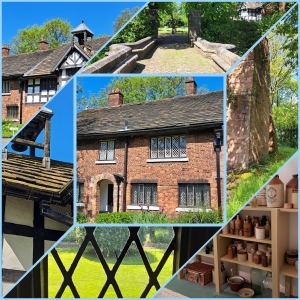
A pleasant and overlooked piece of Manchester’s diverse history. Fitted rooms, detailed and decorated with real artefacts and displays, echo the ambience of past and give our present an opportunity of reflection.

There are connections to Shakespeare, witchcraft, gardening, and nature amongst extensive grounds surrounded by the historic moat.

Throughout the visit, the historic walls, belfry, and varied facades make for good photography. The welcoming staff of volunteers are an asset to a hidden gem only a stones throw from the Etihad Stadium.

Manchester’s Metrolink is across the road at Clayton Hall stop, with the Ashton canal, and Clayton Hall in close proximity to allow more exploration. The hall is a must for historians, families, and those with a curious eye.

Visit https://claytonhall.org/ for more information.

TRT II

Lesson 6 focused on getting the most from text. The key points were about using That Reading Thing to supplement texts, levelled readers and those furthering their literary journey.

Reading must:
· Be of interest.
· Not be embarrassing.
· Be encouraged by the teacher or mentor.
· Be of a suitable size of text.
· Be matched to high school students, whether the lowest level or readers, intermediate readers, or those most able.
· Allow students to decode the text.
· Encourage fluency with minimum pausing and misunderstanding of punctuation, etc.

The teacher or reading mentor should:
· Challenge the student appropriately.
· Ask relevant inference questions, e.g., “Can you picture what is going on whilst you are reading?” To visualise the book is a good way to understand it.
· Reread and clarify a selection of key points.
· Encourage the student to connect to prior knowledge, context, and within the text.
· Discuss points of possible empathy.
· Prompt the students to find facts, infer the gist of the main ideas, and summarise them accordingly.
· Encourage questions and predictions from the text.
· Build on enthusiasm and embolden the habit of reading. That energy needs direction.
· Promote the use of a thesaurus and synonyms. Challenging the student to replace words with alternatives can be a useful tool for learning.

Useful strategy:
someone
wanted
but
so

[MacOn, Bewell & Vogt, 1991; Beers, 2003]

Combined with my knowledge of reading, Malcolm Pryce’s How to Write a Kick-Ass First Novel website, Jolly Phonics and the best part of my education delivery, I feel that That Reading Thing has stripped back a few basics, highlighted and reinforced some ideas and methods that will not just supplement or enhance my methods of delivery, but add a freshness that always follows any personal development.

Tricia Millar and her That Reading Thing course have made me, like many a good self-development session, want to dig deeper, do better, and expand my own knowledge. That desire is one that I hope carries through every session and class, inspiring readers and writers and perhaps planting the seed of a love for words. Some students may not know it now, but later, when the bulb flashes and the green man at the crossing lights up, a jolly new route may be taken. In closing, I have identified the necessary key parts and take homes of the That Reading Thing training, and now I must deliver them. With the access to materials, a good That Reading Thing guidebook to hand in, and seven weeks of access to the initial course, I feel confident in my ability to improve my output. Wish me luck. And, make sure you join the course, if you’re into that sort of thing…

The 500 & Something-th Post

Munich, Birmingham, and Manchester in a day. Added to that, Istanbul, Hong Kong, Dongguan, and Huizhou in just over a day or so. Beyond that, time in Guangzhou and Meizhou. Miles and Miles of carbon footprint with purpose. I’ll plant some trees, flowers and greenery, and do my bit. I wonder how much SpaceX do for offsetting their explosive test work. Can see Elon Musk in a pinny and holding a trowel. Do those bodies need burying?

Every journey needs a purpose, or every journey gives a purpose, dependent on your outlook. Along the roads and flight paths, I’ve come to understand the meaning of it all. Perhaps it is all about succession and passing on as much of your good as possible. Or 42. Give or take, our genes are their to be and exist tomorrow. Investing time and effort in developing a miracle second generation is magical. We’re just a moment in time, so why not give all we can give?!

Humans make mistakes. Humility is normal. Just ask any billionaire businessman and promptly discard their response. People, like mothers who adopt young orphan girls in Meizhou, giving much to support others, are who I want to learn from. I accept judgement from all, but reject all from being my judge.

So, I find myself writing, whilst on a train from Morecambe. In fact, I’m completing words first noted whilst on Munich a few weeks ago. Time has come and given me other distractions like mounting shelves, removing doubt, and wandering to the odd game of football, or five. In fact, today before a carvery lunch, Panda, Blue, and I walked around Heysham village and meandered around Morecambe’s southern flank of town. The 14°C coolness occasionally permeated by glistening rays of sun-shiiiine. Rather than shrivel up and burn as per my pale skin, I opted to walk and feel the delightful comfort of light.

As railway announcements offer routes to Rouse, Carlisle, London, and Manchester, I sit back, legs stretched, almost fastened to a metal bench. In my hands is a paperback copy of Mike Leaver’s Yeti Seeks Mate. The opening new chapters tie you down and pull you in. Everyone loves the excitement of a new chapter. Whilst the author sounds like the words my cleaver, he seems an intricate and clever wordsmith. That tale may be written, but others are just unfolding.

That Reading Thing: First Notes

That Reading Thing: Lesson One

Humorous friendly, laid-back learning environments matter. High expectations and totally safe workspaces must be guaranteed.  

An investment in education of £192 gets an individual access to That Reading Thing for around 7 weeks. My journey began on April 26th, 2023. Armed with several instructions and a few printed materials, I opened the guidebook sent by Tricia Millar. The course has been recommended by experienced colleagues, external assessment and a variety of reviews are available globally.  

Each topic is split into sections. The first section is titled, “How do you teach a teenager to read?” This featured a background, some decoding and a briefing on struggling or confident readers approach unfamiliar words. The 24-minute-long online training video advised how to make phonics age appropriate. Tricia Millar (not from Orange is the New Black, different spelling of course!) mentions the work of Professor Diane McGuinness (University of Florida) and linguistic phonics, or speech to print phonics. Teenagers, as highlighted by Tricia Millar, who cannot read or struggle to read are often humiliated, embarrassed, and subject to social stigmas. That’s where That Reading Thing began. It fills a gap.  

Struggling readers may have given up reading for meaning and may substitute similar-looking words for alternatives, e.g., vitamins in place of victims. Some may look for words within words and not actually be able to make any sense of morphology in the first place. There are skills we need. We must read left to right, as learned in English as a kid. Words can be thought of as whole objects by some learners. Knowing how to segment and blend is a learned skill. Those syllables and words don’t just appear in our heads at birth. Sounds and voices are key. Sounds can be spelt with 1-4 letters. Graphemes are like that. Those spellings of sounds are pesky. Accents are normal, too. Things that look the same but sound different happen, yet the likelihood of one sound of the other is more feasible. Break bread on a beach. The former word has a sound uncommon, to the middle word bread, which is still far less common than the sound ‘ea’ in the beach. Some sounds will also look differently. ‘Ee’ sounds can spelled as ‘ee’, ‘i’, ‘e’, ‘y’, ‘ea’, less so as ‘e…e’, ‘ey’, ‘ie’, ‘ei’, ‘eo’, and super rare in ‘ay’, ‘is’, ‘oe’ and ‘ae’. The phoenix’s foetus beats a pizza for its babies and their keys. Dialects can impact this, too. Remember, some rules have outliers like station to ration. Rules in reading are wasted effort. It is better to focus energy in other ways…

Here, I went for a coffee. Then, back to That Reading Thing, with Tricia Millar, and we glanced at the 6 key ingredients of That Reading Thing. Removing labels is key, smashing away the past. She prescribes, “You don’t have to know anything we haven’t learned together” for a good reason. The clean slate is often needed. What happened before, isn’t constructive to confidence and learning. By saying this to a student, you set high expectations and agree that “you do have to know what we have learned together”. We’re enabling the students to make progress and remove stigmas. A positive effect should see a student attend class, be punctual and feel secure in their learning environment.

Multi-sensory“say the sounds” approaches give tools to the student whilst the teacher be clear with their sounds. Sting-free error correction needs to be applied. Turning negative responses to more encouraging and positive approaches. Show the error, say something (show and tell), and ask a question to prompt the student to respond using their own knowledge to correct or work out something is amiss. Teaching-free zones can be applied. There’s no need to explain everything. This isn’t a science-based approach to English. This is an enabling ploughing-on mission that allows pace-setting. Discussions come later. Answer questions quickly. Stay on track and use scripts, but not that of scripted teaching. Stay efficient and allow students to respond to the unfamiliar by using independent learning.

Another coffee was needed. I supplemented my coffee with a Tunnock’s caramel wafer. Other wafers are available but few are as satisfying as the 30 grams of wafer, layered in 4 parts of caramel, wrapped in milk chocolate. Much like this snack, words and literacy teaching comes with its own layers.  As a teacher, we allow the student to ascend a mountain, and talk them over crevices and ledges as and when they get stuck. At the top of the mountain is their first novel. We coach building and spelling a short and long word. Visual clues, charts of sounds and puzzle cases follow. These help to read short or long words when a student is stuck, overhanging a precarious drop. Support comes in a harness, but little more. They need their hands, cams, nuts, draws, slings, carabiners, crampons and ropes. “Say the sounds, tell me what you hear.” Words that I have heard from these videos included: sprag, hodmandod, blunge and tintinnabulation. The takeaway point of the second video was simple: allow conversation to develop long word understanding.

In closing, my notes are not for profit, duplication or to undermine the course. They’re here for my own use and to encourage others to subscribe or buy the informative course at That Reading Thing.  

Glossary:

Comprehensive: including something or other fully, or dealing with all or nearly all elements or aspects of something.

Decoding: the ability to apply our knowledge of letter-sound relationships, including knowledge of letter patterns, to then correctly pronounce written words. Words we don’t know when we read them are often words we don’t know when we hear them.  

Enable: give (someone) the authority or means to do something; make it possible for. For example, enable someone to read /ɪˈneɪ.bəl/.

Grapheme: a letter, or group of letters, that acts as the smallest unit in a written language.

Latent knowledge: knowledge that only becomes clear when a person has an incentive to display it. Things that some students don’t already know that they already know.

Syllable: a unit of pronunciation having one vowel sound, with or without surrounding consonants.

That Reading Thing: Lesson Two

“I don’t know is a fine answer.” – Tricia Millar, That Reading Thing

I knew education was powerful, but this was incredible. The course on That Reading Thing resumed after lunch. It was my personal choice. I was enjoying the experience and Wednesday’s timetable was forgiving. So, off I delved, deeper into the well-organised lesson content of assessment, building with charts and reading/spelling of short words… Here Tricia Millar reminds me that a Fairtrade bag arrived with foundation sound charts, a “try it” board, multisyllable spelling board and boards to note words that sound the same, but look different. The training manual and a Zippa Bag full of pens, a pointer pencil, some fine tipped dry wipe pens, sticky notes, and puzzle pieces.  

“You don’t know what you don’t know.” – Socrates, Greek philosopher

Through the window, I could see shadowy figures taking their positions. Tools are required. Students should each have a project folder, lesson pieces from TRT2, and their minds. They also need to be placed and engaged. To start, an assessment will help titrate where to begin. During assessment, teachers will note how fast or slow they move with a student. The words to be read are noted on a yes, no, and best answer sheet, with space for notes. There are 3 pages in level 1. The online TRT2 website has multiple levels and pages, working in a sequence from a foundation to advanced level. Tricia Millar ploughs through examples, featuring child actors and scenarios. The video reinforced that many students will not know why they have been sent to literacy invention.  

I was finally holding a new map. Explaining to new learners that you are learning about them and following your own guidance will be freeing to the student who joins your intervention. Always planning ahead and showing the steps will reassure the student of their future journey. The students should take ownership of the flow of a lesson. Their tools and charts are in their hands. Repetition and reminders about the sound, not the spelling, are useful. We must engage their ears. Circle options for those who need extra support.

“you can, you should, and if you’re brave enough to start, you will.”- Stephen King, On Writing: A Memoir of the Craft

There it was. Placed before me looking as expert as ever, video examples of lessons in action. Introduced. Explained. Unwrapped. Delivered with error correction. Minimal support. In some first lessons, throw in a few free answers if the student needs encouraging. There is no harm in support. Checking sounds likes b and d side by side could narrow out some interpretations of those letters. If a student chooses a letter like ‘l’ to sound ‘ll’ then simply ask that he, she or they find an alternative sound from the choices. Make sure they know that the two sound the same. No technical terms and no micro-teaching. Simples. Practice and action need to be forward in motion.  

Saying sounds, telling you what the student hears, and allowing students to connect to words will empower them. Unearthing habits to aid visual learners to use their ears is crucial. What’s the first, second, third, blah, blah, blah sound that you hear in the word blah, blah, blah? Now spell it. Using words to double-check sounds is a good idea. Consonant clusters and blends need separating with some students. Signalling the individual letters and encouraging every sound to be drawn out will encourage the student. The student may spray, spring and splinter their way to the word, but puzzle pieces can be used. Spellings can avoid your cake being published on cakewrecks.com.  

That Reading Thing: Lesson Three

Building with puzzle pieces, reading and spelling long words, and decodability and reading sentences would be the focus of today’s work. Decodability itself is a word that needs decoding, unpacking, and all the ability in the world to follow. The videos ground out, repeat and stress the need for confidence, skills, and habits to push on in their complex coding.

That Reading Thing: Lesson Four

Rhotacized schwa, anyone? None here. Just ‘sh’, ‘th’ and ‘ch’ accompanied by split vowels, foundations and extra support lesson briefings.  

That Reading Thing: Lesson Five

Here be dragons, or… look the same, sound different, and sound the same, look different, as well as the rest of the advanced levels. Breaking up syllables with lines, the use of word visuals on tables and other tips were noted. Adding context to new words often helps. Kakorrhaphiophobia featured: fear of failure. See: κακορραφία  (scheming, evil planning). From kakós, ’bad’ + rháptō, ‘to sew’ + –ía. Learning unusual graphemes is something to keep in mind for future learning. And, to avoid failure.  

That Reading Thing will return…

…in the That Reading Thing: Lesson Six & Conclusion/Review, which shall get a more catchy title.

Shipping Out.

19th January 1863


Dear Manchester,

put your money where your mouth is, this slavery malarkey has to end. End of.

Peace and love,

Abe Lincoln


(P.S. United don’t exist as a club yet, but they’ll probably worship the devil).


The above letter is a paraphrased example. Like much of the world Manchester was wearing the latest clothing of the time around that time. Gucci? Not born. Cotton? Everywhere. The bustling smog of Manchester coated moths, as much as provided clothing to men and women alike. Transgenders were around but less represented. It was, of course, different times. Cash was made. Lots of it. Karl Marx and Friedrich Engels had met in Manchester a few years earlier and released their Waterstones best seller The Condition of the Working Class in England. Jack Reacher novels were nowhere to be seen.


Turn-und Sportverein München von 1860 hadn’t even started kicking a football until 1899. Die Blauen had other sports, and all could have worn cotton garments made in Lancashire. Those kits wouldn’t have featured cotton picked by slaves in the U.S. of A. No. No way. Lancastrian workers had principles. Rather than make a quick Queen Victoria penny, cotton mill workers took a stand. Southern bastards from U.S.of A. were attacking their northern kin and union. The Confederacy could no longer count on cash from much of the north west of England. Unlike England’s Liverpool, where Confederate flags flew proudly. As some households went hungry, more than half of the mills and looms lay silent.

“I know and deeply deplore the sufferings which the working-men of Manchester, and in all Europe, are called to endure in this crisis” – letter: To the Working-men of Manchester, Abraham Lincoln.

Manchester’s Manchester Guardian opposed the blockades. It wanted to put food back on the people’s table. Yet, workers gathered in the Free Trade Hall stuck two fingers up at a proposal to drop the blockade. They backed Abraham Lincoln and his northern union. Starvation and destitution followed. A tad like how the prices of tomatoes have been on the rise after the U.K. backed the Ukraine, whilst simultaneously telling Europe to go away. As the army read the riot act, and Lincoln (the man, not the city) earned himself a future statue in Manchester, praising “”sublime Christian heroism”. Ships full of provisions were also sent, which was a relief for many in Manchester. Within two years slavery was added to the U.S. Constitution and Manchester’s mills were back pumping crap into the air, allowing families to feed themselves once again.


Abraham Lincoln’s fate wasn’t so pleasant and before he had chance to visit Manchester, he was gunned down. This process has been repeated a few times since and seems integral to U.S. culture.


So, when The Guardian, The Daily Mail, etc. manipulate headlines to flag Manchester City, and even MUFC’s crest as being a symbol of slavery, they need to dig into their research skills and work on their journalistic talents before blindly printing misinformation. Even the Manchester Evening News and MUFC’s historian had the decency to highlight the city’s backing of the abolitionist movement. The Manchester Guardian, founder, John Edward Taylor had partnerships with slavers and their companies. History is littered with profits being made over humanity. Let’s learn from it. We’re better for it. We can’t hide our history!

Man U added their ship to a badge in 1902. City used Manchester’s heraldic design from 1894 to 1960. The ship on both is that of a merchant ship to symbolise the city’s link to the Manchester Ship Canal. The Guardian’s writer connects the ship to black history in an insulting an incorrect way. History matters. Get it right. Stop trying to revise history and change a country’s shame based on a misplaced reckoning.

The Guardian writer Simon Hattenstone even suggested the bee of Manchester’s industry replaces the ship. If he had been a tad more industrial in his research and knowledge, he may have published a more compelling argument. Instead, he created a woke debate and accidentally made The Sun look like a paper of good response. And to agree with Man Utd historian J.P. Neill, I close with this quote: “’Not only did the club badges long post-date the abolition of slavery, the clubs themselves were only founded decades after slavery was ended.”

15th April MMXXIII

Up by 5.30am. In a car by 6.30am. A breakfast of water, a slice of bread, and some meatballs. No coffee. We popped out from Huizhou to Meizhou for a coffee. The 105th day of the year. 260 remaining days.

April the 15th is an old date in history. Wars, death and grimness. April (四月) is usually associated with the sound si which sounds a lot like death. Aside from the Pocotaligo Massacre (1715), Swedes defeating Romans at Rain (1632), the English getting battered in Northern France (1450) and the ill-fated Battle of Kilrush (1642), there has to be something good about April the 15th. Step forward Samuel Johnson.

Dr Samuel Johnson published A Dictionary of the English Language. Game changer. Useful for words such as olympiad, because April 15th, 1896, marks the closing ceremony of the first modern Olympics. Two years prior, on April 16th, 1894, Manchester City F.C. was incorporated. Close enough for a tedious inclusion. Other notable events on April 15th include the sinking of the R.M.S. Titanic – a legendary tragedy and disaster, and in 1941, a thousand or so souls were killed in the Belfast Blitz. Doom and gloom.

In 1989, Hillsborough, the U.K.’s most shameful episode of football terracing disaster would eventually claim 97 lives, and years of campaigning for justice began. Little positive can conclude this simple paragraph and statement. Never forget.

It isn’t all grim for this date. Insulin had become available for the public in 1923. Malta received a Goerge Cross in 1942 and the notorious Bergen-Belsen camp was liberated three years later. In ’55, McDonald’s was founded, keeping obesity an option globally, and perhaps led to some chip fat causing the Notre-Dam de Paris cathedral fire of 2019. Okay, it’s really a date with some unpleasant and bleak history. Just ask Leonardo Da Vinci, Nicolas Chopin, and 1000+ games, Canadian ice hockey star, Keith Acton, their birthday. Abraham Lincoln was assassinated fatally on this date, too. Poor chap. Still, his statue in Manchester, England, is pretty cool.

Arthur Lowe, former Chapel Street Primary School pupil, may have passed away on this day in 1982, but his memory and comedic talent live on. As does the memory of comedian Tommy Cooper. Just like that. The Universal Day of Culture under the Banner of Peace adds a more cultured look at the date in question. Or that of World Art Day, powered by UNESCO. It takes all sorts to give a date a meaning.

We arrived back from Meizhou. We didn’t even get a coffee. Two bottles of soft drinks were all. We sat down for lunch. All done and settled inside a few hours. A new meaning to the date. Our own history. Yet, I feel I have forgotten the date’s other connection. I feel it is attached to a family member, yet I can’t place it.

The moon is rising.

Just us.

Just us.

No-one else.

Those who matter in the distance.

Those who care, held close.

Our thoughts in your thoughts.

Your warmth together.

Just us.

Two peas. One pod.

Wrapped up snuggly.

Joined. At the hip.

Together.

Stronger as one.

A union led by destiny.

No pressures. No worries.

Challenges to face together.

Fearless and relentless.

For us.

Hope and glory, in lands, over the seas and by green trees.

Bound at the hands.

Rings on.

A bond. Embraced.

One.

My World Football XI

Some might say that I am too biased toward Manchester City. And, they would be right. Of course. First choice. Only choice. It’s in the blood. That doesn’t mean I don’t watch other teams. I like nothing more than seeing Aberystwyth Town on S4C or the Vanarama National League on BT Sport. I prefer going to live games and dive in and out of non-league games as and when feasible.


As footy fans, we know nothing and nor do the PFA or the leagues. City have 0 winners of the PFA Fans’ Player of the Year. Only Leicester and Spurs have a winner outside of ManUre, LiVARpoo, Ar$e, and Chelsea… There’s an element of bias and the Premier League has grown far too powerful in shaping our influence. La Liga too. The Bundesliga and Serie A feature heavily. Football has a popular landscape, and a broad landscape sits beneath it.


Select an XI (+7 subs) from your favourite players of all time. The rules are numerous:


1. There are no players who are currently playing.
2. One player from one nation, however, one substitute, can have a repeated nation.
3. No Manchester CITY players, past or present.
4. They must have been playing in your lifetime.
5. A balanced number of defenders, midfielders, strikers/forwards, and 2 goalkeepers.


GK: Jussi Jääskeläinen (Finland)


DEF: Frank Rijkaard (Netherlands), Daniel Gabbidon (Wales), John Mensah (Ghana), Kakha Kaladze (Georgia)


MID: Matt Le Tissier (England), Andrea Pirlo (Italy), Michael Ballack (Germany)


ATT: Gheorghe Hagi (Romania), Romário (Brazil), Andriy Shevchenko (Ukraine)


Subs: Yakubu Ayegbeni (Nigeria), Pavel Nedvěd (Czech Republic), Stiliyan Petrov (Bulgaria), Brad Friedel (USA), Franck Ribéry (France), Arjen Robben (Netherlands), Lorik Cana (Albania)


I always enjoyed watching The Yak at Everton, and Petrov seemed an amazing club member at Villa and Celtic. Jääskeläinen struck me as the kind of keeper a club needs for coaching, encouraging, and reliability. Although I’d say Friedel was the better goalkeeper, I think Jääskeläinen would be the bigger voice in a squad. Le Tissier deservedly remains a club legend at Southampton and won’t be too well known by the international goat brigade that love and cherish Ronaldo (the crap one) and Messi – although Le Tissier deserved a bigger crowd.

Pirlo was a sublime player and won awards for both his play and achievements. Great hair, too. Ballack didn’t shy from challenges. Rijkaard and Robben are two of the greatest players I’ve seen from the Netherlands. Cana, lesser known, was a brilliant player, much like Kaladze from Georgia, who both seemed to go under the radar. Perhaps their better-known fellow countrymen had more awards.

Choosing the best XI players not to have played for City wasn’t easy. Balancing their nations and positions was also a challenge. Football is a complex machine. Many will agree and disagree with my choices. Rightfully so. We all have opinions.

Brick Walls

What I’m trying to say, is that I don’t want your throat to hurt so much, I don’t want you feeling so sick, and I’d take every ounce of the pain and suffering away, if I could take it from you. I’d kiss every drop of this evil bug from you.

I’d run through walls to defend and support you. Travel oceans, climb mountains, and rattle off clichés to make you understand that I am here and I am there for you. I’ll hug you closer and suffocate loneliness from you. You’ll be embraced so much that our skins will fuse. It’s that strong that even your farts smell of roses.

You have a way of doing things, and I respect that. Don’t push me away. I need you more than I need air. Without air, I might just be able to survive through some sort of chemical restructuring. Without you, well, what’s the point?! A sore throat comes and goes. I’m here forever. Until you get bored of me, that is.

Watching you sleep, restless and sweaty, face in contortions resembling a gurning competition, I am reminded of Egremont Crabbing Fair. Let’s go together. By then, you’ll be still, calm and feeling much better. Or, we could stay at home and do nothing. Just spend time wasting time and enjoying time in great company. You’re the best. I’m blessed. Let me treasure you. Stay strong. Stay positive. This bug will pass.

Stressful authority.

Prove your status.

Copy that letter.

Twice.

Translate this to that.

Duplicate, duplicate, duplicate.

Thrice.

Indicate at the tick box.

Here, there, and HERE.

There again.

Copies of a passport.

Duplicate and photostat your household register.

Voice print.

Embassy and Consulate verification required.

University experience desired.

Nose print.

Passport photos. Wedding photos. Holiday photos.

Travel history records. Paper money trail. Bank statements.

Dental records.

Fill in this.

Provide a copy of your birth certificate.

Photographs.

What was your dog’s mum’s maiden name?

And, what did your ex-wife eat for lunch yesterday?

Evidence.

Bloodtype, fingerprints, retina scan.

When did you last sneeze?

Health check.

How good are your genes?

Swear an oath, an affidavit, an allegiance to the flag.

Sing the national anthem. In Swahili.

Verify.

What are your political beliefs?

Trump or Xi? Sunak or Churchill?

Confirm.

Height, weight, favourite colour.

Where do you plan to go?

Bureaucracy.

Hand over your loved ones.

Get down on your knees.

Pray.

Relieve yourself of all sins.

Seek absolution and fix this.

Hurdles.

Wisdom.

What is wisdom? Things we learn and learn from? Our abilities to produce something whilst using our prior knowhow and experience? A guided version of common sense founded on our insights to life?

Unbiased judgement may play a part in keeping us grounded. Non-attachment isn’t easy. We connect. Sometimes, we connect more with someone or less with someone else. Or, the same person. At different times, too. I was here. I’m still here. We’re still here. Not every pathway is clear or easy. Not at all. We just have to find the right way. Changing the world isn’t easy, and arguably, you can change the world. However, you can change yourself. And nappies. Or not.

Drawing from our compassion, we should treasure every moment and focus all our energy on each and every brand new, bright tomorrow. The time we have makes us question, probe, redress, and counter our passing days, amongst other things. We make mistakes. We have to learn and relearn and adapt to survive and be the best we can be. Life is short. Enjoy it. No matter the challenge.

Having the capacity to know what contributes to growth and relate our conduct to our soundness of judgment should be simple. Choices are made. The means and ends of which can be practical, controversial, right, and / or wrong. Our experiential self-knowledge leads to self-transcendence. In theory, anyway. Give or take.

Virtues such as ethics and benevolence grow from who we surround ourselves with. Immerse ourselves with good friends and great family, and hope grows. Stand alone, and fear surrounds you. The doubts of self kick dust in your face. Regrets can cuddle you closely and strangle hope from your soul. But, with love and suitable familiar faces, we can dig in deep and accept hands to lift us up.

Doing what we do is important. Doing what we enjoy is us. There’s only one way of life, and that’s your own. We can also live that mantra, sang by The Levellers, by bringing in the ways of others. For every listener of The Hu, there’s a pebble painting pretty-eyed girl. It takes all sorts. For every dog called Panda, we need a dog called Sasha. Each unique character shaping our world and impacting us in their own little ways.

As for the future. Life goes on. We adapt. We face challenges. We survive. We try to fix our past. We grow new trees. A society grows stronger, in which an elderly gentleman plants trees knowing the shade of the trees will never be enjoyed by himself. We could look at clouds as something that blots away the sun or a canvas to be shaped and painted. Artists need treasuring.

So, is wisdom the right use of knowledge to tackle challenges and present a simpler setting. Our psychological construct allows us to foresee consequences. Be strong. Be pleasant to your friends. Apologise. Be honest or as close to it as possible. Never try to hurt anyone. Push away those who lessen your world. Keep good company. Build a strong foundation. Hug more.

Vellichor

The scent pours off of you, slipping away from your soul, wriggling away, pulling you down to the hole.

The depth opens up wide, snarling ruthlessly snide, ripping darkness from below, confirmation that hopes lost and lied.

The pages tear from the spine, torn away in time, words failing to be read, all shrouded in grime.

You lay on the shelf, emitting bad health, your pages full of wise wealth, yet all pass your stealth.

Daylight comes and goes, your words nobody knows, inside treasures like a rose, you slip away on endless rows.

The dust on your front and back, tightened and slack, no hands to pick you up and put you on back.

Discrimination

Why do you discriminate against me?

Why do you think you’re better?

Who allows you to talk over me?

Am I too unambitious if not a go-getter?

What makes you the king of this castle?

Whose voices are you speaking for?

Why do you bring me all this hassle?

Was it my forefathers in that long forgotten war?

Didn’t you understand the mistakes of the past?

Is it my skin, you fear?

Do you blame me or my people for that blast?

What values should I hold dear?

My religion or your religion?

Hate us? Hate me? Hate our future?

Where is the peace dove or grey sooty pigeon?

What makes you think I’ll level a score?

Equality or inequality?

Why do you raise your voice?

Why do you question my ability?

Why do you ask me for my choice?

Will your hateful words always haunt me?

Do you decry the freedom I seek?

Where is forgiveness and the blossoming new tree of the free?

Are you unhappy that I am not weak?

What makes civilisation?

How do I know that you know?

Where is my destination?

How will you show we can no longer grow?

China Travels: Recap.

“It’s coming home. It’s coming home. Football’s coming home.” – England football chant during the Women’s European Cup.

There has been a huge gap since travel has been possible and plausible. Never spending more than a few days in Huizhou, Shenzhen, and just hours in Zhongshan since October 2021 had been quite challenging. Travel, during 2021 and 2022, in Guangdong was unthinkable. The suffocation of humidity and toasting heat above thirty-five Celsius seemingly spelled death for me. Unthinkable. I have zero tolerance to being baked alive.

I’ve been blessed since February 2014. I’ve stepped from my comfort zone in UK living and managed to live abroad for over 8 years. Not every year has had a roasting summer. With just summer 2020 spent in Dongguan, owing to an 8 day change of employer, I’ve not had to endure too many hot days. The air conditioner had never been far away. Green parks like Dalingshan Forest Park and Tongsha wetlands have proved useful for distraction. Summer 2022 wasn’t like that. I found myself on crutches and once again trapped in Guangdong, being cooked. Far from other provinces and cooler ait.

Northern China stretches far and wide from west to east and vice versa. Here, journeys into Ningxia province have proved adventurous. Inner Mongolia and the chills of Heilongjiang have been a stark contrast to the warm southern regions. Gansu was a pleasant surprise. The stifling summer heat, broken by northern breezes and a dryer sunshine.

Through the coastal east and lands of Nanjing, Shanghai and Suzhou, I’ve managed a few looks at a variety of urban and green vistas. Touching down in Shandong and Qingdao was a spiritual connection I welcomed. Thanks, Granddad George Acton, for making me curious about that naval city you once stayed within. The trip there proved colourful and now brings fond memories.

Western China, especially Yunnan, has warmed my heart and claimed my love. Sichuan and Qinghai have equally gripped my passion for the outdoors. Those vast mountain landscapes and green pockets and valleys could fuel a thousand stories. Each one with tales and wilderness to inspire.

In the core of China, Hunan was varied in appearance and home to the mighty Zhangjiajie Nature Park. Forget it being the backdrop to James Cameron’s blue movie Avatar! It’s stunning for millions of other reasons. Xi’an proved an intense city surrounded by history and bathed in glorious culture. Shaanxi and Shanxi provinces each had many highlights.

Guangdong and Guangxi are side by side, and Fujian sits to the east of the former. Here, weekends and short breaks have been spent. Vietnamese coffees, seafood, and wanders along coastlines have gripped attention. All within a short distance of Dongguan and very much accessible before the Covid-19 pandemic.

Of course no trip to China is complete without swinging by modern day capital Beijing. Comedic travel and radio presenter Karl Pilkington visited there in a few episodes of An Idiot Abroad. Like his views, I don’t really like the capital city. How a city of that size doesn’t have a plethora of top flight football teams, or a heartbeat like many other capitals I’ve visited is beyond me. It felt very much like visiting how I imagine North Korea to be. Not my kind of place. Gridlock, grid lines and authoritarian concrete landscapes are a travel turn off. There are historic gems but how much has been remade is open to debate. Even the Great Wall looks too new. Apart from the wild bits. They’re glorious!

Macau, I could live without. It’s okay for a few hours, but not my kind of place. Hong Kong was the global city of cities, but times have changed, and I suspect so has Hong Kong. Many refer to it as just another Chinese city, now lacking its once famed uniqueness. The velodrome, mountain trails, and Clockenflap music festivals are just a few of the many highlights.

One day, I hope to visit Tibet and Xinjiang. For now, those journeys remain on a to-do list. Never say never. And, in September 2022, I found myself back in the UK. I didn’t think I would return to China so soon. The border reopened to tourism and many visa types in March 2023. That change and another more needy necessity led me back to the charms of the People’s Republic of China. This large swathe of lands often offers many attractions still. Would I move back? Never say never. Right now? No.