Manchester Baby (Happy Father’s Day)

How do! / 你好 (nĭ hăo) / Namaste / Welcome!

The Manchester Baby, A.K.A., the small-scale experimental machine (SSEM) was not a device of torture or something living. It was a huge innovation and giver to the future. Here’s a little more about the Manchester Baby and how it came about on the 21st June 1948, just 71 years ago.

F.C. Williams sounds like a football team. There is a Manchester connection. It doesn’t involve a centre-half called Tom Kilburn. Kilburn, from Dewsbury in Yorkshire, resident of Blackpool, was actually a regular at Old Trafford. His being a Manchester Utd fan should exclude him from my writing but Tom Kilburn CBE FRS alongside Stockport-born Sir Frederic Calland Williams, CBE FRS changed the world. Much of our modern world owes itself to this dynamic duo. Geoff Tootill, from Chadderton, where my Gran worked at Avro once, also worked in the Electrical Engineering Department of the University of Manchester.

Freddie Williams was a dreamer and a doer. This pioneer in radar technology carried on a wave of momentum following World War II and applied his science to research for numerous years. Look up his thesis, ‘Problems of spontaneous oscillation in electrical circuits for some light reading. Much of what was written then is widespread knowledge now. He’d be known for Manchester Baby and the Williams tube (or Williams–Kilburn tube) – a device of computer memory. Geoff C. Tootill passed away on 26th October 2017. His contributions are long and illustrious. There’s a replica of Manchester Baby in the Museum of Science and Industry (Manchester), created in 1998, by the Computer Conservation Society. Tootill’s extensive notes and recollections made this possible.

Without this trio of grafters and trend-setters, the computer era could have been years, if not decades away. The Manchester Baby and Ferranti Mark 1 are iconic technological advancements. They represent the first electronic stored-program digital computers. Famous mathematician, computer scientist, logician, cryptanalyst, philosopher, and theoretical biologist Alan Turing ran a programme on Manchester Baby, having had it initially debugged by Geoff C. Tootill. Turing and the National Physical Laboratory had also been trying to make their own programmable computer. The former codebreaker and his team also spent much time in Manchester and greatly contributed to the future.


Happy Father’s Day Dad!

My father, David Acton, or Dad as I call him, because that’s what he is and always will be has given me many great memories. Caravan trips to Cleveleys, Morecambe and countless other days out have been had. There could have been more time spent together, but for divorce, Dad’s work schedule and other factors. It is water under the bridge now. Not every day growing up was wonderful, much was spent in anticipation and uncertainty. Other kids have had far worse feelings, but my dread was all I knew. On the days when Dad and Pup, or my elder brother Asa were around, then it was delightful. Having dinner at my Nana’s house, seeing my Granddad and listening to his many war and travel stories were treats.

I don’t look back with sadness on having my parents divorce so young. Around me many of my friends were in the same boat. That’s life. It is what it is. I was lucky. Some friends had lost their father at a young age, and some never even knew who their father was. Growing up in Manchester, you weren’t far away from a fatherless child. Then, I also knew kids who grew up with fathers who were abusive or neglectful. So, which is best? There are templates and ideals, but for many these were distant dreams not granted to us. Dad did his best, and always has done his best, and understanding my Dad is key. He’s laidback, relaxed and I love him unreservedly.

Dad often took me to Manchester Victoria station, where I’d meet his colleagues in a bland room above the main railway concourse. Broken biscuits, piping hot pint mugs of tea and natter would be had. Or, we’d nip over the road, down some steps to a subterranean Railway Men’s Club with the best corned beef and onion barmcakes (a bread roll) with proper mustard. When Dad wasn’t working, we’d be at the allotment on Joyce Street, Moston. Our dog Pup would be alongside us, and I’d be let out of the back gate alongside my best friend Pup. We’d run riot on Broadhurst Park, climbing trees, jumping the valleys and over the red brick stream within the park. We’d often sit together on a perch overlooking the allotment and Dad’s plot, watching as Dad bodged a greenhouse together or planted row after row of potatoes. Just by the Ronald Johnson Playing Field, Pup and I used to chase footballs. That’s now the site of F.C. United of Manchester. I like to think that Pup and I had a pooh there. I’m certain that a bush doubled-up as an open toilet for me, at least.

From time to time the Ronald Johnson Playing Field would host cycling events. It was the first place that I witnessed competitive cycling in Manchester. How lucky the city of Manchester has been since. Wandering within the confines of Broadhurst Park, Pup and I would never cross the line at Nuthurst Road, and we’d rarely walk down Lightbowne Road towards the junction at Kenyon Lane. My Gran and Ernie lived near there (off Judd Street), plus my Aunty Susan was on Joyce Street, just down Kenyon Lane. The risk of being seen was too high. We were sometimes allowed out of the allotment front gate and crossed over the road by Dad. Here in the armpit of St Mary’s Road and Joyce Street, up against the railway was a new scrub of parkland that ran behind Newton Heath Train Maintenance Depot.

Newton Heath Train Maintenance Depot, mostly known to us as ‘Newton Heath Loco’. It may or not have had a connection to a certain Manchester Utd., but for me it was a mysterious place full of oil and metallic smells. The Lancashire and Yorkshire Railway Company had long maintained a presence at this depot. My grandfather George Acton had worked here, as did my Dad at several points. Sometimes, Dad would drive into there to grab some tools or paints for his job. With Dad and Granddad, I was lucky enough to see under a train once or twice and wander around guided in ways health and safety executives now would grimace at.

The railway was central to my youth and time spent with Dad. Train rides to see aunts, uncles and relatives was normal. From time to time, car rides out to parks, the seaside and to see Nana and Granddad at the caravan were treats. I can recall numerous pilgrimages to see the legendary Blackpool Lights, with return trips sat on old Intercity diesel trains in the luggage and goods compartments. Lugging bags of seaweed for the allotment and garden was standard practice, in Dad’s eyes. Asa said how he, as a teenager, held a greenhouse on the roof of the possibly old Princess car, as it hurtled down the steep hill of St Mary’s Road towards Moston Brook. The residents of St. Mary’s Nursing Home may have seen a flying greenhouse as Asa lost his grip.

Dad’s cars have been antiquarian at best. Workhorses over shiny pride. I can recollect a Lada Riva in beige and faded cream. Further to that there was a black Ford Mondeo with air conditioning. The air-conditioning being electronic windows that seldom worked. Sometimes they’d roll down, but never roll up. There were occasional diesel railway vans and pick-ups. Dad had been for a long-time part of British Railways and then Network Rail as a painter and decorator. His job description was pretty much paint anything and everything – but not the trains. Work was scattered nationally but mostly confined the Lancashire and Greater Manchester area. Between work Dad, would have us nip up to what is now Julie’s Homebrew by Jessie Street and Copenhagen Street off Oldham Road. The Sharp factory would be nearby, so as sponsors of Man Utd, I was allowed to boo.

Taking Nana to Newton Heath market was always exciting as it usually meant a custard slice or Chewits. The dentist’s nightmares were through fault of Nana spoiling me. If I said that I liked a Cadbury’s Boost, Nana, a diabetic would fuel my requests. We’d even jib over the canal, Nana on the concrete walkway parallel to the Old Church Street road bridge, and me springing over the dangerous wooden canal lock gates. What is now Lidl, was once Kwik Save, and our Asa would sometimes be seen working out the back or on the graveyard evening shifts at the weekend.

Our ‘Ace’ was a hero to me, as a kid, and even though we never spent much time together, I always wanted to be him. I had brown curly unruly hair. Asa had well-kept curly black hair. Asa has and had chiseled looks. I resembled a pallet of spilt paint. My freckles and pale skin was quite far from our ‘Ace’. The good thing about ‘Ace’ was that he liked computers and would rarely touch my books. Books were everywhere and I’d pick up anything with words. Asa preferred computers, coding and all that. Picking up books from barrow stalls at Manchester Victoria was something Dad and Mum both gifted me. With my many questions, Dad would often have an answer and if he didn’t, he’d point me at a book or tell me who to ask.

Anyway Dad, have a Happy Father’s Day – see you for a drink and some City as soon as possible.

All my love, John
goater

“OK, mum’s the word!”

How do! / 你好 (nĭ hăo) / Namaste / Welcome!
“Let’s sing it and rhyme; Let’s give it one more time; Let’s show the kids how to do it fine, fine, fine, fine” – All The Best, R.E.M.

Happy birthday to my dearest Mum. Much can be said for my Mum. I want to write it though. Maybe the video says a little, but I think some words are best and need jotting down. Call it reinforcement. Call it a child of a mother without means to display emotion through a hug. Afterall geography and COVID-19 keep us apart. Mothering Sunday and Mother’s Day celebrate mums and mothers (or moms) around the world. A birthday is much more personal than that but by no means less important. Every day I live and breathe on this here Earth is because of my Mum. Dad too. But, deep down we all know mums are more important.

Mums are your first true friend. They’re the best friend we should all have from day one of our lives. They are a forever friend. Mums stick by you no matter what, or they should. There are always exceptions. If a mum disowns you for liking Man Utd, then that’s your own fault. Thankfully, my mum, Mum, as I call her, because she is my mum and Mum to two others: my dreaded siblings Astrid and Paul; yes, thankfully my Mum is brilliant. She’s always listened to great music like Pulp, R.E.M., James, Finley Quaye, and Led Zeppelin. Mum has encouraged me from an early age to read. I was deep into the worlds of Tolkien long before they were fashionable. Armed with knowledge of The Lord of The Rings. Mum made sure I was presented with a stage show version long before a live action version hit the silver screen. The Tameside Hippodrome remains a fond memory with orcs and lasers casting haunting imagery from the central stage. To receive books was always wonderful. Mum and Dad provided great volumes from an early age. Collecting Weetabix tokens sometimes led to great books. Some I still have today and share amongst my classroom. These were the books that set me on my way.

Mum has grafted and strived to make each of us better. Likewise, Mum has set a prime of example of improving herself. Mum has studied at the Open University in Sociology. Mum has always tried to reason her socialist values and community spirit. She has imparted her knowledge on me and always allowed me to make my own judgements and find my own way. As Mum has shared so many great things, I always want to show her my world. I have loved being able to see Mum at Manchester City, or go to a music gig like The Levellers with me. Mum may have heard of and witnessed the Waterboys when they first came around, but my musical world is constantly expanding. As I was experiencing James singing Sit Down at an Air Cadet Christmas party, Mum was being attending their live gigs. Over the years I have grew to love James, and their song Getting Away With It (All Messed Up) is an emotional track. It reminds me of me as a nuisance and a liability towards my mum, as I stuttered and faulted my way through secondary school. Mum has been great for me. My rock. My believer.

Mum treated me once to a birthday trip, with Neil Fanning, to Blackpool and it rained heavily. We were drenched. Mum took me to the Roxy Cinema to see Ghostbusters II and it was flooded. Mum showed me the V.E. celebrations at Manchester Town hall and we had fireworks rain down on us. At Woodford Airshow, Mum calmed me down after seeing a Spitfire crash. As the Supermarine Spitfire Mk XIV struck the ground at the bottom of a low level loop during an air display, Mum must have felt as sick as everyone around them. Pilot David Moore didn’t survive. Bizarrely the aircraft did and was moved to Rolls Royce in Derby for restoration to flying condition. Mum explained everything to me, a young boy, a bit upset by the huge explosion on 27/6/92 at 15:08. I’ve just seen the video again, and it made my eyes water with tears. That’s what mums do, they put their kids ahead of them. They’re the strongest people on Earth. They sacrifice their own time, space and energy to look after and protect us. That’s why Mum spotted me crying when Bambi’s mother died. I can’t explain the tears shed at E.T. or Thomas the Tank Engine. Perhaps those days were dusty.

Eating fresh bread at the observation area (not medical) of Manchester Airport and watching planes land made a few different days. Trips to museums in and around Greater Manchester gave me an appreciation of British heritage early on. Big steam wheels at Wigan Pier and seeing Gran and Ernie at the Manchester Museum of Science and Industry. You can’t fault Mum’s ability to keep our young brains active. Ernie gave me an Engine Driver hat that day.

I wanted to get Mum an experience day, or a stay at a hotel somewhere nice, but the climate around COVID-19/coronavirus isn’t so ideal. Besides, it is safer to remain indoors, stay at home and stay alert. You have to look after your mother because you can only have one. Unless you were adopted. Some of those foster mothers are brave lots, aren’t they?! Anyway, with the world being as it is, vouchers aren’t ideal. I remember Mum gave me a Borders bookstore voucher for Christmas but the company went into administration and closed, so I never used it. Well, I kind of did, but I can’t explain how or where. Those Stephen King horror-thrillers have since move on. I have an idea what to gift Mum, but I need to wait for this COVID-19/coronavirus to all blow over…

My passion for camping came from budget holidays as a kid, usually in the north of England or Wales. The fiscally challenged as those who suffer from political correctness would recognise that times were hard. Money was scarce but we had good food, holidays, and a roof over our head always. There were treats and Fridays used to be the day that maybe a Mars bar or another chocolate treat was waiting. Mum allowed me treats like staying up late on a Sunday to watch London’s Burning or other days to watch comedy shows like Have I Got News For You. On the whole early nights were encouraged and bed would be around 9 o’clock and often with a book under the duvet. Walking was encouraged and as Mum didn’t have a car, walking became normal. The Levenshulme to Reddish Vale and back, via Houldsworth Mill was a favourite trot. Zipping around Disley and Lyme Park was a bigger treat.

Whenever there has been a challenge and times have been tough, Mum has been there to support me and has very much been the 12th player that many football clubs claim to have. That knowledge that my Mum has been around the corner or a quick phone call away, has always made me feel stronger. Usually it takes very little conversation to wipe away any doubt or reduce a huge worry to little more than a niggling ache. I always think Marlon Brando’s farewell to his son speech in Superman: The Movie could easily fit my Mum, obviously with some gender realignments and name changes.

“You will travel far, my little Kal-El. But we will never leave you… even in the face of our death. The richness of our lives shall be yours. All that I have, all that I’ve learned, everything I feel… all this, and more, I… I bequeath you, my son. You will carry me inside you, all the days of your life. You will make my strength your own, and see my life through your eyes, as your life will be seen through mine. The son becomes the father, and the father the son. This is all I… all I can send you, Kal-El.” – Marlon Brando as Jor-El, Superman: The Movie

Mum’s the word

(a popular English idiom)

Used by William Shakespeare, in Henry VI, Part 2.

“Seal up your lips and give no words but mum.” – Henry VI, Part 2, Act 1, Scene 2

“Mum” is slang for momme. Momme means: be silent (or do not reveal). Old English: “mīma“. Latin: mimus (meaning silent actor/imitator).

It was used between 1350-1400 in Middle English.

“Thou mightest beter meten the myst on Malverne hulles; Then geten a mom of heore mouth til moneye weore schewed!” – Piers Plowman, William Langland

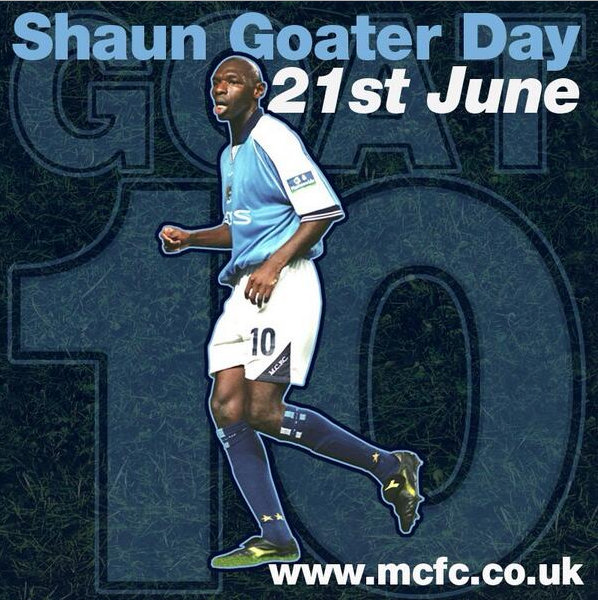
So, on this 20th of June, it is Mum’s birthday, the day before Bermuda’s Shaun Goater Day. Both should be in your calendar. And if not, why not? My Mum is ace. Shaun Goater was an ace player. Perhaps I can get Shaun Goater to say happy birthday to my Mum. That’d be fitting seeing as my Mum asked ‘The Goat’ to write me a Christmas card once. Mums are ace, right!?

goater


P.S. Mum, let’s go to Blackpool Tower and recreate this photograph in 2021. Good idea?

mumjohntowerblackpool

I’d also like to invite you to write some Blog posts for me too. Thanks in advance Mum!

Your loving son, John, aged 37.5-ish.

Ronald Lindsay Johnson (24 September 1889 – 29 May 1917)

How do! / 你好 (nĭ hăo) / Namaste / Welcome!

Ronald Lindsay Johnson (24 September 1889 – 29 May 1917)

I knew of the Ronald Johnson Playing Fields long before FC United of Manchester went slicing into the earth around it. Located on Broadhurst Park, in Manchester’s Moston, I always recall the red brick cycling track within a fenced compound adjacent to the passing St. Mary’s Road. Discovering the Western Front Association website, I recently read about Ronald Johnson. Together with a profile on the Friends of Broadhurst Park, I started clicking left, right and centre.

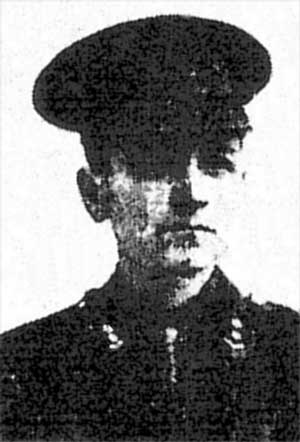
Like many that saw battle in the horrors of The Great War, Captain Ronald Lindsay Johnson (picture courtesy of the Altrincham Guardian) died in action. He was just 28-years old. His shares at Johnson, Clapham & Morris engineers were put to use in creating a sports ground. Initially for employees it became a public ground in the 1930s following Johnson, Clapham & Morris’s move to Trafford Park. It has since seen cricket, football (notably Moston Juniors F.C.), school sports days, car boot sales, fun fairs and life.

I can still recall the damp earthly smells of the ground that measured around 8-acres, sandwiched between a primary school and number 335 St. Mary’s Road. The recreation area was in memorial to Captain Ronald Lindsay Johnson and opened on the 17th June 1922 (or 1925), with Ronald Johnson’s mother present. The cycle speedway track was unique to the area – and existed long before the Manchester Velodrome was created in anticipation of the 2002 Commonwealth Games. I wonder if any cyclist transitioned from there to the often named ‘medal factory’ in Clayton.

By 2011, F.C. United of Manchester were offered the land and their 4,400-seater stadium (for £6.5 million) followed. The name Broadhurst Park was naturally fitting, following a brief period as the Moston Community Stadium. The all-weather pitch has seen a Benfica B team all in a stone’s throw from what was once Moston Hall, and residence to local industrialist Sir Edward Tootal Broadhurst. The park itself a World War One donation to recognise victory.

The New East Manchester and Manchester City Council development, once the home of a metal working and fabrication business team, had been resisted by local residents. The loss of public open space coupled with inadequate parking provision seemed to be the main problems. 2,226 letters of objection (mostly locally sent) were beaten back by 5,635 letters (many outside of Manchester) of support. Manchester Council plodded on with a success at the Court of Appeal in March 2013. The covenant on the land has always been recreation – and for the people of Moston. The one thing I find upsetting is that there isn’t a plaque or statue to honour that for almost 90 years these fields held a different name – but perhaps it hasn’t been made yet, or notified well.

Significant contribution was made by the Football Foundation Community Facilities Fund, Sport England, F.C. United Community Shares scheme, fundraising, Manchester City Council loan and the Football Foundation Football Stadia Improvement Fund amongst others. F.C. Ted (see the link for reasoning about the name) moved in eventually. At an Annual General Meeting of FC United, 10 April 2014, the Ronald Johnson Ground was one of seven names proposed for the new ground. Sadly, the historic Ronald Johnson Playing Fields seemingly vanished. F.C. United played Benfica B to mark the date of Man United’s 1968 European Cup Final, the day Ronald Johnson ceased to live.

Ronald_Lindsay_Johnson

Ronald Lindsay Johnson (24 September 1889 – 29 May 1917)

Family: His parents were William Henry Johnson, died 1914 and Agnes Morton Johnson née Brown. Brother, William Morton Johnson, educated in Cambridge, died July 1916 (in military action, aged just 34 years old). Mother, opened the playing field in June 1922. Ronald was the youngest of six children.

Raised: Woodleigh on Bradgate Road in Dunham Massay

Studied: Summer Fields School, Eton. BA Classics (posthumous MA awarded), @ King’s College, Cambridge.

Lived: Australia, 1912 until August 1914 (at the Sydney branch of Messrs Johnson, Clapham & Morris)

Partner/Chairman: Johnson, Clapham & Morris’ Wire Works (engineers)

Served: As a junior in the Cadet Corps; then Officer Training Corps at Cambridge. Enlisted (2nd October 1914) in the 23rd Division [103 Brigade RFA], Royal Field Artillery. Commissioned as a 2nd Lieutenant.

Rank: Acting Captain and Divisional Trench Mortar Officer (DTMO). Entered the theatre of war from 27th August 1915 (landed Boulogne).

Medals: 1914-15 Star, British War Medal and Victory Medal

Responsibilities: co-ordinating the targeting and positioning of mortar batteries

Notable events: Survived a rifle bullet to the ear, 19th September 1916. Evacuated by H S Dieppe (hospital ship) but returned to service by 11th December 1916.

Cause of death: Pre-Battle of Messines (Flanders, Belgium) preparations. Hit by a German shell, near Zillebeke Lake by ‘Hill 60’. He died in transit on the way to the Field Hospital near Brandhoek.

Place of Rest: Brandhoek Military Cemetery, Belgium (Plot II, Row D, Grave 1).

Commemorated: Dunham (St. Mark’s) war memorial and the Kings College, Cambridge War Memorial.

Other than the Ronald Johnson Playing Fields, he was honoured with the naming of the Johnson Chemicals Labs, Adelaide University, Australia. He is also mentioned in the Cambridge University Book of Honour.

Further reading:  Who was Ronald Johnson ? (David O’Mara, Western Front Association (WFA))

Radical Cowherd

How do! / 你好 (nĭ hăo) / Namaste / Welcome!

“Animals are my friends…and I don’t eat my friends.” – George Bernard Shaw

The radical city of Manchester has and continues to change eating habits for many people. Independent food co-op The Eighth Day (111 Oxford Road) has a shop and a café in central Manchester. It’s part of a growing vegetarianism within Greater Manchester. Everything from food festivals (e.g. Plant Powered Sunday), vegan fairs, beer festivals and club nights can be found within the city.

“Now I can look at you in peace; I don’t eat you any more.” – Franz Kafk, German-speaking Bohemian novelist

William Cowherd died in Salford during 1816. He’d lived around that way for some time. Well done him. Salford, for those outside of Manchester, is a city that is west of Manchester. It is part of Greater Manchester, and when the news is positive, we Mancunians claim Salford as our own, but when it’s negative, Salford stands alone.

“As long as Man continues to be the ruthless destroyer of lower living beings, he will never know health or peace. For as long as men massacre animals, they will kill each other. Indeed, he who sows the seed of murder and pain cannot reap joy and love.” –  Pythagoras, ancient Ionian Greek philosopher

For example, Salford Lads Club (est. 1903), is famous for a photo of The Smiths nearby by photographer Stephen Wright. That’s positive and claimed by Manchester. Murder for example, well that happened in Salford and has nothing to do with Manchester. Salford/Manchester’s William Cowherd advocated vegetarianism and in 1847 his philosophy founded the Vegetarianism Society (in Altrincham, just south of Manchester).

“William Cowherd, the founder and minister of Christ Church, Salford, died 24th of March, 1816, aged 53 years. At his request is inscribed, ‘All feared, none loved, and few understood.’ ” – The words of William Cowherd’s tomb at Christ Churchyard, King Street, Salford.

Popular with his followers, Cowherd gave free medical services, a lending library without cost and soup (vegetarian, obviously). Having trained at Beverley College, Yorkshire,  Cowherd moved to Manchester in the late 18th Century.. Heavily-influenced by 18th Century Swedish theologian Emanuel Swedenborg, Cowherd went his own ways after jumping ship from the Church of England to the Swedenborgian church before he went solo.

“Eaters of flesh could you decry; Our food and sacred laws; Did you behold the lambkin die; And feel yourself the cause?” – Hymn against flesh eating

Reverend William Cowherd established the Bible Christian Church in 1809. Located on King Street, Salford, his church broke away from the Swedenborgian New Church. He and his congregation [known as Cowherdites] vowed not to eat meat or other intoxicants. Born in 1763, William Cowherd, headed from his native Carnforth (Lonsdale South of the Sands). A keen writer, Reverend William Cowherd’s work could be found from the New Jerusalem Journal to the catchily named Liturgy of the Lord’s New Church. Various works of his were printed locally at the Manchester Printing Society. Considering Cowherd, which is a strange name for a man who hated eating meat, was only around for 53 years, his church managed to reach America [Philadelphia Bible Christian Church] and push the cause of vegetarianism and form of temperance to a wider audience. Other temples opened around Manchester for the Bible Christian Church, with one on Every Street just down from what is now known as the Etihad Stadium.

“It is my view that the vegetarian manner of living, by its purely physical effect on the human temperament, would most beneficially influence the lot of mankind.” – Albert Einstein

So, Cowherd convinced a group of congregates not to eat offal (stomach and intestine) etc. The poor were rarely able to invest in higher cuts of meat. These Cowherdites, his flock, went on and before you knew it meat was murder and the Vegetarian Society was born. At this time, vegetarianism was met with disdain. Nobody knew how the health effect would be. Few had studied it. Few had gone that way. Deaths within the Cowherdites were blamed on a lack of meat and two veg in their diets. Intellectuals throughout urbanisation and cities began to debate the ethics of killing and eating animals. Vegetarian restaurants in Victorian Manchester flourished.

“The thought of two thousand people crunching celery at the same time horrified me.” – George Bernard Shaw

Black or White? More grey…

100_2063How do! / 你好 (nĭ hăo) / Namaste / Welcome!

Today marks the memorial of the terrible fire and Grenfell Tower disaster that claimed 72 lives. The enquiry goes on. The battle against protected imperialist privilege remains. The racism of yesteryear hasn’t faded at all. These days a man born on November the 30th in 1874 at a palace (Blenheim Palace, Oxfordshire) is gaining rather a bit of attention. This, a man who, somehow appears (on camera) to have been meddling in Police affairs in 1911. This is long before you look at Sir Winston Churchill’s cash for influence…

“…ought to be lain bound hand and foot at the gates of Delhi and then trampled on by an enormous elephant with the new viceroy seated on its back” – Winston Churchill, on Gandhi, “a half-naked fakir”

Hussein Onyango Obama is better known to many as former US president Barack Obama’s grandfather. He was one of thousands held in British detention camps during Kenya’s Mau Mau Uprising of the 1950s. Winston Churchill served as leader there from 1951–1955. Not many people know about that. Even the Imperial War Museum’s web link skirts over the wartime leader’s involvement.

“Many of our friends in Muslim countries all over the East have already expressed great appreciation of this gift.” – Winston Churchill addressed the cabinet in 1940, They set aside £100,000 for a London mosque to honour the Indian Muslims who fought for the British Empire.

At the weekend thugs and far right fascists waved Hitler-style right arm salutes in front of the Sir Winston Churchill statue. The very character who helped Britain and her allies to overcome Nazi Germany, fascist-state Italy and a hugely militarist Japan hellbent on expanding their Empire. In April 2014, Labour candidate Benjamin Whittingham tweeted on Twitter that Sir Winston Churchill was “a racist and white supremacist”. The Labour Party removed the post and apologised to Churchill’s grandson Sir Nicholas Soames – and the world. In February 2019, before COVID-19 ravaged Europe, Labour’s shadow chancellor John McDonnell called Sir Winston Churchill a villain. Newspapers often dig up some rusty pieces of Churchill-bashing and The Guardian’s Gary Younge’s piece from 2002 is hugely relevant today.

“I think my grandfather’s reputation can withstand a publicity-seeking assault from a third-rate, Poundland Lenin. I don’t think it will shake the world.” – Sir Nicholas Soames (Grandson of Sir Winston Churchill, The Daily Telegraph, February 2019.

Groomed by class, and shaped by his headstrong opinion, Sir Winston Churchill helped deliver Britain through its darkest hours. Strong leadership and action needed to prevail – and it did. People gave their all for freedom and choice. Without such actions, Britain and Europe surely would have fell to Nazi ideals. To freely discuss Sir Winston Churchill and his party’s feelings of other races is easy now. Back then, in another lifetime and era, many were obsessed with master races and strong genes over others. There are even religions, cults and countries now pushing and plugging that notion, but that is another story, for another day.

Sir Winston Churchill was not a stranger to eugenics and controversy. The man himself adorns countless history books, five-pound notes and was and is celebrated by many. Many British-Indians see Sir Winston Churchill as a figure of division. They have a just case, and rightly so they are free to argue their cause, after all the defeat and prevention of Nazi rule on British soil was all about that. Freedom of speech belongs in the U.K. Even during Sir Winston Churchill’s time pre-war and after World War II many argues his faults and his seemingly eugenic views as far more than just class division. His speeches were often tinged with venom and fear-mongering: watch out for those pesky East Asians

I’ve always found Sir Winston Churchill’s books – of which there are volumes to be fascinating and idiosyncratic. They’re outlandishly eccentric pieces from a time of Empire and fear of Communism and Fascism. They’re contradictive deep pieces of opinion and words twist and turn hither and dither to form a kind of blog or diary or history bibliography. Many have deep direction. Most have one-sided takes. The more that people can read into Sir Winston Churchill’s works the better. They’re illuminating and showcase an often-troubled mind full of intellect and discovery. One moments they pour with respect, the next they stand over their quarry and stamp their feet down. Like all heroes, he’s a troubled kind. To question his legacy is natural. There is no alternative narrative from his dealings in World War II. But there are other stories, lesser told and lesser written about. Sir Winston Churchill’s A History of the English-Speaking Peoples is by and large referred to as social Darwinism in a manuscript.

“I do not admit for instance, that a great wrong has been done to the Red Indians of America or the black people of Australia. I do not admit that a wrong has been done to these people by the fact that a stronger race, a higher-grade race, a more worldly wise race to put it that way, has come in and taken their place.” – Part of Winston Churchill’s address the Palestine Royal Commission in 1937.

If given a school report for his handling of World War II, Sir Winston Churchill would be awarded an A* with all possible distinctions and awards.  For his relationships to the Suffragettes, well, how can you offer bail one day and then imprison many just a few years later? That’s the mark of a poor Home Secretary. Sorry, Sir Winston Churchill that’s a U mark on your report card: unclassified, as in terrible. Historians and defenders of the recently desecrated statue of Sir Winston Churchill are now doing battle in the foreground of society. Was Sir Winston Churchill a racist? Hmmm, these knights, there must have been a few over the years that have fell foul of the race cards. How about his treatment to the working classes and liberals he once represented? Scribe another U on the report card please. How about using the Army (Lancashire Fusiliers) against Welsh miners in 1910? That Tonypandy and Rhonda Valley matter deserves another U. Prime Minister Boris Johnson, superfan (in the girl group sense of things) denounces any such things.

Without looking over the Atlantic at the Loyal White Knights of the Ku Klux Klan, we have a few of our own in Britain, in recent years. Racism has never gone away. I recall the Stephen Lawrence enquiry in 1999 said that the killing of young black teenager was “institutionally racist”. Disparity in races has been around all my lifetime and I don’t believe anyone who thinks otherwise. Social-economic constraints act as shackles and supress. I always wondered how shows like Little Britain and Bo’ Selecta could get away with playing black characters. But, me being white, I didn’t question them, I just assumed somebody somewhere in the ages of political correctness had said these shows were portrayals on not to mock anyone. Now it seems actors, comedians, writers and more are apologising for fun. Others like Ricky Gervais are making video blogs.

#BlackLivesMatter and other protests, as well as raves in Daisy Nook (near Oldham, Lancashire), and seem to cast a shadow over the COVID-19 coronavirus problem that is filling our lives right now. The bug is back in Beijing, China and should serve as a warning that suppression of the virus globally is far from achievable – right now. Just as the establishment presented Sir Winston Churchill as a hero and awarded him a state funeral, I can’t help but think that the powers that be will paint all the protestors with one dirty paintbrush and dishonestly claim that they’re the problem. Sir Winston Churchill was made to look like he won World War II with speeches and dogged determination alone. As the Red Army of Russia rolled over Nazi Germany and into Europe, Sir Winston Churchill campaigned so fiercely to take out the Communist threat that he was swiftly shuffled aside. The coalition with the supportive Labour Party sent him packing. It was his ousting that paved the way for Dominion of India to gain independence from Great Britain/the U.K. on 15th August 1947 ( a day after the Dominion of Pakistan). That led to the Republic of India.

Indian history is complex – and British intervention, colonialism there only makes things more complicated. Hindus and their belief, have been around far longer than second testament Christian values and have experienced more fusions, branches away. Nobody has the right to say their religion is better than any other religion. But, as history tells us, our species is pretty damn good at enforcing and passing the message of the latest Messiah, God or entity to pray to at some temple, home or prayer mat. Sir Winston Churchill was raised a time when 24% of Earth’s lands sat under the British Empire’s flag. He knew that “the empire on which the sun never sets” was fragile. The ruins of European nations and the balance of global power now swung between the U.S.A. and U.S.S.R. Anti- European colonialism and anti-imperialism thoughts. Peaceful disengagement led to a British Empire of 700 million becoming just 5 million.

Our modern multicultural society is really privileged. We have the freedom and the questions to tear apart pop idols, song lyrics, scientific facts and history. We can have discussions that our parents and forefathers could not. Well, some of us. Don’t deny the good things from history and hide the sculptures and portraits away. Dig out the dirt and add it. Let people make their decisions and choices about how to remember people from key historic times. Nobody is perfect. I wasted a punnet of blueberries this weekend. They went mouldy. I feel ashamed. I hate wasting food.

“I cannot understand this squeamishness about the use of gas. I am strongly in favour of using poisoned gas against uncivilised tribes” – Winston Churchill, Minister for War and Air, 1919. Was it teargas or mustard gas? Academics are still debating

Sir Winston Churchill had read about the Irish Famine and knew of its bleak effect on humanity. This knowledge was useless to him. The man who sacrificed Coventry, would let down Bengal to an even greater effect. The Japanese occupation of Burma and its affect on Bengal led to Sir Winston Churchill having to do something. He didn’t. He actively refused to send aid – and perhaps as Britain was engaged in austerity it was a justified lack of aid, or not. There is great debate. Some estimates say 2-3 million people died. British Empire colonial policies did not come to the rescue. Sir Winston Churchill had served in the Boer War he had seen concentration camps, he deployed the infamous Black and Tans (Irish War of Independence, 1919). If you think Saddam Hussein was bad or ISIS (Daesh), look up Mesopotamia and a certain Winston Churchill, Colonial Secretary. Perhaps there is reason as to why some memorials keep getting targeted with paint. Maybe the Indians shouldn’t as Churchill called it, bred “like rabbits”?

“Churchill was very much on the far right of British politics over India. Even to most Conservatives, let alone Liberals and Labour, Churchill’s views on India between 1929 and 1939 were quite abhorrent.” – John Charmley, Churchill: The End of Glory

Voted as Britain’s Greatest Ever Briton in 2002, today’s society is understanding this complicated man in ways less fitting for a late Sunday night TV drama. In 2007, Sir Winston Churchill’s legendary statue on Parliament Square was splattered with red paint. The once mighty Churchill grew up in and around an era where racial hierarchies and eugenics were plentiful. We, on the other hand, have the chance to fight and discuss equality. The man who sent tanks and troops to Glasgow in 1919 should not be spared our discussions – and he should not be met with hate, for it is too late. Now, more than ever, we must embrace the past and educate – or learn.

You choose.

Review: Reelin’ In The Years: The Soundtrack of a Northern Life

How do! / 你好 (nĭ hăo) / Namaste / Welcome!

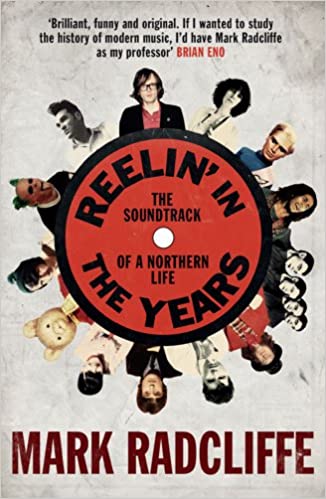
51RNDnzailL._SX324_BO1,204,203,200_Reelin’ In The Years: The Soundtrack of a Northern Life is Mark Radcliffe’s fine written take on music. It features a track of music, some background on the odd year and bits about the evolution of music. Mark Radcliffe’s love for music shines throughout. His knowledge is in depth and music expert Brian endorses the cover, “Brilliant, funny and original. If I wanted to study the history of a modern music, I’d have Mark Radcliffe as my professor.” The book is simple. The author selects one rack from each year to twist and bind key points of the year as one. British culture is slapped together in a rather unique take. The choices are diverse and bold. Some, to me, are regular listened to tunes, thanks in part to people like Mark Radcliffe highlighting Mancunian music and great artists such as Kraftwerk and Slade. There are pointers throughout the book that I am now listening to, such as Stereolab, Cocteau Twins (from Grangemouth, Scotland) and Talk Talk. His book was published in May 2012. I picked it up in June 2020. Better late than never.

I grew up on a diet of Key 103 radio, Piccadilly Gold, some BBC Radio One and BBC Radio Two. By the time I’d reached Aberystwyth, Radio Ceredigion would be a new option. Mark and The Fall’s Marc “LardRiley on Radio One were witty and seemed to have the best playlists ever, covering pop music, some rock and a little indie. Steely Dan’s song Reelin’ In The Years was probably played at some point. After each show, I’d always want to listen to more. I’d try to recall the latest album or single that would make me head to a music shop Our Price, HMV, Zavvi or Fopp! But of all the music shops, the famous Piccadilly Records and Vinyl Exchange on Oldham Street would always get my attention. Often, they’d get a few quid, and sometimes I’d be lucky to bag a CD that was ‘for radio play only’, or a demo copy. Puritans love vinyl. I like compact and easy to carry.

Marc Riley and Mark Radcliffe could rival John Peel for eclecticism. Since those halcyon radio days, Mark Radcliffe moved on to join fellow Lancashire-born Stuart Maconie. Then he moved on again to a folk show. City fans Marc and Mark remain friends and probably went their separate ways at the right time. Both are immensely talented and have great connections to music. Marc Riley’s plugging of Massive Attack, Pixies and Happy Mondays can’t be a bad thing. The parody band (The Shirehorses) he and Mark Radcliffe made was comedy gold and remains a great period of music. You’re Gormless was a great play on Babybird’s You’re Gorgeous. Parody will only go so far. So now, I await the next dose of Marc Riley show on BBC 6 Music or The Folk Show with Mark Radcliffe.

Anyway, that’s how I spent today, in the COVID-19 era, reading this great book. I hope you can pick this book up, but better late than never – and if you want to find my copy of the book, after its own journey, it’ll be in Irene’s Bar, Houjie, Dongguan, Guangdong, China awaiting you.

The Man on Brazennoze Street

How do! / 你好 (nĭ hăo) / Namaste / Welcome!

wx_camera_1533834650410

There’s a global pandemic on. The coronavirus and its related disease COVID-19 has ravaged the planet, taking at least 411,277 (from 7,238,611 infected) lives. Racism is being warred against too. As protestors and police get close and personal, belief and freedom are risks. Standing up against police violence, draws people into a dilemma. End or delay the battle against racism? Contribute to the spread of a potentially fatal disease? If you choose to overwhelm the NHS (National Health service). The virus doesn’t care one iota about your race. You’re ostensibly more likely to die if you are black, Asian or Middle-Eastern, so is it safe to protest? What are your thoughts? For something that disproportionately affects minority communities, that are now coming together in protest, well this could be a huge disaster. Beliefs versus risks. In my mind, I’d want to support the protests, but I’d want to support and protect the NHS too…

“We may have all come on different ships, but we’re in the same boat now.” – Martin Luther King Jr.

I used to eat at Shirley’s Café or Gregg’s bakery and get a breakfast barmcake with a coffee, when I worked on the corner of Brazennoze Street. Here I could walk down the road and see something odd. Manchester has a statue living down the road from Albert Square. High upon a granite plinth the distinct shape of Abraham Lincoln can be seen standing. That’s right. Abraham Lincoln (February 12, 1809 – April 15, 1865), 16th President of the U.S. of America. He’s been stood on Brazennoze Street since around 1986 eyeing passers-by but casting no judgement. The street runs between Albert Square and Deansgate gaining large footfall around office hours.

“You cannot escape the responsibility of tomorrow by evading it today.” – Abraham Lincoln

The square opening on Brazennoze Street is known as Lincoln Square. Few know this. There aren’t many signs and up until a recent renovation nearby, the square has largely been overlooked in favour of the more marketable St. Anne’s Square, Albert Square and the Corn Exchange frontage. The pedestrianised pathway uses red bricks so common within northwest England, and on a damp rainy Mancunian day, it isn’t a place to go looking for escape. A few saplings and trees can be seen nearby but it doesn’t feel very green or warm. Manchester, like many port cities (we have a Ship Canal don’t you know!), has links to slavery. Any city with an insurance company or a bank does. Sorry Liverpool.

hdr

Our Lincoln, the our kid of that America, used to be stood down Platt Fields Park. The son of William Howard Taft (27th President of the U.S.A.) made it. Charles Phelps Taft’s statue was one of two gifted to England – not Manchester, as a symbol of Anglo-American togetherness. One replica ended up in London, as the capital city. The original was left in Cincinnati, Ohio where Taft Junior was mayor.

The other replica was kind of posted to Liverpool but Manchester Art Gallery put in a sneaky bis in 1918, kind of a precursor to eBay outbidding and snatched it from Scouse hands [see also Demba Ba and Steven Gerrard]. London, then went one better and brought a much larger replica of a different Lincoln statue, in what can only be seen as a pissing competition. London urinated higher. By 1919, Manchester’s Lincoln statue was added to Platt Fields. By 1986, Manchester wanted to give more prominence to Lincoln and the cause. It was moved to Lincoln Square and placed on a new plinth. Beneath it a plague reads, “The support that the working people of Manchester gave in their fight for the abolition of slavery during the American Civil War…….By supporting the union under President Lincoln at a time when there was an economic blockade of the southern states the Lancashire cotton workers were denied access to raw cotton which caused considerable unemployment throughout the cotton industry.”

P70620-120424

“Slavery is founded in the selfishness of man’s nature – opposition to it is his love of justice. These principles are an eternal antagonism; and when brought into collision so fiercely, as slavery extension brings them, shocks and throes and convulsions must ceaselessly follow.” – Abraham Lincoln

Manchester’s liberal values and Lincoln’s cause became as one. Britain was an ally. Reportedly even the Confederate Flag flew on some Lancashire mills during the American Civil War. Decades of air pollution and legendary Mancunian weather had left it neat impossible to read the words on the statue of Lincoln’s plaque. His Royal African Company displaced around 80,000 people (men, women and children) to America. Manchester’s statue of Lincoln is seen as a key point for the opposition to slavery. Known often as the ‘Great Emancipator’, Lincoln was part of society’s push towards progression and racial justice. Some argue he was a racist, some don’t. But, what can’t be chalked away from history are the facts. Lincoln made a difference, in far more difficult times for many, especially Africans and African-Americans. What should be taken from Lincoln’s appearance in Manchester, is that Lincoln, like many of his peers was complex character and times, which may explain why he apparently wanted to re-colonize the former-slaves, or send them back to Africa

“Those who deny freedom to others deserve it not for themselves; and under the rule of a just God, cannot long retain it.” – Abraham Lincoln

The Abolition of the Slave Trade Act came in 1807. Almost 213 years later a statue was torn down, toppled and sank in Bristol. The name Colston has long been known. Edward Colston was a 17th Century slave trader. A bastard and a blight on British history, part of the very tapestry that had built an Empire. Around 10,000 people paraded the wreckage before the statue was scuttled in the harbour. Around this time Sir Winston Churchill’s statue is London was sprayed with additional text, ‘was a racist’. Scottish streets were renamed after police brutality victims. Oxford University is a target due to its links to Cecil Rhodes (think white supremacy, colonialism and racism).

Whilst Abraham Lincoln was unsure about what to do with slaves after the end of slavery, now society finds itself at a road where one terrible death has triggered a wave of protest. There is no room in society for racism. Many of yesterday’s heroes or founders of today’s world are not good. Just as many companies has profited from the Nazi persecution of Jewish and other ethnic backgrounds, we have to embrace the atrocities and learn.

“Character is like a tree and reputation like a shadow. The shadow is what we think of it; the tree is the real thing.” – Abraham Lincoln

JAB Holdings (Reimann family) that own Krispy Kreme, Panera Bread and Pret a Manger etc have admitted to profiting under the Nazi regime. French cosmetics company L’Oréal have been tied to illegal property seizures. Barclays Bank (established 1690) has already compensated Jewish members who had their assets seized in France. If you have heard of Siemens, Bayer, Nestle, Coca-Cola, Allianz (Bayern Munich’s ground which is weird for a club once taunted as a so-called “Jews’ club” by Hitler’s twonks), Audi, BMW, IBM, Hugo Boss, Mercedes-Benz, and Volkswagen well you may have heard that they are some of the corporations that made some money from forced Jewish labour. These historic crimes were after black slavery (to and in America), yet seem to have been discussed more openly. History cannot afford to hide indifference.

“If there is anything that a man can do well, I say let him do it. Give him a chance.” – Abraham Lincoln

We’re in the 21st century yet a few idiots want to keep us in the past and destroy world relations. The less said about ‘Miss Hitler’ and Trump the better. We can reshape history and move artefacts that our forefathers and mothers saw fit to decorate cities and towns. We don’t have to be proud of all of our heritage. We don’t need to hide it all. We shouldn’t be hiding any of it. I was born a European and next year, I’ll just be British. I’m human and I am Mancunian – and for me being Mancunian is all about embracing people no matter where they come from, what they believe or who they support (even if it is United).

“Darkness cannot drive out darkness; only light can do that. Hate cannot drive out hate; only love can do that.” – Martin Luther King Jr.

爱与和平 and love

DSCF0065

Suffragette City: We can be heroes

How do! / 你好 (nĭ hăo) / Namaste / Welcome!

“Men make the moral code and they expect women to accept it. They have decided that it is entirely right and proper for men to fight for their liberties and their rights, but that it is not right and proper for women to fight for theirs.” – Emmeline Pankhurst, My Own Story

Suffragette City by David Bowie was a song released in 1972. It was a B-side. That is to say that it wasn’t the focus of the single release. Starman, had that honour. Later it would appear on several albums, compilations and even other singles. Bowie had offered this song, written by himself and co-produced with Ken Scott to band Mott the Hoople. They politely said no thanks but accepted a song called All The Young Dudes. This piece of glam rock has a history before it was even recorded. It even references the movie A Clockwork Orange.

Suffragette City has wonderful rousing lyrics, great guitar work and power. An Occasional Dream, Heroes, and John, I’m Only Dancing are some of my favourite choices of David Bowie music. However, Suffragette City has an aura like no other. These tighter two-semitone gaps (F-G-A) really drive the song. That dummy ending, “wham bam, thank you, ma’am!” fires you back into an encore of chorus. It’s such a great track and one fitting for the growing theatrical rock and swagger of the 1970s.

Manchester though, should be the Suffragette City itself. The sometimes-called ‘powerhouse of the north’ was of course the birthplace of the Suffragette Movement. Our very own Mancunian superhero, Emmeline Pankhurst and her daughters battled hard against money and power, for the people and for the women of the world.

“Governments have always tried to crush reform movements, to destroy ideas, to kill the thing that cannot die. Without regard to history, which shows that no Government have ever succeeded in doing this, they go on trying in the old, senseless way.” – Emmeline Pankhurst, My Own Story

Emmeline Pankhurst’s former residence is today a museum and home to Manchester Women’s Aid (against domestic violence). The Pankhurst Centre, a pair of Victorian Villas, was once home to Emmeline and her three daughters Sybil, Christabel and Adela. They were all immensely political. Between 1891 and 1907, they lived together under those roofs and flew the flag of the Women’s Social and Political Union (WSPU). The small house that is a museum features banners and sashes of the original purple and white colours.

“I want to say right here, that those well-meaning friends on the outside who say that we have suffered these horrors of prison, of hunger strikes and forcible feeding, because we desired to martyrise ourselves for the cause, are absolutely and entirely mistaken. We never went to prison in order to be martyrs. We went there in order that we might obtain the rights of citizenship. We were willing to break laws that we might force men to give us the right to make laws.” – Emmeline Pankhurst

Against the backdrop of cheap labour and a lavish textile industry, the city prospered as the spine of the industrial revolution. Here Socialism was birthed and Labour Unions formed. Community values were thrown at the establishment in their droves. So, with class division and heated change, up popped widow Emmeline Pankhurst. Her late husband Dr. Richard Pankhurst had been a barrister and sympathiser to the cause. There was immense risk to all for taking on the Edwardian overlords. Many were killed, many imprisoned and other atrocities committed towards them.

“Every man with a vote was considered a foe to woman suffrage unless he was prepared to be actively a friend.” – Emmeline Pankhurst, My Own Story

Manchester’s Free Trade Hall now replaced by the Radisson Blu Edwardian Manchester, was built in 1853. It was a place central to Manchester’s progressive and radical history. The Corn Laws were repealed, and this building was a celebration of that. The building also stands on the site of the infamous Peterloo Massacre. Here, at St Peter’s Field, in 1819, 15 people were killed by the government’s cavalry and police. Over 700 people were injured. Like some of today’s global protests over the late George Floyd, these peaceful protestors were met with disproportionate aggression. At the Manchester’s Free Trade Hall, during 1905, suffragettes Annie Kenney and Christabel Pankhurst pushed to fight for votes for women. Watching in the wings was a future prime minister, and then Liberal Party member, Winston Churchill. He offered to pay their bail but was refused. Five years later as Home Secretary, Winston Churchill would direct the uncompromising Police against Emmeline Pankhurst’s protest march of 300 women to Parliament Square. Politicians do like a good U-turn.

“The militancy of men, through all the centuries, has drenched the world with blood, and for these deeds of horror and destruction men have been rewarded with monuments, with great songs and epics.” – Emmeline Pankhurst, My Own Story

dav

Manchester has embraced pride in Emmeline Pankhurst and the Suffragette Movement. On St. Peter’s Square, just to the side of the Metrolink tramline, stands a proud Emmeline Pankhurst statue. Artist Hazel Reeves opted for Emmeline on a chair, a nod to her speech, “Rise up, women.” Some of her original and other Suffragette pieces can be found down the road, at the People’s History Museum. There are telegrams by Emmeline Pankhurst. The collection is a pure conservation to the history of working people in the UK. If you’re a student or an interested historian, this is the place to go for interpretation and study material relating to Suffragettes. It is all wrapped inside Henry Price’s former hydraulic pumping station. The Museum of Science and Industry and Quarry Bank Mill provide further atmospheric links to different times.

Quarry Bank MIll September 2019 (30)

“My conduct in the Free Trade Hall and outside was meant as a protest against the legal position of women today. We cannot make any orderly protest because we have not the means whereby citizens may do such a thing; we have not a vote; and so long as we have not votes we must be disorderly. There is no other way whereby we can put forward our claims to political justice. When we have that you will not see us at the police courts; but so long as we have not votes this will happen.” – Christabel Pankhurst

Influenced by her mother, Sophia Craine, Emmeline Pankhurst passed on her strong character to her daughters. On the 14th June 1928 died in a nursing home in Hampstead. She was buried in Brompton Cemetery, London. Her legacy is well-known.

“The world has never yet seen a truly great and virtuous nation because in the degradation of woman the very fountains of life are poisoned at their source.” – Lucretia Mott, U.S. Quaker, abolitionist, women’s rights activist, and social reformer.

Dame Christabel Harriette Pankhurst, DBE, born of Old Trafford (22nd September 1880), and was laid to rest in Santa Monica, California, U.S.A. in 1958, the day before Valentine’s Day. She had spent two years exiled in France during 1912-13 and directed the militant action of the Women’s Social and Political Union (WSPU). Charles André Joseph Marie de Gaulle had an airport named after him for his exile in World War 2. Christabel Pankhurst was made Dame Commander of the Order of the British Empire for her dedication to public and social services. Of course, being British, and like many Suffragettes she had several blue plaques placed at places she frequented, mostly in Notting Hill.

“Mothers came to me with their wasted little ones. I saw starvation look at me from patient eyes. I knew that I should never return to my art” – Sylvia Pankhurst

Estelle Sylvia Pankhurst (5 May 1882 – 27 September 1960) was part of the alma maters of both the Manchester School of Art and the Royal College of Art. In 1956, she moved to Addis Ababa, Ethiopia with her son Richard at the invitation of Emperor Haile Selassie. Her social and healthcare work there earned her a state funeral. She died as an honorary Ethiopian. She is buried as the only foreigner with patriots of the Italian War, alongside the Holy Trinity Cathedral. Her son, Richard Keir Pethick Pankhurst OBE was a British academic and founding member of the Institute of Ethiopian Studies.

“The older I get, the greater power I seem to have to help the world. I am like a snowball – the further I am rolled the more I gain.” – Susan B. Anthony, American social reformer and women’s rights activist

Adela Constantia Mary Pankhurst Walsh (19 June 1885-23 May 1961) would move to Australia, far from her birthplace in Chorlton Upon Medlock. She would be the co-founder of both the far-left Communist Party of Australia and the far-right Fascist Australia First Movement. She spent some time in a Japan, before returning to Australia to face prison for her advocacy of peace with Japan.

“Now all we need is to continue to speak the truth fearlessly, and we shall add to our number those who will turn the scale to the side of equal and full justice in all things.” – Lucy Stone, suffragist and abolitionist.

Today the great-granddaughter of Emmeline Pankhurst and granddaughter of Sylvia Pankhurst, Helen Pankhurst CBE is an international development and women’s rights activist and writer, as well as a Visiting Professor at Manchester Metropolitan University. Her brother Alula Pankhurst (Manchester University PhD: Social Anthropology) is a social development consultant. His focus is Ethiopian studies and the Young Lives multidisciplinary, longitudinal study, multinational study. Like Alula, Helen Pankhurst CBE has two children and remains heavily connected to her Eithiopian heritage through CARE International.

“I’d rather go down in history as one lone Negro who dared to tell the government that it had done a dastardly thing than to save my skin by taking back what I said.” – Ida B. Wells, prominent journalist, activist, and researcher.

There are huge parallels to what’s happening in America and the world right now, with regards to the #BlackLivesMatter movement. Much can be learnt from the Suffragette movement and their struggles. Let’s look at the Minneapolis City Council who have decided to disband and break-up the Minneapolis Police Department. They have formally committed to forming a community-led Police system. The system was broke, and many should – and hopefully will have the right to fix it. By the people, for the people.

P70721-132530


The Mancunian Way, Dongguan

How do! / 你好 (nĭ hăo) / Namaste / Welcome!

“I feel so extraordinary; Something’s got a hold on me; I get this feeling I’m in motion; A sudden sense of liberty.” – New Order’s song True Faith.

I’m patriotic towards the U.K. in a way. I sing praise and fly the flag for great people, wonderful history and fantastic places. I know that the story of the U.K.’s history has often been brutal, cruel and deserves little love. Even within the 21st century the U.K., as it moves away from a colonial and European past, and becomes less connected, yet more dependent on overseas trading and manufacture is and always will be a wonderful country. It’s my home. I was born in Manchester, England. I don’t call myself English. I’m British, when I choose to be. I’m Mancunian always. I have Celtic blood in me from my Irish and Welsh great grandparents. My roots are clear and free. But this tree doesn’t cling to the past and history. This tree wants to expand and be watered by different skies. For me tradition and culture are important but understanding and freedom to choose your own pathway are far more intrinsic to living. This tree is currently sat on its arse in Changping, Dongguan. Today’s and yesterday’s rugby and football have been washed out by Dragon Boat rains. I have some free time.


Today, I want to show a gallery and write a little about the culture of Dongguan and China. I’ve been here for the vast majority of the 2308 days now (11th February 2014). I believe many great days have passed and many more will follow. That’s why I am right here, right now. I arrived and didn’t feel too much way of culture shock. Around me a reasonably established cultured expat community threaded amongst the fabric of the local workforces and people of Guangdong.

“Because we need each other; We believe in one another; And I know we’re going to uncover; What’s sleepin’ in our soul” – Acquiesce by Oasis.

Since, I arrived I have seen Dongguan grow and grow. It is now classed as a Megacity. It seemingly will never stop growing. There are skyscrapers and apartment blocks skimming the sky in every single district of Dongguan. Whereas in 2014, I’d notice dozens of these mammoth constructions and many more sprouting buildings, now I am seeing hundreds and hundreds of established communities and hubs here, there and everywhere. I used to consider Nancheng and Dongcheng as the central axis of Dongguan. Now the townships of Chang’an (home of Oppo), Changping and the ever-growing former fields of Songshan Lake (home of Huawei), and the sprawls of Liaobu town could easily be seen as central areas. The arrival of the Huizhou to now West Dongguan Railway Station (soon to be Guangzhou East) or 莞惠城际轨道交通  /莞惠线 Guanhui intercity railway has added to rapid growth. As it joins the short-named Pearl River Delta Metropolitan Region Intercity Railway System (珠江三角洲地区城际轨道交通). That’s more than 65 railway stations in close proximity to Dongguan. Like all of the Pearl River Delta, this city is growing fast – and going places.


When not hopping on 200 km/h (124 mph) railway systems, I have ample opportunity to meet great people. Dongguan‘s community is largely migrant with people coming from all over China and the world beyond. International jet-setters with lives here, include Serbians, Kiwis, and even Scousers. They can be found in some of the office places, factories, bars and restaurants throughout the city. Playing football with Brazilians or Russians, or cycling with Dongbei people is possible or a spot of chess at Murray’s Irish Pub with Ukranian opposition. Anything goes here. Drinking homebrew at Liberty Brewing Company (曼哈顿餐吧) in Dongcheng after playing tag rugby with Tongans, South Africans, Germans and Malaysians makes me realise how lucky I am. This is a city that is tidying up and beautifying itself at an alarming rate.

Throughout the 6.5 years of life in and around Dongguan, I’ve slipped up and down ginnels, seeking out the new and old. There have been trips to pizza joints in obscure areas, Dragon Boat races watched, Cosplay events attended and English competitions observed. Dongguan, like Manchester, has a heartbeat that shows anything is possible and if it isn’t here, you make it. You can make something new, or your bring something to the party. You can sit and complain about people taking your photo or saying, “wàiguórén” (foreigner/外国人) or you can show the people around you, your worth.

This week I was asked by the Dongguan Foreign Bureau to teach them. Sadly, I cannot fit their demands into my day. I’ve bene lucky to narrate advertisements, wear watches for model shoots, test-drive new bicycles and play with new robotics before they reached their target audience or global factory floors. Daily life has been far from mundane here with oddities and pleasures as varied as can be. What’s around the next corner? Well, visas are quicker and easier to get, despite more rules and demands. It seems far quicker than when I first arrived. Sometimes, I doubt that I have done everything right, yet it seems clear and simple. Just a checklist. This week I received my medical report back. Now, I need just a few other items for the 2020/21 visa… That’s progress.

Bridges have been made and links that could prove lifelong. The west and east have collided in bizarre ways often forming a touch of the unique. There has been colour, rainbows and diversity amongst the traditional and the common. There have been flashes of light and inspiration. There have been days when solitude has been sought and there will be more, no doubt, but one thing I find, and have found throughout my time here, people are just that. Just simple down to earth, regular people going about their days, looking for peace and good opportunities to survive or better themselves. There are more cars and less bicycles, which shows that some people’s bank accounts and credit-ratings have improved. Quality of life needs balance, and with that the subway/underground system of Dongguan is projected to change from one line to seven lines.

Words can say how thankful I am for my time here. I am enjoying life in different ways to others, and being who I want to be, when I want to be. I’m selfish or I’m sharing. I’m open or I am closed. I read or I watch. I write or I dictate. There are times to slip unseen, and times to lead an audience. It is good for the mind to be bored or alone. I truly believe that’s where creativity lies. It sits there waiting to be tapped and delivered to paper, computers or other outputs. I can wander from craft beer breweries to model car clubs to fusion and western food restaurants with ease and all of the time remain connected to modern and old China.

There is plenty of ugly in Dongguan, just like the rest of the world. To quote the 18th century French phrase, “ne saurait faire d’omelette sans casser des œufs“:  You can’t make an omelette without breaking eggs. Humans must learn from the stains and damage we have caused to our planet globally, whether disease or pollution. We can’t give in. Our cultures, our pride and our people need to fight on and find solutions. Just as #BlackLivesMatter, all lives matter – whether human or worm or bug or panda. Life must find a way. Dongguan is radically changing its energy consumptions, factory practices and the way its environment is being respected. This is good for all. Maybe, I should really put my words into action and finish studying towards the HSK (汉语水平考试 Hànyǔ Shuǐpíng Kǎoshì) course for the Chinese Proficiency Test.


Dongguan has gone from a place with a handful of limited cinemas, to those with the IMAX, vibrating seats, private screens and many of the latest releases from the west. KTV bars make way for baseball batting cages, ten-pin bowling, archery cafes and all the latest crazes. The great thing is that with Wechat (born 2011), Alipay etc, you can leave your wallet behind and pay swiftly with ease using these simple electronic methods. Gone are the days of using equations and haggling to get a taxi a short distance. Piles of services are available via your phone, including electrical bills, water bills and Didi (driver and carshare service) is one such saving grace.

During these COVID-19 pandemic times, your phone provides your health code, advice in travel, guidance on health services and help. Dongguan’s local services for healthcare, private insurance and banking are on your fingertips, rather than a a few hours out of work. Life can be as fast or as slow as you wish. In 2010, Dongguan was named a National Model City for Environmental Protection and greenways, green belts and other greenery followed. There are hundreds of parks now, over 1200… it is easier than ever to stay healthy.

There is culture around us, old temples, modern pagodas, relics of time and shells of history. Dongguan’s landmarks are a tad tough to visit now. The Cwa humid subtropical climate here is far above the reported average annual temperature of 22.7 °C (72.9 °F). The rainfall is typical of the land below the Tropic of Cancer now. It is raining cats, dogs and occasionally elephants. Wellingtons and umbrellas are common sights these days, rather than the Dongguan Yulan Theatre, GuanYinShan (Budda mountain), Hǎizhàn bówùguǎn (海战博物馆 Opium War Museum) or Jin’aozhou Pagoda. Even a trip to my local coffee shop, Her Coffee, is like a swim in a river. It is blooming wet lately. As a Mancunian, I feel at home.

I’m here for education – to both teach and to learn. This city has hundreds of educational institutions, even Cumbria’s St. Bees are opening a school here. I’ve heard there are around 550 primary schools, 480 kindergartens and several universities now. To bump into a teacher amongst the 21,000 plus teachers is not unusual. Although it seems every second teacher works for one of the many Eaton House schools here. I’ve heard Tungwah Wenzel International School (TWIS) in Songshan Lake is one school to really watch. Like its neighbouring Huawei school, it is massive with around 1,000,000 square metres of surface area. I’ve seen the modern sports gyms, performance space and technology labs. It uses the latest gadgets and networking. It really is 21st century over there at Songshan Lake. Although Huawei have a German-style train-tram zipping around, piping back to older days. Dongguan University of Technology(DGUT; 东莞理工学院) is one of universities in the area meaning that you can educate beyond your teenage years here. It really is a place to learn. Watch out Oxford and Cambridge! Maybe that’s why Trump is always bad-mouthing China’s growth?

From eating chicken anus, to two weeks of quarantine in XiHu Hotel, Dongguan has given me more time to turn the contents of my head to words. Now that I am ready to publish a novel, I need a publisher, but how to do this during a pandemic? I haven’t a clue, but I know one thing, the challenge will be tough and worth it. Nobody ever climbed a mountain to sit at the top and look down without seeing another mountain, right? At the end of the day, the sun sets only to rise again. Dongguan faced lockdown impeccably and other challenges, just as the world did and does. Chin up, keep going and let’s crack on.

Last night, I ate Korean barbecue with great people to celebrate a treble-birthday, followed by proof that I am terrible at ten-pin bowling and awoke today feeling optimistic. The world is often reported to be going through a pandemic-sized recession. As the world sailed a wave in 2008 and Dongguan grew from that recession, I will everyone to go on. Manufacture a bucket of optimism. Just like the strings of New Dawn Fades by Joy Division, there is darkness but remember these famous lines: It was me, waiting for me; Hoping for something more; Me, seeing me this time; Hoping for something else. In 2008, low-tech industry switched to the high-tech. Boomtime arrived. Chances are that one in five phones around the globe were made in Dongguan. Is your phone Vivo, Oppo, Honor or Huawei? It was probably made down the road from me. So, Dongguan is closer than you think.


Manchester isn’t any place I will visiting in person for some time, so it has to come to me via playbacks of Oasis gigs at Maine Road and the written word. Over the next few months, I plan to read the following Mancunian-connected books:

Hell is a City – Maurice Proctor; The Manchester ManIsabella Varley Banks; Passing Time – Michel Butor; Magnolia Street – Louis Golding; Fame is the Spur – Howard Spring; Lord Horror – David Britton; The Emigrants – WG Sebald; Cold Water – Gwendolyne Riley; The Mighty Walzer Howard Jacobson; Manchester Slingback – Nicolas Blincoe; Vurt – Jeff Noon; A Man’s Game: The Origins of Manchester City Football ClubAndrew Keenan; Mary Barton – Elizabeth Gaskell; Cranford – Elizabeth Gaskell; North and South – Elizabeth Gaskell.

“I was thinking about what you said; I was thinking about shame; The funny thing how you said; Cause it’s better not to stay” – The Last Broadcast – Doves

Woolly balls, Alan & Xi’an

How do! / 你好 (nĭ hăo) / Namaste / Welcome!

Is that…? No, it can’t be. But, wait, it bloody well is. I‘ll have a gander to check. I stepped into a stationery store in Dalang, attached to the Dongguan Dalang Football Association (DGDLFA). Football culture and community has always interested me. The crest of one of the DGDLFA clubs resembled Man Utd’s badge. I’m sure any do. It’s a curse in any Asian nation that most fans follow a red team. Their flags are red, their Communist brothers in arms are red, red stars, red scarves, red packets, lucky blooming red. Everywhere.

Instead of worn old leather footballs on the central axis, this club, Dongguan Zhicheng F.C. has in place two woollen balls. Zhī (织)means weave or knit. Chéng (城) means city or wall. So, here we have it a woolly mammoth-aged club wrapped in cotton wool. On the top of the crest there are kind of lucky bells, and golden scrolls. There is a ball in pace of Salford Rugby Club’s stolen red devil. Six people fail to adhere to social distancing beneath the ball. The sixsome is an oddity in itself. Most people I know play 7-a-side in China, and sometimes, every now and then 5-a-side. There is football in the traditional 11-a-side format, which is lesser-spotted. I only know of one 6-a-side field in Dongguan. We use it regular on a rooftop. So, Dongguan Zhicheng F.C., what is this mutant game you are playing?! I was in the stationery shop, a foreigner, a rogue and an unexpected shopper. I had to investigate further.

Inside a larger, and rounder older Cantonese lady kind of sneered at me. She eventually asked what I was looking for. I uttered my crap Mandarin Chinese, “Wǒ zài kàn” (我在看). This in itself was bad, as she was clearly Cantonese. I had overheard her recording a flowing barrage of Canton dialect into her right-hand-clutched-like-a-Lego-man-mobile-phone. Can we say phone now? Most phones are mobile now. Landline phones in China are mostly ornamental, right? I could have said to her, “Wǒ zhǐ shì kàn kàn” (我只是看看。) Zhǐ shì means just/merely/only. I didn’t. We all know by now, that I was on a reconnaissance gathering mission. If anyone is monitoring me, I am buggered. Proper buggered. She said, a simple, “Hǎo de” (好的) because it was okay to look around right. It’s a stationery shop and not Area 51.

After selecting some useful stickers and highlighter pens, of various shades of sky blue, a man emerged from the adjoining office door of the Dongguan Dalang Football Association (DGDLFA). He looked at me with suspicion. There was a smidgeon of something in his eye. It could have been dust, curiosity or any other emotion. Maybe the bright yellow faded to peach coloured football shirt I wore was too loud. We looked eye to eye for far too long. I had to buckle and break the moment. The man’s square face framed in black glasses and a thick head of black hair age no emotion away. His game could have been poker. I crumpled and folded my coolness but calmly let out a dry word, “nĭ hăo” (你好). After all, who doesn’t like hearing a stranger say hello. We can’t all be Villanelle from Killing Eve. Some of us must be polite and less murderous.

After selecting some gold dust items, I went to the check-out and here the Lǎobǎn (老板/boss) chatted to me. “Nǐ xǐhuān mànlián ma?”, he said. 你喜欢曼联吗 translates to something offensive to me, and to many. He had asked, “Do you like Manchester United?” My response was calm, and to the point, “Wǒ bù xǐhuān mànlián” (我不喜欢曼联). I do not like Manchester United. It’s a fact. You can check my social media for diatribe and other denunciation of that club. There are rants, periods of haranguing and tirades that probably go back to 1982. I crossed my right hand over my chest and pointed to the crest upon my left breast. “Wǒ ài mànchéng”, said I. I love Manchester City (我爱曼城). He looked me up and down, smiled, and wearing his red polo top, with the crest that resembled Old Trafford’s footballing giants, he proudly said, “Wǒ zhīchí lìwùpǔ” (我支持利物浦). He supports Liverpool. He eventually told me in a mixture of Chinese and his good English that his team liked the badge of Man Utd. I asked him about his connection to Liverpool. None. He didn’t even watch games before the Champions League win last year.

And, that’s one of the reasons football struggles in China. A lack of clear identity. The balls of wool made me think that this team in 大朗 (Dàlǎng town) had pride on their locally known and nationally famous name of wool. Instead I left wondering why a Liverpool fan, would create a team with an almost Man Utd crest. He told me how they’d started a team from a school field in 2018 and then two teams, other teams followed. They play regular 8-a-side because 8 is lucky. I asked why their badge only has 6 people. He said the goalkeeper is not a player. I said, for 8-a-side, this still leaves his team one player short. He said there are 8 outfield players and a goalkeeper. That’s a lot of players on a FIFA regulation 7-a-side field. And, they use a size four football, not a regulation size five football. Good luck to the China national football team.

As I paid my bill, we talked international and domestic football. The excitement that the Premier League in England is returning at a time, that China will also welcome a restart to football. The Chinese Super League is set to resume soon (2020中国平安中国足球协会超级联赛). On July the 3rd, the league will be split into two groups. As China closed its borders to foreigners, the CSL upped the maximum number of players a team could have, from six to seven (throughout a season). At any one time, only six are allowed within the squad, of which, only five can play in one game. Of those five in one game, only four can be on the field at any one time. Following me? Good. Of those four, no foreign goalkeepers are allowed. Taiwanese, Hong Kong or Macau citizens are Chinese as long as they started their professional career as a player there.

Alan Douglas Borges de Carvalho, born José Bonifácio, Brazil is Chinese now. As is Elkeson de Oliveira Cardoso, but he was born in Coelho Neto, Maranhão, Brazil (which you won’t find on a map of China). The former player, Alan (阿兰), arrived from Red Bull Salzburg on 2015. The latter, Elkeson (艾克森/ Ài Kèsēn) arrived in 2013. Chinese citizenship via naturalisation has given both the chance to play for China’s national team. Ricardo Goulart (高拉特) from São José dos Campos, Brazil awaits FIFA to decide if he could play in the stages of the 2022 FIFA World Cup qualification. Aside frome Mousa Dembélé at Guangzhou R&F, Paulinho at Guangzhou Evergrande Taobao, Alex Teixeira at Jiangsu Suning, Marouane Fellaini at Shandong Luneng Taishan, Stephan El Shaarawy at Shanghai Greenland Shenhua there aren’t too many players out there that are household names. 27 Brazilians and 3 former Brazilians make up the 80 possible overseas players for 16 teams. Amongst the Brazilians, Hulk, at Shanghai SIPG isn’t the incredible one, but former-Chelsea player Oscar at the same team has a few awards to his name.

So aside from my covert quest into the local world of football, this turned into a great shop too. I found two A4 paper trimmers – also known as guillotines! Nothing says stationer like a machine with a blade named after a French Revolution beheading device. I hope the Chinese parliament and security forces don’t round me up for beheading postcards or cutting corners.

Xi’an: The Original Home of Football? Think Cuju (蹴鞠)

球迷会名称/Club name: 西安曼城球迷会 Xi’an Manchester City fans Association Club

球迷会联系方式/Club contacts: 阿圭罗的小媳妇儿 [Aguero’s Wife]

微博或其他社交媒体链接/Weibo or social media links: 西安曼城球迷会(微博名)
微信账号/Wechat account: 西安曼城球迷会(公众号)

关于我们/About us: 古称长安。长安城作为古代第一个人口破百万的国际化大都市,北濒渭河,南依秦岭,八水润长安。在这座古老的城市里,住着一群有着蓝色信仰的人们,这群人的存在给这座城市注入了新的活力,这就是我们——西安曼城球迷会。

不论你是土生土长的西安人,还是身在西安的异乡人,亦或是远在他乡的西安乡党,只要你信仰蓝月,我们都向你敞开怀抱。

Xi’an, is an ancient town, once known as Chang’an. Xi’an was one of the Four Great Ancient Capitals. Xi’an is the original starting point of the Silk Road. Emperor Qin Shi Huang’s Terracotta Army is based here. Bordered to the north by the Weihe River, the southern Qinling Mountains and known for 8 rivers, the city has great diversity and history. The sky blue and white faith of City reached Xi’an in modern times and adds vitality to a City mostly know for its great food and castle walls. Whether you are a native to Xi’an, or a visitor to Xi’an, Xi’an’s OSC opens their arms to meet you and your love for the Blue Moon. No reds allowed. 

Expect to eat: Roujiamo Chinese Hamburger (肉夹馍); Liangpi (凉皮); Paomo Mutton, beef, and Bread Pieces in Soup (羊肉泡馍); Biang Biang Noodles (油泼扯面); Jinggao Steamed rice cake stuffed with honey dates and black beans (甑糕).

Expect to see: Fortifications of Xi’an & Xi’an City Wall (西安城墙); Xi’an Bell Tower (西安钟楼); the Drum Tower of Xi’an (西安鼓楼); Mount Li (骊山); Mausoleum of the First Qin Emperor (Qin Shi Huang) (秦始皇陵); Terracotta Army (兵马俑); Shaanxi Galaxy (陕西银河); Shaanxi Guoli F.C. (陕西国力)Shaanxi Renhe Commercial Chanba F.C. (陕西人和商业浐灞)Shaanxi Dongsheng (陕西东盛); Xi’an Evening News (西安晚报); Qinqiang opera (乱弹).
Did you know? Arthur Gostick Shorrock [from Blackburn, Lancashire, England] and Moir Duncan founded the Sianfu Mission in 1892.

U.K. Twin cities & Towns: Edinburgh, Bury St. Edmunds & Birmingham

爱与和平/Peace and love

Every acronym & their gunslinger.

How do! / 你好 (nĭ hăo) / Namaste / Welcome!

I’m in China. The net-based citizens here are laughing and joking about freedom being dead in America. From Sina Weibo to Wechat to QQ, it is out there: America’s freedom is falling. After all when the looting starts, the shooting starts. Act like a donkey and be treated like one. Act with compassion and understanding, and…

“Oh Johnny, did you back thewrong horse! Will you hose him please?!” – Bill Murray as Peter Venkman, Ghostbusters II

Conducting the leadership over social media channel President of the U.S.A. (well, the white part, at least), Trump of the White House is now using the military against his own people. Well, if he identifies with them, that’d be a positive start. But this is a man telling state governors that, “you have to dominate”. The top brass is needed, this is a job for the A-Team. Step forwards General Milley, chairman of the joint chiefs of staff. Trump and his massive cahunas were seen spotted at Lafayette Square (outside the White House) and heading into the slightly burnt St. John’s Church. Right Reverend Mariann Budde told the Washington Post, “I don’t want President Trump speaking for St John’s.”

Tear gas is a reasonable means to scatter peaceful protestors and rubber bullets don’t actually hurt that much. Is this Hong Kong or America we’re talking about? Could be either. Well as long as the free press keep their distance (like Sunrise & #7News from Australia didn’t and CNN failed to sort their acts out). President Trump has directed Attorney General Barr to effectively let all guns rolls. The entire weight of the F.B.I., A.T.F., D.E.A., B.O.P, and U.S. Marshalls are at his beck and call. The Department of Defence and the department of Homeland Security are also deployed to the District of Colombia. So, every acronym and their gunslinger are in town. Clint Eastwood just turned 90 years old and probably had an invitation to the party. Restoring order resembles the first or second invasion of Iraq.

“Hate just hides. It doesn’t go away, and when you have somebody in power who breathes oxygen into the hate under the rocks, it comes out from under the rocks.” – Joe Biden, Associated Press.

In the opposition wings, Democratic Presidential candidate, Joseph Biden has vowed to deal with institutional racism. Would Biden be comfortable removing peaceful protestors just so he can get his photo for the so-called-free-press? Biden is white or Caucasian. I’m white, or Caucasian. Many like him and I haven’t been subjected to servitude or feeling we’re of less, shall we say value, worth or merit than say someone without a title to their name, or land, or property, or a stable upbringing, or a private education – oh go on, let’s spell it clearer. Someone who is black – or Asian – or basically not white. I grew up in Levenshulme, Manchester and attended Chapel Street Primary School. Some of my earliest friends had Pakistani, Irish, Greek, Asian and Afro-Caribbean backgrounds. And? Well, there was no need for an ‘and’ because kids are kids, people are people and not one person should be seen as better than someone because of privilege, or position. Sorry Pope. Sorry leader of boyband al-Dawla al-Islamiya fil Iraq wa al-Sham. Sorry $2.1 billion Twitter user Trump.

“I am the least racist person there is anywhere in the world”- Donald Trump, MSNBC, 1/8/2019.

Racism is racism, pure and simple. It is fear or hate or dislike and it is totally unnecessary. I live and work in Dongguan. This last week I’ve played football or rugby with Tongans, Americans, Argentinians, Russians, Ukrainians, Scottish, Irish, South Africans, Chinese, Malaysians, and Brummies. Some of these great people even supported Man United. The world is a huge sphere with many people. These people bring stories, cultures, foods and difference. There is a great tapestry to my lifestyle here in China. I see and hear racism or judgment because I am a foreigner. Do I feel racially abused? No. I feel sad on their part. But, racism as hate – or ignorance, is racism. Xenophobia and fear of change may be deeply routed in nationalism which may or may not explain the global panic over China and Asia’s growth. The smoke of the fires in America is accompanied by a drumbeat by P.O.T.U.S.A. Trump and co.

“When you’re a star, they let you do it, you can do anything … grab ’em by the pussy.” – Trump, NBC, 2005.

Trump the populist-protectionist-nationalist uses his lack of prior military or government service as a badge of honour. A combination of bragging about business experience and success of making America great again has swollen many false or misleading statements often ridiculed by fact-checkers. His racially-charged comments and legal-challenging cowboy style have seen the U.S.A. stumble from Trans-Pacific Partnerships, the Paris Agreement, relations with China. Luckily he has fixed Syria, Russian problems and Kim Jong-un – as well as his own domestic investigations into electoral discrepancies. He seems stable. He can’t be defeated by anything, it seems. The environmental policies, freedom of trade… You could go on all day about Trump. Recent events just dig it all up again and again.

In the last day or so, likely victim of Police brutality, George Floyd’s death has been labelled as homicide. A post-mortem examination of the African-American died in handcuffs, lay face down on a city street. Video footage leapt around social media almost immediately. The Powderhorn community was devastated and Derek Chauvin, the white Minneapolis police officer could be seen kneeling onto George Floyd’s neck for almost nine minutes. Minnesota’s capital Saint Paul is the twin city that borders Minneapolis. Between them there are five Fortune 500 companies based there. As of 2010, 63.8% of the population were white. There is divide, as per any American state, and The Gopher State is ran by Democratic–Farmer–Labor). They’re U.S. Democrats. Trump has beef with that lot. So, trouble on their patch has been ideal for him. If you can’t run your house, here is a blundering hero with orange skin and a comb-over…

Police officers across the U.S. have been shot from places like Buffalo (New York) to St Louis (Missouri) and even Las Vagas (Nevada). Curfews are in place in many cities. Because when a protest gets out of hand, and people get rubber bullets lobbed at them or teargas at them, they don’t feel so great or valued, so a few may partake in looting. It isn’t backing them or promoting them, but if you treat people like dirt, they may act like dirt. A few unprotected watches, TV sets and middle fingers stuck up to the man can and has happened.

One thing about Trump and America, that is positive, well, at least we don’t have him in charge in the U.K. – and at least China’s top man is less trigger happy. Yes, we see privilege in action in the U.K. but rarely so at the end of stomping boots and a rubber bullet-firing gun. We have water cannons in Britain, but thankfully God shone down on us and delivered us near-drought conditions. Our gaffer, Boris Johnson, is state-sponsored as the rest of his cronies, but he doesn’t target people because of their skin or creed. No, he’s pretty clueless to all races and probably hasn’t tasted life in Aston, Birmingham. He’s more Aston Martin, Whitehall.

Instead, right now we should be focusing on the Royal Shakespeare Company cancelling the remainder of the 2020 shows. We should be reviewing why a Sunday congregation in Singapore during January 2020 had such harsh global complications and how to prevent these things from repeating themselves. We should be digging into why Randox Labratories suddenly get a £133 million contract uncontested. Maybe asking Brexiter Owen Paterson would be a good start.

Instead, like many nations, we have to watch America erupt into flames, panic and division as we await the court proceedings of the fired and disgraced police officer. But, remember this, this isn’t about just one policeman or one victim. This is about institutionalised racism – and that’s now evidently in the hands of the U.S. leader – a man who was the focus of The Apprentice, filmed by Trump Productions at Trump Tower, N.Y.C. Trump this, Trump that, Trump, Trumperty-fecking-Trump. The dirty selfish Trump.

I wish all of those who feel persecuted and to have no voice to stand together. Defeat hate and pessimism with optimism and one collective togetherness. The continued flow of racial injustice and brutality by the state or its organs cannot be allowed to go on. There’s a global pandemic and other matters that need our fuller attentions. But, beliefs are beliefs and persecution and racism had no place in the 20th century. We’ve moved on but a few people want to drag us down. Fate hate, with peace and love. Unification is a dream worth humanity fighting for. No more slinging of terror or words of hate. What change will come?

Superman vs. Peter Pan

How do! / 你好 (nĭ hăo) / Namaste / Welcome!

“In the decade of the 1930s, even the great city of Metropolis was not spared the ravages of the worldwide depression. In the times of fear and confusion the job of informing the public was the responsibility of the Daily Planet. A great metropolitan newspaper, whose reputation for clarity and truth had become a symbol of hope for the city of Metropolis.” – Narration, by a boy, Superman: The Movie

Superman: The Movie made many of us believe a man could fly. Christopher Reeve’s warm portrayal of the extra-terrestrial sent to Earth was to many the greatest superhero of our generation. Well, all until Michael Keaton stepped in as the Dark Knight in Batman. Fast forwards to the 2000s and it seems that Marvel have serialised their comic arsenal to release a new character on a weekly basis. Even the latest Bad Boys (For Life) movie seemed to be swimming in CGI reminiscent of Marvel’s reign of fire.

“Dream, Believe, Dare, Do.” – Walter Elias Disney’s motto.

But, for those born in the late 70s and early 80s there will be a few of us that were treated to Christopher Reeve’s black lock of hair, a very-much clean-cut James Bond-type character. Director Richard Donner and Superman: The Movie squeezed over 300 million US dollars from the box offices, for a movie that cost but a sixth of that. 143 minutes of fantasy and fiction leapt out of the screen much like the scrolling title words and stars’ names. Filmed between the U.K., Panama, Switzerland and U.S.A., this movie was epic. The dark contrast of life being released from a dying planet, and evil being cast to the Phantom Zone, stemmed a story arc which leapt faster than a speeding bullet featuring comic and soft scenes amongst the pile-driving action. It was like watching a wrestling superstar cuddle a kitten.

“Some people can read War and Peace and come away thinking it’s a simple adventure story. Others can read the ingredients on a chewing gum wrapper and unlock the secrets of the universe.” – Lex Luthor; Superman: The Movie

Superman: The Movie claimed a few awards for best visual effects, a BAFTA (Most Promising Newcomer to Leading Film Roles; and Outstanding British Contribution to Cinema Award) and numerous nominations. John Williams and the London Symphony Orchestra’s score is dramatic and distinct. Mario Puzo’s story shuffles between serious issues and wastes little of the cast. Margot Kidder, Glenn Ford, Gene Hackman and Ned Beatty were big names. Terence Stamp would haunt many kids dreams for years to come. Marlon Brando was a global megastar and such was his feeling, he would never reappear in a Superman movie, as he was too buys suing for extra shares of the profits.

“Good form, Mr. Smee? Blast good form! Did Pan show good form when he did this to me?” – Peter Pan, Disney movie, 1953.

Mild mannered reporter Clark Kent starts life in The Daily Planet, before later appearing in cape and pants over his leggings. Many scenes were filmed at the world-famous Pinewood Studios. The Fortress of Solitude was on 007’s stage. British stunt double Vic Armstrong was there for Christopher Reeve for the first two movies.

“..children know such a lot now, they soon don’t believe in fairies, and every time a child says, ‘I don’t believe in fairies,’ there is a fairy somewhere that falls down dead.” – Peter Pan, by J.M. Barrie

undefined

Jerry Siegel and Joe Shuster created Superman. Richard Donner presented a snapshot of 1950s America, subtle humour in modern day Metropolis and the icy cold sci-fi realm of Krypton. The journey was created perfectly for the movies – and although the 2013 movie Man of Steel tried to start again. Jerome Siegel, just like Kal-El (Clark Joseph Kent and  Superman) used pseudonyms (Joe Carter and Jerry Ess) and was born to Jewish immigrants. This wonderful writer dreamed up Superman and with Canadian comic book artist Joseph Shuster by June 1938 Superman ascended into Action Comics #1. Until the 1980s the man of steel dominated the superhero genre of U.S. comic books.

“Stars are beautiful, but they may not take part in anything, they must just look on forever.” – Peter Pan, by J.M. Barrie

Superman drew on many influences. Sci-fi gave some great pointers. Fritz Lang’s 1927 move Metropolis birthed a city within Superman’s eventual realm. Douglas Fairbanks as Zorro influenced the look, although arguably, that caped crusader was closer to the caped crusader, Batman. The geeky barbershop-look of slapstick comedian Harold Lloyd and his mild-mannered persona gave us Clark Kent. Siegel and Shuster’s trawling of pulp fiction, comics and popular media expanded in so many details. Perhaps Peter Pan, as a character from so many stage performances had some influence in there. After all J.M. Barrie’s wonderfully complex character had kids leaping from seats and beds following earlier performances. Much like Superman: The Movie, Peter Pan made many believe that they could fly.

Lois: “Clark…says you’re just a figment of somebody’s imagination, like Peter Pan.” / Superman: “Clark?…Who’s that, your boyfriend?” / Lois: “Clark!? Oh, Clark. No, he’s nothing, he’s just, uh…” / Superman: “Peter Pan, huh? Peter Pan flew with children, Lois. In a fairy-tale.” Scene as Christopher Reeves plays Superman before he’s about to take Lois flying around the city of Metropolis. Superman: The Movie

Peter Pan is complex and rightfully so. The ninth of ten children, Sir James Matthew Barrie, 1st Baronet, had already lost two siblings before birth. This short-statured man from Kirriemuir in Angus, when aged 6, lost his older brother David the day before David would have turned 14 years old. With his mother’s favourite forever-absent, J.M. often imitated and tried to fill David’s place. By the age of eight, his eldest siblings were his teachers at the coeducational Glasgow Academy and six years or so later at Dumfries Academy. Somehow he managed to kick back against his conservative Calvinist Victorian family and crack in with his dream of writing. The University of Edinburgh beckoned, and he graduated with an M.A. in literature during April 1882. After some journalism, unpopular fiction and hard graft he turned his eyes to playwriting. By 1894 he was married and with a Saint Bernard puppy, and had worked with Sherlock Holmes’s creator Arthur Conan Doyle.

“Ostensibly a holiday entertainment for children but really a play for grown-up people” – Irish playwright George Bernard Shaw

The premiere date of 27 December 1904 of Peter Pan, or The Boy Who Wouldn’t Grow Up arrived. Neverland was with us all – and a stark contrast to late Victorian and early Edwardian times. The Peter Pan models were extended and adapted throughout the years and the novel Peter and Wendy was inevitably released in 1911, with illustrations by F. D. Bedford. The two previous novels The Little White Bird and Peter Pan in Kensington Gardens are two equally delightful run outs for the boy who wouldn’t age or grow up. There is another outing in When Wendy Grew Up – An Afterthought. After that, popular culture claimed Pan for a silent movie in 1924, before Disney came knocking in 1953. The thrills of mermaids, fairies, Native Americans and pirates gained global viewers. J.M. Barrie himself commissioned sculptor Sir George James Frampton (he did the lions outside of the British Museum and Dr Barnardo’s Memorial) in 1912. The May Day surprise was a gift to the children of London.

“The moment you doubt whether you can fly, you cease for ever to be able to do it.” – Peter Pan, by J.M. Barrie

Some years ago, I was lucky enough to wander through a dusk-lit Kensington Gardens and see the statue of Peter Pan. Six identical moulds were taken and can be found from Liverpool (U.K.), Canada’s Ontario to Camden, and New Jersey. St. John’s, Newfoundland, Brussels (Belgium) and Perth (Australia) complete the list of original replicas. There are multiple statues of various designs globally also. Great Ormond Street Hospital has its own interpretation and rightfully so. Ever since 1929, all the rights and copyrights were given to Great Ormond Street Hospital. The boy who would be a child forever could inspire and keep those in need, some company.

“When the first baby laughed for the first time, its laugh broke into a thousand pieces, and they all went skipping about, and that was the beginning of fairies.” – Peter Pan, by J.M. Barrie

J.M. Barrie died in Manchester, well Manchester Street, Marylebone, that London on the 19th of June 1937. This was a man who had had Jerome K. Jerome as a friend; had divorced in 1909 and the hugely influential Llewelyn Davies family. George, John, Peter, Michael and Nicholas. Perhaps J.M. Barrie wanted to be a child forever. Perhaps Peter Pan was pretending to want to be forever young or showing off to his beautiful Wendy. Wendy was mature enough to surely see his insecurities. She displays great compassions as Peter Pan struts around his gaff, Neverland and does almost anything he wants. The land of adventures are at his command. The Darling family take his attention a little, but it does feel that Peter Pan would soon grow distracted of them and return to Neverland to do whatever he feels. Peter Pan is the antihero, to the hero of Superman. The two are alike, yet so far apart. Superman is a simple and clear character, with little conflict within. Peter Pan is like me, selfish and confused, and searching for a never-ending youth to hide from everyday burdens like responsibility and grown-up stuff.

“To die would be an awfully big adventure.” – Peter Pan, by J.M. Barrie

Today, in China, it was Children’s Day and we watched the Disney retelling of Peter Pan, complete with lost boys, manipulation and an upset Captain Hook because Peter Pan had cut off his hand and fed it to a crocodile with a timepiece. Eton College-educated Captain Hook seems devoted to bringing Peter Pan down. The Neverland story goes on and on and on, with endless retellings and reinterpretations or works based on Peter Pan and company. The right to collect royalties in eternity under precise and explicit provisos in the Copyright, Designs and Patents Act 1988 mean that Peter Pan is the gift that keeps giving to Great Ormond Street Hospital. Superman, however, is the $5.48 billion cash card of DC Comics and Warner Bros.

“Never say goodbye because goodbye means going away and going away means forgetting.” – Peter Pan, by J.M. Barrie