Learner Portfolio.

English A: Language and literature (Cat.1): Portfolio task

Module One (2/6-8/6)
The Learner Profile
Notes
Analytical writing
Formative Approaches to teaching and learning (ATL)

Close textual analysis of the I.B.
Five questions:
I.B. Mission Statement; I.B. Learner Profile; Course Aims and Assessment Objectives; Standards & Practices; Creativity, activity and service.
Summative

Populating as we go.

C
r
e
a
t
i
v
e
writing
HERE IT WILL BE, WHEN IT IS HERE

Talk to me.

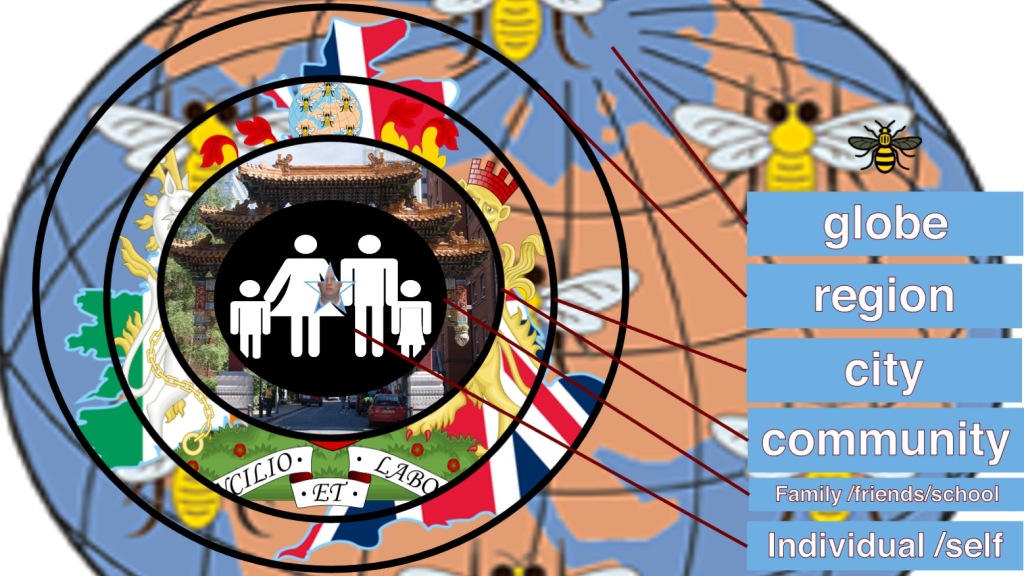
Feedback“Thanks John. I like the idea of using this as an icebreaker early on … something you might share with students at the end of Week 1 or 2, after you’ve gone over various components of the course. It’s a good way for students to focus in on areas where there still may be uncertainty, questions outstanding, etc. Also a good prompt to have students consider ‘why did Mr Acton use this (or that) particular symbol or icon here?’ (discussions pertaining to authorial choices are always fundamental to our study of any text).” – Marie Baird

You need to be yourself.

Projects &/or alternative assessmentsAlso important.
A bullseye activity is a great way to explore a global issue. Imagine an ear bud. To you, it may be of use to clean your ear (individual) but then how do you dispose of it? Are there family rules about ear bus uses? How does the community see an ear bud? What are the city regulations on ear bud disposal? How has ear bud use been affected by regional hotel environmental laws? What problems do ear buds prevent to global pollution levels?

Voices.

ReflectionIt’s important.
1.     Begin by writing a bit about yourself: where do you teach? What’s unique about your IB situation? Let others get to know you. Write whatever you want others to know about you.I joined the I.B. candidacy school of TWIS in Dongguan, against the run of traffic. As I sat in quarantine, having returned to China (on the last possible day before a border closure in March 2020), I figured my job interview was not going to happen. It was due three weeks prior and there had been no response, because everyone had bigger things to worry about. So, I dropped one last e-mail & WeChat message to the principal of TWIS. Video interviews followed. The ball was rolling again. I was excited because the opportunity allowed for holistic teaching methods.

After transfer from my previous school, I realised that I was in a school facing the candidacy process and with many teachers stranded in other countries. Immediately, online meetings and collaborations allowed us as a team to perform effectively and deliver a clear near-uninterrupted school year of teaching. We’re less worried by a nearby outbreak in the city of Guangzhou and Shenzhen, because we know we can adapt and perform during this new norm.
2.     What is the most pressing question you have about the Language A: language and literature course?Actually, two matters arise that I wish to address:

How has this course managed to remain in touch with technology and changing social attitudes to literature and language?

How can the course better support those who require an English intervention programme to better enrich their comprehension and vocabulary skills?
3.     How can you develop positive online professional relationships for the workshop and beyond?We’re each more linked than ever through LinkedIn/Facebook/Weibo/Twitter and so on. Many channels like Xoom allows video calls. E-mails are simple enough. They’re the hassle-free electronic pen pal of the world right now. Meeting teachers at seminars face-to-face and via online courses can be invaluable. I remain in contact with university friends, first aid class companions, teaching colleagues and my door is firmly open. I read somewhere that teachers teach teachers. I couldn’t agree more.
4.     What does a successful outcome look like for you after this workshop? List three things you want to achieve.Diverse literature syllabus.
Balanced literature and language course formation (creative v analytical.
Enhanced teaching method strategies, specific to this course.

English A: Language and literature (Cat.1): Portfolio worksheets

Introduction worksheet for student learner portfolio. Features spaces with prompts and areas to trigger investigation or prior knowledge mind-maps of different text types; Electronic information space (as the portfolio will be analogue); gently stresses that learning is a journey and the portfolio is a pathway to the outcome. Can be used as a classroom ice-breaker early on. Customisable.
Feedback“Thanks John. There’s lots going on here, and at first it felt a little confusing, but when viewed in tandem with your “learner portfolio template” it all makes good sense. I’ve not seen a blog suggested before as an LP format, and I’m not sure if it would be the most appropriate of platforms for the demands of the Learner Portfolio (given the need to offer substantial organisational capabilities for 2 years). But in other respects the blog format accomplishes a great deal, particularly in terms of introducing students to their teacher as an individual, and as a means to demonstrate how organic our thinking and learning can be.” – Marie Baird, IB Diploma teacher

“By encouraging teachers to explore the widest possible array of text types, authors/creators, issues. You’ll see in Module 2 as we take our first look at the syllabus, that no (or very few) restrictions are placed on us in terms of course design — rather we are invited to design a course that takes into account our context, our students’ capabilities and interests, and invites and welcomes multiple interpretations and perspectives.” – Marie Baird, IB Diploma teacher (6/6/2021)

“Thanks John. I like the idea of using this as an icebreaker early on … something you might share with students at the end of Week 1 or 2, after you’ve gone over various components of the course. It’s a good way for students to focus in on areas where there still may be uncertainty, questions outstanding, etc. Also a good prompt to have students consider ‘why did Mr Acton use this (or that) particular symbol or icon here?’ (discussions pertaining to authorial choices are always fundamental to our study of any text).” – Marie Baird, IB Diploma teacher (5/6/2021)

“Thanks Acton. All good here. Just one query to note — in your IO you used The Levellers as a non-literary text (if I’ve understood correctly) – ie their music video. Here though you seem to be including them as a literary work (ie as lyricists – with a study of their lyrics only). Either of these options is possible (as they are not PRL and therefore designated as ‘literary’). However, you would need to make the choice clear to students. If they are studied as multi-modal texts, then they are non-lit (a BOW). If they are studied only as lyrics (a sub group of poetry) then they are a literary choice.
And with that, you’ve completed the requirements for our Cat 1 workshop. All the best as you implement your course — I hope the candidacy phase is nearing completion and you can put your plans into action soon!” – Marie Baird, IB Diploma teacher (29/6/2021)

“I too like your concept questions, Acton. I have been considering for a while this ideas of teaching texts as part of an inquiry. The questions you have included give me a better idea on how to do this. Thank you!” – Amy Climpson, teacher (15/6/2021)

“Hi Acton, When I think about the questions you will focus on, I saw once again how well the works you chose fit the criteria. Thank you” – Banu ÇELİKEL Yildiz, teacher (15/6/2021)

“Hi John, I found your text choices really interesting – so many are unknown to me but it seems a versatile choice offering a lot of unique perspectives which is great! I also like the idea of a unit that explores language change, especially through Shakespeare. This really could open students’ eyes to how we as humans create meaning and are in control of language: a great foundation for all kinds of analysis. I think it would be interesting to see an overall topic for each unit (perhaps this is something you have in mind already!) to better understand the links between texts and also the types of GI your students might consider for the IO.” – Erica Inman, teacher (29/6/2021)

“I’m really impressed by the amount of thought and energy you have put into coming up with a meaningful topic. The detail, especially regarding the press reviews and further reading are useful springboards to encourage students to flesh out their knowledge and this approach could very well make a positive difference to the final mark. However the non-literary text, although chosen from a BOW still has to focus on a single piece i.e. one video, picture, set of lyrics. You are referencing the whole Levellers BOW and from what I understand, I don’t think that’s possible. I wish you would hone down that aspect and focus one just one, then I think it would make an excellent IO. In the 10 points, it might be useful to make a few explicit references to the GI too. cheers Neville” – Neville Attree, teacher (29/6/2021)

“Thanks, Acton. As you’ll have noted I try to focus on one or two elements in each person’s contribution here (different elements, as much as I can) — so that there’s maximum learning from others’ work. Your post is quite comprehensive but I’ll limit my comments.
 
GI is clear – perhaps a further focus – representations of displaced persons – artists using their art as a vehicle for protest
 
Extracts — you’ve provided the non-lit (music video) perfectly — lyrics and screen grabs. (The lyrics run to 43 lines, and we have a 40-line limit, but here’s an example where discretion tells us it’s wise to run to 43. Remember to tell students to add line numbers: SO much value in terms of time saved in the presentation and follow-up discussion.)” – Marie Baird, IB Diploma teacher (30/6/2021)

“The intention of having the extracts is so that students don’t have to memorize quotes — they have the text right before them (and before the teacher, too). Thus, it’s not necessary for the student to use valuable bullets in quoting from extracts (which are there in hand). Perhaps you did this so that we here in the workshop could follow your thinking? if so, thank you. But tell your students to use their bullets for content, key vocab, shifts / way points. 
 
You’ve provided a wealth of other resources you’d use for contextualization etc. We can make double use of this kind of resource if we use the review (for example) as well to study it as a non-literary text type (a text type students might well encounter on their Paper 1). Have students look at 2 or 3 reviews of the same subject (eg The Levellers new album) and consider how bias, voice, intended audience etc shape meaning. (This all has relevance for Paper 1 success.) You’ve included another possible music video (by a different group / performer?). Why not use this for trial IO practice (giving students the chance to work with the form — multi modal text / music video — and thus ‘protecting’ your Levellers BOW for the authentic IO).
 
Thanks for a good pairing and all your thinking — this BOW seems ready to go!” – Marie Baird, IB Diploma teacher (30/6/2021)

Anything else goes below here:

English A: Language and literature (Cat.1): General notes

The course is available for students at both standard and higher levels. The higher level is a study of 6 works and lasts about 240 class hours. The standard is 90 hours and two works less in length. The material works must be broad in spectrum, representing literary forms, time periods and places.

What are your key expectations for this workshop?” Language changes. Literature evolves in meaning and interpretation. It keeps us on our toes, thinking and learning. I expect to enhance my personal critical thinking; collaborate and develop my personal appreciation of literature (and the surrounding language). I expect to encounter a variety of aesthetic or stylistic forms. I expect to find ways to unlock cultural differences to help deliver a deeper appreciation to young learners in the near future.

To support study on this course, students will encounter non-literary text. These bodies of work will include a wide variation in format. Students are to be enabled to deep think, use higher order thinking skills to give an analysis that is critical, shows understanding of culture and context. They must determine a meaning. What is the purpose of the text to the audience? The students will take their assessments through formal examinations, oral and written coursework and other spoken activities. Two essay papers will be taken: A comparative response to two previously studied texts; and then one analysis of a previously unseen, and unto that point, unknown text. Transferring those study techniques will come into action at that stage. Practice to performance. The inevitable coursework for higher level students features a 1200-1500 word essay on a previously studied text.

“How familiar are you with the subject of this workshop?” Language covers all forms of expression that allow communication. It can be written or verbal. Literature is the written form of language. It’s the words to painting in an art gallery. If a song has lyrics and they’re written down, then it sits alongside poetry. Unlike language, literature is always written.

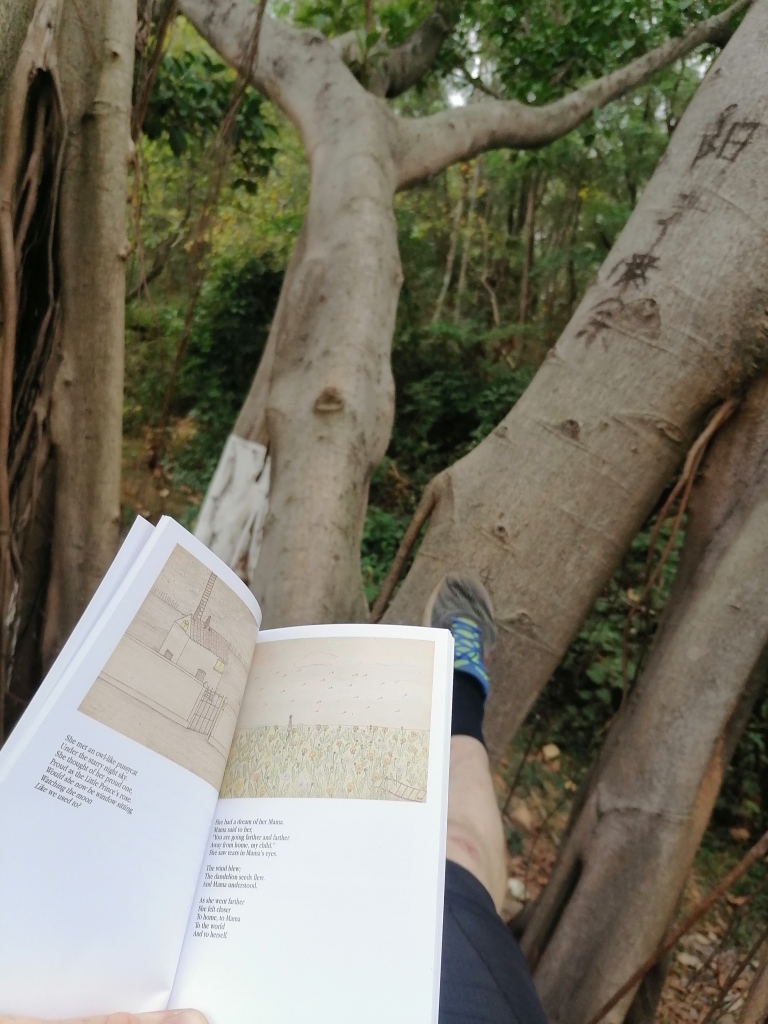
Students are attending this online course from as far afield as Russia, Canada, the U.K., the U.S.A. and China. That’s one heck of a lot of land surface, and a fair old electronic journey. All connected students. Each together on a journey. The COVID-19 pandemic allows opportunity. We can’t stand still. We each must remain engaged, involved and collaborate from offices, school and apartments. At this moment I’m typing in a tent. A Friday night wander into Dalingshan Forest Park (Dongguan, China) seemed like a wise move.

How would you describe yourself as a learner? What helps you to learn best? I like to read, survey varied sources, research using a selection of articles and books before hitting the interweb for accountable sources and also gap-fillers.

To allow storage and to manage this I.B. exploration via a home page, I have a link for Announcements and one for the Resource Library. There’s an interactive forum too. Tomorrow, I’ll print off the Language A: Language and Literature Guide, first exams 2021. Blue, purple and yellow highlighters at the ready. Then, I’ll swing by the downloadable samples and have a gander at them. I am just reading THE ROADMAP for a more clear pathway to complete and collaborate my way to the end of June. Any questions, I can drop here at Burning Questions. Where else?!

I watched a video by Tim Pruzinsky and followed his designed workshop first steps. The take home being that I am a student and I need to create exemplars. Time to test my approaches to teaching and learning (ATL).

the key study chapters are as per below:

Module One (2/6-8/6)
The Learner Profile
Notesapproaches to teaching and learning (ATL)

Greater sense of confidence in class?

Module Two (9/6-15/6)

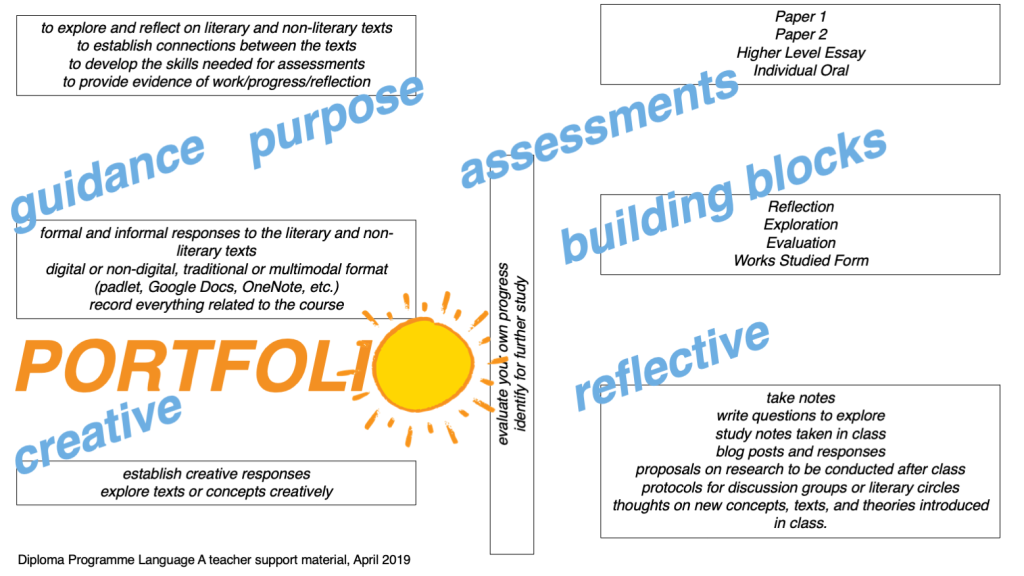
Learner Portfolio Educator

“Space of development”

“Formative”

“Autonomy”

“Authentic journey”
Exploration (make connections between texts?; reflect on their own responses; practice; preparation area; early introduction; increases in importance; evidence – think academic integrity; reports; experimentation; with creative writing; form, media and technology; insights; record of responses; create guiding questions)

Notepads, art books, post-it notes on a small board, reading logs, web based e.g. Padlet (2), OneNote 2, Moodle, PowerSchool Digital, Adobe Spark, blogs, other such ways.

Non-Literary Unit of Study
Transdisciplinary learning (beyond the classroom investigation); diverse; monitored; created independently; students can use digital or old-fashioned paper (choice); orally: link global issues, representation of different or similar perspectives;


Syllabus construction
Portfolio allows self-assessment of skills that lack confidence; keeps a running record; which text types will be a challenge? Monitor progression of Paper One/Two attempts. Reflect on challenges posed by essay writing.

Grouping of common themes; explore similarities and/or differences (build an awareness of the multiplicity); any significance; record references and quotations. Which works match the questions they may face?

How to tackle a beast

Module Three (16/6-22/6)
Assessing student work
Assessing student work: Paper 2 marking.

Looking closer

Module Four (23/6-30/6)
Close textual analysis of the IB
Notes

Greater sense of confidence in class?

AssessmentPaper OnePaper TwoProjects
Higher Level (6 works/240 hours) paper reviewAssessing the examiner’s marking.Assessment under review.Individual Oral Assessment example exploration (Close textual analysis of the IB)

Feedback

ReflectionSelf-assessment (self checking your own progress)

Module one reflection.

Module two reflection.

Module three reflection.
Peer (suitable audio recordings)

Pool and identify ideas.
Teacher (personal valued feedback; challenges overcome; challenges to overcome)Feedback & Evaluation (critical analysis – exploring possible meanings)

A little extra:

Optional ChallengeModule One challengeAlternative
<object class="wp-block-file__embed" data="https://acton28.blog/wp-content/uploads/2021/06/ib-guide_language-and-literature_may2021update.pdf&quot; type="application/pdf" style="width:100%;height:600px" aria-label="Embed of Language A: language and literature guide
Language A: language and literature guide
Download

Jargon:

AOE = Areas of Exploration (there are 3)

ATL = Approaches to Teaching and Learning

BoW = Body of Work

IBDP = IB Diploma Program

IBEN / MyIB = IB Educators Network (accessible once you are employed in an IB school)

IO = Individual Oral

LE = Learning Engagement

LP = Learner Portfolio

PRL = Prescribed Reading List

TOK = Theory of Knowledge

TSM = Teacher Support Material
Rooted to the spot.

The feeling is like you’re trembling without moving. Your feet are rooted to the ground like earth beneath them is shaking. You’re still. The earth is still. Yet, all seems to shudder, bend and fold. Feet planted firmly feel they will fall.

Flashes of vivid light, breaches of Technicolor, lightning jagged rays and strobes penetrate darkness. There’s no light but for moments night becomes day. A lightning storm without clouds.

Thunderous calamity like a dozen orchestras each competing to be heard at a rock festival. For a moment the noise ends. Just as suddenly it envelopes and surrounds all. Whistling wind rips apart into a treacherous typhoon. Yet, it is silent. Absolutely hushed.

Rotten roses mix with sweet garlic and freshly chopped onions. They join lavender, mint and thyme in a coriander sauce gently dipped into sticky runny melted honey. Although absence of olfactory senses does not allow this. There’s nothing at all.

On the tongue a smattering of rich sweet tastes, twists in and out of salted sour lemon infusions with the tastes of childhood favourites abound. Of course the mouth is closed and salivation long gone. No tastes present.

This is death.

ERIC CARLE June 25th 1929 – May 23rd 2021

224 words shaped so many bedtime reading sessions. Bedrooms around the world were greeted with a heart-warming tale of growth, albeit through humour and a spot of seemingly obesity. The story has radiated like the light from the moon, from pages in over 60 languages to beaming eyes looking at the colourful intricate nature of the tale.

“That’s something I learned in art school. I studied graphic design in Germany, and my professor emphasized the responsibility that designers and illustrators have towards the people they create things for.” – Eric Carle

Eric Carle didn’t just write that one book of course. His designs, illustrations and words have appeared in numerous texts. Having dropped his first drawings in 1965, Aesop’s Fables for Modern Readers (Peter Pauper Press), the new-to-the-scene and relatively young illustrator was spotted by educator and author Bill Martin Jr. One red lobster in an advertisement led to a lifetime of colour and creation.

“We have eyes, and we’re looking at stuff all the time, all day long. And I just think that whatever our eyes touch should be beautiful, tasteful, appealing, and important.” – Eric Carle

Brown Bear, Brown Bear, What Do You See? was an award-winning book collaboration with the late author Bill Martin Jr. Thereafter cardboard editions, die-cut holes, inflatables, plastic pockets and multiple versions of artwork with words began to grow and filter from Eric Carle to the world. Countless children have lived and learned through rhyming picture books and used string in one of his many creations.

“One day I think it’s the greatest idea ever that I’m working on. The next day I think it’s the worst that I’ve ever worked on – and I swing between that a lot. Some days I’m very happy with what I’m doing, and the next day I am desperate – it’s not working out!” – Eric Carle

The story of the story-teller is ever more remarkable. This was a man, who his wife Barbara Morrison, strongly believed had held a form of post traumatic stress disorder. He’d dug trenches on the dreaded Siegfried Line of a World War II battlefield. He’d seen death at first hand, aged only around 15 years of age. But then, darkness turned to light over the years: “One Sunday morning the warm sun came up and – pop! – out of the egg came a tiny and very hungry caterpillar.” Okay, it wouldn’t have been that simple, but Eric Carle refused to bow down and give in. Years of toil brought his mind to a place where writing was permitted. An audience was earned. From Germany in World War II, he returned to his country of birth, the U.S.A. and found his way from Syracuse to the New York Times as a graphic artist.

“Let’s put it this way: if you are a novelist, I think you start out with a 20 word idea, and you work at it and you wind up with a 200,000 word novel. We, picture-book people, or at least I, start out with 200,000 words and I reduce it to 20.” – Eric Carle

Via stints back in Germany, for the U.S. Army (during the Korean War) he went on to be an art director at an advertising agency. His collage techniques, rich in hand-painted paper, featured layers and slices of vivid imagination set out as tiny pieces of artwork. Nature and wonder have set tones throughout his simple stories. These stories have been warm and inviting, and give hope to children, especially those new to schooling and education.

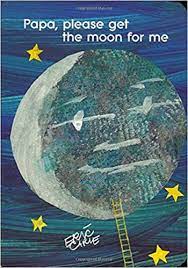
Papa, please get the moon for me is a tale of great importance in my opinion. It shows us that imagination is wonderful, even if it is breaking something seen as impossible. Whoever told me that Father Christmas, the Tooth Fairy and the Easter Bunny weren’t real, or anybody for that matter, that breaks the dreams of a child, deserves a good long look at themselves. Reality and imagination can sit side by side, otherwise Neil Armstrong, or Elon Musk or Celine Dion would not be around. Ability and knowledge need the company of spark and dream – and that’s where imagination grows.

“They are deceptively simple. I admit that. But for me, all my life I try to simplify things. As a child in school, things were very hard for me to understand often, and I developed a knack, I think. I developed a process to simplify things so I would understand them.” – Eric Carle

As I sit typing words and reading about Eric Carle’s history, I recall flicking through glossy covers of his books, and the joy as my face beamed when I discovered a translated copy in Hengli, Dongguan. That beautiful familiar white cover with a caterpillar and a red apple missing a mouthful, all slightly imbalanced, as if to say, and to appeal, that things aren’t always neat and tidy. One day when COVID-19 passes and the world is a little more tidy, I dream to fly to Amherst, Massachusetts to see the Eric Carle Museum of Picture Book Art. That would be as good as finding another Uroballus carlei on a trip to Hong Kong. The Caterpillar Jumping Spider’s Latin name is testament to the reach and pull of a world class picture book writer.

“My father used to take me for walks in the woods. He would peel back the bark of a tree and show me the creatures who lived there. I have very fond memories of these special times with my father and in a way I honor him with my books and my interest in animals and insects.” – Eric Carle

ERIC CARLE June 25th 1929 – May 23rd 2021

Heartbeat of life.

You can only see yourself.

But look around you, on the hoof.

There’re millions of souls in bad health.

Those with less, having more truth.

You may be feeling low and blue.

Things may be getting too much.

Will the world gobble and swallow you?

Piling up like a tidal mountain and such.

Look beyond your glass mirror or window.

False portraits of glamour and status?

When you see it, you’ll know.

Take away your self to hiatus.

Be kind, care, aware and share.

It could be a brighter day.

Give a smile, give some fair.

What say, today, add love to our play?

Listen for the heartbeat of life.

A look, a hug, a hand on the shoulder.

Talk to remove the awkward strife.

Lift up and discarded the whole boulder.

Take away barriers when you carry us.

To war children, bring good cheer.

Bring flowering meadows filled with a buzz.

Take away the bombs pounding, fear.

A gesture, a notion and a worthy feeling.

Warriors to worriers to the calm-minded.

Exploring ways to start the deep healing.

End feelings of being soullessly stranded.

Trail of blood.

Heartbreak was never the aim of the game.

Not was collating the rest as conquests.

There wasn’t intentional slurry to bring worry.

Only the trail of blood said he should.

Be more careful and less wasteful, more tasteful and less hastened and dull.

His heart still longed for the romance that never gonged.

The sound of dreams slipped from his seams.

Hope bound to him and wound around his frowned face. He drowned.

Tears leapt from his eyes to skies like waterfalls hitting ledges and wedges of rock. His shock.

He clinged to hope, like a rope ascending a tough slope.

If it happens, happenstance will make it happen. If not, then now what?

Mistakes, shakes, and high stakes versus mountain walks, sea swims and great lakes.

Life goes on. Life. Goes. On. It goes on. And on. And onwards he goes.

Talk Proper English.

Useful things/tips to learn:

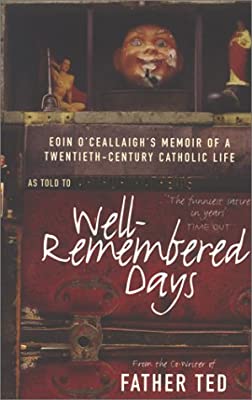
#1 Audio books. See below. Books read by people, for people. Surprisingly good ways to read on the go. Well Remembered Days, written by Arthur Matthews, but read by Frank Kelly (Father Jack from Father Ted) is a great exposure to Irish (Ireland, where they often speak English) culture and accents.

well

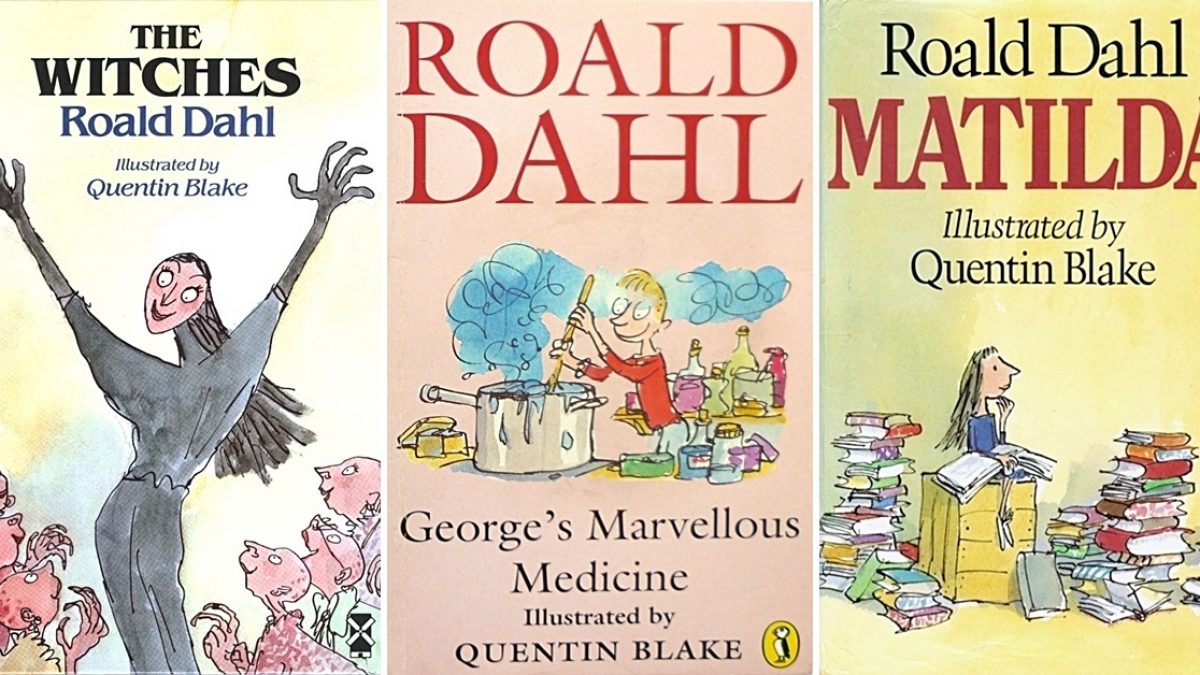
#2 Books. These are the best things ever. They’re diverse and they’re almost everywhere. Read one, pass it on. Read another, share it. Read a great one, keep it on your shelf to read again. Recommended authors include Michael Crichton (Jurassic Park/Timeline), Roald Dahl (The BFG/Matilda), JK Rowling (Harry Potter series), Janet and Allan Ahlberg (Funnybones), Eric Carle (The Very Hungry Caterpillar). Comic books, graphic novels, audiobooks, and even short stories in newspaper serials can all add up to the book experience. What are you reading next? Feel free to ask me for suggestions.

CoverRoaldDahlTop10-1200x675

“I have a passion for teaching kids to become readers, to become comfortable with a book, not daunted. Books shouldn’t be daunting, they should be funny, exciting and wonderful; and learning to be a reader gives a terrific advantage.” – Roald Dahl, writer, former pilot of a Hurricane fighter, and conjuror of dreams.

#3 Music. See Blog post about music, mostly.  Or BBC 6 Music.

(#1 added 29/8/2020; #2 added 29/8/2020; #3 kind of added 1/10/2020)

Vaccinated.

It wasn’t so sharp. I didn’t feel the coldness until it withdrew. The tiny fierce syringe shot inside like the wind blew.

The liquid vial, so small in hand. The nurses steadiness and readiness. One swift move, into a groove, of my skin. That’s it. It’s in.

Social Security pays for the ways that give days to this phase that ends slays. With every jab and prick, the world gets closer. Closer to open doors, walked floors, airplane snores, and many less bores.

My arm became heavy, unsteady and a weight I just carry. The doctors, the nurses; and the once-upon-a-time they married, but not now; the lost souls lost deep in books; the young who cast withdrawn looks; the babies and toddlers who haven’t yet seen grandpa and grandma; the grieving and the upset beyond feeling; we’re all getting closer.

The new norm is now. The now is new. The normal normality of the norm is here as a dawn. We could slink away, sink today or sail that way. Lay down your fear. A new beginning is near.

Drowsy side effects mean you feel. If you feel then it’s real. If it’s real then here’s the steel. We’re stronger than before and living longer what’s more. So, take the first hit. Go back for the second stab. Curl up after, roar in laughter. Stay bright, feel right and let go of uptight. The new now is the norm that is is next to you. Let’s go.

Dear Wendy

Best laid plans fall apart. Follow the feeling that leads your heart. Throw your full mind, and you will find. It, it, it, there’s something out there.

What it is I do not know, wish it’d clear and then show. Open a door, give me for sure. It, it, it. There’s something out there.

With a tickle in the finger, this itch does linger. One telling thought, is all it ought. It, it, it. There is something out there.

The words softly spoken, could well be the token. The wish had been heard, and with it a word. It, it it. There is something. Out there.

The eyes they do see, they imagine what could be. It could be the one, one I thought had gone. It, it, it. There is. Something out there.

I wonder if it’s a mutual feeling, to feel on the ceiling. Wanting to know for sure, if I’m at that door. It, it, it. Is there something? Out there?

If the wall can be broken, words can be spoken. I can lay down my head, and slip off into bed. It, it, it. I’m sure something is out there.

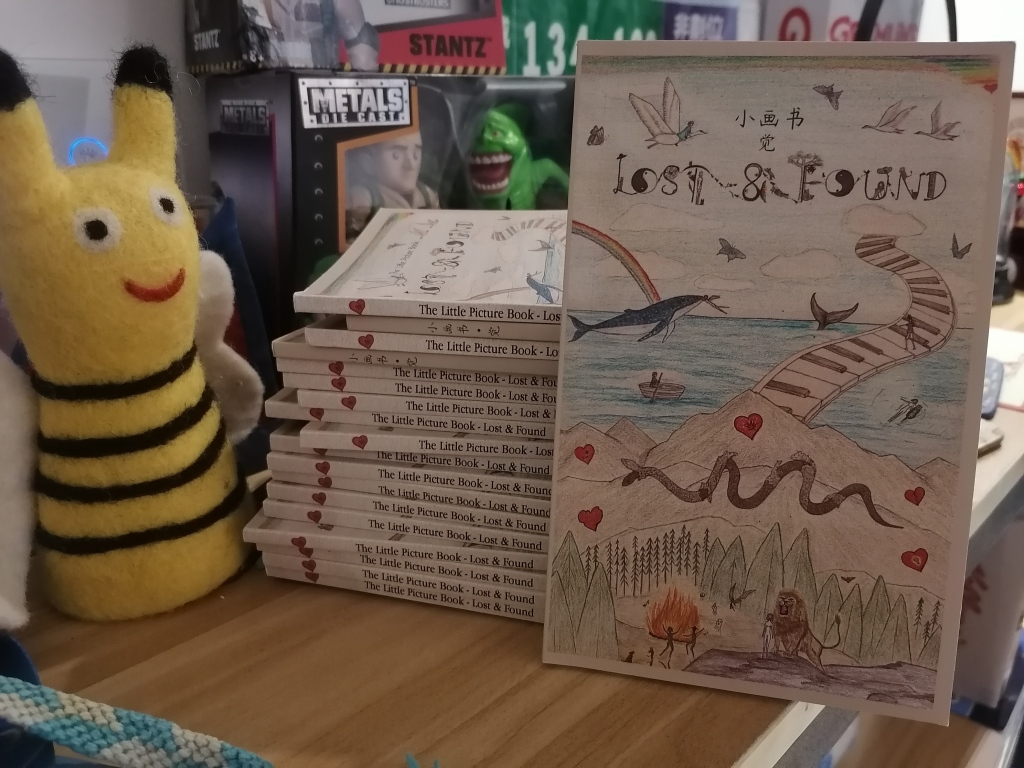
The Little Picture Book: Lost & Found

Eck and Timu, otherwise known as Echo and the late Tim Mileson, can be found in a book just shy of sixty glossy pages. The compact pocketbook is presented through poetry and story alike. It is conventional and yet unconventional. Interpretation is a skill you can choose to use, or just float on the muse.

Sandwiched between Tim’s personal writing, Eck explores emotions such as loss, belonging and echoes nature throughout. Cute eye-catching illustrations using a variety of sketching styles follow an imaginative route to deliver a peaceful and loving tribute in the form of a poetic manuscript.

There are lines throughout that transport the reader, catch them, hold them and bring them downward. There are uplifting words, moments of hope and flashes of light. It’s a sweet little book deserving of a wider audience. The book comes in both Chinese and English editions. My grade four students at Tungwah Wenze International School greeted that with joy. Next up they’ll interview the author…

In China? Further afield? Order directly from Eck by scanning the above on WeChat.

Toxic Positive Negativity.

Persist, insist, never desist. Let others resist. They won’t be missed.

Move on, it’s gone, voyage of bon. New days don. Move off the con.

Wrong ways, long days, hard plays. Some card lays. Time to seek a raise.

Tough path, don’t laugh, hard math. Take a hot bath. Sometimes you can’t get the staff.

Taken aback, forced whack, cut slack. Lives matter, white or black. Why’d do racists offer a crack?

Equal opportunity, low equity, not pretty. Rappers ditties. City’s witty and gritty.

Division here, always fear, hollow ear. Hate of queer. Too much abuse of beer?

Overgenerous happy, angry snappy, feeling crappy. Invalid invaluable emotionally. Tippy on the tappy.

Authentic prick, red brick, held trick. Fargo, Groundhog Day, filmed slick. Breaking Bad sequel filmed quick.

Persist, insist, never desist. Let others resist. They won’t be missed.

Keys.

It must be there, I swear.

Over here wouldn’t be so queer?

This is rare and surely will bare?

I fear it can only be near.

Under that, that makes sense?

From he to where did it went?

Up there? I’m so dense!

I will find it. It is meant!

Down below, it has to show.

In the cushions of the sofa, can I see?

Behind the bookshelf, yes or no?

In the freezer, it cannot be.

Behind my shoes? No! No! No!

In, on or by my big blue bag?

This hard hunt is making me sad.

Not here. What a drag!

Where it went is driving me mad!

Ah…

There…

Got you…

Surely…

Yes.

My pocket.

Obituary.

If you checked out now, how would you be remembered? Fondly by some? Infamous by others? Perhaps. Not. At. All. Maybe you’ll be forgotten, like a lost teddy bear on a train bound for nowhere in particular.

What’s your legacy? Did you do something good? Did you make someone better? Maybe you broke a heart, or a string of hearts. Maybe you’re but a regret to most and a faded memory to another. Perhaps. Nobody. Will. Recall. You.

What did you do right? How did it go? What did you leave behind? A divorce? A fatherless child? A mother grieving over an unborn dream? It could be that words won’t be spoken about you. Perhaps. Silence. Is. Best.

Who’ll be there? At your funeral. Will there be shadows cast from people? Or the shapes of memories dancing in fading lights spun by the branches of trees dancing in the wind? Perhaps. No one. Will. Know. When. You. Go.

Will you get a choice when to go? Unlikely. Most never know. Some expect. Some arrive at an unfortunate moment. Some prepare well ahead but it arrives far too soon. Some get through extra days and leave as heroes. Some die another day. Some have no time to die. Perhaps. You’ll. Never. Know. Until. It’s. Over.

Loosely put.

His hands grip around my throat. He’s strangling me. Trying to choke my last breath out. I struggle. Twisting and turning. I try to raise my left open palm upwards to force his vice-like grip to release me. I slap. No change. I use both flailing hands. Nothing.

Still he pulls his chest towards his hands. My throat trapped between his intended route. I slide and writh but I get nowhere fast. I twist my aching legs, trying to backwards kick his kneecaps. Anything. Any little hope. He grabs tighter. I know I don’t have long left. My throat is burning. Every gasping breath I take could be my last. I push my body forwards trying to open a space between his chest and arms. The Steel-like bicep is sweating on my neck. I open my mouth wide forcing little air in.

I’m beyond desperate. I feel woozy and clouded. My brain is losing a battle. He slides a few millimeters along my throat. That marginal gain gave him the extra he needed. He already had the upper hand. I feel his chest muscles stretch and tighten. He takes a tired deep breath. One heavy pull and I resist the extra force. He loosens his grip by the slightest of pressures. A budgie feather in a fight fit for an ostrich. Can I escape now?

All aboard.

I’m the commander of my own seas. I don’t mean to control them but I shall not let them wash over me. The waves crash beneath me, around me and by my side. They do not sweep me away in the tide.

The ship I choose to sail often changes. One day a frigate, one day a galleon. A skiff here, a galley there. On board a passenger liner with much company. A lonely kayak. A canoe floating along the river of life. Wearing a windbreaker in a windjammer. A rag boat struggling against the battling riotous rip tide. Schooner for later. Luxury aboard a catamaran or yachts heading for the high seas. Drinking tea aboard a clipper.

The undercurrent changes its spaces too. A still torrent floods in ebbs and flows. The rush and drag leaves me bobbing along. Up and down. Side to side. Over and under. Around in circles. Swirling. Staying motionless staring at stars. A whirlpool of dreamy dawns and dusks swishing directions. A flushing sound scolding my ears, drowning out yesterday’s sorrows. A puddle so smooth it reflects the sun like a giant glass mirror. Clouds visible far or vast shadows atop.

So, of you see me sailing through stormy waters, recall the saying of smooth waters not making for great sailors. A storm passes. As do I. Time claims all. I traverse a journey of my own. Will you sail with me? Now? Later? Never? All aboard.

Taking the biscuit.

Nobody ever takes one chocolate Hobnob. Not even two. In fact, I’m sure studies show even a trio of collected biscuits is unlikely. This biopsychosocial disorder has you in its hands the moment the blue packet is torn open. The slightest hint of chocolate spread thinly over rolled and jumbo oats have been dividing families and causing micro moments of intense eating since 1987.

McVitie’s debuted their chocolate Hobnobs in the eighties and for some the discovery wasn’t made until the next millennium. Few were spared the dependency that would follow. Stores and supermarkets around the world have replicated and perfected near identical copies. All equally a compulsion.

The chocolate-free biscuits are marketed as a variety of digestive biscuit. They’re not remotely addictive. They’re good but you shouldn’t get hooked. Although caution is often advised to prevent craving becoming dependence. Would Richard McVitie’s be proud of us?

They marketed these criminal snacks as, “Chocolate now has Hobnobs underneath” and drew in their crowd of followers. One nibble and we’re all nobbled. Captured. Drained of choice. Dedicated followers of the passion of crunch. Even Reading Football Club had fans hooked because of their nearby Hobnob factory. They had to move production to a place less likely to experience addiction: Glasgow. Each packet is branded by a Royal Warrant, from Her Royal Highness, Queen Liz the Second. That makes it a legal high.

Weakness exposes a chocolate Hobnobs eater with ease. A nibble here. “Just one more, Dave!” The mouth enacts enslavement as synapses across the brain fixate on filling the gob with crunchy goodness. Commitment to the condition of this substantial sustenance substance is done. Almost unbreakable, unlike the biscuit itself.

Packets rarely remain open longer than a day. To this day I haven’t kicked the habit. Even in China, I found myself supplied by a shifty importer slipping me packets via post. Even they know what they’re doing. Habits are wrapped up tightly, hidden from prying eyes. “Don’t judge me!” My craving makes me a monkey to the social mixing biscuits. Mixing with people of a higher class doesn’t take my priority. I just look to dunk the goods and chew relentlessly.

Chocolate Hobnob withdrawal can make you go cold turkey. But, what is cold turkey? To me, after a week without chocolate Hobnobs, my mind is distracted. I start to imagine the aftertaste, bits of oats between my teeth, a crumb on my shirt, smears of chocolate down my cheek, and a host of other sensations. I’ve even pictured a passerby as one giant anti-snacksize hallucination. The obsession makes me slather saliva like one of Pavlov’s dogs.

I find myself administering self made behavioural therapy. I draw huge alternatives. Custard creams, Bourbons, and Jaffa Cakes but never rich tea biscuits. I watch videos about raspberries and rhubarb. I dance to the music of the people chewing crackers and crisps. I pray to the Goddess of digestive processes (Gillian McKeith) and I read copious extracts of the food Bible (Meatpaper). My tolerance for distraction is weak. They draw me in. Taobao, an online versatile application in China suggests to me (with highlighted sugfestions) that I should buy a Manchester City mug, coffee from Yunnan province, milk from Asda and a packet of chocolate Hobnobs. They win.

You think you’re table to resist. But, open one packet. How long before you’re munching away? Do you resist? Masticating hard and not swallowing the pulp of chocolate oats? I don’t think you’ll resist.

Sunset.

The evening sun has arrived. It’s not a sunset if beauty. We won’t make it until dawn. This sun sets on you and I. Take the blame on oneself. Gloaming deepens. Put aside the dream of tomorrow. Today has just died. We could stand, aside, in a corner. Not now. Never again. Our motion becomes static. The pace fell away. White clouds rush. The sky’s twilight hides the moon. The sun shines not on it. Nor on you and I. The fireworks we had do not light the sky. All light refuses to break this darkness. Dawn may arrive. I choose to wake alone. Goodbye scenery of yesterday. I wake to a new dawn chorus, alone.

Say what?

Killing mosquitoes is like mowing the lawn. Cut the down and they are quickly replaced.

Homework never ever truly ends. Every job requires you take a little home and bring much back.

For every reaction, there is a positive and negative result. I told you. I TOLD YOU SO!!!

Wherever you go, you always take the weather with you. A lack of atmosphere would be free of weather.

The book always lands butterfly up. Why. would an insect be a cover feature?

Two birds, one stone, and something about glass houses. The early bird must be catching worms. Again.

Leave no unturned stone alone. Better bad company is together than turned over.

I don’t remember many sayings or idiomatic phrases. I’m an idiom idiot.

notes found from 2017

Plagiarism.

It’s easy! It’s easy! It’s easy! 1, 2, 3… Copy and paste. Trace. Select.Copy. Insert. Saving time too. Why spend too much time thinking? Find it, reuse it. Reduce. Reuse. Recycled.

What’s the answer that you’re looking for? Look over their shoulder. What did they write? Take it! You know you want to. Less time on work, more time to play. Right? Copy it. Just look how east it can all be!

Feeling integrity needs to be kicked away? Don’t worry. Who can spot you? They’re not paying attention. Go on. Join the dark side. Photograph it. Use their details. Submit it faster, they they’ll be the copy, right? Register the trademark, add the copyright logo, spin their materials. It’s all the same to you me. Same ending, right?

FEEL FREE TO COPY IT.

Disclaimer: Written during academic integrity week. Not to be taken seriously. This does not represent the author’s true views on the title subject. Feel free to copy this disclaimer though.

The departed.

The bereaved have a particular look about them. They look flushed of colour. All their facial expressions drain away. One day they’re happy go lucky and full of vim; the next they’re a mix of grey pastels on tainted dull canvas. Their ears droop in tune with their frown. They look tired and out of focus. Loss is evident across their face. Their words are spoken slower and they take longer to stand up. They don’t bounce around looking for coffee and they certainly don’t race home on their bicycles.

I never know how to act around them. Do I stay the same? No. Not at all. Things are no longer the same. Loss is not a gain. I show my empathy but it never feels enough. I don’t want to say too much, but I do want and try to show I care. It’s not easy. Nothing ever is. Their loss is a challenge. My challenge is simply to be there for them, in the littlest of tiny small kind of ways.

How do you cope with loss? How do you act when someone departs? How many tears are too few? Or, too many? Is silence the treatment? Does that kind of loss ever truly fade away? How long does it take to recover? How many words need speaking? How does memory remain? How can I not forget you?

The dead don’t care. Maybe they did, before they left. Maybe their spirits go to heaven, Elysium or into the clouds. I can’t say. I’m no expert on the afterlife. Maybe they do care now. Or do they live on in us? Perhaps they flutter between the molecules and matters that make life? Could they be the vacuum of space? Or compost bringing life from waste?

I don’t want to feel what they feel. I don’t want to act differently or awkwardly. I don’t want to ask too many questions. I don’t want to forget the dead.

May you all rest in peace.

I love you.

I don’t say the word love lightly. I find it hard to say at all. To family, friends, those I spend my time with and even pets: sorry, it’s hard to say it. Not now, anyway.

You may feel it from me. You may get glances of it. You may touch upon moments where I should say it. You can probably sense I want to show or say it. It probably is bubbling so deeply and ready to escape that I’m trembly. Won’t say it.

Maybe I’m confused. Maybe I didn’t hear it from my parents, siblings or uncles or aunts or Gran or Nana or the postman. Maybe I used it too lightly as a teenager or with that lady who made me a man or the friends who left my sides or the stories I read made me feel different instead. I just can’t find the words.

How can I not love you? How can you not love me? How can love not be for you and me? How can I not love myself? Is it all unrequited? Could I utter it? Could I think it? It’s a gamble, right? Instead I stay silent.

My heart may beat faster. My breathing may be deeper. My eyes may be showing excitement. My cheeks may be brightening. Other things may be happening, some bold, some exciting. But, I doubt I’ll speak it. Not here. Not now.

The next day may be different. There may be more momentum. There may be more desire. Need is here. Speed and precise private precious moments may have dawned. Surely now? Unlikely. Sorry.

Shadows.

The light is dim. Something is flickering. Whatever the source, it casts out growing stretches of darkness into the mostly dim room.

My eyes strain. They can’t focus. Whatever the cause, it struggles to grasp clutches of information by the deepest darkest broom.

My head spins. There’s no coordination. Whatever the thought, my imagination magnifies and spins a yarn out of control filled with doom.

My nose twitches. It tickles inside. Whatever I breathe, it’s not enough to match my growing gloom.

My heart beats. The engine is going faster. Whatever the mood, my lungs suck in and push air into my demanding body’s inverted zoom.

My brain slows. The air hasn’t arrived. My mood, breathe, thoughts and eyes fail. Whatever it was, it was enough. But, whatever I needed, did not show. Not one last little glow. I go.

Written in Nepal, 2017.

Phone home.

Don’t look down at it. Too late. Don’t flip the camera to reserve. Oh, you’ve done it. Does everything need photographing? The way you’ve angled the camera to catch the fire extinguisher and your slightly edited face is exquisite. Just the nine photos. Each one like a time lapse with barely perceived difference. How thin exactly is your face? It looked a bit different an hour ago, a week back, some months ago.

How many moments did you fill? Is that video the same as someone else’s video? Pucker those lips up. Take a selfie. Snap! Snap! Snap! Take the photo from over there. No hazard there. Precarious overhanging places are fine too. Passing traffic? No need to look. Step out backwards. Drivers can swerve. Beeps are loud but you don’t hear it. Focus on your phone.

Cycling the wrong way up a busy road, in the nearest lane to the pavement kerb, and head down on our phone? Don’t worry. You could see beyond the cyclist going the right way. You could. Stay against the flow of the traffic though. Let the right do the right thing. Heck, even parallel ride with a friend. Both be on phones. You’re got it.

What conversation is needed? Look at your phone. Disengage from those with you in the group. By all means, one of you ramp up the volume. I wasn’t listening to my friend anyway. Perhaps some sounds of games will dazzle my mind. Go on. Some shooting sounds? Ideal. Money and other jingles. All at once? Perfection.

Is your child walking into a dangerous situation? Our won’t see. Your head is facing down. That black mirror is playing a video of a kangaroo hugging a panda, or mushroom in a bunch of flowers, or was it a video ending in canned laughter? The point is, your toddler has walked away. Too late? Hurry! Careful now!

And now I’m typing on a phone. Aware of the problem. Known to the addiction. Embraced. Doomed. Digital.

Gratitude.

Gratitude is a faithless twat who hates you. It spits on you. It shits on you. It laughs in your face. It spits into your eyes. Right into the corners. Filthy dirty fucking flem.

As you kneel on the floor wiping the green and yellow saliva of another man’s flem out of your eyes, gratitude takes one Usian Bolt-sped run from a distance of far too fucking unsuitable, swings its legs up, full flying Jacky Chan and boots your balls harder than the moon colliding into Earth.

It all wants to smash you. The establishment and the unknowns. They gather in shadows and whisper out of earshot. You know it. Gratitude rings their ears and directs their blows. It sniggers and wheezes distorted taunts. They say you’re paranoid. You yell back that you’re not. You fucking scream it until your voice is hoarse and your head throbbing with echoes.

Screaming from rooftops bucket fulls of curses, you could send thunder into the mountains and torrents of anger down to the very stones that hold them up. You kick and stamp hard, so hard. Your toes bleed and bruise against the inner soles of your shattering shoes. The threads tear and break away. Your gratitude is kicking dirt back in your face.

You could walk off and not stop walking for days, weeks, months or even years. Fueled on rage, anger, gritting your teeth. You shake inside. Your heart beats like a Slipknot album. You breath deep, but too fast and too hard trying to suppress this stupid furor. Temper and madness are your bedfellows and you hemorrhage a mania unknown before. Gratitude is grasping your heart, twisting it like child’s soft plasticine.

Your knuckles are white as you clench animosity and refuse to let go. It holds inside and around your chest like a jellyfish tangled to prey. A spasm here, an eruption teetering and ready to blast out there. The spleen ferments more than agitation. This huff is pure wrath and gratitude is unwilling to submit.

That’s what you should say, in some shape or form, when someone asks you casually, “How are you?” But, you find few words come out: “Not bad, thanks.” Gratitude has won.

Lost for words.

A student stood up my class one day. She smiled as she asked a bold question. Her little voice was quivering but audible, “How many words can you write?” To my mind, I could not answer her. We began a class task, searching books, dictionaries (Cambridge and Oxford English), newspapers, everything and anything we could lay our hands on. The task followed each student and I from the classroom. It became an obsession. As time changed our research became simpler. Yet words expanded and multiplied. Eventually journals, magazines, compendiums and the internet came along, and how it grew and grew. We pooled our tasks together. The list for the student grew, even as she did not.

That first tough question was in the year 1948. I was a young teacher then. Just twenty five years of age. It’s now 2022. I’m still writing the list of words. I hope to be finished this decade. I fear our work will never be complete.

Against the flow.

I’ve never owned an iPhone. When in groups, I’m alone. I don’t have a power bank. Tesla, I couldn’t rank. Nike Air Max did nothing for me. You buy one, you get one free. Fashion, fads, phases and crazes passed me by. Reebok classics, I did not buy.

Lining up to see the latest movie? I wouldn’t rush; no hurry! Thrilled by a new rollercoaster ride? Look out to sea; I’m by the tide. Dancing in a crowded room? In the darkest corner; I’m in the gloom. All outside, drinking and eating? I’m inside; self-retreating.

Against the flow of the traffic is where I belong. If you need me, I’m here, just plodding along. What I do best, I do it so strong. Being myself, not the rest, that’s where I long. Just me, being myself, right or wrong. Listen to a clock going ding-dong. I’m sat with time beating my own gong. I’m a little further north of famous Hong Kong.

Instagram, MySpace, Twitter and LinkedIn? Maybe I’ll join; maybe they’ll win. Perfection in the artwork? Not for me; I’d go berserk. Quality and quantities, over and over? For me, myself and I; it doesn’t matter. Keeping current and up with the Joneses? I never did buy; one of those onesies.

You need to be yourself.