English A: Language and literature (Cat.1): Module Three – Assessing the Higher Level Essay
What is a 4?What is a 5? The line between the two is foggy and at times completely a blur. So, here, I use the benefit of the doubt. My reasoning is simple. The overall piece was well written, clearly thought of in detail and delivered in an informative way. I still had some question. So, I went looking. I found that Calvin and Hobbes ran from 18/11/1985 to 31/12/1995 as a daily comic strip in the U.S.A. and across the world. I’ve certainly never stumbled on this strip, despite it landing in over 2400 newspapers! Humour, satire, politics, and family life mix well with philosophy and judging by the Wikipedia write-up, a dozen of so academics have touched on it too.
Criterion
Examiner marks
Examiner reasoning
A
Understanding & Interpretation
5/5
Broad understanding of Calvin & Hobbes. Strong appearance and understanding. Clear persuasive interpretation. Some focus on satire shows deeper interpretation. Implications of text explained well bit could have had more detail. Demonstrates a passion for the text. Reference use is strong. Portrays the comic’s intent and purpose well. Line of inquiry allows for development &/or relevant/focus. Some openness of interpretation may be conveyed from the chosen language features of the student’s works. Who, when, what and how answered. The why is a little under-supported.
B
Analysis & Evaluation
4/5
Graphic aspects needed a little further contextual depth. Would have benefitted from more language analysis. Consistent flow with convincing analysis. Insightful analysis of the text. Is the reader intended to be active or an observer? Clear that: Language + style + technique = meaning. Evaluation of author’s choice clear & concise. Further development of points possible. Accurate use of technical terminology.
C
Focus & Organization
4/5
Organised/cohesive, but a little complex. Integrated example usage. Adequate development of a line of inquiry. Paragraphs clear and linear, however some back and forth to the appendix is needed.
D
Language
5/5
Clear and well-chosen. Appropriate register (effective/concise). Vocabulary strong and supportive. Literary terms deployed. Grammar usage largely accurate. Some sentence structure errors.
Total
18/20
English A: Language and literature (Cat.1): Module Three – Added Extras (Extended Essay)
Firstly, the score weighting is different to previously marked papers, so it allows for flexibility in awarding a final mark. Deciding between a score from four or five is tougher than that of one from six or twelve. An in depth extended essay offers more chance to digest and deconstruct before reviewing and offering feedback. Overall, it is much more demanding. However, for candidate and examiner the process is more exacting and testing. It isn’t a short time task! A cup of steaming cappuccino was required!
Criterion
Examiner marks
Examiner reasoning
A
Focus & Method (a reader should see the beginning to the end)
5/6
Effective speech chosen. Culture/context/target language show connection. In depth analysis versus that of a broader range of speeches. Good usage of secondary sources as way of support. Displays good intelligence.
B
Knowledge & Understanding (a reader should be informed)
5/6
Social/political understanding of the speech fully demonstrated. Subject-specific terminology deployed. Primary and secondary sources support context. No digression. Public opinions over-generalised?
C
Critical Thinking (a reader should see thoughts)
9/12
Research, analysis and evaluation evident and of a high value. Exploration of the speech could have been furthered more accordingly (to gain full marks). Concentrating their interpretation would be of more benefit to the writer.
D
Presentation (a reader needs it to be clear)
3/4
Clear. Some over-general citation use.
E
Engagement (a reader should be engaged)
5/6
Initial topic starts and is abandoned. Further two topics engage deeply. Candidate’s voice lacks full bite.
Total
27/34
English A: Language and literature (Cat.1): Module Three – Reflection
How can you use the assessment components, the learner portfolio, and more, to help achieve the IB mission?
Papers one and two offer opportunities for student encouragement and development. Each offers skillsets for life. The IB learner profiles can be explored and reinforced. The issues of identity, culture, class, environment and representation, amongst other matters can be explored through non-literary and literary study. Literature is a rich vein for exploration. It offers voices and opportunity to use effectively the approaches to learning skills. Drawing a connection beyond the non-literary and literary gives rise to language exposure and expansion.
Through paper one students can explore global issues across a broad range and bring them to the classroom for debate. Global thinking inquiring minds can be founded within the realm of paper one.
Paper two has a traditional feel to deliver in a form of written communication. That. construct must include balanced analysis, evaluation and be organised in a way that shows complete organisation through good time management and and thorough language use.
English A: Language and literature (Cat.1): Module Three – Reviewing Examiner Marked Papers
Part One
Criterion
Examiner marks
Examiner reasoning
A
Understanding & Interpretation
4/5
Demonstrates full literal understanding. Insightful interpretation. Fully supported/referenced to text.
B
Analysis & Evaluation
5/5
Convinced analysis of textual/visual features. Supports how features/choices shape meaning. Effective use of website provision.
C
Focus & Organization
5/5
Coherent organisation of analysis. Growth shown from writing’s beginning to end. Conclusion is strong. Supports itself.
D
Language
4/5
Clear/carefully selected language. Adequate register/style. Accuracy in vocabulary, grammar and structure. Ideas expressed clearly enough, but could benefit from more oomph. Some grammatical endings likely prevented full marks.
Part Two
Criterion
Examiner marks
Examiner reasoning
A
Understanding & Interpretation
4/5
Demonstrates full understanding of literal text, when combined with visual text elements. Individual aspects highlighted.
B
Analysis & Evaluation
5/5
Conveys meaning & evaluation of features. Highlights choice of word use; drawing details; story development; character choice.
C
Focus & Organization
5/5
No focus on the story’s moral. Paragraphing very clear.
D
Language
4/5
Appropriate use of terminology for graphic novel/comic strip formats. Notes inconsistencies. Some tough misuse of punctuation. Tenses/clauses incorrectly used.
English A: Language and literature (Cat.1): Module Three – Marking Rewards Content
Before tackling this, I hate red pens. I refuse to use red pens. I like to highlight in sky blue, what needs to be praised. I use orange (or pencil) to draw attention to something that needs reflection and evaluation. I use pencil where corrections can be made. So, my marking is looking to reward what happens to stare outwards and not what is missing. Marking should encourage students and not destroy their confidence.
Knowledge, understanding & Interpretation
Criterion A
7/10
Shows knowledge about works. Evidence of narration. Experience of characters evident. Comparatives used. Contrasts clear. Evident connection. Linked clearly to the question. Generalisation overpowers specific areas of closer comparison.
Analysis & Evaluation
Criterion B
8/10
Includes textual features. Analysis connects technical features to texts. Analysis shows connection of different perspectives. Evaluates the chosen text. Encourage use of explicit answers. Encourage analytical terminology.
Focus & Organisation
Criterion C
4/5
Not very smooth in flow. Few conjunctions in use. Focus seems to lack sharpness. Overall Conclusion: vague. Sentence length and structure needs revision. What exactly is etc?
Language
Criterion D
3/5
Some repetition of key points. Some repetition of key points. Register appropriate. Some spelling, punctuation and grammar faults. Proofreading would have removed these errors. Encourage a wider range of vocabulary and terminology. Lacks evaluation voice.
English A: Language and literature (Cat.1): Module Two Wiki
Notes: It is important to use questions: WHO / WHEN / WHAT / WHY / HOW / WHICH / DO / DID / etc.
Concept
Identity Who is Boris Johnson? What was his political background? How did he rise to power? What roles did he have? How do you measure his success? Based on your analysis of several magazine and newspaper covers, is it possible for you to comment on his character? To what extent do these covers reflect his identity? Has he stylised his approach to that of Sir Winston Churchill? Communication Political parties and their members need communicationmethods. A voice within a newspaper column can have a great effect on the potential electorate. Every word is carefully written, edited, drafted and calculated. How do people remember words from speeches? How do people see written text and compare this to spoken dialogue through various sources? Culture Negative campaigns and advertisements are characteristic of certain cultures. Some cultures take these techniques much further than others. § How do texts in this unit compare to the election & political culture in your country? § Are they more negative or less negative than what you are used to seeing? § How are trends in negative advertising changed over the years in your country? Why is this?
Global issue
Political landscape – battles of power
Area of Exploration
Readers, writers, texts What are the different ways in which people are affected by texts and their attached imagery? Time and space What is the influence of cultural contexts on how texts are written and received? Intertextuality: connecting texts Which diverse texts have features in common?
Assessment Objectives
How are notions of political power constructed by the media? (Local, regional or international influence?) How do newspapers play a role in shaping public opinion? (Or, to try to remain unbiased?) How do politicians use language to persuade voters? (Or to dissuade?) What kinds of debate techniques and argumentation fallacies are common in televised and political debates? (Is it civil? Or, closer to that of a talk show? Or, akin to that of Jerry Springer?) In what ways do politicians use language to tear down their rivals? Is it respectful to the viewing audience’s collective maturity and intelligence? Respond to non-literary texts to demonstrate an understanding and develop a personal interpretation (Paper 1)
1. Gather ten political figures on different magazine or newspaper covers. Review the presentation, first impressions and back-up their opinion using the material evidence. 2. Observe a debate video. Discuss their answer. Refer to their arguments. Discuss fairness and tactical language usage.
What aspects of this activity resonated strongest with you? How could I have improved this Non-Literary Unit of Study inquiry? Has anything changed the way you look at the world? How important is it to know what is fair or unfair? Is there an aspect you would like to explore further? Why?
Created by: Ahmed, Acton, and Olivia. Published at: INSERT LINK Submitted to: IB PD website on 21st JUNE 2021
English A: Language and literature (Cat.1): Module Two Reflection
“How did your thoughts about what you might teach change based on the TOK debate?”
The debate opened up new avenues of exploration, exposure to other influences shared by other teachers around the globe and created a wider lens to look at teaching options. The wider the scope of texts, the broader the issues that can be covered in comparative assignments.
“What is your role in creating an internationally minded literature syllabus?”
Turning negatives into positives, examples of adversity can be shown to create inspirational and deep characters. I believe I can highlight equality and inequality as a stepping stone from their comfort zones to the wider world around them, using relatable issues and examples. Trying to make students feel part of something or connect is a challenge and one that needs to be handled compassionately with complete empathy, and not through a patronising lens. We’re not trying to feel sorry for others. We can relate and encourage critical thinking and higher order thinking that seeks change for the better. We don’t want every issue or problem to overshadow the mood and emotion of study.
“Do you believe it is more important to teach canonical works or a diverse set of texts? Why?”
Diverse foods create good tongues. Diverse music taste influences good listening skills and music knowledge. Diversity in reading creates a reader that can handle texts from numerous countries, cultures and backgrounds.
“And finally, what are you most excited about teaching and why?”
I am most excited to get students lifting new unfamiliar texts, through their own choice and confidence. In turn, I want to see each student set unique challenges and bring their own interests, choices to the classroom.
Hasn’t it been a long time since the wind whistled lightly down the valley? Hasn’t it been so long since the book’s pages flipped over gently in the breeze? Hasn’t it been so long since the smell of a campfire spun on smoke from a place unseen to the eye? Isn’t it a pity that these places seem so far away? If only I had more memories to sit back and unwind with. Where’s the next mountain? Where’s the next wander? Where?
English A: Language and literature (Cat.1): Module Two Syllabus Construction – A checklist for language and literacy (draft I)
See Guide, pages 20-21. Use: Prescribed Reading List.
HIGHER LEVEL (6 works) STANDARD LEVEL (4 works)
concepts
place* (3 / 2)
period* (3 / 2)
literary form* (3 / 2)
Areas of Exploration
PRL (English) 1: William Shakespeare
representation
England/ Europe
16th/17th century
literary text: poetry
readers, writers & texts
PRL (English) 2: Nurrudin Farah
perspective
Somalia
20th/21st century
literary text: prose fiction / drama
time & space
PRL (translated) 1: Persepolis & Persepolis II (Marjane Satrapi)
Cultures & identity: How does a text bridge a cultural boundary and create an insight? How do we approach texts from different times and cultures to that of our students?
Iran /France /Austria
21st century
literary text: graphic novels
connecting texts
PRL (translated) 2: Hanqing Guan / The Ballad of Mulan, anonymous / Njal’s saga, Óþekktur höfundur
communication:How can texts offer multiple perspectives of a single issue, topic or theme?
China/ Iceland
13th century; 4th century onwards; 12th-14th century
creativity: how does the listener understand the meaning of a song and its lyrics; How are we affected by texts in varied ways?
UK/ Europe
20th/21st century
literary text: music lyrics
time & space
Free choice 2: Tash Aw
why & how do we study language and literature?
Malaysia
21st century
literary text: prose fiction/novel
various
all
global
21st century
non-literary text: websites
readers, writers & texts; times & space; connecting texts
various
all
global
various
non-literary text: opinion columns
readers, writers & texts; times & space; connecting texts
various
all
global
20th/21st century
non-literary text: magazine and newspaper covers
readers, writers & texts; times & space; connecting texts
various
all
global
pre-21st century; 20th century
non-literary text: public information texts
readers, writers & texts; times & space; connecting texts
various
all
global
pre-21st century; 20th century
non-literary text: propaganda pamphlets
readers, writers & texts; times & space; connecting texts
various
all
global
pre-21st century; 20th century
non-literary text: advertisements
readers, writers & texts; times & space; connecting texts
various
all
global
21st century
non-literary text: blogs
readers, writers & texts; times & space; connecting texts
various
all
global
20th/21st century
non-literary text: self-help guides
readers, writers & texts; times & space; connecting texts
various
all
global
various
non-literary text: photography
readers, writers & texts; times & space; connecting texts
various (some translated)
all
global
various
non-literary text: speeches
readers, writers & texts; times & space; connecting texts
various (some translated)
all
global
various
non-literary text: quotations
readers, writers & texts; times & space; connecting texts
The Levellers were chosen for their breadth and depth of lyrics. I absolutely agree that I would be focusing on an exploration of the lyrics (as a form of poetry) more than any other aspect. The subculture of music videos, album art, posters, and instruments representing voices would supplement a non-literary body of work.
“Your daddy, well he died in the Falklands; Fighting for another man’s cause; And your brother he was killed in the last war; Now your mother’s, well she’s lying home alone” – Another Man’s Cause, The Levellers
There are songs within their 12 (or so) album catalogue that cover topics like human rights (food roof family), refugees (The Shame), peace (Exodus), anti-war (The Recruiting Sergeant), the 1917 Étaples Mutiny (Mutiny), homelessness (Cardboard Box City), identity (England My Home), nuclear trouble (Belaruse), being human (Julie), inequality (Dirty Davey), class and humanity (This Garden), a dived world (Generation Fear) and huge range of emotions, personalities and periods of time. There are many songs that mark a journey and an exploration of the individual. Some are simple. Some are deep.
“My father when I was younger; Took me up on to the hill; That looked down on the city smog; Above the factory spill” – One Way, The Levellers
The indie folk rock genre that The Levellers have inhabited for over three decades. They formed their own festival in opposition to the increasing numbers of festivals of a highly commercial nature. At first I was thinking about bands that are highly accessible like Coldplay and U2, but then I thought why not go off the beaten track?!
“The year is 1991, it seems that freedom’s dead and gone; The power of the rich is held by few; Keep the young ones paralysed, educated by your lies” – Sell Out, The Levellers
The Levellers were formed in the 1990s and were not afraid to speak and sing the truth. They’ve been on a musical revolution for over three decades. They edged on the fringes of pop in their early days but have found their home more across genres than any other British band. They have likely influenced more musicians disillusioned by the commercial and closed state of the music industry. Their lyrics have been heard by musicians, writers and poets. The alternative scene to as establishment has a voice that can echo far. This is a band named after a political movement during the 17th century, formed in the years of the late William Shakespeare’s growing influence (on the English language).
“They’re sending in the elite, complete with guns; To advertise the way to go; Faxing through the fax to make it clear; That they’re the ones who know” – Liberty Song,The Levellers\
English A: Language and literature (Cat.1): Module Two Theory of Knowledge
Canonmeaning (1): a general law, rule, principle, or criterion by which something is judged. Or meaning (2): the writings or other works that are generally agreed to be good, important, and worth studying. (Meanings interpreted from the Collins, Cambridge and Oxford dictionaries)
Module 2 mission:
I: theory of knowledge debate about the canon, the prescribed book list, and international-mindedness. Before building the course: What do you believe? Note: conceptual/flexible/international-mindedness core values (IB mission; allows freedom and exploration). Must be a connection between course of TOK and Language & Literacy.
Questions that spring to mind are:
Is there a difference to gaining knowledge from literacy, language or other methods of learning?
What do we actually learn through the study of text?
Is there a scientific method to language and literacy study?
What is the purpose of non-literary text and why is it often compared to fuller literary text types? How is it best to interpret these different forms? Any clinical ways to explore them?
Who understands and comprehends a text best?
Do clashes exist in interpretive strategies? How can you review such diverse viewpoints?
The word canon brings to mind William Shakespeare, Charles Dickens, T.S. Eliot, or Mark Twain. Homer, Geoffrey Chaucer, Samuel Beckett, Seamus Heaney and many others make up a largely male list. Jane Austen, the Brontë family, Virginia Woolf and Elizabeth Gaskell often make the list to offer a feminine perspective. Gwendolyn Brooks is the only writer of a different racial group that I recall reading in secondary school. That was because Mr Mack, my year 9 English teacher, loved poetry and wanted us as students to understand the world beyond England.
Western writers always appear elevated over often-so-called new world, African, Asian or other regional writers. I have found myself in China, reading translated pieces by Kǒng Fūzǐ (孔夫子) or as he is known globally, Confucius and trying to follow Sūnzǐ (孫子) or Sun Tzu, so I can relate to Chinese students trying to master Shakespeare or other works set and written in a different world! For me, text without Confucius and Sun Tzu needs to be accompanied by the interpretation of other writers. Canon writers are predominantly the popular and classical writers that A-Levels and GCSEs have covered. Those modelled courses and their American and Australian equivalents have travelled through international schools to far flung places and huge populations like India and China. It surprised me on arriving here in Dongguan, China to see Jack London’s Call of The Wild and O. Henry’s The Gift of Magi. The latter is on my reading list but struggling to find its way off it. I found it odd that English classics had more perspective than translated versions of domestic Chinese literature. Surely, writing an essay on such relatable matters would boost comprehension of western writing interpretation?
IB curriculum schools open doors to places around the globe lesser known. I wandered into a class earlier this year themed around Persepolis. Inspired by this choice in MYP, I found a transcript of writer Marjane Satrapi’s Chicken with Plums translated from French to English. I introduced the lesser graphic edit to my PYP Grade 4 students. Later, one of the students advised they had seen the movie and didn’t know there was a book! We were there and then led to Follow the Rabbit-Proof Fence (Doris Pilkington AKA Nugi Garimara), and Khaled Hosseini’s The Kite Runner – under slight edits to remove scenes unsuitable for ten year old students! A unit of inquiry about migration, refugees and where we are in place and time had been connected, all because of one literature piece’s indirect influence.
I’m a firm believer in diversity and multicultural integration. I’ve seen first-hand the horrors of divide, but also the beauty and magic of inclusion and togetherness. Access and exposure to literacy and language has the power to close divide and bring people closer. It can open discussion and encourage dialogue or understanding. Remake a Shakespeare play as a movie or live action theatre by all means, but make sure those watching know their stories and the stories that are relevant today.
Increasingly there is an element of pick and mix to reading texts. Newspapers, online media, word of mouth, social media and movie adaptations are highlighting international writers, giving readers chance to develop international mindedness. With that young learners are blessed to have education bodies and influencers that can modernise and expand Prescribed Reading Lists. Context that can easily get lost to the wrong audience should not be overlooked or ignored. It should be connected and explained.
English A: Language and literature (Cat.1): Module Two Learning Engagement
“What are the three things you want to make sure you do when you design your own course?”
Having reviewed the concepts that underpin the syllabus content, I began to unpack the course syllabus. Below is a work in progress. I am creating my tailored course outline to reflect the flexible nature of IB teaching and learning. Through freedom of design and under continual improvement, I hope to have a course outline ready for use and continued modification to enhance my learners and their learning experiences. I want to ensure that students can connect through their own identities, cultures and find a suitable perspective. The students must be offered a place to display their creative talents and all texts must represent both popular and obscure examples. In short, trio of design demands must engage, inform and educate in a natural flow.
CONCEPTS (underpin syllabus content)
1
identity
Reading a text, for a student, or by a student, will see them make their own narrative and perspective. They may imagine the voices and characters, each in differing ways. They may imagine a deeper backstory or be influenced by movie or television adaptations. They may connect the characters to previously explored texts. This is normal. The writer and the reader each place part of their identity within the story. Sometimes the author doesn’t make reading easy to follow or understand. Their identity can bend, shift, change and be quite complicated. This complexity can make an understanding difficult to follow. Reading across texts may even deepen that mystery – or paint a clearer picture. Reading texts by James Herriot or Colin Dann gives a reasonable interpretation and insight into the writer’s background. The World War II fighter pilot, Roald Dahl, may be clear in some of his closer autobiographical books, but his children’s texts are far further from his life experiences. Or, are they not? Readers will have their own interpretation and it’s important to know that diverse responses to perspectives are possible.
2
culture
JRR Tolkien penned the epic ‘The Hobbit’ and ‘The Lord of The Rings’ books. These works and his other compendium of titles reflected his life story in some shape and form. He was born in an independent nation the Orange Free State (now part of South Africa). The landscape of the African continent was complex and difficult. Family circumstance saw his widowed mother move to England. Place names from his upbringing, a spider bite, the tragedy of World War I and countless other stages of his life influenced his writings. Here was a man propelled into his first job at the Oxford English Dictionary and fell in love with language. His translation of ‘Beowulf’ showed considerable international mindedness, a theme that slips in and out of his Middle Earth adventures. Beliefs, values and attitudes shape a writer. They target an audience willing to lift open the pages. Quite often the writing follows a similar style to that read in the years before it. A connection between the familiar and the new is important for a reader. Does text reflect where it was formed and when? The place and time of a text can often be acknowledged from the feel of the text.
3
creativity
Imagination is key. Creating something and engaging it has to be in reach of the reader. The writer’s role within a text is to paint a canvas vividly enough to make the words leap from the page. The often written cliche about transporting the reader to another place is important. Interpretations can take multiple forms and transcend that of a simple text. The writer and the text will be heavily original in ideas, shapes and forms. Originality will make a work stand out.
4
communication
Both non-literary and literary text have the problem of getting their message across loud and clear. Does the writing aim to convey a message to the reader? How can the writer know that the reader will see the message? The audience must be assumed to be in on the writer’s previous works, or of a particular kind that can easily access the text. Some readers may struggle to follow the messages hidden or directly thrown at them from the text. Some may ignore the bias of a message and value their own views more highly. Cooperative readers may follow more closely, but even so, text meaning is not always definitive.
5
perspective
Authors can also write in ways that do not follow their views in any shape or form. They may take the role of devil’s advocate just to sell more books, or open a debate. This is one example of literacy devices available to writers that readers may or may not be aware is being used on their perception of a text. The reader may or may not bring their own complete perception which clashes with the views in the text. Before you know it, there’s critical thinking, attention and a discussion as the reader tries to interpret the text. What will the end result be? Will it influence the reader or not?
6
transformation
Intertextuality: the connection and relationship across texts, especially that of literary ones. One text can lead to a heavy influence on the next text. Sometimes it is the creation of new ideas from one text to another. Some texts may follow one another, across authors, or not. Some may be reimagining or taking elements of a story into their own works. C.S Lewis penned ‘Perelandra’ which is often cited to be a reworking of John Milton’s ‘Paradise Lost’ and the biblical ‘Book of Genesis’. Some texts will influence a reader changing their perception of reality. Reading Michael Crichton’s ‘Congo’ as a teenager opened my mind drastically to interspecies communication and in later years whilst volunteering at a zoo, I found myself communicating with an orangutan, like you do. Potentially, personal interpretations can be hugely transformative.
7
representation
Some texts are abstract. Some are relatable to reality. Some are every step between. Accurate reflections of reality, potential futures, to artistic imaginings are central to a reader connecting the text to meaning. The form and structure of the story must connect between both the author and the reader. The largely popular space soap opera epic ‘Star Wars’ started out under the pen of George Lucas. His dog, an Alaskan breed would find itself as a relatable humanoid representation in that of the character, Chewbacca. Throughout his writing he represented characters using human touches.
With the above in mind, the course can be further dissected and placed in the required syllabus areas of explorations. They can be supplemented by the Prescribed Reading List.
AREA OF EXPLORATIONS
1
readers, writers text
#0.1 Why do we study language and literature? #0.2 How do we study language and literature? #0.3 How does text affect us? [Use real world examples] #0.4 How does text affect us? [Use variety] #0.5 Meaning: constructed, negotiated, expressed and interpreting #0.6 language use variation: text types/form/genre #0.7 Building confidence through structure #0.8 Non-literary and literary differences #0.9 Language & literature: an introduction. #1 Breaking down the complex #1.1 Text type: style & structure – the affect on meaning #2 Investigate texts, the various forms & types – pay close attention #3 What choices do writers make to communicate meaning? (e.g. images, sounds and words) #3.1 Texts: an insight? Form a response #3.2 Texts: a challenge? #3.3 Personal vs. academic responses #3.3. expand your response #3.4 metacognitive awareness #4 What role do readers make to understand meaning? (e.g. images, sounds and words) #5 The role of creative language. #6 How does creative language relate through literature? #7 The power of texts/perspectives #8 Linguistic and literary messages: what are the authors communicating?
2
time and space
#A social capacity: connect to community, culture & history (advertisements, poems, etc) #B variety of cultural contexts (places, cultures, times; insights?) #C Do texts reflect or refract our world? (Is there a social or political agenda? How do we approach older texts? Still relevant or obsolete?) #D How do cultural conditions affect language? (Any representation of social, political and cultural concerns? Do meanings and impacts change over time?) #E How are cultural conditions a product of language? (Bound by societal framework and the implications? Do they represent cultural practices?) #F How is identity and culture influential to how text is received? #G Explore cultural and historical perspectives (Open, plural or cosmopolitan?) #H The role of text to oneself, local and global connections (Does it provoke influence of raise questions?) #I Is a text complex or dynamic? (Is there a hidden story of reality?) #J An exploration of the author’s background (historical events, narratives in terms of critical reception; is it important?) #K Who is the author’s audience? Obvious or unapparent? #L The intricacies of relatable places and times across generations and boundaries (Is a society or identity represented reflected in language use?)
3
intertextuality
Relate: past to present. Engage: literary & linguistic traditions. #i Connections between text and audience (ideas and traditions in respect of diversity; is a classic text still valid?) #ii Making a comparative (deeper appreciation; how can different perspectives highlight an issue, topic ore theme? Can a comparative and an interpretation be transformative?) #iii Unique characteristics and complex systems as a connection (Similarities & differences? Can diverse texts share points of similarity?) #iv How to and when to openly discuss your interpretations (create a critical lens; expand on a meaning; question it; what’s your view? How does a system of reference evolve over time?) #v Mode & genre of text, literary form, chronological development, topic or concept, debate or theoretical perspective. Do texts deviate from literary forms and genre? Why? How?
“What two principles of course design spoke to you personally, why, and how will you use that to design your syllabus?”
Integration and variety will enhance interest. I believe as a teacher our heaviest influence sits in these two areas. Students are mostly familiar with autonomy and accountability. These should be well-trod paths across IB subject areas.
COURSE DESIGN PRINCIPLES
1
variety
Students can connect, compare and contrast across multiple texts. This can include translated texts and those in an original target language. The traditional canon and the voices of emerging voices can strike a balance to form a varifocal view of the world at large. The bigger the lens, the deeper the understanding? The text students are exposed to should reflect global society, local society and multiple cultures. The protection and preservation of texts should be side by side with literary forms, places times and most importantly voices. Is less more? Or, is in terms of literary form more diversity essential for diverse understanding? Linguistic and language evolution is ongoing, and tied to literary developments. Students must understand that they are the master of their own exploration. Their individual selection of texts will open new doors for others within the classroom cohort. “Variety is the spice of life” – William Cowper, British poet.
2
integration
A learner profile needs more than reflection. How can a student look at each current and previous text to form a connection? Do students need to form spider webs and mind maps to draw and illustrate connections? Will as Minecraft-style virtual map help relate and show their connections? Lines can be drawn across areas of exploration and through the seven concepts. Organisation skills will be needed throughout.
Everything should connect. Compartmentalisation has little value to complimenting the study of multiple texts. Inherent, context-related and comparative text studies should be integrated to demonstrate to students that references from outside of the classroom cohort’s own research are relevant and supplementary to their development.
Why is integration important? Oral assessment / Paper 2 – meaning elaboration required.
“Integration happens when all your parts of your being are in harmony.” Amy Leigh Mercree, author.
3
autonomy
Students must be empowered. They’re the keepers of their destiny. They prepare their likely routes of study individually. They work towards assessment, formative (self-assessment and peer-assessment will encourage evaluation skills) and summative. They must make decisions with care. They will need pushing through positive encouragement. A variety of materials and access to research tools, the right syllabus components, how an assessment is made, and full scaffolding support (in the case of students new to the IB or international schooling). A teacher’s role is to guide and ensure texts are appropriate to the short-term and long-term study at hand. Is the text connected to the concept or issue? “I want to sing like the birds sing, not worrying about who hears or what they think.” – Rumi, Persian poet
4
accountability
Academic honesty. Whole class awareness of the course requirements. A plan of action that is clear and achievable: the pathway to assessments. Individual assessment components must be used on a sole occasion, keeping it fresh and balanced. “Simplify, slow down, be kind. And don’t forget to have art in your life – music, paintings, theater, dance, and sunsets.” – Eric Carle, author and illustrator
“What one question do you still have about the philosophy or the practicalities of designing a course syllabus?”
I want to think mainly in terms of reflection:
Is my course fit for purpose? Are all the outcomes specific, attainable and measurable? Does the content and method match the outcome? How well can students achieve the necessary outcome? How can I make the course a better fit for the differentiated learner? Are my course syllabus learning outcomes reasonable in relation to the contextual issues? Are all the outcomes going to be theory-based or will it be possible to draw on transdisciplinary skills to highlight skill-based outcomes?
I should hope any student on the course has a level of English that’s appropriate but I’m willing (as is the school) to intervene and develop that level. The level of interest is something I half-worry about. Parent power in China is strong. Some students may feel pushed into the more traditional areas of education and lose sight of their personal interest. A student studying English, here in Dongguan (China), is often a source of pride to family and face. Developing and maintaining an interest in era heavily flooded with video game, social networking and other distractions takes time and patience. As a teacher we must adapt and evolve with the times. Discouraging a student will only create a barrier. How can we integrate their other interests to reinforce interests in literature and language?
“How did your thoughts about what you might teach change based on the TOK debate?” The understanding that knowledge is a reconstructed or constructed representation as opposed to a perfectly symmetrical mirror image of life and reality.
“What are you most excited about teaching and why?” Engaging students in their time and place and uncovering their viewpoints. Watching as they evolve confidence in understanding the viewpoints of others. I’m excited to help our learners at TWIS develop inquiry and critical thinking skills alongside literature and language. I hope that they can recognise the value of reflection, transferring their skills into other disciplines. Explorations should be shared. Are we told by the author to read their text in a certain way? Can we choose to interpret their work in terms of our own cultural assumptions? How do communities of students, academics, teachers or other groups view a text? The same? Differently? Constructing knowledge around text will be enjoyable. Meanings shared are often enlightening.
As a teacher the challenge is monumental. Explaining things sometimes lost in translation will be challenging. Exploring how a text may have been written for a completely different audience (ethnicity, location, time etc) will determine how open-minded a learner can be. Perhaps, there will be absence of an international viewpoint that can be explored. Charlie Hebdo,a French publication known for satire have experienced extreme examples of how an approach to place and time could be considered divisive and unhelpful in international outlooks and mindfulness. Poets, bloggers, cartoonists, and journalists must all take careful approaches. The learner too. They are each subject to their interpretation techniques.
English A: Language and literature (Cat.1): Module One reflection
Is the learner profile relevant?
help teachers build rapport
deepen a teacher’s professional relationship with their learner(s)
connect support levels and buddy peers
allow informed planning
allow a teacher to observe a student’s perspective more closely
allow for suitable timetabling
allow teachers the chance to create a relevant scaffolding of learning
determine classroom layout
develop tutoring support through differentiation
allow group and class participation
Information is not static. It moves. The student’s profile is a record and guidance for new teachers.
Pertinent information such as interests can be aligned to teaching.
Highlight strengths and needs
Allows supply and cover teachers a fairer insight into the individual
personalisation
it can be a document, a portfolio, a combination of digital and traditional forms
THIS
IS
ABOUT
INDIVIDUALS
Formal or informal
Can contain conversations, questionnaires, video interviews etc
A place for their aspirations & passions
Recommendations
To inform discussions between teaching staff, parents and guardians
Insert things they dislike and wish to avoid
Document life experiences, people, pets, moments of inspiration or importance
Highlight what they do when help is needed
Examples
Exemplars selected from other sources that guide the student
Select appropriate curriculum material/support
Help develop maximum engagement
Provide assessment data
Explore the profile’s purpose
Review snd evaluate the profile format
Two-way process between the teacher & the learner
Understanding
A chance to show inclusion of all in the learning journey
How does the individual adapt?
What tools and/or techiniques and/or technologies do they favour?
A chance to express themselves
Address assumptions
Skill sets
Have their own say
Support transition
To I.B., or not to I.B.?
There are numerous forms of education systems and curricula out there. The University Admissions Officers Report 2017 may argue that A-Levels are in-depth looks at specific avenues. Many will have you look at US, Australian, or British curricula. The International Primary Curriculum is reportedly the fastest growing primary school system on Earth. So, as a teacher, a parent or a potential student, it pays to do your homework in the form of research. Which methods best fit you? Differentiation in learning is also about knowing when a system of study will or will not suit your learning style or method. Cost, demand, class size, location, and a plethora of other factors need to be taken into account. If a student or parent aspires to have holistic, rounded, international minds after primary, middle years and diploma years, then IB is the way to go. A range of skills as opposed to the ability to answer exams may help.
Native and foreign languages are encouraged with IB formats. Whereas, a language must be chosen separately in the AS- or A-Level formats. Students usually opt for 3 to 4 A-levels, but can take more. Obviously more subjects will equate to more homework and class time. That could also create more clashes in a timetable. The base AS-Level can serve as a foundation, paving the way for the A-2 Level which give the final result and grade. Their grading ranges from A* down to E.
The IB system is comprised of six subjects. There are academic cores (TOK: Theory of Knowledge), Extended Essay (EE) and Creativity, Action & Service (CAS). Optional subjects are plentiful and the opportunity to attempt Higher Level study is available. Points win prizes and diplomas are issued based on overall points gained. University entry, e.g. UCAS (The Universities and Colleges Admissions Service) in the U.K. requires a number of points earned. Overall, feedback via independent websites and student reviews indicates that students feel they’re better equipped at university. One student’s experience of course differs to another student’s feel. Perspective is key.
Close language analysis: what’s the point?
Words matter. Phrases matter. How you teach it and convey the comprehension of all text matters. Writers convey and highlight messages in their text. How your comprehension interprets this message matters. Figures of speech, idioms, sentence structures, tone of voice, choice of words and other techniques need to be clear. Literacy and language need good communication to avoid messages losing meaning or creating problems! We, as analytical thinkers, must decode and reconstruct the meaning. We must be able to say what it is about and the possible effects of the text.
To make all students and teachers aware that interpretation of knowledge is important. It is fundamental to ideological thinking. It is key to understanding bias, valid or not. It offers the chance to retain, revise or reject bias. Critical reflection is encouraged. Knowledge and knowing are there to be questioned and explored. With knowledge and exploration, it allows students a chance to apply it to real-world scenarios. The whole subject must be passed. Without it, then no certificate of diploma can be awarded.
An introduction to the curriculum/framework of primary (those 3-12 years old) years programmes within the I.B. schooling systems.
dominant vs oppositional reading
mostly dominant
highly dominant first page spread; second page is dominant also, with a slightly toned-down aggression
tone created/reasoning
TOK (Theory of Knowledge) is assessed through an essay (1600 words) & by an oral presentation. It’s a broad spectrum reflection on what knowledge is, how it happens and why we know is what we know. It must argue how we know what we state to know. It’s a mandatory test within the I.B. Diploma Programme (D.P.) central core. As a student, you will need a broader mind. Arguments are presented to teachers.
Question and answer style format. Adopted the role of interviewer and interviewee. Some bullet points and linked sources included to break down the monotony of paragraphed answers. Highlights I.B.’s interweaving style of teaching and emphasis
words or phrases have a highly charged connotation/ the effect on the reader
“Theory of knowledge guide intended to guide the planning, teaching and assessment of the International Baccalaureate (IB) Diploma Programme (DP) Theory of knowledge (TOK) course.”
curiosity, creativity, ability to reflect, stimulating, challenging, nurture, foster a lifelong love of learning (also smooth alliteration), transdisciplinary, investigating big ideas, gifted, special,
words or phrases demonstrate the ideological perspective of this text
“Theory of knowledge guide TOK teachers are the primary audience, although it is expected that teachers will also use the information in this guide to inform students and parents about the subject.”
Aimed at parents and guardians.
Other notes
Bertrand Russell (1926) invented the term Theory of Knowledge. The 8 areas of knowledge are mathematics, natural sciences, human sciences, arts, history, ethics, religious knowledge systems, and indigenous knowledge systems.
English A: Language and literature (Cat.1): Close textual analysis of the I.B.
I.B. Mission Statement:
“The International Baccalaureate aims to develop inquiring, knowledgeable and caring young people who help to create a better and more peaceful world through intercultural understanding and respect. To this end the organization works with schools, governments and international organizations to develop challenging programmes of international education and rigorous assessment. These programmes encourage students across the world to become active, compassionate and lifelong learners who understand that other people, with their differences, can also be right.” (Source: https://ibo.org/ accessed June 2021)
#1 “What ideological biases exist in the IB mission statement and how do you know this as a reader?“
Is education equally accessible to all? Do the elite get independent and private teaching with more ease? How many governments support IB teaching? Do regional governments back the IB system and methods? Is the IB system open to all, or to the few?
The notion that the target market is those classified as young. There is an assumption that people want to make peace. Some cultures and societies do not want other teaching methods placed to their population. The statement refers to international organisations, notably governments and schools. It implies that other systems of assessment and international education are less challenging, however, it acknowledges that other ways of life and education may also be right. These other methods of learning are other ways and means to continue life-long learning. The statement that it ‘encourages students across the world…’ is bold and clearly implies the IB backs its words up with statistical analysis. Social, intellectual and cultural bias could be implied from the first and third sentences of the statement. Similar to some countries not wanting an external influence on domestic education, it could be said that tolerance or understanding may also be subject to different perspectives. Marginalised and threatened social groups may not be treated equally within one kingdom. The paragraph on the whole highlights that nations and continents are connected, and more than ever, we as a race of people need to communicate and get along. Yes, there are many ideals, but aspiring to be better for everyone is a very human trait.
Cognitive verbs form the first half before the latter becomes less preachy, more clinical. The persuasion blends into intrigue and overlooks nationalism in favour of internationalism. The standing of populism, separatism and divide from internationalism shows this debate has plenty of room for the IB system. Isn’t together as a species for the preservation of the planet a better way to be than selfish ways?
Preferred (or Dominant) Reading
Negotiated Reading
OppositionalReading
An audience follows the direction of the media or writing in a way that was pre-calculated by the writer.
The viewer or reader must make their own decision, be it in whole or partial agreement to the message of the writer. It is quite often a partial agreement.
The audience are not expected to swing their views in favour of the writer or the message of the produced text/material. Complete disagreement is expected.
e.g. An advertisement in a magazine triggers the reader to use a discount voucher or follow social media channels
A documentary, TV programme or show, or a movie.
A political broadcast aimed at one party’s members but not the opposition following.
#2 “What is the dominant reading of this text and what might be an oppositional reading of the IB learner profile?“
Looking objectively through eyes that imagine that I have never encountered the IB system, I can see a few cases against IB learning. An oppositional reading may be one whereby a student or parent has been sold A.P., IGCSE, Cambridge Pre-U, or the BTEC National Schemes. The traditional AS- and A-Levels of the U.K. may be favoured due to their longevity and global usage. Advanced Apprenticeships, NVQs and T-Levels are other such alternatives. The world is fluid and these days, more than ever, with global uncertainty in the shadow of COVID-19 and political disagreements, mean that IB faces a challenge, like all education methods. Online teaching, isolation, illness and worry are barriers that prevent smooth collaboration and transition without dedication and focus. Education attitudes change and idealising every problem is far from, erm, ideal. And, as the semester crack on, there are stories of IB students weighed down by too many essays, from too many subjects. Are students reflecting too often and in too much detail on too many common sense matters? Should students and parents ultimately share their perspective of the IB system and its benefits, rather than the IB itself?
Dominant wording such as ‘integrity’, ‘honesty’, ’empathy’, and ‘compassion’ are qualities that many people aspire towards. These hard-selling words sit alongside people’s curiosity. We’re a species that asks questions, over and over again. And when we get answers, we seek more questions. For many questions start to fade, but there’s always a group of people asking more and more questions, continuing through their lives. We develop. We grow. We exercise our minds. We expand our knowledge. We express ourselves. We think about how the world works. We explore who we are and where we are in space and time. Consciousness gives us appreciation and we use it in empathic ways. The IB school appears to be a garden and source of higher learning. It shows a student who is an ideal: the champion of learning. A student who is hungry to excel, has drive and uses resilience to battle through studies. The IB method can’t create a ‘Super Student’ in a red cape with a blue suit, but it can stand students in the right position to know which tools to use, and when. Each will then be capable to use their best qualities and maintain their learning efforts throughout life.
#3 “What is the tone created in the aims and assessment objectives, how does the author create it, and why?”
Aims are presented clearly. They’re fed to the reader as a list. The assessment objectives are clear and again placed in a bullet-point list to allow clarity when reading. It has a dynamic shift using active words. Engage. Develop. Communicate. Foster. Collaborate. It screams of hands-on learning. Key skills are set out, and with that the scaffolding of the student’s eventual endgame assessments. Target acquired?Lock on and engage.
For a young learner it allows imagination and gives meaningful descriptive words to appeal to those who likely have at least one of the 10 IB learner profiles, even before they’ve encountered such things. There’s an emphasis on motivating a keen student, that shows at some stage they must ‘analyse and evaluate’ their own studies. Great responsibility awaits the learner seeking independence. A student can develop their own journey of learning.
#4 “What words or phrases have a highly charged connotation and what is the effect on the reader?“
All throughout you can celebrate learning. Who doesn’t like a celebration?! Did somebody mention learning? This key word appears in phrases throughout the text. Learning celebrates meaning. Learning means an open and inclusive classroom. Learning is for life. Learning processes are cyclic. Learning is a doctrine to develop purpose, culture and the environment of the classroom. These paraphrases give various simultaneous overtones and undertones, e.g. that of lifelong learning/It brings people together/be part of it.
The word democratic empowers people and perhaps those in more closed systems may be sold on the idea of governing themselves or bringing revolution to learning. It also implies that the teacher is not the be all, end all autocrat of traditional classroom environments. It says to the reader that they can command their own seas, and a voyage is possible (on the way to a pre-guided syllabus assessment). The student, however, will feel empowered.
#5 “What words or phrases demonstrate the ideological perspective of this text?“
The phrases allow creative minds to wander and focus. There’s an emphasis on connecting whilst taking responsibility. They allow outside the box thinking to dream of situations beyond the walls of a learner’s classroom or school. They encourage community, caring and service to others in active ways. It is an open invitation to think bigger than a page in a writing book. Inevitably there will often be students who carry causes or concerns to the classroom. The word empowers returns again. It gives them a chance to think of a way to rectify or influence change, even if it’s simply drawing attention to a concern that is lesser talked about. The examples serve to inspire and tap into the emotional level of a reader. It introduces projects as being possible and plausible. Contextualising opportunities gives ample opportunity for educational analysis, in a way that students participate. How can the learner create a more superior world? Can they start that process in their early days of the IB?
English A: Language and literature (Cat.1): ATL (Approaches to Teaching)
“Your mission, should you choose to accept it…”Find pages 60-66. Read them, digest them and share them in a way that has meaning. “What is your criterion behind some having a higher or lower priority?“
The below positions can be interchangeable dependent on a student’s needs. It’s important to differentiate and tailor tasks to a student’s needs. A student will be better equipped for inquiry work, if supported by peers and collaboration. This will iron out any doubt in a student’s mind. Inquiry can lead to putting those questions into a context (locally, regionally and globally) through real examples and exemplars. From that a conceptual understanding can form. Finally assessment should follow, whether formative or summative. All areas of approaches to teaching and learning are essential but to knock down any barriers to learning is a sounder starting point. Remove the barrier and forward progress can be made. Leave the barrier and growth will not come.
1
Teaching designed to remove barriers to learning.
2
Teaching based on effective teamwork and collaboration.
3
Teaching based on inquiry.
4
Teaching developed in local and global contexts.
5
Teaching focused on conceptual understanding.
6
Teaching informed by assessment.
Further thoughts: The weight of importance in all six aspects are near equal, but in reality little is equal. So, I believe they are better thought of the form of a mode continuum (Gibbons 2003). This popular profiling can help us to show the understanding and needs of students, with respect to their development and targeted progression.
Additional thoughts: Following my own look and thoughts of this challenge, I found that other students on the course had similar ideas but also preferences on their own take of the ATL positioning. Perhaps a central title with arms spread equally and outwardly like a starfish is more appropriate. There’s a bigger picture at play in context, conceptual understanding and assessment. However, the removal of barriers, creation of teamwork and direction of assessment need to be in place for the latter three aspects.
English A: Language and literature (Cat.1): ATL (Approaches to Learning)
1
Communication skills
2
Social skills
3
Self-management skills
4
Thinking skills
5
Research Skills
“What is your order of importance for the approaches to learning?“
From the beginning of any course, students may or may not be new to one another. Communication is key to a smooth study. They must be able to talk with, e-mail or write to one another, or their teachers. Ineffective communication may lack social skills. The two are very closely related. Likewise, self-management links to thinking and research. Can all truly be prioritised over others? Not really, due to the fact they’re interactive and they’re dynamic. Essential agreements between students mean that they set their boundaries and regulations for study. Without that there would be an unclear pathway of communication. Social skills allow good communication, but good communication takes social skills. Holistic learning systems are like a dessert jelly. They shift and wobble to the needs of the learner. Self-management requires prior learning and knowledge. Not every student comes from the same background. The social and communication skills of a class allow self-management to filter through. With this skill in place, then thinking and research has a firm base to take part. Basic thinking is a natural skill, to take it further it needs inquiry and research. Research, like in real world scenarios (e.g. vaccine makers and pandemic preventers) takes the thinking of others and combination of all of the above skills.
“Thanks, Acton. As we proceed in the workshop, you’ll come to appreciate how fundamental visual literacy is to our course. Your choice to incorporate a visual interpretation when you respond is a good model for others — and will be a valuable practice in your teaching. Students are invariably familiar with the maxim “a picture is worth a thousand words”, but that’s a very superficial starting point to the broader examination of the interplay of image and text, how one can complement the other, or offer a nuanced interpretation of a single point etc. The authorial / creative choices behind the creation of an image is something we’ll explore often with our students (in photos, ads, documentaries, films, tv shows etc).” – Marie Baird, IB Diploma Teacher
Close textual analysis of the I.B. Five questions: I.B. Mission Statement; I.B. Learner Profile; Course Aims and Assessment Objectives; Standards & Practices; Creativity, activity and service.
“Thanks John. I like the idea of using this as an icebreaker early on … something you might share with students at the end of Week 1 or 2, after you’ve gone over various components of the course. It’s a good way for students to focus in on areas where there still may be uncertainty, questions outstanding, etc. Also a good prompt to have students consider ‘why did Mr Acton use this (or that) particular symbol or icon here?’ (discussions pertaining to authorial choices are always fundamental to our study of any text).” – Marie Baird
A bullseye activity is a great way to explore a global issue. Imagine an ear bud. To you, it may be of use to clean your ear (individual) but then how do you dispose of it? Are there family rules about ear bus uses? How does the community see an ear bud? What are the city regulations on ear bud disposal? How has ear bud use been affected by regional hotel environmental laws? What problems do ear buds prevent to global pollution levels?
1. Begin by writing a bit about yourself: where do you teach? What’s unique about your IB situation? Let others get to know you. Write whatever you want others to know about you.
I joined the I.B. candidacy school of TWIS in Dongguan, against the run of traffic. As I sat in quarantine, having returned to China (on the last possible day before a border closure in March 2020), I figured my job interview was not going to happen. It was due three weeks prior and there had been no response, because everyone had bigger things to worry about. So, I dropped one last e-mail & WeChat message to the principal of TWIS. Video interviews followed. The ball was rolling again. I was excited because the opportunity allowed for holistic teaching methods.
After transfer from my previous school, I realised that I was in a school facing the candidacy process and with many teachers stranded in other countries. Immediately, online meetings and collaborations allowed us as a team to perform effectively and deliver a clear near-uninterrupted school year of teaching. We’re less worried by a nearby outbreak in the city of Guangzhou and Shenzhen, because we know we can adapt and perform during this new norm.
2. What is the most pressing question you have about the Language A: language and literature course?
Actually, two matters arise that I wish to address:
How has this course managed to remain in touch with technology and changing social attitudes to literature and language?
How can the course better support those who require an English intervention programme to better enrich their comprehension and vocabulary skills?
3. How can you develop positive online professional relationships for the workshop and beyond?
We’re each more linked than ever through LinkedIn/Facebook/Weibo/Twitter and so on. Many channels like Xoom allows video calls. E-mails are simple enough. They’re the hassle-free electronic pen pal of the world right now. Meeting teachers at seminars face-to-face and via online courses can be invaluable. I remain in contact with university friends, first aid class companions, teaching colleagues and my door is firmly open. I read somewhere that teachers teach teachers. I couldn’t agree more.
4. What does a successful outcome look like for you after this workshop? List three things you want to achieve.
Diverse literature syllabus. Balanced literature and language course formation (creative v analytical. Enhanced teaching method strategies, specific to this course.
English A: Language and literature (Cat.1): Portfolio worksheets
Introduction worksheet for student learner portfolio. Features spaces with prompts and areas to trigger investigation or prior knowledge mind-maps of different text types; Electronic information space (as the portfolio will be analogue); gently stresses that learning is a journey and the portfolio is a pathway to the outcome. Can be used as a classroom ice-breaker early on. Customisable.
Feedback
“Thanks John. There’s lots going on here, and at first it felt a little confusing, but when viewed in tandem with your “learner portfolio template” it all makes good sense. I’ve not seen a blog suggested before as an LP format, and I’m not sure if it would be the most appropriate of platforms for the demands of the Learner Portfolio (given the need to offer substantial organisational capabilities for 2 years). But in other respects the blog format accomplishes a great deal, particularly in terms of introducing students to their teacher as an individual, and as a means to demonstrate how organic our thinking and learning can be.” – Marie Baird, IB Diploma teacher
“By encouraging teachers to explore the widest possible array of text types, authors/creators, issues. You’ll see in Module 2 as we take our first look at the syllabus, that no (or very few) restrictions are placed on us in terms of course design — rather we are invited to design a course that takes into account our context, our students’ capabilities and interests, and invites and welcomes multiple interpretations and perspectives.” – Marie Baird, IB Diploma teacher (6/6/2021)
“Thanks John. I like the idea of using this as an icebreaker early on … something you might share with students at the end of Week 1 or 2, after you’ve gone over various components of the course. It’s a good way for students to focus in on areas where there still may be uncertainty, questions outstanding, etc. Also a good prompt to have students consider ‘why did Mr Acton use this (or that) particular symbol or icon here?’ (discussions pertaining to authorial choices are always fundamental to our study of any text).” – Marie Baird, IB Diploma teacher (5/6/2021)
“Thanks Acton. All good here. Just one query to note — in your IO you used The Levellers as a non-literary text (if I’ve understood correctly) – ie their music video. Here though you seem to be including them as a literary work (ie as lyricists – with a study of their lyrics only). Either of these options is possible (as they are not PRL and therefore designated as ‘literary’). However, you would need to make the choice clear to students. If they are studied as multi-modal texts, then they are non-lit (a BOW). If they are studied only as lyrics (a sub group of poetry) then they are a literary choice. And with that, you’ve completed the requirements for our Cat 1 workshop. All the best as you implement your course — I hope the candidacy phase is nearing completion and you can put your plans into action soon!” – Marie Baird, IB Diploma teacher (29/6/2021)
“I too like your concept questions, Acton. I have been considering for a while this ideas of teaching texts as part of an inquiry. The questions you have included give me a better idea on how to do this. Thank you!” – Amy Climpson, teacher (15/6/2021)
“Hi Acton, When I think about the questions you will focus on, I saw once again how well the works you chose fit the criteria. Thank you” – Banu ÇELİKEL Yildiz, teacher (15/6/2021)
“Hi John, I found your text choices really interesting – so many are unknown to me but it seems a versatile choice offering a lot of unique perspectives which is great! I also like the idea of a unit that explores language change, especially through Shakespeare. This really could open students’ eyes to how we as humans create meaning and are in control of language: a great foundation for all kinds of analysis. I think it would be interesting to see an overall topic for each unit (perhaps this is something you have in mind already!) to better understand the links between texts and also the types of GI your students might consider for the IO.” – Erica Inman, teacher (29/6/2021)
“I’m really impressed by the amount of thought and energy you have put into coming up with a meaningful topic. The detail, especially regarding the press reviews and further reading are useful springboards to encourage students to flesh out their knowledge and this approach could very well make a positive difference to the final mark. However the non-literary text, although chosen from a BOW still has to focus on a single piece i.e. one video, picture, set of lyrics. You are referencing the whole Levellers BOW and from what I understand, I don’t think that’s possible. I wish you would hone down that aspect and focus one just one, then I think it would make an excellent IO. In the 10 points, it might be useful to make a few explicit references to the GI too. cheers Neville” – Neville Attree, teacher (29/6/2021)
“Thanks, Acton. As you’ll have noted I try to focus on one or two elements in each person’s contribution here (different elements, as much as I can) — so that there’s maximum learning from others’ work. Your post is quite comprehensive but I’ll limit my comments.
GI is clear – perhaps a further focus – representations of displaced persons – artists using their art as a vehicle for protest
Extracts — you’ve provided the non-lit (music video) perfectly — lyrics and screen grabs. (The lyrics run to 43 lines, and we have a 40-line limit, but here’s an example where discretion tells us it’s wise to run to 43. Remember to tell students to add line numbers: SO much value in terms of time saved in the presentation and follow-up discussion.)” – Marie Baird, IB Diploma teacher (30/6/2021)
“The intention of having the extracts is so that students don’t have to memorize quotes — they have the text right before them (and before the teacher, too). Thus, it’s not necessary for the student to use valuable bullets in quoting from extracts (which are there in hand). Perhaps you did this so that we here in the workshop could follow your thinking? if so, thank you. But tell your students to use their bullets for content, key vocab, shifts / way points.
You’ve provided a wealth of other resources you’d use for contextualization etc. We can make double use of this kind of resource if we use the review (for example) as well to study it as a non-literary text type (a text type students might well encounter on their Paper 1). Have students look at 2 or 3 reviews of the same subject (eg The Levellers new album) and consider how bias, voice, intended audience etc shape meaning. (This all has relevance for Paper 1 success.) You’ve included another possible music video (by a different group / performer?). Why not use this for trial IO practice (giving students the chance to work with the form — multi modal text / music video — and thus ‘protecting’ your Levellers BOW for the authentic IO).
Thanks for a good pairing and all your thinking — this BOW seems ready to go!” – Marie Baird, IB Diploma teacher (30/6/2021)
Anything else goes below here:
English A: Language and literature (Cat.1): General notes
The course is available for students at both standard and higher levels. The higher level is a study of 6 works and lasts about 240 class hours. The standard is 90 hours and two works less in length. The material works must be broad in spectrum, representing literary forms, time periods and places.
“What are your key expectations for this workshop?”Language changes. Literature evolves in meaning and interpretation. It keeps us on our toes, thinking and learning. I expect to enhance my personal critical thinking; collaborate and develop my personal appreciation of literature (and the surrounding language). I expect to encounter a variety of aesthetic or stylistic forms. I expect to find ways to unlock cultural differences to help deliver a deeper appreciation to young learners in the near future.
To support study on this course, students will encounter non-literary text. These bodies of work will include a wide variation in format. Students are to be enabled to deep think, use higher order thinking skills to give an analysis that is critical, shows understanding of culture and context. They must determine a meaning. What is the purpose of the text to the audience? The students will take their assessments through formal examinations, oral and written coursework and other spoken activities. Two essay papers will be taken: A comparative response to two previously studied texts; and then one analysis of a previously unseen, and unto that point, unknown text. Transferring those study techniques will come into action at that stage. Practice to performance. The inevitable coursework for higher level students features a 1200-1500 word essay on a previously studied text.
“How familiar are you with the subject of this workshop?” Language covers all forms of expression that allow communication. It can be written or verbal. Literature is the written form of language. It’s the words to painting in an art gallery. If a song has lyrics and they’re written down, then it sits alongside poetry. Unlike language, literature is always written.
Students are attending this online course from as far afield as Russia, Canada, the U.K., the U.S.A. and China. That’s one heck of a lot of land surface, and a fair old electronic journey. All connected students. Each together on a journey. The COVID-19 pandemic allows opportunity. We can’t stand still. We each must remain engaged, involved and collaborate from offices, school and apartments. At this moment I’m typing in a tent. A Friday night wander into Dalingshan Forest Park (Dongguan, China) seemed like a wise move.
“How would you describe yourself as a learner? What helps you to learn best?“ I like to read, survey varied sources, research using a selection of articles and books before hitting the interweb for accountable sources and also gap-fillers.
To allow storage and to manage this I.B. exploration via a home page, I have a link for Announcementsand one for the Resource Library. There’s an interactive forum too. Tomorrow, I’ll print off the Language A: Language and Literature Guide, first exams 2021. Blue, purple and yellow highlighters at the ready. Then, I’ll swing by the downloadable samples and have a gander at them. I am just reading THE ROADMAP for a more clear pathway to complete and collaborate my way to the end of June. Any questions, I can drop here at Burning Questions. Where else?!
I watched a video by Tim Pruzinsky and followed his designed workshop first steps. The take home being that I am a student and I need to create exemplars. Time to test my approaches to teaching and learning (ATL).
Exploration (make connections between texts?; reflect on their own responses; practice; preparation area; early introduction; increases in importance; evidence – think academic integrity; reports; experimentation; with creative writing; form, media and technology; insights; record of responses; create guiding questions)
Transdisciplinary learning (beyond the classroom investigation); diverse; monitored; created independently; students can use digital or old-fashioned paper (choice); orally: link global issues, representation of different or similar perspectives;
Portfolio allows self-assessment of skills that lack confidence; keeps a running record; which text types will be a challenge? Monitor progression of Paper One/Two attempts. Reflect on challenges posed by essay writing.
Grouping of common themes; explore similarities and/or differences (build an awareness of the multiplicity); any significance; record references and quotations. Which works match the questions they may face?
224 words shaped so many bedtime reading sessions. Bedrooms around the world were greeted with a heart-warming tale of growth, albeit through humour and a spot of seemingly obesity. The story has radiated like the light from the moon, from pages in over 60 languages to beaming eyes looking at the colourful intricate nature of the tale.
“That’s something I learned in art school. I studied graphic design in Germany, and my professor emphasized the responsibility that designers and illustrators have towards the people they create things for.” – Eric Carle
Eric Carle didn’t just write that one book of course. His designs, illustrations and words have appeared in numerous texts. Having dropped his first drawings in 1965, Aesop’s Fables for Modern Readers (Peter Pauper Press), the new-to-the-scene and relatively young illustrator was spotted by educator and author Bill Martin Jr. One red lobster in an advertisement led to a lifetime of colour and creation.
“We have eyes, and we’re looking at stuff all the time, all day long. And I just think that whatever our eyes touch should be beautiful, tasteful, appealing, and important.” – Eric Carle
Brown Bear, Brown Bear, What Do You See? was an award-winning book collaboration with the late author Bill Martin Jr. Thereafter cardboard editions, die-cut holes, inflatables, plastic pockets and multiple versions of artwork with words began to grow and filter from Eric Carle to the world. Countless children have lived and learned through rhyming picture books and used string in one of his many creations.
“One day I think it’s the greatest idea ever that I’m working on. The next day I think it’s the worst that I’ve ever worked on – and I swing between that a lot. Some days I’m very happy with what I’m doing, and the next day I am desperate – it’s not working out!” – Eric Carle
The story of the story-teller is ever more remarkable. This was a man, who his wife Barbara Morrison, strongly believed had held a form of post traumatic stress disorder. He’d dug trenches on the dreaded Siegfried Line of a World War II battlefield. He’d seen death at first hand, aged only around 15 years of age. But then, darkness turned to light over the years: “One Sunday morning the warm sun came up and – pop! – out of the egg came a tiny and very hungry caterpillar.” Okay, it wouldn’t have been that simple, but Eric Carle refused to bow down and give in. Years of toil brought his mind to a place where writing was permitted. An audience was earned. From Germany in World War II, he returned to his country of birth, the U.S.A. and found his way from Syracuse to the New York Times as a graphic artist.
“Let’s put it this way: if you are a novelist, I think you start out with a 20 word idea, and you work at it and you wind up with a 200,000 word novel. We, picture-book people, or at least I, start out with 200,000 words and I reduce it to 20.” – Eric Carle
Via stints back in Germany, for the U.S. Army (during the Korean War) he went on to be an art director at an advertising agency. His collage techniques, rich in hand-painted paper, featured layers and slices of vivid imagination set out as tiny pieces of artwork. Nature and wonder have set tones throughout his simple stories. These stories have been warm and inviting, and give hope to children, especially those new to schooling and education.
Papa, please get the moon for me is a tale of great importance in my opinion. It shows us that imagination is wonderful, even if it is breaking something seen as impossible. Whoever told me that Father Christmas, the Tooth Fairy and the Easter Bunny weren’t real, or anybody for that matter, that breaks the dreams of a child, deserves a good long look at themselves. Reality and imagination can sit side by side, otherwise Neil Armstrong, or Elon Musk or Celine Dion would not be around. Ability and knowledge need the company of spark and dream – and that’s where imagination grows.
“They are deceptively simple. I admit that. But for me, all my life I try to simplify things. As a child in school, things were very hard for me to understand often, and I developed a knack, I think. I developed a process to simplify things so I would understand them.” – Eric Carle
As I sit typing words and reading about Eric Carle’s history, I recall flicking through glossy covers of his books, and the joy as my face beamed when I discovered a translated copy in Hengli, Dongguan. That beautiful familiar white cover with a caterpillar and a red apple missing a mouthful, all slightly imbalanced, as if to say, and to appeal, that things aren’t always neat and tidy. One day when COVID-19 passes and the world is a little more tidy, I dream to fly to Amherst, Massachusetts to see the Eric Carle Museum of Picture Book Art. That would be as good as finding another Uroballus carleion a trip to Hong Kong. The Caterpillar Jumping Spider’s Latin name is testament to the reach and pull of a world class picture book writer.
“My father used to take me for walks in the woods. He would peel back the bark of a tree and show me the creatures who lived there. I have very fond memories of these special times with my father and in a way I honor him with my books and my interest in animals and insects.” – Eric Carle
Eck and Timu, otherwise known as Echo and the late Tim Mileson, can be found in a book just shy of sixty glossy pages. The compact pocketbook is presented through poetry and story alike. It is conventional and yet unconventional. Interpretation is a skill you can choose to use, or just float on the muse.
Sandwiched between Tim’s personal writing, Eck explores emotions such as loss, belonging and echoes nature throughout. Cute eye-catching illustrations using a variety of sketching styles follow an imaginative route to deliver a peaceful and loving tribute in the form of a poetic manuscript.
There are lines throughout that transport the reader, catch them, hold them and bring them downward. There are uplifting words, moments of hope and flashes of light. It’s a sweet little book deserving of a wider audience. The book comes in both Chinese and English editions. My grade four students at Tungwah Wenze International School greeted that with joy. Next up they’ll interview the author…
In China? Further afield? Order directly from Eck by scanning the above on WeChat.
Words have souls. They have sounds that draw our attention. Punitively sounds so much more than a word about punishment or arduous tasks. It could mean much more. It could be formed of other words. It could be that within the word, there are words that aren’t really used. Punitively. An adverb .
His hands grip around my throat. He’s strangling me. Trying to choke my last breath out. I struggle. Twisting and turning. I try to raise my left open palm upwards to force his vice-like grip to release me. I slap. No change. I use both flailing hands. Nothing.
Still he pulls his chest towards his hands. My throat trapped between his intended route. I slide and writh but I get nowhere fast. I twist my aching legs, trying to backwards kick his kneecaps. Anything. Any little hope. He grabs tighter. I know I don’t have long left. My throat is burning. Every gasping breath I take could be my last. I push my body forwards trying to open a space between his chest and arms. The Steel-like bicep is sweating on my neck. I open my mouth wide forcing little air in.
I’m beyond desperate. I feel woozy and clouded. My brain is losing a battle. He slides a few millimeters along my throat. That marginal gain gave him the extra he needed. He already had the upper hand. I feel his chest muscles stretch and tighten. He takes a tired deep breath. One heavy pull and I resist the extra force. He loosens his grip by the slightest of pressures. A budgie feather in a fight fit for an ostrich. Can I escape now?
A student stood up my class one day. She smiled as she asked a bold question. Her little voice was quivering but audible, “How many words can you write?” To my mind, I could not answer her. We began a class task, searching books, dictionaries (Cambridge and Oxford English), newspapers, everything and anything we could lay our hands on. The task followed each student and I from the classroom. It became an obsession. As time changed our research became simpler. Yet words expanded and multiplied. Eventually journals, magazines, compendiums and the internet came along, and how it grew and grew. We pooled our tasks together. The list for the student grew, even as she did not.
That first tough question was in the year 1948. I was a young teacher then. Just twenty five years of age. It’s now 2022. I’m still writing the list of words. I hope to be finished this decade. I fear our work will never be complete.
What do you believe in? Is it fairytale endings? Is it a happily ever after story? Maybe it’s pots of gold at the end of colourful striped rainbows? Perhaps there’s a pirate ship sailing through your skies above. Do you believe in love? Is hate something you shove?
Who believes in you? Do they think you’re a prince or princess? Are they your happily ever after? Maybe they’ve seen shining rings of gold? Perhaps they’re buying long dresses and swanky suits for that special day they dream of. Do you believe in yourself? Do you have a heartbeat of wealth?
Why do you believe in you? Do you know your happy ending? Is it flowers and sunshine at the end of your road? Maybe it’s celebrity and fame down your journey of fate? Do you believe in success? Is your life free of duress?
Whatever will be, what ever you wish may follow, but deep down, amongst it all you need to sweat it and bet it. Without a gamble, the adventure can’t be written. Without a step off the beaten track, you’ll never find what you’re looking for. Danger may hurt you but the monotonous life will drain and kill you. They may all sound like cliches, but didn’t they cliche writers have a point?
Your comfort zone: you’ll remain alone or go insane. Your sense of exploration: you’ll adapt or be born again. So, what are you waiting for?
Well below are some comments passed on from Mr Ben. They may include quotes or the like.
Thank you kindly for your time. Take care!
LOVE this rubric. Good work. I agree that it will prove very valuable especially as a repeated tool or maybe a classroom environment resource (on the wall).
Hiraeth [hiːrai̯θ] is real. I absolutely empathize. Its one of the reason why reading the Hobbit this past year hit me so hard and moved me so deeply.
Our students undergo a similar experience; imagine hitting your limit for foreign, non-homestyle etiquette or expectations or communication or food or cultural normalities… and you just sink into a state of longing or maybe homesickness; at the very least a sense of bitterness about things here not being the way you know/feel they are back home; this frequently happens multiple times a day in the life of an ELL in the international school. you and i may now have developed and matured enough skillsets for living and maintaining sustained life abroad to only feel this way occasionally and usually only when we confront certain nostalgic memory-inducing reminders. But for the ELL, young, immature, undeveloped, and almost always ill-equipped to deal well with the difficulties that you and I confronted on our first abroad experiences, or maybe in university when we had to get used to the big city or the lack of family, whatever the case may be. It is these difficulties that we strive to remove from their day-to-day academic life; after all, study in our own mother tongue can be strenuous to the max, let alone in another language. This sensitivity, and the toolset to deal with it effectively, makes us English-language-in-addition-to-mainstream-subject teachers.
“For many of us, we may be able to pre-read and digest a news article, magazine piece or a book blurb just from experience. Our pre-formed ideas and exposure to templates could settle our mind on a track to read with ease. The imagination and interpretation of a seasoned-mind will draw out bold titles, enhance key points, find text captions, and articulate the who, when, what, why and how etc.”
You’ve successfully articulated the objectives of the language-in-addition-to-subject teacher’s instructional planning when re consider granting out students access to written/visual texts. With a bit-o-revision you could change this quote into a succinct set of reading objectives that you should now be better equipped than ever to address explicitly as a teacher.
Polias, Nominalisation, meaning making in the written realm by Brian Dare, and How accessible are the texts we use by John Polias made for riveting reading. They kept me up into the wee hours and on my toes. Why? They made me question my teaching and my selection of textbooks. Hugely.” I’ll be sure to pass this on to the two writers of TESMC (now called TEMC) though i’ll be careful to leave out the ‘fellow hair challenged Brian Dare’ bit; in the meantime, remind me to pass on some other works sure to ‘rivet’ and further call into question instructional practices.
” Our job is much more proactive though. We’re targeting an end product.” Your use of ‘targeting’ here carries such a nuanced depth of meaning, it is hard to ignore or avoid commenting on; everything we do should be focused on how to grant access to the end product on behalf of our students.
I’ll also admit to opening the test your vocab link you shared….thanks for that time-murdering resource. Appreciate it.
“I never teach my pupils. I can only attempt to provide the conditions in which they can learn.” – Albert Einstein
This of all your quotes most closely aligns with my educator sensibilities. And it is upon this mentality that I think the TEMC course is based; assessment should not be a method of judging student efforts and progress, but of success of failure of our attempts to create the necessary conditions for learning to occur; teacher who take their responsibility seriously immediately embrace this, while those who’ve been slighted or taken advantage of by schools/districts/governing forces using assessment result as the rationale tend to knee-jerk push back against this, citing student lack of effort. I understand both responses intimately. We must be aware that in practice and in theory it is the student at the forefront of our motives and to forget, when necessary, and to embrace when available, the inclinations and perspectives of administrations be them top-down or adjunctory (there’s wordplay for you). Teachers must draw a line and say within themselves “if it is in the best interest of my students, I’ll do it without grumbling and even with determination. If I cannot see how it even benefits my students or that it in fact takes away from the learning environment, I reject it, all personal repercussions aside.” Thus you sleep well at night and must choose employers very selectively.
Jiǔ (九) is nine in Chinese. It sounds like jiǔ (久) which means long-lasting. Nine is considered a lucky number. So, with the ninth class of Mr Ben’s TESMC course, our journey into the English as a Second Language (ESL) course will hopefully last forever. Failing that, until retirement to the R.Y.P. (Retirement Years Programme) at the nearby care home that is under construction (by the Tungwah Group). With our nine bows we took aim at the challenge of teaching a foreign language in a foreign land.
In some ways the ninth module was like a Best of… TV show. It was a compilation of all that was before it, applied to our very own school situation and discussed in part, to remind us and drill home the finer details. The module title of Programming and whole-school models of support for ESL students summed up the content. That is what chapter titles do after all. It gave an increased awareness of the importance of collaboration throughout the school, with respect to ESL students’ and their delicate needs. It gave us a chance to reflect and evaluate the course before clarifying the next steps (after the course). It reassessed person programmes and combined them with understanding gained throughout the TESMC course.
“Anyone who does anything to help a child in his life is a hero to me.” – The Reverend Fred McFeely Rogers, Children’s television presenter, actor, puppeteer.
As we zipped through an overview of the course, Mr Ben outlined how far we had come on the TESMC journey. Whilst much wasn’t too new, much of it was refreshing and cohesive – something to take away and re-digest before using actively. It was the beginning of the end, of the start of something. The sun was on the rise with the sky brightening.
“The important thing is not so much that every child should be taught, as every child should be given the wish to learn.” The Right Honourable The Lord Avebury John Lubbock, author and X-Club founder.
Possession is nine tenths of the law, apparently. After nine great classes, we’re in control of more than we entered the classroom with. The teachers were the students. We went the whole nine yards to get where we were – and didn’t need the nine circles of Hell. With the conclusion of our class, I should have been on cloud 9. Instead, my head drifted to the question, “So, what now?”
Notes from the final class:
Programming and whole school models of support for ESL students.
What is our the school’s ESL policy? Can we describe our student group? How much time has been allocated to our students? What are the roles of our ESL students, classroom and specialists within our school? What are the anticipated learning outcome throughout an appropriate state of the ESL continuum? What themes, topics and topic objectives are covered by our International Baccalaureate programme? Is there a specific language goal and objective list? Are any grammatical structures focused upon? Will there be a final series of Money Heist (La casa de papel) in 2021/02? What’s our methodological approach? Have we got an appropriate assessment and reporting plan in place? Together with guidelines for programme evaluation and resources available, we looked deeper into how our school functions for the benefit of the ESL students within it.
The conditions of the International Baccalaureate methods satisfy the below key points:
1. The long-term programme
2. Units of work
3. Daily diary or work program
4. Assessment program.
The course finale gave me chance to think about my own planning and collaboration. I must look at the below more closely:
include / delete / modify / elaborate upon
I’d written ‘involving and working in partnership with families and the community’ and underlined it with two lines. My reasoning being that like the whole course, we must consider ways to set up a successful whole-school framework that is achievable over a manageable time-frame and is completely sustainable. As an early years teacher, I must adhere to four principles: every child is unique; positive relationships are essential; the classroom must have an enabling environment; we’re all here for learning and development. To that end, I wish to thank Mr Ben for enabling us throughout the TESMC class. There’s plenty to take away. Be that practical suggestions and language clubs, or birdwatching groups, or revision centres or cultural exploration… the world of teaching is diverse and open to sharing through collaboration.
So, what now?
Essential TESMC readingtitles:
“ESL Students: some factors influencing their school experiences and learning outcomes.”
“ESL Students: changing and re-shaping identities (identities under construction).”
“What ESL students may bring to the learning context.”
“From speaking to writing in the content classroom”
“Using small group work”
“Talk about literacy in the content areas”
“Supporting ESL students with written and visual texts across the curriculum”
“Multiliteracies in literate futures”
“Reading for meaning across the text”
“Perspectives on vocabulary”
“Nominalisation: meaning making in the written realm”
“How accessible are the texts we use?”
“Making assessment supportive”
“Reviewing ESL provision within a culturally inclusive curriculum”
My heartbeat is firing like a machine gun rattling out bullet after bullet, streaming out flashes upon flash of doom and fire-streaming life-ending hot metal. My breath is heavy, laboured and gasping in pockets of air, struggling to deliver the necessary components to my demanding heart rate. I can’t open my mouth fast enough and suck air inwardly. It burns with every gasp. It rasps as I force it down my windpipe deep into the cavity of my lungs. They heave and tussle at their over demanding master’s will. My chest throbs and I swell with redness. My temperature is rising. I shiver with fear and pain. I can’t get air quick enough. I quiver and flutter like a bird stuck in a net. My eyes water and my nose sounds dry and tight. Air filters in and out of it like a vacuum in a hurricane. I grasp my hands tightly onto my sweaty shorts. They’ve crinkled in the heat of my own body but I don’t know it. I can’t see further than my own nose. The vision around it blurs and blends. It’s coming soon. I can feel it. My mind swirls and whirls. It moves around like a dishwasher dancing on a violently shaking washing machine. I taste something metal. Little do I know that the iron taste is my own tongue shredding between my clenched teeth. I smell nothing. I feel less. Suddenly. No warning. Nothing. Light’s out.
Sat here just thinking. Thoughts rattling through my head. Should I do this? Should I do that? Maybe I can go there? Perhaps a visit to such and such a place is order? How about I do that thing? You know, that thing, the thing I always say that I should do. Or maybe learning an instrument is in order.
Maybe, I said maybe, you’re gonna be the one that saves me. No, not my words. Sorry Liam and Noel. I could listen to music or write a song, or see a band or play an old vinly record. Is it just the ideal time to dance? Alone or with a stranger? Someone familiar or someone I want? I’ll decide one day.
What if…? Oh, so many what if questions. What if I add another question? What if questions mount up? What if they become a mountain? What if I can’t climb that mountain? What if the mountain has a landslide? What if the landslide swallows me up? What if I’m buried alive? What if the burial is long and starves me of oxygen? Oh. What if?
By the time I’ve thought all of this, time has slipped away. Was it relaxing? Was it a waste? Was it time lost to history? Was it a moment of reflection or a moment of? planning? Was it worth it? Procrastination, what’s that all about? I’ll tell you later…
I’m too tired to write this. I started writing an hour ago. I can’t think how to continue the words. Did I forget something then or am I forgetting something now? I can’t shake my mind into gear. The ideas are there. I can feel them. I keep getting bits of this and that, or something and another. Nope. Gone again.
I’ll try memory techniques. I can’t remember how to do them. I’ll walk around in circles. Why am I doing this? What is it that I set out for? Left, right, left right? Look up here. No not there. Oh, there’s something I was looking for. When was that? What was I looking for it for?
I am shattered. My shoulders dropped down a life time ago. What did it to me? Why this week? Now and again it all seems to build up. Then the glass overflows. I need a rest. I need naps. I need to lay in bed. My muscles don’t just ache, they throb and they pulse. They burn. I eat right, I think but something is lacking. I rest well, usually, but what is it that I miss? I relax with books and movies and television shows and music and love and peace and quiet. I lack something.
I overslept. I barely moved today. My step count was liked by friends and colleagues but on those days I’d barely moved an inch. Are they mocking me? Even so, I don’t have the energy to ask them. I’m drained, pooped and my battery is empty. Duracell bunny? Not a chance. Time to close my eyes. Maybe tomorrow I’ll be full of energy. Here’s to hope. I’ve been too tired for optimism. Pessimistic thoughts didn’t join me either. The number you have dialled has not been recognised, please hang up and try again…
My eyes sag heavily. Dry lips. My mouth tastes like yesterday. There’s a smell I recognise as the fumes of frustration. I’ve blinked and the fidgeting of my hand is twitching away. I’m stammering words and mumbling hopes. Dreams pass by. I’m fighting a battle. Just can’t sleep or stay awake. Time to rest. Rest in peace. Not that way. Just quiet. Me, my mind and no movement. Rejuvenating restful rest. I close my eyes, without concern of waking. No plans tomorrow. Just rest. Only rest.
*…Walsh, Gündoğan, Sheron, Creaney, Wright-Phillips, Benarbia, Fowler, Barton, Geovanni, Pizarro, Nasri… and all those other wonderful Manchester City numbers 8s.
These are the voyages of the starship TESMC. Its nine-module mission: to explore strange new words. To seek out almost new teaching methods and relatively new vocabulary. The bold crew of the giant starship explores the excitement of strange uncharted dictogloss things, and exotic uninhabited refined writing.Imagine it – thousands of noun groups at our fingertips…To boldly go where few teachers have gone before!
“Navigation was always a difficult art, Though with only one ship and one bell: And he feared he must really decline, for his part, Undertaking another as well.” – The Hunting Of The Snark, a poem by Lewis Carroll
During TESMC classes we have focused on language in learning across the curriculum. Here’s a recap (to build on the 7th instalment), at the Using English for Academic Purposes website, of nominal groups, structures and examples with exercises. There’s two links here and there for dictogloss activities. Look at this website called The Up-Goer Five Text Editor. It expects you to type a complex idea only using words from a list of 1000 common use words. That’s that, done!
[Now, an important announcement] Lemma: a word family, e.g. running, run, ran; blue, bluer, bluest, blueish, blues, etc. [Announcement ends]
Another vocabulary test website was pointed my way. Cheers ears! You know who you are. VocabularySize.com is a tool to create customized and test vocabulary tests for students. It was created by the University of Wellington, in New Zealand. Their School of Linguistics and Applied Language Studies worked with School of Engineering and Computer Science. Language acquisition takes time, patience and exposure. Those students in an international school such as Tungwah Wenzel International School, surrounded by numerous international teachers, are most likely to increase their vocabulary than students in Inner Mongolia without a foreign teacher or access to YouTube. To them English will be as Scottish as a suntan.
Judgement value calls shouldn’t be drawn from memory. Responsive attitudes towards data collection over time carries more merit and significance. By showing a daily goal, we set a part of a bigger picture. The bigger picture should come from steps and aims. Those goals need organising. Rubrics are familiar territory that often get overlooked. I know, from my experience, that I have often favoured an in-head calculation over pencil, pen or paper. That’s not fair. Formative and summative assessments need clarity, not just for the teacher or the parent. The student should have the goalposts set early on. They must know what the task entails and how to achieve maximum marks.
“When the cook tastes the soup, that’s formative; when the guests taste the soup, that’s summative.” – Robert E. Stake, Professor Emeritus of Education, University of Illinois
Having a summative assessment that resembles activities earlier on is key too. If you use formative pieces that have multiple choice questions and then for the finale you switch to an all-singing, all-dancing 2000-word essay, then that’s totally not playing cricket with your students. English as a Second Language (ESL) students need modelled methods that allow them to switch between multiple forms. To do it without preparation is unfair. Failure or success depends on students and their experience. To think outside of the box without the necessary scaffolding is not easy. One activity that I found useful was to assign half the class the activity of being the teacher. The other half had to follow the instructions given by the teacher. Afterwards peer review of the followers revealed that some students gave clear instructions. Others did not. Some students improvised where instruction was lacking. Many students competed to give the better and clearer instructions. Positive peer pressure gives chance for evaluation and reflection. Using a checklist or rubric over the top of that student’s activity gives a more meaningful insight to the activity and assessment. The teacher can play the role of referee or judge. The peers become the jury. Hopefully no executioner needs assigning. That being said we’ve all had that one student who never does homework… [It’s gallows humour, relax]
“What we learn with pleasure we never forget.” – Alfred Mercier
Student age gives us an idea of where to set our expectations. Within an age group, each student’s experience and exposure to English needs to be factored in. Then there’s nationality, multilingualism, academic performance in their native language(s), and so on… or what they ate for breakfast. Classrooms are living breathing jelly-like places that seldom remain constant. One gargantuan factor to take into consideration is that of student behaviour. Special needs and cares need to be taken into account. Not every student has the level of focus that we desire. To give confidence, informal formative assessments and their analysis will benefit the teacher and student. In the long run, reforming practices to unlock their true productive potential using a variety of interactive assessments will become a most valuable teaching tool.
“I never teach my pupils. I can only attempt to provide the conditions in which they can learn.” – Albert Einstein
Formative assessments can guide a teacher to how a student is or is not progressing. It can allow the teacher to amend their methods or tailor an individual student’s needs much more fluidly. John Polias, of Lexis Education, describes it as:
assessment of learning;
assessment for learning;
assessment as learning.
I read that in the style of Pep Guardiola as an intense football manager. He, like many great football managers, uses coaching of football in the game, after game analysis and during the game. The game is the test. The game is also a time to test new formations and tactics. The game is something to reflect on and to understand new learnings. This can also be said within our classroom. This should also be applied to our students. Assessment as learning is a real chance give appropriate and frequent feedback – in order to modify learning activities. It’s proactive and not reactive. Assessment of learning, the summative part, is reactive. It’s done, it’s dusted. Game over, almost. Assessment for learning also allows us scope to work away from the traditional unit test and external testing of old. Here in assessment for learning and assessment as learning we allow magic to happen. Students can express themselves. There’s self-assessment, self-monitoring and peer-assessment time. Students can create or make their own checklists or rubrics. With that, they can be employed for the purpose of learning. They allow students incentive, a drive, a spur on to get to a much more useful end. Therefore, Making Assessment Supportive focuses on how we can devote adequate time to making a type of assessment that makes sense for our students – and being able to use it at varied points of instruction. At points along the teaching cycle allows us to make assessment more fruitful. Lorna Earl’s Assessment as Learning: Using Classroom Assessment to Maximise Student Learning further strengthens this material showing a host of judgements about placement, promotion, credentials, etc to fit with other students. It shows information for teacher instructional decisions to meet external standards and expectations. It shows self-monitoring, self-correction and adjustment to reach personal and external goals.
“You are the bows from which your children as living arrows are sent forth.” – Kahlil Gibran
So, with all that, I ask you, teacher or not, what does the assessment pyramid look like? Identify how your school, current or old, had their pyramid. Where would you place the below? Top, middle or bottom?
assessment of learning;
assessment for learning;
assessment as learning.
Let’s each analyse samples of assessment tasks being used in our schools. Are they devised to be assessment of, for, or as learning? How can we incorporate a more overlapped approaches to assessments within teaching? What’s the understanding from students within our classes about the kinds of assessments that we do?
“The beautiful thing about learning is that no one can take it away from you.” – B.B. King, musician






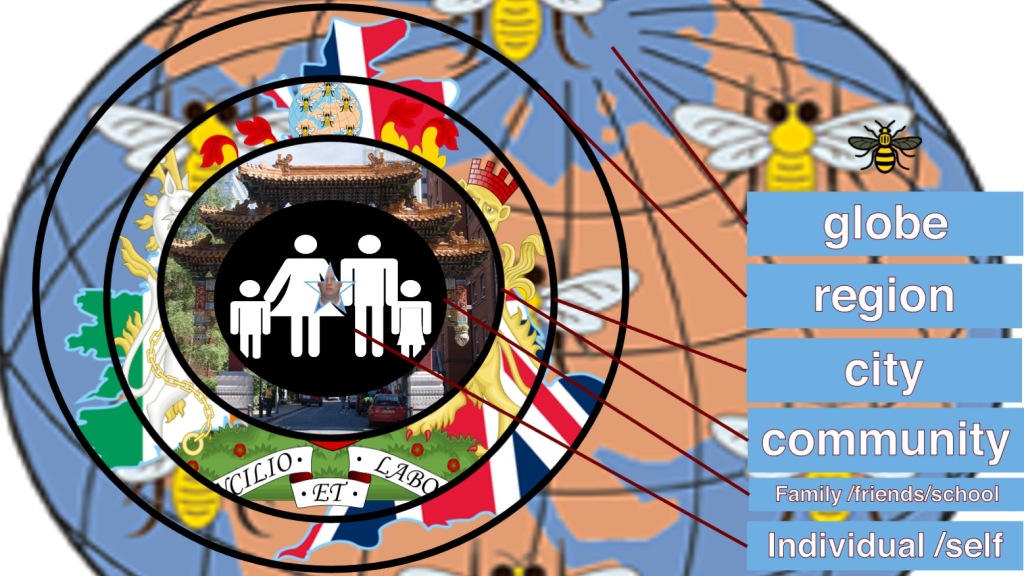

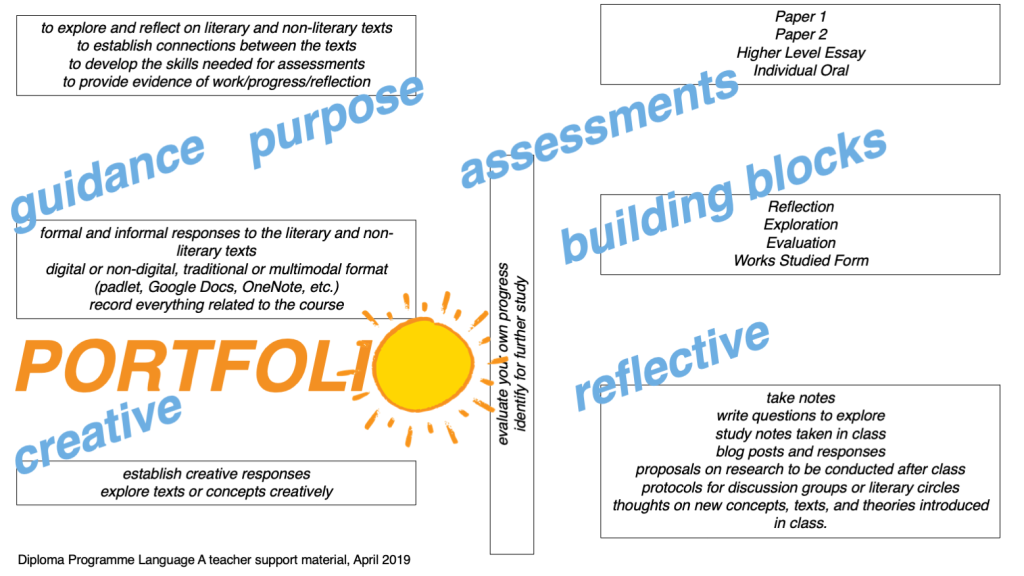
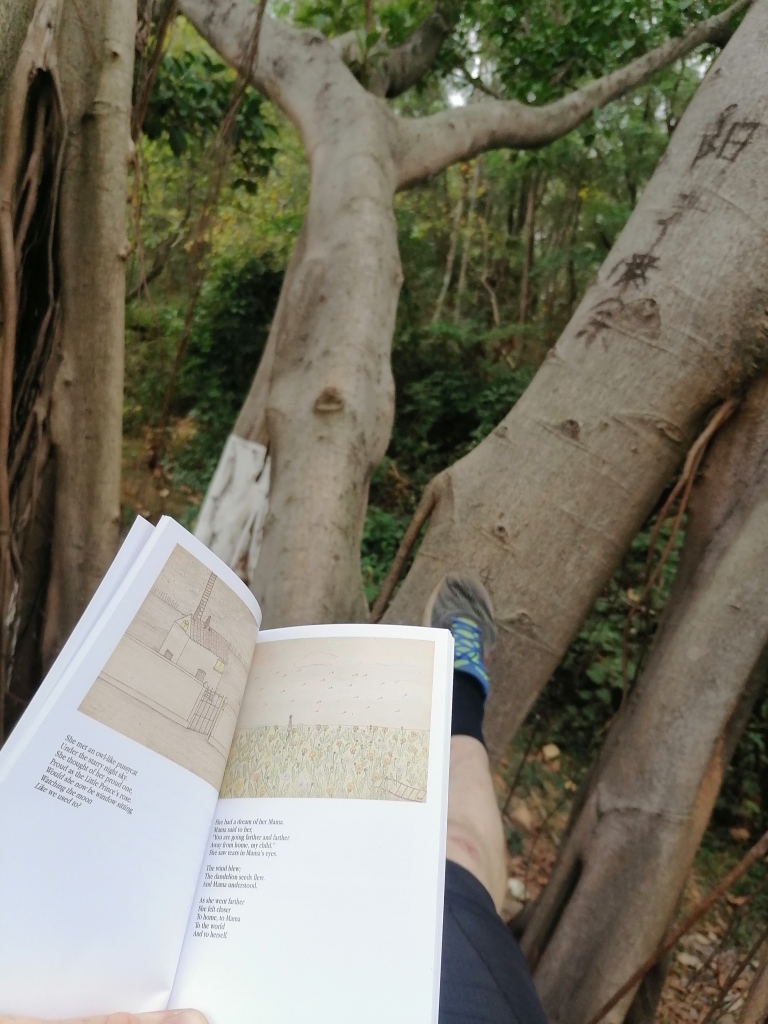



 AGAINST THE FLOW OF TRAFFIC - ACTON28.BLOG