你好 (nĭ hăo) / Namaste / Welcome!
“In general what I tell people I have learnt is that it’s far better to make a friend out of a possible enemy than an enemy out of a possible friend. You can’t go far wrong.” – Bob Weighton, aged 112 – interview on Good Morning Britain.

“We need to call Mr Lam back in 20 minutes,” Gerry said, explaining that we had little time to make a decision or get out of Thailand. Monday had started heavily, with worries about an impending closure of the whole of Thailand. Royal mandates and decrees were in position and martial law was on the horizon. A state of emergency was teetering into play, threatening one to three months of lockdowns. Flights were being cancelled and the prospect of all international flights being suspending was approaching fast. We’d been supplying our Principal, Mr Lam with regular requests for assistance for many days, as it was. And, both Gerry and I had had flights cancelled in the run up to that Monday. My Thai Air Asia flight could be rebooked, as long as it was before the scheduled flight on April the 1st, April Fool’s Day. Trip.com, the agent that I booked with has yet to provide any customer assistance. That’s understandable considering the world’s population of humans have big, big, big problems now.
The British Embassy and UK Foreign Office were essentially telling all British citizens to fly home to the motherland – a green land heavily infected with COVID-19. The Thai people said I could remain there and all I needed was a British embassy letter. The UK Foreign Office had previously said don’t go to China – and had yet to retract that statement, despite China being one of the few places seriously controlling the spread of COVID-19…
Mr Lam, and the school could not confirm of the school would be responsible for flight costs or any potential quarantine costs. At that stage, flight tickets had jumped from about 900RMB one way to 4660RMB – and quarantine could be anywhere between 200-400RMB a day. We were pretty much assured that we would be allowed home quarantine as many others had experienced this. Another colleague Nick, was trapped in Sri Lanka, with fast-diminishing flights outbound, but was due to fly on April the 3rd. Two colleagues, Garth and Jason had been in Dongguan during their lockdown and were finally enjoying restaurants and fresh air after lengthy periods tucked in their homes.
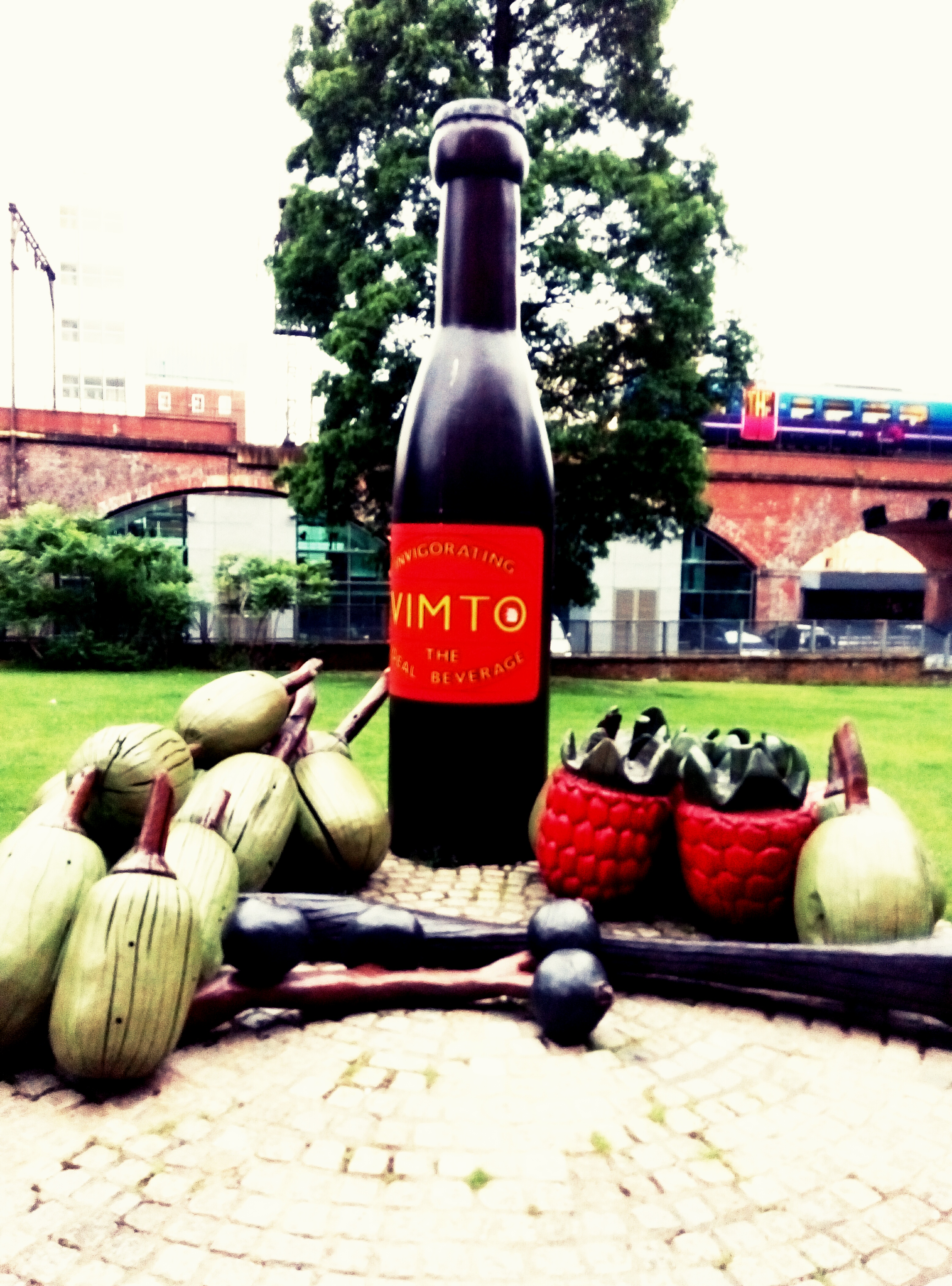
So, I agreed with Gerry, that we had to go. With that Mr Lam booked us on a China Southern Airlines flight to Guangzhou. So from an evening playing four-in-a-row and checkers with science teacher Sirimook, I was frantically packing my bags and cramming bottles of Vimto into spaces that weren’t actually there. Around midnight, I was lay on the bed, everything packed and ready to go. It seemed to fast. This was an urgent few hours.
 I awoke at 7.30am, I jumped onto the hire bicycle and returned it to Mr Wichai, who was very kind throughout the hiring period of said mountain bike. As I jumped on a tuk-tuk back, I told Gerry to fry up some of the Wiltshire bacon and the black pudding that we had ordered for a future treat. He complied, and as the kind woman driver of the tuk-tuk waited outside, we tucked into the quick breakfast, doused in HP brown sauce and then bid Amy and Eddi good luck and goodbye. They were to remain there indefinitely and would probably not emerge until Liverpool lifted the 2019/20 Premier League title, and the world was a safer place.
Back onto the friendly tuk-tuk driver’s tuk-tuk, we zipped out Chanta village gates, waving goodbye to the security guard and gatekeeper (in a mask, just like us), and turned right, then left at the roundabout, across the really quiet main road. We stopped so that I could pick up my City hat, it blew off due to turbulence and a gust. I ran to grab it. A snake darted off the near empty roads. I jumped back onto the tuk-tuk. The driver floored it. We reached the modern Hua Hin Airport to Bangkok Airport bus station. We paid her 600 baht for her driving, way above the usual rate – but she certainly wasn’t getting many customers that day. Hua Hin was desolate. Everyone who could fly away, had gone, or were at the airports desperately finding a way to their native lands. About a tenth of the average million visitors to Thailand were at that time stranded or clutching at straws to get out. We grabbed our bags and went to the counter. Almost all the buses that day had sold out. Our luck was in. We paid 294 baht. Within an hour we boarded the full 11:30am service, which left 30 minutes. The usual journey time was anticipated to be three to five hours dependent on traffic. We arrived before 2pm. Way too early check-in. Even with roadworks, our coach had practically flown into Bangkok uninhibited.
At Bangkok’s Suvarnabhumi Airport, our temperature was checked on the way in and we were each labelled with a green sticker. We were in. After being told that we were far too early to check in, we skipped past many returning Chinese nationals in hazardous materials suits. Some had full facial gas masks on. Some wore visors. Many sported full body rain ponchos that could be found in theme parks across the world. Others had kits resembling a kind of pale Ghostbusters. We wandered downstairs, well travellators, for lunch passing sets of four seats with two red exes closing off the central seats. A green tick meant that you could sit down. Posters, banners, hand gels, sanitizers, signs, announcements and swarms of temperature gun-toting airport staff. The pandemic response was clear to see.
Next was some queuing on red dots and trying to occupy one red dot on the floor per person, without being close to the person in front or behind. After dropping our bags in, scanning a QR code which gave us a National Health Commission of China health declaration, in Chinese, we proceeded to customs and passed several LED screens full of cancellations. Very little was due to fly that day. We were lucky. I showed Gerry that the Spring Airlines flight to Guangzhou that evening was cancelled. That was our other possible way out. There still was a chance that we would not lift off the ground. Flights were also known to face diversions and returns to their departure airports. We kept hope.
 After a goodbye beer in the airport, we grabbed sandwiches to go, quickly, as our flight’s departure had moved forwards a little. We boarded the flight and at the rear of the plane we were able to move from row 57 to 61 and enjoy lots of empty seats. They’re here, they’re there, they’re every slipping where, empty seats, empty seats… No headphones in flight and all the staff had latex hands, and half-hidden faces. After the usual health and safety video, the China Southern Airlines, flight CZ364 taxied and then rocketed down the runway. The wheels lifted and the plane went skywards. Up, up and away.
After an inflight sandwich or two, and a pre-packed inflight snack pack, our flight descended. We had no real idea of when we would eat next or how the reported quarantine and testing processes would be. We’d filled in the health declaration form – the first of four paper sheets that night and following early hours. Another QR code later, and we’d replicated the paper form on an electronic giving us a further QR barcode to provide to the epidemiological investigations team, after two temperature checks. Here a translator copied my English form to a Chinese form. Gerry was led away to another room. Eventually I was also directed to that room. The cast of Outbreak, in their sky-blue and white uniform hazmat suits wandered in and out. Gerry was led away to a smaller room and came out soon after saying the swab test was uncomfortable.
When my turn came, a young suited and booted man, who I could only see the eyes of, through steamed goggles, led me into the smaller room. Here I as happy that no needles were involved. That was – until a roughly 12cm swab was tunnelled up my left nostril and then my right one. It seemed to last forever. It was probably closer to a second or two. After that, I felt relief that it was over. Then a second swab appeared. The medic in white said, “Say, ahhhh.” I was closer to saying, “ARGHHHHH!” My gag reflex made me throaty and horrible in sensation. It was a vile feeling. I left the room with a taste of something unrecognisable and utterly vile. I whipped my mask down and swigged a few needed gulps of water. Gerry and I were each handed a stamped certificate to say that we’d had the tests. Out we went, through the next temperature gates and over to customs, after filling in yet another form. After passing customs, we found our bags slowly spinning around the baggage carousel amongst many other suitcases. At least ten baggage carousels filled the great arrivals hall. We were the only two souls within the room. It was now close to 01:30 on Wednesday morning. We’d landed around 23:30 the previous day. After gripping our bags, we passed through the customs declaration channels, gone right up a cordoned pathway, up some escalators and then left over a bridge. A young girl sporting a full hazmat suit directed us the only possible way we could walk, forwards.
The path was a bridge, entirely sealed and led to some stairs on our right. Down we went and turned right. Gerry mentioned that it reminded him of the registration tents of a marathon run. After scanning another QR code, and filling another paper form, we sat down and awaited a bus or coach to Dongguan. All around us, many tables displayed towns within Guangzhou, cities around Guangdong and one sign for provinces beyond. Eventually, around 3am, a dozen or more fellow Dongguan-bounded passengers were marked outside. Considering Gerry had stopped someone taking a bottle of hand-sanitizer by accident, they were all lucky to be boarding. In fairness, it was placed next to the complimentary water bottles. What struck me about ot all, here we were, in a nation at the time, that had suffered thousands of deaths, tens of thousands of infected ill people and yet spirits were high, and nobody seemed worried.
The coach departed with an escort vehicle. For some unknown reason there was a beeping sound for some time. I imagine it was to do with the hazard lights being on. The coach slowed down around Machong Town and a half-sleepy me heard my number (2) and Gerry’s number (3) and went to depart. I managed to get off the coach. In actual fact it was everyone but numbers two and three. So, back onboard I went. Then, the coach started up again and away we went. The bleeping sound never relented. As the coach pulled off the highways to more local roads, we could see recently constructed barriers between gardens and walls of MDF and scaffolding. Eventually, the coach passed the Botanical Gardens, pulled left, and a few hundred metres, left again into West Lake Hotel. The escort car shot up the raise to the hotel at the top of the hill. We followed, slowed and then stopped. The doors opened. We departed. Hazmat suits everywhere. Here they carried our bags, checked us in with yet another form at 05:00. The actual cost was to be an eye-watering 450RMB a night. I was handed my room number. No key. Gerry was allocated a different floor and wing of the hotel. Off we went. At the fourth floor (in the UK, it’d be the third floor), I told Gerry I’ll see him soon, and off I went, a few doors down on the right. I stepped through the door into quarantine.
It begins.
This week in Manchester, little Britain and the world.
“It’s irresponsible for the Prime Minister and Health Sec to say they’ll only self-isolate for 7 days. The WHO say people can be infectious 14 days after symptoms stop.” – Dr Rosena Allin-Khan, Labour MP for Tooting/NHS hero: A&E Doctor
Mancunian people, whether workers or businesses have always been known for their spirit when faced with the terrible. Mancs, not manky mongrels. Through kindness and solidarity, Manchester, whether blue or red, or other, whether queer, straight, transgender, lesbian, gay and all the wonderful colours of the spectrum of sexuality have and will always show love to hate, love to fear, and togetherness in adversity. Yes, there are exceptions and every village as their idiot, but we don’t look down on that lot, we reason, we educate ‘em and we again show love.
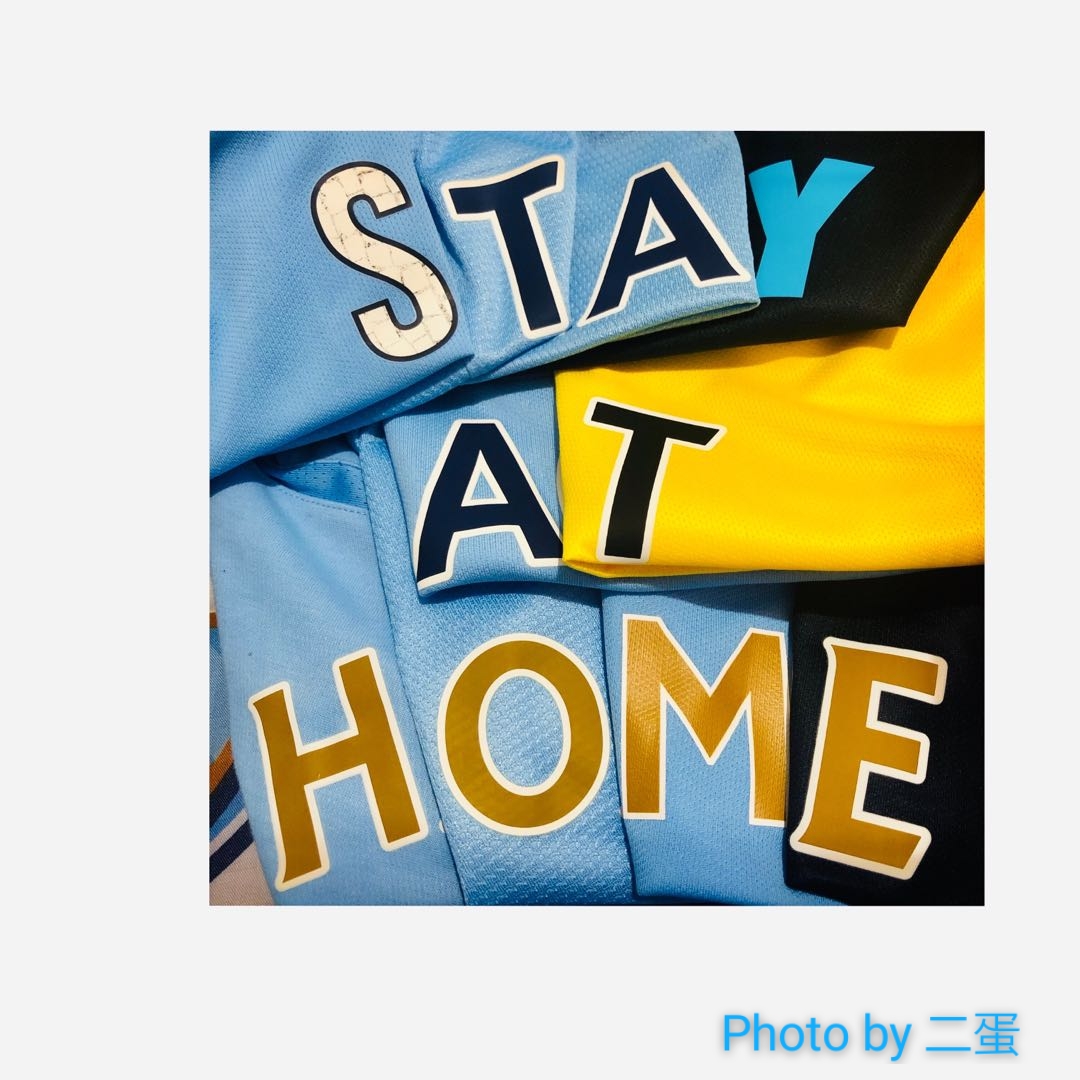
So, NHS, you beautiful creation and wonderful giver of life and provider in strife, here’s the City of Manchester Etihad Stadium, council-owned and City-leased for you to use as you see fit. Do as you need, because you need and they need, more than we need. Cry Sis’? No crisis, the superheroes with their inadequate masks and their gowns weakened by cuts, are here fighting. They’re our front line and with them I feel fine. If anyone can save me, it won’t be Superman, Batman or the Avengers, it’ll be Doctors like Rosena Allin-Khan, in Tooting, or our boys and girls in blue (or whichever nursing colours they choose) in Wythy, and my place of birth Crumpsall and the numerous other trusts up and down these green and pleasant lands. But, they need us. They need our volunteers, they need our support and they need us to stay indoors. The longer we do this, the sooner we’re out. If you anyone out, don’t give them a clout, maintain a distance and shout, “Oi, get inside and don’t be snide.” Feel the rhythm, feel the ride? No time for a sneaky bobsleigh ride. Watch the tele’ instead. Or find yourself lucky with beeping at the bed. Don’t be misled, by Trump and his fools, or Boris and his tools, 14 days here, is better than 14 days under soil, feeding worms and all the bugs. Overhead, thoroughbred might be okay, but in their hospital beds, some won’t live, and that’s the thing that you can give. A chance. One little chance. Stay at home, like I said.
Returning to China has been eye-opening. What’ve I seen? World class control. Top rate protection. No risks. This is the now, and not the beginning which obviously was a huge Alan Ball’s up. I’d rather be here than Britain, right now. That says a lot. I’d be home in a jiffy, if I felt it was safe enough to protect my family and friends. I feel I can’t offer much more than a mass clap for the NHS.
The clap for the NHS was wonderful. It gave hope and lifted spirits. It wasn’t the true support that the NHS needed, but it was as a national scale response to the superheroes both in the UK and beyond that are battling for our lives. Some are giving their own lives. The government dissection and eventual evaluation of what could have been done better has begun, and will continue throughout, but I think the time to reflect must be after. Not now. By all means, question now and help to make suggestions. What’s absolutely unforgivable is that this Conservative government do not care about the general population of Britain. They found money with consummate ease to ease the worries and support the masses. It seemed mostly to support the upper echelons and middle tier of society, with so many hidden support packages for business and industry. People, the working class mainly, may not have jobs to go to after all of this blows over or fades away. That’s on the assumption that they make it through this alive.
This government downsized our capacity for dealing with outbreaks. They made devastating cuts and prevented those in medical capacities from having access to adequate personal protection equipment. The matter of Brexit pressed on and the warnings of SARS-CoV-2 barely existed. Not that any rival party politics groups were waving warning flags either. Nor was the WHO. The Conservatives seem, on the surface, to be facing up to their mistakes of old, realising that the chasm-like depth of suffering was on their doorstep – and soon enough it was flooding in and around them, swirling and taking no prisoners.
COVID-19’s arrival comes on the back of decades of reductionism at the NHS. Many aspects of the NHS are under market control. Cash for care. Money for statistics. Insurance by stockpiling medical goods, undermines profit and gain. Why put things in boxes and let them go dusty?
Capitalism protected itself (in June, not now) in unparalleled ways during this exceptional time. Chancellor Rishi Sunak was pushed forwards with his cool and emotional responses. A temporary floatation of cash keeps many people feeding the industries essential to keeping an economy afloat. This impermanent flash of generosity may be short-lived. Does it protect newly self-employed staff? No. Those undertaking redundancy recently? No. Those on a zero-hours contract? No. The unemployed and those on disability? No. They can apply for Universal Credit, which was increased to £94.25, up about twenty quid in these harder than hard times. £377 per month may help you travel far enough to buy the last bag of pasta, or pay a water bill on time. If you’re self-employed you can get up to £2500 a month. Chancellor Rishi Sunak cited fraud as being a huge concern. These are hardly terms to discourage people from going outside looking for a bit of work on the quiet. How long will this go on?
Government grants, from state funds, are bailing out businesses in a period of unknown. Like the idea of herd immunity, it could well be the same as pissing into the wind. Not of much use. The big plus being that the workers of Britain will not experience hunger or poverty, for now.
Health Secretary, Matt Hancock, had already said he couldn’t live on £94.25 a week. Around £330 billion has been set aside for business. The unemployed have a ringfenced figure of £7 billion to enjoy amongst themselves – over time. We’re in this together – some less than others, some more than others, and many doing near nothing – and some doing nothing but getting paid for it. There’s no such thing as equality. None. The rewards seen by businesses aren’t meant for the working classes. In a nation divided by those susceptible by this COVID-19 disease, there are already people plagued by means-testing, heavy taxes, debt, student loans (hell, years ago, I’ve thought about suicide on that subject but never considered it – I couldn’t hurt anyone in my family or my friends), and so many crippling factors. Now a fairer government would say, okay, hey, this is bad, erm, let’s have X amount of the pot divided by the population number. Each payment will be weighted larger towards those with care costs, children, disability, assistance requirements etc. Those who own a house, have less outgoings, no travel or fuel costs, will get less. Those stuck overseas and unable to return will get X, Y and Z provided. What am I talking about? A fairy tale. Stabilise people and their minds, keep them indoors and protect each other. Not with this government…
To highlight the hate directed at the mis-leadership that is this government’s modern day Neville Chamberlain, Boris Johnson (better described by Stewart Lee as…), preoccupied with conserving their social order and trying to escape self-isolation a week early is getting death threats and utter abuse. As his chancellor supports those who earn more (the more you earn, the more you get support), Boris is locked away in Number Ten Downing Street. Health Secretary Matt Hancock and England’s Chief Medical Officer, Professor Chris Whitty are also isolating alone. They all tested positive for COVID-19. Each shown symptoms of the viral disease that treats its hosts to universalism, something the Tory hosts may never understand. The Tories don’t care about you. Boris didn’t receive much love either. Just many cheers of joy and a few death wishes too.
A twat is a twat, but nobody truly deserves death or illness for being that. We’re not Gods and we don’t deserve to hang each other on nooses. As disgusting as someone is, isn’t it more human to reason, debate, democratically talk sense to a thickie… if not then, we all deserve the end. That’s bleak. That’s horrible. I imagine somewhere his education and his upbringing wasn’t like yours or mine and that shaped him. By all means don’t feel sorry for him, but don’t default to being Adolf bleeding Hitler on him. Yes, Boris, has years of systemic life-reduction methods and decision in his tank, but does anyone have the right to respond with heinous distasteful emotional attacks on the man? Is anyone entitled to stab a man in the back on his bed of illness? His policies may target groups of people and favour the few, but deep down below that tuft of white mop-hair, he’s a human. Or at least a lizard-humanoid, because he ONLY needs 7 days of self-isolation.
Or, we could argue that illness and hate is deserved. His floundering and dithering government sat back on this COVID-19 outbreak too long before making a huge U-turn to take it on. Dawdling the message of herd immunity fell away for the delaying weaker policy of ‘please stay at home’ and struggling into an eventual negligence and incompetence, aside from the heart-warming handclap. Personally, I don’t respect faltering Boris. He lost my respect long ago as stumbling Mayor of London, and wallowing as other fools since then. I won’t be his fan. Luckily, I won’t be wishing he dies or gets ill. I will be wishing that this government wakes up and gets its act together. Britain, the UK, England, whatever, it cannot go alone. The world must act together. Pool resource. Put aside emotion and concentrate on this global issue. Mother nature has a great new way to make compost – or air pollution via cremations. COVID-19 isn’t to be defeated, but gently turned away and eradicated. Viruses, like governments, and civilisations can fade away. Humanity should not. But, it does need to adapt P.D.Q. (pretty damn quick).
Unluckily, Brazil’s top dog and general knobhead, posing president Jair Bolsonaro has laughed at and almost denied COVID-19 as the world struggles. He even threatened to sack his health minister and any experts critical of his regime handing. Brazil is at high risk.
Luckily, some nations are taking action. The National Health Commission of China will not dismiss a second wave of this disease outbreak. That’s why the borders of China were closed to foreigners, on the 28th of March 2020. Around 10% of China’s so-called imported cases came from returning foreigners. As xenophobia and fear ramps up, China has called for calm. It also imposed a rule that allows one airline to go to one country, once a week. Posing the selfish question, how can I get to the UK in summer, if this carries on?!
“One thing I think the coronavirus crisis has already proved is that there really is such a thing as society.” – Prime Minister Boris Johnson, Twitter.
Luckily, COVID-19 doesn’t discriminate and isn’t corrupt.
Unluckily, the longer this goes on, the more our lives will change because of COVID-19.
Luckily, some nations are seeing drops in infections and deaths.
Unluckily, COVID-19 could be here for a while or mutate…
Luckily, Trump is taking U-turns and allowing states and other proper leaders to do a job.
Unluckily, Trump.
Luckily, Dyson and F1 are making ventilators, Brewdog are making hand gels, Santini (cycling jerseys) switched to making masks, and so many great stories. Trump is using the Korean War-era Defense Production Act to get General Motors producing items of use to the medical profession. Food banks, which shouldn’t exist in the first place, are being supported by major supermarkets.
Unluckily, many on the frontline of healthcare have died or are in isolation.
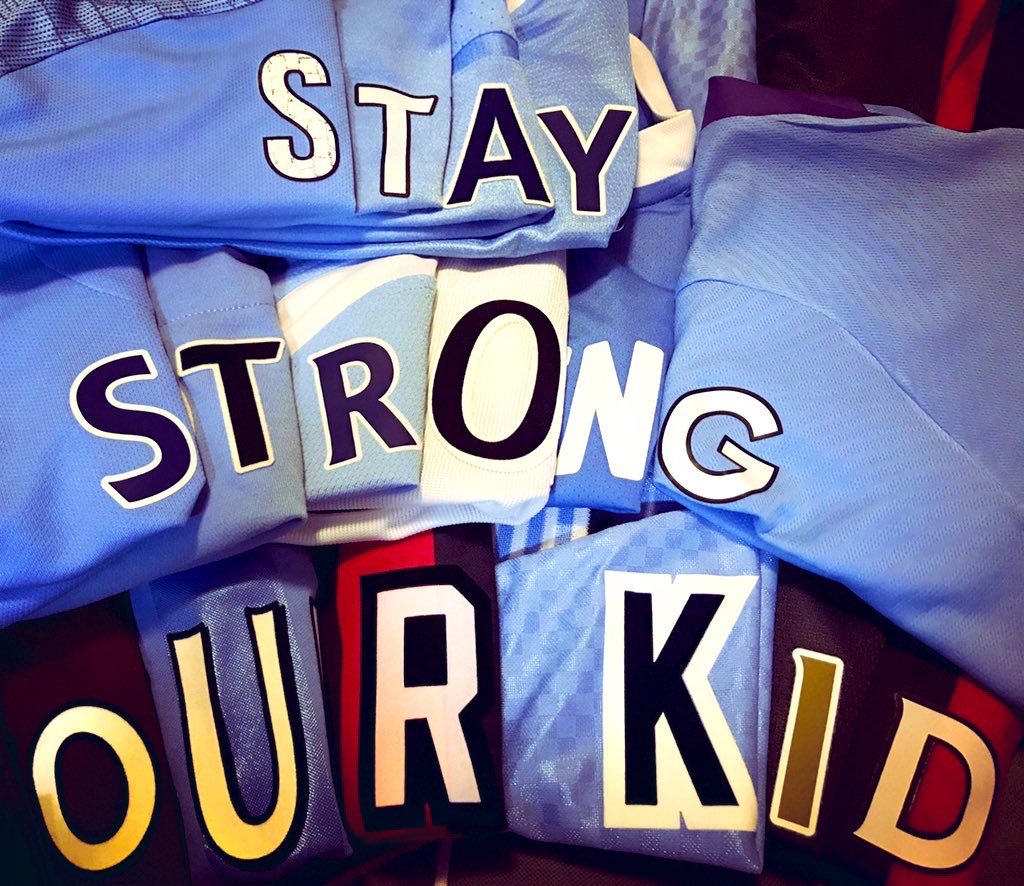
The above image was made by SZ Blues member Waits.
Luckily, City & Utd came togetherand supported local foodbanks. #ACityUnited
Unluckily, Bugzy Malone’s boredom led to a crash. Get well soon.
Bastard of the week: McDonald’s asked for help from customers. This was only a week after Ronald McDonald House evicted a ten year old boy. NB: While the fast food company provides funding and organisational support, Ronald McDonald House Charities is an independent charity.
Luckily, many medics returning to fight against the outbreak. The NHS is testing more workers than ever before. #StayHomeSaveLives
As COVID-19 almost doubles every five days or so, it isn’t all doom and gloom. People are recovering. That’s key. Hope.
I’d like to leave you with this:
“There is no such thing as society.” – Margaret Thatcher, Prime Minister (U.K.), 1979-1990
Hey, Maggie, we’re about to really find out… look up from Dante’s Inferno and see how we get on.





 I remember the game well for an exciting 21-year-old called Jeff Whitley stepped onto the field for his debut. “Officer” Dibble returned to goal in a game that saw my favourite player


 Tal (1700m) was over a hill. By over the hill, I mean very far away and plenty of up, up, up. Not a hint of what Tal would look like because ultimately some very large geological features were doing a good job of screening the beyond. After some really emotional digging in we were back on the pathway, Livia and I, walking with Srirang not far behind. The few restaurants and hotels along the way were closed, and water had to be gained from river feeds into pipes, and then straight into the Life Straw bottle. Clean and fresh. The great sinister and prophesying slopes ahead didn’t encourage but we dug in. On reaching the top we had an eagle’s eye view into Tal, with an eagle flying beneath us over a wide valley plain and lake within the Marsyangdi River. The overlooking stone gate faced onto Tal. We toyed with how long before Srirang would arrived but decided the best thing was to find somewhere to eat. A gent introduced himself, and told us that his lodge was sadly under repair. His friend from Jagat, at Mont Blanc Hotel, had recommended his sister’s lodge. We said, not to worry, and carried on. We went all the way to the farthest point of the village, Paradise Lodge on his recommendation. Here we ordered food and fussed a local dog that followed us. The pumpkin soup and momos were brilliant. Well needed after that wander, The widened-valley stretched across the banks of the river beneath with a stone plain giving home to the village of Tal. Behind it the Tal waterfalls plummeted downwards powering a turbine or two.
 After a cup of milky coffee, the weakest coffee ever, but warm and sweet, Srirang walked up the garden path. He did not have his backpack. He said he’d checked into Tashi Delek Lodge (named after a Tibetan greeting). We retreated back there and dropped our bags in. The girl at the lodge had wide Tibetan eyes, wonderfully smooth hair and a figure to die for. I seldom judge someone as breath-taking at first sight. She was. And, without appearing like a debauched foreigner, I politely thanked her for showing me to the wide room, and she slid away quietly. A man I assumed to be her father, and a woman who was clearly her mother shuffled around the garden and lodgings in the start of the Manang district. Before a wander out, we ordered our dinners and dal bhat was on the menu once again.
 Before dinner, Livia, Srirang and our new Kukura (कुकुर – a dog) – abandoned Livia’s impressive learning of Nepali language and we went to see the waterfall, lit up by several bulbs and enjoyed the setting sun over the snow-capped mountain ranges of the west. To our north up the Marsyangdi River, cold clouds gathered and swirled. To the south, similar clouds menacingly eddied and flowed over distant peaks. We looked at pictures of a spider and Livia, with Srirang set about creating a kind of social media profile photo montage. The day had been epic in terms of the scale and ravines witnessed, with such dramatic sweeping scenery accompanying us along the way. Following steep stones and vast drops, a few photos of an eight-legged critter seemed fitting. The big and small, side by side.
 The following morning blue skies greeted us all. I’d woken around 7am but we departed closer to 10.30am. Why rush? Armed with a stodgy breakfast we set off early, having chewed on buckwheat bread, omelettes and porridge. The beautiful girl waved us goodbye. The river bent north-west, and we followed the banks, as the valleys once again enclosed the Marsyangdi River. After only a short distance the river pointed north, and we looked upstream at gaping valleys. But, first we enjoyed a smooth and calm waterfall on our right shoulders. Livia washed her hair and Srirang rested for a while. I plodded up the stairs slowly at first and then having reached a crest, decided I’d trot on a little. The valley below deepened and over the river the road slipped lower below me. The mountains above me cast shadows and sunlight broke through the occasional pockets of bamboo forestry. Here the plants became more deciduous than before, with the air temperature hovering just below teens in centigrade. Sound thundered up from the deep va
 lley beneath. After passing the first yak of the journey I found the small village of Karte. That was an ideal break point after some knee-stress-inducing steps on the route so far. As my lunch of pumpkin soup and momos was readied, I walked over the suspension bridge and back. By 12.50pm, I was at Karte, and now I had met the sister of a certain doggy back in Tal. Her puppies were nearby too. I sat and enjoyed the views and had a quick gander on the internet, via the lodge’s wi-fi. Here I read an
  h here. The so-called Gandaki Zone of northern Nepal. Just across the river a further 102 houses, house about four times as many people as front doors. The village of Thonje can be reached by a swinging suspension bridge. A river valley to the north-east gives Thonje a headland sandwiching it to the north-west by the Marsyangdi River. The north-easterly direction to Tilche and a village called Goa looked cold and uninviting. The name Thonje means ‘pine trees growing on a flat place’ in Gurung language.
 An hour’s climb up a near vertical cliff-hugging pathway is not the best thing to do for a late breakfast. But, it had to be done. That vertical line of suspension bridge was calling out my name. Eventually I reached the steep-faced village of
  ed the soup moments later. After thanking the owner and their family, I swiftly wandered around the bend, shuffled by two bulls blocking the path and skipped on forwards. To walk on a very-raised footbridge was my intention. The pathway descended and Annapurna could be seen across the opposite valley and way off into the distance.


