Kristen Perrin’s How to Solve Your Own Murder: Review + Light Up Lancaster

How to Solve Your Own Murder by Kristen Perrin is a page-turner with a unique premise that sets it apart from other mystery novels. At first, the genre and title didn’t attract me. Once I’d opened the cover, the protagonist’s posthumous investigation is intriguing, and Perrin’s plot is full of clever twists and turns. The novel’s fast-paced and suspenseful narrative keeps readers engaged from start to finish. Perrin’s innovative approach to the mystery genre makes this book a highly enjoyable and memorable read. 

At times, I thought the book to be both gripping and inventive take on the classic murder mystery. However, I felt torn between changing a chosen book to read. At first, the story centres around the protagonist who, after her own untimely death, must piece together the clues to uncover her killer. It sounds cheesy and forced. Perrin’s writing is key to why I continued. The delivery is sharp and witty, with a plot that keeps readers guessing until the very end. That being said, it doesn’t leave too many imagined options.

The novel’s unique premise and well-developed characters make it a standout in the genre. Fans of mysteries and thrillers will appreciate the clever twists and the protagonist’s relentless pursuit of the truth. as it offers a fresh and intriguing spin on the traditional mystery narrative, Kristen Perrin‘s well crafted work stands out as a must-read for mystery enthusiasts looking for something different. A thought-provoking and compelling mystery told through the themes of identity, justice, and the afterlife. May contain deeper philosophical undertones.

If a soundtrack is needed for any future televised or silver screen production, then look no further than Rebekah Okpoti‘s haunting score for the Light Up Lancaster event installation in Lancaster Priory. Amongst the visuals by artists Jonathan Hogg and Nick Rawcliffe, a tone of menacing organ music filled the vast Lancaster Priory. The acoustics seemingly fit multiple genres of entertainment, and I reckon Kristen Perrin’s work deserves a soundtrack.

The Lancaster Priory’s Director of Music, Rebekah Okpoti, took inspiration from William Herschel, playing a tune overlaying an almost eye-lije triangle screen sinisterly reflecting kaleidoscopic journeys. The other town light installations varied in shape, sizes, and subtletkaleidoscopicy, much like the words of Kristin Perrin.

James Naughtie’s The Spy Across the Water: Review

Head of Zeus publishers release The Spy Across the Water by James Naughtie caught my eye through its cover. Between the covers unfurls an intricate web of intrigue via a fascinating yarn of espionage and loyalty. The backdrop of a familiar Cold War sees our protagonist’s pathways into a dangerous game of intelligence and counterintelligence. Trust is a rare commodity. However, through Naughtie’s evocative and gripping writing, tension rises and falls, maintaining a grip on the reader whilst bringing to life a Cold War era uncertainty.

Fans of Mitch Rapp (Vince Flynn), Jack Reacher (Lee Child), and James Bond (Ian Fleming) will find the characters make it a compelling read that will resonate with fans of spy fiction. Naughtie’s pace of plot plods along through intellectually stimulating layers of authentic tension and historical accuracy. This book, with lead Will Flemyng, is a must-read for anyone who enjoys sophisticated spy stories that challenge the mind and keep the reader engaged from start to finish. 

James Naughtie is a BBC special correspondent deeply knowledgeable in democracy and respected throughout his field, except for on X (Twitter) because nobody is respected there. Not even the dead.

Now, it’s time to find the previous books in the series… The Madness of July and Paris Spring shall follow, even though they’re prequels to the book I’ve just read.

Katie Flynn’s A Mother’s Secret: Review

Katie Flynn’s A Mother’s Secret is a heartwarming tale that delves deep into the themes of love, resilience, and family bonds. Set against the backdrop of World War II, the novel follows the life of a young mother struggling to protect her family and safeguard her secrets. Flynn’s evocative writing and well-drawn characters make for a compelling read that is both touching and inspiring. This book is a testament to the enduring strength of maternal love and the sacrifices made during challenging times. 

Interestingly, as I expected, the book’s author is a continuation of her work via her daughter. Katie Flynn’s enduring name lives through her daughter Holly. Holly rips into the work, delivering a glimpse of historical detail, life for the working classes, and the trials and triumphs of Wartime Britain. Katie Flynn, a pen-name of Norwich-born Judith Turner, passed away in 2019, after 82 years of life that threw a catalogue of books our way.

A Mother’s Secret draws tender attention to details, emotional struggles, and a secret with the odd unexpected twist. Love, loss, and redemption are portrayed in both a realistic and evocative way. Lessons about the strength required to confront and overcome past mistakes shine throughout the novel. The plot, however, lacks jeopardy in its delivery. That does no damage, as the focus of a mother’s love stands tall.

Katie Fforde’s Island In The Sun: Reviewed + Keane

Island in the Sun by Katie Fforde is a feel-good novel. I get why it’s popular. The age-old tried and tested niceties of its contents are visible from the cover to the blurb. It isn’t for me. That also applies to Keane, although this band does have some gorgeous tunes that are worthy of many playlists, including my own. If you like uplifting stories and music, pair up this novel with Keane’s Hopes and Fears.

“We’re spiraling; We’re tumbling down. We’re spiraling; Tied up to the ground.” – Keane lyrics, Spiralling

Usually, I would’t pick this kind of book up. Island in the Sun by Katie Fforde is a warm and enchanting story that transports readers to a beautiful, sun-drenched island. The book’s themes of love, self-discovery, and new beginnings are beautifully explored through the eyes of the protagonist, whose journey from uncertainty to confidence is both relatable and inspiring. The island setting serves as a perfect backdrop for the blossoming romance and the personal growth that occurs throughout the story. I also wouldn’t usually be found listening to Keane for too long.

Attending Keane’s 20th anniversary tour of their debut album, Hopes and Fears, was a pleasure. The tunes are melodic, the fans impassioned, and the band itself, divine. Tom Chapman, on lead vocals, alongside Tim Rice-Oxley and Jesse Quin, sit on the softer edge of rock, somewhere between indie and soul, and all the other gentle musical genres. Slow to mid-tempo rarely jump up beyond their distorted piano and instruments, but it works. Somewhere Only We Know is a gorgeous ballad. My sister Astrid was certainly enjoying the gig. She seemed to know every lyric instinctively. If ever Tom Chapman needs a break, Astrid is ready and waiting.

“I hold you in cupped hands; And shield you from a storm; Where only some dumb idiot; Would let you go.” – Keane, Sunshine lyrics

The Katie Fforde book is highly recommended for fans of feel-good romance novels, especially those who enjoy stories set in idyllic locations. It’s a perfect summer read for anyone looking to escape into a world of love and sunshine. I am not sure that I would pick this book up again. Much like the novel by Katie Fforde, the band Keane is sun-soaked, cheery, and filled to the brim with credible content. It is easy to imagine scenes of the book with the background music, This Is the Last Time. It doesn’t mean I won’t be revisiting the author’s or band’s works.

Katie Fforde’s Island in the Sun is a charming novel beautifully capturing both the themes of second chances and rediscovery. Richly drawn characters take a journey through a central landscape of warmth and magic. Dollops of personal growth land alongside love found at an older age. Expect whimsical blends of romance throughout vivid escapism. Much like the lyrics of Keane, satisfyingly atmospheric moments will occur. Perfect symmetry, indeed. Keane’s gig was postponed, much like the opening of Coop Live in Manchester. The wait was well worth it. An emotional Tom Chapman cut the stage-audience interactions perfectly, and on reflection, Keane delivered fantastically.

Review: Ancestors, Professor Alice Roberts

“And the past belongs to everyone.” – Professor Alice Roberts, Ancestors.

I must confess that this burgundy bestseller of a book sat on my shelf for far too long. Gifted by Mum and Paul, in Christmas 2022, it lay on a shelf devoted to books that I will read. Eventually.

Slowly and surely, like the remains of an ancient body arriving at the tip of an archaeological trowel, the book departed the shelf and found eyes upon it. Dusting down the top, it opened, unfurling mysteries, tales, and fables, alongside cutting edge sciences and graphic use of vocabulary.

Professor Alice Roberts first caught my attention on BBC’s Coast, and since then, a variety of television shows. I have a crush on her intellectual prowess and passion for her chosen field of expertise. I love how a bright spark seeks newness, raw knowledge, and extrapolates ideas, developing within a text or a show, or in the good Professor’s case, as a person.

Exploring neolithic, Iron Age, Bronze Ages, and a whole layer of timeliness, British history, human remains, personalities such as Pitt Rivers, and conflicting progressives explore our Before Common Era. Here, Roberts explains the dangers of assumption and the pitfalls of satisfying a narrative.

Final confession time. I spent time savouring this read over a few weeks, intertwining my reading amongst other books. Overall, essential reading is all about exploring a genre or topic of unfamiliar ideas. I am now neither expert nor amateur, but like an archaeologicalist digging ploughed Wiltshire soil, I have a sound glimpse into the past.

Empowering Students Through Effective Reward Systems

Praise is enough for some. Others need more motivation. Some distrust reward. Whether a student, a teaching mentor or a teacher, reward goes a long way. The buzz of recognition is empowering. In the past and present, behaviour management systems have often focused on punishments over recompense. Nowadays, education looks at ways to place guerdon over burden. 

“central component of habit formation” (Wood and Neal, 2016, p.73) 

If the stake of a decoration and honour is visible, students may be more motivated to perform, stay on task or give fuller focus to earn their winnings. Conformity by most students may follow. With that boot students may engage with a higher level of interest, get stuck in and participate more diligently. Most of us will understand that a tangible goal and deadlines add a sense of urgency to our responsibilities. Dangle a carrot and stick, and suddenly better work may be produced.  

“Only rewards that promote the repetition of specific actions contribute to habit formation” (Wood and Neal, 2016, p.75) 

Pride is a sin, yet humility can counteract such worries. To have pride is fine, just keep it beneath excessive. We all feel a warm tingle of joy when our efforts are appreciated by others, whether that’s in the classroom or a game of football or a pub quiz in Irene’s Bar (Houjie, Dongguan). Achievements matter. They boost morale and are powerful classroom tools of remuneration. Success can be tangible and increase self-esteem, ideally leading to self-confidence and belief in raising a student’s game. Once-believed hard-targets suddenly become possibly achievable, and barriers can fall over like dominoes.  

“He who wished to secure the good of others, has already secured his own.” – Kǒngzǐ (孔子 Confucius), Chinese philosopher 

When persuading a student, every teacher must be critical of their own methods. Rewards, like learning should be exciting, engaging and appropriate. If you want your student to be the best version of themselves, then you must incite the best practice for yourself. Only then will you be able to induce the optimum classroom conditions for students to actuate improvements. To improve at home or in the classroom, a clear system of reward can drive students to squeeze out that extra bead of sweat in their efforts. Students who push themselves can see their final work improve and their efforts gain clearer progress.  

“Carry out a random act of kindness, with no expectation of reward, safe in the knowledge that one day someone might do the same for you.” – Princess Diana 

Of course, when prompting students, it must be a system that avoids greed. Dependence upon rewards can instil the wrong behaviours. Knowing when a scheme is prone to manipulation is important. Likewise, think about how the student may feel manipulated by something they may associate with as an early learning structure of rewarding. Does it appear like a bribe? The systems also need to consider the view of decreased value of the motivational bounty. The prize novelty cannot be over-stimulating and cause a student to shoot wide of the learning goal. Missing the point is counterproductive. Does the arrangement of reward also trigger further pressure? Is the pace, right? Is the task something a student’s working memory or ability will be capable of or incapable of completing? How can expectations be met if the task is too challenging? Whilst we look at advantages, we must be fully aware of disadvantages.  

“…students could develop reward addiction.” – The Influence of School’s Reward Systems on Students’ Development, Zihan Chen, 2023 

Effective rewards system need full consideration, weighing up pros and cons, to spur on, influence and activate student motivation. Each teacher or mentor reaches a class and gets the most out of students in differing ways. The fluidity of the teaching strategies and response by students will mean some methods work, some do not. Applying adaptive teaching and strategies within reward schemes should bridge the gap to stimulate, propel and inspire students and bring them from their slumber into a world of active reading and attention. How will you provoke yours? 

“Man gives you the award, but God gives you the reward.” – Denzel Washington, actor 

Ideas to consider as reward options:  

a visit to the library  achievement points towards a gift voucer play a chosen music video to the class earn a physical reward e.g. pens, pencil cases, etc. play games 
earn a snack or treat choose an activity outside of the classroom read quietly in a different space  change seats watch movies 
extra break time or outside walking time choose a partner for a homework task become a teacher’s helper for a set period complete homework in class share games 
take home a postcard, reference book or game choice of class chore or duty custom-made bookmark, badge, school equipment cancel homework for a class share a story 
a phone call home teacher reads to the class choose new books for the school to buy school trips to the local library school trips to a writing or literacy-related museum or tourist attraction 

All the above were suggestions by our reading and writing club students. 

Nota bene: allow students to be part of the process and choose their reward? 

Further reading: 

Boosting Literacy: Strategies for Active Reading in Schools

Introduction 

Before the 2023 summer holidays ended, I planned for the 2023/24 academic year, within the role and remit of the Literacy Mentor. A Padlet noticeboard started as out as a few scrappy ideas and a clutter of things to consider.  As the year went on, I tracked the progress in many ways. Looking back is a way of looking forward. A good way to track changes, evaluate and expand ideas.

Hypothesis 

Predictions for the outcome are dependent upon active engagement from students, applied alongside that of rigorous and well-compiled materials. To this end, it is predictable that an increase in reading engagement is forecastable.  

Methods 

Active Reading That Reading Thing In Class Support Book Club Writing Club 
Inference and vocabulary-based tasks from an active reading booklet, tailored to the specific needs of the students. Students work from sound to print using age-appropriate vocabulary and authentic reading material. The method is rooted in linguistic phonics but has grown its own way of working with older learners for the fastest possible results. An instructional arrangement in which a paraprofessional provides education services in the general education setting, to allow students to access the materials and develop their ideas. Metacognitive techniques, Active Reading, etc. can be applied. Reading For Pleasure’s masthead allows exploration of text and words for a small group, but is promoted to the entire school community, through modelling, displays and visibility. 

Results 

Active Reading results largely demonstrated an upward turn. Results were shared internally and to the school governors.

Reading For Pleasure has been researched and implemented in greater depth than the autumn-winter term. Below are some highlights: 

  • Writing and reading competitions (multiple entries have been permissible in some cases). Winners roll of honour established with 12 books containing students’ works.
  • 2 online video author meets (Tom Palmer/Joseph Coelho) 
  • World Book Day voucher distribution, alongside sponsored Readathon event (in progress) 
  • Over 140 books have been obtained from publishers, book groups and, online video events. A list is available. 

In Class Support was provided across year 10 and 11 classes. All students completed entry assessments (YARC). Due to impending GCSEs and other assessments, no exit assessment was completed. This is something to amend for the future.

Form time reading groups Year 10 (Friday) and Year 11 (Wednesday) have completed their Active Reading booklets. Year 10 Tuesday has been affected by behaviour barriers, with the challenging students removed, allowing others to continue uninterrupted. Future provision for disruptive students and how to support them better would need to be considered.

That Reading Thing (TRT) allowed one student to be considered a model of success. Documented spelling, grammar and reading (with inference skills) have been logged. He has developed a great sense of reading for pleasure and is turning into a bookworm. That student had attempted writing book reviews, poetry and article writing, to deepen his TRT experience. It is arguable that he could leave the TRT sessions, however, to further good habits and create encouragement throughout this academic year, he will remain with the TRT programme. 

One student joined TRT, and at first, was receptive and engaged. He eventually felt intimidated by one-to-one approach. Said student eventually scored highly in YARC, LAO assessments and NGRT – allowing him to exit TRT. He remains an at-risk student but was never truly in need of the TRT programme.  

Another student resisted TRT from the offset. Again, this student was an at-risk student who likely would benefit from this programme. He was heavily influenced by a previous TRT student. As that TRT student left our school for another school, it may be feasible to reinstate that student into the TRT programme with less resistance. 

Two further students joined TRT sessions on a Monday morning. Each made steady progression in efforts and output. Both require more sessions of TRT. 

Conclusion 

Due to reading comprehension being vitally important in secondary education, the active reading intervention is also important for educators to be mindful of because of the huge impact it can have on reading fluency as students transition from KS3 to KS4. The methods utilise a stacked approach of research-based methods, including reading aloud, assisted reading, and repeated reading in order to give students the chance to be active readers. In addition to this, it encourages reading habits for pleasure and curiosity by selecting appropriate and engaging materials.  

Supplementing regular classroom instruction with Active Reading successfully accelerated the reading development of the vast majority of students. On the whole, the methods increased each student’s word recognition, automaticity, reading prosody, decoding skills, word knowledge, and reading comprehension. Focusing on phonemic awareness, phonics, fluency, vocabulary, and comprehension allows students to access a greater deal of text.  

Evaluation 

Strengths:  

    1. Ease of use of available materials for Active Reading. 
    1. Talented and enthusiastic staffing for literacy throughout the school community. 
    1. Knowledge and skill base of teachers and support staff allows for shared good practice. 
    1. Recognition that evidence-based and evidence-informed methods need to be partnered with challenging and suitable reading materials. 

    Opportunities:  

      1. Reluctant and ignored students can be caught and empowered. 
      1. Literacy partners are available via local libraries and bookshops. 
      1. Increased demand for well-read individual talent, with opportunities to perform, compete and be published. 
      1. In the future, a further noticeboard has been created to plan the Reading for Pleasure remit of our school in a deeper and broader look at possibilities, angles and ways to entice both the established and the most reluctant of readers.  
      1. Further opportunities to replicate the scheme to target a greater population of students. 
      1. Continued possibility to adapt materials and include a greater diversity of targeted reading texts. 
      1. Social and media promotion opportunities, e.g. blow our own trumpet. 

      Weaknesses:  

        1. Better Reading foundation and transition from this programme to Active Reading can clash with the Maths department’s intervention programmes. 
        1. Lack of graphic novels/comic books/recent publications. 
        1. Other schools have clearly set spaces for reading, library and micro-libraries; as well as tablet computers dedicated to reading. 
        1. Resource limitations (regionally and nationally). 
        1. Unclear visibility of long-term literacy goals? 

        Threats:  

          1. Numerous schools have established models for literacy or are re-evaluating literacy based on evidence-based and evidence-informed models. We should not be left standing. 
          1. Literacy censorship and availability of some texts? 
          1. Negative press of reading materials (e.g. The Secret Garden, etc.) 
          1. Changing social and behavioural habits towards reading. 
          1. Budgeting constraints, room availability, and student attendance. 

          Further Evidence 

          Further evidence has been kept securely and privately within school, as per GDPR.

          CN Lit.

          Picking up a book, that usually I would never have picked up, one short story caught my eye. Then another. And another. Suddenly, I’d hit the halfway point of the annotated bilingual edition of the Selected Modern Chinese Essays 1.

          The book, whilst a little gentle, rendered into英语 (English) by Zhang Peiji features a bland cover with a bare tree. The flimsy pages and cover almost feel disposable. Shanghai Foreign Language Education Press didn’t even supply a blurb on the 38RMB book. Never judge a book by its cover? Well, this book has all the appeal of a Mancunian skyline during the peak industrial revolution during a grey wintery rain shower.

          “His name has spread far and wide and become more and more celebrated with the passing of time. Innumerable people have come to follow his example so that everybody has become a Mr. Cha Buduo.” – Mr About-the-Same – Hu Shih.

          Despite the outward appearance and an inside cover telling you about the translator, little is given away as to the themes of the essays nor the 377 pages. So, reading on is the only way to delve deeper. First published in 2007, this edition arrived a decade later.

          Through writing by the likes of Li Dazhao, Lu Xun, Xu Dishan, Hu Shih, Xia Mianzum, Ye Shengtao, Zhu Ziqing, Ba Jin and 24 other authors, I found myself transported from modern life to various times within Chinese history and at varied points of culture. Mosquitoes featured every now and then. Phrases and parodies of tales that I had heard clung to pages like my sweaty underwear in a Guangdong summer.

          “A fighter is perennially young. He is never irresolute or inactive. He plunges deep into teeming crowds in search of such vermin as flies and venomous mosquitoes.” – Be a Fighter, Ba Jin*

          Plenty of themes feature throughout, including hope, faith, and the need for family and friends. The book itself is deep in meaning and easily interpreted in many different ways. Rereading a few pages, I quickly realised how the Bible, the gospels, and other religious texts could be manipulated under one light or another. Books are powerful things. We should read more to understand more and always adapt or change to whatever life needs, rather than desires. Equally, we should read for pleasure in a diverse way.

          I enjoyed something different.

          *See also: Carpenter Lao Chen and Dreams but the same author, Ba Jin.

          Bedrock… notes

          Bedrock Learning, review to date:

          Functions well, clear and well laid out. Accessible.
          Follows a pathway/block system.
          Loads fast and smoothly.
          Good feedback from users in China, U.S.A. and other teachers in the U.K. Data apparently clear and concise.
          Confidence boosting.
          Competitive grouping of students possible.
          Runs on e-devices. Accessible in school and at home.

          Looking at it from a student’s point of view:

          Bedrock doesn’t appear to have a feedback function following an activity. It appears to give points and not correct errors.
          It uses many technical terms and the language could be more simpler at times.
          Accepts simpler words in some scenarios, but rejects other suitable words.


          Functionality:

          Can’t change students in and out.


          Users:

          Public reviews appear worrying, although many are written by students.


          Alternatives:


          Lexonik.


          Others to explore & review:

          Literacy Company

          Flex, Advance and Cloud available (“rapidly improve reading, vocabulary, spelling and comprehension”)
          U.K. standardised assessment for pre- and post-testing.
          Lexonic Vocabulary online-based training & school-wide or subject specific.
          Lexonic Leap supports English as an Additional Language learners
          Peer to peer/tutor to learner style (Flex)
          1:4 (Advance)
          Lexonic Develop is independent learning, with face-to-face and pre-recorded materials
          Lexonic Grammar is mostly online, with a broad range of materials
          Excellent feedback online.


          I have downloaded numeroud pieces to review.

          LexiaUK (trial requested)
          Rapid Plus (currently in our library) & Catch Up Literacy (reading through the guide booklet)
          Webinars online
          Pathways to Read programme for primary schools (KS2) only.

          NPQ Literacy Lead: Notes

          Reading is more than being able to say words out loud. Reading is the ability to process and understand a text. If the reader can’t decode or comprehend something they lose out. Those who don’t understand it, will not enjoy it. We must make sense of something, whether words, sentences or wider language aspects in order to have the key to access the content. To close word gaps, we must listen, engage and allow responses at every possible avenue. Giving opportunity to answer, question, respond to asides or talk with a partner can allow that moment of reflection or self-correction. Using modelling through sentence starters or stems gives students a step up onto a ladder that can serve as a basis for getting the output right. Alongside stories, rhymes, poems, sing-a-long opportunities, and conversation, there are various opportunities to drill, repeat and replicate or create. Students should be allowed freedom of expression to demonstrate a foundation of comprehension via discussion

          The Chinese linguist Rèyīlā Dáwútí (热依拉·达吾提) recently has been confimed of “endangering state security”. As one of many intellectuals in China and its western province, she has been active as a director of her founded Minorities Folklore Research Centre. To many, this text alone, about an imprisoned anthropologist offers challenging textual content. To allow students to access this material, thinking aloud is essential. An educator must model the contents, perhaps explaining an impartial background to the region of Xinjiang Autonomous Region, or explaining how ethnic Uyghur people like geographer Tǎxīfǔlātí Tèyībài (塔西甫拉提・特依拜) and economists like Yīlìhāmù Tǔhèt (伊力哈木·土赫提) face extremely life-threatening situations for allegedly “splitting the state”. On the other hand, the educator can extend their tasks to see the points of view of the Chinese Communist Party and how those who undermine or critique policies could be seen as a danger to the state. Cases such as the hijacking of Tianjin Airlines Flight 7554, the Pishan hostage crisis, the 2010 Aksu (阿克苏市) bombing, July 2009 Ürümqi (乌鲁木齐市) riots, and the 2012 Yecheng (叶城) attack indicate the situation is not black and white. Students could collaborate with peers in a way where they discuss what they know, what they could research and how they could link it to other local or international situations. The educator could probe and question to allow students to demonstrate their understanding through talking to read and learn. These methods should be transformational in a student’s ability to take inferences from conversation. Inference skills in conversation can be transferred to reading. Rereading and processing a text helps. Repetition is key. Using predictions, clarifying skills and questions, modelling through talk gives opportunity to develop. 

          Adults must have a positive attitude to reading. I know that my mother reads often and has always read a large variety of text. I know my fathe reads infrequently, yet has always worked hard to surround my siblings and I with books. Most have been of his interests, trains, birds and British places. Through these reading role models, I have formed a passion for reading. Well-trained teaching staff like Mr Andrew Jones (Chapel Street Primary School, Manchester) and Mr Tony Mack (Reddish Vale High School, Stockport) have always stood out in my memory. They have reinforced my reading habits, however, neither were heavily influential with the deep decoding, vocabulary, fluency and comprehension. That, came earlier in primary school at New Moston Primary School and Clayton Brook Primary School. At these primary schools, through a variety of echo reading, choral reading, partner reading and independent reading tasks, I developed my reading comprehension. The three primary schools I attended used fidelity to programmes, with clear intent, pace, and direction. Biff and Chip, amongst others allowed myself as a student to follow the pedagogy from the teaching teams. I recall targeted support for classmates and evidence of effective assessment. Targeting the next levelled reader or colour of books was always my aim as a youngster. In hindsight, I now understand why. Those self-inflicted aims and targets also stimulated my reward and pleasure in reading. 

          The Education Endowment Foundation (EEF), a charity dedicated to smashing the gap between families on low incomes having access to education and doing better for themselves. Through evidence and support, the EEF improve teaching and learning opportunities. The EEF (another acroymn, sorry) note that robust training is essential for teachers, and how teachers manage their own responsiveness. The teacher should be matching student pace, responses, whilst responding to their needs. As with many education groups and foundations, they champion the need for engagement. If a class or lesson is more interactive and enjoyable, then by doing the work it is more likely to stick with the learner. Classes need adaptive teaching and learning because those adaptations shall scaffold and shape the learner’s access and focus. Keys open doors, but not all keys fit all locks. Educators must select appropriate keys. 

          The best teachers know their pupils. They put knowledge into practice. They think over timing, assessment, resourcing (including additional targeted support), allowing time (“Go on, give it a little more time.”), expert delivery and teacher links to reality and the wider world. 

          Vocabulary, knitted tight with all manner of bespoke definitions and its purposeful variations can either create an active interest or not. The words that can be used maybe fascinating and diverse, but education is not about churning out another Susie Dent or other such experts. Vocabulary does, however, need a degree of immediate interaction or repetition of use to allow deep processing. William Shakespeare played with words, coined new words, pairings and phrases. Those who used these intended or unintended mistakes and uses evolved over time. Prioritising vocabulary is natural. We use many tier 1 words (e.g., this, that and the other) frequently to access text. From that, tier 2 words (e.g. calf), allow us to access text, but these appear infrequently. Up above are the tier 3 words that are specific to subjects, e.g. globalisation. 

          Mathew effect word-rich students become richer in knowledge. Word-poor students fall behind. This may be due to the quality of parents’ talk, or a lack of role models. Students may not have a bookshelf. They may be too distracted by TikTok or social media. The importance of allowing students opportunity to explore text through talk and stories allows exposure to greater depth of text and vocabulary. Through this students can become word-rich. Robust exposure to vocabulary will increase accessibility to text. It needs repetition to strengthen and embed. They should be hearing and seeing words over and over again. Imprinting vocabulary repetitively. Again and again. Literacy is a key that opens doors and opportunities. Without it, education is likely impoverished.  

          Comprehension is not a simple matter. It is a combination of skills. It is the sum of many bricks in a pyramid. Comprehension makes the pinnacle. Beneath it, a duo of blocks including word reading and language comprehension. The lowest blocks, above the surface, include decoding, full word recognition, fluency, inferencing, comprehension monitoring and text structure. Under the ground a line of foundation blocks stop the pyramid going all Tower of Pisa. These include elements of phonological awareness, print knowledge, vocabulary, grammar and syntax. Thinking in big words, these cross all aspects of orthography, semantics, etymology, lexicon, executive function, morphology and syntax. Master all of these skills, knowingly or unknowingly and doors open to treasures within. 

          English schools teach synthetic phonology from an early age. We simply champion it. It is first on the agenda. This allows chance for young learners to copy and prepare themselves for later phonics screening checks. With this in place, phonology leads to fluency. That consistent implement of accuracy and speed builds towards automaticity. This will likely boost motivation and increase overall comprehension. All of which can be visible indicators towards future success. Here a reader can develop prosody. Those appropriate stresses, intonations and variety in volume develop phrasing and pace smoothing. Gaps in knowledge need filling in, to prevent the crumbling of comprehension. To support this, a variety of methids can be applied. Understanding a student is important. Some may follow a mathematical process, some may be more literal. Books enable. As does conversation. Reading for Pleasure, is both a way to access and inspire students. This can act to model and scaffold, as well as act as a powerful influence. 

          The Independent review of the teaching of early reading (Jim Rose, March 2006) compiled for the Department for Education & Skills recommended teaching and training in literacy as “building quality rather than capacity”. It identified five key competencies that children must be able to show before they can progress in their successful acquisition of reading skills. Without these, then secondary school reading content becomes a barrier. 

          Do not discourage a student trying a difficult text. Let the student own their challenge.  

          DFE Reading Framework 2023 “same alphabetic code” for all students 

          Tim Rasinski advocates using song, poetry and games to teach and familiarise vocabulary within reading. The Bridge is a fluency bridge with phonics and comprehension as islands, with prosody and automacity as bridge foundations. 

          Alex Quigley ‘Closing the Writing Gap’ / ‘Closing the Reading Gap’ / ‘The Confident Teacher’ 

          Share the secret. Stimulate curiosity. Active their prior knowledge. Teach ‘keystone vocabulary’ / ‘read related texts’ 

          Andy Taylor, F.F.T. reciprocal reading, C.P.D.s, developing vocabulary etc 

          O.F.S.T.E.D. state daily reading is a non-negotiable and staff hear pupils read regulary. 

          Christmas ’23

          Eight miles there. Eight back. Clayton Vale, Ashton-under-Lyne canal, the old filled in Stockport canal, and the Fallowfield Loopline cycle path paved the way from home to home. A few roads, with the odd crossing, make for a largely traffic-free route. Perfect for the Panda dog walking tight to your legs, and more importantly, good for chasing a kicked or thrown ball. A good wander.

          The battle against the big C rages on. Cancer is a horrid thing. It ruins families and strikes at the centre of health, in a way crippling and doesn’t let go. As one beats it, another battles. It claims life whilst brave faces tussle and show determination to win and live go fight another day. Keep battling. You can do it.

          A platter of yummy foods, traditional at Christmas, was devoured between five mouths (Panda included). Paul and Mam always know their food. The former more than the latter. Mam did her best to keep us in baked beans and curries as kids. In fact, I’d go as far as saying as Mam has always been a culinary explorer. Mam tried her best and still does to introduce me, Paul Jr. and Astrid to new forms of scran. Corn, however, is still a big no. Paul, being a former chef, knows his onions, shallots, and all the other Allium members. I feel blessed to eat well. Astrid, predisposed, wasn’t around, but hopefully, we can catch up later this week and have some competitive eating.

          Christmas 2012 was the last time I ate Christmas Dinner at Mam’s before last year (2022). Those intervening years in China have dampened my mood for Christmas. With new life and youth present, it has reminded me that this special time of year is perfect for celebrating together. 2024 will be much better. I feel it. I hope for it. Christmas Dinner in 2023 consisted of a platter of potatoes, Mediterranean-style vegetables, salmon, sprouts, carrots, chicken, and gravy. It wasn’t the traditional Christmas Dinner. But, sat with Dad nattering and an episode of Last of The Summer Wine, it was pleasant enough. Merry Christmas and a happy new year.

          Christmas Day involved copious amounts of dog walking, reading, and generally communicating via the mobile phone to the point of near blindness. Boxing Day would lead to more walking. 16 miles in the legs deserved a drink. The last Christmas gift opened. Belgian beer, Bernardus Abt 12, at 10% volume, sank well. Cheers, Doddsy, for the plonk. The dark quadruple was rich in flavour and suitable for watching Hunter Killer, a disappointing middle-of-the-road Russian-American conflict movie. As paint by number action movies go, it did enough to get my nose back into Flann O’Brien’s The Poor Mouth. Translated text can sometimes be difficult, but the wit and heart of the stories shine through.

          The new book

          Opening the cover beyond the title and an author’s name, ignoring the blurb in the rear, smelling the pages, and anticipating what lies within. The smell of books decomposing ever so slowly, losing their cellulose and lignin is known as bibliosmia. A book shed that information to me once. A bibliophile needs to know that. Some folk say books smell and attract us. It could be. I’d have to read about that to understand it.

          The peaty, earthy, and slightly musty smell is neither a grotesque or pleasant smell. It is a familiar one. So, today, on my 41st birthday, I open Vince Flynn’s American Assassin. I’m unsure if I have seen the movie by the same name. It’s insignificant. All I know is that I want to read the book and feel the author’s words. My Aunty Christine rehomed this book with me. She recommended it. That was some time ago. Good things come to those who wait?

          The nostalgia of feeling a book in your hand has made me ignore my Kobo e-reader, almost immediately after Mum gave it to me years ago. I’ve used it for reading literacy documents and nonfiction. That’s all. The bibliochor fragrance is all too tempting. Tiny dust mites, squashed spiders lost in the pages, and the odd note by a predecessor of a reader make books a fair journey into timelines and places beyond the text. Each book, even the crap ones, packs potential for a new world or inspiration to read more, write better, or seek new nostalgic texts.

          Some books are unpardonable and need discarding. Some can not be put down. Some demand full attention, and some will sit silently awaiting the caress of a gentle reader. A few books will get battered and lay tattered. Many will touch hearts, and others may heal, or hug, or wrap amongst the DNA of the eyes upon the pages. Emotions and feelings from junior texts to deeper heavier lexile demands may equally challenge or relax a reader. The duality of opening a book and opening a door to a new story awaits.

          Simon & Schuster, the publishers sits on the spine. The New York Times Bestseller awaits. So, prelude, page one… off we go… over to you, Vince Flynn. I’m ready to read.

          Robert Ebenezer Jenrick Scrooge 1843-

          “No warmth could warm, no wintry weather chill him.” – A Christmas Carol, Charles Dickens 

          Over 179 years have passed since Chapman & Hall published A Christmas Carol on December 19th, 1843. The original title Charles Dickens has been lost to time. A Christmas Carol. In Prose. Being a Ghost Story of Christmas remains. Have times changed? Is the novella outdated and irrelevant? Or, is their a reason why its story remains an enduring feature of the stage, silver screen, print and audiobooks? Crikey, even Sir Patrick Stewart reads parts on TikTok. “That is what it is to be human: To make yourself more than you are.” 

          “You may be an undigested bit of beef, a blot of mustard, a crumb of cheese…” – A Christmas Carol, Charles Dickens 

          The book, a well-visited tale is divided into five staves. These parts allow three spirits to visit between an introduction and a conclusion. The structure of the novel is clear and flows, making translation to multiple language feasible and lasting. Its story takes place in just a 24 hour period, making it the inspiration for Kiefer Sutherland’s Jack Bauer (not the cyclist from New Zealand). As tough as Jack Bauer is, the central character Ebenezer Scrooge appears unbreakable. A tough old boot. 

          “I mean to give him the same chance every year, whether he likes it or not, for I pity him.” – A Christmas Carol, Charles Dickens 

          A plethora of retellings, re-imaginings and interpretations have crossed political and social borders. Whether it is that of Bill Murray, Ebenezer Blackadder, or Michael Caine opposite Kermit the Frog, the central character Ebenezer Scrooge is instantly recognisable. Look closely at Dr Seuss’s The Grinch and you’ll see Scrooge in cold-hearted green. Stave one sees cheerful and kind-hearted Fred visits his mean Uncle Ebenezer at his counting house. He persists and resists spirits being dampened by Scrooge’s venomous tongue. Invited to a meal, Ebenezer Scrooge declines. As he does for a charitable donation request. Charity muggers are sent away. Soon, at his home, he sees a dead business colleague in his door knocker. Startled by that encounter, he is later visited by the chained ghost of Jacob Marley. Marley warns penny-pinching Scrooge that his future is bleak, should he not change his ways. He also warns that salvation can be sought following the visit of three ghosts. Plot delivered. 

          “I’ll keep my Christmas humour to the last. So A Merry Christmas, uncle!” – A Christmas Carol, Charles Dickens     

          Stave two sees the Ghost of Christmas Past, take Scrooge back in time. Here he views his previous boss Mr Fezziwig. In an old-fashioned take on BBC’s The Apprentice, Scrooge’s version of Alan Sugar is seen within the workplace displaying all forms of warmth, generosity and benevolence. The jovially affectionate nature of Fezziwig contrasts with his moderate profiteering and highlights how bigger traders were sweeping aside the small ownership family businesses of the 19th century. Fezziwig is very much a Baron Sidney Lewis Bernstein (Granada TV founder) of his time. 

          “Hard and sharp as flint, from which no steel had ever struck out generous fire; secret, and self-contained, and solitary as an oyster.” – A Christmas Carol, Charles Dickens 

          The ending of the stave is too sad for Scrooge to take. Scrooge protests and resists, waking up in his bedroom once more. His ephemeral encounter had been well-meaning, yet here Scrooge must have known that more was to come. He could not have known what those next two likely encounters would entail. Scrooge’s welfare was safely out of his hands for the moment. Could he rise and walk again? 

          “Most of all beware this boy, for on his brow I see that written which is Doom, unless the writing be erased.” – A Christmas Carol, Charles Dickens 

          Bob Cratchit is the uncomplaining clerk to the parsimonious Scrooge. He does what he is told, almost like an obedient dog. This timid man is married to Mrs Cratchit. His wife in her “twice-turned gown” is the gratuitous optimist. She makes the best of a bad situation. Next in the family is Martha Cratchit, a hatter, just like many Stockport folk once were. It remains to be seen if she suffered from Mad hatter disease (a form of chronic mercury poisoning, associated with the hatting industry). The Cratchit family have a son, and here forms stave three. Bob Cratchit’s mundanely repetitive job counting cash for his superior could ill-afford him time of leave to stay with family at a Victorian-era Christmas. As Christmas grew, so could Bob’s internal worries. Tiny Tim appeared a condemned young soul. 

          “”It’s only once a year, sir,” pleaded Bob, appearing from the Tank.” – A Christmas Carol, Charles Dickens 

          Tight-fisted Scrooge joins the jollily prophetic and welcoming Ghost of Christmas Present to visit Tiny Tim. Tiny Tim, not to be mistaken for the late singer-activist Hebert Butros Khaury, is ill and proper care cannot be given. The Cratchit family suffer in the same niche as many Mancunian families do in the 21st century when seeking mental healthcare. Tiny Tim may have had origins on a real boy in the old mills of cotton-factory Manchester. Kind, thoughtful and incapacitated as Tiny Tim is, this character radiates positivity and reflects his family’s attitudes to challenging shortcomings. To quote my elder brother Asa, “It is what it is.” 

          “If he be like to die, he had better do it, and decrease the surplus population.” – A Christmas Carol, Charles Dickens 

          After being told that Tiny Tim will snuff it, the Ghost of Christmas Present visits Fred’s house and highlights two hideous representations of ignorance and want. Danger was afoot. Gratefulness and sympathy lay firmly in Bob Cratchit’s court, yet the bad-tempered leader Scrooge’s connections and empathy lay far away from humanity. Think Wolverhampton-born, St John’s College-educated Immigration Minister Robert Jenrick painting over murals in a Kentish centre of children’s asylum. Scrooge would have been proud? His leadership team in Parliament are just after stopping immigrants on boats. And welcoming children. 

          “Still the Ghost pointed with an unmoved finger to the head.” – A Christmas Carol, Charles Dickens 

          The Ghost of Christmas Yet to Come enters stave four. His ominous, dark and silent presence guides Scrooge to the possible death of Tiny Tim. Other visions also guide Scrooge from the dark side to the side of the angels. One of which sees a grave with the etchings of Scrooge’s name. After you’ve seen scallywags sifting through your abandoned rucksacks and filing cabinets, I challenge you not to feel glum. Imagine listening in on relatives bickering about your Last Will and Testament. Let’s hope that’s not too relatable. Balance your books before you go. 

          “…a solemn Phantom, draped and hooded, coming, like a mist along the ground, towards him.” – A Christmas Carol, Charles Dickens 

          Stave five ends positively, as the latter stage of the book follows the transition of Scrooge from out and out despondent miser to benevolent altruist. He gives,. He rewards. He feels joy again. Tiny Tim doesn’t die. In fact, Tiny Tim gets the equivalent of a Godfather. Christmas once again is filled with merriment. Solitary death averted, Scrooge is reformed. He can even take a joke. Redemption in under 24 hours. 

          “Let him in! It is a mercy he didn’t shake his arm off.” – A Christmas Carol, Charles Dickens 

          During the Victorian era, Love Actually and E.T. couldn’t be screened on televisions. Those technologies hadn’t arrived. Ghost stories were the hip way to spend time. Dickens went further than most, smothering his with wealth, injustice and all the injustices of wealth distribution of Victorian England. It pre-dated Downton Abbey but equally its conflict in social responsibility is shared. The importance of family and love at Christmas is growing, with dinners, carol singing, trees, cards and high spirits increasing. Christmas is seen as a time to bring people closer together. Its religious meaning is present, yet less announced. Those without would, no doubt, see what they are missing. Inequality was rife and obvious. 

          “Emancipate yourselves from mental slavery; None but ourselves can free our mind…” – Redemption Song, Bob Marley & The Wailers 

          The aftermath of diving into A Christmas Carol slams home the message that children are the responsibility of all mankind. Not that Robert Jenrick would agree. Perhaps he shall read this novella realise the failings of only thinking of oneself. Or, like many Conservative ministers, likely maintain a selfishness that the richer elements of Victorian society once held. Poor laws, prisons and workhouses once dealt with the poor destitute working class. These days we have zero-hour contracts at Amazon and less-than-living wages at McDonalds. Perhaps, the final stave and its message of completion and possibility should be explored as a mandatory fit-to-govern the U.K. test. A bit of pity goes a long way. “The sound of” children playing and shouting should be “so delightful that even the ‘air’ is laughing.” 

          “God bless us, every one!” – A Christmas Carol, Charles Dickens 

          [Christmas Carole, Sky TV, starring Oldham’s Suranne Jones

          TRT II

          Lesson 6 focused on getting the most from text. The key points were about using That Reading Thing to supplement texts, levelled readers and those furthering their literary journey.

          Reading must:
          · Be of interest.
          · Not be embarrassing.
          · Be encouraged by the teacher or mentor.
          · Be of a suitable size of text.
          · Be matched to high school students, whether the lowest level or readers, intermediate readers, or those most able.
          · Allow students to decode the text.
          · Encourage fluency with minimum pausing and misunderstanding of punctuation, etc.

          The teacher or reading mentor should:
          · Challenge the student appropriately.
          · Ask relevant inference questions, e.g., “Can you picture what is going on whilst you are reading?” To visualise the book is a good way to understand it.
          · Reread and clarify a selection of key points.
          · Encourage the student to connect to prior knowledge, context, and within the text.
          · Discuss points of possible empathy.
          · Prompt the students to find facts, infer the gist of the main ideas, and summarise them accordingly.
          · Encourage questions and predictions from the text.
          · Build on enthusiasm and embolden the habit of reading. That energy needs direction.
          · Promote the use of a thesaurus and synonyms. Challenging the student to replace words with alternatives can be a useful tool for learning.

          Useful strategy:
          someone
          wanted
          but
          so

          [MacOn, Bewell & Vogt, 1991; Beers, 2003]

          Combined with my knowledge of reading, Malcolm Pryce’s How to Write a Kick-Ass First Novel website, Jolly Phonics and the best part of my education delivery, I feel that That Reading Thing has stripped back a few basics, highlighted and reinforced some ideas and methods that will not just supplement or enhance my methods of delivery, but add a freshness that always follows any personal development.

          Tricia Millar and her That Reading Thing course have made me, like many a good self-development session, want to dig deeper, do better, and expand my own knowledge. That desire is one that I hope carries through every session and class, inspiring readers and writers and perhaps planting the seed of a love for words. Some students may not know it now, but later, when the bulb flashes and the green man at the crossing lights up, a jolly new route may be taken. In closing, I have identified the necessary key parts and take homes of the That Reading Thing training, and now I must deliver them. With the access to materials, a good That Reading Thing guidebook to hand in, and seven weeks of access to the initial course, I feel confident in my ability to improve my output. Wish me luck. And, make sure you join the course, if you’re into that sort of thing…

          That Reading Thing: First Notes

          That Reading Thing: Lesson One

          Humorous friendly, laid-back learning environments matter. High expectations and totally safe workspaces must be guaranteed.  

          An investment in education of £192 gets an individual access to That Reading Thing for around 7 weeks. My journey began on April 26th, 2023. Armed with several instructions and a few printed materials, I opened the guidebook sent by Tricia Millar. The course has been recommended by experienced colleagues, external assessment and a variety of reviews are available globally.  

          Each topic is split into sections. The first section is titled, “How do you teach a teenager to read?” This featured a background, some decoding and a briefing on struggling or confident readers approach unfamiliar words. The 24-minute-long online training video advised how to make phonics age appropriate. Tricia Millar (not from Orange is the New Black, different spelling of course!) mentions the work of Professor Diane McGuinness (University of Florida) and linguistic phonics, or speech to print phonics. Teenagers, as highlighted by Tricia Millar, who cannot read or struggle to read are often humiliated, embarrassed, and subject to social stigmas. That’s where That Reading Thing began. It fills a gap.  

          Struggling readers may have given up reading for meaning and may substitute similar-looking words for alternatives, e.g., vitamins in place of victims. Some may look for words within words and not actually be able to make any sense of morphology in the first place. There are skills we need. We must read left to right, as learned in English as a kid. Words can be thought of as whole objects by some learners. Knowing how to segment and blend is a learned skill. Those syllables and words don’t just appear in our heads at birth. Sounds and voices are key. Sounds can be spelt with 1-4 letters. Graphemes are like that. Those spellings of sounds are pesky. Accents are normal, too. Things that look the same but sound different happen, yet the likelihood of one sound of the other is more feasible. Break bread on a beach. The former word has a sound uncommon, to the middle word bread, which is still far less common than the sound ‘ea’ in the beach. Some sounds will also look differently. ‘Ee’ sounds can spelled as ‘ee’, ‘i’, ‘e’, ‘y’, ‘ea’, less so as ‘e…e’, ‘ey’, ‘ie’, ‘ei’, ‘eo’, and super rare in ‘ay’, ‘is’, ‘oe’ and ‘ae’. The phoenix’s foetus beats a pizza for its babies and their keys. Dialects can impact this, too. Remember, some rules have outliers like station to ration. Rules in reading are wasted effort. It is better to focus energy in other ways…

          Here, I went for a coffee. Then, back to That Reading Thing, with Tricia Millar, and we glanced at the 6 key ingredients of That Reading Thing. Removing labels is key, smashing away the past. She prescribes, “You don’t have to know anything we haven’t learned together” for a good reason. The clean slate is often needed. What happened before, isn’t constructive to confidence and learning. By saying this to a student, you set high expectations and agree that “you do have to know what we have learned together”. We’re enabling the students to make progress and remove stigmas. A positive effect should see a student attend class, be punctual and feel secure in their learning environment.

          Multi-sensory“say the sounds” approaches give tools to the student whilst the teacher be clear with their sounds. Sting-free error correction needs to be applied. Turning negative responses to more encouraging and positive approaches. Show the error, say something (show and tell), and ask a question to prompt the student to respond using their own knowledge to correct or work out something is amiss. Teaching-free zones can be applied. There’s no need to explain everything. This isn’t a science-based approach to English. This is an enabling ploughing-on mission that allows pace-setting. Discussions come later. Answer questions quickly. Stay on track and use scripts, but not that of scripted teaching. Stay efficient and allow students to respond to the unfamiliar by using independent learning.

          Another coffee was needed. I supplemented my coffee with a Tunnock’s caramel wafer. Other wafers are available but few are as satisfying as the 30 grams of wafer, layered in 4 parts of caramel, wrapped in milk chocolate. Much like this snack, words and literacy teaching comes with its own layers.  As a teacher, we allow the student to ascend a mountain, and talk them over crevices and ledges as and when they get stuck. At the top of the mountain is their first novel. We coach building and spelling a short and long word. Visual clues, charts of sounds and puzzle cases follow. These help to read short or long words when a student is stuck, overhanging a precarious drop. Support comes in a harness, but little more. They need their hands, cams, nuts, draws, slings, carabiners, crampons and ropes. “Say the sounds, tell me what you hear.” Words that I have heard from these videos included: sprag, hodmandod, blunge and tintinnabulation. The takeaway point of the second video was simple: allow conversation to develop long word understanding.

          In closing, my notes are not for profit, duplication or to undermine the course. They’re here for my own use and to encourage others to subscribe or buy the informative course at That Reading Thing.  

          Glossary:

          Comprehensive: including something or other fully, or dealing with all or nearly all elements or aspects of something.

          Decoding: the ability to apply our knowledge of letter-sound relationships, including knowledge of letter patterns, to then correctly pronounce written words. Words we don’t know when we read them are often words we don’t know when we hear them.  

          Enable: give (someone) the authority or means to do something; make it possible for. For example, enable someone to read /ɪˈneɪ.bəl/.

          Grapheme: a letter, or group of letters, that acts as the smallest unit in a written language.

          Latent knowledge: knowledge that only becomes clear when a person has an incentive to display it. Things that some students don’t already know that they already know.

          Syllable: a unit of pronunciation having one vowel sound, with or without surrounding consonants.

          That Reading Thing: Lesson Two

          “I don’t know is a fine answer.” – Tricia Millar, That Reading Thing

          I knew education was powerful, but this was incredible. The course on That Reading Thing resumed after lunch. It was my personal choice. I was enjoying the experience and Wednesday’s timetable was forgiving. So, off I delved, deeper into the well-organised lesson content of assessment, building with charts and reading/spelling of short words… Here Tricia Millar reminds me that a Fairtrade bag arrived with foundation sound charts, a “try it” board, multisyllable spelling board and boards to note words that sound the same, but look different. The training manual and a Zippa Bag full of pens, a pointer pencil, some fine tipped dry wipe pens, sticky notes, and puzzle pieces.  

          “You don’t know what you don’t know.” – Socrates, Greek philosopher

          Through the window, I could see shadowy figures taking their positions. Tools are required. Students should each have a project folder, lesson pieces from TRT2, and their minds. They also need to be placed and engaged. To start, an assessment will help titrate where to begin. During assessment, teachers will note how fast or slow they move with a student. The words to be read are noted on a yes, no, and best answer sheet, with space for notes. There are 3 pages in level 1. The online TRT2 website has multiple levels and pages, working in a sequence from a foundation to advanced level. Tricia Millar ploughs through examples, featuring child actors and scenarios. The video reinforced that many students will not know why they have been sent to literacy invention.  

          I was finally holding a new map. Explaining to new learners that you are learning about them and following your own guidance will be freeing to the student who joins your intervention. Always planning ahead and showing the steps will reassure the student of their future journey. The students should take ownership of the flow of a lesson. Their tools and charts are in their hands. Repetition and reminders about the sound, not the spelling, are useful. We must engage their ears. Circle options for those who need extra support.

          “you can, you should, and if you’re brave enough to start, you will.”- Stephen King, On Writing: A Memoir of the Craft

          There it was. Placed before me looking as expert as ever, video examples of lessons in action. Introduced. Explained. Unwrapped. Delivered with error correction. Minimal support. In some first lessons, throw in a few free answers if the student needs encouraging. There is no harm in support. Checking sounds likes b and d side by side could narrow out some interpretations of those letters. If a student chooses a letter like ‘l’ to sound ‘ll’ then simply ask that he, she or they find an alternative sound from the choices. Make sure they know that the two sound the same. No technical terms and no micro-teaching. Simples. Practice and action need to be forward in motion.  

          Saying sounds, telling you what the student hears, and allowing students to connect to words will empower them. Unearthing habits to aid visual learners to use their ears is crucial. What’s the first, second, third, blah, blah, blah sound that you hear in the word blah, blah, blah? Now spell it. Using words to double-check sounds is a good idea. Consonant clusters and blends need separating with some students. Signalling the individual letters and encouraging every sound to be drawn out will encourage the student. The student may spray, spring and splinter their way to the word, but puzzle pieces can be used. Spellings can avoid your cake being published on cakewrecks.com.  

          That Reading Thing: Lesson Three

          Building with puzzle pieces, reading and spelling long words, and decodability and reading sentences would be the focus of today’s work. Decodability itself is a word that needs decoding, unpacking, and all the ability in the world to follow. The videos ground out, repeat and stress the need for confidence, skills, and habits to push on in their complex coding.

          That Reading Thing: Lesson Four

          Rhotacized schwa, anyone? None here. Just ‘sh’, ‘th’ and ‘ch’ accompanied by split vowels, foundations and extra support lesson briefings.  

          That Reading Thing: Lesson Five

          Here be dragons, or… look the same, sound different, and sound the same, look different, as well as the rest of the advanced levels. Breaking up syllables with lines, the use of word visuals on tables and other tips were noted. Adding context to new words often helps. Kakorrhaphiophobia featured: fear of failure. See: κακορραφία  (scheming, evil planning). From kakós, ’bad’ + rháptō, ‘to sew’ + –ía. Learning unusual graphemes is something to keep in mind for future learning. And, to avoid failure.  

          That Reading Thing will return…

          …in the That Reading Thing: Lesson Six & Conclusion/Review, which shall get a more catchy title.


          Guarded Reading

          How do / Nihao / ‘ello!

          Miss Aleks and I were sent to Shenzhen last week. In a rather odd way, it happened just as Guangzhou had one or two cases of modern day Black Death, COVID-19. The coronavirus just won’t go away. So, to be safe, face masks, hand-wash and direct transport was arranged. In-out, and quiet areas for dinner: Nepali food and Vietnamese pho made up for average lunch options.

          Day one started little after nine in the morning. It finished around six o’clock (due to homework). Day two was similar. There was no real time to add to my end of semester student comments at T.W.I.S. Notes were scribbled and presentations listened to in quick succession. First up was the energetic Nicole Ren, from Scholastic in Beijing. Considering her flight arrived late the evening before, she did not lack vim. Before entering the Grand Mercure hotel conference room, I was assigned the number 1. That meant I was on the first table. Aleks chose a random number too. She was despatched somewhere near the rear of the room. There were at least a dozen tables. The bum-numbing seats did not make a difference in positioning. The screen was visible and speakers had been installed.

          Setting up a balanced literacy programme

          Day 1: Balanced Literacy in Action Word / Intro & implementation: Setting up Your Balanced Literacy Program. Understand appropriate materials for each components of Balanced Literacy. Understand components of Balanced Literacy Approach. Key stages of Literacy Development and appropriate texts for Early (D-1) and Transitional (J-N) readers. LEXILE Reading Framework: Assess Reading Levels and Find the Right Book for students. Shared Reading: Comprehension & Shared Writing. Demo: Explain the before-, during-, and after sections of a Shared Reading lesson. ldentify how comprehension skills, word study, and writing fit into a Shared Reading lesson. Workshop: Set instructional foci and deliver a shared reading session. ·Guided Reading (I): Teaching Comprehension With Response Formats.

          Video observation: Explain the before-, during-, and after- sections of a Transitional. Guided Readina lesson. ldentify instructional foci and phases of a GR session.

          Day 2: Study & Writing Workshop / Guided Reading for Early and Transitional Readers

          Focus: Conduct small-group Guided Reading lnstruction including use of Literacy
          09:00 – 10:30 .Understand appropriate materials for each components of Balanced Literacy. Centre activities and classroom management approaches. Plan, implement and
          manage differentiated small-group GR instruction within a Balanced Literacy approach
          to Early and Transitional learning in English for all students. Explore differentiation in
          ·small-group instruction, use of groups, and managing literacy centres.
          Students
          Session 2 Guided Reading Lesson Planning (!): A Deeper Dive With Word Study
          (90 mins)
          · . Introduction & Discussion:
          10:40-12:10
          ·Understand the Place of Phonics and Spelling in Word Study·Teach Word Study During A Guided Reading Lesson

          ·Quick and Easy Activities for Word Study
          Apply the word solving strategies to figure out words: Cover the ending / Use known
          parts / Chunk big words / Break down contractions / Use analogies
          Session 3 Writina About Reading: Exploring Types of Writing With SRP
          (80 mins) · . Specific structures, devices and features of each type of writing.
          14:00-15:20 . First step toward essay writing – understanding textual structure.

          .Demo: The before-, during-. and after- sections of a Guided Reading lesson with . Demo: From reading to writing – How Modelled, Shared, Guided Writing
          support respondina to text.
          quided reading session.
          .Workshop: Set instructional foci and select teach points. ·Discussion: How writing workshops support students’ writing development.
          Session 4 Launching the Writing Workshop: Planning a Trait-Based Writing Lesson
          Guided Reading (U): Teaching Reading Strategies With Graphic Organizers
          (80 mins) .Demo: before-, during:, and after- sections of a Guided Reading lesson with . Demo: Observe the trainer carrying out a lesson to give you a model of what
          15:30 – 17:10
          nonfictional text. identify how graphic organizers support academic reading in a quided instruction looks like in action and the inspiration to develop your own
          reading session. trait-based lesson plans.
          ·Discussion: Explain how comprehension skills fit in a GR lesson: Connect / Predict/ Question / Determine importance / Infer / Visualise / Evaluate / State and support . Discussion: ldentify the Writing Process; Blend writing traits and processes within a
          opinions trait-based writing lesson.
          Assignment Round-up of Day 1 Round-up of Day 2
          (15 mins)
          Homework activity: Reflection:
          GR fiction lesson plan How am l going to implement GR in my classes?

          Each session started with goals and an overview.

          Xiexie / Thank you kindly / Ta’ra for now.

          (Unpublished notes from 2021)

          Review: The Big Book…

          The Big Book of Literacy Tasks by Nancy Akhaven is targeted for grades K-8. As per the cover, it aims to give teachers 75 activities that are balanced and suitable for students to complete. This reference book is engagingly colourful, well illustrated and concise. It provides instructional plans that can be tailored or differentiated to the need of a teacher.

          The book helps teachers to hand off the tasks to the student. It moves very much from, “I” to “You”. The book is well-structured to allow students to be challenged, and reduce teachers from dilly-dallying, which in an era of electronic media and distraction, helps a teacher try to engage a student deeper.

          The author Nancy Akhavan, an assistant professor of Educational Leadership draws on her experience and dedication to professional development research to illuminate daily planning. The tasks can be divided into useful everyday skills, weekly practices and a few slightly more complex challenges. They are each applicable to reading circles, workshops or other literacy tasks. The book is loaded with tips, things to look out for and insights to allow English acquisition learners to progress into fully-fledged literacy learners. The author delivers far more than a lengthy book title.

          This book offers Guru-like support, with practical advice and encouraging ideas that are easy to drop into the classroom. In a world often flooded by educational text resource, the bright cover with a climbing wall, Akhaven’s guide acted like a beacon for inspiration this week – and shall continue to be picked at until all is imparted and transferred appropriately.

          The Big Book of Literacy Tasks by Nancy Akhaven has been published by California’s Corwin Literacy, a sample can be found online here.

          Kicking this habit?

          Hello! 你好! Nǐ hǎo! S’mae!

          “A book is a gift you can open again and again.” – Garrison Keillor (author of The Lake Wobegon Virus)

          I read a few chapters before bed. I carry a book in my pocket almost religiously. I aim to have books on my desks and near my bedside. The bookshelf I have is full to bursting despite attempts to forever re-home unwanted texts. If I can read on a walk, at lunch or between classes, I do. It has always been my way. Reading is a lifelong pleasure and habit. It helps me to feel relaxed and whenever I have felt tired, alone or under the weather, reading has been my medicine and friend.

          “Literacy is a bridge from misery to hope.” – Kofi Annan (Late UN Secretary-General)

          Having a to do list is seen as normal in many households. Why not create a list of texts and books to read? Mine keeps getting longer. It never reduces. That’s the joy of reading: there’s always something new to expand your horizons. I find my television and movie viewing list also remains quite lengthy. By being balanced and principled, I can reduce my screen time in favour of reading. I often use TV as a reward for completing a reading target.

          “One of the greatest gifts adults can give – to their offspring and to their society – is to read to children.: – Carl Sagan (Scientist)

          Pale Blue Dot: food for thought?

          I recall the joy of Mum and occasionally my Dad reading to me when I was a child. Those bonds and memories never fade. As a child I listened to it as we shared a reading habit development together! Such quality time is essential for reading habits. I recall how my Mum used to log when I would start and end a book. There was a list of great books we read together, those I picked up at school and some I had read all alone. Reading can instill self-esteem.

          “Reading should not be presented to children as a chore or duty.  It should be offered to them as a precious gift.” – Kate DiCamillo

          The library was a weekly excursion. It was a few hours outside of the house to explore new worlds from the pages. And, on occasion, Mum would ensure I had a special trip to buy secondhand books or new books from stalls at Manchester Victoria railway station. There, I’d often find books that gripped my attention and make me want to read. Not everything read must be a masterpiece. Those books would make for a wonderful day or hour here and there. Having a day, every month set aside just for reading has become a way to slow the pace of life down and enjoy new works. Mum gave me lots of choices for reading. That’s important. What interests me may not interest you. You can recommend reading materials but giving a child a chance to pick will always work best. 

          “Books are a uniquely portable magic.” – Stephen King

          reading with parentsset times
          always carry a bookexplore bookshops
          create reading listsreduce your screen time
          log ituse the library
          find compelling bookschoose a quiet & pleasurable place
          Ten possible steps to positive reading habits.

          “We read to know we are not alone.” – C.S. Lewis

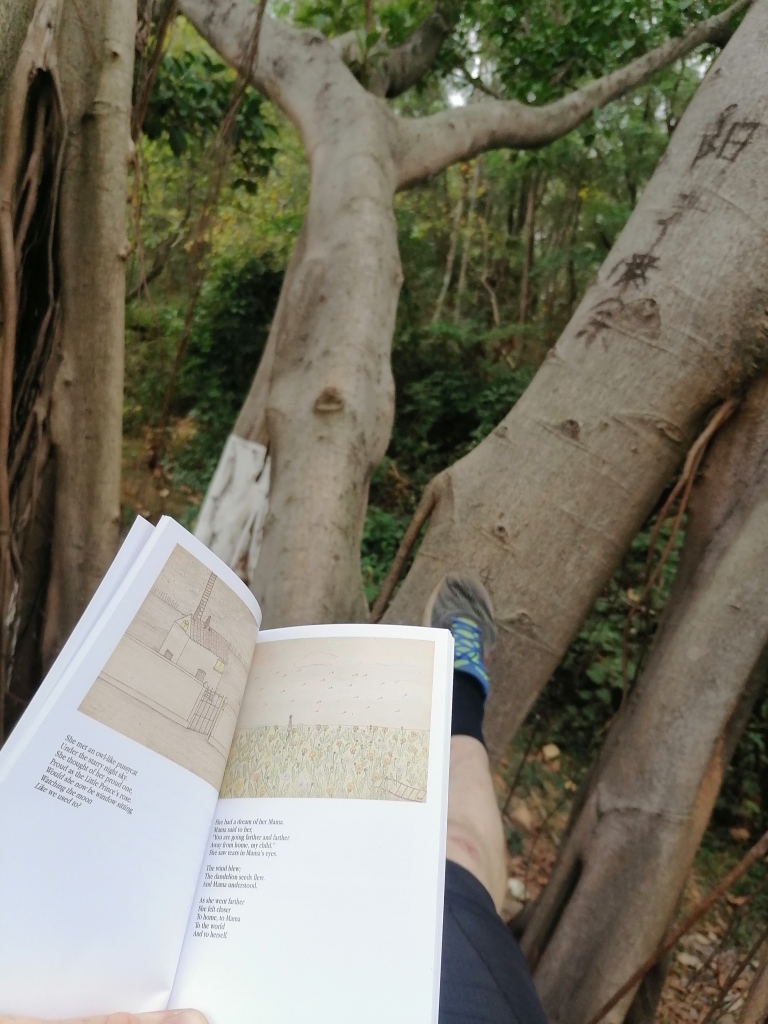
          Some of my favourite places to read: the old Levenshulme Library; the domed Great Hall of the Manchester Central library; hiking towards Everest Base Camp (at various points); a really cool tree in Songshan Lake park (Dongguan, China); my apartment office; on train journeys (especially The Cambrian Coast line in Wales); a rock at the Old Man of Coniston; near an abandoned cabin in Yunnan; and my bed.

          Goodbye! 再见! Zàijiàn! Ta’ra!

          Reading Draft.

          Dear readers,

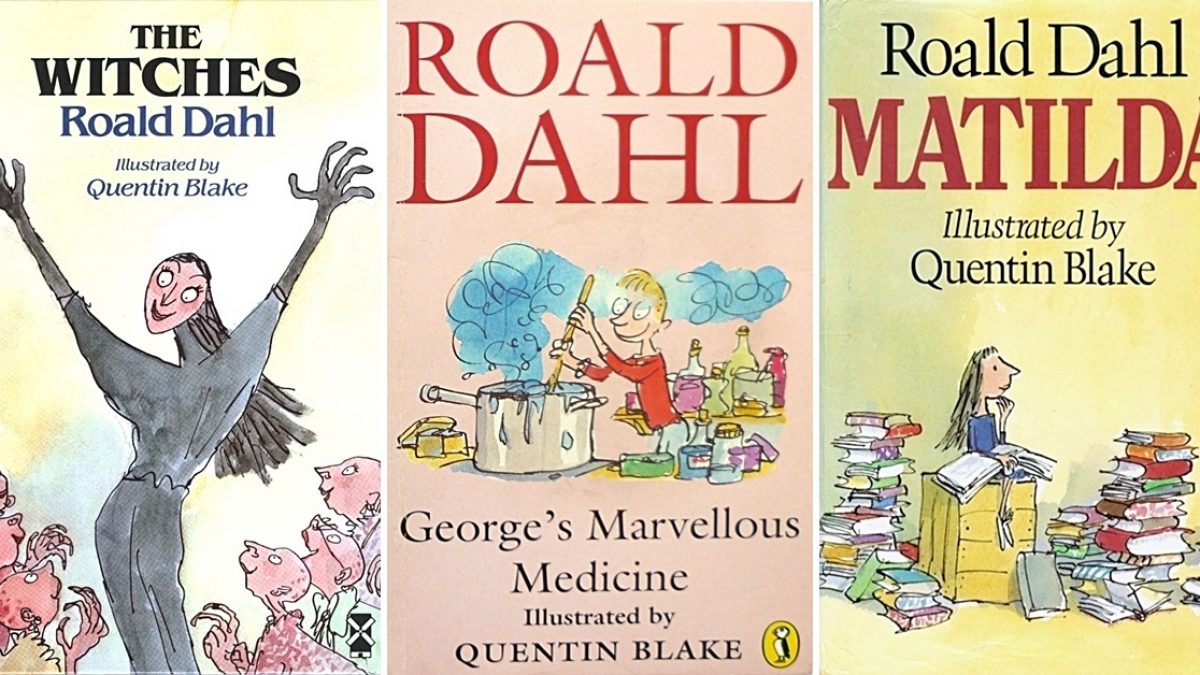
          “I have a passion for teaching kids to become readers, to become comfortable with a book, not daunted. Books shouldn’t be daunting, they should be funny, exciting and wonderful; and learning to be a reader gives a terrific advantage.” – Roald Dahl

          The below is a huge draft that will be edited and chopped probably into less than 150 words, or maybe just a handful of sugar, or likely whichever earns me the most coffee cups. It all started when Miss Hannah in marketing asked me to create something for social media in relation to holiday reading. I immediately wanted to share Roald Dahl. Then, I thought about international mindedness, books with messages and genres that leave your heart tickling. Of course, there are many mainstream examples and some are quite well-known, but that’s the magic of a good book – it cannot stay shut! It fails to remain quietly shut in a dark corner of a room. Books cry out for attention. They’re living breathing monsters that grip you, hug you and leave sloppy kisses on your cheeks. So, that’s the introduction to the opener below.

          “I can’t imagine a man really enjoying a book and reading it only once.” – C.S. Lewis

          Do you remember the first time you opened a book and it truly grabbed your attention? Perhaps that text took you away to a whole new world. Maybe that story whisked you off on a never ending story. Certainly the protagonist had your attention. You were hooked! You find yourself nose-deep in the book, living and feeling the words! Breathing in a rollercoaster ride or feeling the love from the rows and rows of the word beneath. Importantly, age groupings are never always accurate. Students read and write at various levels of ability across age and year groups. It’s important to differentiate to an appropriate reading level. It is worth noting that opening new books may not prove too challenging, however, it can always awaken a part of a new imagination.

          “There are many little ways to enlarge your child’s world. Love of books is the best of all.” – Jacqueline Kennedy Onassis

          Artist’s impression. Just a concept at this stage.

          Whether you’re an avid reader or a book guru, books such as The Animals of Farthing Wood (Colin Dann) can stick with you for life. Reading about characters such as Tintin and adventures such as The Lord of The Rings can shape our expectations of movies or provide us with hours of conversations amongst thinkers and friends. As we reflect in life, we’re often granted opportunities to communicate our recommendations. Here are a few books to get you going.

          Emerging readers: Kindergarten & PYP levels 1-2 / grades 1-2 / UK nursery school or years 1-2 (5-7 years)

          Books at this level should be packed full of sight words, colour and invention. A trio of examples shall follow. The Reverend W. Awdry wrote Thomas the Tank Engine and friends. His 26 stories were aimed at his child Christopher. It must have worked because later on, son followed father, adding a further collection to the series! Eric Carle was a colourful writer, creating a list of books as long as my arms and legs (which are very long indeed). The Very Hungry Caterpillar is an iconic place to start reading his works: “One sunny Sunday, the caterpillar was hatched out of a tiny egg. He was very hungry.” Janet and Allan Ahlberg are no strangers to children’s fiction. This married couple worked together for over two decades. Funny Bones, Mr Biff the Boxer, and Kicking a Ball.

          “Oh, magic hour, when a child first knows she can read printed words!” – Betty Smith

          At these ages students are now working out how to segment words using phonics and recognising an increasing number of sight words. They’re differentiating homonyms whilst learning to love books. Read daily and often with your kids now and they should develop at their fastest! To that mind look up the following books: All Join In (Quentin Blake – one of the greatest and most distinctive illustrators of all time); Peace at Last (Jill Murphy); The Runaway Wok (Ying Chang Compestine); Mr Wolf’s Pancakes (Jan Fearnley); Owl Babies (Martin Waddell & Patrick Benson); Suddenly (Colin McNaughton); Grumpy Frog (Ed Vere); Oi Frog! (Kes Gray & Jim Field); The Squirrels Who Squabbled (Rachel Bright & Jim Field); Flotsam (David Wiesner); Guess How Much I Love You? (Sam McBratney); Slow Loris (Alexis Deacon); I Want My Potty! (Tony Ross); Dear Zoo (Rod Campbell); Meg and Mog (Helen Nichol and Jan Pienkowski) and so many more… (further inspiration can be sourced here).


          PYP 3-5 / grade 3-5 / UK years 3-5 (7-9 years)

          Flat Stanley, penned by Jeff Brown, tells the story of a boy squashed by a bulletin board. His newfound flatness allows him to slip under doors like a piece of mail. He can even fly like a kite! This story series has been around for more than fifty years. The authors six original stories have inspired a catalogue of stories by other authors. There is also the Flat Stanley Project which brings together an awful lot of people around the world. Jackie Chan approves of it.

          “Never trust anyone who has not brought a book with them.” – Lemony Snicket

          Anything from the collections of Dr Seuss, A.A. Milne (Winnie the Pooh), Astrid Lindgren (Pippi Longstocking) and Roald Dahl should capture attention at this age. René Goscinny and Albert Uderzo‘s Asterix the Gaul series can open up new frames as to how a story can appear. I would recommend this following group too. The Nothing to See Here Hotel (Steven Butler); The Bee is not Afraid of Me (Fran Long & Isabel Galleymore); King Kong (Anthony Browne); Dilly the Dinosaur (Tony Bradman); The Diary of a Cat Killer (Anne Fine); Mrs Cockle’s Cat (Philippa Pearce); The Owl Who Was Afraid of the Dark (Jill Tomlinson); Where The Wild Things Are (Maurice Sendak); Mr Majeika (Humphrey Carpenter); How to Train Your Dragon (Cressida Cowell); The Sheep-Pig (Dick King Smith’s book was made into the movie Babe); Charlotte’s Web (E.B. White); The Iron Man (Ted Hughes) Cliffhanger (Jaqueline Wilson); Peter in Peril (Helen Bate); Coming to England (Floella Benjamin) and other great books for PYP3, PYP4 and PYP5.

          Not quite a good artist’s impression. Just another concept at this stage.

          “The more that you read, the more things you will know. The more that you learn, the more places you’ll go.” – Dr. Seuss


          MYP 1/2 / grades 6-7 / UK years 5-6 (9-11 years)

          “The reading of all good books is like conversation with the finest (people) of the past centuries.” – Descartes

          After developing imagination and experiencing adventure, books tend to favour realistic fiction and serious topics for older students. At this age, books open doors into many new worlds and offer insights into many other cultures. Encyclopedia-style texts lure in the curious and student inquirers. Hard-hitting and dark stories sit between classics and familiar friends of the literature world. Look up: The Boy At the Back of The Class (Onjali Rauf); Illegal (Eoin Colfer – think Artemis Fowl); Abomination (Robert Swindells); The Hobbit (J.R.R. Tolkien); What Katy Did (Susan Coolidge); The Chronicles of Narnia (C.S. Lewis); The Borrowers (Mary Norton); Silverfin (Charlie Higson’s young James Bond series) and so on.

          “So please, oh please, we beg, we pray, go throw your TV set away, and in its place, you can install a lovely bookshelf on the wall.” – Roald Dahl

          Yet another idea. It isn’t official.

          MYP 3/4 / grades 8-9 / UK years 7-8 (11-13 years)

          “I find television very educating. Every time somebody turns on the set, I go into the other room and read a book.” – Groucho Marx

          Recently the language and literature class tackled Bridge to Terabithia by China-born Katherine Paterson. This novel became a Disney-adaptation. Few students favoured the movie over the book. Books have often been adapted for the silver screen, the television or the stage. A great checklist to read and then watch can include the following: Madame Doubtfire (Anne Fine); The Outsiders (S.E. Hinton); The Curious Incident of the Dog in the Night-time (Mark Haddon); The Day of the Triffids (John Wyndham); The Hound of the Baskervilles (Arthur Conan Doyle’s Sherlock Holmes); The Plague Dogs (Richard Adams); The Woman in Black (Susan Hill); Watership Down (Richard Adams); and The Giver (Lois Lowry).

          “Reading is essential for those who seek to rise above the ordinary.” – Jim Rohn


          MYP 5/DP / grades 10+ / UK years 9+ (13+ years)

          “A reader lives a thousand lives before he dies . . . The man who never reads lives only one.” – George R.R. Martin

          At this age level, the vocabulary is expanding with new words dropping down like rain. Students are better armed to scaffold and learn these familiar unfamiliar phrases and terms. Using their decoding techniques they can swiftly move through lengthy text. The classic The Time Machine by H.G. Wells, Khaled Hosseini’s The Kite Runner and Maus by Art Spiegelman are fine examples of texts that would sit well on a student’s bookshelf. Students who watch movies such as Dune and Jurassic Park, should at this point, now be lifting the text that inspired these movies. The respected authors Frank Herbert and Michael Crichton have sizable and diverse reading catalogues suitable for those who claim to be knowledgeable. Writers and readers alike should explore diverse texts, such as: This Book is Cruelty Free (Linda Newbery); Atonement (Ian McEwan); Long Walk to Freedom (Nelson Mandela); Touching My Father’s Soul (Jamling Tenzing Norgay). I would also thoroughly recommend Paddy Clarke Ha, Ha, Ha by Roddy Doyle and William Golding’s Lord of The Flies because by now a rounded reader is a communicator of text. Just ask the students of language and literature at TWIS. Further reading suggestions can be found here and there.

          “You can never get a cup of tea large enough or a book long enough to suit me.” – C.S. Lewis

          The last idea? Not at all. However, it is crude and simple.

          Tired of heavy paper books? Do your children favour electronic devices? Try a popular e-reader like Kindle or Kobo. They may be devices that are limited, but that’s the beauty of it. Why worry about bad eyesight or distractions? There are stacks of available titles, some free and many can be read from .PDF documents. Many are portable. The anti-glare screens and lack of blue light make most devices unobtrusive to eyesight. Some even have onboard dictionary features.

          Consult your librarian or find a suitable booklist, then check off or list how many books you have read! Be principled!

          Many of us are traditional and favour paper because of the smells and textures, as well as the tangible aspect. We like to touch things. Make sure the next thing your son or daughter touches is one that reaches back and captures their heart. On top of that, books exercise brains, and to quote Roald Dahl, “If you are going to get anywhere in life you have to read a lot of books.” There you have it. Read it. Read it all. Read everything! I read everything. I read every little thing. That’s not true. I wish I did. I’m still working on it.

          Thank you kindly for your time and reading.

          Mr John

          The End of Time.

          Hello! How do! 你好~

          The notion of time need to go. That’s how author Paulo Coelho answered Laura Sheahan for a Beliefnet.com interview. Everything is eternal and there is no time. He said that “time is another of these things that help us go through life”. Professor Stephen Hawking would have been proud. This was the closest I’d got to understanding anything written by the great professor, and it wasn’t through deep science.

          Instead the vessel of discovering enlightenment came through a multifaceted faith-crossover text, The Alchemist. Since Qiezi (茄子) gifted me this novel, I’ve had to read it twice. Time on a hospital bed granted me a third visit to the pages. Actually, visiting this book again was like embracing an old friend. A welcome return to the familiar. And like all good friends, there’s always something new to encounter together.

          Whoever is the Fatima of my Personal Legend and wherever the pyramids are that I seek, perhaps today in this hospital I’m encountering my own crystal glass shop. The cliche-heavy book is relatable in many senses and my biggest take home is change. We must always adapt and accept that very few things remain constant. If one day you can’t breathe easily, then the next you may improve (or not).

          The simplicity of the book, through protagonist Santiago, tells a sweet take about keeping faith and discovering your destiny, despite the challenges set before you. Now Santiago’s visions set him on a journey that teaches more and gives plenty whilst indulging you and I as a reader in the do more, see more, be more mantra of life. If it was a Coldplay song it’d be about opening up your eyes.

          The short read delves deep into fate and manifestations with a strong sense that the universe is pushing your path in front of you. Rich in symbolism, folklore and spirituality, Paulo Coelho has made me want to explore every other text he’s written since the Brazilian started publishing in 1974 (in his late twenties). His Portuguese books have spread globally and been aided by translation. Popularity has been earned. Now, which students can I put the Chinese and English editions into their hands? I’ve been gifted these words. It’s time to share this world.

          Goodbye. Ta’ra! 再见~

          Alchemy

          I laughed out loud in the shop and smiled so widely. A surprise came by me.

          The other customers must have thought I was crazy. They looked at me so hazy.

          I opened the unexpected packet and my eyes watered. What was inside the packaging I had slaughtered?

          I smiled and smiled some more. Could my face have exploded? I pulled out books, unloaded.

          I giggled and giggled a little dance. I could hardly believe this chance!

          What a wonderfully heartwarming gift of romance. The book to my heart an instant lance.

          The love of a book shared from one soul to another. The gift of wise words and places to discover.

          The next adventure belongs to all who uncover. This book will be read fast and slow from cover to cover.

          We all know that sharing is caring and caring is sharing. This fairing was bearing caring and sharing.

          Angels and mothers give books. The keys to new worlds and a new way. Ialways say every day is World Book Day. But, today, I say: “I will treasure this book forever and a day.”

          Now, time to turn the first page.

          ERIC CARLE June 25th 1929 – May 23rd 2021

          224 words shaped so many bedtime reading sessions. Bedrooms around the world were greeted with a heart-warming tale of growth, albeit through humour and a spot of seemingly obesity. The story has radiated like the light from the moon, from pages in over 60 languages to beaming eyes looking at the colourful intricate nature of the tale.

          “That’s something I learned in art school. I studied graphic design in Germany, and my professor emphasized the responsibility that designers and illustrators have towards the people they create things for.” – Eric Carle

          Eric Carle didn’t just write that one book of course. His designs, illustrations and words have appeared in numerous texts. Having dropped his first drawings in 1965, Aesop’s Fables for Modern Readers (Peter Pauper Press), the new-to-the-scene and relatively young illustrator was spotted by educator and author Bill Martin Jr. One red lobster in an advertisement led to a lifetime of colour and creation.

          “We have eyes, and we’re looking at stuff all the time, all day long. And I just think that whatever our eyes touch should be beautiful, tasteful, appealing, and important.” – Eric Carle

          Brown Bear, Brown Bear, What Do You See? was an award-winning book collaboration with the late author Bill Martin Jr. Thereafter cardboard editions, die-cut holes, inflatables, plastic pockets and multiple versions of artwork with words began to grow and filter from Eric Carle to the world. Countless children have lived and learned through rhyming picture books and used string in one of his many creations.

          “One day I think it’s the greatest idea ever that I’m working on. The next day I think it’s the worst that I’ve ever worked on – and I swing between that a lot. Some days I’m very happy with what I’m doing, and the next day I am desperate – it’s not working out!” – Eric Carle

          The story of the story-teller is ever more remarkable. This was a man, who his wife Barbara Morrison, strongly believed had held a form of post traumatic stress disorder. He’d dug trenches on the dreaded Siegfried Line of a World War II battlefield. He’d seen death at first hand, aged only around 15 years of age. But then, darkness turned to light over the years: “One Sunday morning the warm sun came up and – pop! – out of the egg came a tiny and very hungry caterpillar.” Okay, it wouldn’t have been that simple, but Eric Carle refused to bow down and give in. Years of toil brought his mind to a place where writing was permitted. An audience was earned. From Germany in World War II, he returned to his country of birth, the U.S.A. and found his way from Syracuse to the New York Times as a graphic artist.

          “Let’s put it this way: if you are a novelist, I think you start out with a 20 word idea, and you work at it and you wind up with a 200,000 word novel. We, picture-book people, or at least I, start out with 200,000 words and I reduce it to 20.” – Eric Carle

          Via stints back in Germany, for the U.S. Army (during the Korean War) he went on to be an art director at an advertising agency. His collage techniques, rich in hand-painted paper, featured layers and slices of vivid imagination set out as tiny pieces of artwork. Nature and wonder have set tones throughout his simple stories. These stories have been warm and inviting, and give hope to children, especially those new to schooling and education.

          Papa, please get the moon for me is a tale of great importance in my opinion. It shows us that imagination is wonderful, even if it is breaking something seen as impossible. Whoever told me that Father Christmas, the Tooth Fairy and the Easter Bunny weren’t real, or anybody for that matter, that breaks the dreams of a child, deserves a good long look at themselves. Reality and imagination can sit side by side, otherwise Neil Armstrong, or Elon Musk or Celine Dion would not be around. Ability and knowledge need the company of spark and dream – and that’s where imagination grows.

          “They are deceptively simple. I admit that. But for me, all my life I try to simplify things. As a child in school, things were very hard for me to understand often, and I developed a knack, I think. I developed a process to simplify things so I would understand them.” – Eric Carle

          As I sit typing words and reading about Eric Carle’s history, I recall flicking through glossy covers of his books, and the joy as my face beamed when I discovered a translated copy in Hengli, Dongguan. That beautiful familiar white cover with a caterpillar and a red apple missing a mouthful, all slightly imbalanced, as if to say, and to appeal, that things aren’t always neat and tidy. One day when COVID-19 passes and the world is a little more tidy, I dream to fly to Amherst, Massachusetts to see the Eric Carle Museum of Picture Book Art. That would be as good as finding another Uroballus carlei on a trip to Hong Kong. The Caterpillar Jumping Spider’s Latin name is testament to the reach and pull of a world class picture book writer.

          “My father used to take me for walks in the woods. He would peel back the bark of a tree and show me the creatures who lived there. I have very fond memories of these special times with my father and in a way I honor him with my books and my interest in animals and insects.” – Eric Carle

          ERIC CARLE June 25th 1929 – May 23rd 2021

          Talk Proper English.

          Useful things/tips to learn:

          #1 Audio books. See below. Books read by people, for people. Surprisingly good ways to read on the go. Well Remembered Days, written by Arthur Matthews, but read by Frank Kelly (Father Jack from Father Ted) is a great exposure to Irish (Ireland, where they often speak English) culture and accents.

          well

          #2 Books. These are the best things ever. They’re diverse and they’re almost everywhere. Read one, pass it on. Read another, share it. Read a great one, keep it on your shelf to read again. Recommended authors include Michael Crichton (Jurassic Park/Timeline), Roald Dahl (The BFG/Matilda), JK Rowling (Harry Potter series), Janet and Allan Ahlberg (Funnybones), Eric Carle (The Very Hungry Caterpillar). Comic books, graphic novels, audiobooks, and even short stories in newspaper serials can all add up to the book experience. What are you reading next? Feel free to ask me for suggestions.

          CoverRoaldDahlTop10-1200x675

          “I have a passion for teaching kids to become readers, to become comfortable with a book, not daunted. Books shouldn’t be daunting, they should be funny, exciting and wonderful; and learning to be a reader gives a terrific advantage.” – Roald Dahl, writer, former pilot of a Hurricane fighter, and conjuror of dreams.

          #3 Music. See Blog post about music, mostly.  Or BBC 6 Music.

          (#1 added 29/8/2020; #2 added 29/8/2020; #3 kind of added 1/10/2020)

          The Cafe Book

          The Cafe Book: Engaging All Students in Daily Literacy Assessment and Instruction, by self titled sisters Gail Boushey and Joan Moser, attracted me in library. Or because of the literacy element. Nor so that of instruction. The word cafe stood out. Its abstraction and my liking of coffee met perfectly.

          Hoisting the 204 paved softback down, I noticed the bump in the cover. A CD-ROM. I haven’t used a DVD or CD for so long. The Tungwah Wenze International School staff-issued iMac doesn’t come with a drive. I don’t have one on my personal laptop. The TVs at school, my TV at home and all the smart board systems at school don’t have a place for discs. Printed in 2009, I started to wonder if the contents would have dated as fast as the technology they employed. The longevity of books however remains stalwart.

          Seven sturdy chapters opened before me. I skim read the acknowledgements, unable to connect to the names on the page, but fully aware such matters as teaching and writing needs a cast of many. Last Friday, Grade 4 had a COLA (Celebration of Learning Achievement). Mr Jaime, Mr Richard and Miss Aria with support from Miss Keats and Miss Belinda set our class on a good course.

          Chapter one asks why and what are assessment systems. It refers heavily back to the authors and their previous book, Daily Five. The general idea being: students read to self, read to someone else, write something, use word work and then listen to reading. In an ideal and disciplined world, it makes a big difference. The appendix of the book I had in my hand though made more sense. I could see how CAFE system could be of use to the busiest of teachers. It is simple.

          Notebooks are often overlooked in these times of electronic record keeping. These can be filled by simple strategy forms. Students set their goals and post to a classroom chart. Small group work is encouraged, much like what I’m trying, time and time again. Whole group instructions and flip charts caught my attention. I’ve neglected flip chart paper for far too long.

          By the time I’d reached chapter two, the key details that came across were that teachers want to do more; the importance of scaffolding; and teachers take offence to be told to follow a set template. They want to find their own ways to adjust the scaffolding needs of individuals. Can’t say that I disagree.

          The evolution of a calendar from post it notes and scribbles on paper has certainly met all the best teachers. Our methods evolve and practices adapt. Reading literacy takes time for monitoring. Tabs, pages and menus of reading form. A bulletin board showing comprehension, fluency, accuracy and expanded vocabulary certainly feels like it should be at home in every classroom. Just like a daily ongoing story book. A chapter and day helps work, rest and play.

          To get students to know their target, classes often need exemplars. These set a clear visual goal for their work ahead. The CAFE book covers familiar grounds of observation, encouragement, tracking and how to push interest. It develops wall display ideas and recommends strategies to develop readers. There are bucket loads of suggested reading books, group activities and then reference forms. Before the evening expired, I had read the book cover to cover. Ideas will have sank in. But, first, just one chocolate Hobnob biscuit

          The Little Picture Book: Lost & Found

          Eck and Timu, otherwise known as Echo and the late Tim Mileson, can be found in a book just shy of sixty glossy pages. The compact pocketbook is presented through poetry and story alike. It is conventional and yet unconventional. Interpretation is a skill you can choose to use, or just float on the muse.

          Sandwiched between Tim’s personal writing, Eck explores emotions such as loss, belonging and echoes nature throughout. Cute eye-catching illustrations using a variety of sketching styles follow an imaginative route to deliver a peaceful and loving tribute in the form of a poetic manuscript.

          There are lines throughout that transport the reader, catch them, hold them and bring them downward. There are uplifting words, moments of hope and flashes of light. It’s a sweet little book deserving of a wider audience. The book comes in both Chinese and English editions. My grade four students at Tungwah Wenze International School greeted that with joy. Next up they’ll interview the author…

          In China? Further afield? Order directly from Eck by scanning the above on WeChat.

          The Little Picture Book: Lost and Found arrived.

          They could be seeds of new growth;

          or water to the roots of the tree.

          They could be dusted on shelves;

          or taken away by borrowing elves.

          They could be friends in a pocket;

          or maybe passed on from brother, to sister to brother or cousin or read by many a dozen.

          They may become forgotten in time;

          or triggered memories by one rhyme.

          There are 14 of them, plus two and two more. Two for over there too. For Kitty. For Harry. For Jim and Kim. For Jimmy and Marline. For Alex, Sofia, Alice and Jerry. For Angela also. Not forgetting Amir and Owen. And last but not least Lucy.

          One for me. One for the library.

          Either way, I wish their echoes go on. And on. And on. And on and on. Ripples in a pool.

          The Little Picture Book: Lost and Found arrived. Thank you Echo. Tomorrow I’ll sit in a tree by Songshan Lake or a cafe (if it rains) and soak up all the words, with illustrations. I can smell the spirit of Tim Mileson and the lively love of Echo. Mr Bee is happy.

          PEACE AND LOVE 心

          To Dad.

          How do,

          I wanted to write this on Dad’s birthday. I procrastinated. A habit I possibly learnt from Dad. Let’s talk about my Dad. He’s half of the reason why I exist. Now, where to begin? Last week, I had a video call with Dad on his birthday. He was sat on his lounge sofa and the frustrations of being unable to get out were etched on his face. Dad’s never been a mountain climber or a road cyclist, but he’s always been someone who enjoys the outdoors.

          Dad, as father to Shaun, Tina, Asa and I, hasn’t always been perfect. Who amongst us, can say they are free from mistakes or poor choices? This is life, and the consequences of one action or inaction ripple like a stone crashing into a millpond. Things between Dad and I haven’t always been gloss paint or even matt, or emulsion. There have been paint spillages. I still love my Dad and I feel his love too. I’m lucky. I can’t imagine life without a Dad, and I truly don’t want to feel the loss of my Dad (or Mum): that would hurt too greatly.

          Dad mentioned, in our last call, he’d been ‘cutting back Himalayan barbed-wire‘ or in layman’s terms, chopping the plants of blackberries. It was good to hear that the garden was once again embracing Dad. I grew up at Joyce Street allotments listening to City’s away games, or playing with our dog Pup on the nearby Broadhurst Park. Dad always seemed to have his allotment patch (and at times, two allotments).

          Before my teenage days, I was acutely aware that Dad bodged things together. A loose panel fastened awkwardly here, and a piece of perspex draped there. Never quite fitting. Always in a place that served purpose. Not pristine, always functional. Dad would show me blackbirds nesting in his grey monolithic-looking shed. He’d feed me coriander and thyme, unwashed from a patch of ground. I would eat delicious tomatoes, rich in flavour, second only to my Granddad’s – and truth be told, not by much! I recall eating cucumbers, strawberries and planting potatoes, dancing with goats, finding old toys in impromptu concrete paths and losing races to my older brother Asa. The allotments were a good place to be. With Dad.

          During the summers, sometimes he’d help at the Joyce Street Farm and I’d get to feed ponies, gain the trust of feral cats, collect chicken eggs, much out the horses and play with ducks. The goats were always my favourite. They’d be loaned out to allotment holders to go mow their plots or let out to feed on an adjacent banking of grass. Chickens and poultry would scatter up and down on a free range grass plain. Sometimes I’d stay there and enjoy the peace. Other times Pup and I would go bonkers and break the peace.

          Dad with Granddad would take us to Tottington for cuttings and chrysanthemums. We’d go to Chester for seeds. It wasn’t unusual to serve Granddad leaning over walls taking a few freelance cuttings of his own, from other people’s gardens. Dad, Asa and I would walk ahead seemingly oblivious but totally aware. Other days and evenings we’d meet his friends, the legendary John ‘The Ghost’, Ernie at the farm, locals at the Working Man’s Club, etc.

          Whether it was spam butties, salad from the allotment, a pie at Newton Heath market or reduced to clear food, I can’t say I ever went hungry. Boxes of broken biscuits at Manchester Victoria station or vanilla custard slices were probably where I got my sweet tooth. What I’d give to sit down with a shandy at Newton Heath Working Man’s Club, or Two Dogs Alcoholic Lemonade at the defunct Castle and Falcon, and talk with Dad.

          From an early age, caravan holidays have been a thing. Actually, since Nana and Granddad passed away, Dad has maintained a. succession of caravans in Morecambe. They’ve been a holiday home for family, neighbours and friends of the family. Ritz Carlton they’ve never been, but a stone’s throw from Morecambe’s famous Midland Hotel, they’ve always been cosy and convenient. Walking with dogs, Snowy, Suzie, Pup, Nomaz, Jerry, Nobby, Blue, and others, even cats Sky and Lucy, around the caravan park resort or along the beaches to Heysham have given a great sense of relaxation to many an Acton.

          There’s no place like home. I miss Dad, equally as much as I miss my Mum and other tribe members. I live and work here in sunny Dongguan, and have no plans to leave here. I enjoy the challenges of my job far too much. I respect the freedom it affords me. I hope in this troubled year I can be home for Christmas. The COVID-19 pandenic has probably stopped a summer jaunt to Manchester. And even if I could go back, could I visit all the family at all their houses without myself being the risk of spreading this godforsaken virus?

          Dad loves trains, and as a former painter and decorator of ‘anything but the trains’ he’d steam through stories about the places he’d been, witnessing snow on Winter Hill (in summer) and what painters do when watching paint dry. It took me a while to understand that the word crumpet wasn’t always food. These days the meaning would generate the #MeToo on Twitter. We’d visit steam trains or famous stations, as long as there was no cost. We’d ride in luggage cars, behind diesel trains or then speedy Intercity 125. Being sat on huge sacks of seaweed heading for Manchester’s gardens seemed normal to me. It was a pungent form of social distancing, far ahead of its time.

          My Aunty Christine tells me Dad was a talented artist, and studied so. I’ve seen some of his works but it seems time has hidden them in Dad’s clutter. Uncle George, the youngest of Dad’s brothers and sisters, told many stories of them at Wembley, away games and Maine Road following the mighty Manchester City and occasional scraps with hooligan types. I could always see the family love in Aunty Irene’s eyes for Dad, but an awkwardness towards Dad’s habits. Our family, like many, has its quirks and oddities. I wouldn’t change it for the world.

          One birthday, I pretended to sleep. I think I was disappointed that Dad hadn’t picked me up that weekend. Dad was supposed to pick me up every Saturday. My parents had divorced at, for me, an early age. I wasn’t in a broken home, thankfully, but the new norm for us all was different, yet not unheard of in Manchester. So, one night Dad opened my bedroom door and I was sleeping. But, I wasn’t. The gift was wonderful. I regret not sitting or waking up. I regret not hugging my Dad.

          Gifts were always welcome. Books from the barrow at Manchestet Victoria Station, from Mum and Dad were always a treasure. Animal books, and adventures became habit. Over the years Mum would collect tokens and send off for hugely discounted books. I still have some here in China now. They’re both sentimental and functional. Dad would sometimes find stray Lego bricks and these little tokens (of an expensive luxury toy) fitted well. The two square road pieces with a helipad and three lanes were rarely out of use. I know that the once-paraffin barrel of Lego passed from me to Astrid and Paul, and then over to Shaun and Christina. So, a collection started by Mum and Dad has served well.

          After completing the Morecambe Bay CrossBay run, I spotted Dad near the finish line and he took some photos of me looking shattered and void of energy. Cheers Dad! I was so happy to see Dad, that day, at Hest Bank. I think Christina and Shaun with there with the West Highland terrier Jerry. Either way after a mostly solo half-marathon distance through Morecambe Bay, it was a heartwarming sight. Also, it was at one of Dad’s favourite places, a sandy bank on the expanses of Morecambe Bay, complete with passing trains in close proximity.

          There’s much more I can write about Dad. Perhaps I will one day.

          Thank you kindly for your time.

          TESMC: Bell, Bishop…*

          *…Walsh, Gündoğan, Sheron, Creaney, Wright-Phillips, Benarbia, Fowler, Barton, Geovanni, Pizarro, Nasri… and all those other wonderful Manchester City numbers 8s.

          These are the voyages of the starship TESMC. Its nine-module mission: to explore strange new words. To seek out almost new teaching methods and relatively new vocabulary. The bold crew of the giant starship explores the excitement of strange uncharted dictogloss things, and exotic uninhabited refined writing. Imagine it – thousands of noun groups at our fingertips… To boldly go where few teachers have gone before!

          “Navigation was always a difficult art,
             Though with only one ship and one bell:
          And he feared he must really decline, for his part,
             Undertaking another as well.” – The Hunting Of The Snark, a poem by Lewis Carroll

          During TESMC classes we have focused on language in learning across the curriculum. Here’s a recap (to build on the 7th instalment), at the Using English for Academic Purposes website, of nominal groups, structures and examples with exercises. There’s two links here and there for dictogloss activities. Look at this website called The Up-Goer Five Text Editor. It expects you to type a complex idea only using words from a list of 1000 common use words. That’s that, done!

          [Now, an important announcement] Lemma: a word family, e.g. running, run, ran; blue, bluer, bluest, blueish, blues, etc. [Announcement ends]

          Another vocabulary test website was pointed my way. Cheers ears! You know who you are. VocabularySize.com is a tool to create customized and test vocabulary tests for students. It was created by the University of Wellington, in New Zealand. Their School of Linguistics and Applied Language Studies worked with School of Engineering and Computer Science. Language acquisition takes time, patience and exposure. Those students in an international school such as Tungwah Wenzel International School, surrounded by numerous international teachers, are most likely to increase their vocabulary than students in Inner Mongolia without a foreign teacher or access to YouTube. To them English will be as Scottish as a suntan.

          Judgement value calls shouldn’t be drawn from memory. Responsive attitudes towards data collection over time carries more merit and significance. By showing a daily goal, we set a part of a bigger picture. The bigger picture should come from steps and aims. Those goals need organising. Rubrics are familiar territory that often get overlooked. I know, from my experience, that I have often favoured an in-head calculation over pencil, pen or paper. That’s not fair. Formative and summative assessments need clarity, not just for the teacher or the parent. The student should have the goalposts set early on. They must know what the task entails and how to achieve maximum marks.

          “When the cook tastes the soup, that’s formative; when the guests taste the soup, that’s summative.” – Robert E. Stake, Professor Emeritus of Education, University of Illinois

          Having a summative assessment that resembles activities earlier on is key too. If you use formative pieces that have multiple choice questions and then for the finale you switch to an all-singing, all-dancing 2000-word essay, then that’s totally not playing cricket with your students. English as a Second Language (ESL) students need modelled methods that allow them to switch between multiple forms. To do it without preparation is unfair. Failure or success depends on students and their experience. To think outside of the box without the necessary scaffolding is not easy. One activity that I found useful was to assign half the class the activity of being the teacher. The other half had to follow the instructions given by the teacher. Afterwards peer review of the followers revealed that some students gave clear instructions. Others did not. Some students improvised where instruction was lacking. Many students competed to give the better and clearer instructions. Positive peer pressure gives chance for evaluation and reflection. Using a checklist or rubric over the top of that student’s activity gives a more meaningful insight to the activity and assessment. The teacher can play the role of referee or judge. The peers become the jury. Hopefully no executioner needs assigning. That being said we’ve all had that one student who never does homework… [It’s gallows humour, relax]

          “What we learn with pleasure we never forget.”  – Alfred Mercier

          Student age gives us an idea of where to set our expectations. Within an age group, each student’s experience and exposure to English needs to be factored in. Then there’s nationality, multilingualism, academic performance in their native language(s), and so on… or what they ate for breakfast. Classrooms are living breathing jelly-like places that seldom remain constant. One gargantuan factor to take into consideration is that of student behaviour. Special needs and cares need to be taken into account. Not every student has the level of focus that we desire. To give confidence, informal formative assessments and their analysis will benefit the teacher and student. In the long run, reforming practices to unlock their true productive potential using a variety of interactive assessments will become a most valuable teaching tool.

          “I never teach my pupils. I can only attempt to provide the conditions in which they can learn.” – Albert Einstein

          Formative assessments can guide a teacher to how a student is or is not progressing. It can allow the teacher to amend their methods or tailor an individual student’s needs much more fluidly. John Polias, of Lexis Education, describes it as:

          • assessment of learning;
          • assessment for learning;
          • assessment as learning.

          I read that in the style of Pep Guardiola as an intense football manager. He, like many great football managers, uses coaching of football in the game, after game analysis and during the game. The game is the test. The game is also a time to test new formations and tactics. The game is something to reflect on and to understand new learnings. This can also be said within our classroom. This should also be applied to our students. Assessment as learning is a real chance give appropriate and frequent feedback – in order to modify learning activities. It’s proactive and not reactive. Assessment of learning, the summative part, is reactive. It’s done, it’s dusted. Game over, almost. Assessment for learning also allows us scope to work away from the traditional unit test and external testing of old. Here in assessment for learning and assessment as learning we allow magic to happen. Students can express themselves. There’s self-assessment, self-monitoring and peer-assessment time. Students can create or make their own checklists or rubrics. With that, they can be employed for the purpose of learning. They allow students incentive, a drive, a spur on to get to a much more useful end. Therefore, Making Assessment Supportive focuses on how we can devote adequate time to making a type of assessment that makes sense for our students – and being able to use it at varied points of instruction. At points along the teaching cycle allows us to make assessment more fruitful. Lorna Earl’s Assessment as Learning: Using Classroom Assessment to Maximise Student Learning further strengthens this material showing a host of judgements about placement, promotion, credentials, etc to fit with other students. It shows information for teacher instructional decisions to meet external standards and expectations. It shows self-monitoring, self-correction and adjustment to reach personal and external goals.

          “You are the bows from which your children as living arrows are sent forth.” – Kahlil Gibran

          So, with all that, I ask you, teacher or not, what does the assessment pyramid look like? Identify how your school, current or old, had their pyramid. Where would you place the below? Top, middle or bottom?

          • assessment of learning;
          • assessment for learning;
          • assessment as learning.

          Let’s each analyse samples of assessment tasks being used in our schools. Are they devised to be assessment of, for, or as learning? How can we incorporate a more overlapped approaches to assessments within teaching? What’s the understanding from students within our classes about the kinds of assessments that we do?

          “The beautiful thing about learning is that no one can take it away from you.” – B.B. King, musician

          Until next time… goodbye for now.