Manchester rain made a welcome return on Saturday morning. The sky cried for my departure. The greyness of overhead lines, concrete, and new high rise towers did not clash with the constant matt grey of the leaking vast sky. Blue skies and sunshine had greeted Manchester for months on end. The summer school holidays had now arrived.
Getting to Manchester International Airport’s Terminal 2 early required a 05:25am wake up, an early bus, and the 07:18 train. Kitted with a 20kg rucksack and a lighter 8kg daysack, I ran through my head the things that I may or may have not forgotten. Despite attentive planning and packing, a snag of doubt sat firmly on my shoulder.
Juneyao Airlines, complete with cluttered and near unworkable website for check-in, would be my carrier. Other airlines are available. However, on arrival, my world fell apart. Blood emptied my face my legs became jelly, and the shock of being told my visa had expired hit me like a freight train. It was not a good day.
On the train back to Manchester, I shook in rage qnd worry. I trembled. I vomited. I went to the toilet in other ways. I was empty. Panic battled with sensibility. I struggled home in a zombie-like trance. I entered the house, dropped my rucksack and backpack, and crumpled up into a bawling sack of self-hate, anger, and shame.
On telling the family, I set about rebooting myself and explored resurrection for summer plans. I immediately logged onto Chinese Visa Application Service Centre Manchester’s website and lodged my visa application. A trip to the library was necessary to gain scanned electronic copies of every passport page. And everything seemed to upload.
Sunday:
A day in the garden digging up vineweed and Himalayan-barbed-wire-bramble, with plenty of worrying and questioning of myself. A few video calls and some Bosch Legacy on the telebox. A day of limbo sandwiched by buying some Lego Duplo at a charity shop in Failsworth and an evening of cheese, sauerkraut, and bacon Polish dumplings. That all followed noticing my visa application as not being present. However, it would not allow me to apply due to a previous application. I wondered if it would go well.
Monday:
08:00 – Visa application appear online at Manchester Chinese Visa Centre website.
10:00 – query visa at Manchester Chinese Visa Centre. Visa application received.
11:46 – email request for further information.
12:00 – further information sent.
Pottering around town. Waiting. Limbo.
15:08 – application approved. Email to print with code and hand passport in. I legged it from the book and coffee shop.
15:24 – printed documents at Manchester Central library.
15:27 – arrive to Manchester China Visa Centre. Attempt to hand off passport and documents. Man at desk, “I’m sorry we don’t accept applications after 15:00.” I said, “It says 10:00 – 16:00.” He replies, “That’s wrong. We open again for application drop offs at 09:00 tomorrow.” Thanked man at desk.
I’ll be back. The quest goes on. 🐝
Wednesday:
Using the mandatory bonus free day, I headed to Warrington and met Little Big Sis’ Astrid for noodles and a movie. A good switch off from recent tension.
Tuesday:
08:35 – arrival at Chinese Visa Application Service Centre, Manchester. 5th in the queue.
09:00 – Service commences.
Thursday:
08:40 collection queue, position 2.
09:05 visa in hand, all grand.
Go to bed early (16:00/17:00), wake around 22:00/23:00.
Friday’s plan:
Depart for Manchester International Airport around midnight.
03:00 – Check in.
06:00 board flight to Brussels, Belgium. Sing a Vincent Kompany song and wobble my backside like Jeremy Doku skipping past defenders. Look out for former City player Émile Mpenza.
11:40 – board flight to China, in Brussels.
Let’s be fair, I’m not so sure U.K. leisure or family visit visas are as fast.
“Of the 120,000 Jews who lived in the Netherlands before the war, only 5,000 of us returned from either the camps or hiding.” – Hannah Pick-Goslar
Through reading My Friend Anne Frank, by Anne Frank’s reallife friend, Hannah Pick-Goslar, the text offered a unique perspective on Anne Frank’s legacy through the lens of their friendship. A slickly rich delivery in the form of memoir, loaded with heartfelt reflections that compliment Anne’s diary.
“I often feel Anne’s presence with me because I go around speaking about her very often.” – Hannah Pick-Goslar
Pick-Goslar uses her narrative as inspiration, layered in poignant heartbreak. The power of memory certainly ensures and in a world saturated by antisemitism and division, a fuller understanding of lost lives like Anne Frank, and the impact of absence wouldn’t go amiss. Touching anecdotes impart a close bond, evocative of a time of innocence swept up by severe tragedy. The deeper understanding of humanity lost in historical events crawls from the pages.
“I try to be compassionate, but I’m not sure it’s the result of war.” – Hannah Pick-Goslar
Several of my reading peers experienced the tales carried through Hannah Pick-Goslar’s My Friend Anne Frank. Upon feeding back to our book group, tears formed, and voices trembled. A more engaging and enlightened view of Anne Frank‘s legacy beyond her diary surely could not be found. Resilience and impact through shared memories that offer expansion to Anne Frank’s Het Achterhuis (republished later as The Diary of Anne Frank).
The author, Hannah Pick-Goslar, was one of several Verlorener Zug (“lost train”) passengers liberated by the Red Army. A broken railway bridge impeded the progress of the train to Theresienstadt ghetto for extermination. The luck led to survival. That survival allowed a story to live on.
“I approached the fence, but I could see through new gaps in the straw that the tents on the other side had been cleared out. Anne, Margot, Mrs van Pels, everyone was gone. Vanished. It was if they were never there.” – Hannah Pick-Goslar 12/11/1928 – 28/10/2022
Picking up a book, that usually I would never have picked up, one short story caught my eye. Then another. And another. Suddenly, I’d hit the halfway point of the annotated bilingual edition of the SelectedModernChinese Essays 1.
The book, whilst a little gentle, rendered into英语 (English) by Zhang Peiji features a bland cover with a bare tree. The flimsy pages and cover almost feel disposable. Shanghai Foreign Language Education Press didn’t even supply a blurb on the 38RMB book. Never judge a book by its cover? Well, this book has all the appeal of a Mancunian skyline during the peak industrial revolution during a grey wintery rain shower.
“His name has spread far and wide and become more and more celebrated with the passing of time. Innumerable people have come to follow his example so that everybody has become a Mr. Cha Buduo.” – Mr About-the-Same – Hu Shih.
Despite the outward appearance and an inside cover telling you about the translator, little is given away as to the themes of the essays nor the 377 pages. So, reading on is the only way to delve deeper. First published in 2007, this edition arrived a decade later.
Through writing by the likes of Li Dazhao, Lu Xun, Xu Dishan, Hu Shih, Xia Mianzum, Ye Shengtao, Zhu Ziqing, Ba Jin and 24 other authors, I found myself transported from modern life to various times within Chinese history and at varied points of culture. Mosquitoes featured every now and then. Phrases and parodies of tales that I had heard clung to pages like my sweaty underwear in a Guangdong summer.
“A fighter is perennially young. He is never irresolute or inactive. He plunges deep into teeming crowds in search of such vermin as flies and venomous mosquitoes.” – Be a Fighter, Ba Jin*
Plenty of themes feature throughout, including hope, faith, and the need for family and friends. The book itself is deep in meaning and easily interpreted in many different ways. Rereading a few pages, I quickly realised how the Bible, the gospels, and other religious texts could be manipulated under one light or another. Books are powerful things. We should read more to understand more and always adapt or change to whatever life needs, rather than desires. Equally, we should read for pleasure in a diverse way.
I enjoyed something different.
*See also: Carpenter Lao Chen and Dreams but the same author, Ba Jin.
Seeking out and spelling out hatred of those with different sexuality? Check.
Refugee hosting state turning to refugee producing state? Work in progress, perhaps.
“An all but universally accepted definition of evil, a fixed point on our moral compass” – Professor Alec Ryrie (historian) on Nazism
These are difficult times. The landscape has gone to the dogs. Godwin’s Law is rife. And, why not? It feels like comparison of current troubles echo that of the 1930s Weimar Republic. Thankfully, by a minority, and not by a government (Israel, aside). But, can you speak your thoughts out loud? Yes, with the right audience. Heaven forbid you should write it down. Worse still, make a video and distribute it via social media. The Left are to blame, of course. Or the reigning government, even in their infancy. Modern-day Britain is a shitshow.
Everything is seemingly dumbing down. U.S. Presidents used to talk and have words that sounded both educated and reassuring, even as their fingers hovered over nuclear buttons. Nowadays, failed (thankfully) assassination attempts appear to inspire confidence and show defiance in a likely pathway to ruling. As Trump, Putin and other loony leaders play with our future, the world is truly heating up. Modern day Britain can’t even safeguard a Greggs bakery from looters. And the saddest part, the kids who lost their lives in Liverpool.
The victims: the kids should be remembered, and their stupendously-short, meaningful yet unfulfilled lives celebrated. It is criminal that they did not live longer. Evil swept them away. Their futures eradicated. More should be done to make their young friends and families safe. An open platform for debate could drive changes and give hope to all. That’d be a good memory rather than riots in Rotherham, London, and Manchester. Is this what life has become? Mourning under madness?
Let the authorities get on with resourcing the criminal actions of evil in hand and stop this cancerous social media disinformation that is treacherous to all who live on the green and pleasant lands of a supposed Great Britain. Or, burn it all down? Otherwise, history will repeat itself. We can’t go on this way.
“The wind is a gentle breeze Ooh, él me habló de ti, aah The bells are ringing…” – Freddie Mercury & Montserrat Caballé’s songBarcelona.
Ever since the Barcelona 1992 Olympic Games, Barcelona has gripped my soul with the words and haunting operatic sounds of Montserrat Caballé. The autumn before saw the death of its legendary singer and writer Freddie Mercury, which accentuated the voices of a stunning musical piece. The city is also famous for a football team and is synonymous with art and gastronomy. Whether it’s Gaudi or Messi, chances are most people on Earth have a Barcelona connection.
“In Barcelona, I learnt things I thought I knew when I actually knew nothing at all.” – Roberto Bolaño, writer
A snapshot of Barcelona.
Landed late at night, even the grimness of a late night subway and train journey didn’t gloss over the vibe of the city. Walking down from Plaça de Catalunya to the Sun and Moon hostel, the splendour and the darkness could easily be seen. Hand in hand. All the drugs in the world on offer, ladies of the night and classical theatre. La Rambla cuts a direct tree-lined route to the sea, Christopher Columbus on a column and Barcelona’s equivalent of the Liver Building. Before reaching there, I darted left to the fringe of the Gothic quarter. The mixture of Irish bars, tapas dealerships, and dated facades were mostly quiet. It was 1am. Checked in. Bed.
“The great book, always open and which we should make an effort to read, is that of Nature.” – Antonio Gaudi
Waking up, I wandered out. Turning left from Carrer de Ferran, I headed to the harbour and seaside. The smell of freshly warmed pastries, coffee, and dogshit came in wafts. Having got to the beach, the crap of the streets dissipated to a fresher sea air. A long wander to see El Petó de la Mort (“The Kiss of Death“) at Poblenou Cemetery also allowed sights such as a water tower, a converted gas-holder, and various beaches. Following this, the construction site of the new Nou Camp and various spires followed. The unfinished design of Basílica i Temple Expiatori de la Sagrada Família stands out across the city. It was rude not to visit Catalan architect Antoni Gaudí’s masterpiece. He died in 1926. It is due for completion in 2034. An incredible long-term commitment by the Catholic Church.
“There is no nightlife in Spain. They stay up late, but they get up late. That is not nightlife. That is delaying the day.” – Ernest Hemingway, Novelist
Throughout the city, the Catholic Church’s influence and presence are visible to the extent that it makes me feel England is a Godless nation. Not that I’m religious. I just feel the further a nation moves from a central belief, the deeper a lack of respect and manners shatter from society. Multiculturalism has the power to embed basic values, but let’s be fair, the U.K. is not fully integrated or interested in such a way. As can also be seen in parts of Barcelona, through homelessness, wandering refugees canvassing dodgy goods, and slum-like neighbourhoods far removed from equality. It could be a much prettier world.
“If we get up early and have a think, believe me, we are an unstoppable country. Thank you and Long Live Catalonia.” – Pep Guardiola’s speech at the Parliament of Catalonia after receiving its Medal of Honour in 2011.
The world comes to Barcelona, but not for long. Cruise ships stop. Ferries and shipping dock. Many come to see the sights and head elsewhere. The city is overcrowded. Like many cities. Visiting Castell de Montjuïc, I was presented with the opportunity to learn the word castle in Catalan. I can’t recall how to say it. Castell deMontjuïc castle has been central to the history of Barcelona since the 1600s. This infamous site was the last breathing place of Lluís Companys i Jover. Here, like thousands of others, executions awaited. The democratically-elected 123rd President of the Government of Catalonia was the first and only European leader to be executed. Nazi Germany’s Gestapo packed him off from exile in France to General Francisco Franco.
“We crossed spacious streets, with buildings resembling palaces, in La Rambla promenade; the shops were well illuminated, and there was movement and life…” – Hans Christian Andersen, author.
The former Francisco Franco and his legacy remain controversial and unpopular in Generalitat de Catalunya, an area of self-governance and autonomy. Barcelona, its capital city, sprawls across valleys and Serra de Collserola mountains. The Mediterranean coast and all the city could be seen from the fortified Castell de Montjuïc. A man fired an arrow from a bow along the moat of the in an area known for its executions. Leisure and pleasure have long replaced torture and death. Descending the 177.72m (583ft) Montjuïc hill, the winding roads swept over the Estadi Olímpic Lluís Companys, which is the home of F.C. Barcelona during their 2023/24 campaign. The La Liga ground is where İlkay Gündoğan plays football now. The former City player wasn’t available to be smuggled back to Manchester. João Cancelo wouldn’t be invited back.
“Tomorrow we will do beautiful things.” – Antonio Gaudi, artist, architect, and dreamer.
Wandering the Gothic Quarter of Barcelona, some quiet and relaxing spots made me think about why many people love Barcelona and why quite a few people dislike the city. It’s almost like Marmite. You either love it or hate it? I didn’t dislike it, but I wouldn’t call again. A day is enough. I found myself more swayed by the places within two hours. Girona looks gorgeous. That is a trip for another day. For now, next stop: Madrid.
The fist Saturday night in Guangzhou: 42°C; Sunday’s peak of 38°C; a toasty Monday, 37°C; Tuesday’s inferno 37°C and Wednesday at 38°C. The week that followed hit highs of 36°C daily. Last week, another Wednesday clocked 37°C. Oppressive heat with a real feel peak of “feels like 49°C.” Just the twelve degrees above human body temperature. Tropical humidity. Storms were coming, again and again. Just like two weeks ago. The 6th typhoon of the year was coming, apparently. The sky was mostly cloudless, most days. 28°C nighttime lows have allowed a wander or two. The 7th typhoon bypassed us. The heat remained.
Of course, being in tropical Guangdong, snow, and ice wasn’t on the menu. Humid subtropical climates rarely see coolness in summer. Still, the average high for July is supposed to be around 32.7°C. June was predicted to be at best 32°C. August is supposed to be, on average 32.5°C. Yet Huizhou and Dongguan are pressure cookers, much like the rest of the province of Guangdong. Sea ice melts, and Antarctic floating debris remains such a long way away from here. In fact, the only ice to be had seems to be in the abundance of single use plastic pots.
As much of Mediterranean Europe cooks or turns to ash, much of the Tropical world faces similar unfamiliar and extreme weather. Much like thousands of migrants displaced to a camp, many people around the globe find themselves fleeing even their place of refuge as fire threatens their temporary sanctuary. As many deserts expand, demands for food production slim the natural water sources whilst chugging out gas and reducing wilderness. The U.N. hold summit after summit and commits countries and their leadership to act. Those countries then break laws, find ways around it, or actually act. Some do okay. Some, like Norway, do well. Many failings are critically noted as insufficient. None are meeting the “1.5°C Paris Agreement compatible” rating. None. Some countries have people who argue they should be exempt because they’re just joining the Industrial Revolution. Aren’t all countries allowed to spend 283 years doing what they want? U.S.A. has the highest quota of negativity towards reduction of climate changing impact by it people. Well, it’s probably that constitution and a breach of rights, drawn up in 1789, at a time when climate change meant leaving home for many indigenous Americans as Europeans took over. And, other lands…
Recently, I passed a protest against the use of oil. This wasn’t Just Stop Oil. It was a group of Mancunians walking through Piccadilly waving banners and flags, quietly. Not a word could be heard from them. On the other side of the road, an angry man approached. “The ice caps will melt by such a date, and such will rise the sea levels to such a point that such will end the world”, belted out the words of a counter-protester who was genuinely protesting against protesters. He carried on, “Greenhouse gases are a myth.” I instantly liked his confidence. “The scientists are paid by Greenpeace to lie.” I disliked him immediately. His rage and custom-print t-shirt were clearly beliefs of his heart. The chosen slogan was “OIL RAN OUT IN 2010.” I assumed it was a rare form of cooking oil made from dodo blood. This balding white man in Piccadilly Gardens, Manchester, could have been me. It could have been any of us. Well, those of us who deny science, favouring homeopathy, and a less bumpy Earth. Or, those who believe a higher presence is just testing us, ahead of a second coming. Or, it could be models, hypotheses, and the rapid human-induced change (since 1760) on the globe that we call home. Iron, wool, cotton, silk, and fabrics to exploding e-bikes, Poundland plastics, bottle caps, and fishing line. Perhaps the lone counter-protester can see how waste like gases, solid materials, lithium from single use electronic vapes, etc. do no harm.
I could see his argument that wildfires are lies. Many wildfires get blamed on arsonists hellbent on unlocking wild land for development or potential declassification from nature parks. It is a time-honoured Western practice for removing listed buildings of heritage status. Greenhouse gases produced by older buildings may be less or more harmful. Perhaps the counter-protestor could start by understanding that Just Stop Oil are primarily concerned with the U.K. not pumping further oil or digging more coal… they even acknowledge that the U.K. must transition its current oil dependency. Although the government and opposition party Labour seemingly resemble crack addicts scrambling for their last dregs.
“Because in the end, you won’t remember the time you spent working or mowing your lawn. Climb that goddamn mountain. ” – Jack Kerouac
Philips Park in East Manchester is a gem. The river Medlock flows through it, surrounded by red bricks before flowing under Alan Turing Way and Manchester City’s extensive car parking facilities. Arguably, the park is less cared for under government cuts, but it still maintains a summery charm. Rises of 14 or so metres make for a varied wander. Or you could take a level path that runs the length of the park…
Back in 1846, on a day (22nd August) when Manchester opened three parks simultaneously at the same time, Philips Park was one of the largest municipal parks in Lancashire and now remains so in Greater Manchester. Covering a whopping 31 acres (12.5 hectares) it links to Philips Park cemetery (opened 1867) and loosely to Clayton Vale via a road crossing. Lady Hoghton’s former land at Philip’s Park has long complimented Manchester. On my own travels, the park has held memories of toffee apples on Bonfire Night, the Original Source Urbanathlon run, and kickabouts with mates.
Formal gardens and a bowling green sit near-idle, over an orchard for the community and a dipped-away pond. The grade-II listed site has winding pathways, an allotment, and modern BMX tracks (provided by British Cyling and the nearby National Cycling Centre). Manchester City Council operates the park, which is supported by a Friends of Philips Park group, too. The arches of an old railway display artwork as a south-eastern border to the parkland. The whole park is part of the Medlock River Valley corridor.
Located along Stuart Street and Alan Turing Way, the fields feature football goals, amphitheatre-style bowls, and an array of playground facilities for little ‘uns to enjoy. The historic head gardener’s house (designed by Salford’s Alfred Darbyshire, who helped Jameson build whiskey distilleries in Dublin) stands across the way from the Etihad Stadium and Ashton Canal. Just two miles (3.2km) from the city centre of Manchester, make Philips Park easily reachable by the Veldrome tram stop or numbers 216 and 76 buses. Bee Network cycle paths pass close by, too. Woodland, wild grassland, and undulating bumps are close to the Mancunian urban centre. The Green Flag park isn’t too bad for a picnic, should the famous Manchester weather allow possibility.
The park takes its name from M.P. Liberal Mark Philips (4 November 1800 – 23 December 1873). He was one of Manchester’s first parliamentarians after the Great Reform Act of 1832. Mark Philips was born in a park of the same name in Whitefield, just up the way. Mark Philips and others supported a Liberal form of capitalism known as Manchesterism. Just to highlight one major contribution to socialism too: Philips was instrumental in the creation of a local association of public schools, paving the way for national publicly-funded state schools. A keen supporter of access to education, he backed a free library, too. His statues can be found in the Manchester Town Hall and an estate in Stratford-upon-Avon. A man of the people who helped turn land once part of the Bradford Colliery and Estate into a green space, part of a longstanding green recovery. The park doesn’t take its name from Manchester City’s number 4, Kalvin Philips.
“No warmth could warm, no wintry weather chill him.” – A Christmas Carol, Charles Dickens
Over 179 years have passed since Chapman & Hall published A Christmas Carolon December 19th, 1843. The original title Charles Dickens has been lost to time. A Christmas Carol. In Prose. Being a Ghost Story of Christmas remains. Have times changed? Is the novella outdated and irrelevant? Or, is their a reason why its story remains an enduring feature of the stage, silver screen, print and audiobooks? Crikey, even Sir Patrick Stewart reads parts on TikTok. “That is what it is to be human: To make yourself more than you are.”
“You may be an undigested bit of beef, a blot of mustard, a crumb of cheese…” – A Christmas Carol, Charles Dickens
The book, a well-visited tale is divided into five staves. These parts allow three spirits to visit between an introduction and a conclusion. The structure of the novel is clear and flows, making translation to multiple language feasible and lasting. Its story takes place in just a 24 hour period, making it the inspiration for Kiefer Sutherland’s Jack Bauer (not the cyclist from New Zealand). As tough as Jack Bauer is, the central character Ebenezer Scrooge appears unbreakable. A tough old boot.
“I mean to give him the same chance every year, whether he likes it or not, for I pity him.” – A Christmas Carol, Charles Dickens
A plethora of retellings, re-imaginings and interpretations have crossed political and social borders. Whether it is that of Bill Murray, Ebenezer Blackadder, or Michael Caine opposite Kermit the Frog, the central character Ebenezer Scrooge is instantly recognisable. Look closely at Dr Seuss’s The Grinch and you’ll see Scrooge in cold-hearted green. Stave one sees cheerful and kind-hearted Fred visits his mean Uncle Ebenezer at his counting house. He persists and resists spirits being dampened by Scrooge’s venomous tongue. Invited to a meal, Ebenezer Scrooge declines. As he does for a charitable donation request. Charity muggers are sent away. Soon, at his home, he sees a dead business colleague in his door knocker. Startled by that encounter, he is later visited by the chained ghost of Jacob Marley. Marley warns penny-pinching Scrooge that his future is bleak, should he not change his ways. He also warns that salvation can be sought following the visit of three ghosts. Plot delivered.
“I’ll keep my Christmas humour to the last. So A Merry Christmas, uncle!” – A Christmas Carol, Charles Dickens
Stave two sees the Ghost of Christmas Past, take Scrooge back in time. Here he views his previous boss Mr Fezziwig. In an old-fashioned take on BBC’s The Apprentice, Scrooge’s version of Alan Sugar is seen within the workplace displaying all forms of warmth, generosity and benevolence. The jovially affectionate nature of Fezziwig contrasts with his moderate profiteering and highlights how bigger traders were sweeping aside the small ownership family businesses of the 19th century. Fezziwig is very much a Baron Sidney Lewis Bernstein (Granada TV founder) of his time.
“Hard and sharp as flint, from which no steel had ever struck out generous fire; secret, and self-contained, and solitary as an oyster.” – A Christmas Carol, Charles Dickens
The ending of the stave is too sad for Scrooge to take. Scrooge protests and resists, waking up in his bedroom once more. His ephemeral encounter had been well-meaning, yet here Scrooge must have known that more was to come. He could not have known what those next two likely encounters would entail. Scrooge’s welfare was safely out of his hands for the moment. Could he rise and walk again?
“Most of all beware this boy, for on his brow I see that written which is Doom, unless the writing be erased.” – A Christmas Carol, Charles Dickens
Bob Cratchit is the uncomplaining clerk to the parsimonious Scrooge. He does what he is told, almost like an obedient dog. This timid man is married to Mrs Cratchit. His wife in her “twice-turned gown” is the gratuitous optimist. She makes the best of a bad situation. Next in the family is Martha Cratchit, a hatter, just like many Stockport folk once were. It remains to be seen if she suffered from Mad hatter disease (a form of chronic mercury poisoning, associated with the hatting industry). The Cratchit family have a son, and here forms stave three. Bob Cratchit’s mundanely repetitive job counting cash for his superior could ill-afford him time of leave to stay with family at a Victorian-era Christmas. As Christmas grew, so could Bob’s internal worries. Tiny Tim appeared a condemned young soul.
“”It’s only once a year, sir,” pleaded Bob, appearing from the Tank.” – A Christmas Carol, Charles Dickens
Tight-fisted Scrooge joins the jollily prophetic and welcoming Ghost of Christmas Present to visit Tiny Tim. Tiny Tim, not to be mistaken for the late singer-activist Hebert Butros Khaury, is ill and proper care cannot be given. The Cratchit family suffer in the same niche as many Mancunian families do in the 21st century when seeking mental healthcare. Tiny Tim may have had origins on a real boy in the old mills of cotton-factory Manchester. Kind, thoughtful and incapacitated as Tiny Tim is, this character radiates positivity and reflects his family’s attitudes to challenging shortcomings. To quote my elder brother Asa, “It is what it is.”
“If he be like to die, he had better do it, and decrease the surplus population.” – A Christmas Carol, Charles Dickens
After being told that Tiny Tim will snuff it, the Ghost of Christmas Present visits Fred’s house and highlights two hideous representations of ignorance and want. Danger was afoot. Gratefulness and sympathy lay firmly in Bob Cratchit’s court, yet the bad-tempered leader Scrooge’s connections and empathy lay far away from humanity. Think Wolverhampton-born, St John’s College-educated Immigration Minister Robert Jenrickpainting over murals in a Kentish centre of children’s asylum. Scrooge would have been proud? His leadership team in Parliament are just after stopping immigrants on boats. And welcoming children.
“Still the Ghost pointed with an unmoved finger to the head.” – A Christmas Carol, Charles Dickens
The Ghost of Christmas Yet to Come enters stave four. His ominous, dark and silent presence guides Scrooge to the possible death of Tiny Tim. Other visions also guide Scrooge from the dark side to the side of the angels. One of which sees a grave with the etchings of Scrooge’s name. After you’ve seen scallywags sifting through your abandoned rucksacks and filing cabinets, I challenge you not to feel glum. Imagine listening in on relatives bickering about your Last Will and Testament. Let’s hope that’s not too relatable. Balance your books before you go.
“…a solemn Phantom, draped and hooded, coming, like a mist along the ground, towards him.” – A Christmas Carol, Charles Dickens
Stave five ends positively, as the latter stage of the book follows the transition of Scrooge from out and out despondent miser to benevolent altruist. He gives,. He rewards. He feels joy again. Tiny Tim doesn’t die. In fact, Tiny Tim gets the equivalent of a Godfather. Christmas once again is filled with merriment. Solitary death averted, Scrooge is reformed. He can even take a joke. Redemption in under 24 hours.
“Let him in! It is a mercy he didn’t shake his arm off.” – A Christmas Carol, Charles Dickens
During the Victorian era, Love Actually and E.T. couldn’t be screened on televisions. Those technologies hadn’t arrived. Ghost stories were the hip way to spend time. Dickens went further than most, smothering his with wealth, injustice and all the injustices of wealth distribution of Victorian England. It pre-dated Downton Abbey but equally its conflict in social responsibility is shared. The importance of family and love at Christmas is growing, with dinners, carol singing, trees, cards and high spirits increasing. Christmas is seen as a time to bring people closer together. Its religious meaning is present, yet less announced. Those without would, no doubt, see what they are missing. Inequality was rife and obvious.
“Emancipate yourselves from mental slavery; None but ourselves can free our mind…” – Redemption Song, Bob Marley & The Wailers
The aftermath of diving into A Christmas Carol slams home the message that children are the responsibility of all mankind. Not that Robert Jenrick would agree. Perhaps he shall read this novella realise the failings of only thinking of oneself. Or, like many Conservative ministers, likely maintain a selfishness that the richer elements of Victorian society once held. Poor laws, prisons and workhouses once dealt with the poor destitute working class. These days we have zero-hour contracts at Amazon and less-than-living wages at McDonalds. Perhaps, the final stave and its message of completion and possibility should be explored as a mandatory fit-to-govern the U.K. test. A bit of pity goes a long way. “The sound of” children playing and shouting should be “so delightful that even the ‘air’ is laughing.”
“God bless us, every one!” – A Christmas Carol, Charles Dickens
The sirens are screaming, the lights are on full, flashing strobes bounce off the audience beneath. The volume is loud, and the crowd is baying for more.
Two gigs in two days. Two stunning venues. Two great collectives. With my younger brother Paul, we wandered down to the modern Bridgewater Hall. The vast stage and an auditorium for 2341 people. The acoustics and still air encapsulate that the venue sits on 280 springs. Despite the name Bridgewater, it doesn’t sit on that canal. Instead, it lines a branch of the Rochdale Canal. A green garden-lined basin and destination for sound.
The Bridgewater Hall, home of the world famous Halle Orchestra, represents music, culture, and a transition to modernisation for the city of Manchester. The city was first visited by Meat Loaf on his first U.K. tour in 1978 at the Manchester Apollo seemed an apt place for the Neverland Express band to perform a celebration of Meat Loaf and singer/writer Jim Steinman.
Caleb Johnson, an American Idol product, used his rebellious warmth and personality to play lead singer. Nobody can ever replace Meat Loaf (and that’s the truth), but Caleb is a talent fit to headline. I doubt this will be his last trip to the U.K. or Manchester. As a supplement and addition to the excellent Neverland Express band who seemingly will never ever ever, ever stop rocking. The music didn’t sound like a group cashing in a last pay opportunity. Their raw and unique sound rippled eardrums and rattled bones.
John Miceli on drums has been with the band since 1989. The Long Island, New York-born drummer hasn’t let his energy slip with ferocious beats and trademark speed on show throughout Friday’s musical marathon. Good enough skills for Queen and Brian May. Alongside the inner sanctum of the band, and since 2003, Paul Crook, lead guitarist and show director, proudly worked the stage. Hailing from Plainfield, New Jersey, guitarist Crook has spun through Anthrax, Blue Oyster Cult, Marya Roxx, Queen, and filmmaker John Carpenter on his spiderman-like web of a journey. His passion and love for music are apparent throughout.
Randy Flowers and a score of more recent others completed the band, but by no means looked out of place. Sadly, as highlighted by one song, played to the audience without a vocalist, a lone microphone with a red handkerchief symbolised that one man was missing. Meat Loaf’s music will live on, especially with the American Idol winner Caleb Johnson walking amongst brooding crowds. A band truly endorsed by Meat Loaf, for fans of Meat Loaf in a world without Meat Loaf isn’t a bad thing.
The following evening saw a quick wander to Manchester’s Albert Hall. This was my first trip to the former Albert Hall and Aston Institute, which most people of a certain generation know as Brannigans. It’s been on ghost-watching shows, Neo-Baraque architecture radars, and the English Heritage list for a long time. Yet, I hadn’t visited since its rebirth in 2012 as a music venue. The former Wesleyan Mission Mission Mission Methodist Church houses a horseshoe-shaped hall, complete with seated balcony level and a wall-filling organ.
Bouncing sounds off the terracotta and stained glass were the sharp-edged Hot 8 Brass Band. This band has been through troubles. Three members died from handgun related causes, whilst recently Bennie Pete, a former leader, died as a result of Covid-19. This latest tour was held in his name. Featuring in a Spike Lee movie and on BBC Radio 6 Music has propelled their growing audience and love for jazzy blues. Covering Joy Division with Love Will Tear Us Apart doesn’t hurt your following in Manchester. This bubbly eight-piece ensemble made the watching audience sing, bounce, and cheer Saturday evening away. Hip hop, funk, pop, indie, and more genres spliced by New Orleans style gave something for everyone.
I’m the rise against the odds. I’m the growl facing the sods.
I’m the vote that casts a change. I’m the matter that needs derange.
I’m the fighter in the field they want to mine. I’m the nurse fixing plasters rain or shine.
I’m the voice that they want to silence. I’m the battler against all manner of violence.
I’m with many who shout and demand new ways. I’m one of the glued-up rebellious art damaging strays.
I’m the silent protestor who annoyed the police sergeant some. I’m the leader of the change that has to come.
Stand alone, fall down. Stand tall and together, stand up for your town. Stand for the greedy and against the needy, stand opposite me, you’ll see. We’re the changes that are needs be. See.
Striding off the jet, up the steep long gangway into the terminal building, I plodded hard and fast. I walked with conviction. At the Terminal building luggage belt and special items, I had to meet Panda.
Panda, the border collie with attitude, had been boxed for 17 hours plus pre-boarding time, and was fast approaching the 24 hour mark. I passed passport control and wandered off to collect my luggage. Neither Panda nor my backpack had arrived. The conveyor spun around and eventually the 30kg juggernaut of a backpack arrived. I lugged it over to the area for oversized or special baggage and waited.
Amongst the discarded polythene wraps and seemingly forgotten golf buggies and cycling cases, I slipped back and slumped against a wall. Here I reflected that I was already feeling calmer having left China and its measures to achieve dynamic zero CoViD-19. I also was enjoying some diversity of culture, having mostly been surrounded by Han Chinese and Guangdong for three years.
“That mountain you’ve been carrying, you were supposed to climb.” / “你身上背负的大山,是你本该攀登的.”
Panda didn’t arrive quickly. Nor did the five other dogs being awaited by other travelers around me. After querying customer services, the glass door at the end of the annex to luggage slid open. Out on pallets slid a whole kennel of dog crates. Here a whining and happy Panda looked simultaneously pissed-off yet relieved. His owner, equally happy to see his puppy-like eyes.
“每个人都是独立的个体,但我们联系在一起” / “Everyone is an individual, but we’re connected.”
To Customs and the anything to declare section we went, showing our papers, well Panda’s jabs and rabies inoculation sheet, etc. The chilled out inspector handed back our papers and allowed us to depart, having not even looked inside the dog crate. Arrivals was above Amsterdam Schipnol and by a car park. Time to unleash the beast.
I frantically used a small metal key card to remove the straps fastened around Panda’s dog crate. Then we wheeled outside and pondered what to do with the dog crate. From here on, Panda deserved to be back on his leash and free. Immediately on opening the door, near to a tree, an excited Panda leapt out and washed my fast, and just as quick, squatted and deposited a bottom compost pile. I scooped it into a dog pooh bag and discarded it. But, the dog crate, unspoiled and un-soiled was a tougher matter.
“Don’t cry because it is over, smile because it happened.” / “不要因为结束而哭泣,微笑吧,因为你曾经拥有”
I looked around one outer flank of the airport railways station. Nowhere to be found. No places to donate a dog crate in close proximity. Not even an area for recycling or refuse. With time rattling away, I decided a bicycle park seemed a safe bet. I disassembled the dog crate and pushed it into a wide bicycle locker. It wasn’t a good idea to leave an unattended object of that size by a major international airport.
I had a pre-booked train ticket go Rotterdam for a hotel booked in advance. Now, Panda needed a ticket for the journey so I queued ahead of his first dedicated rail ticket. We both scuttled down to the platform for our train to Rotterdam Zuid Station. On the train Panda met a whole range of friendly people and I chatted to an Indian metallurgist working in the Netherlands. The country had made a very special imprint in a short space of time. Great transport, friendly people, diversity, many cycles and cleanliness. We’d only been there an hour and it felt so relaxed.
A brief stroll from the station to B&B Unitas at J.B. Bakemakade on the Binnenhaven Dock didn’t take long. Here the host allowed us on board and shown Panda and I to our room. A brief introduction and then we set out for Panda’s first well-deserved and much needed walk in Europe.
Starting in Rotterdam’s Feijenoord area, we headed towards the centre and admired the architecture. Well, I enjoyed the building shapes and designs, whereas Panda enjoyed the walls, corners, footers of lampposts and other fittings etc. After a good few kilometres, a lot of leg-cocking and no dinner, we arrived back at the quaint boat hotel.
Being about 193cm tall on a boat, I had to duck into the shower cubicle, which was considerably shorter. It wasn’t that I didn’t like it, or felt uncomfortable, but it’s certainly something to be aware of. Actually looking back on the stay aboard Unitas there’s nothing I didn’t like. The gangplank is a metal grill, which I didn’t like carrying Panda over it, because it is shoulder-width at best, however expecting a wider pathway is silly. The boat hotel is quaint, friendly and located close to Rotterdam Zuid train station. Red-eyed Panda and I slept like logs.
The breakfast, ate on deck, was deliciously fresh and hearty, from a basket and full of variety. The surrounding area was great for a wander with Feyernord’s football ground down the road, and plenty of shops around the corner. It’s an idyllic hotel, in a city but seemingly away from the hustle and bustle. I wouldn’t swap the experience for any other hotel.
Our long day walk took us across many parks but notably into Zuiderpark to see a windmill (by Kromme Zandweg), and eat a delicious and filling lunch at the calm setting of De Bonte Keukentafel. A perfect setting for an afternoon wander, complete with historic windmill and farm to its side. Again Panda received a fair share of attention. Welcome to Europe, Panda.
Panda and I stayed at the dog friendly boat hotel, for one night only, en route to Rotterdam Europoort. The hotel helped arrange a taxi towards our ferry, and off we went…
Recent news, football games and the behaviour of a minority of fans have made me reflect how Liverpool fans are often painted in a bad light, for something shameful that happened amongst their illustrious history.
Maxine Peake is a dazzling actress. She first came to my attention through Mancunian drama Shameless playing the striking Veronica. Some years later her acting has brought me to tears. The gritty subject is the Hillsborough football disaster. Much like that of the Bradford City fire and disaster (11th May 1985), both events cost lives. Both were preventable. Both were injustices and both shameful blights on British and human history.
“the injustice of the denigration of the deceased” – David Cameron, Prime Minister, parliamentary address, 12/9/12
Hillsborough was much more than that though. Liverpool F.C.’s fans were shamefully and disgracefully vilified by national media outlets, the local and national government, the Police and other official bodies. This came but a few years after the atrocities at the Heysel stadium disaster, again blamed on Liverpool fans. That disaster in May 1985 led to many arrests and a London Fire Brigade report being ignored as evidence. The crush barriers and reinforced walls were unsuitable for crowds. The behaviour of some fans, just like Saint-Etienne and Manchester Utd. in 1977 could have happened at any club, anywhere. UEFA and a poor venue choice, the clubs and their inability to direct fans traveling to away ties, and the venue’s poor policing contributed to a disgraceful disaster. Heysel should have been the end point for football stadium deaths. It seemed that more time was spent on banning clubs than investigations and litigation.
“A complete and utter disgrace” – Andy Burnham, Mayor of Manchester
So, England, the F.A. Cup and another semi-final at Hillsborough in Sheffield. Wednesday’s ground had been chosen for a third F.A. Cup semi-final in as many years. The 15th of April 1989 went down in history for all the wrong reasons. Something that victims of the Grenfall Tower fire may relate to in present day England. 96 fans did not return that day. Around 766 injured fans were reported. Many living souls became haunted and tortured in their own minds. Many years later, in July 2021, a 97th fan passed away from brain damage and related complications. They were only going to a football game!
ITV’s production Anne follows one campaigner, the late Anne Williams. It charts the effect of that day, the aftermath of the stadium disaster, the fate of her lost son Kevin Williams and the subsequent fight for justice. Threaded into the story are the Steffan Popper inquest (1989/91); The Taylor Report (1990); Hillsborough Independent Panel (2012); but falls shy of the Sir John Golding inquest (2014/16) because sadly Anne Williams died of cancer in April 2013, just days after bravely attending a memorial ceremony at Liverpool F.C.’ Anfield.
The four part miniseries focuses on the intense aftermath and shown in January 2022. It was and should be seen by a wider football audience. Just as Bradford City and Lincoln City met in 1989 to raise money for the Hillsborough Disaster fund, and most fans observe minutes of silence and memorials around the country, there are much more important matters to hand. As Factory Records and other musical ties up in northern England came together, London’s parliament conspired and led to a cover-up of the events at Hillsborough. Later the mask was ripped away. Terms such as unlawful killing, manslaughter by gross negligence and failure of duty of care, an unfit stadium, perversion of the course of justice and misconduct in public office, were simply put an understatement for the torture of victims and their families.
Demonisation of football fans at a high time of hooliganism, fenced fronts, railings and pens are no excuse for inaction and lies started at the time of a human catastrophe. Chief Superintendent in his duty of leadership, failed to lead. He failed to rescue. His force, words and actions began the big lie. These injustices have been well documented and shared.
“Open the gates.” – Chief Superintendent David Duckenfield, 2.52pm, 15/4/1989.
Liverpool F.C.’s fans have suffered more than most. The epic and continued failure of the British legal system to bring justice and convict those accountable is beyond laughable. 33 years have passed. Hounded by South Yorkshire Police, The Sun newspaper, and dragged through the courtrooms and other places of supposed justice, there is till now outcome. Stadium constructors Eastwards, Sheffield Wednesday F.C. and the local Sheffield council have suffered lightly. They may have lost their names but they didn’t lose family or suffer at the hands of those supposedly there to protect them. Trauma on top of wounds, placed over lacerations with contusions and lesions of abrasion. It has been a completely inhumane process. Anne, gives just a fraction of that taste and it’s a bitter one. One that could have happened to any club or fans, at any older ground in England.
“Her relentless pursuit of justice for her son personified the unyielding bond of a mother’s love for her child.” – Steve Rotheram, MP
Apologies for the long post. Not sure if this article was a piss take or serious:
Opinion: This is why Liverpool fans boo the national anthem and this is what would stop it (The Independent)
The contrast between Boris Johnson and Jurgen Klopp could not be starker. The Liverpool manager would make a great statesman. He is honest, takes responsibility, cares about people in worse situations than himself and does his best to contribute to a wider society.
The prime minister is the polar opposite.
When Klopp talks politics, it makes sense. When Johnson pontificates about football, it’s more of the same bluster that has characterised his entire career. On Monday, according to certain sections of the media, Johnson “slapped down” Klopp because the 54-year-old suggested it might be worth at least exploring the reasons why Liverpool fans booed the national anthem and the Queen’s grandson before the FA Cup final on Saturday. A spokesman said the prime minister disagreed with Klopp and called the behaviour of the supporters a “great shame”. It takes some fairly deranged spin to see this as a slap-down. Klopp probably hasn’t even noticed that he’s supposed to have been put in his place.
Like Klopp and Johnson, those who booed the anthem and those who were angered by the jeering are unlikely to find common ground. Will there ever be a time when Liverpool supporters embrace the patriotic experience?
The prime minister’s spokesman talked about shame, an emotion Johnson knows little about. He hasn’t any. Or empathy. The Spectator’s attack on Merseyside when under the 57-year-old’s editorship in 2004 is well known. The editorial column said that the people of Liverpool “see themselves whenever possible as victims, and resent their victim status; yet at the same time they wallow in it”. The article went on to repeat lies about Hillsborough.
What is less well known is Johnson’s supposed mea culpa in the next edition of The Spectator. Headlined “What I should say sorry for”, the piece was written from “a cold, damp three-star hotel in Liverpool” after the old Etonian was ordered to travel north to apologise by Michael Howard, who was then the leader of the Conservative Party (and a Liverpool fan, much to the embarrassment of many Kopites).
“Operation Scouse-grovel”, as the author describes it, is as obscene as the previous editorial. Johnson doubled down. He wrote: “Whatever its mistakes of facts and taste, for which I am sorry, last week’s leading article made a good point: about bogus sentiment, self-pity, risk, and our refusal to see that we may sometimes be the authors of our misfortunes.”
Almost every week Liverpool supporters hear the echo of the words of the man who holds the highest political office in the UK. “You killed your own fans.” “Always the victims.” “The Sun was right, you’re murderers.”
Is there a more “bogus sentiment” than becoming emotional about a national anthem? The royal family are the cornerstone of the class system. The idolisation of a dynastic institution that is completely distanced from ordinary people is bewildering for a large proportion of Liverpool supporters, especially those who have a close-up view of the growing poverty in the UK. The Fans Supporting Foodbanks initiative was founded outside Goodison Park and Anfield – it often gets overlooked that Evertonians are on the receiving end of anti-Scouse invective, too. Supporters of club after club come to Merseyside and rejoice in songs that mock poverty. Some Chelsea fans were chanting about hunger on Saturday. The Liverpool end booed institutional, inherited privilege. Guess which one the nation was outraged by? That was two days before the governor of the Bank of England warned of “apocalyptic” rises in food prices.
Hunger is at the centre of the historic perception of the people of Liverpool. The port, once known as “Torytown” and “the second city of the empire”, first fell out of step with the rest of England after the Potato Famine in the 1840s. Millions of starving Irish landed on the banks of the Mersey. Many stayed. The “othering” of Liverpool stretches back to the mid-19th century.
What does this have to do with football? A lot. The word “Scouse” is an insult that was reappropriated by those it was used against. In the poorest areas of Liverpool a century ago, the malnourished residents – who were the children of immigrants and who mainly identified as Irish – relied on soup kitchens and cheap street vendors for food. What they were served was Scouse, a watery stew. Scouser was a pejorative term used to mock the poorest. When “Feed the Scousers”, echoes around stadiums it is expressing a deep folk memory that is imbued with anti-migrant and anti-Irish sentiment. Those chanting it may not be conscious of the history, but the driving forces for their behaviour can be traced back down many decades. Nowhere else is poverty sneered at in this way by outsiders. No one sings “Feed the Geordies” or “Feed the Mancs” even though other places have much more deprived areas. No wonder citizens of Liverpool are triggered by the chants.
In these circumstances, it is hard to make a case for Scousers to do anything more than boo the national anthem. And then we get to Hillsborough. Britain should still be in a state of uproar about the 1989 disaster that led to the deaths of 97 people. Senior policemen and high-level politicians lied about what happened, covered up the mistakes of officials and threw the blame at innocent supporters. The national press, by and large, amplified the establishment narrative or failed to provide adequate scrutiny of the authorities. A substantial percentage of the British public still will not accept the findings of the longest, most exhaustive inquests in the country’s history. To cap it all, the policemen responsible for the mass death and the cover-up were acquitted of any wrongdoing – even after some of those individuals admitted their culpability in legal settings. Now the biggest miscarriage of justice in the nation’s history is being reduced to football banter. What a country. Play that anthem again so we can all join in.
The FA got off lightly, too. The ruling body held a semi-final at a ground that did not have a safety certificate. Tottenham Hotspur fans had a near miss eight years earlier on the same Leppings Lane terraces where the carnage occurred in 1989. For those whining that Abide With Me was disrupted, the FA did nothing to abide with the bereaved and survivors of an avoidable catastrophe at one of their showpiece games.
The events of the FA Cup semifinals weekend, this season, illustrated just how toxic the attitudes towards Hillsborough have become. Family members of the dead were abused heavily on social media by trolls who used Saturday’s events as an excuse to harass those who have fought, in vain, for justice. And we don’t want to hear any complaints about Scousers not showing respect. The booing is a cry for justice, for equality, a howl against hunger and poverty. It is depressing that so many in Britain cannot hear that. Klopp heard it. Johnson never will.
I’m up to 4 subcutaneous injections and 6 other blood extraction or CT Scan related pricks. That’s ten holes more than my nod started with on Tuesday morning. It’s been a funny old brace of days. The red notice behind me is still red. I’m still on oxygen. I’m checking my urine and stools for blood. The fantastic attentive nursing team are keeping me on my toes whilst keeping me firmly off them. The bed complete with side bars feels like an oversized cot. I haven’t breast fed but the toilet methods are dangerously close to nappies (diapers). Something to catch the manure for salad farming is always necessary.
It seems that today’s ultrasound from feet to neck, missing nowhere, is key. It missed nowhere. Nowhere. Everywhere accountable. Shyness wasn’t an option. Anyway, this full body check aged 39 and week isn’t a bad idea. We all need a check these days. Men’s health. Women’s health. All need it. So much to watch out for. Best to catch everything sooner or we’ll be customers of the Grim Reaper.
The love and care shown by colleagues has been overwhelming. Betty in Human Resources has gone above and beyond the call of duty. Her peer Maggie has called by once too. They’re a lovely team within our TWIS (Tungwah Wenzel International School 东华文泽国际学校). When the first doctor suspected myocardial infections and heart troubles, Betty supported me and calmed me when I worried that’d be the end of my job here. It could still turn that way. Maktub (it is written).
My first day in was not only scary, it was terrifying. I’ve never really been in hospitals. I still cry every time I go to Crumpsall hospital in Manchester. I was born there. My Nana and Granddad passed away there. I hold fear for these unknown wards and uniformed peacemakers. It’s a mixture of illogical and emotional over – thought. They’re so often the keepers of our destiny.
Jamie and Jaime delivered some essentials like positivity and snacks on my first day. The comedy duo born in different lands were well welcomed by a nervous and worrisome patient in bed number 9. We nattered about owt and nowt for a wee while before they left putting wood in t’ hole.
Miss Ann, our esteemed principal and leader, swung by with Miss Nicole and Miss Junny from her office. It was like a Royal visit. I couldn’t get up and bow. A deeply touching visit. They brought a huge basket of fruits and enough water to fill a swimming pool. Very caring indeed. I’ve heard many, including Miss Ann, are covering my classes. I’m thankful. Also, Betty called by again.
Yesterday, the doctor in perfect English explained everything about pulmonary embolism. She said they’d investigate my veins. All of them. Neck to feet. There’d be particular attention given to my right calf and thigh. Today’s ultrasound definitely lived up to her words. I’ve never needed to pee so much! Ultrasounds mean nil by mouth and no toilets in the preceding four hours. Since then I’ve been told I should be out in a week’s time and under a three month medicine recovery programme. Accepted.
I miss my Dad’s salads. Dad is my no means a chef. Michelin stars were not meant for him. He’s an artist trapped in a body that was formerly a painter and decorator. And he should be a gardener. Dad does gardening well. He’s a clever man but his calling seems unanswered these days. Age is not an excuse. I love my Dad and I miss eating his salads. They’re rich in cucumber, fresh tomatoes (locally grown ones, always), seasonal greens and mushrooms. Never a bad salad at Dad’s house. Our kid, Ace, with his Mrs Stephanie do good salads but Dad’s is best. Simple and hearty. Sorry to Mum’s Paul who also makes a fantastic salad. Too much thought goes into these artisanal salads. They taste delicious. No doubt. They’re in my top five salads. Sorry, but Dad wins. I say all this because the Lauren’s Pizza salad I had for a late breakfast/lunch wasn’t bad.
My homeroom in Grade 8 have been busy planting my mint outside my classroom. They’ve also prepared a card. I do like Lisa’s little steamed bun-pooh shaped character on the bottom right. I hope this unfortunate hospitalisation gives students the motivation to create and do things because time is precious. They’re young and have the chances to do anything with a bit of hard work. They shouldn’t be anywhere near a hospital. Even though I’m here, I’m wishing their studies well. All of them. I can’t wait to hear poetry and Shakespearean arguments from the Language and Literature classes. That’ll be when I’m out. Soon.
Each and every one of us are teachers. Whether we have bad grammar, a bad grandma or are just plain bad, we can and we do teach. WE all pass something on!
What are we teaching? We’re passing on our habits, manners and cultures through stammers and scammers. We’re inspiration personified and electrified. We’re terrified by teenagers and hormone-ragers. We’re stood-up cowering yet courageous.
We’re teachers, preachers, passionate thrill seekers, and seekers of new, old and bold ways for all our long or short days. We look to heavens, travel to Devon, eat mustard from Dijon. Off we go. Gone. Gone. Gone.
We’re walkers and talkers, hip hop loving, beat box popping, Beastie Boy dancing and prancing, warts and all stabbing, pistol packing, trigger happy, backwards slanting, lazy crazy kinds. Some of us, like parachutes.
We come in all shapes and sizes. Tall, broad, as thin as a sword, looping-swooping PE teachers with all the muscular features, and smiles. Loads and loads of smiles. Shining beaming radiant teeth under a variety of hair styles, or none. Fashion isn’t for everyone, but teachers, we have our own flair for fair and compare. We really give a damn.
To the Mr Meherans, the Tony Macks, Frau Hodges, Miss Hopkins and Mr Jones of our world, we salute you! Of course, I could list more, but that’s a register, and right now is time to read, plan and prepare. Another day, another dream in the wide world of the imagination dream.
Firstly, I’m a resident in China enjoying a privileged position as a teacher at an international school. I’m a guest in an ancient country rich in history and culture. However,that does not mean I can’t be disgusted by something or other. One such thing often makes me feel sick inside my guts: spitting. [Note: not the light rain]
Spit happens, would make an accurate car bumper sticker in China. Bizarrely for at least seven years (since I arrived) there have been signs forbidding public gobbing. Not that those who do it, see the graphic warning signs. The comic book style head, usually male (or a woman with a very short hair cut), has a tilted head with three or more large drops of watery phlegm projectile in its flight, trying to defy gravity.
With the outbreak of the now devastating, everlasting boredom and annoyance that is COVID-19, especially it possibly (and allegedly) having an origin in China, you’d expect the mask wearing public to obey and end public displays of mouth splatter protection. No. Wrong! Wrong! Wrong! Aim. Fire! In fact many pull their masks down to fire their sludgy substances.
My first disaster came in Houjie, Dongguan in 2014. I was new to China. I walked past a multistorey building and SPLATT! Some dirty scrotebag had launched their throat contents from high, hitting my arm square on. At the time I didn’t have a tissue on me. A huge faux pas. So, I whipped off my shirt, revealing my palest of pale demeanour and rubbed the shirt sleeve on a wall, then some dirt in a small outdoor plant pot. After that on some tree bark, then on a wall. Then I out the shirt back on, cancelled a dinner with a friend and stormed back feeling like a tut wasn’t enough. Tut.
The women here, and not all, as well as many men have a good throat clearance. It crosses all provinces and all manner of careers. I’ve seen bank managers in Guangdong purge equally as much as a taxi driver in Gansu launch their own weapon of local destruction. In Manzhouli, Inner Mongolia I witnessed a local hotel owner turn an evening gob into ice. It being -30C, I was simultaneously amazed, disgusted and bloody cold. Microorganisms on ice.
Don’t get me wrong, spitting sometimes us necessary like when you swallow a spider to catch the fly that you’d previously swallowed. Or the following animal kingdom members that you swallow to catch the eight-legged freak. Or, when playing sports, that are highly aerobic and need a little clearance. We’ve all seen football players do it. Nobody is perfect. Or, do it in private. Away from others. Hide it. Don’t be so open and show everyone.
On one recent train journey, I witnessed a woman of middle age, whip her mask down, hawk a lookie after about a minute of snarling gasping rasping raking throat sounds. Everyone around her carried on as normal. I was sick in my throat. I had to keep my own sick down. She did this more than once. The railway carriage actually wreaked of her throat’s fragrance.
At Chapel Street Primary School I witnessed a few kids spit on other’s faces. It’s disgusting. I silently vowed if ever anyone did that to me, they would taste a knuckle sandwich. And at primary and secondary school, my fists were raised for such incidents. I’m not proud. Sticks and stones as we know, hurt. Name calling really hurts. Spitting is extremely rude. Contempt and anger should not lead to spitting. That’s something a wild animal may do in fear or aggression. Are you a llama, alpaca or cobra?
Spit is healthy. It’s a lubricant. It fights bacteria. It stops bad breath, sometimes. The bubbling fresh gross spit, that resembles the cuckoo spit, seen often across British grasslands in spring is vile. And across the globe laws are being changed to stop spitting as a weapon. Spitting has been deliberately used against key workers and caused death by contagion. Part of our two pints or so of gob a day should never ever find its way to anyone else’s vicinity.
Good or bad habits are often learned from peers, parents and television. This bad habit of shooting saliva from your mouth may have followed watching Jurassic Park and the Dilophosaurus. Spit being water, salt and antibodies is quite neutral, until the bacteria and viral materials that it’s designed to remove join in the liquid mess. The mass needs removing, for some but not others.
Inhaling hard to force ounces of nasal mucus is something that I find hard to stomach. Some argue smokers need to remove their excessive phlegm. Others say having a dry throat necessitates expectorated contents to soothe an absence. For me, it’s the sound, the lack of sanitary consideration for the dispelled vapour at the time of ejection. Then there’s the where factor. Where are they spitting? Will a child play on that part of the pavement?
The way I see it, is that if you spit in public, you’re spitting on the grounds that your people and family walk. In turn you’re spitting on friends and your civilisation. You have no respect for your flag or heritage. Is my view extreme? Only as extreme as spitting so rudely!
The first train from Chaka Lake station left on time. I’d spent an hour or so prior talking to a young your guide called Ethan. His tour group were busy exploring Chaka Lake. He kindly shown me the mine workers’ village and a nondescript shed that doubled up as a shop. Inside it was crammed with fresh vegetables, beers, spirits, dry foods and all the things life needs to survive. The dark shop had a big bottle of water and a bottle of lemon tea. That’s exactly what I wanted for the four hour train ride ahead.
As I went to pay, Ethan, born in Qinghai and a graduate of philosophy, beat me to it. He insisted. It’s hard to fight warmth and kindness from people at times. We sat on his your coach, complete with snoring driver, and talked about Buddhism, Confucius (孔夫子 Kǒngfūzǐ), Muslims (Hui), and harmonious people. He mentioned how one grandfather had fled persecution during the Cultural Revolution, on the advice of fellow villagers and how another had ridden his horse away from the late-World War II battlefield with Japan.
I changed at Xining for the second train. A sleeper carriage all the way to Chengdu (成都). I awoke, still with three hours to kill, flipped open Word By Word: The Secret Life of Dictionaries and half-read, half-day-dreamed. Alighting the train at Chengdu Railway Station, I emerged into a world of grey. Concrete and aged. My first impressions lacked enthusiastic joy. I headed down to the subway for a tube train to the Chengdu South Railway Station.
I departed the station’s subway via exit C, emerging into a barren building site. I turned right, trying to find a way to the other side of the surface railway. After about a kilometre of walking, I arrived at the Skytel hotel. I checked in without trouble, then headed out for an exploration of the city’s relics.
My initial impression of the city softened. Littered with monasteries, relics and life, the city of Chengdu became a green established city with limited construction (unlike many other cities) but sadly one that has far too many flyovers and cars. I visited a monument to Zhūgě Liàng (诸葛亮), the one time legendary military leader and prime minister of Shu Han (蜀汉) during the Three Kingdoms period. From there I tasted black ice cream from a black cone. No apparent explanation could be given. The Wuhouci (武侯祠) temple was okay but the modern Jinlin Ancient Street (锦里古街) around it was heavily commercial, in a way resembling so many other cities that have tourism at their hearts. The new version of an old style street is very much a photogenic tourist trap.
The biggest draw for tourists lies to the city’s northeast. The city of Chengdu is famous for the Chengdu Panda Research Base of Giant Panda Breeding Centre. It’s a kind of zoo limited to red pandas (the original panda) and a handful of aquatic birds… and Giant Pandas. The 58RMB ticket seemed a little harsh at first. Every enclosure had a sign saying that Giant Pandas can’t go outside in warm weather. For me it was no problem. For many other fare paying customers, they were angry on the border of irate.
On entering several internal enclosures, I managed to see a few scruffy Giant Pandas. Their housing having turned their white to grey and black to dirty. Usually Giant Pandas sit with their arse to the windows. Maybe to drowned out the think it on the glass by adults and kids alike. Tired looking security staff didn’t seem interested in keeping the noise down. Some opted for megaphone to make sure you didn’t stay still too long and enjoy the majestic mountain beasts.
Cameras and selfie sticks are all fair and good, but waving them around carelessly striking a Mancunian in the face will only result in an ouch and a tut. Said person then asked me to “小心” (xiǎoxin) which means be careful. It was entirely my fault to be stood still and swiped by a careless metal pole with an iPhone begging to be stamped on. But, instead I tutted. Tut!
I observed Sichuan Opera (四川歌剧院) on the way to meet a good friend Momo and also caught up with an organiser of the Dongguan World Cup for beers, a natter and midnight snacks. His former student friends were all policemen and lawyers. It was an interesting insight into Sichuanese language and culture. They were all so very friendly. Just like the Taoist people at Qingyanggong Temple (青羊宫) and Du Fu’s cottage (think Chinese Shakespeare). Most of the food I ate was not too spicy (微辣; wēilà) but often it was too oily and spicy. The midnight snack hotpot from a Chongqing boss (老板 lǎobǎn) was delicious, even though I’d ate earlier!
Sichuan pepper (花椒; huājiāo) isn’t too hot compared to Thai and Indian foods. It’s just a little more drying with a kind of mouth numbing effect. Although for one meal, passing a Scotts Fish & Chip shop I had to try it. For 110RMB, the large cod and chips with a drink didn’t disappoint at all! A huge Tibetan area by the Wuhouci temple also had my belly full far too much. Meeting Momo in Comfort Cafe (British-style) meant my two days in Chengdu featured a balanced diet of hot and bland. A good Ploughman’s is hard to find. Sorry, Comfort Cafe, I didn’t find it. The piccalilli wasn’t bad though.
Meeting a student who was travelling alone, I ended up exploring the Panda Museum at the Chengdu Panda Research Base of Giant Panda Breeding Centre with Jason. He explained how he was studying to be a soldier. I didn’t ask questions. Anyway, we tagged along together and ended up going to the immersive Jurassic World exhibition. The 168RMB allowed a wander through some animatronics and simulations. It wasn’t bad and took me back to the first Jurassic Park movie and book. A highly enjoyable contrast to other cultural parts of the days in Chengdu. Chengdu is truly a modern old city with a futuristic outlook.
Next stop: Dali (after a bloody noisy train journey… or three). It’d be nice if the obese woman and her young child that is full on slobbery would stop screaming down their phones. The phone calls are not really helped by the in-out, in-out nature of tunnels and mountains. Almost everyone around them is going on mad. I’ll just tut. Tut!
I arrived at Chaka Station (茶卡站, Chákǎ Zhàn) 151km from the gargantuan Qinghai Lake, and 300km from Xining. The smooth railway journey was sandwiched between sweeping views and seemingly endless tunnels. The train ground to a halt on the single track. A chugging diesel engine had swapped with an electrical unit at some stage of the journey. I guess that hour where I had a nap.
The station was immediately at the gate of the scenic area. Chákǎ 茶卡盐湖 Salt Lake (Yánhú) has a salted bed. That’s the reason for such a high level of reflection. There are salt mines around these parts. It’s known as a photographer’s wet dream. For 60RMB (less in off season) and a further 50RMB to board a quaint sightseeing train, there’s much to be seen across the 105 square kilometres of lake. I walked the 3km to my hotel, checked in and then walked back.
Chákǎ is a Tibetan word meaning salt lake. It’s located around 3059m (10,036′) above sea level. That’s probably the reason the Gaoyuanhong Inn has disposable oxygen canisters for sale. That and some salt products. Salt seems to be a thing here, having been mined for three millennia. I read the salt below the water can be 5 to 15 metres in depth. And, every time it rains more salt is brought down the valleys. The once sea area keeps providing. Some claim it is infinite.
There are sightseeing platforms and decking everywhere: a tall 30m tower; a platform with the words ‘I love Caka’; two hearts in love as a platform; and the mirror of sky squares. It’s a real draw for tourism, apparently attracting over a million visitors a year. Sculptures are present and some honour the Wuxian tribes who once harvested the plains and salts of Chaka. Closer to the present there’s an abandoned salt factory and salt-mining transportation hub. There are yachts, helicopters and all manner of ways to see the lake’s splendour.
A smaller lake, Sky Number One Lake, is a little east of Chaka Lake. However, I’m not rushing to it. My experience of saltwater is that it stings broken blisters, makes you really dry and forms a crusty layer over your skin. I’ll take it easy and enjoy the sunrise then have a wander.
The pass at Jiāyùguān (嘉峪关) is the Ming Dynasty‘s western end of the Great Wall of China. From 1368-1644, the Ming Dynasty rid China of Mongols and had 16 Emperors. During which time, 168 years of facial lifts have led the Great Wall to it’s current state of appearance. That and some careful restoration work in the 1980s too. The pass lies on the Hexi Corridor (河西走廊 Héxī Zǒuláng) at the narrowest point, which is a plain between the Tibetan & Mongolian Plateaus.
For the afternoon, I visited the Overhanging Wall (悬壁长城), the First Pier of the Great Wall (长城第一墩; changcheng diyi dun) and Jiayuguan’s original fort area. The taxi driver I had selected had agreed 180RMB for the routes and waiting times. The 120RMB tong piao (ticket) allowed access to all three sites. Although at the pier site an electric car is on offer for 20RMB for those wishing to avoid the baking sunshine. The dry hot sunshine is only comfortable for so long!
The Ming Dynasty’s Great Wall’s western end was a slog down a valley to a closed bridge to look up as the river sloshed by heavily. The River Lai fed by the Qilian mountains gave life to many regions but here few plants braved the unforgiving desert earth. After a while I headed to the museum in the 56 metre high cliff face and the final beacon of the Great Wall. The signposts were published in English, Chinese and Japanese. The English mostly resembled gibberish. Although I ascertained that this part of the Great Wall was built around 1539CE across 18 years. With that I went to the Overhanging Wall, next to a huge desert with military operations under way. Best to avoid that. I looked down from the picturesque wall at a ski slope and wondered how such a hot place could ever get snow!
Selection of Jiayuguan scenes.
The final stop was the fortified city of Jiayuguan. The Silk Road’s trading and tax station of old. Rammed earth, yellow and sand-like dried mud mixed with rice pastes, stones and straw have been shaped to scar the landscape around this region. The wall, of course, was a defensive garrison and outpost of a nation growing in strength and stature. It could even be said that some sections would blend into the surrounding desert. For unlucky invaders, trenches would lay hidden on approach to the wall, often filled with hazardous death-and-pain-inducing problems. Gansu’s northwestern city of Jiayuguan is named after the pass. The loess and windswept substrate reflected the sunlight up and at you.
After exiting the ancient walls of Jiayuguan, I found the Great Wall Museum was long closed. It shuts at the odd time of 16:30. It being 19:30, I tottered back to my hotel and ate some local barbecue foods on the way. My aching feet appreciated the early night’s sleep.
Following a good sleep at the Railway Station Ibis Hotel and an okay breakfast, I was lucky enough to hire the same taxi driver for 150RMB. I had initially enquired about the July 1st Glacier and mountain park (七一冰川) but was advised the whole area is closed for safety and conservation reasons. So, a new plan was made. First we stopped at the underground tombs of 魏晋墓葬 (Weijin Muzang). Here you could only visit one of nine unearthed tombs. It being far below the surface. The museum is a little underwhelming as most of the tombs had long been plundered. The few artefacts and coffins on display are nevertheless impressive. On, by cart, to the tomb site, and you alight in a wide open space.
I’m in a wide open space. There’s a wooden shelter. Beside that a concrete block the size of a small garden shed. A mound of earth covered in pebbles and grit protrudes. A small metallic vent sits atop. It looks out of place. The aggressive sunshine beats down. I feel out of place. An electric police cart parks in the shed’s shade. It is out of place. The shed’s metal door opens on aching hinges. A policeman gestures for me to enter. He’s the site security man and ticket officer. He clips my ticket and points to a staircase. I slip down underground. A welcome respite from the heated day overground.
The 36C heat of outside fades in just a few steps. Subterranean coolness wraps around me. After a few dozen steps, I’m at a largely concrete anteroom. Here I see a wall and facade of great detail. A small arch allows access to the tombs beyond. I crouch and enter admiring the majestic brickwork entrance.
Inside the tomb’s tight entrance, the dazzling array of colours leap from the four wall. The brick dome overhead looms over my tall frame. I strangely feel no claustrophobia but do feel calm. The air is still and silent. It’s eerily unmoving. The details of the drawings and the colours envelop my eyes. It’s morbid fascination has grasped me. I visit the three tombs in a line ducking through short archways to enter each ancient gallery. No photography is allowed. The light flickers ever so slightly. I reach for my phone to use the torch function. It radiates a deep pocket within the tomb. The drawings stretch into a smaller tube lined with bricks and stones. It’s a magical piece of history. The region has ruins everywhere to see.
Next the taxi driver kindly visited Yěmáwān Cūn (野麻湾村). This village with a sand and rammed earth fortress nestles between corn and other farmland. Watermelons were being grown across the road. I shuffled around the wire protection fence admiring the sparrows and swifts that had made nests in the crumbling ruins. The front of the fortress faces the main road and the rear is less dramatic but well worth a wander. The flooded farm fields next to this barren piece of earth are suitably contrasting. The modern art of survival alongside the old dried and decayed survival walls. All in sight of the snow capped Qilian Mountains many kilometres away!
The Qilian Mountains (祁连山; Qílián Shān) peaks at Kangze’gyai around 5808m (19055′), not the name of the whole mountain range. Interestingly, the uncle of the notorious flying ace Manfred Albrecht Freiherr von Richthofen (The Red Baron) had once named the almost 800km long mountain range. Uncle Baron Ferdinand went with the local name of Richthofen Range. He also created the name Seidenstraße which these days we know as the ‘Silk Road’.
My silk road following was almost over. The D2758 train at 11:09 from Jiayuguan South will whistled through Zhangye West on Sunday passing through a place called Mingle before arriving at Qinghai’s provincial capital city Xining for 14:36. The seat I should have been on in carriage 11, had a sleeping individual across three seats on a packed carriage. His snoring was causing perturbation to other passengers. I should him. Nothing. Again. Nothing. I said excuse me in Chinese. Nowt. So, I moved to an empty seat and hoped for the best.
The Qilian Mountains straddled my right hand view. Their snow caps contrasted greatly with the foreground view if rolling desert hills and the northern reclaimed agriculture on a plain once covered in arid nothingness. That’s all for now. Time to enjoy this train journey.
I am writing from near the seat of the West Xia Kingdom (1038-1227). The city of Yinchuan is about 25 kilometers (15.5 miles) away from the tombs and mausoleum. The bone dry eastern face of the Helan mountain range towers over the mausoleum site. The site spans around 50 square kilometers (19.3 square miles) and approximately 9 imperial tombs, with a huge 253 lesser tombs. They’re still making discoveries to this day.
The tombs are incredible to witness. The museum at the entrance has six very modern galleries full of relics discovered across the site. The lighting, style and interactive nature of the artefacts is we’ll organised. There are plenty of opportunities to visit the a 3D cinema, gifts shops and grab plenty of water for the outdoor experience that follows. From the museum you can walk to a bus transfer. Here we opted to walk to the mausoleums and experience the desert ambiance.
The mausoleum site is spread out, striking and feature-rich. Steles, towers, sacrifice palaces, earth walls, and natural damage by winter floodwater alongside cracks in the earth covered the whole region. Using three-wheeled scooters after plenty of walking, we managed to see huge distances of the area. Sunblock was applied almost hourly, as grasshoppers flew by with clicking sounds and cute Gerbil-like rodents scampered around. With two litres of water, the day was comfortable, but more is advisable in 38 degrees heat! The sun is not your friend.
The day was a great investment in exploring the state’s deep history and culture. A taxi from Yinchuan cost 60RMB and a return Didi taxi car cost 85RMB with entrance fee being about a 100RMB. Just over two hours on the scooters cost 130RMB (but we certainly went off the beaten track).
The following day, Mr Oliver and I set out for the Great Wall. I’d suggested the Ming Great Wall stretch by a place called Sanguankou (三关口明长城). The three passes are about 2.5km apart. We didn’t go there. Mr Oliver found a section using Baidu maps and an overhead satellite photo near to the G307 highway (Ningxia to Inner Mongolia). So, after a Didi taxi car journey we hopped out in searing heat in the mountainous Alxa desert. Having left Yinchuan’s continental arid climate we were now at the mercy of the sun.
We scrambled up a mound of earth to see a watchtower, wandered down the road and looked at the adjacent wall sections. Here we respected every fence and sign. Then we went under the highway and followed a section of wall through fields and over hills. Horses, hares and hawks were frequent witnesses to our hiking. The enigmatic landscape surrounding the wall had so much to offer the eyes.
Fences came and went, so we walked close and far at times. We started trekking at about 10:30am and ended around 19:00hrs. Some sections had the backdrop of a Jeep safari driving range, whilst others had civilian roads with a handful of tourists driving by and saying hello. At some stage though we had to get back to Yinchuan. The map shown a road to the nearby Wuwa Highway and G110 highway. We avoided the military warning signs on a path seemingly headed into the mountains, passing some civilian contractors and wandered (now without any water left) along a bleak ever-expanding straight line slab of concrete. The road was intensely energy-consuming.
Towards the last 3km, just past the tanks, a car with two men gave us a lift to the highway. That journey was curtailed and after three hours of explaining our day’s walking route, photograph inspection and travel document verification we were driven to the village of Minning. The People’s Liberation Army were extremely hospitable. They seemed to understand that we’d strayed into their tank range unintentionally. They appreciated our desire to see the Ming Dynasty Great Wall.
The gate guardsmen gave us hot noodles, a cake and some fruit. And frequent, much needed water. The chief who came with at least three officers and the Public Security Bureau policemen kept apologising for taking our time. It was all rather surreal. We were able to cancel our onward train journey, and hotel for the next night. We also apologised politely and shown our sorrow at wandering into a restricted military zone.
The Public Security Bureau policemen waited with us whilst we tried to get a taxi or Didi car. As it was midnight, nothing was coming, so we spoke with a nearby hotel receptionist. He ordered a car for us. We got in, whilst being watched by the three policemen. They approached then checked the driver knew where we were going. Finally, they checked his credentials and found he was an illegal taxi driver. So, we stepped from the car, “for your safety” and the Police dealt with him. Annoyed by that inconvenience, we started to hike and try to get back. The Police gave up and headed back. Eventually we flagged down a van.
Nestled between chicken feet in buckets, flies on the roof and 400RMB lighter for it, we made it back to the hotel we’d checked out of that day. We retrieved our left luggage and checked-in. All is well that ends well. Our next journey is the 1842 train to Gansu’s Lanzhou city to meet a connection to Zhangye. What waits for us there?
The Great Wall (长城) is massive. It’s length exceeds the distance around the U.K.’s total coastline (I believe). Fact check that at your heart’s content. Heading from Xi’an involved a night train on a soft sleeper bed. The room had old yellowing lights, grim grey walls and no power sockets. It was cost-effective to travel and bunk, than to bunk at a hotel then travel. The selected option had no shower and barely a place to brush your teeth in comfort. The on board restaurant car involved a selection of noodles, room temperature water or baijiu (rice wine).
Having finished Lee Child and Andrew Child’s The Sentinel, sleep was an easy choice. My former colleague Mr Oliver occupied the attention of an enthusiasm kid trying to charge his phone at a busted power point outside our bunker of a room. The lack of ventilation wasn’t so bad because our closest window slid down from time to time. Waking up at 01:30hrs due to a slammer of a man thumping down his suitcase, thrashing his shoes off and generally bumping everything with loudness wasn’t so bad. Until his eruptive snoring. Still, I fell asleep well.
From Taiyuan station we wandered to a bus station, Jiannan Bus Station, bagged tickets and sat down to eat in a Chinese equivalent of a greasy-spoon cafe nearby. The Shanxi pickles were good alongside egg pancakes and eggs. After an uneventful journey with a dab of xenophobia, we arrived at the mining region of Yangquan (coincidentally where I’m writing this now). Immediately a Didi taxi was booked to Niangziguan and the village of ShuiShangRenJia. The water village has multiple bubbling springs feeding babbling brooks and streams. Some pass through and under buildings. Our homestay had such a variety of flowing water over the roof and in the restaurant area.
The above was written yesterday evening and since then there has been an overnight train journey on hard seats. Think little old ladies spitting into metal pans, snoring and general discomfort. On the positive side, some fellow passengers made space for my rucksack and moved from my first seat. Mr Oliver and I drank a few McDonald’s-based beers, pretending to be customers at the American Embassy branch of Taiyuan. It passed some of the three-hour transfer time.
We have wandered through Guguan Pass and Ningzi Pass in recent days. Seeing the old stonework and some newer sections has allowed us to explore a few off the beaten track avenues. Some knee-deep in thorns and prickly bushes, with wasps the size of fighter jets buzzing by our heads. Some horsefly species surely must take their name from that of them being the size of a horse. Scorpions and centipedes have whipped by and so far been avoided. Although mites and spider bites have likely been experienced.
The jagged snaking Great Wall sections at Guguan are far more dramatic than that of NingziPass. The protrusion at the latter have been remade in recent years but sit atop a splendid village and river landscape. At our lodge of choosing, the owners have decorated the walls with photos and artworks of the locality. The waterfall these days is hidden around a river-side theme park and tacky attractions. However, the Great Wall lines an ancient village.
Guguan is an oddity. The wall towers over a fantastic entrance gate. The ground is lined with centuries of horse and cart worn stones. Around the entrance, a highway slides through (under a section of bridge connecting The Great Wall). The scars of industry, mining and the Revolution periods of China’s new era shroud and strangle the Great Wall before releasing it’s higher levels to a combination of wild scrubland and farmlands.
The short stay in Shanxi was a pleasant one with local people gifting us refreshing cucumbers, crunchy crisp pancakes and an abundance of pleasantries. The food was excellent and varied. The people were generally warm and welcoming. The whole visit was delightful, despite the heat! However, I won’t miss the relentless thorn bushes (or the snarling dogs)!
Departing Shenzhen International Airport for Xi’an city in Shaanxi province proved a problem. The 1050am flight was cancelled. That was a pretty hefty stumbling block. But, in checking the trains, Mr Oliver and I booked a long haul train from Guangzhou South to Xi’an via Zhengzhou East (wherever that is). We hopped in a Didi car and jumped on a high speed train from Dongguan’s Humen Railway Station.
Almost 11 hours later we arrived at Xi’an and used another Didi taxi car to take us to the Lemon Hotel. The wrong one. Turned out there are more than one, with similar names. We almost ended up at yet another incorrect Lemon Hotel. Bitter luck followed us to the right hotel though. Our reserved rooms with given away because we were late. So, we had a family room and checked out the next day rather annoyed.
We left our bags at left luggage, and gravitated towards to Xian city walls. The walls are around 14km around, although I didn’t do the maths. After just under three hours the circuit was completed. There was annoyingly a lot of sunburn. Oops. Major oops. The wall is a seriously good place to feel the city and get close to the historic grounds. However, most is quite commercial and bare. Nevertheless, the city walls and castle features are vast and photogenic.
Breakfast and dinner has been delightful. Xi’an really lives up to its reputation when it comes to variety and delicious foods! It seems everyone wants you to try something new or local. The belly may grow these days…
With the wall completed, and attempt to see the museum was abandoned due to sold out tickets. Some further walking was had followed by a park with an entertaining roller skating rink. Tomorrow, terracotta and upright old fashioned Action Men figures await.
We started the year as ten eager sets of eyes and ended with a net gain of four extra pairs of eyes. The class has many strengths and a few challenges to overcome, such as not copying poor choices of behaviour from each another.
It only takes a moment to be courteous – and that makes smiles.
花片刻的时间就能做到真正的礼貌,而这样会让别人会心一笑。
I read somewhere that it takes seven fewer muscles to smile than it does to frown. Grade four’s students each have the ability to turn days of frustration and worry to days of sunshine and happiness. Bring me sunshine, in your smiles! Just like, when I say the word birthday, and the whole class starts singing ‘happy birthday’ to me in October, May, or June… a running shared joke that carries warmth.
Over the past year, I have seen countless moments of your growth, scenes like photos frozen in my mind.
这一年来,我看到了你们无数的成长瞬间,一幕幕像照片一样定格在我的脑海里
Finding little post-it notes on my desk and tiny little handmade gifts from scraps of paper. These are things we never ask for, yet are rewarded by caring, disciplined and balanced learners.
Seeing students tackle texts far above their grade level; dissect and cut open popular quotations; make and share ice cream, cheesecake, flapjacks, and lemon teas.
Seeing bright smiles with swipes of a ping pong bat; hugging each other after a stray Frisbee bumps a head; shooting the ball so hard that your big toe hurts; the glorious teamwork in the cooking room – working through problems together; ignoring me all day because I told you to ignore things you disagreed with, and you took my advice a little too far.
trusting yourselves and respecting the expression of others; using genuine apologies and acknowledging to yourself that you’ve made a mistake – you’re only human, after all! asking new questions; connecting with authors, museums, and parks in ways others can only dream of; treating each other with warmth and sincerity; sharing your vitamin waters, and my vitamin tablets.
helping to tidy up the classroom after someone else; building a tin can cable car to help your teacher; explaining the many difficult Chinese stories and words in ways that I can relate to; and multitudes of wonderful moments that cannot all be documented or photographed. No matter what you think, it has been an honor to work with and for you all.
You can bring more sunshine to the world. Stay positive. Smile in the face of difficult and testing feelings. Put on the bravest face. Be more Superman than Super Monkey! Now, knuckle down, work harder, play hard and dance like nobody is watching. You are all butterflies in a hand. Free to fly away, but safe to stay and learn from the hand that holds you.
Grade five is one final step and one big leap in primary school. Give it all. Every bead of sweat, every gram of energy, every waking moment, every electrical charge of new reading. Pick up books. Pick up more books. Turn bookshelves into book mountains. Drink the words like water.
Swim in the stories. Let the tales and information of each page become part of you. Never ever stop reading! Question? Answer it. Find a new question. Spread love for reading. Let’s read together in the new school year. I look forwards to seeing you well-rested, eager, and ready to show your teachers, new and old, why I believe that you are all set for big things! To the future scientists, explorers, chefs, and every possible job going, I say: Do your best and that’s all we ask. C’mon you sausages!

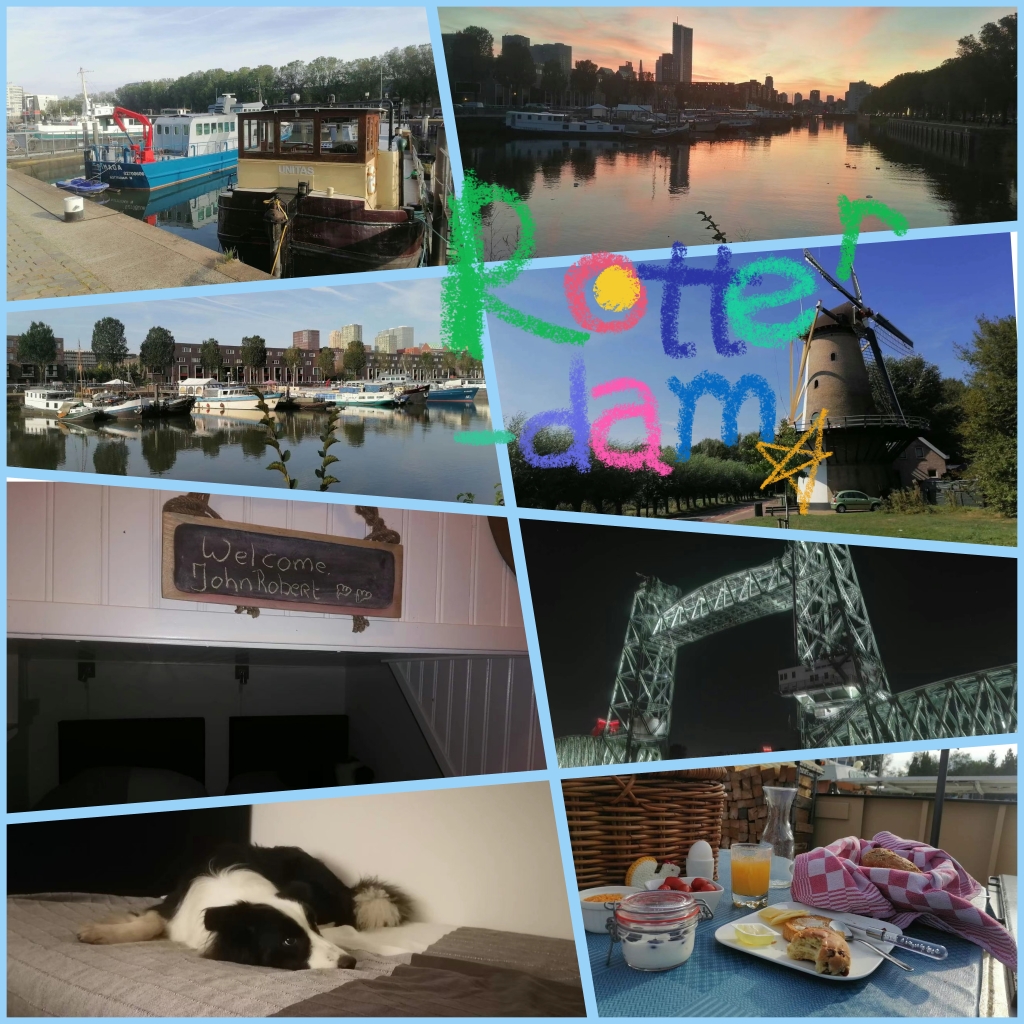




 AGAINST THE FLOW OF TRAFFIC - ACTON28.BLOG