Manchester Baby (Happy Father’s Day)

How do! / 你好 (nĭ hăo) / Namaste / Welcome!

The Manchester Baby, A.K.A., the small-scale experimental machine (SSEM) was not a device of torture or something living. It was a huge innovation and giver to the future. Here’s a little more about the Manchester Baby and how it came about on the 21st June 1948, just 71 years ago.

F.C. Williams sounds like a football team. There is a Manchester connection. It doesn’t involve a centre-half called Tom Kilburn. Kilburn, from Dewsbury in Yorkshire, resident of Blackpool, was actually a regular at Old Trafford. His being a Manchester Utd fan should exclude him from my writing but Tom Kilburn CBE FRS alongside Stockport-born Sir Frederic Calland Williams, CBE FRS changed the world. Much of our modern world owes itself to this dynamic duo. Geoff Tootill, from Chadderton, where my Gran worked at Avro once, also worked in the Electrical Engineering Department of the University of Manchester.

Freddie Williams was a dreamer and a doer. This pioneer in radar technology carried on a wave of momentum following World War II and applied his science to research for numerous years. Look up his thesis, ‘Problems of spontaneous oscillation in electrical circuits for some light reading. Much of what was written then is widespread knowledge now. He’d be known for Manchester Baby and the Williams tube (or Williams–Kilburn tube) – a device of computer memory. Geoff C. Tootill passed away on 26th October 2017. His contributions are long and illustrious. There’s a replica of Manchester Baby in the Museum of Science and Industry (Manchester), created in 1998, by the Computer Conservation Society. Tootill’s extensive notes and recollections made this possible.

Without this trio of grafters and trend-setters, the computer era could have been years, if not decades away. The Manchester Baby and Ferranti Mark 1 are iconic technological advancements. They represent the first electronic stored-program digital computers. Famous mathematician, computer scientist, logician, cryptanalyst, philosopher, and theoretical biologist Alan Turing ran a programme on Manchester Baby, having had it initially debugged by Geoff C. Tootill. Turing and the National Physical Laboratory had also been trying to make their own programmable computer. The former codebreaker and his team also spent much time in Manchester and greatly contributed to the future.


Happy Father’s Day Dad!

My father, David Acton, or Dad as I call him, because that’s what he is and always will be has given me many great memories. Caravan trips to Cleveleys, Morecambe and countless other days out have been had. There could have been more time spent together, but for divorce, Dad’s work schedule and other factors. It is water under the bridge now. Not every day growing up was wonderful, much was spent in anticipation and uncertainty. Other kids have had far worse feelings, but my dread was all I knew. On the days when Dad and Pup, or my elder brother Asa were around, then it was delightful. Having dinner at my Nana’s house, seeing my Granddad and listening to his many war and travel stories were treats.

I don’t look back with sadness on having my parents divorce so young. Around me many of my friends were in the same boat. That’s life. It is what it is. I was lucky. Some friends had lost their father at a young age, and some never even knew who their father was. Growing up in Manchester, you weren’t far away from a fatherless child. Then, I also knew kids who grew up with fathers who were abusive or neglectful. So, which is best? There are templates and ideals, but for many these were distant dreams not granted to us. Dad did his best, and always has done his best, and understanding my Dad is key. He’s laidback, relaxed and I love him unreservedly.

Dad often took me to Manchester Victoria station, where I’d meet his colleagues in a bland room above the main railway concourse. Broken biscuits, piping hot pint mugs of tea and natter would be had. Or, we’d nip over the road, down some steps to a subterranean Railway Men’s Club with the best corned beef and onion barmcakes (a bread roll) with proper mustard. When Dad wasn’t working, we’d be at the allotment on Joyce Street, Moston. Our dog Pup would be alongside us, and I’d be let out of the back gate alongside my best friend Pup. We’d run riot on Broadhurst Park, climbing trees, jumping the valleys and over the red brick stream within the park. We’d often sit together on a perch overlooking the allotment and Dad’s plot, watching as Dad bodged a greenhouse together or planted row after row of potatoes. Just by the Ronald Johnson Playing Field, Pup and I used to chase footballs. That’s now the site of F.C. United of Manchester. I like to think that Pup and I had a pooh there. I’m certain that a bush doubled-up as an open toilet for me, at least.

From time to time the Ronald Johnson Playing Field would host cycling events. It was the first place that I witnessed competitive cycling in Manchester. How lucky the city of Manchester has been since. Wandering within the confines of Broadhurst Park, Pup and I would never cross the line at Nuthurst Road, and we’d rarely walk down Lightbowne Road towards the junction at Kenyon Lane. My Gran and Ernie lived near there (off Judd Street), plus my Aunty Susan was on Joyce Street, just down Kenyon Lane. The risk of being seen was too high. We were sometimes allowed out of the allotment front gate and crossed over the road by Dad. Here in the armpit of St Mary’s Road and Joyce Street, up against the railway was a new scrub of parkland that ran behind Newton Heath Train Maintenance Depot.

Newton Heath Train Maintenance Depot, mostly known to us as ‘Newton Heath Loco’. It may or not have had a connection to a certain Manchester Utd., but for me it was a mysterious place full of oil and metallic smells. The Lancashire and Yorkshire Railway Company had long maintained a presence at this depot. My grandfather George Acton had worked here, as did my Dad at several points. Sometimes, Dad would drive into there to grab some tools or paints for his job. With Dad and Granddad, I was lucky enough to see under a train once or twice and wander around guided in ways health and safety executives now would grimace at.

The railway was central to my youth and time spent with Dad. Train rides to see aunts, uncles and relatives was normal. From time to time, car rides out to parks, the seaside and to see Nana and Granddad at the caravan were treats. I can recall numerous pilgrimages to see the legendary Blackpool Lights, with return trips sat on old Intercity diesel trains in the luggage and goods compartments. Lugging bags of seaweed for the allotment and garden was standard practice, in Dad’s eyes. Asa said how he, as a teenager, held a greenhouse on the roof of the possibly old Princess car, as it hurtled down the steep hill of St Mary’s Road towards Moston Brook. The residents of St. Mary’s Nursing Home may have seen a flying greenhouse as Asa lost his grip.

Dad’s cars have been antiquarian at best. Workhorses over shiny pride. I can recollect a Lada Riva in beige and faded cream. Further to that there was a black Ford Mondeo with air conditioning. The air-conditioning being electronic windows that seldom worked. Sometimes they’d roll down, but never roll up. There were occasional diesel railway vans and pick-ups. Dad had been for a long-time part of British Railways and then Network Rail as a painter and decorator. His job description was pretty much paint anything and everything – but not the trains. Work was scattered nationally but mostly confined the Lancashire and Greater Manchester area. Between work Dad, would have us nip up to what is now Julie’s Homebrew by Jessie Street and Copenhagen Street off Oldham Road. The Sharp factory would be nearby, so as sponsors of Man Utd, I was allowed to boo.

Taking Nana to Newton Heath market was always exciting as it usually meant a custard slice or Chewits. The dentist’s nightmares were through fault of Nana spoiling me. If I said that I liked a Cadbury’s Boost, Nana, a diabetic would fuel my requests. We’d even jib over the canal, Nana on the concrete walkway parallel to the Old Church Street road bridge, and me springing over the dangerous wooden canal lock gates. What is now Lidl, was once Kwik Save, and our Asa would sometimes be seen working out the back or on the graveyard evening shifts at the weekend.

Our ‘Ace’ was a hero to me, as a kid, and even though we never spent much time together, I always wanted to be him. I had brown curly unruly hair. Asa had well-kept curly black hair. Asa has and had chiseled looks. I resembled a pallet of spilt paint. My freckles and pale skin was quite far from our ‘Ace’. The good thing about ‘Ace’ was that he liked computers and would rarely touch my books. Books were everywhere and I’d pick up anything with words. Asa preferred computers, coding and all that. Picking up books from barrow stalls at Manchester Victoria was something Dad and Mum both gifted me. With my many questions, Dad would often have an answer and if he didn’t, he’d point me at a book or tell me who to ask.

Anyway Dad, have a Happy Father’s Day – see you for a drink and some City as soon as possible.

All my love, John
goater

“OK, mum’s the word!”

How do! / 你好 (nĭ hăo) / Namaste / Welcome!
“Let’s sing it and rhyme; Let’s give it one more time; Let’s show the kids how to do it fine, fine, fine, fine” – All The Best, R.E.M.

Happy birthday to my dearest Mum. Much can be said for my Mum. I want to write it though. Maybe the video says a little, but I think some words are best and need jotting down. Call it reinforcement. Call it a child of a mother without means to display emotion through a hug. Afterall geography and COVID-19 keep us apart. Mothering Sunday and Mother’s Day celebrate mums and mothers (or moms) around the world. A birthday is much more personal than that but by no means less important. Every day I live and breathe on this here Earth is because of my Mum. Dad too. But, deep down we all know mums are more important.

Mums are your first true friend. They’re the best friend we should all have from day one of our lives. They are a forever friend. Mums stick by you no matter what, or they should. There are always exceptions. If a mum disowns you for liking Man Utd, then that’s your own fault. Thankfully, my mum, Mum, as I call her, because she is my mum and Mum to two others: my dreaded siblings Astrid and Paul; yes, thankfully my Mum is brilliant. She’s always listened to great music like Pulp, R.E.M., James, Finley Quaye, and Led Zeppelin. Mum has encouraged me from an early age to read. I was deep into the worlds of Tolkien long before they were fashionable. Armed with knowledge of The Lord of The Rings. Mum made sure I was presented with a stage show version long before a live action version hit the silver screen. The Tameside Hippodrome remains a fond memory with orcs and lasers casting haunting imagery from the central stage. To receive books was always wonderful. Mum and Dad provided great volumes from an early age. Collecting Weetabix tokens sometimes led to great books. Some I still have today and share amongst my classroom. These were the books that set me on my way.

Mum has grafted and strived to make each of us better. Likewise, Mum has set a prime of example of improving herself. Mum has studied at the Open University in Sociology. Mum has always tried to reason her socialist values and community spirit. She has imparted her knowledge on me and always allowed me to make my own judgements and find my own way. As Mum has shared so many great things, I always want to show her my world. I have loved being able to see Mum at Manchester City, or go to a music gig like The Levellers with me. Mum may have heard of and witnessed the Waterboys when they first came around, but my musical world is constantly expanding. As I was experiencing James singing Sit Down at an Air Cadet Christmas party, Mum was being attending their live gigs. Over the years I have grew to love James, and their song Getting Away With It (All Messed Up) is an emotional track. It reminds me of me as a nuisance and a liability towards my mum, as I stuttered and faulted my way through secondary school. Mum has been great for me. My rock. My believer.

Mum treated me once to a birthday trip, with Neil Fanning, to Blackpool and it rained heavily. We were drenched. Mum took me to the Roxy Cinema to see Ghostbusters II and it was flooded. Mum showed me the V.E. celebrations at Manchester Town hall and we had fireworks rain down on us. At Woodford Airshow, Mum calmed me down after seeing a Spitfire crash. As the Supermarine Spitfire Mk XIV struck the ground at the bottom of a low level loop during an air display, Mum must have felt as sick as everyone around them. Pilot David Moore didn’t survive. Bizarrely the aircraft did and was moved to Rolls Royce in Derby for restoration to flying condition. Mum explained everything to me, a young boy, a bit upset by the huge explosion on 27/6/92 at 15:08. I’ve just seen the video again, and it made my eyes water with tears. That’s what mums do, they put their kids ahead of them. They’re the strongest people on Earth. They sacrifice their own time, space and energy to look after and protect us. That’s why Mum spotted me crying when Bambi’s mother died. I can’t explain the tears shed at E.T. or Thomas the Tank Engine. Perhaps those days were dusty.

Eating fresh bread at the observation area (not medical) of Manchester Airport and watching planes land made a few different days. Trips to museums in and around Greater Manchester gave me an appreciation of British heritage early on. Big steam wheels at Wigan Pier and seeing Gran and Ernie at the Manchester Museum of Science and Industry. You can’t fault Mum’s ability to keep our young brains active. Ernie gave me an Engine Driver hat that day.

I wanted to get Mum an experience day, or a stay at a hotel somewhere nice, but the climate around COVID-19/coronavirus isn’t so ideal. Besides, it is safer to remain indoors, stay at home and stay alert. You have to look after your mother because you can only have one. Unless you were adopted. Some of those foster mothers are brave lots, aren’t they?! Anyway, with the world being as it is, vouchers aren’t ideal. I remember Mum gave me a Borders bookstore voucher for Christmas but the company went into administration and closed, so I never used it. Well, I kind of did, but I can’t explain how or where. Those Stephen King horror-thrillers have since move on. I have an idea what to gift Mum, but I need to wait for this COVID-19/coronavirus to all blow over…

My passion for camping came from budget holidays as a kid, usually in the north of England or Wales. The fiscally challenged as those who suffer from political correctness would recognise that times were hard. Money was scarce but we had good food, holidays, and a roof over our head always. There were treats and Fridays used to be the day that maybe a Mars bar or another chocolate treat was waiting. Mum allowed me treats like staying up late on a Sunday to watch London’s Burning or other days to watch comedy shows like Have I Got News For You. On the whole early nights were encouraged and bed would be around 9 o’clock and often with a book under the duvet. Walking was encouraged and as Mum didn’t have a car, walking became normal. The Levenshulme to Reddish Vale and back, via Houldsworth Mill was a favourite trot. Zipping around Disley and Lyme Park was a bigger treat.

Whenever there has been a challenge and times have been tough, Mum has been there to support me and has very much been the 12th player that many football clubs claim to have. That knowledge that my Mum has been around the corner or a quick phone call away, has always made me feel stronger. Usually it takes very little conversation to wipe away any doubt or reduce a huge worry to little more than a niggling ache. I always think Marlon Brando’s farewell to his son speech in Superman: The Movie could easily fit my Mum, obviously with some gender realignments and name changes.

“You will travel far, my little Kal-El. But we will never leave you… even in the face of our death. The richness of our lives shall be yours. All that I have, all that I’ve learned, everything I feel… all this, and more, I… I bequeath you, my son. You will carry me inside you, all the days of your life. You will make my strength your own, and see my life through your eyes, as your life will be seen through mine. The son becomes the father, and the father the son. This is all I… all I can send you, Kal-El.” – Marlon Brando as Jor-El, Superman: The Movie

Mum’s the word

(a popular English idiom)

Used by William Shakespeare, in Henry VI, Part 2.

“Seal up your lips and give no words but mum.” – Henry VI, Part 2, Act 1, Scene 2

“Mum” is slang for momme. Momme means: be silent (or do not reveal). Old English: “mīma“. Latin: mimus (meaning silent actor/imitator).

It was used between 1350-1400 in Middle English.

“Thou mightest beter meten the myst on Malverne hulles; Then geten a mom of heore mouth til moneye weore schewed!” – Piers Plowman, William Langland

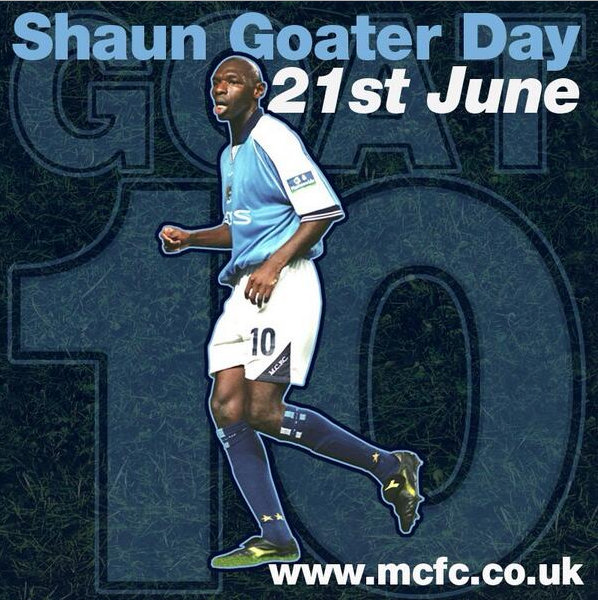
So, on this 20th of June, it is Mum’s birthday, the day before Bermuda’s Shaun Goater Day. Both should be in your calendar. And if not, why not? My Mum is ace. Shaun Goater was an ace player. Perhaps I can get Shaun Goater to say happy birthday to my Mum. That’d be fitting seeing as my Mum asked ‘The Goat’ to write me a Christmas card once. Mums are ace, right!?

goater


P.S. Mum, let’s go to Blackpool Tower and recreate this photograph in 2021. Good idea?

mumjohntowerblackpool

I’d also like to invite you to write some Blog posts for me too. Thanks in advance Mum!

Your loving son, John, aged 37.5-ish.

Ronald Lindsay Johnson (24 September 1889 – 29 May 1917)

How do! / 你好 (nĭ hăo) / Namaste / Welcome!

Ronald Lindsay Johnson (24 September 1889 – 29 May 1917)

I knew of the Ronald Johnson Playing Fields long before FC United of Manchester went slicing into the earth around it. Located on Broadhurst Park, in Manchester’s Moston, I always recall the red brick cycling track within a fenced compound adjacent to the passing St. Mary’s Road. Discovering the Western Front Association website, I recently read about Ronald Johnson. Together with a profile on the Friends of Broadhurst Park, I started clicking left, right and centre.

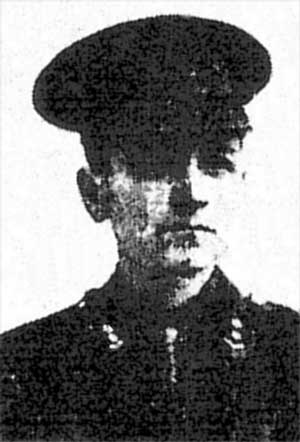
Like many that saw battle in the horrors of The Great War, Captain Ronald Lindsay Johnson (picture courtesy of the Altrincham Guardian) died in action. He was just 28-years old. His shares at Johnson, Clapham & Morris engineers were put to use in creating a sports ground. Initially for employees it became a public ground in the 1930s following Johnson, Clapham & Morris’s move to Trafford Park. It has since seen cricket, football (notably Moston Juniors F.C.), school sports days, car boot sales, fun fairs and life.

I can still recall the damp earthly smells of the ground that measured around 8-acres, sandwiched between a primary school and number 335 St. Mary’s Road. The recreation area was in memorial to Captain Ronald Lindsay Johnson and opened on the 17th June 1922 (or 1925), with Ronald Johnson’s mother present. The cycle speedway track was unique to the area – and existed long before the Manchester Velodrome was created in anticipation of the 2002 Commonwealth Games. I wonder if any cyclist transitioned from there to the often named ‘medal factory’ in Clayton.

By 2011, F.C. United of Manchester were offered the land and their 4,400-seater stadium (for £6.5 million) followed. The name Broadhurst Park was naturally fitting, following a brief period as the Moston Community Stadium. The all-weather pitch has seen a Benfica B team all in a stone’s throw from what was once Moston Hall, and residence to local industrialist Sir Edward Tootal Broadhurst. The park itself a World War One donation to recognise victory.

The New East Manchester and Manchester City Council development, once the home of a metal working and fabrication business team, had been resisted by local residents. The loss of public open space coupled with inadequate parking provision seemed to be the main problems. 2,226 letters of objection (mostly locally sent) were beaten back by 5,635 letters (many outside of Manchester) of support. Manchester Council plodded on with a success at the Court of Appeal in March 2013. The covenant on the land has always been recreation – and for the people of Moston. The one thing I find upsetting is that there isn’t a plaque or statue to honour that for almost 90 years these fields held a different name – but perhaps it hasn’t been made yet, or notified well.

Significant contribution was made by the Football Foundation Community Facilities Fund, Sport England, F.C. United Community Shares scheme, fundraising, Manchester City Council loan and the Football Foundation Football Stadia Improvement Fund amongst others. F.C. Ted (see the link for reasoning about the name) moved in eventually. At an Annual General Meeting of FC United, 10 April 2014, the Ronald Johnson Ground was one of seven names proposed for the new ground. Sadly, the historic Ronald Johnson Playing Fields seemingly vanished. F.C. United played Benfica B to mark the date of Man United’s 1968 European Cup Final, the day Ronald Johnson ceased to live.

Ronald_Lindsay_Johnson

Ronald Lindsay Johnson (24 September 1889 – 29 May 1917)

Family: His parents were William Henry Johnson, died 1914 and Agnes Morton Johnson née Brown. Brother, William Morton Johnson, educated in Cambridge, died July 1916 (in military action, aged just 34 years old). Mother, opened the playing field in June 1922. Ronald was the youngest of six children.

Raised: Woodleigh on Bradgate Road in Dunham Massay

Studied: Summer Fields School, Eton. BA Classics (posthumous MA awarded), @ King’s College, Cambridge.

Lived: Australia, 1912 until August 1914 (at the Sydney branch of Messrs Johnson, Clapham & Morris)

Partner/Chairman: Johnson, Clapham & Morris’ Wire Works (engineers)

Served: As a junior in the Cadet Corps; then Officer Training Corps at Cambridge. Enlisted (2nd October 1914) in the 23rd Division [103 Brigade RFA], Royal Field Artillery. Commissioned as a 2nd Lieutenant.

Rank: Acting Captain and Divisional Trench Mortar Officer (DTMO). Entered the theatre of war from 27th August 1915 (landed Boulogne).

Medals: 1914-15 Star, British War Medal and Victory Medal

Responsibilities: co-ordinating the targeting and positioning of mortar batteries

Notable events: Survived a rifle bullet to the ear, 19th September 1916. Evacuated by H S Dieppe (hospital ship) but returned to service by 11th December 1916.

Cause of death: Pre-Battle of Messines (Flanders, Belgium) preparations. Hit by a German shell, near Zillebeke Lake by ‘Hill 60’. He died in transit on the way to the Field Hospital near Brandhoek.

Place of Rest: Brandhoek Military Cemetery, Belgium (Plot II, Row D, Grave 1).

Commemorated: Dunham (St. Mark’s) war memorial and the Kings College, Cambridge War Memorial.

Other than the Ronald Johnson Playing Fields, he was honoured with the naming of the Johnson Chemicals Labs, Adelaide University, Australia. He is also mentioned in the Cambridge University Book of Honour.

Further reading:  Who was Ronald Johnson ? (David O’Mara, Western Front Association (WFA))

Radical Cowherd

How do! / 你好 (nĭ hăo) / Namaste / Welcome!

“Animals are my friends…and I don’t eat my friends.” – George Bernard Shaw

The radical city of Manchester has and continues to change eating habits for many people. Independent food co-op The Eighth Day (111 Oxford Road) has a shop and a café in central Manchester. It’s part of a growing vegetarianism within Greater Manchester. Everything from food festivals (e.g. Plant Powered Sunday), vegan fairs, beer festivals and club nights can be found within the city.

“Now I can look at you in peace; I don’t eat you any more.” – Franz Kafk, German-speaking Bohemian novelist

William Cowherd died in Salford during 1816. He’d lived around that way for some time. Well done him. Salford, for those outside of Manchester, is a city that is west of Manchester. It is part of Greater Manchester, and when the news is positive, we Mancunians claim Salford as our own, but when it’s negative, Salford stands alone.

“As long as Man continues to be the ruthless destroyer of lower living beings, he will never know health or peace. For as long as men massacre animals, they will kill each other. Indeed, he who sows the seed of murder and pain cannot reap joy and love.” –  Pythagoras, ancient Ionian Greek philosopher

For example, Salford Lads Club (est. 1903), is famous for a photo of The Smiths nearby by photographer Stephen Wright. That’s positive and claimed by Manchester. Murder for example, well that happened in Salford and has nothing to do with Manchester. Salford/Manchester’s William Cowherd advocated vegetarianism and in 1847 his philosophy founded the Vegetarianism Society (in Altrincham, just south of Manchester).

“William Cowherd, the founder and minister of Christ Church, Salford, died 24th of March, 1816, aged 53 years. At his request is inscribed, ‘All feared, none loved, and few understood.’ ” – The words of William Cowherd’s tomb at Christ Churchyard, King Street, Salford.

Popular with his followers, Cowherd gave free medical services, a lending library without cost and soup (vegetarian, obviously). Having trained at Beverley College, Yorkshire,  Cowherd moved to Manchester in the late 18th Century.. Heavily-influenced by 18th Century Swedish theologian Emanuel Swedenborg, Cowherd went his own ways after jumping ship from the Church of England to the Swedenborgian church before he went solo.

“Eaters of flesh could you decry; Our food and sacred laws; Did you behold the lambkin die; And feel yourself the cause?” – Hymn against flesh eating

Reverend William Cowherd established the Bible Christian Church in 1809. Located on King Street, Salford, his church broke away from the Swedenborgian New Church. He and his congregation [known as Cowherdites] vowed not to eat meat or other intoxicants. Born in 1763, William Cowherd, headed from his native Carnforth (Lonsdale South of the Sands). A keen writer, Reverend William Cowherd’s work could be found from the New Jerusalem Journal to the catchily named Liturgy of the Lord’s New Church. Various works of his were printed locally at the Manchester Printing Society. Considering Cowherd, which is a strange name for a man who hated eating meat, was only around for 53 years, his church managed to reach America [Philadelphia Bible Christian Church] and push the cause of vegetarianism and form of temperance to a wider audience. Other temples opened around Manchester for the Bible Christian Church, with one on Every Street just down from what is now known as the Etihad Stadium.

“It is my view that the vegetarian manner of living, by its purely physical effect on the human temperament, would most beneficially influence the lot of mankind.” – Albert Einstein

So, Cowherd convinced a group of congregates not to eat offal (stomach and intestine) etc. The poor were rarely able to invest in higher cuts of meat. These Cowherdites, his flock, went on and before you knew it meat was murder and the Vegetarian Society was born. At this time, vegetarianism was met with disdain. Nobody knew how the health effect would be. Few had studied it. Few had gone that way. Deaths within the Cowherdites were blamed on a lack of meat and two veg in their diets. Intellectuals throughout urbanisation and cities began to debate the ethics of killing and eating animals. Vegetarian restaurants in Victorian Manchester flourished.

“The thought of two thousand people crunching celery at the same time horrified me.” – George Bernard Shaw

Black or White? More grey…

100_2063How do! / 你好 (nĭ hăo) / Namaste / Welcome!

Today marks the memorial of the terrible fire and Grenfell Tower disaster that claimed 72 lives. The enquiry goes on. The battle against protected imperialist privilege remains. The racism of yesteryear hasn’t faded at all. These days a man born on November the 30th in 1874 at a palace (Blenheim Palace, Oxfordshire) is gaining rather a bit of attention. This, a man who, somehow appears (on camera) to have been meddling in Police affairs in 1911. This is long before you look at Sir Winston Churchill’s cash for influence…

“…ought to be lain bound hand and foot at the gates of Delhi and then trampled on by an enormous elephant with the new viceroy seated on its back” – Winston Churchill, on Gandhi, “a half-naked fakir”

Hussein Onyango Obama is better known to many as former US president Barack Obama’s grandfather. He was one of thousands held in British detention camps during Kenya’s Mau Mau Uprising of the 1950s. Winston Churchill served as leader there from 1951–1955. Not many people know about that. Even the Imperial War Museum’s web link skirts over the wartime leader’s involvement.

“Many of our friends in Muslim countries all over the East have already expressed great appreciation of this gift.” – Winston Churchill addressed the cabinet in 1940, They set aside £100,000 for a London mosque to honour the Indian Muslims who fought for the British Empire.

At the weekend thugs and far right fascists waved Hitler-style right arm salutes in front of the Sir Winston Churchill statue. The very character who helped Britain and her allies to overcome Nazi Germany, fascist-state Italy and a hugely militarist Japan hellbent on expanding their Empire. In April 2014, Labour candidate Benjamin Whittingham tweeted on Twitter that Sir Winston Churchill was “a racist and white supremacist”. The Labour Party removed the post and apologised to Churchill’s grandson Sir Nicholas Soames – and the world. In February 2019, before COVID-19 ravaged Europe, Labour’s shadow chancellor John McDonnell called Sir Winston Churchill a villain. Newspapers often dig up some rusty pieces of Churchill-bashing and The Guardian’s Gary Younge’s piece from 2002 is hugely relevant today.

“I think my grandfather’s reputation can withstand a publicity-seeking assault from a third-rate, Poundland Lenin. I don’t think it will shake the world.” – Sir Nicholas Soames (Grandson of Sir Winston Churchill, The Daily Telegraph, February 2019.

Groomed by class, and shaped by his headstrong opinion, Sir Winston Churchill helped deliver Britain through its darkest hours. Strong leadership and action needed to prevail – and it did. People gave their all for freedom and choice. Without such actions, Britain and Europe surely would have fell to Nazi ideals. To freely discuss Sir Winston Churchill and his party’s feelings of other races is easy now. Back then, in another lifetime and era, many were obsessed with master races and strong genes over others. There are even religions, cults and countries now pushing and plugging that notion, but that is another story, for another day.

Sir Winston Churchill was not a stranger to eugenics and controversy. The man himself adorns countless history books, five-pound notes and was and is celebrated by many. Many British-Indians see Sir Winston Churchill as a figure of division. They have a just case, and rightly so they are free to argue their cause, after all the defeat and prevention of Nazi rule on British soil was all about that. Freedom of speech belongs in the U.K. Even during Sir Winston Churchill’s time pre-war and after World War II many argues his faults and his seemingly eugenic views as far more than just class division. His speeches were often tinged with venom and fear-mongering: watch out for those pesky East Asians

I’ve always found Sir Winston Churchill’s books – of which there are volumes to be fascinating and idiosyncratic. They’re outlandishly eccentric pieces from a time of Empire and fear of Communism and Fascism. They’re contradictive deep pieces of opinion and words twist and turn hither and dither to form a kind of blog or diary or history bibliography. Many have deep direction. Most have one-sided takes. The more that people can read into Sir Winston Churchill’s works the better. They’re illuminating and showcase an often-troubled mind full of intellect and discovery. One moments they pour with respect, the next they stand over their quarry and stamp their feet down. Like all heroes, he’s a troubled kind. To question his legacy is natural. There is no alternative narrative from his dealings in World War II. But there are other stories, lesser told and lesser written about. Sir Winston Churchill’s A History of the English-Speaking Peoples is by and large referred to as social Darwinism in a manuscript.

“I do not admit for instance, that a great wrong has been done to the Red Indians of America or the black people of Australia. I do not admit that a wrong has been done to these people by the fact that a stronger race, a higher-grade race, a more worldly wise race to put it that way, has come in and taken their place.” – Part of Winston Churchill’s address the Palestine Royal Commission in 1937.

If given a school report for his handling of World War II, Sir Winston Churchill would be awarded an A* with all possible distinctions and awards.  For his relationships to the Suffragettes, well, how can you offer bail one day and then imprison many just a few years later? That’s the mark of a poor Home Secretary. Sorry, Sir Winston Churchill that’s a U mark on your report card: unclassified, as in terrible. Historians and defenders of the recently desecrated statue of Sir Winston Churchill are now doing battle in the foreground of society. Was Sir Winston Churchill a racist? Hmmm, these knights, there must have been a few over the years that have fell foul of the race cards. How about his treatment to the working classes and liberals he once represented? Scribe another U on the report card please. How about using the Army (Lancashire Fusiliers) against Welsh miners in 1910? That Tonypandy and Rhonda Valley matter deserves another U. Prime Minister Boris Johnson, superfan (in the girl group sense of things) denounces any such things.

Without looking over the Atlantic at the Loyal White Knights of the Ku Klux Klan, we have a few of our own in Britain, in recent years. Racism has never gone away. I recall the Stephen Lawrence enquiry in 1999 said that the killing of young black teenager was “institutionally racist”. Disparity in races has been around all my lifetime and I don’t believe anyone who thinks otherwise. Social-economic constraints act as shackles and supress. I always wondered how shows like Little Britain and Bo’ Selecta could get away with playing black characters. But, me being white, I didn’t question them, I just assumed somebody somewhere in the ages of political correctness had said these shows were portrayals on not to mock anyone. Now it seems actors, comedians, writers and more are apologising for fun. Others like Ricky Gervais are making video blogs.

#BlackLivesMatter and other protests, as well as raves in Daisy Nook (near Oldham, Lancashire), and seem to cast a shadow over the COVID-19 coronavirus problem that is filling our lives right now. The bug is back in Beijing, China and should serve as a warning that suppression of the virus globally is far from achievable – right now. Just as the establishment presented Sir Winston Churchill as a hero and awarded him a state funeral, I can’t help but think that the powers that be will paint all the protestors with one dirty paintbrush and dishonestly claim that they’re the problem. Sir Winston Churchill was made to look like he won World War II with speeches and dogged determination alone. As the Red Army of Russia rolled over Nazi Germany and into Europe, Sir Winston Churchill campaigned so fiercely to take out the Communist threat that he was swiftly shuffled aside. The coalition with the supportive Labour Party sent him packing. It was his ousting that paved the way for Dominion of India to gain independence from Great Britain/the U.K. on 15th August 1947 ( a day after the Dominion of Pakistan). That led to the Republic of India.

Indian history is complex – and British intervention, colonialism there only makes things more complicated. Hindus and their belief, have been around far longer than second testament Christian values and have experienced more fusions, branches away. Nobody has the right to say their religion is better than any other religion. But, as history tells us, our species is pretty damn good at enforcing and passing the message of the latest Messiah, God or entity to pray to at some temple, home or prayer mat. Sir Winston Churchill was raised a time when 24% of Earth’s lands sat under the British Empire’s flag. He knew that “the empire on which the sun never sets” was fragile. The ruins of European nations and the balance of global power now swung between the U.S.A. and U.S.S.R. Anti- European colonialism and anti-imperialism thoughts. Peaceful disengagement led to a British Empire of 700 million becoming just 5 million.

Our modern multicultural society is really privileged. We have the freedom and the questions to tear apart pop idols, song lyrics, scientific facts and history. We can have discussions that our parents and forefathers could not. Well, some of us. Don’t deny the good things from history and hide the sculptures and portraits away. Dig out the dirt and add it. Let people make their decisions and choices about how to remember people from key historic times. Nobody is perfect. I wasted a punnet of blueberries this weekend. They went mouldy. I feel ashamed. I hate wasting food.

“I cannot understand this squeamishness about the use of gas. I am strongly in favour of using poisoned gas against uncivilised tribes” – Winston Churchill, Minister for War and Air, 1919. Was it teargas or mustard gas? Academics are still debating

Sir Winston Churchill had read about the Irish Famine and knew of its bleak effect on humanity. This knowledge was useless to him. The man who sacrificed Coventry, would let down Bengal to an even greater effect. The Japanese occupation of Burma and its affect on Bengal led to Sir Winston Churchill having to do something. He didn’t. He actively refused to send aid – and perhaps as Britain was engaged in austerity it was a justified lack of aid, or not. There is great debate. Some estimates say 2-3 million people died. British Empire colonial policies did not come to the rescue. Sir Winston Churchill had served in the Boer War he had seen concentration camps, he deployed the infamous Black and Tans (Irish War of Independence, 1919). If you think Saddam Hussein was bad or ISIS (Daesh), look up Mesopotamia and a certain Winston Churchill, Colonial Secretary. Perhaps there is reason as to why some memorials keep getting targeted with paint. Maybe the Indians shouldn’t as Churchill called it, bred “like rabbits”?

“Churchill was very much on the far right of British politics over India. Even to most Conservatives, let alone Liberals and Labour, Churchill’s views on India between 1929 and 1939 were quite abhorrent.” – John Charmley, Churchill: The End of Glory

Voted as Britain’s Greatest Ever Briton in 2002, today’s society is understanding this complicated man in ways less fitting for a late Sunday night TV drama. In 2007, Sir Winston Churchill’s legendary statue on Parliament Square was splattered with red paint. The once mighty Churchill grew up in and around an era where racial hierarchies and eugenics were plentiful. We, on the other hand, have the chance to fight and discuss equality. The man who sent tanks and troops to Glasgow in 1919 should not be spared our discussions – and he should not be met with hate, for it is too late. Now, more than ever, we must embrace the past and educate – or learn.

You choose.

Review: Reelin’ In The Years: The Soundtrack of a Northern Life

How do! / 你好 (nĭ hăo) / Namaste / Welcome!

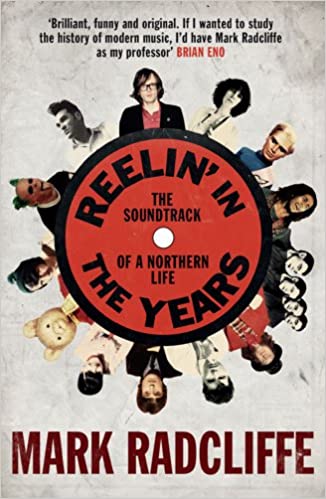
51RNDnzailL._SX324_BO1,204,203,200_Reelin’ In The Years: The Soundtrack of a Northern Life is Mark Radcliffe’s fine written take on music. It features a track of music, some background on the odd year and bits about the evolution of music. Mark Radcliffe’s love for music shines throughout. His knowledge is in depth and music expert Brian endorses the cover, “Brilliant, funny and original. If I wanted to study the history of a modern music, I’d have Mark Radcliffe as my professor.” The book is simple. The author selects one rack from each year to twist and bind key points of the year as one. British culture is slapped together in a rather unique take. The choices are diverse and bold. Some, to me, are regular listened to tunes, thanks in part to people like Mark Radcliffe highlighting Mancunian music and great artists such as Kraftwerk and Slade. There are pointers throughout the book that I am now listening to, such as Stereolab, Cocteau Twins (from Grangemouth, Scotland) and Talk Talk. His book was published in May 2012. I picked it up in June 2020. Better late than never.

I grew up on a diet of Key 103 radio, Piccadilly Gold, some BBC Radio One and BBC Radio Two. By the time I’d reached Aberystwyth, Radio Ceredigion would be a new option. Mark and The Fall’s Marc “LardRiley on Radio One were witty and seemed to have the best playlists ever, covering pop music, some rock and a little indie. Steely Dan’s song Reelin’ In The Years was probably played at some point. After each show, I’d always want to listen to more. I’d try to recall the latest album or single that would make me head to a music shop Our Price, HMV, Zavvi or Fopp! But of all the music shops, the famous Piccadilly Records and Vinyl Exchange on Oldham Street would always get my attention. Often, they’d get a few quid, and sometimes I’d be lucky to bag a CD that was ‘for radio play only’, or a demo copy. Puritans love vinyl. I like compact and easy to carry.

Marc Riley and Mark Radcliffe could rival John Peel for eclecticism. Since those halcyon radio days, Mark Radcliffe moved on to join fellow Lancashire-born Stuart Maconie. Then he moved on again to a folk show. City fans Marc and Mark remain friends and probably went their separate ways at the right time. Both are immensely talented and have great connections to music. Marc Riley’s plugging of Massive Attack, Pixies and Happy Mondays can’t be a bad thing. The parody band (The Shirehorses) he and Mark Radcliffe made was comedy gold and remains a great period of music. You’re Gormless was a great play on Babybird’s You’re Gorgeous. Parody will only go so far. So now, I await the next dose of Marc Riley show on BBC 6 Music or The Folk Show with Mark Radcliffe.

Anyway, that’s how I spent today, in the COVID-19 era, reading this great book. I hope you can pick this book up, but better late than never – and if you want to find my copy of the book, after its own journey, it’ll be in Irene’s Bar, Houjie, Dongguan, Guangdong, China awaiting you.

The Man on Brazennoze Street

How do! / 你好 (nĭ hăo) / Namaste / Welcome!

wx_camera_1533834650410

There’s a global pandemic on. The coronavirus and its related disease COVID-19 has ravaged the planet, taking at least 411,277 (from 7,238,611 infected) lives. Racism is being warred against too. As protestors and police get close and personal, belief and freedom are risks. Standing up against police violence, draws people into a dilemma. End or delay the battle against racism? Contribute to the spread of a potentially fatal disease? If you choose to overwhelm the NHS (National Health service). The virus doesn’t care one iota about your race. You’re ostensibly more likely to die if you are black, Asian or Middle-Eastern, so is it safe to protest? What are your thoughts? For something that disproportionately affects minority communities, that are now coming together in protest, well this could be a huge disaster. Beliefs versus risks. In my mind, I’d want to support the protests, but I’d want to support and protect the NHS too…

“We may have all come on different ships, but we’re in the same boat now.” – Martin Luther King Jr.

I used to eat at Shirley’s Café or Gregg’s bakery and get a breakfast barmcake with a coffee, when I worked on the corner of Brazennoze Street. Here I could walk down the road and see something odd. Manchester has a statue living down the road from Albert Square. High upon a granite plinth the distinct shape of Abraham Lincoln can be seen standing. That’s right. Abraham Lincoln (February 12, 1809 – April 15, 1865), 16th President of the U.S. of America. He’s been stood on Brazennoze Street since around 1986 eyeing passers-by but casting no judgement. The street runs between Albert Square and Deansgate gaining large footfall around office hours.

“You cannot escape the responsibility of tomorrow by evading it today.” – Abraham Lincoln

The square opening on Brazennoze Street is known as Lincoln Square. Few know this. There aren’t many signs and up until a recent renovation nearby, the square has largely been overlooked in favour of the more marketable St. Anne’s Square, Albert Square and the Corn Exchange frontage. The pedestrianised pathway uses red bricks so common within northwest England, and on a damp rainy Mancunian day, it isn’t a place to go looking for escape. A few saplings and trees can be seen nearby but it doesn’t feel very green or warm. Manchester, like many port cities (we have a Ship Canal don’t you know!), has links to slavery. Any city with an insurance company or a bank does. Sorry Liverpool.

hdr

Our Lincoln, the our kid of that America, used to be stood down Platt Fields Park. The son of William Howard Taft (27th President of the U.S.A.) made it. Charles Phelps Taft’s statue was one of two gifted to England – not Manchester, as a symbol of Anglo-American togetherness. One replica ended up in London, as the capital city. The original was left in Cincinnati, Ohio where Taft Junior was mayor.

The other replica was kind of posted to Liverpool but Manchester Art Gallery put in a sneaky bis in 1918, kind of a precursor to eBay outbidding and snatched it from Scouse hands [see also Demba Ba and Steven Gerrard]. London, then went one better and brought a much larger replica of a different Lincoln statue, in what can only be seen as a pissing competition. London urinated higher. By 1919, Manchester’s Lincoln statue was added to Platt Fields. By 1986, Manchester wanted to give more prominence to Lincoln and the cause. It was moved to Lincoln Square and placed on a new plinth. Beneath it a plague reads, “The support that the working people of Manchester gave in their fight for the abolition of slavery during the American Civil War…….By supporting the union under President Lincoln at a time when there was an economic blockade of the southern states the Lancashire cotton workers were denied access to raw cotton which caused considerable unemployment throughout the cotton industry.”

P70620-120424

“Slavery is founded in the selfishness of man’s nature – opposition to it is his love of justice. These principles are an eternal antagonism; and when brought into collision so fiercely, as slavery extension brings them, shocks and throes and convulsions must ceaselessly follow.” – Abraham Lincoln

Manchester’s liberal values and Lincoln’s cause became as one. Britain was an ally. Reportedly even the Confederate Flag flew on some Lancashire mills during the American Civil War. Decades of air pollution and legendary Mancunian weather had left it neat impossible to read the words on the statue of Lincoln’s plaque. His Royal African Company displaced around 80,000 people (men, women and children) to America. Manchester’s statue of Lincoln is seen as a key point for the opposition to slavery. Known often as the ‘Great Emancipator’, Lincoln was part of society’s push towards progression and racial justice. Some argue he was a racist, some don’t. But, what can’t be chalked away from history are the facts. Lincoln made a difference, in far more difficult times for many, especially Africans and African-Americans. What should be taken from Lincoln’s appearance in Manchester, is that Lincoln, like many of his peers was complex character and times, which may explain why he apparently wanted to re-colonize the former-slaves, or send them back to Africa

“Those who deny freedom to others deserve it not for themselves; and under the rule of a just God, cannot long retain it.” – Abraham Lincoln

The Abolition of the Slave Trade Act came in 1807. Almost 213 years later a statue was torn down, toppled and sank in Bristol. The name Colston has long been known. Edward Colston was a 17th Century slave trader. A bastard and a blight on British history, part of the very tapestry that had built an Empire. Around 10,000 people paraded the wreckage before the statue was scuttled in the harbour. Around this time Sir Winston Churchill’s statue is London was sprayed with additional text, ‘was a racist’. Scottish streets were renamed after police brutality victims. Oxford University is a target due to its links to Cecil Rhodes (think white supremacy, colonialism and racism).

Whilst Abraham Lincoln was unsure about what to do with slaves after the end of slavery, now society finds itself at a road where one terrible death has triggered a wave of protest. There is no room in society for racism. Many of yesterday’s heroes or founders of today’s world are not good. Just as many companies has profited from the Nazi persecution of Jewish and other ethnic backgrounds, we have to embrace the atrocities and learn.

“Character is like a tree and reputation like a shadow. The shadow is what we think of it; the tree is the real thing.” – Abraham Lincoln

JAB Holdings (Reimann family) that own Krispy Kreme, Panera Bread and Pret a Manger etc have admitted to profiting under the Nazi regime. French cosmetics company L’Oréal have been tied to illegal property seizures. Barclays Bank (established 1690) has already compensated Jewish members who had their assets seized in France. If you have heard of Siemens, Bayer, Nestle, Coca-Cola, Allianz (Bayern Munich’s ground which is weird for a club once taunted as a so-called “Jews’ club” by Hitler’s twonks), Audi, BMW, IBM, Hugo Boss, Mercedes-Benz, and Volkswagen well you may have heard that they are some of the corporations that made some money from forced Jewish labour. These historic crimes were after black slavery (to and in America), yet seem to have been discussed more openly. History cannot afford to hide indifference.

“If there is anything that a man can do well, I say let him do it. Give him a chance.” – Abraham Lincoln

We’re in the 21st century yet a few idiots want to keep us in the past and destroy world relations. The less said about ‘Miss Hitler’ and Trump the better. We can reshape history and move artefacts that our forefathers and mothers saw fit to decorate cities and towns. We don’t have to be proud of all of our heritage. We don’t need to hide it all. We shouldn’t be hiding any of it. I was born a European and next year, I’ll just be British. I’m human and I am Mancunian – and for me being Mancunian is all about embracing people no matter where they come from, what they believe or who they support (even if it is United).

“Darkness cannot drive out darkness; only light can do that. Hate cannot drive out hate; only love can do that.” – Martin Luther King Jr.

爱与和平 and love

DSCF0065

Suffragette City: We can be heroes

How do! / 你好 (nĭ hăo) / Namaste / Welcome!

“Men make the moral code and they expect women to accept it. They have decided that it is entirely right and proper for men to fight for their liberties and their rights, but that it is not right and proper for women to fight for theirs.” – Emmeline Pankhurst, My Own Story

Suffragette City by David Bowie was a song released in 1972. It was a B-side. That is to say that it wasn’t the focus of the single release. Starman, had that honour. Later it would appear on several albums, compilations and even other singles. Bowie had offered this song, written by himself and co-produced with Ken Scott to band Mott the Hoople. They politely said no thanks but accepted a song called All The Young Dudes. This piece of glam rock has a history before it was even recorded. It even references the movie A Clockwork Orange.

Suffragette City has wonderful rousing lyrics, great guitar work and power. An Occasional Dream, Heroes, and John, I’m Only Dancing are some of my favourite choices of David Bowie music. However, Suffragette City has an aura like no other. These tighter two-semitone gaps (F-G-A) really drive the song. That dummy ending, “wham bam, thank you, ma’am!” fires you back into an encore of chorus. It’s such a great track and one fitting for the growing theatrical rock and swagger of the 1970s.

Manchester though, should be the Suffragette City itself. The sometimes-called ‘powerhouse of the north’ was of course the birthplace of the Suffragette Movement. Our very own Mancunian superhero, Emmeline Pankhurst and her daughters battled hard against money and power, for the people and for the women of the world.

“Governments have always tried to crush reform movements, to destroy ideas, to kill the thing that cannot die. Without regard to history, which shows that no Government have ever succeeded in doing this, they go on trying in the old, senseless way.” – Emmeline Pankhurst, My Own Story

Emmeline Pankhurst’s former residence is today a museum and home to Manchester Women’s Aid (against domestic violence). The Pankhurst Centre, a pair of Victorian Villas, was once home to Emmeline and her three daughters Sybil, Christabel and Adela. They were all immensely political. Between 1891 and 1907, they lived together under those roofs and flew the flag of the Women’s Social and Political Union (WSPU). The small house that is a museum features banners and sashes of the original purple and white colours.

“I want to say right here, that those well-meaning friends on the outside who say that we have suffered these horrors of prison, of hunger strikes and forcible feeding, because we desired to martyrise ourselves for the cause, are absolutely and entirely mistaken. We never went to prison in order to be martyrs. We went there in order that we might obtain the rights of citizenship. We were willing to break laws that we might force men to give us the right to make laws.” – Emmeline Pankhurst

Against the backdrop of cheap labour and a lavish textile industry, the city prospered as the spine of the industrial revolution. Here Socialism was birthed and Labour Unions formed. Community values were thrown at the establishment in their droves. So, with class division and heated change, up popped widow Emmeline Pankhurst. Her late husband Dr. Richard Pankhurst had been a barrister and sympathiser to the cause. There was immense risk to all for taking on the Edwardian overlords. Many were killed, many imprisoned and other atrocities committed towards them.

“Every man with a vote was considered a foe to woman suffrage unless he was prepared to be actively a friend.” – Emmeline Pankhurst, My Own Story

Manchester’s Free Trade Hall now replaced by the Radisson Blu Edwardian Manchester, was built in 1853. It was a place central to Manchester’s progressive and radical history. The Corn Laws were repealed, and this building was a celebration of that. The building also stands on the site of the infamous Peterloo Massacre. Here, at St Peter’s Field, in 1819, 15 people were killed by the government’s cavalry and police. Over 700 people were injured. Like some of today’s global protests over the late George Floyd, these peaceful protestors were met with disproportionate aggression. At the Manchester’s Free Trade Hall, during 1905, suffragettes Annie Kenney and Christabel Pankhurst pushed to fight for votes for women. Watching in the wings was a future prime minister, and then Liberal Party member, Winston Churchill. He offered to pay their bail but was refused. Five years later as Home Secretary, Winston Churchill would direct the uncompromising Police against Emmeline Pankhurst’s protest march of 300 women to Parliament Square. Politicians do like a good U-turn.

“The militancy of men, through all the centuries, has drenched the world with blood, and for these deeds of horror and destruction men have been rewarded with monuments, with great songs and epics.” – Emmeline Pankhurst, My Own Story

dav

Manchester has embraced pride in Emmeline Pankhurst and the Suffragette Movement. On St. Peter’s Square, just to the side of the Metrolink tramline, stands a proud Emmeline Pankhurst statue. Artist Hazel Reeves opted for Emmeline on a chair, a nod to her speech, “Rise up, women.” Some of her original and other Suffragette pieces can be found down the road, at the People’s History Museum. There are telegrams by Emmeline Pankhurst. The collection is a pure conservation to the history of working people in the UK. If you’re a student or an interested historian, this is the place to go for interpretation and study material relating to Suffragettes. It is all wrapped inside Henry Price’s former hydraulic pumping station. The Museum of Science and Industry and Quarry Bank Mill provide further atmospheric links to different times.

Quarry Bank MIll September 2019 (30)

“My conduct in the Free Trade Hall and outside was meant as a protest against the legal position of women today. We cannot make any orderly protest because we have not the means whereby citizens may do such a thing; we have not a vote; and so long as we have not votes we must be disorderly. There is no other way whereby we can put forward our claims to political justice. When we have that you will not see us at the police courts; but so long as we have not votes this will happen.” – Christabel Pankhurst

Influenced by her mother, Sophia Craine, Emmeline Pankhurst passed on her strong character to her daughters. On the 14th June 1928 died in a nursing home in Hampstead. She was buried in Brompton Cemetery, London. Her legacy is well-known.

“The world has never yet seen a truly great and virtuous nation because in the degradation of woman the very fountains of life are poisoned at their source.” – Lucretia Mott, U.S. Quaker, abolitionist, women’s rights activist, and social reformer.

Dame Christabel Harriette Pankhurst, DBE, born of Old Trafford (22nd September 1880), and was laid to rest in Santa Monica, California, U.S.A. in 1958, the day before Valentine’s Day. She had spent two years exiled in France during 1912-13 and directed the militant action of the Women’s Social and Political Union (WSPU). Charles André Joseph Marie de Gaulle had an airport named after him for his exile in World War 2. Christabel Pankhurst was made Dame Commander of the Order of the British Empire for her dedication to public and social services. Of course, being British, and like many Suffragettes she had several blue plaques placed at places she frequented, mostly in Notting Hill.

“Mothers came to me with their wasted little ones. I saw starvation look at me from patient eyes. I knew that I should never return to my art” – Sylvia Pankhurst

Estelle Sylvia Pankhurst (5 May 1882 – 27 September 1960) was part of the alma maters of both the Manchester School of Art and the Royal College of Art. In 1956, she moved to Addis Ababa, Ethiopia with her son Richard at the invitation of Emperor Haile Selassie. Her social and healthcare work there earned her a state funeral. She died as an honorary Ethiopian. She is buried as the only foreigner with patriots of the Italian War, alongside the Holy Trinity Cathedral. Her son, Richard Keir Pethick Pankhurst OBE was a British academic and founding member of the Institute of Ethiopian Studies.

“The older I get, the greater power I seem to have to help the world. I am like a snowball – the further I am rolled the more I gain.” – Susan B. Anthony, American social reformer and women’s rights activist

Adela Constantia Mary Pankhurst Walsh (19 June 1885-23 May 1961) would move to Australia, far from her birthplace in Chorlton Upon Medlock. She would be the co-founder of both the far-left Communist Party of Australia and the far-right Fascist Australia First Movement. She spent some time in a Japan, before returning to Australia to face prison for her advocacy of peace with Japan.

“Now all we need is to continue to speak the truth fearlessly, and we shall add to our number those who will turn the scale to the side of equal and full justice in all things.” – Lucy Stone, suffragist and abolitionist.

Today the great-granddaughter of Emmeline Pankhurst and granddaughter of Sylvia Pankhurst, Helen Pankhurst CBE is an international development and women’s rights activist and writer, as well as a Visiting Professor at Manchester Metropolitan University. Her brother Alula Pankhurst (Manchester University PhD: Social Anthropology) is a social development consultant. His focus is Ethiopian studies and the Young Lives multidisciplinary, longitudinal study, multinational study. Like Alula, Helen Pankhurst CBE has two children and remains heavily connected to her Eithiopian heritage through CARE International.

“I’d rather go down in history as one lone Negro who dared to tell the government that it had done a dastardly thing than to save my skin by taking back what I said.” – Ida B. Wells, prominent journalist, activist, and researcher.

There are huge parallels to what’s happening in America and the world right now, with regards to the #BlackLivesMatter movement. Much can be learnt from the Suffragette movement and their struggles. Let’s look at the Minneapolis City Council who have decided to disband and break-up the Minneapolis Police Department. They have formally committed to forming a community-led Police system. The system was broke, and many should – and hopefully will have the right to fix it. By the people, for the people.

P70721-132530


The Mancunian Way, Dongguan

How do! / 你好 (nĭ hăo) / Namaste / Welcome!

“I feel so extraordinary; Something’s got a hold on me; I get this feeling I’m in motion; A sudden sense of liberty.” – New Order’s song True Faith.

I’m patriotic towards the U.K. in a way. I sing praise and fly the flag for great people, wonderful history and fantastic places. I know that the story of the U.K.’s history has often been brutal, cruel and deserves little love. Even within the 21st century the U.K., as it moves away from a colonial and European past, and becomes less connected, yet more dependent on overseas trading and manufacture is and always will be a wonderful country. It’s my home. I was born in Manchester, England. I don’t call myself English. I’m British, when I choose to be. I’m Mancunian always. I have Celtic blood in me from my Irish and Welsh great grandparents. My roots are clear and free. But this tree doesn’t cling to the past and history. This tree wants to expand and be watered by different skies. For me tradition and culture are important but understanding and freedom to choose your own pathway are far more intrinsic to living. This tree is currently sat on its arse in Changping, Dongguan. Today’s and yesterday’s rugby and football have been washed out by Dragon Boat rains. I have some free time.


Today, I want to show a gallery and write a little about the culture of Dongguan and China. I’ve been here for the vast majority of the 2308 days now (11th February 2014). I believe many great days have passed and many more will follow. That’s why I am right here, right now. I arrived and didn’t feel too much way of culture shock. Around me a reasonably established cultured expat community threaded amongst the fabric of the local workforces and people of Guangdong.

“Because we need each other; We believe in one another; And I know we’re going to uncover; What’s sleepin’ in our soul” – Acquiesce by Oasis.

Since, I arrived I have seen Dongguan grow and grow. It is now classed as a Megacity. It seemingly will never stop growing. There are skyscrapers and apartment blocks skimming the sky in every single district of Dongguan. Whereas in 2014, I’d notice dozens of these mammoth constructions and many more sprouting buildings, now I am seeing hundreds and hundreds of established communities and hubs here, there and everywhere. I used to consider Nancheng and Dongcheng as the central axis of Dongguan. Now the townships of Chang’an (home of Oppo), Changping and the ever-growing former fields of Songshan Lake (home of Huawei), and the sprawls of Liaobu town could easily be seen as central areas. The arrival of the Huizhou to now West Dongguan Railway Station (soon to be Guangzhou East) or 莞惠城际轨道交通  /莞惠线 Guanhui intercity railway has added to rapid growth. As it joins the short-named Pearl River Delta Metropolitan Region Intercity Railway System (珠江三角洲地区城际轨道交通). That’s more than 65 railway stations in close proximity to Dongguan. Like all of the Pearl River Delta, this city is growing fast – and going places.


When not hopping on 200 km/h (124 mph) railway systems, I have ample opportunity to meet great people. Dongguan‘s community is largely migrant with people coming from all over China and the world beyond. International jet-setters with lives here, include Serbians, Kiwis, and even Scousers. They can be found in some of the office places, factories, bars and restaurants throughout the city. Playing football with Brazilians or Russians, or cycling with Dongbei people is possible or a spot of chess at Murray’s Irish Pub with Ukranian opposition. Anything goes here. Drinking homebrew at Liberty Brewing Company (曼哈顿餐吧) in Dongcheng after playing tag rugby with Tongans, South Africans, Germans and Malaysians makes me realise how lucky I am. This is a city that is tidying up and beautifying itself at an alarming rate.

Throughout the 6.5 years of life in and around Dongguan, I’ve slipped up and down ginnels, seeking out the new and old. There have been trips to pizza joints in obscure areas, Dragon Boat races watched, Cosplay events attended and English competitions observed. Dongguan, like Manchester, has a heartbeat that shows anything is possible and if it isn’t here, you make it. You can make something new, or your bring something to the party. You can sit and complain about people taking your photo or saying, “wàiguórén” (foreigner/外国人) or you can show the people around you, your worth.

This week I was asked by the Dongguan Foreign Bureau to teach them. Sadly, I cannot fit their demands into my day. I’ve bene lucky to narrate advertisements, wear watches for model shoots, test-drive new bicycles and play with new robotics before they reached their target audience or global factory floors. Daily life has been far from mundane here with oddities and pleasures as varied as can be. What’s around the next corner? Well, visas are quicker and easier to get, despite more rules and demands. It seems far quicker than when I first arrived. Sometimes, I doubt that I have done everything right, yet it seems clear and simple. Just a checklist. This week I received my medical report back. Now, I need just a few other items for the 2020/21 visa… That’s progress.

Bridges have been made and links that could prove lifelong. The west and east have collided in bizarre ways often forming a touch of the unique. There has been colour, rainbows and diversity amongst the traditional and the common. There have been flashes of light and inspiration. There have been days when solitude has been sought and there will be more, no doubt, but one thing I find, and have found throughout my time here, people are just that. Just simple down to earth, regular people going about their days, looking for peace and good opportunities to survive or better themselves. There are more cars and less bicycles, which shows that some people’s bank accounts and credit-ratings have improved. Quality of life needs balance, and with that the subway/underground system of Dongguan is projected to change from one line to seven lines.

Words can say how thankful I am for my time here. I am enjoying life in different ways to others, and being who I want to be, when I want to be. I’m selfish or I’m sharing. I’m open or I am closed. I read or I watch. I write or I dictate. There are times to slip unseen, and times to lead an audience. It is good for the mind to be bored or alone. I truly believe that’s where creativity lies. It sits there waiting to be tapped and delivered to paper, computers or other outputs. I can wander from craft beer breweries to model car clubs to fusion and western food restaurants with ease and all of the time remain connected to modern and old China.

There is plenty of ugly in Dongguan, just like the rest of the world. To quote the 18th century French phrase, “ne saurait faire d’omelette sans casser des œufs“:  You can’t make an omelette without breaking eggs. Humans must learn from the stains and damage we have caused to our planet globally, whether disease or pollution. We can’t give in. Our cultures, our pride and our people need to fight on and find solutions. Just as #BlackLivesMatter, all lives matter – whether human or worm or bug or panda. Life must find a way. Dongguan is radically changing its energy consumptions, factory practices and the way its environment is being respected. This is good for all. Maybe, I should really put my words into action and finish studying towards the HSK (汉语水平考试 Hànyǔ Shuǐpíng Kǎoshì) course for the Chinese Proficiency Test.


Dongguan has gone from a place with a handful of limited cinemas, to those with the IMAX, vibrating seats, private screens and many of the latest releases from the west. KTV bars make way for baseball batting cages, ten-pin bowling, archery cafes and all the latest crazes. The great thing is that with Wechat (born 2011), Alipay etc, you can leave your wallet behind and pay swiftly with ease using these simple electronic methods. Gone are the days of using equations and haggling to get a taxi a short distance. Piles of services are available via your phone, including electrical bills, water bills and Didi (driver and carshare service) is one such saving grace.

During these COVID-19 pandemic times, your phone provides your health code, advice in travel, guidance on health services and help. Dongguan’s local services for healthcare, private insurance and banking are on your fingertips, rather than a a few hours out of work. Life can be as fast or as slow as you wish. In 2010, Dongguan was named a National Model City for Environmental Protection and greenways, green belts and other greenery followed. There are hundreds of parks now, over 1200… it is easier than ever to stay healthy.

There is culture around us, old temples, modern pagodas, relics of time and shells of history. Dongguan’s landmarks are a tad tough to visit now. The Cwa humid subtropical climate here is far above the reported average annual temperature of 22.7 °C (72.9 °F). The rainfall is typical of the land below the Tropic of Cancer now. It is raining cats, dogs and occasionally elephants. Wellingtons and umbrellas are common sights these days, rather than the Dongguan Yulan Theatre, GuanYinShan (Budda mountain), Hǎizhàn bówùguǎn (海战博物馆 Opium War Museum) or Jin’aozhou Pagoda. Even a trip to my local coffee shop, Her Coffee, is like a swim in a river. It is blooming wet lately. As a Mancunian, I feel at home.

I’m here for education – to both teach and to learn. This city has hundreds of educational institutions, even Cumbria’s St. Bees are opening a school here. I’ve heard there are around 550 primary schools, 480 kindergartens and several universities now. To bump into a teacher amongst the 21,000 plus teachers is not unusual. Although it seems every second teacher works for one of the many Eaton House schools here. I’ve heard Tungwah Wenzel International School (TWIS) in Songshan Lake is one school to really watch. Like its neighbouring Huawei school, it is massive with around 1,000,000 square metres of surface area. I’ve seen the modern sports gyms, performance space and technology labs. It uses the latest gadgets and networking. It really is 21st century over there at Songshan Lake. Although Huawei have a German-style train-tram zipping around, piping back to older days. Dongguan University of Technology(DGUT; 东莞理工学院) is one of universities in the area meaning that you can educate beyond your teenage years here. It really is a place to learn. Watch out Oxford and Cambridge! Maybe that’s why Trump is always bad-mouthing China’s growth?

From eating chicken anus, to two weeks of quarantine in XiHu Hotel, Dongguan has given me more time to turn the contents of my head to words. Now that I am ready to publish a novel, I need a publisher, but how to do this during a pandemic? I haven’t a clue, but I know one thing, the challenge will be tough and worth it. Nobody ever climbed a mountain to sit at the top and look down without seeing another mountain, right? At the end of the day, the sun sets only to rise again. Dongguan faced lockdown impeccably and other challenges, just as the world did and does. Chin up, keep going and let’s crack on.

Last night, I ate Korean barbecue with great people to celebrate a treble-birthday, followed by proof that I am terrible at ten-pin bowling and awoke today feeling optimistic. The world is often reported to be going through a pandemic-sized recession. As the world sailed a wave in 2008 and Dongguan grew from that recession, I will everyone to go on. Manufacture a bucket of optimism. Just like the strings of New Dawn Fades by Joy Division, there is darkness but remember these famous lines: It was me, waiting for me; Hoping for something more; Me, seeing me this time; Hoping for something else. In 2008, low-tech industry switched to the high-tech. Boomtime arrived. Chances are that one in five phones around the globe were made in Dongguan. Is your phone Vivo, Oppo, Honor or Huawei? It was probably made down the road from me. So, Dongguan is closer than you think.


Manchester isn’t any place I will visiting in person for some time, so it has to come to me via playbacks of Oasis gigs at Maine Road and the written word. Over the next few months, I plan to read the following Mancunian-connected books:

Hell is a City – Maurice Proctor; The Manchester ManIsabella Varley Banks; Passing Time – Michel Butor; Magnolia Street – Louis Golding; Fame is the Spur – Howard Spring; Lord Horror – David Britton; The Emigrants – WG Sebald; Cold Water – Gwendolyne Riley; The Mighty Walzer Howard Jacobson; Manchester Slingback – Nicolas Blincoe; Vurt – Jeff Noon; A Man’s Game: The Origins of Manchester City Football ClubAndrew Keenan; Mary Barton – Elizabeth Gaskell; Cranford – Elizabeth Gaskell; North and South – Elizabeth Gaskell.

“I was thinking about what you said; I was thinking about shame; The funny thing how you said; Cause it’s better not to stay” – The Last Broadcast – Doves

Woolly balls, Alan & Xi’an

How do! / 你好 (nĭ hăo) / Namaste / Welcome!

Is that…? No, it can’t be. But, wait, it bloody well is. I‘ll have a gander to check. I stepped into a stationery store in Dalang, attached to the Dongguan Dalang Football Association (DGDLFA). Football culture and community has always interested me. The crest of one of the DGDLFA clubs resembled Man Utd’s badge. I’m sure any do. It’s a curse in any Asian nation that most fans follow a red team. Their flags are red, their Communist brothers in arms are red, red stars, red scarves, red packets, lucky blooming red. Everywhere.

Instead of worn old leather footballs on the central axis, this club, Dongguan Zhicheng F.C. has in place two woollen balls. Zhī (织)means weave or knit. Chéng (城) means city or wall. So, here we have it a woolly mammoth-aged club wrapped in cotton wool. On the top of the crest there are kind of lucky bells, and golden scrolls. There is a ball in pace of Salford Rugby Club’s stolen red devil. Six people fail to adhere to social distancing beneath the ball. The sixsome is an oddity in itself. Most people I know play 7-a-side in China, and sometimes, every now and then 5-a-side. There is football in the traditional 11-a-side format, which is lesser-spotted. I only know of one 6-a-side field in Dongguan. We use it regular on a rooftop. So, Dongguan Zhicheng F.C., what is this mutant game you are playing?! I was in the stationery shop, a foreigner, a rogue and an unexpected shopper. I had to investigate further.

Inside a larger, and rounder older Cantonese lady kind of sneered at me. She eventually asked what I was looking for. I uttered my crap Mandarin Chinese, “Wǒ zài kàn” (我在看). This in itself was bad, as she was clearly Cantonese. I had overheard her recording a flowing barrage of Canton dialect into her right-hand-clutched-like-a-Lego-man-mobile-phone. Can we say phone now? Most phones are mobile now. Landline phones in China are mostly ornamental, right? I could have said to her, “Wǒ zhǐ shì kàn kàn” (我只是看看。) Zhǐ shì means just/merely/only. I didn’t. We all know by now, that I was on a reconnaissance gathering mission. If anyone is monitoring me, I am buggered. Proper buggered. She said, a simple, “Hǎo de” (好的) because it was okay to look around right. It’s a stationery shop and not Area 51.

After selecting some useful stickers and highlighter pens, of various shades of sky blue, a man emerged from the adjoining office door of the Dongguan Dalang Football Association (DGDLFA). He looked at me with suspicion. There was a smidgeon of something in his eye. It could have been dust, curiosity or any other emotion. Maybe the bright yellow faded to peach coloured football shirt I wore was too loud. We looked eye to eye for far too long. I had to buckle and break the moment. The man’s square face framed in black glasses and a thick head of black hair age no emotion away. His game could have been poker. I crumpled and folded my coolness but calmly let out a dry word, “nĭ hăo” (你好). After all, who doesn’t like hearing a stranger say hello. We can’t all be Villanelle from Killing Eve. Some of us must be polite and less murderous.

After selecting some gold dust items, I went to the check-out and here the Lǎobǎn (老板/boss) chatted to me. “Nǐ xǐhuān mànlián ma?”, he said. 你喜欢曼联吗 translates to something offensive to me, and to many. He had asked, “Do you like Manchester United?” My response was calm, and to the point, “Wǒ bù xǐhuān mànlián” (我不喜欢曼联). I do not like Manchester United. It’s a fact. You can check my social media for diatribe and other denunciation of that club. There are rants, periods of haranguing and tirades that probably go back to 1982. I crossed my right hand over my chest and pointed to the crest upon my left breast. “Wǒ ài mànchéng”, said I. I love Manchester City (我爱曼城). He looked me up and down, smiled, and wearing his red polo top, with the crest that resembled Old Trafford’s footballing giants, he proudly said, “Wǒ zhīchí lìwùpǔ” (我支持利物浦). He supports Liverpool. He eventually told me in a mixture of Chinese and his good English that his team liked the badge of Man Utd. I asked him about his connection to Liverpool. None. He didn’t even watch games before the Champions League win last year.

And, that’s one of the reasons football struggles in China. A lack of clear identity. The balls of wool made me think that this team in 大朗 (Dàlǎng town) had pride on their locally known and nationally famous name of wool. Instead I left wondering why a Liverpool fan, would create a team with an almost Man Utd crest. He told me how they’d started a team from a school field in 2018 and then two teams, other teams followed. They play regular 8-a-side because 8 is lucky. I asked why their badge only has 6 people. He said the goalkeeper is not a player. I said, for 8-a-side, this still leaves his team one player short. He said there are 8 outfield players and a goalkeeper. That’s a lot of players on a FIFA regulation 7-a-side field. And, they use a size four football, not a regulation size five football. Good luck to the China national football team.

As I paid my bill, we talked international and domestic football. The excitement that the Premier League in England is returning at a time, that China will also welcome a restart to football. The Chinese Super League is set to resume soon (2020中国平安中国足球协会超级联赛). On July the 3rd, the league will be split into two groups. As China closed its borders to foreigners, the CSL upped the maximum number of players a team could have, from six to seven (throughout a season). At any one time, only six are allowed within the squad, of which, only five can play in one game. Of those five in one game, only four can be on the field at any one time. Following me? Good. Of those four, no foreign goalkeepers are allowed. Taiwanese, Hong Kong or Macau citizens are Chinese as long as they started their professional career as a player there.

Alan Douglas Borges de Carvalho, born José Bonifácio, Brazil is Chinese now. As is Elkeson de Oliveira Cardoso, but he was born in Coelho Neto, Maranhão, Brazil (which you won’t find on a map of China). The former player, Alan (阿兰), arrived from Red Bull Salzburg on 2015. The latter, Elkeson (艾克森/ Ài Kèsēn) arrived in 2013. Chinese citizenship via naturalisation has given both the chance to play for China’s national team. Ricardo Goulart (高拉特) from São José dos Campos, Brazil awaits FIFA to decide if he could play in the stages of the 2022 FIFA World Cup qualification. Aside frome Mousa Dembélé at Guangzhou R&F, Paulinho at Guangzhou Evergrande Taobao, Alex Teixeira at Jiangsu Suning, Marouane Fellaini at Shandong Luneng Taishan, Stephan El Shaarawy at Shanghai Greenland Shenhua there aren’t too many players out there that are household names. 27 Brazilians and 3 former Brazilians make up the 80 possible overseas players for 16 teams. Amongst the Brazilians, Hulk, at Shanghai SIPG isn’t the incredible one, but former-Chelsea player Oscar at the same team has a few awards to his name.

So aside from my covert quest into the local world of football, this turned into a great shop too. I found two A4 paper trimmers – also known as guillotines! Nothing says stationer like a machine with a blade named after a French Revolution beheading device. I hope the Chinese parliament and security forces don’t round me up for beheading postcards or cutting corners.

Xi’an: The Original Home of Football? Think Cuju (蹴鞠)

球迷会名称/Club name: 西安曼城球迷会 Xi’an Manchester City fans Association Club

球迷会联系方式/Club contacts: 阿圭罗的小媳妇儿 [Aguero’s Wife]

微博或其他社交媒体链接/Weibo or social media links: 西安曼城球迷会(微博名)
微信账号/Wechat account: 西安曼城球迷会(公众号)

关于我们/About us: 古称长安。长安城作为古代第一个人口破百万的国际化大都市,北濒渭河,南依秦岭,八水润长安。在这座古老的城市里,住着一群有着蓝色信仰的人们,这群人的存在给这座城市注入了新的活力,这就是我们——西安曼城球迷会。

不论你是土生土长的西安人,还是身在西安的异乡人,亦或是远在他乡的西安乡党,只要你信仰蓝月,我们都向你敞开怀抱。

Xi’an, is an ancient town, once known as Chang’an. Xi’an was one of the Four Great Ancient Capitals. Xi’an is the original starting point of the Silk Road. Emperor Qin Shi Huang’s Terracotta Army is based here. Bordered to the north by the Weihe River, the southern Qinling Mountains and known for 8 rivers, the city has great diversity and history. The sky blue and white faith of City reached Xi’an in modern times and adds vitality to a City mostly know for its great food and castle walls. Whether you are a native to Xi’an, or a visitor to Xi’an, Xi’an’s OSC opens their arms to meet you and your love for the Blue Moon. No reds allowed. 

Expect to eat: Roujiamo Chinese Hamburger (肉夹馍); Liangpi (凉皮); Paomo Mutton, beef, and Bread Pieces in Soup (羊肉泡馍); Biang Biang Noodles (油泼扯面); Jinggao Steamed rice cake stuffed with honey dates and black beans (甑糕).

Expect to see: Fortifications of Xi’an & Xi’an City Wall (西安城墙); Xi’an Bell Tower (西安钟楼); the Drum Tower of Xi’an (西安鼓楼); Mount Li (骊山); Mausoleum of the First Qin Emperor (Qin Shi Huang) (秦始皇陵); Terracotta Army (兵马俑); Shaanxi Galaxy (陕西银河); Shaanxi Guoli F.C. (陕西国力)Shaanxi Renhe Commercial Chanba F.C. (陕西人和商业浐灞)Shaanxi Dongsheng (陕西东盛); Xi’an Evening News (西安晚报); Qinqiang opera (乱弹).
Did you know? Arthur Gostick Shorrock [from Blackburn, Lancashire, England] and Moir Duncan founded the Sianfu Mission in 1892.

U.K. Twin cities & Towns: Edinburgh, Bury St. Edmunds & Birmingham

爱与和平/Peace and love

Every acronym & their gunslinger.

How do! / 你好 (nĭ hăo) / Namaste / Welcome!

I’m in China. The net-based citizens here are laughing and joking about freedom being dead in America. From Sina Weibo to Wechat to QQ, it is out there: America’s freedom is falling. After all when the looting starts, the shooting starts. Act like a donkey and be treated like one. Act with compassion and understanding, and…

“Oh Johnny, did you back thewrong horse! Will you hose him please?!” – Bill Murray as Peter Venkman, Ghostbusters II

Conducting the leadership over social media channel President of the U.S.A. (well, the white part, at least), Trump of the White House is now using the military against his own people. Well, if he identifies with them, that’d be a positive start. But this is a man telling state governors that, “you have to dominate”. The top brass is needed, this is a job for the A-Team. Step forwards General Milley, chairman of the joint chiefs of staff. Trump and his massive cahunas were seen spotted at Lafayette Square (outside the White House) and heading into the slightly burnt St. John’s Church. Right Reverend Mariann Budde told the Washington Post, “I don’t want President Trump speaking for St John’s.”

Tear gas is a reasonable means to scatter peaceful protestors and rubber bullets don’t actually hurt that much. Is this Hong Kong or America we’re talking about? Could be either. Well as long as the free press keep their distance (like Sunrise & #7News from Australia didn’t and CNN failed to sort their acts out). President Trump has directed Attorney General Barr to effectively let all guns rolls. The entire weight of the F.B.I., A.T.F., D.E.A., B.O.P, and U.S. Marshalls are at his beck and call. The Department of Defence and the department of Homeland Security are also deployed to the District of Colombia. So, every acronym and their gunslinger are in town. Clint Eastwood just turned 90 years old and probably had an invitation to the party. Restoring order resembles the first or second invasion of Iraq.

“Hate just hides. It doesn’t go away, and when you have somebody in power who breathes oxygen into the hate under the rocks, it comes out from under the rocks.” – Joe Biden, Associated Press.

In the opposition wings, Democratic Presidential candidate, Joseph Biden has vowed to deal with institutional racism. Would Biden be comfortable removing peaceful protestors just so he can get his photo for the so-called-free-press? Biden is white or Caucasian. I’m white, or Caucasian. Many like him and I haven’t been subjected to servitude or feeling we’re of less, shall we say value, worth or merit than say someone without a title to their name, or land, or property, or a stable upbringing, or a private education – oh go on, let’s spell it clearer. Someone who is black – or Asian – or basically not white. I grew up in Levenshulme, Manchester and attended Chapel Street Primary School. Some of my earliest friends had Pakistani, Irish, Greek, Asian and Afro-Caribbean backgrounds. And? Well, there was no need for an ‘and’ because kids are kids, people are people and not one person should be seen as better than someone because of privilege, or position. Sorry Pope. Sorry leader of boyband al-Dawla al-Islamiya fil Iraq wa al-Sham. Sorry $2.1 billion Twitter user Trump.

“I am the least racist person there is anywhere in the world”- Donald Trump, MSNBC, 1/8/2019.

Racism is racism, pure and simple. It is fear or hate or dislike and it is totally unnecessary. I live and work in Dongguan. This last week I’ve played football or rugby with Tongans, Americans, Argentinians, Russians, Ukrainians, Scottish, Irish, South Africans, Chinese, Malaysians, and Brummies. Some of these great people even supported Man United. The world is a huge sphere with many people. These people bring stories, cultures, foods and difference. There is a great tapestry to my lifestyle here in China. I see and hear racism or judgment because I am a foreigner. Do I feel racially abused? No. I feel sad on their part. But, racism as hate – or ignorance, is racism. Xenophobia and fear of change may be deeply routed in nationalism which may or may not explain the global panic over China and Asia’s growth. The smoke of the fires in America is accompanied by a drumbeat by P.O.T.U.S.A. Trump and co.

“When you’re a star, they let you do it, you can do anything … grab ’em by the pussy.” – Trump, NBC, 2005.

Trump the populist-protectionist-nationalist uses his lack of prior military or government service as a badge of honour. A combination of bragging about business experience and success of making America great again has swollen many false or misleading statements often ridiculed by fact-checkers. His racially-charged comments and legal-challenging cowboy style have seen the U.S.A. stumble from Trans-Pacific Partnerships, the Paris Agreement, relations with China. Luckily he has fixed Syria, Russian problems and Kim Jong-un – as well as his own domestic investigations into electoral discrepancies. He seems stable. He can’t be defeated by anything, it seems. The environmental policies, freedom of trade… You could go on all day about Trump. Recent events just dig it all up again and again.

In the last day or so, likely victim of Police brutality, George Floyd’s death has been labelled as homicide. A post-mortem examination of the African-American died in handcuffs, lay face down on a city street. Video footage leapt around social media almost immediately. The Powderhorn community was devastated and Derek Chauvin, the white Minneapolis police officer could be seen kneeling onto George Floyd’s neck for almost nine minutes. Minnesota’s capital Saint Paul is the twin city that borders Minneapolis. Between them there are five Fortune 500 companies based there. As of 2010, 63.8% of the population were white. There is divide, as per any American state, and The Gopher State is ran by Democratic–Farmer–Labor). They’re U.S. Democrats. Trump has beef with that lot. So, trouble on their patch has been ideal for him. If you can’t run your house, here is a blundering hero with orange skin and a comb-over…

Police officers across the U.S. have been shot from places like Buffalo (New York) to St Louis (Missouri) and even Las Vagas (Nevada). Curfews are in place in many cities. Because when a protest gets out of hand, and people get rubber bullets lobbed at them or teargas at them, they don’t feel so great or valued, so a few may partake in looting. It isn’t backing them or promoting them, but if you treat people like dirt, they may act like dirt. A few unprotected watches, TV sets and middle fingers stuck up to the man can and has happened.

One thing about Trump and America, that is positive, well, at least we don’t have him in charge in the U.K. – and at least China’s top man is less trigger happy. Yes, we see privilege in action in the U.K. but rarely so at the end of stomping boots and a rubber bullet-firing gun. We have water cannons in Britain, but thankfully God shone down on us and delivered us near-drought conditions. Our gaffer, Boris Johnson, is state-sponsored as the rest of his cronies, but he doesn’t target people because of their skin or creed. No, he’s pretty clueless to all races and probably hasn’t tasted life in Aston, Birmingham. He’s more Aston Martin, Whitehall.

Instead, right now we should be focusing on the Royal Shakespeare Company cancelling the remainder of the 2020 shows. We should be reviewing why a Sunday congregation in Singapore during January 2020 had such harsh global complications and how to prevent these things from repeating themselves. We should be digging into why Randox Labratories suddenly get a £133 million contract uncontested. Maybe asking Brexiter Owen Paterson would be a good start.

Instead, like many nations, we have to watch America erupt into flames, panic and division as we await the court proceedings of the fired and disgraced police officer. But, remember this, this isn’t about just one policeman or one victim. This is about institutionalised racism – and that’s now evidently in the hands of the U.S. leader – a man who was the focus of The Apprentice, filmed by Trump Productions at Trump Tower, N.Y.C. Trump this, Trump that, Trump, Trumperty-fecking-Trump. The dirty selfish Trump.

I wish all of those who feel persecuted and to have no voice to stand together. Defeat hate and pessimism with optimism and one collective togetherness. The continued flow of racial injustice and brutality by the state or its organs cannot be allowed to go on. There’s a global pandemic and other matters that need our fuller attentions. But, beliefs are beliefs and persecution and racism had no place in the 20th century. We’ve moved on but a few people want to drag us down. Fate hate, with peace and love. Unification is a dream worth humanity fighting for. No more slinging of terror or words of hate. What change will come?

David Steeds (1938-2020)

I was saddened to read on ATFC.org.uk the news of another fond person passing away.

David Steeds (1938-2020)

David Steeds made me laugh. The first time I met him, he rolled over to me, looked up at me and said, “I used to be as tall as you.” From then on, he was always witty and welcoming. After some time, I learnt he was one of those mythical Directors within Aberystwyth Town F.C. He’d tell tale after tale and engage me with his vision of how Aberystwyth Town F.C. could be so much bigger, if it wasn’t for the sea and regional isolation. As well as being a keen historian, he was greatly knowledgeable about literature and could quote countless authors. Not only that, he’d throw in a question and make you engage the conversation in a thoughtful but not taxing way.

Recommended further reading: Aberystwyth Town Football Club: Fallen Heroes of the Great War by Gil Jones and David Steeds [GB 0212] ADX/1503 @ Ceredigion Archives.

Mr Steeds was an International Politics Lecturer at Aberystwyth’s University when it was simply known as the University of Wales, Aberystwyth. I don’t recall ever meeting his two boys William or Daniel, but I do remember feeding their family cat and chickens over several holidays, as Mr and Mrs Rhiannon Steeds travelled. The popular ATFC director always had a warm greeting and was clearly very friendly throughout the club. His people’s person skills are something we should all learn from. People matter – and to him they always did. When F.C. Dinaburg came to train in Aberystwyth, he accompanied them to Penparcau’s Min-y-ddol fields to help them settle in. I recall seeing him in deep conversation with the UEFA Intertoto opposition team’s manager (as pictured).

Local football and Aberystwyth have lost someone dear. I read his involvement in the Mini Minor League had nothing to do with cars of the same name, but his passion to push his boys as far as they could go. I heard he helped them get to Aberystwyth Town’s Youth and reserve teams. He talked a few times of these great moments, and the rainy days when things weren’t so easy, but he always conveyed his pride that his boys had gotten so far in football. This is proof alone, that lifting the Champions League trophy is one thing, but giving your all and getting into your local club is one thing entirely different. Something to be utterly proud about.

I didn’t know Mr Steeds as well as others, or wasn’t his student, but I am glad that Mr and Mrs Steeds showed their kindness during my late university year and the year I resided in sunny Aberystwyth after university. To Mrs Rhiannon Steeds, his sons William and Daniel and to their family, I give you my condolences.

Civic Duty

How do! / 你好 (nĭ hăo) / Namaste / Welcome!

“It is your civic duty, so you avoid unknowingly spreading the virus and you help to break the chain of transmission.” – Matt Hancock, Health Secretary, BBC News.

Boris Johnson has urged you to move on. In a rare boiling of the blood, Boris told his peers to “move on” five times. In fact, it almost mirrored Kasabian’s Fire track, ‘move on, you got to move on. You got to get to the hip, get your shake on (I’m on fire)’. How dare his peers and opposition party politicians stoke the fire of a political ding-dong-the-witch-is-dead. It seems to be a running problem, that when the elitist leaders and their aides do something, others should do something else. You’re in this together, right? Not us. Not everyone. Not everybody. Them and us?

“Stop indulging in irrelevant debates about sharing the pie between manufacturing and services, the north and the south, women and men” – Dominic Raab et al, Britannia Unchained

Well, what better way to idle away time than watch a good cop show? Between writing, reading books and teaching, I did however find an electronic copy of the book Britannia Unchained:Global Lessons for Growth and Prosperity and sped through the material with consummate ease. Authored by Priti Patel, Elizabeth Truss, Dominic Raab, Kwasi Kwarteng, and Chris Skidmore in 2012, it is a treatise (a long essay) on politics and business. It argues that Great Britain should take more risk and engage a radical approach in economics and business. Its writers are all elitist Thatcherite-leaning Free Enterprise Group members and it shows across the 152 pages of content. They’re all part of Boris Johnson’s inner sanctum and the cabinet in some shape or form now. It advises that Great Britain should slacken employment laws and abandon fairness for the worker, in favour of global profits.  

“The British are among the worst idlers in the world. We work among the lowest hours, we retire early and our productivity is poor.” – Dominic Raab et al, Britannia Unchained

The book Britannia Unchainedargues that 85% of Japanese kids learn A-level standard mathematics to just 15% in the U.K. It fails to indicate how few students study these subjects and go on to work in a relevant area. It snubs any notion that arts and creativity are good for community and transferable skills. It doesn’t mention the outcome of Japan’s 15% of mathematical unqualified. It takes joy at the U.S.A.’s risk-taking but barely mentions the outcomes of flops and failures and the social or economic gambles gone wrong.

Arguably, as noted by General Secretary of the Trades Union Congress Brendan Barber, there aren’t enough jobs knocking around and slackness may be a result of not being motivated to go pick lettuce in a slurry field on a wealthy conglomerate’s estate in Surrey. Not everyone needs to have the motivations or grafting spirits of Asia, but it does seem those who haven’t are being pushed to do so by those who have. Easily done when all is on a plate. What I love about British culture most, is when someone from a working class background steps up and becomes the hero of their people – the boy or girl who did good. The Billy Connolly or Danny Boyle types who defy, are few and far between. The rest of us scrap out for what’s left. The book proved who to watch and highlighted a class divide. It rang alarm bells at the time and now all the writers are in top government positions. The New Statesmen wrote of them, “They have joined the political version of celebrity culture – the same culture that they argue, to some extent compellingly, makes Britons believe they can get on without doing any hard work.”

“I didn’t float up the Lagan in a bubble” – character Ted Hastings, Line of Duty

That’s Line of Duty done with. I really enjoyed series 1-3, but the 4th season was much of the same. The fifth was strong and rightfully so has claimed good plaudits but the flow was a little slower. I understand that original director and writer Jed Mercurio announced two more series will follow. It is gripping and engaging as thrillers go, but surely co much corruption in the fictious Central Constabulary and East Midlands Constabulary must have been found by now. Oh, wait, maybe it is like real lifeTM. The latter four series were filmed in Northern Ireland by the BBC. The range of accents throughout all five series creates an almost perfect fictional city. It is so generic that you forget where you are. All the series feature big gun screen stars such as Keeley Hawes (Spooks, Ashes to Ashes), Thandie Newton OBE (Crash, Westworld), Kirkby-born Stephen Graham (Snatch, Boardwalk Empire’s Al Capone), and Nottingham’s Lennie James (The Walking Dead, ShakespeaRe-Told). Stephen Graham joined main star Vicky McClure in the movie This Is England and its spinoff TV series. It took me a awhile to realise that Nottingham-born McClure was Frances Lorraine “Lol” Jenkins from This is England. They’ve also starred in BBC’s The Secret Agent together too. There’s a tram named after her in Nottingham – one in which she was asked to leave for not paying her fare. Detective Inspector Kate Fleming and former footballer (Greenock Morton) Martin Compston’s Anti-Corruption Unit Detective Sergeant Steve Arnott with Superintendent Ted Hastings played by Adrian Dunbar make for a thrilling series, way better than the movie of the same name.

“Some little girls grow up wanting ponies. I always wanted to be a widow.” – character Alice Morgan, Luther.

Jed Mercurio was responsible for a TV series with Noddy Holder from 1997 to 2001 called The Grimleys. That was comedy gold-dust, set in and around Dudley, with some wonderful cameos throughout. He also created and wrote the thriller Bodyguard with Richard Madden and Keeley Hawes. His creation Line of Duty has fast become a favourite. It doesn’t hold back and a few surprise turns have kept countless viewers on their seat-edges. Each finale always seems to leave the viewer wanting more That’s what you want, especially from a cop show. I’d rank it #6 in my top thirteen cop shows. My choice for #13 is Inspector Morse. I’ve never disliked Inspector Morse and I can’t say it was amazing but it was always gritty (despite my lack of bias towards John Thaw being a Gorton-born Manchester City fan) and I think Jimmy McGovern’s Cracker (Robbie Coltrane) is much more than a cop show and deserves to be remembered for being very complex and about psychological motivations – plus it is Mancunian, so that’s why it is my #10 choice. David Jason’s A Touch of Frost just makes the #12 slot.

“I drink too much, I smoke too much, I gamble too much. I am too much.” – character Dr Edward ‘Fitz’ Fitzgerald, Cracker.

#11 Rebus (penned by Ian Rankin), #9  Life on Mars (nostalgic 70s drama), #8 The Shield (with rogue bald bad cop Vic Mackey), #7 The Wire (set in Baltimore), #5 Denmark’s The Killing, #4 Helen Mirren in Prime Suspect, #3 The Bridge (Nordic noir), and #2 Neil Cross’s Luther (Idris Elba) are all great cop shows. #1 But for me the king of all has to be Homicide: Life on the Street (Baltimore’s finest foray into the criminal world on a TV set). I would rate them all highly and recommend them even more so. If you have some COVID-19 lockdown time spare or wish to stay clear until a vaccination is found, then bang on a blues and twos box set.

Maybe by the time I have reviewed my top 13 cop TV shows, I will stumble on the reason Boris Johnson’s aide committed murder in Durham…

Title image: https://b3ta.com/users/profile.php?id=80591

Manchester Remembers.

How do! / 你好 (nĭ hăo) / Namaste / Welcome!

In 2013 Tony Walsh penned the poem, This is the Place. Sadly, following an attack on civilians by an absolute coward and fool in the name of extremism – and one which has nothing to do with Islam, this poem became very well known. It is a poem about belonging and the importance of communities. They need nurturing and through Forever Manchester (est. 1989) they work to inspire and encourage projects that want to see healthier and happier neighbourhoods in Manchester. This is the Place became an anthem for the people of Manchester.

Concert-goers, from the artist Ariana Grande, had enjoyed a love-filled pop concert and filtered out of the packed Manchester Evening News Arena. The very arena at the centre of Manchester that I and many friends have enjoyed sports, music, arts and comedy at. It has held political and social justice events. It’s part of Mancunian culture and has been so since the 15th of July 1995. The Nynex Arena was a place many looked forwards to seeing Manchester Giants dunk balls through hoops and the Manchester Storm and Manchester Phoenix teams slash at pucks sliding up and down ice. It was here I’ve seen Meat Loaf, at least 3 times, Catatonia, Slipknot, Idlewild, the Mighty Boosh, Arcade Fire, and a concert campaigning for a minimum wage (28/4/2001). On either October the 13th or 14th in 2000, I attended Britney Spears tour for Oops!…I Did It Again Tour, with my mate Robert Hanna. It wasn’t that bad. The familiar ways in and out of the weird cuboid shaped cavernous arena are clear in my mind. It was and always should be a place of entertainment and joy.

But, on May the 22nd 2017, things could have changed. Things did change. The tool of death was a shrapnel-laden improvised homemade device was filled with pure hate. Twenty-two souls were claimed that horrible and atrocious night. At least 139 people were wounded physically, and hundreds suffered psychological traumas.

Prime Minister Theresa May and Greater Manchester’s Chief Constable, Ian Hopkins acted accordingly and within the public eye. Millions of pounds were handed to the recovery and care of victims from that night. For many, counselling still goes on. It would be September the 9th before Manchester’s flagship arena would reopen. The patron saint of Manchester, Noel Gallagher held a special benefit concert. Mancunian defiance and love for our city, brought even red and blue together.

Manchester fought back with love. Accommodation and transport were supplied by people to the people. Taxi companies, houses, and companies threw open their doors. The Sikh gurdwaras temples nearby became shelters. A local hotel became a makeshift safety shelter and lost children tent. Underneath Manchester Victoria station was evacuated. The city was swiftly placed into action to check for further dangers and to assess the losses. Whilst repairs were possible to the arena foyer and the railways station, the true loss came in human tragedy.

The victims ages were from as tender age as just eight years old to 51 years of age. All cut too short from life. Ten people died below the age of 20. Two Polish nationals and twenty British nationals, from various walks of life, gone. Young Saffie Rose Roussos died aged 8. The Tarleton Community Primary School student’s parents invited Manchester to mourn with their family. Described as a little girl with a beautiful smile who loved dancing, gymnastics and music, she could be any primary school kid in any nation. Dreadfully and heartbreakingly, she was in the right place at the wrong time. Just like many of us as kids do, we follow – or we push our parents to go to see live concerts. Who does that hurt? Nobody. It never should.

Before that night, I’d barely known who Ariana Grande was. I knew she was a hip sexy popstar and idol of many young and even older fans. Her edgy music was appealing to many. It wasn’t my cup of tea, but it did entice 28-year-old John Atkinson from Bury. He enjoyed a break as a support worker for people with autism. The void left to his family and those he supported is unimaginable.

Halewood Academy’s Megan Hurley’s parents vowed to keep her memory alive. The charity pin, designed by her bigger brother Bradley helped that and now www.meganhurleyfoundation.org.uk supports families due to the sudden and unexpected loss of a child. The legacy of a 15 year-old-girl’s devastating passing keeps her treasured memories for her family whilst offering hope to those in dark, dark places.

Another 15-year-old victim Olivia Campbell-Hardy has a foundation in her honour. Liv’s Trust. It sounds so alive. Liv’s Trust has been set up to help under twenty-fives in Greater Manchester get help and receive education in music & dance. What a wonderful and noble cause.

“People are not born with hate. It is coming from somewhere. We need to integrate all age groups. We need to bring everyone together. At the end of the day, we are all human beings. That is what we are.” – Andrew Hardy, Manchester Evening News (28/9/2017)

Alison Howe (sexual health nurse and mother of two, with four stepsons), 45

Lisa Lees (beauty tutor at Oldham College and mother of two), 43

Angelika Klis (39) and Marcin Klis (42), residents of York, just waiting to collect their kids form the concert.

Martyn Hett, 29 (PR manager, social media star) #BeMoreMartyn

Georgina Callander, 18 (a college student from Lancashire)

Kelly Brewster, 32 (a globetrotter from Sheffield looking to settle down and be a loving stepmother)

Jane Tweddle, 51 (a school receptionist from Blackpool and mother-of-three)

Nell Jones, 14 (“She would not want you to hate because of what has happened, she would want you to love.” – her brother Sam’s words)

Michelle Kiss, 45 (Her widower husband Tony Kiss asked all to support children’s charity Derian House because she ‘she lived for her children’.)

Sorrell Leczkowski, 14 (a teenager from Leeds, robbed of her ambitions)

Liam Curry, 19, and Chloe Rutherford, 17 (a loving couple from South Shields, Tyneside)

Elaine McIver, 43 (served with the Cheshire Police for 19 years)

Wendy Fawell, 50 (a former primary school worker)

Eilidh MacLeod, 14 (from Barra, Outer Hebrides, Scotland)

Courtney Boyle, 19, and Philip Tron, 32 (from Gateshead, there to pick up a family member)

Off-duty consultant anaesthetist, Michael Daley, was one few medical experts on scene almost immediately. His name is quite rightly on the British Medical Association Book of Valour in June 2017. Sirens blazed throughout the centre of Manchester and the edge of Salford that May 22nd night. The North West Ambulance Service sent 60 ambulances to the wretched incident. Numerous walking wounded received treatment by key NHS workers.

I didn’t know any of these people, but I could have. These were everyday people going about their lives in a place of relative security and safety. Aside from the 1996 IRA bombing of Manchester and the events of World War II, Manchester has been like almost every other city, its fair share of unfortunate crime and hate, with trouble here and there. But, on the whole Manchester has and always will be a place of togetherness and inclusion. It doesn’t accept hate or perversion of any race of religion. It bounces back.

One Love Manchester was one high profile benefit concert event on the 4th June 2017. 55,000 people rocked up less than two weeks after the terrorist attack. Ariana Grande was graceful and full of strength and many stars took to the stage to offer a huge two-finger gesture to those who wish to destroy our everyday lives: you will not win. Following it, our Ariana Grande became an honorary citizen of the city. We look after our own and those who we claim as our own.

The British Red Cross received over £17 million of donations following the One Love Manchester concert. 50 countries around the world broadcast it, ensuring the people of China, Australia, Peru, and the listeners of Capital Radio Sierra Leone could share the love. Legend of popular music Stevie Wonder belted out Love’s in Need of Love Today and Marcus Mumford of a similar named-band played Timshel. As I watched YouTube’s livestream of Ariana Grande and Coldplay performing an Oasis number, even from the comfort of my sofa, Don’t Look Back in Anger rung very true. Liam Gallagher swaggered onto stage and sang Live Forever, and do you know what, as a Mancunian born and bred, I properly hope that none of those who died that day are forgotten. I trust and I hope that like then, now in these horrid COVID-19 times, that we as Mancs, born here, or raised here, or headed here (for good or for a day out), keep the flag waving for peace and love.

“…the City of Manchester was the Hero.” – Scooter Braun, manager of Ariana Grande to Billboard magazine.

Community and courage arose from the ashes, and for those lucky enough life went on. But, we didn’t forget our lost, our visitors who never travelled back, our guests our workers, and their losses. No, we remember. Manchester remembers.

爱与和平/Peace and love

///////////

Need further inspiration?

The bomber’s name won’t be written here and even now his brother is imprisoned on twenty or so counts of murder. Both attended Burnage High School for Boys (now Academy), a school once bombed by the Luftwaffe during World War 2. Just as Hitler shouldn’t ruin the name of Austria, Burnage should be seen in a better light. It’s motto is ‘Be The Best That You Can Be’. I’ve got friends and met many people from Burnage, and they’ve all lived to that motto. The school has a rich history. It offers chances to escape Manchester. Darren and Jason Beckford (Manchester City), Busby babe Roger Byrne, Wes Brown and Peter Coyne (Man. Utd.) make up the footballing graduates. Bass players Guigsy (Paul McGuigan) of Oasis and Dale Hibbert (The Smiths) attended there – as did Simply Red’s Aziz Ibrahim (he was also with Paul Weller, The Stone Roses and Ian Brown). There have been some big former students. Motivational speaker Brian Sterling-Vete, American football player Menelik Watson, and Jim O’Neill (Baron O’Neill of Gatley) was a government minister. Even a bloody bobsleigh competitor, Lamin Deen, made it out of Burnage to bigger things. It is unfair that the bomber’s name taints the school’s long-standing name and a place that 1966 BAFTA TV Award for Best Actor Alan Badel attended.

Author John Hutton attended Burnage High School. His novels are 29, Herriott Street (1979) and Accidental Crimes (1983). The latter received a Gold Dagger Award from the Crime Writers’ Association. My favourite Nepali film, Sherpa, was co-produced by John Smithson. This former Burnage student was also notable in his involvement in a huge list of hard-hitting dramas and documentaries. Toughing the Void, 127 Hours, and Deep Water. So with all the above, Burnage has created far more great people than the one mistake that the media highlights.

Optimistic Toddlers?

How do! / 你好 (nĭ hăo) / Namaste / Welcome!

The cure is coming! There will be an end to all of this! The miraculous rays of hope are out there and all across the planet scientists are scurrying about, digging deep for elements and combinations. The manufacturing of the optimistic cure for COVID-19 is deep under way. Do you believe that we’ll win? The future if humanity may be riding on it, but we’re a species who can create great things. Anyway, you’re onto a win. I guarantee it. You have already done something wonderful today. Now, go and find someone and make them smile from ear to ear.

Science has constantly been like a toddler asking too many questions. It looks. It makes an assumptive comment that may in turn resemble a loose understanding. It is a bright toddler though. It then goes to ask its toddler peers. The little toddler grows up far too fast and then starts to collect bits and bobs. Before long it has a Filofax of data. The toddler is now enrolled and fast-tracked into school. Between the extra piano lessons after school and the pre-school Latin classes, our toddler is rampant for knowledge. Soon enough, this toddler is taking tests, is full of excitement and thinks he or she has found the meaning of life. They’re on to something. The latest edition of Children’s BBC’s Play School is released with our toddler’s work to date. It isn’t National Geographic but this kid is really onto something. They’re already rewriting Sherlock Holme and other toddlers are literally tearing the first toddler’s work to shreds. There are bits everywhere. Some of it has found its way into nappies and diapers and cracks that shouldn’t house a kid’s work. This toddler stands out though and is a modern exemplar of the highest standard. Other toddlers and older students can’t compete or find a way to headbutt this toddler off their highchair. The toddler is the epitome and personification of the New Scientist-reading U.K. government right now. They are lining themselves up for either the Nobel Peace Prize or the Oscars. Any flaws or shame will be avoided by glossing over the unsmooth surface and painting over any cracks. A win for ‘the science’ at the very least.

COVID-19 is the new Brexit. These are the defining annoyances of the 21st century for those who are British or inferior. Right or wrong? Emotions are real in the moment, and right now many people are struggling with their minds. This COVID-19 is an annoyance that has been here on Earth for the blink of an eyelash and seemingly won’t go. It will. Just remember that so many people over the history and sands of time have been in utterly dire moments with horrible situations right in their face. What did they do? Something, surely? We’re still here.

The U.K.’s dealings with the COVID-19 cannot be collectively described as horrifyingly abysmal with a dash of utterly extreme rotten hard luck. Boris Johnson, ever-present during so many key moments has led from the front. He didn’t use private healthcare, so BUPA and his care plan wasn’t troubled one iota. He went full state service and utilised the very NHS he has always loved. He and his party have been consistent in telling hard-truths at both daily press conferences and within the Houses of Parliament. Thankfully none of the Conservative party members’ friends have benefited from this outbreak and no deals or contracts have been slotted their way like a croupier would in a bent casino.

Financiers are going extinct too. No matter your belief or state of mind, compare yourselves to others. It is natural to do so. Where are they? Where are you? How are they feeling? What do they have? What don’t you have? Look around you, what’s missing? What’s there and there for you alone? Who is with you? Who is truly alone? What help mechanisms are there? Who started out with nothing and still has most of it left? Be optimistic. Be energised. Be inspired.

There hasn’t been any gross ineptitude by the incomparable leadership of this government. There will certainly be movies made and speeches replayed for the next 70 or so years, about the defining hours of the year 2020. It isn’t the Great War, or World War II, but it will be remembered for the few. Those great few who gave their all and opened the treasury wide open to eliminate social and financial divide. As always, the nation obsessed with calling other nations corrupt is tendering left, right and centre to bat away any claims of British exceptionalism. This is a nation that resolved a growing homelessness crisis and stabilised the care home industry at the right time.

The virus and its associated disease COVID-19 rocked up to these secure island shores of Britain and was left floundered by a questionnaire. All the flights from struggling third world and developing nations such as Italy and Germany were halted. Instead Britain went on the offensive supplying help overseas and partnering with countries in need. Red Nose Day after Comic Relief after Children in Need was not needed. British aid was bolstered by fair-trade loving tax paying corporations and syndicates. “Help!”, they cried overseas in foreign lands. Britain dug deep and exported ‘the science’ and the world was grateful. You could feel bad because other nations and people have it better. Don’t. Don’t look over the garden fence at what they have. Don’t assume they’re better than you. Think on how good or bad things used to be. How can you get back to that? It could be much worse, right?

The concern of the everyday normal people running England has been overwhelming. The openhanded and transparent display of sharing ‘the science’ was praised globally by China, the W.H.O. and the successful President Trump, currently running away with a sweeping presidential campaign. The rise and accomplishment of near-100% testing within the U.K. was credit to Matt Hancock’s half hour of power. As he deputised for Boris Johnson, who was allowed a free weekend away from the spotlight (as thanks from the adoring nation), he practically rebuilt Public Health England so well that Wales, Scotland and little Northern Ireland came begging for the recipe. Even the Isle of Man came knocking. It has been so refreshing to see the love and admiration of down-on-their-luck types on their rags to riches rise into politics and their effect on the population.

Seeing how good it is over there in Switzerland or Sweden and how bleak it is here with you, that’s ony going to erode your mind. Those negative moments will multiply. Forget it. Kick the self-torturing in the dick and move on. Do we always deserve a raise in salary of someone else gets one? You be your judge. Fairness isn’t for everyone. What about those around you who didn’t get a pay rise? What about those who have no opportunity to get a pay rise because they haven’t even got a job? So, your flights and lifestyle changed. It hurts. Did you die? No. Did someone you love get hurt? Hopefully a big no. Be thankful COVID-19 didn’t enter your house. Wait a minute! Be thankful that you haven’t had it worse.

Thankfully hijackings of scientific methodology and terminology has been avoided. The general public have been treated to an open and clear display, free of patronising speech and overbearing experts with words longer than attention span. The steady messages have been clear. NHS workers: Stay alert at home safely and save protected lives or something like this or that: stay at home in order to protect the NHS and save lives. Whilst other nations scramble and scratch to replace their liars, their dealers of death, their wasters, their corrupt and their tyrants, Britain stands firm with reliance and love for the very institutions set up to make us one. Without the traditional household names of Virgin, Epson, Reliance, Yahoo, Facebook, Unilever, Coca-Cola, Kellogg’s, Ebay and Delta, we’d really be up a creak without a paddle. Many companies have been on hand to rescue the faltering National Health Service.

Perceptions are tools. Flip a switch to off for pessimism and bang the button of optimism. With that your emotional state will shine. With a little extra focus on what we have as being good, we can focus on how to make things better – and with that share to others on how to improve ourselves as people. As a species we have excelled and have dominated the planet, but now we’re of the mind that we need to bring balance to the world around us. Is it too late? That depends on the contents of your glass. If you look back five years, ten years and twenty years, you’ll see changes and adaptations. It may seem like the road ahead out of COVID-19 road or over the plastic seas is impossible, but look back at the journey, and we’ve got far. A few more steps and new things shall be possible.

For example, just look how far little 126-year-old Manchester City have progressed in 5 years, 10 years, 15 years and 20 years. Yes, there was investment but that’s professional football. Okay, no wins of the Champions League, but that’s work in progress. Look how far that they have moved. That’s motivating and inspiring for City fans. Now compare that to Leicester City, Manchester Utd., Real Madrid, and so on. But, keep in mind City were in the third tier of English football as recent as May 1999. Now it is 21 years later. So much is possible over the next 21 years.

Independent experts have been using their bias and brown paper envelopes globally to distance themselves from independent and pure nations. Within the broader cultures of the planet Earth, we’ve learnt much in recent months, and science, it seems, is s collection of lies spun by flat-Earthers and know-it-all-types alike. A beautiful British common-sense approach is all you need to bat away the virus that refuses to play cricket. Just wash your blooming hands to the tune of ‘Happy Birthday’ and all will be fine.

In 2017, I went to Nepal, I walked for many days and didn’t get close to my aim. I returned in 2019 and surpassed my now-based-on-experience-aim. In 2020, I returned to Nepal with a realistic aim of exploring new areas and setting no target for dates and times. It was all about new steps and progress. A bit further, a bit more, and a bit less worry. I may not want to climb every mountain or walk every trail, but I do want to be in a better place tomorrow than today. I’m sure as COVID-19 cures and treatments come about, humanity will be there too.

This week:

Three students entered the classroom of class 3F. Their eyes barely visible as small pools of dark pigmentation above their pale blue facemasks. Their long hair hung too low to be considered a maintained fringe. They greeted with hellos, as if the events of recent months hadn’t happened. Each had hand gel sanitizer strapped to their bags. They shuffled to their desks and sat quietly, awaiting the arrival of further peers.

The new term is well under way, albeit a wee bit later than planned. Around seven weeks of online teaching, and home-schooling was now at an almost end. For most. One student, in Taiwan and a further student in Japan cannot return. The border is closed for overseas visitors – and my student in Taiwan has valuable family time at this time of international emergency. It has been a disruptive period of a few months for students and teachers alike. Thankfully, much is salvageable with some crammed lessons, adapted revision and continual efficient planning. As my colleague Nick is trapped in Serbia, I will take his middle school classes twice a week, otherwise my timetable is not too dissimilar to last semester. The usual seven classes a day has been adapted to eight classes a day for the poor old hard-working students. Morning exercise is earlier in the day and mealtimes are allocated into slots to allow reasonable social distancing.

The reality of social distancing is rather different. As schools in France resume and 70 or so cases of COVID-19 have been linked to them, students elbow for space in corridors and staircases here. I type this having heard passers-by in the road expectorating throats from their mouths onto the road by our school I truly worry about complacency. Masks are being relaxed outside now and inside many places people are far more laissez-faire about wearing personal protective equipment. Yes, China has the virus in a suppressive state, but cases are emerging every now and then. The perfect storm only needs the right level of guards being dropped for COVID-19 to continue its survival unhindered. Personal protection equipment seems to be on the way out here. Is that good or bad?

There is no cure. There isn’t a valid vaccine, but big pharmaceutical companies, nations and leading scientists are working around the international clocks, together or separately, in order to find that final cure. The breakthrough will bring major amounts of money to many – and if available to all, hope for a brighter and more free future. Humanity has had a huge wake-up call to come together yet many are drifting apart. There’s a change coming. We can either sit back and watch it crumble or dig in deep and do something wonderful. Stubbornness and blind faith will only get us so far. Now is the time to manufacture some optimism and stoke up the fire of positivity. The world is a wonderful place, full of great people and during COVID-19’s reign of destruction, it is not a time to lose hope. There is no cure – at present. One day there will be. Right?

On the plus side, this week, I’ve played football for two hours (with great people) and I’ve just finished reading the Jack Reacher novel titled Blue Moon, written by Lee Child. Between the frantic handwashing, panic, worry and speculation, it isn’t easy to find time to switch off, but years of procrastination have prepared me well for…

Jump On, Happy Now

How do! / 你好 (nĭ hăo) / Namaste / Welcome!

I recall Mr Jones at Chapel Street Primary School making a simple poem. It was wordplay on my name John. Jump on, happy now. So simple. So memorable. Like other school events. When I was young, our class went to Mam Tor and the Blue John Cavern in Castleton, Derbyshire. I remember very little other than giggling at the name Blue John. The cavern is named after a semi-precious mineral Blue John. The 250 million years old was and is mined for the purposes of jewellery. The cavern sits beneath Mam Tor, a rather tall hill, a 517-metre (1696ft) peak of the world famous Peak District. I never picked up any fluorite (with bands of a purple-blue or yellowish colour) but I do recall the French name of bleu-jaune (blue-yellow). So, my name went from blue to yellow. In China blue movies are called yellow movies.

Our class had walked the 4.8km up (3 miles) from a car park, where our coach awaited. In misty wet conditions we returned, a little soggy. The views across the Edale Valley and Kinder Scout were wasted on us. It was completely shrouded by clouds. The Derwent Moors were less than visible. We even walked to another cave, Windy Knoll, but the entrance was covered by loose rubble. That was invisible to us too. Still we’d climbed up the peak that means ‘Mother Hill’. The brittle shale and so-called shivering mountain also left us shivering in the damp and cold too. As our teeth chattered a teaching assistant rambled on about Bronze Age and Iron Age forts. To kids in a field, drenched head to toe, he mustered zero enthusiasm. We all had ideas of using the caves (Speedwell Cavern, Peak Cavern A.K.A. ‘The Devil’s Arse’ and Treak Cliff Cavern) as a kind of natural umbrella.

So, that was my first time to see the name John in a strange place. Our primary school used to have three Johns. John O’Neill and John Doherty, with myself. Recently, I played football with John Burns and John Crompton. My surname is Acton. So, here in China, we had John A, B and C at Murray’s F.C. It isn’t an unusual name. John is Jewish, or was. It coms from a word meaning ‘Graced by Yahweh’ – a kind of Samarian God. Jack, Jackie, Johnny and Jonathan all come from the name John. Jackie Chan is a wannabe John. also comes from the name John but as a Manchester City striker, I can’t take responsibility for him, and nor should the name John. Johns can be equally good or bad. Everton, not the football team, but the name also comes from the name John. Being a very biblical name, John has been mutated and transpired into Celtic (Ianto), Germanic, Romance, European, Arabic (يُوحَنّا‎), Hungarian, Albanian (Xhoni), Slavic (Ján) and other forms. One of the most common names in English-speaking countries is sticking around hard and fast.

Yahweh is or was a storm-and-warrior deity which explains why I like the rain a fair bit. That and being Mancunian – it’s a kind of Stockholm syndrome. Here in China, as the Dongguan rain lashes down, I can write Yuēhàn (约翰) into my phone to produce a local version of my name that sounds more German than Chinese. My Korean student Kim could write my name as Yohan (요한) and my Japanese student Leon could write my name as Yohane (ヨハネ). Then there are countless feminine forms around the world such as Jone, Johanna, Ghjuvanna and Sinéad.

John is mentioned countless times throughout religion, with the Gospel of John, First through to Third Epistles of John and the Book of Revelation by a certain Saint John the Divine scribbling something down. There were no blog pages in his time. Apocalypses have remained popular in fiction and non-fiction ever since. Well, until the 2020 COVID-19 pandemic. Gospel of John was the third sequel to the Gospel of Matthew. Mark and Luke were the other members of the Gospel boyband. The Gospel of John has much prattling and something to do with the raising of Lazarus and contrasts Judaism. It’s probably where Christianity broke away, circa AD90-110. Three faith-raising sermon letters (epistles) of John followed much like the Fast & The Furious franchise.

“Who’s that writin’? John the Revelator. Who’s that writin’? John the Revelator. Who’s that writin’? John the Revelator. Wrote the book of the seven seals” – John the Revelator, Blind Willie Johnson

Many kings and queens have taken on the various forms of the name John through time, with prophet John the Baptist (died 30AD-ish), John the Apostle (one of a dozen). John the Evangelist (an author type), John of Patmos (the Revelator/the Divine), John the Presbyter (open to interpretation), another John (father of Saint Peter etc), John of Antioch (a chronicler which is a kind of news reporter of the time), umpteen Pope Johns (at least 21 of them), and several Saint Johns. There are Saint John churches and places as diverse as Cornwall (a parish village with the nearby St John’s Lake SSSI), Malacca in Malaysia, the capital city of Newfoundland and Labrador and even the Church of St John-at-Hackney. Wherever a boat could sail, and a missionary could set up a parish, that’s where the name has reached. If you don’t believe me, take a glance at the maps of Antigua and Barbuda, Barbados, Dominica and Grenada. Oh, and there are ambulances displaying the saintly name: St. John Ambulance. Mighty Mouse was even a St. John Publications comic character.

Nicknames involving Johns area round us too. My Dad had a friend who was nicknamed ‘John the Ghost’ because of his pale look and I think had a few near misses with death in hid life. John the Hunchback isn’t as famous Quasimodo. Being a General and Politician in Roman times on the flanks of the Eastern Roman Empire wasn’t quite as romantic as being the protagonist of The Hunchback of Notre-Dame. John “the Savage” features in Aldous Huxley’s Brave New World. John “OO” Fleming is a trance D.J. and his music could be heard on a portable speaker sat atop your very own Johnboat (an aluminium hunter-fishing boat). My mate John Petrie shares the name of Arbroath F.C.’s striker extraordinaire – he scored a record 13 goals in a 36-0 win. That’s something to mull over as you listen to former Meat Loaf and Marilyn Manson guitarist John 5. There are countless Johns to plug: I mentioned John Rabe and John Nichols before.

Whether in a campaign, a B-side on a Kylie Minogue with Robbie Williams song, a Giant Cave of Gilbratar, the John’s Langur (Semnopithecus johnii), a famous New York pizzeria, archaic phones, or a show about Tourette’s syndrome, the name John can be used for good or bad. Fritz John made an ultrahyperbolic partial differential equation that carries the name John’s equation. It was pretty bad for my eyes to see it and understand very little of it. Not all Johns make sense. I know that I don’t.

“Be thine own palace, or the world’s thy jail.” – ― John Donne, The Poems of John Donne (Volume 1)

The name John is popular in many ways. Master Chief Petty Officer John-117 from the video game Halo wasn’t an ideal role model for me but he did accompany far too many adolescents through early development blasting the hell out of crazy religious Covenant alien radicals. Almost as great as sending a Dear John letter to tell your loved one that they are a former loved one and now you have a new loved one. Writer Philip Jerome Quinn Barry wasn’t a John but in 1927 the New Yorker published his play called, yes, you guessed right, John. That play was unsuccessful. Bad John. Lil’ Wayne (2011) and Desireless (1988) didn’t write their songs of the same name, based on P.J.Q. Barry’s failed play. They sold around 2 million and 313,000 respectively.

“The mind is its own place, and in itself can make a heaven of hell, a hell of heaven.” – John Milton, Paradise Lost.

Other odd uses of the name John can mean someone who uses a prostitute, slang for a toilet (cheers America!), tropical storms and hurricanes, and there are about 13,400,137 Johns in the U.S.A. at any one time. That’s about one in every 25 Americans. On the flipside, John the Ripper is a program used to test the strength of a password. In Morse code John looks like this: .——….-. (which may be useless in the digital age). John Lennon and John F. Kennedy didn’t get any Morse code message of their fate. John R. “Johnny” Cash is one of my favourite Johns, in terms of talented Johns. John Paul Henry Daniel Richard Grimes is not.

Bizarrely the names Eoin, Evan, Yohannes, Ifan, Ioane, Hermes, Siôn, Janes, and Núño have origins in the name John. Jhon is also a real name. I guess somebody couldn’t type or spell, and it stuck. John has grace the rich and famous with numerous kings, Elton John, the late huge-nosed Gottfried John, Dame Olivia Newton-John and (was it personal?) R&B singer William Edward “Little Willie” John having a certain name. That 24-bar blues song Leave My Kitten Alone is so underrated. The Beatles and Elvis Costello copied it at some state too.

“Heard melodies are sweet, but those unheard, are sweeter” – John Keats, Ode on a Grecian Urn and Other Poems

The name John is classic. It is a natural and wholesome formal name, refined and well at home in history and equally strong for the present day. It can represent the boring aspects of name history and the simple yet serious mature look of a person. Whether the name represents an author or an actor in Downton Abbey, the name John could likewise be a Canadian prime minister or a character in DC comics. John can be legend or literature, musician or theologian. The name John was once consistently popular in one of its many forms. Now newer names and international culture are heavily influencing naming across the globe. The name John, however, will not fade away.

Johnny Marr is from Manchester and spent some of his years in Ardwick. He probably wasn’t far from another famous John in Manchester. All of the above writing could easily have been a huge and tedious introduction to Manchester’s famous John Dalton. Born in Cumberland at a place called Eaglesfield (by Cockermouth), John Dalton headed for Manchester. He would go on to be a hugely influential chemist, physicist, and meteorologist. He made huge contributions to atomic theory research, the study of colour blindness and dissenting educationalists from church-backed establishments. He was radical.

Buried under Ardwick’s playing fields (former cemetery), Dalton’s legacies are far more than a statue-bust in Manchester’s town hall. The John Dalton Building of Manchester Metropolitan University houses the Faculty of Science and Engineering. There’s a statue of John Dalton outside. John Dalton Street connects Deansgate and Albert Square in central Manchester. There’s a bleu plaque at 36 George Street, his former residence. Dalton published many pieces including work on the Law of Multiple Proportions, Dalton’s Law of Partial Pressures, Daltonism (also known as colour blindness). He earned his Royal Medal amongst many plaudits and lived to study and research. Nowadays his name lives on through such terms as Dalton (S.I. unit), Daltonism, and the Dalton Minimum. The latter was a period of low sunspot count, representing low solar activity, possibly much like the City of Manchester’s exposure to sun at the peak of winter, right?

“John Dalton’s records, carefully preserved for a century, were destroyed during the World War II bombing of Manchester. It is not only the living who are killed in war.” – Isaac Asimov, Writer & Biochemistry professor

John Nichols: You Know His Name

How do! / 你好 (nĭ hăo) / Namaste / Welcome!

/vɪm/

noun

informal
noun: vim
  1. energy; enthusiasm.
    “in his youth he was full of vim and vigour
    Origin: mid 19th century (originally US): perhaps from Latin, accusative of vis ‘energy’.

Today I am mostly going to talk about Vimto. Well, maybe not talk, but write. Yes, today, I’ll write about Manchester’s John Nichols and Vimto. When I was at RAC Inspection Services in Cheadle, Stockport, we used to have a fizzy Vimto option on the drink vending machine. It’d pump out gassy and sugar-free purple liquid into a disposable cup, or mug if you remembered to place one down quick enough.

I have always enjoyed Vimto. My Gran and my Nana used to give me steaming warm cups of it when I was too young to touch the top of door frames. Not that the height of doorframes was a prerequisite for drinking the purple-golden cordial. I can even remember having it pumped on draught at the Working Man’s Club in Newton Heath and Morrison’s supermarket in Failsworth. Since those days, I have supped this drink at the Etihad Stadium, in Abu Dhabi’s airport and on Hua Hin beach in Thailand.

Vimto was originally a health tonic. It contains about 3% fruit juice concentration. The key fruits are possibly from Lancashire: raspberries and blackcurrants. There are grapes too. Don’t ask me which valley of Lancashire they came from – I can only assume Bowker Vale. It sounds plausible. Herbs and spices are bunged in too. Preston’s Ellis Wilkinson Mineral Water Manufacturer produced the water early on. It was really a health business on a healthy path of growth.

“My father used to go into work on Saturdays in those days, back in the mid-to-late ’60s, and so there was a fascination. And in those days my grandfather, who invented the product in the beginning, was still around.” – Grandson John Nichols

(John) Noel Nichols came from Shortridge, Scotland to 19 Granby Row, Manchester. By 1908 he had invented his new drink, just off Sackville Street, and around the corner from Back Acton Street. After 4 years his vim tonic was shortened in name to Vimto. The wholesaler of herbs, spices and medicines had found something quite popular amongst local people – especially in the shadow of the temperance movement and the new 1908 Licensing Act. Soft drinks were a new and exciting market. It changed from health tonic to cordial by 1913 and the rest they say is history.

It is not clear if John Nichols would have approved of the Purple Ronnie character or the slightly rude Giles Andreae poems (friend of screenwriter Richard Curtis). These highly marketable poems and colourful animations appeared in the 1990s and set a tone for a trendy drink – as an almost indie alternative to the giants of Pepsi and Coca-Cola. Nowadays the family link is retained within Nichols plc. Grandson John Nichols is the Non-Executive Chairman. His two sons also work within Nichols plc.

“We have a very open, friendly approach and encourage any member of staff to talk to the management team about their ideas for the business. Innovation has been key to our success in developing the iconic Vimto brand and identifying new brands, products and market opportunities.” – John Nichols, interview with Warren Partners.

Vimto Cordial has diversified from its original form, to sugar-free varieties, fizzy carbonated cans and bottles, cherry and strawberry editions. Then there is Vimto Remix. And sweets. Ice-lollies too. With new space needed, Vimto moved to the edge of Manchester into Salford’s Chapel Street, now home to the luxury Vimto Gardens apartment complex. By the year 1927, they then scattered to Old Trafford (then home to the teenage-aged Manchester Utd. F.C. who had by then picked up five senior domestic trophies) before heading back onto Mancunian soil in Wythenshawe by 1971. Nowadays the multi-billion dollar American-Canadian beverage and food service provider Cott Corporation produces Vimto in Leicestershire and Yorkshire. Presumably both exotic locations have better access to grapes. Traditional bottled soft drink manufacturer A.G. Barr in Forfar and Cumbernauld still make the pop too.

Vimto Soft Drinks and Newton-le-Willows based Nichols plc retain the license alongside other favourites like Panda Pops. Under their Cabana name they manufacture a fair range of soft drinks and post-mix solutions – both at home and overseas to around 80 plus countries. Outside of the traditional market, Vimto enjoys huge presence in the middle-east and Arabian countries. It is made in Yemen, The Gambia and the Saudi Arabian city of Dammam City. It is apparently produced under license (since 1979 by Aujan & Brothers) in order for demand around Ramadan and other occasions that demand fasting. Vimto is so international that it is even made by Mehran Bottlers in Pakistan, is once again back in India, and Nepal’s Himganga Beverage Pvt Ltd. There are currently no products available in China or Taiwan or Hong Kong. Macau? No.

Granby Row has a park now, called Vimto Park with a statue to the drink. It’s a very Mancunian statue erected in 1992. Most cities celebrate iconic politicians and movements, but Manchester being Manchester, we celebrate the birth of a soft drink. The artist Kerry Morrison carved wood from a sustainable forest. Again, forward-thinking and considerate!

12th July 2015 Manchester centre and City campus (15)

Anyway, I’m sat in Dongguan, China, parched and thinking, maybe, I need a meeting. Who wants to invest? Drop me a line. During these COVID-19 outbreak time, we need more sunshine. Let’s bring the purple to the red land of China.

“Be the change that you wish to see in the world.” – Was it Mohandas Gandhi who said that? Arleen Lorrance?

Goodness Gracious Me, Chapel Street!

How do! / 你好 (nĭ hăo) / Namaste / Welcome!

Mother: “Look, I’m a student. I’m balancing a traffic cone on my head.” /     Son: “That’s not a traffic cone; it’s a small aubergine.” / Mother: Aubergine, traffic cone. I’m too drunk to tell the difference! – Goodness Gracious Me, BBC TV comedy series.

I’d had to move because Mum and her partner had to relocate. I was uprooted from New Moston School and sent to a strange foreign land: Clayton. I hated life in Clayton Brook Primary School. Luckily, I would spend just one and a bit years at the school.

“It took John a little while to settle down in class 3. He is a bright boy and is now working very well. Although he is very untidy, he has a good understanding and has been very enthusiastic about some topics we have tackled. He wants to do well and his attitude to work is excellent. Number work is also good, but he does tend to be careless. A very good start at Clayton Brook.” – I. Proudfoot, year 2 teacher, Clayton Brook Primary School, 3rd July 1990.

Chapel Street Primary School made me stronger. It was never an easy time there, but it wasn’t the worst time of my life. To my younger self, bullying and getting into childhood scraps probably readied me emotionally for puberty and the tests of young adult life. It didn’t scar me. In fact, I look back and think of how much of a little terror I was. I made silly mistakes – more than any other kid (probably).

Before Chapel Street, I’d already been at New Moston Primary School and Clayton Brook Primary School. They’d taken our classes to Moston Baths and Ravensbury Primary School’s swimming pools respectively. At Levenshulme Baths, Chapel Street Primary School students had long been making the area into a madhouse. Levenshulme Baths used to be located opposite Levenshulme Library and both were next to the back gate of our school. The Bluebell Pub (at one stage ran by a parent of a classmate) was to the other extreme of the back of the school, and lay across the north-eastern flank of the school was Chapel Street Park. Here I can remember great times playing football with Ben McGreavy and Kevin Fairfax, or climbing (trees?) with Dan and Peter Ridyard, or digging for treasures with Alex Muir.

At Chapel Street, I recall the great dinnerladies being ever so friendly and the dinnertime assistants at lunchtime (yeah, there’s a whole problem of terminology regarding mealtimes going on there). In the morning we’d have a bottle of milk around 10am. To this day, I sup as much milk as the cows can produce. I draw the line at soy milk. It gives men breasts, I read somewhere. The school day had three breaks, all of which involved the playground, running around crazy (pretending I was a velociraptor after seeing Jurassic Park at the Davenport Theatre; or I was one of the Royal Air Force Red Arrows after attending Woodford Airshow). I had my imagination and Micro Machine cars or Lego figures were in or out of my pocket often.  I wasn’t the closest friend to anyone.

“How big is his danda?” – example of a catchphrase from Goodness Gracious Me, BBC TV comedy series

Mrs Clegg’s class during year 4 meant that I would lose many Micro Machines and Lego men. Her big plastic laundry bag must have held hundreds, if not thousands, or possibly millions of them. She was an incredibly strict teacher who like many in her profession drank copious amounts of coffee. I recall her reeking of coffee. At that time, I hated the smell of coffee, but in hindsight, she knew best, coffee is wonderful. Although now, I only drink 1-2 cups a day, if any. I’m in China and there are too many wonderful teas to sample. This week at St. Lorraine Anglo-Chinese Primary School, Miss Zeng gave me Peach Oolong tea and anther oolong tea that tastes like champagne. At primary school, as a kid, all I’d drink was corporation pop (water) and the odd Barr’s Dandelion and Burdock if I had 20p to hand.

I joined Chapel Street Primary School in year 3 with a short-haired teacher (who I cannot remember the name of) charged to calm me down. I’d entered part way through the school year and was a little unsettled. I soon became friends with the shortest member of the class, Peter Ridyard. He had a few brothers and sisters. His sibling clan of seven weren’t all dwarves. Far from it. I always remember his long-haired taller and older by a year or so sister Amanda with golden-red hair flowing like Rapunzel. I was scared of her instantly. She was a girl and a taller one at that. Then there was Steven, and he was older and much more streetwise. He was the guy with the cool kids and maybe some trouble. Apart from one incident over they years, Steven was fair to me, and never gave me problems. Actually, he stopped a few local knobheads kicking the crap out of me. Dan was Peter’s younger taller brother. Jodie, Adam and Sally made up the younger trio of the Ridyard clan. I used to sing to the theme of a Toys’R’Us advert tune, “Millions of Ridyards all under one roof…” but I did it with affection and jest. One thing about their mother, Margaret, she is a damn strong woman and has raised seven kids over a tight age-range. Dan and Peter would go onto be my best friends. I’d enjoy good friendships with Alex Muir and James Cliff too, but both would drift away in time.

My friends were needed because not long after moving to Levenshulme, my sister Astrid was hit by a car. She would endure many weeks in Booth Hall Children’s Hospital and then years of schooling at a specialist school to help her recuperate and catch up, before she could finally start at Chapel Street Primary School. I love my sister Astrid fiercely and seeing her curled up with traction devices and machines attached to her is a vision that haunts me. When she was finally back out running, I had my sister back. But, around this time, ‘Titch’ was mobile and in the education system. Her and Paul (the youngest of our tribe on my Mum’s side) grew closer. Astrid and Paul were inseparable as I started to outgrow them and their games. It remains a pleasant memory to recall.

5AJ with Mr Andrew Jones was where I switched from maths work lover to someone curious and interested by words. Mr Jones would set us challenges such as write as many words as possible beginning with ‘st’ but we must understand the meaning of every word. I read the dictionary. I started with ‘st’ and then I carried on through all the words starting with S. Then I went to the letter T. I decided I needed to read the prequels A through to R. After that, I decided U to Z needed a look. It wasn’t exciting and I understood very little, but I actually read a dictionary. I recall building Lego models at home and stopping to take in a page, with occasional writing of the word, running downstairs and asking my mum how I could say a particular word. She must have thought I was madness personified.

Around about 1997, I discovered Goodness Gracious Me on BBC Radio 4. Sanjeev Bhaskar, Kulvinder Ghir, Meera Syal and (my first crush on an Asian girl) Nina Wadia. I fell in love with Nina Wadia’s voice on radio and then when I did see the television version of the show, well she didn’t disappoint. Not that I could focus on her physique or voice. The show was far too funny for that. Here was a mould-breaking show, fast, witty and dynamic. It laughed itself, it mocked stereotypes, it ripped apart tradition. It flipped views of the British over to those of South Asia. It parodied and spoofed and after just 3 TV series, it left the world a better place. The best sketch has to be: Going for an English. In this sequence a group of Asian friends go for an English meal after a few lassis (non-alcoholic yogurt drink). They mispronounce and bumble the waiter’s name. They request the “blandest thing on the menu” and request a “stronger” steak and kidney pie. Who can possibly eat 24 plates of chips? The parody of British people, and you know there are some who still do this, getting drunk and going to end the night at an Indian restaurant. Surely, we’ve all met the macho guy who orders the hottest vindaloo. How many papadums can one actually eat?! Cheque, please. I need to go and watch Asian Top Gear again.

“The people here believe the tree to be sacred, so that even if one leaf falls onto the track, the whole line is immediately shut down.” – Goodness Gracious Me, BBC TV comedy series, sketch: Great Train Journeys of the World: Fenchurch Street to Southend

During the final year of primary school Miss Rowe (6RO) and her classroom assistant calmed me down. When the final last day came, I never collected signatures on old schoolbooks or signed my school jersey. I just walked out of the gate saying thank you and goodbye. It didn’t seem to be a big thing. The sterile looking Reddish Vale Secondary School awaited. I would move on a free transfer from Manchester’s educaton authority to that of Stockport. How bad could it be?

CHAPEL STREET NEWS – May 1993 – Edition 2

How do! / 你好 (nĭ hăo) / Namaste / Welcome!

From the archives of Chapel Street Primary School (Levenshulme, Manchester) via my own scrap book. Arthur Lowe (best known as Dad’s Army‘s Captain Mainwaring) went to the same primary school as I. Chapel Street Primary School was founded in 1903 (March 21st). It is over 100 years old. Like much of the world, students are currently unable to attend school due to the COVID-19 outbreak.

“After 21 happy years at Chapel St I will be retiring at the end of this school year. My retirement coincides with the centenary of the school and I am so thrilled to be a part of this historical occasion.”- former Head Teacher, Mr Gary Kershaw, 2005, Manchester Evening News.

CHAPEL STREET NEWS

[cost 20p] / May 1993 – Edition 2 – Page 3

It’s wild – not the kids!

By our wildlife correspondent, John Acton (Year 5)

When we arrived we were told to unpack.

DAY 1: we went on the rope course. Later we explored the grounds. I saw a mouse. At night we had the legendary cuckoo spit lecture.

DAY 2: we went rock scrambling near Morecambe. Also we did canoeing. I thought I saw some pike. We arrived on an island and saw a goose lay an egg.

DAY 3: we went gorge-walking and abseiling. Then we went tunnelling.

DAY 4: we went horseriding and caving.

I saw a wild ferret or a weasel. Later we had a barbecue. On Thursday we saw some deer. We heard some cuckoos.


LETTERS PAGE

Dear Chapel Street News,

I would like to recommend Ghyll Head to all little juniors. It is very educational.

John Acton (5.AJ)

CHAPEL STREET


The above writing and a vague memory of a story I’d called ‘Samson The Wonder Dog’ based on my own dog Pup are probably the first few times I tried any real writing. Encouraged by Mr Andrew Jones, during my time in 5AJ I used to look on in awe as Amanda Tetlow, Evangelia Votski, Ian Gray and Paul Rawcliffe would do great pieces of writing. They made me want to be better at writing.

“The trick is to believe it. And the best way to believe it is tell the truth. Stories should all have an element of truth in them. Truth can be boring. You sometimes have to tart it up a little bit.” – Sir Billy Connolly

Now, I am encouraging students in China, aged 9-10 (the very same age) to write their own stories and to try writing more. Life feels good, despite the worries. Yesterday, two government departments of Dongguan assured me that renewing my visa and transferring my work permit will be okay, despite having only one blank passport page. As my present school asked me to renew a contract two days ago, I had to give them a notice that I will change employer at the end of the school term (no later than August the 1st, 2020). Since I listened to and re-read the quote by Sir Billy Connolly, I have fell in love with the below quote:

“It’s up to yourself. You manufacture it. You either look at the world one way or another. It’s the old half full half empty. It’s up to you. The world’s a great place, it’s full of great people. The choice is yours. Pessimism is a luxury you can’t afford”. – Sir Billy Connolly on optimism, BBC Radio Five.

I love it. You manufacture optimisim. Pessimism is unafordable but the components of optimisim sit inside your factory waiting to be churned out. So, stay positive and make some optimisim.

“I Hear You’re a Racist Now, Father?”

How do! / 你好 (nĭ hăo) / Namaste / Welcome!

This week I was asked to recommend some cheery comedy viewing and a book, by several people. During this COVID-19 days, with seemingly endless lack of positive news, I turn to Russel Howard’s Home Time Live, amongst other shows.

My early exposure to comedy was catching the odd bit of Spitting Image or other such TV series. I was never too keen on Children’s Television, other than say Stingray, Thunderbirds, The Real Ghostbusters and a few other cartoons. The ones that really got my attention were Dangermouse and Count Duckula. These last two titles had Only Fools and Horses great and comedy star David Jason as the voices of many of the great characters. I also recall David Jason appearing in bits on one of many Ronnie Barker shows. For years David Jason in a show meant that I wanted to see it. From the gentle drama of The Darling Buds of May to the gritty detective show A Touch of Frost, or seeing David Jason as Rincewind in Terry Pratchett’s The Colour of Magic, I enjoyed every appearance. But, I have never seen one full episode of Still Open All Hours or Open All Hours. I’m sure I’ll see Granville in the future. Sir David Jason OBE turned 80 years old this year. He is to television comedy as Sir David Attenborough is to wildlife on television.

Have I Got News for You represents perhaps the longest running show I have watched attentively throughout my life. If I miss a few episodes, or a run over a period of months, I will find a repeat online or in the archives. It now boasts over 520 episodes and the regular panel show game contestants Paul Merton and Ian Hislop share a camaraderie that few series can muster. They swipe at news and bring satire to often bleak or dull matters. They’re often inciteful and wide-sweeping in their opinions. It isn’t a how that tells you what to do. It is entertainment with buckets of wit. Guests such as Victoria Coren Mitchell (who really is very clever and sexy), Jo Brand, Janret Street-Porter and Ross Noble, mix it with politicians, entertainment stars, future Prime Ministers and stars of the silver screen. It isn’t free of controversy or wasn’t so when regular host Angus Deayton left after 12 years. Other satirical shows have been around but few have shown the staying power of this series.

“If it wasn’t for your wellies where would you be; You’d be in the hospital or infirmary.” -Billy Connolly, The Welly Boot Song.

At Aberystwyth University, I’d seen Jimmy Carr, Alan Carr, Men In Coats, and almost every stand-up comedian or visual comedy act from September 2001 to leave four years later. That may explain my poor graduation grades. Still, I met Al Murray as the Pub Landlord. After university I’d go to Manchester’s Frog and Bucket and the Comedy Store. Mark Thomas, a political comedian, became a great favourite and an emerging German Comedy Ambassador called Henning Wehn whet my appetite for comedy that enabled you to think too. Great shows like Dave Gorman’s Googlewhack Adventure and even Jim Bowen having a round of Bullseye in Aberystwyth’s Student Union made for memorable evenings. I’m very lucky to have access to comedians such as Andrew Lawrence over the years. Freedom of speech is a marvellous thing.

“The Buddhist version of poverty is a situation where you have nothing to contribute.” -Sir Michael Palin KCMG CBE FRGS, Himalaya

On paper Jon Ronson, Ardal O’Hanlon (best known as the hapless Father Dougal in Father Ted), and Christopher Brookmyre had my eye for their witty writing fashions. Recently I discovered Based on a True Story by Norm Macdonald which was picked up and never put down until it was finished. Saturday Night Live was also responsible for Steve Martin, Robin Williams, Bill Murray and numerous comedians gaining a foothold in the mainstream, but the ones who have gone on to write add greatness to their portfolio. However, Rich Hall and Charlie Brooker (creator of Black Mirror) remain my all-time favoured comedic writers, just after Eric Morecambe. I guess the Reluctant Vampire, Eric Morecambe on Fishing and Stella hold so much warmth that they are essential bookshelf companions for me. I don’t even like fishing. Joseph Heller’s Catch 22 is probably the only classic comedy writing that I’ve enjoyed. I found Jerome K. Jerome’s Three Men In A Boat a little dull. I do have a book published in 1892 on my ‘to read list’: Diary Of A Nobody by George and Weedon Grossmith. Perhaps, that will be my latest essential shelf-filler.

Woody Allen may have been celebrated as a great writer of movies, but I didn’t get taken in by him at all. Mel Brooks’ Spaceballs was more my thing. Anything Monty Python became so laughable and cult that everyone (it seems) shares the same thoughts on their archive of classics. Richard Pryor was a bit part in Superman III. I am glad he was in the movie because years later after university life I delved into his back catalogue. What a star! His  observational and political speaking was acerbic and iconoclastic. For me, as a Caucasian Mancunian, I only spotted Lenny Henry and a few others on the predominantly white British TV stations as a kid. Andi Osho and Stephen K. Amos came later. But, for the most, few black or mixed-race comedians made it onto the television and Craig Charles in Red Dwarf had a scouse accent. Over time, and as the internet-age gave rise to more comedians from that America reaching our shores comedians such as Reginald D. Hunter, Martin Lawrence, Eddie Murphy, and Whoopi Goldberg became regular viewing. Comedy is like this COVID-19 disease: it doesn’t recognise gender or race. You’re either funny or you’re not (or ill or not).

“I think some of the best modern writing comes now from travellers” – Sir Michael Palin KCMG CBE FRGS, comedian, writer, & actor

Comedy needs diversity and it needs lovable rogues heading to foreign shores to ply their trade. Father Ted, written by Graham Linehan and Arthur Mathews flung religion and culture onto the television with the powerful Catholic Church as the celebrated and loved butt of many jokes. It is surely the most successful comedy production from Ireland ever – and I hope the Pope Ted: The Father Ted Musical arrives sooner rather than later. Father Jack will surely approve. Arthur Mathews is the author of Well Remembered Days: Eoin O’Ceallaigh’s Memoirs of a Twentieth-century Irish Catholic. Pick that book up. Read it. Then, find the audiobook read by none other than actor Frank Kelly (who played slightly inebriated and loaded Father Jack from Father Ted).

My mum introduced me to David Tynan O’Mahony, better known as stage name Dave Allen. Dave Allen was an Irish satirical comedian well-known for sitting on a chair and talking. His style wasn’t too fast-paced but coupled with some creative sketches and ramblings, he remains an Irish comedy legend. Nowadays surreal comedic talent David O’Doherty, fast-mouthed Ed Byrne, the tremendous Tommy Tiernan, Dylan Moran and snappy Andrew Maxwell bring the great wit of the Emerald Isle to the world. Whilst America has its fair share of divide and racism to talk in the open Britain and Ireland have a fair bit of oppression and divide to discuss. Then there are also the political troubles, religion, sectarianism, recreational drug abuse, crime, and self-deprecation. But, being Irish and British means we’re not as good as the Americans when it comes to self-deprecation.

“I get snow blindness from looking at my diary.” – Barry Cryer, writer and comedian

Dag, a Norwegian comedy-drama, about a marriage counsellor and his sex-mad friend Benedict’s struggles through life, is a great dark comedy. It will make you cringe and feel warm in equal measures. Atle Antonsen plays the lead character and he is brilliant counterweight to his love-interest that is Tuva Novotny’s character. I’ve just found there to be a fourth series so I shall look this up soon.

From great comedy series such as Goodness Gracious Me, The Fast Show, Harry Enfield and Chums, or Not The Nine O’Clock News, Britain has been blessed with comedy. Such editions could not be seen in lesser-free states of the world. It is hard to reimagine Father Ted reimagined as Monk Lama set in Tibet, or the ‘going for and English’ sketch of Goodness Gracious Me being re-filmed in Pakistan as ‘going for a Russian’. The right blend of social awareness, love of culture, and respect of differences are required.

“Drumchapel is a housing estate just outside Glasgow. Well, it’s in Glasgow, but just outside civilisation,” – Sir Billy Connolly.

And now, ‘The Big Yin’, the one stand-up comedian I have never seen live, despite chasing ticket after ticket since I was a wee man. Sir William Connolly, CBE is as titanic as the ships that floated out of the Glasgow shipyards. He was and remains the heavyweight champion of storytelling. Having jumped ship from The Humblebums (Billy sang folk alongside Gerry Rafferty and Tam Harvey), lovable comedy-musician scraped a living in his homeland of Scotland doing comedy. Almost 55 years later he stopped, enforced mostly by Parkinson’s Disease, but probably by love of art. Along the road from Glasgow he’s starred with The Muppets, acted alongside Dame Judie Dench, produced music, been a pet zombie, travelled and ran entertaining documentaries and shared his love for his home country. On stage, Billy has always worn what he wants, danced like nobody watches him and shouted whenever he likes. ‘The Big Yin’ has an encyclopaedia of material and an archive that would probably take a lifetime to follow. You can do much worse than sit down to some Billy Connolly. He really is a fine orator much like the smooth whiskies of his homelands.

“It’s up to yourself. You manufacture it. You either look at the world one way or another. It’s the old half full half empty. It’s up to you. The world’s a great place, it’s full of great people. The choice is yours. Pessimism is a luxury you can’t afford”. – Sir Billy Connolly on optimism, BBC Radio Five.

Stay strong. Stay optimistic.

Kippax, Red Devils & Dreams

How do! / 你好 (nĭ hăo) / Namaste / Welcome!

The day before I was born (27th October 1982), Manchester City beat Wigan Athletic through two Paul Power goals. Three days later they beat Swansea City by two goals to one at Maine Road in the football league. Denis Tueart scored the first whilst Asa Hartford scored what would be the winning goal. Fast forward some years to 2020, to Dongguan city, China, during the sleepy stuffy hours of May the 4th… and a kind of nightmare.

I’ve been to many football games and the majority have been at Maine Road, The Etihad Stadium and one at Manchester City’s other home ground of the 21st century (Oakwell, Barnsley). There have been some great memories over the years but today I awoke from a surreal nightmare and felt I was back in 1996, really annoyed by City’s loss to Barnsley. The dream I recall, was an odd one. I was walking into the lower tier of the almost-new Kippax stand. Up some steps and into the beautiful atrium of the ground. The bright greens of the field, the darker Kippax blues and the sky blues of the stands, with much cheer and optimism. Alan Ball had been fired not long before and club legend Asa Hartford added Scottish steel to the rocky City’s manager hotseat.

barnsley home 1996 to 97 progI remember the game well for an exciting 21-year-old called Jeff Whitley stepped onto the field for his debut. “Officer” Dibble returned to goal in a game that saw my favourite player Uwe Rösler wasteful. Steve Lomas had put a chance on a plate for him, but I guess the advancing Barnsley goalkeeper had done his maths well in advance. City fell a goal behind due to some calamitous defending but restored the game through a Steve Lomas cross turned in by Nigel Clough (son of Brian). Bald left-back defender Frontzeck hugged the hell out of Clough as he pushed him away. Later on, young debutant Jeff Whitley gifted Barnsley the winning goal opportunity and Trinidad & Tobago striker Marcelle now had two goals. It was a mistake. We all make them. I’m certain Jeff Whitley came back a better player because of that moment.

I can recall rolling up my matchday programme and heading to The Clarence pub with my Dad, struggling to keep up with his pace and half-understanding his anger at the City team. I was a spotty thirteen-year-old kid with curly hair and no appeal to the opposite gender. Different times, different hair. The Kippax had been bouncing with atmosphere but at times it had been so quiet, silenced by the visiting team and their strength over a disjointed City squad. From my dream I had all that, and the Manchester United fans laughing at me in school the week after. Even the Stockport County fans in Reddish Vale School enjoyed a laugh at my expense. I don’t recall Clewsy the lone Blackpool fan having a dig at me though.

“City, well, quite simply in a state of turmoil.” – host Elton Welsby, Granada Goal Extra, September 7th, 1996

The 1996/97 season was a drab affair. As it was Asa Hartford would step aside as caretaker manager for Steve Coppell and then Frank Clark. Uwe Rösler would bag 17 goals that season and take the club’s golden boot. City would finish 14th and spend the following season wallowing in the Football League First Division once again as Barnsley gained promotion to the Premiership. Manchester City weren’t always that bad, sometimes they were worse, and sometimes not bad, and now they are amazing. Nor was the Kippax so quiet at times, despite the crap football.

Manchester City 1-2 Barnsley / Division One (New) / Saturday 07 September 1996. Attendance: 26464. CITY 1 Andy Dibble / 2 John Foster < 53’ Rae Ingram / 3 Michael Frontzeck < 75’ Gerry Creaney / 4  Steve Lomas / 5 Kit Symons / 6 Nigel Clough [Goal] / 7 Nicky Summerbee / 8 Jeff Whitley / 9 Paul Dickov < 75’ Martin Phillips / 10 Georgi Kinkladze / 11 Uwe Rosler  Barnsley Watson, Eadon, Appleby, Sheridan, Davis, de Zeeuw, Marcelle [GOALS 2], Redfearn, Wilkinson, Liddell, Thompson – subs Regis (81’), Bullock(unused), Bosancic (unused)

The new Kippax stand had been opened by club goalkeeping legend Bert Trautmann in October 1995. It would stand on the former ‘Popular side’ of the field opposite the Main Stand of Maine Road until 2003 when it faced demolition due to Manchester City’s relocation to the then City of Manchester Stadium. Back in 1956, the ‘Popular side’ became known as the ‘The Kippax’ at what many called ‘The Wembley of the North’. Money from the FA Cup final win (that same year), featuring Bert Trautmann, gave the ‘The Kippax’ a roof to shelter from the very Mancunian weather. This vocally active and huge terrace of noise was well-known in football for many, many years. Unlike other famous noisy football stands, this ran goal-end to goal-end, much like the players upon the pitch. The passionate Kippax stand gave name to the fanzine, King of the Kippax. The Kippax name came from Kippax Street behind the stand itself. Kippax though, is a parish village within Leeds and Yorkshire. It was called Chipesch back in Domesday Book of 1086 and later sometimes spelt as Kippeys, Kypask and Kypax. City’s stand could have been named after kippers. The word itself may relate to ash trees.

“One of my first memories was we played Twente in the UEFA Cup and when we scored, it was utter bedlam. Arms and legs going everywhere. I ‘d never experienced anything like it before.” – Sean Riley, Failsworth, Manchester Evening News

As kids we used to play football with tin cans, bottles (glass wasn’t unusual) and any other rags we could boot around. Think of the back of the old Kippax as a kind of nursery or kindergarten. Following standing areas being outlawed, so too were tin-can football stands. Instead new VIP areas and executive boxes found a home over areas once known for hide and seek and tiggy-it games. The new three-tier stand was full of seats and at one stage the highest football stand in England. Utd fans loved to sing about City being a massive team because of the highest floodlights in the land and then the highest stand.

“When we scored everyone would charge around but it felt like you always ended up back where you started. That’s how it felt to me anyway. Night games were just amazing. Those cup runs we had in the 70s, it was absolutely rocking. Unbelievable atmosphere.” – Brian Houghton, Droylsden, Manchester Evening News

As Manchester City moved to bigger things, the Kippax nickname carried over to the new stadium, with the East Stand sometimes being referred to as the Kippax. The familiar Kippax seat colours filled the now Etihad Stadium from day one of the 2002 Commonwealth Games. The old and new Kippax stands at Maine Road witnessed Rugby League Championship play-off finals, League Cup finals, Charity Shield games, David Bowie, Queen, Oasis, The Rolling Stones, and even religious meetings.

“It was just an assault on the senses. It was always packed, everyone was always pushing and shoving. Some people didn’t even bother going to the toilet, they just went where they stood. But it was the atmosphere that drew you there, it really was incredible, unlike anything we have now.” – Kevin Parker, secretary of City’s official supporters club, Manchester Evening News

City were always the main tenants at Maine Road but a certain Manchester United called Maine Road home from 1945–1949. Old Trafford having been bombed by the Germans (and possibly Uwe Rösler’s granddad if you believe the t-shirt) made Man Utd homeless. So, City being City offered the use of Maine Road. During the 1947/48 season, the Reds set a record of 81,962 at a Football League game, against Arsenal. Probably fair to say, in the post war years, many fans would have gone and watched their rivals and City fans would happily have watched anyone at their home ground.  And then in 1956–1957, the ‘Heathens’ soon to be known as ‘Red Devils’, came knocking and played three out of four European games at Maine Road. City had floodlights. United didn’t.

City’s Hyde Road, Maine Road and Etihad Stadium were or are all in Mancunian districts. Old Trafford, on the edge of Salford Docks, may have a Manchester postcode is in the Metropolitan Borough of Trafford. It isn’t in the City of Manchester or the City of Salford. However, Greater Manchester (formed 1st April 1974) mixed some of the ancient county boundaries of Lancashire, Cheshire, Derbyshire and even Yorkshire (Saddleworth way) to give Mancunian flavour and togetherness. Maine Road, like Old Trafford had remained a reasonably easy place to access and football was the draw for red or blue for many years. Geography used to be the biggest debate between City and Utd fans, before City were founded in 2008.

Heathen chemistry? Matt Busby had experienced City as a player and would go on to manage United over successful years. Apparently, he hated his team being called the ‘Busby Babes’ and wasn’t too keen on ‘Heathens’ so he stole Salford rugby’s nickname (which was given to them by the French press in 1934: ‘Les Diables Rouges’). Even though Barnsley F.C. are known as ‘The Tykes’ or ‘The Colliers’, but for me ‘The Reds’ of Yorshire will always be known as the ‘Red Devils’ because of that 1997/97 game – and a few bad nights’ sleep at 7 Days Inn in China (owned by current Barnsley F.C. Chairman Chien Lee).

“Buster will be the first British £10 million pound player.” – Alan Ball, as Manchester City manager after signing Martin Phillips

I blame last night’s dreams on Martin “Buster” Phillips. Why? Because yesterday, with Murray’s F.C. we had a 6-a-side tournament on a rooftop field, with only 18 players. As the games went on, they slowed down dramatically. The 32°C heat plus 100% humidity and direct sunlight didn’t help. During a break Alex from Spain and Lucho from Argentina were asking what we called someone who couldn’t score in front of an open goal. I said, “in Manchester, we call them Buster Phillips.” Sorry. Dream well.

Bring Us Sunshine

To the National Health Service and all those careworkers, and keyworker, oh how you bring us sunshine!

How do! / 你好 (nĭ hăo) / Namaste / Welcome!

Ernie Wise: Its not easy for us authors to find new words.
Eric Morecambe: Have you got a thesaurus?
Ernie Wise: No,I don’t like motorbikes.

So far, it has all been writing, links and a few photos. Today the mould is broken. Welcome to embedded videos. This isn’t groundbreaking stuff, no, this is the first justified joyful collection of clips (to date) – available in all the countries around the world that allow YouTube (or via VPN in China). Other media players are available but to be frank, I can’t understand the language.

Thinking back to comedy, and there have been times when I have lay prone or been down in the dumps, feeling low or blue, and the voices of comedy have come calling. I love stand-up comedy and to be honest, I will watch anyone, at least once, sometimes twice. If I enjoy them, I will carry on enjoying them and look out for them at every possible turn. Then there is slapstick and comedy writing. There are so many layers of comedy from silent movies to dark comedy showings to modern day images blended to satire or adapted to show the absurd.

Comedy is a kind of medicine in a time of worry and suffering. The movie Patch Adams starring the wonderful comedian-actor Robin Williams was one fine example of humour as a remedy. The film is based on the real life doctor-clown-social activist and founder of The Gesundheit! Institute, Hunter Doherty “Patch” Adams MD. This is a man devoted to finding an alternative healthcare model not founded by insurance or by the haves over the have nots. In many ways he is a doer and a revolutionist. Besides which his kids are called Atomic Zagnut Adams and Lars Zig Edquist Adams. One interesting thing his inspirational portrayal by Robin Williams, led to Bollywood filming Munna Bhai M.B.B.S. which may have in turn led to Pakistan and India director Rajkumar Hirani having ideas for his movie, or not. Munna Bhai M.B.B.S. was remade in the Tamil, Kannada, Telugu and Sinhala languages. It has won many awards, as have its remakes. The ₹1.039 billion viewing audience plus the $202.3 million audience of Patch Adams may have reached far and wide financially, but it does make you wonder if the sense and spirit of both have reached and influenced many in the medical profession. I would imagine the essence of humour and a warm heart has always been with those in the natural work setting of caring for others. It is their job. The presence of these heart-warming and movies cannot hurt none.

The best writers are the ones who really show their passion in their works. Some even cast themselves from years of heard graft and find a vehicle for their talents. Jeremy Dyson, Steve Pemberton, Mark Gatiss and Reece Shearsmith aren’t always the fashionable names of modern stardom, but as The League of Gentleman they have shocked and terrorised using dark comedy to bring a belly laugh or a grizzly ‘Can-I-laugh-at-that?’ moment. Their productions such as Psychoville and Inside No. 9 have carried the enhanced tones of their earlier work inviting newer audiences by bringing an ensemble of well-known stars to their twisted scripts. The quadruple basis of the League of Gentleman cast carry fairly diverse and long appearances. They’re grafters who have done bit parts and played key roles. Reece Shearsmith even appeared in London’s Burning as was his rite along a passage to present day; whilst his colleague Steve Pemberton, of Blackburn, has featured in Manchester’s finest comedy-drama series Shameless – as well as the brutal series Blackpool, London-based Whitechapel and Benidorm. A seemingly wide set of locations. Jeremy Dyson has had a crack at Roald Dahl’s Twisted Tales amongst many hit West End and big-screen projects.

Having looked up Mark Gatiss and the other League of Gentleman cast members, following an online episode of Stay At Home with Stewart Lee and Josie Long, I’ve found out that my favourite historical piece Operation Mincemeat, by Ben Macintyre is being turned into a movie! The director John Madden has previously worked on Mrs Brown, Captain Corelli’s Mandolin, The Best Exotic Marigold Hotel and Shakespeare in Love. Scottish actress Kelly Macdonald and Matthew Macfadyen will also star in the Mac-See-Saw Films production. A spot of sunshine for the future.

You’ll Never Walk Alone…

Eddie Braben came from Dingle in Liverpool. It’s an area that gave rise to Ringo Starr (The Beatles), Robbie Fowler (Manchester City and Liverpool striker), Arthur Askey (comedian), Gerry Marsden (singer: Ferry Cross the Mersey; He Ain’t Heavy, He’s My Brother; and contributor of The Crowd), and singer Billy Fury.

Eddie Braben had written countless wonderful lines for the duo of Morecambe and Wise. Through fall-guy Ernie Wise, Eric Morecambe would mock the “plays what he had wrote – sometimes 26 in one day”. Other great celebrities would enter the stage and screen, appearing on Christmas specials and transmitting to households all over the nation. Many argued these were the most-viewed shows outside of the Queen’s Christmas Day speeches. More than 20 million people watched on. Future James Bond star Judi Dench and all round great dame proved the draw to star on The Morecambe and Wise Show was like no other. Household names, movie stars, big names of the theatre, news presenters and more all lined up to join the cast.

“What he did for Eric and Ernie was incredible. He was the third man of the comedy.” – Sir Bruce Forsyth on Eddie Braben

Writer Eddie Braben replaced Dick Hills and Sid Green. Braben wasn’t too confident about filling such big boots and writing for what were then a very popular and successful comedy act. His specimen material started with one solo appearance with Eric Morecambe opening his jacket and telling his heart, “Keep going you fool!” And from then on, Braben added gold to the Morecambe & Wise cabinet of materials. He’d previously written for Charlie Chester and Ken Dodd, from the comforts of Liverpool, but now he had London T.V.’s finest to pen for. Hiding away from the stage itself, Braben wouldn’t elope to London. Instead he’d be home again via the train soon after filming. His methods worked and he was awarded gongs from the Writers’ Guild of Great Britain for three consecutive years over several years. In 1972 he even picked up a BAFTA. He worked tirelessly and had a nervous breakdown, recovering to pen for Little and Large, Jimmy Cricket, Les Dawson and Ronnie Corbett, amongst others. His autobiography, The Book What I Wrote, is a modest and heart-warming account of comedy and television. For a man who hated the limelight he certainly influenced the stage and screen. His 24 writing credits to just 3 tiny appearances speak volumes.

“All men are fools, and what makes them so is having beauty like what I have got.” – Glenda Jackson, in the Antony & Cleopatra sketch, Morecambe & Wise Chrismas Special

Asked, in a Roman sketch, if he had “the scrolls”, Eric Morecambe replied: “No, I always walk this way.” Eddie Braben’s writing was so very good, and the production team that were around Morecambe and Wise appeared to be ad-libbing like no tomorrow. Prince Philip once commented, “I thought they just made it up.” That was the magic of the well-written sketches, the production design and the chemistry between the two star leads. In surreal ways, Braben had Eric Morecambe and Ernie Wise haring a bed together. You can’t see the join. There was little vulgarity to it. It was far from innuendo. Just like the perceived rudeness of Eric Morecambe towards guest-stars who would appear and Eric would get their names wrong.

“Sorry I’m late, but I was digging the Suez Canal when some fool filled it full of water” – Eric Morecambe as Disraeli.

Eddie Braben’s notes and poems can be found in various books. One sweet piece is as follows:

Two cows chewing grass, on a warm sunny hillock. I thought, ‘This time tomorrow, that grass will be millock.’

Such simplicity and beauty within a few short sentences. No over-padding. No need for profanity. No need for stressing and over-writing. Such wonderful word imagery.

Lay on a bed together: ERIC MORECAMBE (as the Duke of Wellington): Would you like something to warm you up?
VANESSA REDGRAVE (as Empress Josephine): (Seductively) I would very much.
ERIC: Good, I think I’ve got some extra-strong mints in my greatcoat.

There’s only one way to end this post.

Bring us sunshine!

Now Help Some(more)

How do! / 你好 (nĭ hăo) / Namaste / Welcome!

Tuesday the 28th of April 2020 will be a sad day. It is still almost a week away. At 11am, on that morning the U.K. will engage in a minute’s silence to mourn key workers who have died during this pandemic. Backed by UNISON, the Royal College of Nursing and the Royal College of Midwives all should join the tribute at 11am. So, on International Workers’ Memorial Day, I will bow my head at 11am local time and 11am U.K. time.

At least 112 health care and key workers have died from COVID-19.

Social care workers.

Doctors.

Nurses.

Surgeons.

Specialists.

Porters.

Care home workers.

Others linked to key jobs.

#YouClapForMeNow is and was all over Twitter and other social media. I always will clap and cheer for the NHS. I was born because of the NHS and I have seen a few NHS heroes over the years. You have laid some of my family to rest. You’ve helped them too. You’ve helped my friends. Always loved you all. Even if, doctors do have sh!t handwriting…

The Guardian has been posting notes about the deaths of NHS workers, volunteers and other health workers. There are many entrants on its news page amongst its 91 recorded deaths. The official government figure is that there have been 27 recorded deaths in the NHS. Newcastle Royal Victoria Infirmary Nurse Rebecca Mack was only 29 years old. Watford general hospital Nurse John Alagos was just 23 years old. Essex GP Dr Habib Zaidi was 76 years old. Andy Howe, 48, was a bus driver in Nottingham, simply ensuring that NHS workers and patients could get to and from hospital. 33-year-old Pooja Sharma, a hospital pharmacist died the day after her father had passed away from the same illness. Retired gynaecologist, Hamza Pacheeri was 80 years old. He’d answered the call and returned to treat those with Coronavirus in Birmingham. Born in Kerala, India, he passed away in Birmingham. Grant Maganga in Tameside, Greater Manchester, should be doing his job as mental health nurse. Now he can no longer treat those at Hurst Place. Those who have died in service to healthcare shouldn’t be losing their lives. They’re our protectors. They’re our carers.  

I don’t have too many experiences with Doctors and Nurses, thankfully. I was born in 1982 in Crumpsall Hospital, had a hernia operation at an early age in Booth Hall Children’s Hospital, and visited Manchester Royal Infirmary with a cracked leg after doing a cross country run – much to the delight for Dan and Peter Ridyard (I was walking and then I disappeared from view, having fell down an open manhole in a field). Then there was the time I had my nose and eye rearranged by rock, in Scotland Hall Road Park, Newton Heath, but I can’t remember much. I just know it ruined City’s white and maroon away shirt from 1996/97. Oh, and some tick bites… and erm… dentistry… and vaccinations and continuous support as a child. Oh, I do love the NHS – they’ve always been there for me and so many others! The NHS is one institution that I’d love every nation to copy, model and shape as their own. Caring and sharing for the community, at that level needs money and support – and that’s why we pay National Insurance from our wages. I’d pay more for the NHS. Would you?

News round-up: The effects of the virus pandemic are long and wide, with cases of depression up globally, deaths in quarantine, possible surges in case numbers around travelling football fans, former footballers importing masks via crowdfunding, debate over how long to quarantine yourself, and newspapers rewriting modern day history. At least some writers will look to support those who care, invent and make more.

Of course, nothing lasts forever, and much like Man Utd being unable to afford Harry Kane, the world around us will take shape in a new form, if we’re bright and breezy about it. Common sense and recent experience highlight how much the NHS is needed – and costs being cut over the years and closures alike, shows how much it needs a massive future-proofing boost. Things will change. Those who die on the frontline now deserve to be remembered. They should be part of the very fabric of the new era of community healthcare throughout the U.K. Will it happen that way? Only time will tell.

Boris Johnson, applauded nurses and namechecked several immigrant nurses recently. That’s the same cheerer of the Conservatives blocking pay rises of nurses in a Commons vote during 2017. Wouldn’t be nice to have that same vote tomorrow?

“Three hundred thousand, thirty four, nine hundred and seventy four thousand” – Home Secretary Priti Patel reports the number of COVID-19 tests completed, at the Downing Street briefing on the 11th April 2020. She was eleventy-four percent right in the year twenty-twelvety.

These deaths in the NHS and care industries put my own personal problems into perspective. I’m lucky enough to have such small hinderances compared with what the brave frontline of COVID-19 are facing. I just have the small matter (that could affect my future) of not being able to renew my passport.


The British Consulate General Guangzhou do not handle passport matters. All passports are dealt with by HMPO, who have an office in Guangzhou too. Neither are open to the public during this global pandemic. The consular sent an automatic reply as: ‘We will try to get back to you as soon as possible regarding your enquiry. However, if your email relates to consular assistance, passports or visas please see the below information.’ It pointed me to a link that I’d already tried: UK Visa Application Centre. A passport replacement does not count as an emergency situation – and should I get an Emergency Passport it must have the stated journey, dates, booked flights and final destination. However, my passport is water damaged and the ID page is falling out, so maybe it does count towards that… But, it does cost more than a regular passport, and technically I am alright here until July the 31st 2020. However, I have one passport page and before then I will need to review my visa to remain within China…

I could wait for the passport renewal site to come online again. That’d be £95.50 (34 pages) or £105.50 (50 pages) £23.01 for courier fee. Or, I could try to blag an Emergency Passport (and double my costs!). The passport renewal site advises for those in China: “We are currently unable to accept applications from this country. Due to coronavirus (COVID-19), UK visa application centres are closed. We will update this page when the service becomes available.”

My future in teaching now hangs on a tiny thread. It has caused me to really reflect upon the past six years. Why do I like teaching? To see the reward that you can make a young learner jump up their steps of learning at the end is an amazing feeling. I believe with energy, passion and drive, you can infect a child’s ability and will to learn more smoothly and refine their desire to find their chosen interests. You can open so many doors and light a flame for learning. You’re not just a lighthouse for help, you can be a rock and a foundation for a student to develop. You are part friend, part parent and fully a guardian.

I’ve had six years here in China, teaching withing Dongguan’s Houjie and Changping townships. At the end of each semester in Houjie, I’d be sent to cover for teachers in Guangzhou at high school and college levels. One summertime, I had experience teaching a small kindergarten class. Like some schools, my ambition is big. With access to continued learning and opportunity, I feel I can give much more to education and bring something new to a team. Whilst I’ll be a team player, I hope to add my own unique blend of culture and experience to give all a slightly different output. I desperately want to progress as a teacher. If it all goes wrong, I just have to accept it. People are in far worse places.


Many teachers influenced me over the years. I could never choose one great teacher over another, so I’m afraid I will give several key teachers who really influenced me. At Primary School, Mr Andrew Jones stood out. He knew that I’d had it hard in previous years from bullying and I’d been at three primary schools due to my mother moving houses and locations within Manchester. Mr Jones helped other students to include me more and fuelled my growing appetite for reading. As a parting gift before the summer holidays, he gifted me three huge thesaurus books. That was the summer sorted! After he left Chapel Street Primary School, I never did find out where he went. I still want to say, “Thank you kindly!” Miss Roe in primary school was level-headed and offered great support at helping me to self-study, often far ahead of other students and sometimes with books from advanced years ahead. She gifted me an A-Level biology book and I studied it ferociously. Mrs Clegg took my Lego and Micro Machines. The primary school years had seen three schools: New Moston, Clayton Brook and finally Chapel Street Primary School. The dinnerladies of Chapel Street and other teachers along the way guided me.

“If I had my whole life to live over again, I’d make all the same mistakes, only sooner.” – Eric Morecambe, one half of Morecambe and Wise, a famous comedy duo from England.

In my secondary school, the late Mr Tony Mack, really engaged my interest in his English classes. Whilst science and geography firmly held my intended ambitions, words and wordplay were always my passion. Mr Mack gave me added confidence at belief to really play with sentences, structures and be creative. Reddish Vale Secondary School must have seen countless students flow through their doors over many years, I wonder how many students he really pushed on? Further to Mr Mack, in secondary school, Mr Robert Oxley was typical Yorkshire coolness and relaxed attitude, and I think he kind of made me more independent by setting an example at times. I can recall Frau Hodges in my German class having to battle unruly students but being a mighty fine teacher. If only I had focused more. Mr Meheran in later English classes was wonderful and Mr Walker in history was a great teller of stories, but few respected him, because he had a beard. Teenagers are bastards.

But throughout life, my Mum has and always will be my greatest teacher. I haven’t always learned the easy way, but I have always had the support and love of my mother. Cheers Mum!


One for the road – who would I take on board a return train journey along the Cambrian Coast to Aberystwyth from Pwllheli?

One. Marvin Aday (AKA Meat Loaf), singer, songwriter and artist. Any wordsmith and singer could provide entertainment but more importantly, great conversation and stories. Of course, it would be selfish to ask someone along on a cruise, just to give. I think I’d like to suggest he writes a book of poetry, and I would give good reason for this, to him. Also, how cool would a rock and roll interpretation , fused with the local passing scenery be?

Two. Roald Dahl, the greatest author of many children’s books ever. Like Lewis Carol and JRR Tolkein, Roald Dahl had seen action in war, and came back scarred and with stories to tell. Roald was in many ways different to Carol but also similar to Tolkein. He created new words, new phrases and filled his characters with emotions and zest. I suspect his books have influenced a whole batch of young readers who have since been unable to put books down.

Three. Emmeline Pankhurst, the U.K.’s suffragette movement leader. I am a fiercely passionate Mancunian (people of Manchester, England) and I would love to know how Emmeline Pankhurst would look back on her legacy, her family’s influence on present day society and equality. What could she suggest in order to make the world a brighter place now?

Four & Five & Six. Eric Morecambe, Ernie Wise & Eddie Braben. More on them another time…

“On his gravestone): “I told you I was ill.” – Spike Milligan, comedian

I have ambitions to be a novelist, and I know many others share that dream, but I’ve spent two years writing (and now rewriting) a real novel. On top of this, I like writing shorter warm-up pieces and scribbling ideas down for the next novel(s). I love cycling and can be found on the ‘rupture machine’ quite often – or watching the latest Grand Tour race. Then, there is football, which is the perfect embodiment of teamwork, exercise and the British passion for sports. I’m from the city of Manchester, so I had no choice – nor would I change it anyway!


I’m not one to wish to be a typecast, within the I.B.O. (International Baccalaureate Organization) scheme, but I’d slot somewhere between ‘Inquirers’, ‘Thinkers’ and ‘Open-Minded’. My reasoning is because I feel adaptable, accountable and I am forever curious. I respect tradition but equally I will reject it for progression, if it causes no insult or worry to others. I like to think of the causes and effects that change can bring. I don’t believe in change for the sake of change. We must progress sustainably and carefully. The world is so big and there’s only so much we can know, but I’m certain that there is room for more. That’s why I am here, right?


Now

Help

Some(more)

Their gaff, their rules?

How do! / 你好 (nĭ hăo) / Namaste / Welcome!

“If the freedom of speech is taken away then dumb and silent we may be led, like sheep to the slaughter.” – George Washington

Before I write any more, firstly, I need to clarify that I hate the idea of animals suffering. Actually, it forms one of the reasons why right now I do not have a pet. If I cannot be certain where I will live within twelve months, how can I look after a cat, dog or hamster? I’ve been lucky enough in my life to be raised around animals. My Dad and Mum gave me Pup, who was with me for about 17 years of my life as man’s best friend, a wonderful dog. There were cats along the way, Basil (think of a detective that was a rodent), Sparky and Tigger (original, right?). I had umpteen hamsters: Bright Eyes, Stripe, Gizmo and Gremlin to name but a few. Astrid, my sister, will tell you of her hamster Doris, and how she selected it on the basis that it bit her bigger brother (me) in the pet store. There were mice, bred and rehoused, with responsible intentions. I had fleeting dreams of being a vet – but for a huge dislike of blood. Then, it was time to study a BTEC National Diploma at North Trafford College and eventually study a BSc Behavioural Biology. Since then, my wildlife and animal passion has evolved into a pastime, set of interests and hobbies. The professional world was oversubscribed, underpaid and hard to escape clicks. It wasn’t for me. Instead I find myself softly influencing future generations and making people think twice.

“I disapprove of what you say, but I will defend to the death your right to say it.”- S.G. Tallentyre, The Friends of Voltaire.

Stumbling into education with transferable skills just meant I swapped elephant dung in the morning for a whole raft of new pooh. I’m in China, their gaff their rules. But I can talk freely about some topical issues. What is a wet market? Well, it’s just a marketplace that sells fish, meats, vegetables, and fruits. The produce is not dry (like fabric or electronics). The goods at wet markets are perishable. Not all wet markets slaughter animals or have a fishmongers. Across the Indian subcontinent (e.g. Thailand), China, Japan, Korea and the island countries northwest of Australia, wet markets can be found and are a common feature of daily life. Foods can be fresh, cheaper than supermarkets, and going to these markets themselves can be a huge part of your social life. It is tantamount to culture and traditions for many people. To close many wet markets may be seen as xenophobic and cause more problems. But, will these same wet markets yield the next outbreak?

Wang Mengyun’s video of a bat being eaten in Palau has become infamous. It is disgusting in my opinion. What adds further disgust is that RT and the Daily Mail, amongst many, posted this via news outlets and social media claiming it was from Wuhan. I was even sent it on the Chinese app Wechat. I’m not justifying or defending her, or any other fools eating weird crap. Data and images can easily fit any story, without, erm, actual information. Of course, if China is involved, then there’s always an element of menace and worry from a social point of view. What exactly are they up to over there?

The wet market here hasn’t reopened (and many will never reopen, as many are rumpured as marked for demolition, to be replaced by more sanitized versions) which is great. I’m actually excited for when it does because they have limited the list of edible species right down. You wouldn’t believe the list before. There was no list. It could have been likened to taking a walk in a zoo. Except, that zoo was closer to The Green Mile, and all the inmates were destined for the grimmest of chops. Owls, giant salamanders and frogs may not appear on the menu in Beijing, but across this large nation of China, there are huge differences in diets. Here in Guangdong, it is said that the Cantonese eat everything with four legs, excluding chairs and desks.

Afterall the list isn’t far off what is approved as meat in the U.K. The most exotic things are to be found all over Britain such as ostrich, deer, reindeer, alpaca etc. Sadly, the list still includes fur species: mink, foxes and raccoons. BUT activism and conservation are growing here. Thoughts are changing. Many influential and middle-class people really believe that bigger changes are coming. Conservation and animal welfare are some of the few things people can protest here. The WHO advised China to “sell safe food with better hygiene”. That seems to be triggering a huge revolution in hygiene. There’s revulsion at the rich who can afford palm civet soup, braised bear paws and deep-fried cobra. These rarities are not farmed or caught for everyone. There’s status and face to show off, and keeping up with the Joneses is on the menu. Rebecca Wong explains in her book about the illegal wildlife trade that things are far from simple.

The China Biodiversity Conservation and Green Development Foundation is pushing for an end to meats from wild sources. Many cities such as Shenzhen and several provinces are banning the sale of wild-sourced meats – yet China only has a temporary ban in place (and that excludes use for Traditional Chinese Medicines – T.C.M.). Is the ban effective? Well, The Daily Mail, managed to get images and a journalist into Guilin, Guangxi province and show dogs alongside cats, with T.C.M. posters showing bats. The W.H.O., the U.N.’s Convention on Biological Diversity, have called on China to do more.

China’s Wildlife Protection Law to permanently make catching and eating wildlife as a food into a criminal law will follow. The decision’s first real steps had been made on February 24th 2020. It is expected the list of 54 wild species bred on farms will be further reduced. Do people really need to eat hamsters and bird of prey? Do these horrific farms need abolishing? Does the farm license from The State Forestry and Grassland Administration conflict with their interest in wildlife protection? Places like Guangzhou and this province of Guangdong will need to seriously rearrange their eating habits. Chinese news sources, backed and owned by the state, have decried the practice of eating wildlife. One such piece, China Daily, went further than most with an English opinion piece by author Wu Yong. He correctly pointed to the Institute of Virology of the Chinese Academy of Sciences (home base: Wuhan) and their publications warning of the next big outbreak, following SARS in 2012. There are voices from within China banging a drum to the same beat: stop eating wildlife (50% of people surveyed in 2014 said wild animals should not be eaten). And should the laws come how vague will they be? How will provinces, cities and local areas enforce the laws? Who will steady the balance books of those who need the income?

“Without freedom of thought, there can be no such thing as wisdom – and no such thing as public liberty without freedom of speech.” – Benjamin Franklin

It is easy to say that wild animals carry viruses, and should they not be eaten by people, then there is little to no chance of these zoonotic viruses affecting human lives. If we do, then the viruses are with us. But, how many viruses start on farms from long-term domestic animals? Think Pandemic H1N1/09 virus and its outbreak from Mexico/U.S.A. in 2009 that killed about 151,700-575,400 people globally, according to the CDC. The problem is that for some their eyes are bigger than their bellies. They don’t want you and I, or others telling them what is right or wrong. For some status and entitlement is paramount. Why can a rich U.S. hunter go and shoot a lion in Africa, when a poor villager can’t catch pangolin in Vietnam to support their family? Will bans work? Will the trade go from loosely regulated to completely underground shady dealings? “Psst, wanna but a civet?” What is a civet anyway? I imagine many having seen a pangolin too. Look them both up. They’re wonderful little critters. Just don’t grill them!

“It is clear that not in one thing alone, but in many ways equality and freedom of speech are a good thing.” – Herodotus

China has endured food safety scandals, unusual additives being included in food, a distrust of food regulation, corruption and countless public health appeals and campaigns seeking to improve standards. If you live here long enough, you’ll know having diarrhea tablets to be most useful. Food poisoning happens and at public ad even private restaurants, finding hand soap can be a miracle. Everyone carries hand sanitiser and tissues, but few look forwards to visiting an outside toilet. To get to the modern regulation systems of the U.K. standards, the U.K. under the name of Great Britain and its Empire had many flaws and faults. Many want change but it will take time. Not every country is perfect, some wash their chicken in chlorine, don’t you America? Tradition and odd ingredients need talking about, at least. Without conversation and debate, how can we as people strike a balance between nature and need?

This pandemic is always going to throw up many questions. Should all wet markets adapt and abandon tradition in favour of hygiene and high standards? Yes, for the sake of humanity, surely! Should we be searching for the next big pandemic? Should we be vaccinating our pets and our zoo animals when the cure to COVID-19 arrives? Will the virus replicate and mutate in other domestic animals? Have we ignored the warnings (2017 and so on) for too long? Will wildlife poaching rise in the shadow of little eco-tourism? How many more lies will the internet spread about handwashing?

“We have to go see Bill Gates and a lot of different people that really understand what’s happening. We have to talk to them, maybe in certain areas, closing that Internet up in some way. Somebody will say, ‘Oh, freedom of speech, freedom of speech.’ These are foolish people. We have a lot of foolish people.” – Donald Trump, Twitter user.

Keep talking. It’s the only way to progress.


The cover image: chicken anus on a stick. From a Taiwanese takeaway store, in China.


The new norm.

How do! / 你好 (nĭ hăo) / Namaste / Welcome!

The plague of the 21st century isn’t locusts or bubonic. Not at all. It is lies, rumourmongering and misinformation.

If I was to state that taking antihistamines for hay-fever will help your rheumatoid arthritis, I’d be right up there with Doctor P.O.T.U.S.A. Trump. I’m fairly certain, by his instinctive logic, a sticker plaster (band-aid) may heal a lost limb. Hydroxychloroquine is a mouthful to say, let alone take. Trump loves to say hydroxychloroquine. I think his instinct about the drug is overshadowed by his pride in the ability to say this long word. In my instinct, I think this psychopathic P.O.T.U.S.A. is enjoying every utterance of the drug’s name. “What have you to lose? Take it,” said the man claiming common sense wins him the right to issue medical advice. Trump tweeted about it, with 103,400 re-tweets and 386,900 likes, so at least nobody noticed him and won’t have to worry about the possible side effects list (four patients had liver damage and one patient severely worsened in Trump’s favoured French study – so from twenty, 25% had big problems).

The losses are probably higher than reportable. Doctors and nurses will have been approached about the miracle drug. Imagine all that lost time. Drug therapies are in their infancy because this new virus and the COVID-19 that it causes are only just being researched. As outbreaks go, it is a baby. Malaria and SARS CoV-2 are not that closely related. Twenty patients tested in France, in uncontrolled circumstances alongside another drug azithromycin, was inconclusive. Only a few patients shown a positive response. Like many other studies, things are in their infancy. But, remember, that as one drug becomes popular, its demand rises, and those who truly need it – battling malaria or for other uses may be short. And, what happens when the drug kills? Always use hydroxychloroquine responsibly.

There is a huge distrust of China globally.  The internet age revolution is finally being eclipsed by a very grey area of lies, untruths, and extreme bias. People like Jack Patrick Dorsey (Twitter CEO/co-founder) don’t ban far-rights and extremism of views. They believe in freedom of speech – at the supression of protecting everyone else from extreme views. Didn’t he and Twitter learn about World War 2? Because, should such a person do so, then populism, as needed by Trump (the P.O.T.U.S.A.) would have no secure place in our world. Fake temperature devices, faulty goods, corporate espionage, 5G battles, cybersecurity, and other such exposes are leaving China in a different light for many. Over here in China, I can see Chinese channels and media slamming the U.S., Taiwan (funded by the U.S.; and funding Hong Kong’s resistance?), Britain’s fragmented and gradually anti-Chinese stance. It’s a horrible place to be for an expat in China, knowing that one word wrong by one politician could ruin six years of working here.

Some guidance had been set by China on managing the virus, but has enough been done to understand how this drug and virus react together? The NHS now has several trusts giving trial to it. Everywhich way you look, there are many hoping to find the cure. We all look on and hope. Remember normality and a regular daily life? Wouldn’t it be nice to be there. I’m over here in China and yet I can’t see it. Not yet.

There is guidance knocking around W.H.O. on what to do, after relaxing lockdowns. The biggest point is that transmission should be controlled. China is definitely doing that! Even after quarantine, I have 14 days of temperature checks, swabs before I restart work (alongside all the staff and students), and a QR code showing a green tick to show that I am apparently clear of the dreaded buggy virus. Every supermarket and restaurant must check me, and all others on the way in. Any hint of too high a temperature and there is no admittance – and probably a report to the authorities.

Today, the Police and garden/village management took my details and gave me a form to fill in. On the other hand, today, I’d walked past a guy without a mask on, sneezing his cloud of nasal blobbery into the air. Oh, and a dozen others coughing out of masks. Even a twinge of my muscle or a slight hint of exhaustion and I worry. Anxiety is my bedfellow. Luckily China’s health system capacities are detecting, testing, isolating and treating as it suppresses this beastly vile virus. The essential places are being re-opened but by bit, yet cinemas stand empty, many shops and restaurants have gone for good and the country has severely controlled flights out of China: one airline, one country, once a week… so please don’t ask my summer plans and what I plan to do after this contract at this school. The only one thing I want to do, is see my loved ones, my family and my close friends – but I will not be coming home, endangering them now or later. It is time to stay home (or The Winchester), stay safe and save lives… and wait for this to all blow over. Or Chernobyl to burn and cause a global nuclear problem. Perhaps they’ll be a follow up series to HBO’s Chernobyl after all.

The virus outbreak has left many alone in their final hours but it has also gave many care in those moments too. It has left pets without homes and also gave many homes. Every exception, every aspect and every scenario seem to be at play now. Some are regional, some are national and some vary from culture to culture. Fear and humanity are battling. Art is out there in the shadows and beauty abounds, but the media and noise is loud. We mustn’t lose touch of who we are and what we are doing. What are you doing in the new norm? 

After quarantine.

How do! / 你好 (nĭ hăo) / Namaste / Welcome!


After quarantine isn’t quite what I expected. I expected life to be much more difficult, but it isn’t. On arriving back to the garden compounds of my home apartment, I had my temperature checked, had a form filled in for me, and after maybe ten tense minutes, I was driven to my apartment door. Here I took the squeaky-clean lift up to my floor, opened the door, scanned a QR code and registered myself. That’s for the garden management, the local authority and the Police to know where I am. There was a form given to me, with 14 days on it, for my temperature but as I’d completed government-ran hotel quarantine and had a lovely certificate to show for it, I was exempted.

“If your smiling you’d better smile, for us all; If your laughing you’d better laugh, for us all; Well you better from now on; Yeah you better from now on” – For Us All, Levellers

Every day in quarantine, I thrashed my exercise out to several songs, one was For Us All, by the Levellers, alongside their track England My Home and many more! When the darkness drifted in and I felt myself so alone, I turned to music. I read the songs in my mind like fine books. I embraced the beats, the tempos and felt raw emotions like never ever before, perhaps enhanced by my temporary hermitage existence. The solitary confinement can’t be compared to that of a prisoner in a box of solitude, but for me, it was a personal struggle. I can be a loner of my own choosing, but this eremitic period of time has certainly convinced me that I will never be a true solitudinarian. More upbeat numbers of my childhood such as Sub Sub’s, Ain’t No Love (Ain’t No Use), and copious amounts of Black Grape (It’s your big day in the north, love…).

Outside, after a gentle jog (I felt knackered after doing less than 2km) and a brief wander to say hello ( and collect a medal from a colleague), I went to Kings Bar in Changping to enjoy pizza and a trio of beers (two IPAs and a stout from Master Gao brewery). I felt shattered and tired all night. It was good to be out, but emotionally it was a strain. I could see my colleague Gerry, wasn’t too fresh from quarantine too. There’s only so much conversation that you can have when you’ve both been stuck in a room for one, over 14 days. Luckily Kingston and Andy added to our nattering. The complimentary stout helped welcome us back – and was much, much appreciated.

“But it’s there to find if you have the mind; And you don’t live in fear of it…” – Men-an-Tol, The Levellers

Today, I went to a supermarket and a coffee shop. Temperature checks and all that were normal. The frequency of said checks in the supermarket was abnormal: four times. Yesterday, an old man spat towards me on the way to school. He shouted something towards me calling me American or something about America. Gerry had a car refuse to pick us up, and they messaged him with the word ‘poisonous’. It is fear and worry, no doubt, but it’ll go away, we all hope. This is not a time for hate and fear. That being said counterfeit testing kits and fake masks, scams, lies, pure hate, alleged W.H.O. bias, and xenophobia are fuelling a global atmosphere of hate and distrust. Fight I with love and support. The minority, the knobheads and the uneducated lowlife responses don’t represent us all – and increasingly many governments and politicians do not either. There’ll be a brighter day soon.

There is hope out there, amongst the gloom. UCI show us how the professional cyclists keep going; charities left, right and centre help those in need; research is making progress in finding a vaccine or helping to alleviate symptoms; footballers are throwing their money at the NHS too; and countless other goodwill moments. China is sending aid to many countries – sometimes to mixed responses. The Vatican had benefited, Pakistan too, Israel has, Spain (did but they were faulty), France also, similarly Greece and Italy likewise. Pick a region or country and you’ll find China has been helping, whether through government, enterprise or charitable donations. Many argue the W.H.O., U.N., U.S.A. and China working as one are key. Some argue that there isn’t enough input from one or the others; but Europe is increasingly receiving support from China. The U.S.A. appears to be extensively alienating itself. Canada and Mexico, its geographically closest neighbours aren’t exactly being encouraged. 3M were ordered not to export to Canada despite 3M receiving the bade components and materials. And, Mexico is always the brunt of a Trump border problem. Corona beer production in Mexico is on hold for other reasons.

Oh and my letter to Dongguan was published on the local Here! Dongguan magazine online channel. Right time to go eat a salad… homemade with sweet potato leaves and peanuts. Why not?

Thanksgiving Day.

How do! / 你好 (nĭ hăo) / Namaste / Welcome!

“And I was taught to feel, perhaps too much, the self-sufficing power of solitude.” – William Wordsworth, The Prelude.

So, my trek in Nepal was over. I’d passed through up to 28 ethnic groups of people, notably Thakali, Gurung, Magar, Chhetri, Bhotia and some Tibetans. I’d seen Annapurna II, Manaslu, my favourite haunt of this trek, Pagunda Danda and other great mountains. I’d passed through areas housing maybe just 45,000 or so people in a short distance and across great swathes of area. The river Marshyangdi had been by my side from beginning to the end, and never more than a few kilometres away from my wanderings. I’d tread along a world-renowned trekking destination that needs great care, for peril lurks at every ridge. Remarkable waterfalls, dense forests, and other climatic wonders had lined the sub-tropical, temperate, sub-alpine and alpine bio-climatic zones. These imposing regions offered diversity in both mammal and bird species, and plants that I’ve never seen anywhere else before, and no doubt will never see somewhere else. The barks of musk deer, the swoosh of vultures, the tweets of life from tree to tree, and flashes of Himalayan Langur will stay in my memories.

I’ve met people connected with agriculture, animal husbandry, tourism, the military, conservation, Buddhist monks and other labouring forces. These stirring moments reminded me why I love to visit Nepal. There have been moments when I’ve looked in shame at crumbling mountain sides, ripped open by new roads, and power lines draping over great scenery. The price of a modern world has cut open a blend of people in need of the new age, with as many in fear of what will arrive. Can these ethnic groups survive the new ways in, and the new exposure to the outside world? Will everything change too fast for some to understand? Will education and investment bring new opportunity? Can the high pressure on natural resources be reduced? Will an unequal distribution of tourism wealth and benefits leave some people behind? Poverty is there, but can it seriously be eradicated? Will Chinese hydroelectric dam projects benefit anyone if they have mostly Chinese workforces? Will Indian investment be reduced as Nepal juggles the money of China over India?

With hunting, poaching, pollution, loss of habitat and humans getting ever closer to wildlife, can the Annapurna or Manaslu parks be improved to reduce these problems? Will climate change, flooding and increased tourism add greater strain to the region? I read that 18% of the world’s plant species can be found in the Annapurna Conservation Area. The project there highlights that 58% of Earth’s birds are present. A staggering 33% of Earth’s reptiles have refuge in the region. Amphibians (20%), butterflies (53%), and flowering plants (18%) represent significant proportions of Earth’s species too. There’s much more to Annapurna than snow leopards and possible yeti sightings…

To have walked through the largest protected park of Nepal was a privilege. I sat down to a cold coffee in Pokhara and stroked my sore head. I decided I would fly from Pokhara to Kathmandu. My friend Jodie was to visit Kathmandu a day or so later. I decided the long arduous coach journey was too much for me. Besides I like to fly and the price wasn’t too bad (732RMB) – and bookable via my Wechat money and Trip.com application. After a few wanders from the now ghostly quiet Pokhara, I was ready to fly.

Before doing so I took in the sights of Pokhara, a bat cave and the Gurkha Memorial Trust. Since joining the British Army in 1815, after showing valour in the battlefield against the British, the Gurkhas have enjoyed great connection with Britain and India. The museum itself was alike almost every museum and trust collection, with cabinets of medals, regalia and factsheets. Photos of hundreds of faces, stories and campaign information could be found throughout the large building. I was welcomed by two former Gurkha soldiers in full uniform and shown to the ticket desk, then set free to enjoy the words of regimental life, the sounds and read about Victoria Cross winners. A history sheet was handed to me and I spent a good couple of hours perusing the displays. I had passed the museum by chance, and prior to walking to Bat Cave in the direction of Mahendra Cave not even know there to be such a museum. I did not expect to be so detailed and well-constructed. The passion of many had created their space to inform, educate and celebrate. Here I learned the name Gurkha comes from the hill of Gorkha, and not from a specific race of people. Better to die than be a coward, is the Gurkha motto. Their history attains to that. Long may they have the welfare and care of those who respect them.

Now, Bat Cave is called that on every sign. I could see signs for the religious Mahendra Cave frequently. Those signs had Nepali Sanskrit and English on. The Bat Cave just had English. Bruce Wayne had no chance of hiding a Batmobile and Batwing in there. Green foothills surround the cave, but before you get there, a gate, with a kind of turnstile not out of place at a 1980’s football ground and a pay booth await. Here they try talking you into hiring a guide. I resisted that. I wanted tranquillity. He handed me a large lamp. I handed that back and shown him my simpler headtorch set. In I went. After a few steep steps, a dip and a ducked head I was in the main cavern. Alongside me were around 70-100,000 horseshoe bats. I dipped my torch and gazed on enjoying the cold humid chamber underground. The floor is slippery, the air is whiffy (it is a home to nature, after all), and my good footwear helped me a great deal. I reminded one small group to stay quiet, and they respected my wishes – and that of the bloody great big sign saying to be silent. There was a tiny passage for an exit, but I doubled back without trouble. I wanted to avoid a bump on the head.

After the 20km round-trip walk, I headed back to Obey Guest House. The family were really very nice. Sushil’s place had been recommended to Srirang and I by Livia on our first brief stop in Pokhara. Each time I’d stayed, I ended up the same room: up the stairs, first right turn, first room. The big clean room had a double bed, coffee table, hat stand, two small chairs, a bathroom with a steaming hot shower and a sink for a proper scrub down. There was a tiny balcony and the door would open to allow me to put my stinking walking boots outside. On the top floor, there are several levels to appreciate the panoramic views and a place to sit with a garden table. The family were really welcoming, warm and friendly. They check on you and make you feel at home. Sushil had washed some of my laundry before the trek, and it was waiting in a bag for me, alongside some trainers I’d left behind. The lodge is a tall pink building up a road from Lakeside. It’s easy to find. There’s Wi-Fi and the family pointed us to a simple and tasty breakfast place at the top of the road. Every morning I awoke to beautiful bird call, and at night I enjoyed peaceful ambience. I had several good sleeps there. Sushil pointed us to the nearby TIMS office, other amenities and gave great advice throughout. If you want to stay somewhere peaceful without hassle and worry, then obey me and look up Obey Guest House.

I do have to apologise to Obey Guest House because I stupidly left my smelly walking boots on the balcony when I left… I hope that they turned them into a plant pot! They probably couldn’t be repaired, and they certainly won’t be now! Sorry Sushil and family!

So, with the wheels lifting off the Pokhara runway, flight YT676, operated by Yeti Airlines departed, I assume. I’d been shuffled onto an earlier departure that eventually departed later. Not to worry. It was a good flight. The flight comfortably descended into the Kathmandu valley and once again I was in the cradle of rapid urbanisation. Here I enjoyed more days at Northfield Café and hotel, met a good man to embroider my travelling shirt, and enjoyed a haircut. With room in my bag, eight Lee Child novels filled my bag and that was that. I was ready to go. Goodbye Nepal. Thanks to Srirang and Livia for great company. Thank you to all of those people I met. See you again.


Almost 54 days later, I am writing this piece. I should have been in Hong Kong and heading over to Dongguan, China on the 15th of April. Here, I am in Dongguan, preparing to end my time in quarantine. If my PCR (Polymerase Chain Reaction) test comes back as negative tomorrow, I will be allowed to go to Dongguan’s Changping town, to fill in more forms and scan a QR code to show that I am virus-free. I’ve penned a letter to the management and local government officials here. Maria and Waits translated it for me. It’s as per below:


二零二零年四月八日
8th April 2020


给相关人士 To whom it may concern.


诚 挚 地 感 谢 

T H A N K   Y O U   K I N D L Y !

我从心底里感谢你。谢谢你对我的帮助。就像一名优秀的曼城足球运动员一样,我会敞开心扉。我在这里的日子很艰难,但你们更加辛苦。Thank you from the bottom of my heart. Thank you kindly for helping me. Like a good Manchester City football player, I wear my heart on my sleeve. My time here has been tough, but you have been tougher.

当你路过西湖的时候,不管是东莞的这家酒店,还是那片著名的杭州的湖,还是惠州的那座城市,你都一定能够感受到你所做的这一切带给你的荣耀,是你肩负起了这份重任。When you pass West Lake, whether the hotel in Dongguan, the famous lakes of Hangzhou or the city of Huizhou, you’ll be able to think of the pride that you made a difference. You answered the call.

是你让所有人一起团聚;是你给予了爱人、朋友和亲人们一起纵享新时刻的机会;是你,在保护我们,你在照看我们,是你放弃了你们自己的时间,而把精力全部投入到了我们身上。You brought people back together. You gave loved ones, friend and family the chance to enjoy new moments together. You protected us. You looked after us. You gave up your time and gave us all your energy.

你为我打扫卫生,检查我的健康,为我尽心尽力。你让我的肚子饱饱的,并激发了我不知道我能做的锻炼。每当我口渴的时候,你就在那里。You have cleaned up after me, checked my health and waited on hand and foot for me. You have kept my belly full, and inspired exercises I didn’t know I was capable of. Every time I have been thirsty, you have been there.

我是东莞的客人。广东的客人。来中国的客人。你让我很受欢迎。我非常喜欢东莞。这是一座充满希望、想象力和雄心的城市。就像我的家乡曼彻斯特一样,这里也有工业路线,但这里的工业路线也越来越多。I’m a guest in Dongguan. A guest of Guangdong. A guest to China. You’ve made me welcome. I like Dongguan greatly. It is a city of hope, imagination and ambition. Like my hometown of Manchester, it has industrial routes but here too has grown to be so much more.

我们是如此的幸运,生活虽有不便但我们还是在这儿。那些倒下的人、那些逝去的人和那些殉职的人——正是因为他们,我们才能好好地活着。让我们一起为他们默哀片刻吧。We are the lucky ones. We are inconvenienced but we are here. Those who fell, those who died, those who died – it is because of them, we can live well. Let’s observe a moment of silence for them.


Mr John R. Acton


TO THE HEROES.

To the NHS staff in the U.K.; and to those health workers, care assistants, doctors, nurses, specialists and all going about in essential jobs right now. I salute you. Keep fighting on. Never give in. You are true heroes. The world needs you. I wish you well. Good luck! This is your hour to shine. Inspire the next generation and those who can and should support you. Look after your neighbours and we’ll find a brighter day. Peace and love!


Spiritually thunderstruck.

How do! / 你好 (nĭ hăo) / Namaste / Welcome!

A kind of swishing sound, only just perceivable to my ear, was what I heard. It happened in such a microscopic space of time that I had no time to react. My instinct said the sound was to be alarmed at. My brain had the signal. The computations were in process. It didn’t add up fast enough. As soon as my central nervous system was signalling peril, it struck. It skimmed more than struck, gliding over my head and landing with a thump two metres to my left shoulder. My head had slowed its momentum and the rock landed with a dull thud. The snow around it had remained intact. It sank into a hole maybe a leg’s length deep. As I peered into the hole, one eye was facing up the slope, making sure this rock’s bigger relatives weren’t coming down to flatten me. The slope was still enough. I gave a little more time to viewing the rock in the hole.

It was slate in colour, crumbly around the edges, rough and worn underneath but jagged and unforgiving on the top. The size, well, it was close to that of a red house-brick. I reached down to touch it. It weighed as much as two bags of sugar, if not a little more. I thought to myself, if that had landed on me more directly, I’d be as good as gone. Game over? I assessed my injury. It was a bump and no bigger than two (or three) that I had experienced earlier in the trek from headbutting low roof rafters and doorframes. It’s a habit I have tried to avoid since being a kid, but as my Mum will agree, I am clumsy. It’s in the genetics somewhere.

With that new bump obtained between Bhratang, the beginnings of the huge western face of Pagunda Danda, I just carried on to Upper Pisang. Not much I could do but knuckle down and see how it panned out. Initially that day, I was fine and later that day, I was still okay. The next day, as we departed the lodge and started our walk onwards, I started to feel an ache spanning from the bump back to rear-right of my head. After an hour of trekking that ache became near agony. It was either the rapid onset of altitude sickness, or that injury was playing up. Livia, Srirang and I trekked through deep snow, and eventually Livia and I stretched ahead a little, but not much. As we reached the mani stones, just shy of a very snowed over river with two bridges, I took a moment to try to understand my pain.

A2803377

We had opted for the path up to Ghyaru and Humde, because the views would look back across the valley at the Annapurna Masiff. The great mani stones, stood on a ridge overlooking the raging river below, and the smaller tributary that was would have to cross. Many slabs, rocks and smaller carved models carried one simple message, ‘Om mani padme hum. The beautiful artistic Sanskrit writing curved and glimmered in the various levels of light: ॐ मणि द्मे हूँ. Om/Aum/ ॐ [white] is a sacred syllable. Mani/ मणि [green] is a jewel (or bead). Pad/प [sky blue] plus me/द्मे [red] is the lotus flower – a flower sacred to Buddhism. Hoon/hum/ हूँ [dark blue] is the spirit of enlightenment. It can also be found in Chinese as 唵嘛呢叭咪吽 and Thai as โอมฺ มณิ ปทฺเม หูมฺ, amongst many languages and cultures.

Right here, on the pathway, the stone plates featured the six syllabled mantra as a form of Tibetan prayer. Some had clearly been painted, but most were natural earthly colours. Decades and possibly centuries of devotion made up this wall, like many other walls throughout Nepal and other countries. I’ve seen many mounds and cairns in similar fashions. Each one, I believe, offers prayer to the locality and beyond. The time and effort for each creation could be seen. No corners had been cut. Devotion had been placed on each faithful stone. This wall was around about two metres high and sagged just a little. It was long as coach and as wide as a wardrobe. You always walk around a Mani wall, the same way the Earth rotates. Buddhism has rules. Against the backdrop of the Himalayas, spiritualism and nature hugged each other. Lichens and mosses covered what surface they could, and birds occasionally perched on the walls, looking down at the snow, trying to find the little food available. At this moment, I assessed the bridges. Livia and I decided the lower bridge route would be the safest option. We set out.

After crossing the lower bridge, we scrambled upwards a few and awaited Srirang. He chose the upper bridge and we met once again. I walked up one gentle wide path and Srirang and Livia chose a steeper more direct route. They met me as I was sat down. My head was pounding inside – and I felt a little sick. There was dizziness. I ate some biscuits and drank plenty of water. Srirang and Livia were concerned. They suggested a rest and we discussed the injury or whether it could be altitude sickness. We were about 3500m up and we had never rushed the journey so far. Ghyaru (3730m) lay just a few metres upwards. After an hour, I decided I had to descend. Livia and Srirang disagreed but we all agreed, “if I feel better tomorrow, I’d head back up.” With that I scuttled back to Upper Pisang, and enjoyed the views of the frozen lake below on the plains, and the ever-angry flows of the Marshyangdi River. I was welcomed back into the same lodge. Even to this day I cannot recall the name of the lodge. It had a Sherpa-Tibetan family and they were ever so nice. I said about my discomfort and they said that I did the right thing.

After an evening of talking with trekkers on their way from Manang, and a few individuals heading upwards, I slipped off to bed. The dal baht power didn’t seem to be shifting my headache and numerous litres of water made me get up during the night several times. Peeing into a frozen toilet with no water to flush it, isn’t a nice experience, at 4am in the freezing cold. Still, it beat watching celebrities on mind-numbing television shows. I’d also spent hours on Wi-Fi trying to talk with customer services at Trip.com – for the second night running, to see if I could move a flight to Hong Kong, because of the growing seriousness of the COVID-19 outbreak in China. Many airlines were cancelling flights and by this time Nepal had apparently closed its borders to China and reportedly banned Chinese tourists. In my anxious mind, it made sense to be proactive and try to remain in Nepal. The border crossings between China and Hong Kong were rapidly becoming fewer too. Why fly to absolute uncertainty?

wx_camera_1581058160318

I awoke a little refreshed but still with a headache. I made the choice to descend further. I set out just before 11am and walked back. I wasn’t sad. I wasn’t relieved. I just had a pain in the head that wouldn’t go away. The walk back was tough as the walk up. The deep snow and occasional blustery winds made it a slog of a day. As I rounded the cliffs and the path led through to The Farmhouse at Bhratang, I spotted a jeep. The driver helped me get to Chame. At Chame, I met a doctor who looked at my head, tested my reactions and concluded concussion. He said no need for emergency treatment and suggested I head back to Pokhara or rest for several days in a warmer village downhill. I was in luck, the jeep driver took me as far as Besi Sahar! Back to the beginning. Here I was dropped at the hotel Manaslu and booked onto the first coach to Pokhara that morning. It felt sad but I had a mix of emotions in my head, anxiety and a head injury.

A2803372

The U.K. Foreign and Commonwealth Office advised against all travel to China but didn’t state a clear reason why. The outbreak seemed to be mostly confined to Hubei and a few other areas. The U.K. wasn’t even screening passengers on arrival from any Chinese city. Was it really that serious?! Could I return to China or not? Would I have to head to the U.K.? Could I stay in Nepal by extending my visa? I had a tight budget and worry had been with me for days. Worry and concussion are not ideal bedfellows.

A2803359

The cumbersome coach clumped along, bouncing and bumping, throwing passengers here and there, and visited countless villages on the route back to Pokhara. At one stop a toothless elderly man sat on a step. He had no shoes on and his clothing looked unkempt. His face crinkled from years of exposure to the sun. He looked at me. He smiled. He gestured with his fingers the shape of a smile, over his face. That’s what it is all about. Experiences, moments and smiles. I smiled back, greeted and waved goodbye as the cumbrous coach continued headlong. I could take much from this journey and experience.

A2803410

Looking back at the day where the rock had hit my head, I’d been clicking away like crazy on my camera before that. After that, I’d rarely taken many photos. It clearly marked a change in my behaviour and my general health. The physical and mental challenge had just been knocked out of me. Yet, I experienced many great moments, even on the jeep journey back down. It isn’t every day a herd of goats gets in your way! From then on Nepal would still give me more great moments, but the trek had finished.

So, what next?