Back In The Saddle

Good evening from China,

“You’ve got to get up every morning with determination if you’re going to go to bed with satisfaction.” – George Lorimer, author and journalist.

It could be afternoon, morning or night where you are, but I’m greeting with my own time-influenced greeting. Why not? I mean, “G’day” is for the Australians, “How do” is rather Lancastrian and “Nihao” is local but not that local. Let’s stay simple. I’m sat watching Irish actor Ciarán Hinds in movie titled The Man in the Hat. It’s a Sunday night movie. Very gentle. A British independent movie, downloaded in China. Musical composer Stephen Warbeck (Billy Elliot, Mrs. Brown & Shakespeare In Love) has moved from scores to directing. It’s a flowing road trip comedy full of charm and great cinematography. It features five bald men in a Citroën Dyane car. Rather Good Films Ltd. have a modest name and now they have a movie befitting their studio title. This is a great movie to escape the news and doom or gloom of these most testing months.

“Go as far as you can see; when you get there, you’ll be able to see further.” – Thomas Carlyle, Scottish historian.

This week has seen two visitors join the apartment. First, following Western Wednesday (on a Tuesday), I walked from Mr Ben’s digs outside, with Mr Oliver. Many kittens and cats were by the overflowing rubbish bins. On walking around the bins, in the gloomy post-Chinese New Year smoky air, I spied a white rabbit. Follow the white rabbit? I did. I picked it up. It was chewing plastic. It being around midnight, and following Once Upon A Time In The West, I was shattered. Oliver scooted off. I passed the garden security guard bearing a white bunny. I tried to explain, in my crap Chinese, where I’d found the long-eared lagomorph but didn’t get anywhere. So armed with the calm albino rabbit, I tootled back to my apartment, giving a mixture of dry food and a small bed to the new guest. After almost tripping up over him, I nicknamed him Speed Bump.

“The individual who says it is not possible should move out of the way of those doing it.” – Tricia Cunningham, author.

The previous night has seen me message almost everyone I knew within the gardens of residence that I reside, and the neighbouring phase one complex. Some clues were gained but nothing concrete. Nobody claimed the bunny. So, later that day, hearing that possibly two rabbits were regular lawn guests, I went back. There I found the second rabbit. On asking some kids on the lawn if they knew where the rabbits lived, i got nowhere. I did find a cage and the second rabbit chewing plastic with gusto. So, Second Coming joined Speed Bump. That was last week. It’s Monday now. Many small brownish black balls have been scattered throughout the apartment and promptly cleaned up. I’m starting to see why Elmer J. Fudd had such a problem with Bugs Bunny (originally a hare!). Whilst I don’t class myself as an adversary to my guests, I could do without them jumping on me whilst I’m reading on the sofa, especially whilst watching The Texas Chainsaw Massacre late at night.

“When someone tells me ‘no,’ it doesn’t mean I can’t do it, it simply means I can’t do it with them.” —Karen E. Quinones Miller

The Friday of last week and the Saturday saw our academic team join the varied and diverse departments of Tungwah Wenzel International School (TWIS) return to work. With an International Baccalaureate® (IB) task we made a video showcasing Songshan Lake, created some ideas for the next Unit of Inquiry (American English is acceptable). All in all it was two days after a 13 day break that was quite enjoyable. We finished Saturday with a barbecue (completed by Breakfast Champion’s black pudding) and looked out across our school grounds, over the running track and football field. I looked at the farm at the farthest reaches of our school perimeter. Perhaps the compost machine rabbits will join our school farm soon. Maybe an owner will come forward. We’ll see.

“I would rather die of passion than of boredom.” – Emile Zola, French novelist, journalist

Until next time, good evening/night/morning/afternoon/day… Have a nice day (if you must)

#VisitDongguan2021

Good morning/afternoon/evening/night/day,

Wherever you are, make sure it is a good one.

6th February 2021. Day 1 distance cycled: 94km. Tongsha Reservoir and Ecological Park (同沙生态公园) was the route chosen. Lodged beside the 107 National Highway, beginning at the Dongcheng District, the reservoir and ecological park stretches towards Foling Reservoir, linked by a stretch of road at the unknown named temple (under construction at grid reference 22.971147108234454, 113.82079775499022). The area is great for cycling, picnics, and walking. It has a mix of managed and wild forestry. There’s the odd farm selling fruits such as passion fruits, bananas and other such desideratum fruits. There’s often a good melody of bird calls and some wildlife can be found throughout, although patience is needed. The best way to enjoy the park, in my humble opinion, is on two wheels. There are some side cycle routes and the loop road throughout the area is safe enough to cycle on (with care). There’s a shop somewhere on the west flank and one towards the southern entrance (with cycle hire) which allows for snacks and refreshments. I often cycle to this parkland area just to buy my honey. I’ve yet to try flying kites or picking my own fruits. This park is the place for such joys.

On my return cycle, I swung by Songshan Lake and rolled through a new park (Central Park – ZhongXin GongYuan is next to 梦幻百花洲), discovering an abandoned theme park ruins and a good place to park my bottom whilst swigging a cup of hot cappuccino. Looking back at the day spent in a wetland and ecological park only built in 2006, I thought how quickly nature had taken hold of the area. For a teenage park, it has much more potential to blossom. The huge 40 square-kilometre region has small mountains, water bodies, flowery meadows and plenty of leafage. After that ride, I ate Hunan food with my friend Melody and then had dinner in Nancheng. It was a very pleasant day indeed.

7th February 2021. Day 2 distance cycled: 85km. Alongside my Spanish colleague Jaime, we set off for the most south-western point of Dongguan. We’re not allowed to leave Dongguan during the Chinese New Year festival. It’s part of the pandemic control. It makes sense. Why risk it? So, we headed to a place that overlooks Shenzhen’s most north-western tip. The new ecological park at JiaoYi Bay is so new that on arrival we found that most of the wild areas were under construction. The Marina Bay New District is being. Some land reclamation, some sea landscaping and plenty of soil was being moved. Still it was easy to work out what the end product would be. A Dongguan government propaganda piece has a alerted me to the area, and it wasn’t a bad wander. However the ride through Chang’an town and much of Dalingshan on the way there was an anticlimax. The ride back following the Dongbao river wasn’t bad even if sometimes the cycle path just vanished or had a construction site over it.

8th February 2021. Day 3 distance cycled: 70km. I went out for a coffee. I had no intention to do more than 20km. Songshan Lake has many inlets and side roads. Some areas are under intense building work, whilst others have immense environmental projects here and there. And then there’s Europe. Huawei’s European town is tacky and classy. It’s cheap and it’s extravagant. It’s simple and it’s complex. I’m unsure how I feel about this stack of contradictions. Although it does have a pretty cool railway system, I worry the scale is so large and so imposing that in a country struggling between Western and Eastern cultural identity that this piece of luxury is one step too far. Ox Horn Campus has 12 town styles inside it. And it seems to be growing, year on year, like a sinister James Bond nemesis set.

9th February 2021. Day 4 distance cycled: 0km. Today was our Murray’s F.C. x DGFC 30-man football tournament on Dongcheng rooftop. Between us all we had 5 teams, two fields (both 5 and 6 a-side) and a good evening of football, followed by beers and food at One For The Road and then Hollywood Baby Too. After many games throughout three hours, I was shattered and sore. The holiday needed me to have more energy…

Until next time.

Murray Christmas.

早上好。Good morning.

Having boarded a Didi taxi car (express service) to Guangzhou Baiyun International Airport Terminal Two, I’m currently motoring up the whatever it’s called highway northwards. As the car hurtles towards the border of Dongguan, I realize that this is only the second time I’ve left Dongguan city proper since returning in Spring 2020. In October, I went to Suzhou and that’s about it. I haven’t been to Shenzhen at all. I had a football tournament with Murray’s FC in Foshan for a day. And, a school trip to Guangdong Science Centre, allowed a few hours on the outskirts of Guangzhou. Okay, so travel has happened, but not much.

As many people around the world, just like family and friends back in the UK can relate, travel these days is a rare thing. It’s not always wise. I’m lucky, no, I’m privileged to be able to move around in relative freedom. Many people will travel domestically in Chinese New Year. The mainland of China often resembles a fast paced Rubik’s cube at that time. I doubt that I’ll travel then. The risks will increase, despite the experts here saying the risks are low.

So, here I go, heading to catch a flight to Shangri La Airport. And it isn’t a fictional airport or city. Zhōngdiàn (中甸) was renamed to Shangri La (Xiānggélǐlā/香格里拉) to draw in tourists. Mission accomplished. The so-called picturesque Yunnan province city awaits. From there I hope to trek/ramble/walk into the wider area of Díqìng Tibetan autonomous prefecture [迪庆藏族自治州]. This will give me a risk free (although under caution and care) wander in a mountainous land. Armed with face masks, hand cleaning gel and common sense, tonight I’ll be sleeping at a higher altitude.

The Didi car driver called me to check I was okay for today, immediately after pre booking the journey yesterday. Powered by Cantonese and Mandarin power ballads, at an acceptable volume, the driver, Mr Yang is allowing his electric Toyota to zip forwards. This Uber-like service has been invaluable since it appeared on the scene to foreign customers several years ago. Using my poor Chinese, I feel quite proud to have understood many little phone and car conversations. Each driver has been my spoken Chinese tutor for some time. The cost of the journey today is about 330RMB for an estimated 99 minutes of travel time. I figured the cost worth it when placed against other options. Had I have gone by train (40rmb), stayed in a hotel for a night (120+rmb), used local taxis etc it wouldn’t have been far off the cost of this journey. Besides, I was able to enjoy flour noodles and hotpot yesterday evening.

So, with my bags packed, a litre of pure orange juice, a premade sandwich and familiar warm music, the darkness of 5am passes me by, occasionally punctuated by rear taillights and a rare street lamp. Strangely, unlike other solo or group walks, I’m far from excited. It’s Christmas time. I’m alone. I’m far from home. I expect that my green health QR code will be accepted but I may encounter some wariness or prejudices. I could be wrong. I hope so. I don’t believe people are bad but I do believe there’s lots of worry around. Worry leads to fear. Fear leads to anger. Anger leads to suffering. Sorry, too much Grogu and Yoda there.

Last Saturday, Murray’s FC held its annual Christmas game and barbecue. There aren’t many places in the world where you can mix a large group of people and play football. We really are in a strange time. There were many missing faces and we all pass on our love and peace to Murray’s FC players, friends, associates, past and present. We may have adopted the Dongguan F.C. moniker but we’re still the same sharing and caring team that welcomes all. Even Man U fans. The game finished 7-7 and marked by second 8-a-side goal in three months. Gareth Southgate wasn’t there to witness it. He won’t get my rejection either. The ball, fueled by Alvaro’s strike, bears an imprint of my gonads to this day. I can still taste them. Horrible moment. Other than that, it was a very pleasant day culminating with a barbecue at Liberty bar.

In closing, my bag has simple cold weather clothes, a lesser spotted windbreaker (Sherpa brand from Nepal), a rain jacket layer, walking boots, a sleeping bag, a walking pole, a notepad, a camera and little else. Supplemental oxygen? No thanks. I’ll take the altitude change slowly and surely. No rush. No aims. Just explore. Waterfalls, glaciers, and mountains are all bonuses after months in the city of Dongguan. So, what now?

再见 Goodbye. Have yourself a Murray Christmas. 圣诞快乐。

School’s out for Christmas

How do. Nihao. 您好。

Parent Teacher Conferences? Check.

Student reports? Check.

Holiday homework? Check.

Bags packed? Check.

Pen and notepad? Check.

Green health QR code, masks and hand wash? Check.

Thunderbirds are go…

Can trekking be done in Yunnan, China? Only one way to find out..

明年见吗?See you next year?

TESMC IV: The Quest for Peas

Superman IV: The Quest for Peace was a British-American superhero fantasy released in 1987. Lead actor Christopher Reeve penned it alongside Lawrence Konner and Mark Rosenthal. It was bobbins. Proper crap. It was perhaps the reason the Superman franchise fell silent for 19 years. That and the unfortunate paralysis of handsome Christopher Reeve. The fifth movie followed Supergirl but slotted into the storyline arc after Superman III. The first four movies are good. Superman II: The Richard Donner Cut, remains one of my favourite pieces of cinema. Superman: the Movie has been regular viewing since I was a kid.

“We were also hampered by budget constraints and cutbacks in all departments. Cannon Films had nearly thirty projects in the works at the time, and Superman IV received no special consideration. For example, Konner and Rosenthal wrote a scene in which Superman lands on 42nd Street and walks down the double yellow lines to the United Nations, where he gives a speech. If that had been a scene in Superman I, we would actually have shot it on 42nd Street Richard Donner would have choreographed hundreds of pedestrians and vehicles and cut to people gawking out of office windows at the sight of Superman walking down the street like the Pied Piper. Instead, we had to shoot at an industrial park in England in the rain with about a hundred extras, not a car in sight, and a dozen pigeons thrown in for atmosphere. Even if the story had been brilliant, I don’t think that we could ever have lived up to the audience’s expectations with this approach.” – Christopher Reeve, Still Me

The final appearance of Christopher Reeve was ill-received by fans. Movie critics washed their hands of it. Plot holes gaped as large as life and special effects looked very much out of place. That’s exactly how my fourth instalment of TESMC will be. Read on to be convinced that I am right to state this early on. I make no apology. It is, what it is.

Literacy and learning must be multi-dimensional. A topic can be talked about, in terms of content and theme. Talk serves as a bridge to writing. Talking about those written and supporting texts will only support the learning further. Our primary school years are crucial to allow us to develop literacy skills across the curriculum. A range and repertoire of skills can be born here. The key role of spoken language can furnish a student’s developmental progress. This is the path to critical literacy skills. New topics, new subjects, new teachers, new methods and the all round goodness of new experiences facilitate, under guidance, can bring meaning to it all. Talk is a tool for thinking and communicating. We’re helping students to make sense of the bigger (possibly daunting or exciting) world around them. In one blink of an eye we are seen as a facilitator, or in another flutter of the eyelids, we become the tour guide. Likewise we are an expert or a caregiver. We’re the U.N. Peacekeeper. We’re the negotiator. We’re a nurse. We’re an advisor. Then we’re a play figure. We shape our role in the classroom to the need of each or all students. Our interaction is important. We must be flexible and varied in our approach.

The four stages of the teaching learning cycle (negotiating the field; deconstruction; joint construction; independent construction) are part of our arsenal to allow us to bridge the gap between oral and written language. We work tirelessly to integrate spoken and written language. We add clarity to muddy waters, interweaving the teaching learning cycle to give students a balanced understanding of concepts. We engage. We inform. We educate. We give opportunity. We task students to predict. We task students to evaluate. We check their prior knowledge. The students own their lessons. This becomes their own learning. It should shape their methods. Metalanguage builds up over time. These shared understandings about language and text allow students to look back on Superman IV: The Quest for Peace and agree it was crap.

I can interact with classmates confidently. [I’m not afraid to try.]
I can interact with my teachers confidently. [I’m Superman or Supergirl.]
I can try to volunteer relevant information about the topic in class. [I can raise my hands.]
I can express my personal opinion regarding a topic, when asked. [I have a view.]
I can give feedback about the ongoing topic. [I can talk about something, over a few days.]
I can talk and give relevant inputs in a group discussion. [I like teamwork.]
I can try to use meaningful vocabulary / terminology for answering questions. [I can find big words that are useful.]
Listening
I can listen with sustained concentration and retell things. [You say it. I say it again.]
I can listen to and follow teacher’s instructions/explanations attentively. [I know what you said I should do.]
I can understand the different kinds of questions asked by the teacher. [I am clever.]
I can respond appropriately to my peers and adults. [I am respectful.]
I can listen and respond to audio tapes appropriately. [I understand more than music.]
Useful rubric? From the fourth module of TESMC, I believe the above rubric to be of great value to my student’s self-assessment. I shall edit it further until it is of more use.

Multiple activities can be effective in the process of learning. Students can use interests as a scope of discussion. They can use discussion as a scope of their interests. They can find common ground and talk openly. There will always be moments of excitement and times when familiar objects or foods generate a real buzz. One or two sentences by students beats no input and it is important to allow students a voice. Some may tend to hide. A teacher’s job is to encourage. Encourage. Stand tall. Perform. That’s the key to effectiveness. Tasks, however, must be relayed clearly, always based on the English as a Second Language (ESL) learner’s needs.

I’m going to go away and find a downloadable copy of the Superman IV: The Quest for Peace script. Perhaps my grade four students can rewrite the script, and use a cast of garden peas. It can’t be any worse. Mark Pillow, A.K.A. Nuclear Man came from Leeds, Yorkshire (U.K.). Best forgotten.

I guess the writing just says that the movie is bobbins.

TESMC III: Colonel Bogey March

In the morning, the familiar tune of the Colonel Bogey March blazed out from tannoys filling the air. The nearby high school were performing their morning exercise. Lieutenant F. J. Ricketts had penned this tune way back in 1914. It has been rather odd to hear a pre-Great War marching song, based on a golf term, penned in the Highlands of Scotland. The Tragedy of Macbeth by William Shakespeare is more apt, but no, here I find myself in Dongguan, Guangdong, the P.R. of China, humming Hitler Has Only Got One Ball”. I doubt very much I can teach this song over here. Well, just in case you were wondering…

“Hitler has only got one ball; The other is in the Albert Hall; His mother, the dirty bugger; Cut off the other, when he was only small; She threw it into the apple tree; It fell in to the deep blue sea; The fishes got out their dishes; And had scallops and bollocks for tea.”

The above discrediting tactic [Trump move] first appeared in August of 1939 in the U.K., yet I found myself learning it from classmates in Chapel Street Primary school as early as year 5/grade 5. Between the Jurassic Park novel and goals from Niall Quinn’s disco pants, Mike Sheron and Garry Flitcroft against Q.P.R. on September the 11, 1993, I was picking up the habit of reading at school. I am sure this is when I penned a story called Sam The Wonder Dog. Think Lassie meets Superman.

Using vivid and colourful games or activities like jigsaws can be advantageous to many students. It can be fun, creative and allow for thinking within teams. Group work solidifies strengths in teamwork by allowing discussion, and giving everyone roles to perform. It lessens worries and burdens. Everyone is valuable. It encourages relevant and meaningful communication with an emphasis on thoughtful questioning skills. The learning pace is dictated by the students and their needs. Collaborative working skills can be transferred to other activities later on. Afterwards it allows for a joint analysis of their work. This was evident in my grade 4 class when practising the Anna Kendrick song When I’m Gone [Cup Song] actions and lyrics. Two groups of four students, and two solo students seemed disjointed. However, with gentle persuasion and leading, eventually one student, Jimmy, encouraged a group of 6 to work together. Later he led both the group of 4 and his group of 6 to join forces.

Through sequencing the information in a classroom, it allows clear communication. With that collaborative working has a good chance of being followed through. The aim has to be visualised and that end goal can then be met. Some thinks can appear easy or simple, but maybe some of the scaffolding is lacking in the instructions. That’s why sequencing is so much more important to the learning environment. A huge advantage of team and group work allows for students to work through problems.

Deconstruction, however, allows for a clear context to be set. Modelling and construction can follow. With joint construction it can allow a group of students to work together. Independent construction can happen equally well but holds less advantage in terms of enhancing classroom dynamics and group work. Some students need to work alone. It may be in their character to feel better when acting solo, or feel more confident. Support and guidance from classmates may not make a student feel confident. They might already have the spark of self-belief to go it alone. Within my classroom, I’ve seen Amir demonstrate practical exploration, review and evaluation before then joining Terrance and Harry to show their final workings as one team. It allowed Amir to work efficiently and show his ability before joining others. The model of language they used throughout their interactions and participation differed according to their audience. With myself present, it was much more formal and well thought. With other students, they played and joked more, between little instances of shy behaviour. In front of a camera and no audience they started off shy and unsure, before gaining a rhythm and moved away from the tension of a camera being present.

Macro-scaffolding is the bigger picture. It’s the pandemic that grips the world right now. To the world of football this is like the great Sir Alex Ferguson speaking to his squad in the Old Trafford Theatre Of Dreams Swamp scaffolding stadium using encouraging words through growls, “Don’t be afraid to go down in the box on the 96th minute and get us that draw.”

Meso-scaffolding corresponds to the goals and activities required of a specific class. It’s the middle of a pandemic and the world are searching for vaccinations or a cure.

Micro-scaffolding zooms in up and close like a microscope on a COVID-19 virus strand. In football coaching some managers go in up close and personal. They take players aside and put an arm around the shoulder and talk about how to improve that player.

Without building on a student’s current knowledge and understanding, teaching would be like going up a creek without a paddle. Through the use of concrete experiences we can further understanding which will enhance their concept of English. Learning language allows the learner to have the tool to use it. The more contexts they can experience or talk about, the easier it is for them to understand it. Expecting a student to understand language without a proper concept means that student is now knee-deep up the. creek without the paddle or a suitable kayak. Language needs context. Let me write that again: language must have context. Without context, language is near useless. Think about the last time you were in foreign lands and used a handful of limited phrases. You wouldn’t say ‘Namaste’ or ‘danke schoen’ as ways to request directions in Greenland. Or maybe you would. I’ve never been there. I may head there after hearing of a catastrophic asteroid heading to Earth.

A clear plan of action when working with groups is important because it can give each student the opportunity to assume different roles, have enclosed experiences and learn using a different context. With every group work activity we need to evaluate it. This gives us an idea on how to improve the learning experience for future instances. Clear guidance gives a clear pathway for learning.

Oral language teaching is central to supporting the learning of a secondary language. The teacher has a crucial role of interaction that supports and scaffolds students during their development. Through a range of classroom tasks we can provide opportunities to use and develop oral language. This is an integral and essential part of teaching each and every subject effectively. The task shapes the talk. The talk shapes the talent. Now we can move on to the use of oral language. How should it be interpreted and how can it produce oral texts? This will allow us to scaffold students to become more effective in their listening and speaking.

Sometimes we must be reminded constantly of the best or better teaching practices to better serve our students. Waiting for a student to respond for over three or four seconds would significantly allow students time to use better language than the quick and easy answers by the first hands up. Students need to take a few more moments. Think time is essential. Give encouragement to think and then respond after rethinking. As an adult we need time and a conscience effort to think sometimes. So, why not give extra thinking time for students?

Having read about and watched students performing experiments before being introduced to key vocabulary, I find it clear that with experience those same students can relate and build on the knowledge they had prior. After some time and reflection, students can use new vocabulary more simply to describe what will happen. Having examples to relate to vocabulary matters. Practising vocabulary becomes more about directions and learning how to describe and use new concepts than the weight of new words (often without context).

Chaos can be avoided, in favour of a more comprehensible class, simply by instructions appropriate to the level of the students. The descent of chaos bobs up and down like an angry turkey’s head, knowing that Christmas is close by, but with an Ikea booklet to hand, the turkey can face up to some vegans for this year. Speaking, of course, leads into the development of proper critical literacy skills.

“Don’t worry about a thing; ‘Cause every little thing gonna be all right.” – Bob Marley & The Wailers, Three Little Birds

Negotiate the field. The farm is tricky without navigation aids.

Deconstruction. Why not break the farm map and layout down?

Joint construction. This has nothing to do with Bob Marley. The farm is a mess now. It has been ripped to shreds. The tatters and remains need piecing together carefully, and with thought. Sit down and chill to Three Little Birds, as the students perform their tasks.

Independent Construction (of text). Well now the farm is running smoothly enough to advertise and run an article in the local Farmer’s Weekly magazine. E-I-E-I-O.

After the between module readings and module activities, many thoughts, as broad as as wide, popped into my noggin. Time constraints can inhibit development using these techniques. How can we ensure something isn’t rushed for all the individual students? Do those higher up the grade and year levels need further ESL support? How about giving extra support to incoming students that arrive midway through an academic year? What if fewer lessons were given to higher level students, would it allow more time to develop their English skills by way of concrete experiences, scaffolding and to find a range of appropriate contexts? Are all learning cycles considered in a proper integrated approach?

MATE MASIE – “what I hear, I keep” – wisdom, knowledge, prudence [from Adinkra, the language of west Africa]

Pavarotti and Weetabix

Previously on TESMC (Teaching ESL students in mainstream classrooms): Factors impacting on ESL students…

In conclusion, language is a tool, a mode of context and something that gives a valid outcome of learning. Success will depend upon fluence of the language. By success, I mean success in learning. In an ESL setting the fluency of English shouldn’t outshine or exceed that of the mother tongue. Students in an ESL environment, as a necessity, must develop and advance the native tongue’s skills, which will allow a faithful and genuine proficiency in English. The language environment with adequate support facility are vital. Attitudes, family ability and support alongside realistic expectations are just a few or many factors that influence language learning.

Language demands or language choices? Name, praise and the words we, our, and us. Connect as a team, and support will follow. A reduction of hesitation will allow confidence. The teachers and classmates need to avoid laughing at each other to promote a stable and safe space to allow expression and exploration of a second language. There will be a need to use their own native tongues to support one another.

Do students feel the pressure of their future on their shoulders? University, a life overseas and so on may follow…

Student-student interactions are different to teacher-student interactions in terms of language demands. Varied support is available. Language accompanies actions. Teachers can prompt, even just through one word. Encouragement follows. Small questions that act to prompt students to question and define facts. Students can direct a sequence, through shirt-sharp input. Collaboration can assist students to create a report, through gentle guidance. Abstract reports need definitions and information to educate and to report clearly to the reader.

Realia and materials allow negotiation of language without full technical statement. It and this are valuable words too. Students can support each other.

Process of routines can allow students to try to work alone. They can guess first, then do. Students can be observed before the teacher pushes them to use a little harder sentence structure. Simple experiments. Smaller groups make a comfort zone and task ownership. Once a teacher joins, they can expand the technical language and methodology. Strong guidance replaces exploration without prevention of free-thinking.

Last week, Supreme Training Leader Ben set us the task of gaining a profile of a specific student. To protect the student’s identity, I chose one, and for the purpose of writing, I’m going to call him Jay-Z.

Jay Z likes the colour yellow. He is about 10 years old. He likes football and basketball. He prefers football. He has an older sister and she attends a school nearby to our school. He shares a classroom with 9 other students. He joins his Dad running. He likes board games but doesn’t like to pay attention for too long. He is happiest studying maths but prefers online maths games to written work. At times he can demonstrate good leadership and organization skills. He likes to eat meat from the bone. He doesn’t like girls. 

Now, let’s imagine that famous Star Wars theme music in our heads:

Not so long ago in a galaxy where Earth resides, and I’m sat in a room admiring the sunset reflecting off Donghua Songshan Lake Hospital’s windows. The day has been long, and noisy. The room we’re in smells of pulled pork and pizza. There isn’t a beer in sight. EIP Supreme Training Leader Ben Greuter is overseeing a cohort of TESMC course learners and module 2 is on the approach…

(Did you picture it scrolling?)

In this module we introduced the theories of language, learning and teaching that underpin the course. It’s essential. A backbone. We develop our understanding of the relationship between text and context and the implications for our classroom. Interactions give us expectations, whether written or spoken. We can’t react to a piece of meaningful language if it misses key points or lacks weight of content. Text and context are often related, and gibberish is just that. With proper text set in the right context, we can predict how to respond.

A text message (SMS), and e-mail between friends, a letter or communication between a medical expert or letters between schools and parents all have different contextual usage and language content. Nuanced functional models of language are much like cultural changes. Those tones can be regional, national, or global. Likewise they can be like friends with shorter interactions or deeper in content. American, British and Chinese cultures influence the output language whereby an American kid, a Chinese child or a British brat is placed within. “Hey man, wassup?”, may be appropriate for the playground at an International School, but would it be heard in that same school’s principal’s office? By the principal? To their students? The student who always chooses trouble over calm? You know the student, the one with real energy? That student who makes teachers leave for foreign trade jobs? Language is influenced heavily by the context of the situation, which is in turn impelled by the context of language. Think specifically about the genre of a situation.

Genre – what’s occurring? E.g. Doctor-patient consultation. Genre is kind of like a topic.

The field is e.g. a doctor and his/her patient establish the problem. It is also a place to allow cattle some much needed energy-producing food consumption. Fields are good places to have music festivals, one such musician belted a song out in a Milan field in 1990 that many may recall. The London Philharmonic Orchestra conducted by Zubin Mehta had triggered a call for that one song.

A tenor gives the commanding role. The tenor and the relationship to the e.g. The doctor is producing a dialogue and leading the conversation. Luciano Pavarotti Cavaliere di Gran Croce OMRI was one of three tenors that always had something to voice. My Nana loved those three blokes singing their opera pieces. Nessun dorma, alone is a soft classic, made globally famous by football at FIFA Italia 1990’s World Cup. That aria from Turandot, and the voice of James Brown alongside James Brown, for It’s A Man’s Man’s Man’s World are such wonderful songs. They use the medium of songs, which is what needs discussing next…

Mode: how does the text and context take place? This is the channel of the language. E.g. face-to-face, using spoken language not usually found in written text. It’s a good example of contextualized language. In mathematics, the mode is the value that appears most often in a set of data values. Mode can also mean a way of living, operating or behaving.

Register time…

Is the field/subject matter everyday and concrete or technical and abstract? Students can feel uncertain or out of place, just like some foreign workers do overseas, or office workers do when they’re sent to run a warehouse. The rules of the playground at home, or school can be two different beasts. Socio-cultural practices differ. As do rules. Home is where the heart is. School is where the art is. Schools help students find comfort or ability to move from everyday fields on the field continuum to highly technical fields via specialized fields in the middle. New technical vocabulary, new challenges and a continued need to develop the everyday language makes the task all the more daunting for those learning a second language. Links and examples galore will be conveyed or pointed towards. Finer meanings will be challenging.

Is the tenor informal, personal or novice? Are they formal, impersonal or informed? That tenor continuum is important too. Flitting between informal and formal language, or other situations that require a slightly increased formal spoken ability could be as common as wearing a football shirt, business suit or the casual dress in between. Without the tenor continuum or field continuum the mode continuum would be useless. The ability to use most spoken-like dialogue, needs an air of spontaneity and to remain concrete and shared. Or, it could be written, as a reflection, shared or not, or better still presented well, concise and clear and edited or organized in an engaging way. Between these two polar regions sits language as a means of reporting (think BBC News) or recounting (The World At War), or gossip down The Sidings pub in Levenshulme, Manchester (post-lockdown).

Is the mode mostly spoken, “here and now”, with language accompanying action or mostly written, generalized or the language constitutes the text? Students need to know that they can flip between a good register continuum. A student who can write or talk as a professor might be needed for one task, but a functioning student needs to flip in and out of popular, social and other scenarios as and when. Talking like a Shakespearean actor is all well and good but will it be appropriate at a DMX concert? Many scientists engage in workshops and debates, but after these professional meetings, they may enjoy a game of chess, golf or a beer down Ziggy’s in Chang’an, where a good Reuben sandwich may be the topic of discussion, more than blooming COVID-19…

The classroom environment will have the inevitable spoken stage at which a challenge is given to students. It could be homework or guided classroom written work. It could be almost anything. They will need preparation for that written work task. The students need warming up and encouraging. Student engagement is everything. Engage. Inform. Educate. Make the students want to talk about something or ask questions. From my experience, correcting students too early will only switch them off from the task. Ensuring that students engage is not easy. It’s a challenge for sure but early stage conversation can be key to generating interest.

The mode continuum is a tool. This tool allows students numerous ways to break down and build both spoken and written forms of English. It helps students and adults alike to prepare writing and thoughts in a crisp clear way. It gives precision to a situation. The school life offers ample opportunity to play with, experiment and develop the mode continuum. It should allow students confidence and comfort in talking about what they’re learning and give opportunities, to learn that quite often some things can be written in different ways to how they are spoken. It can help to standardize the various ways and means of speaking and writing English as a language too. With or without this tool, students have the support or not, to take risks with language. This allows time to reflect on what was said as being accurate or inaccurate for a certain context. Can it be improved upon?

“You can’t write it if you’ve never said it. You can’t say it if you’ve never heard it.”Pie Corbett, Poet, storyteller and educational consultant.

Literacy is for life. It’s not just a test! This skillset is important. How well a person conducts themselves in conversations or writing can open or close doors, according to their ability. A fully articulate person at a job interview will have benefits, but without their written skills of a suitable level, they may find some careers beyond them. Talk For Writing, modelled by Pie Corbett & co., highlights the need to build oral literacy before pushing for excellent writing. At the end of the day, a good teacher brings words alive. Teachers have the power to guide language learners in ways others may not. With great power, comes great responsibility. So, if a student lacks that essential scaffolding, perhaps they weren’t exposed to beautiful elegant flowing constructed phrases or well-thought arguments. How many great teachers stick in your mind from your school days? What made them stay there? Mr Jones, Mr Meheran, Mr Mack, Miss Hodges, Miss Rowe, and so on all remain influential to my reading passion, and the biggest teacher of them all: my mum.

“Give me the place to stand, and I shall move the Earth.” – Archimedes of Syracuse (c. 287 BC – c. 212 BC), Greek mathematician, philosopher, scientist and engineer.

Is there a link in the class between proficient readers and superb writers? If one reads a large quantity of books, expect a larger quantity of output in their writing. Give a child Lego blocks, and they’ll build. Give a child Lego blocks, some demonstrations, some blueprints, some instructions and some examples and then take them away, and they’ll build something better. Just as an architect needs to be able to draw or use computer design technology, so do writers need to be readers.

Language and its context will always have a relationship. The two broad concepts of culture enveloping that of the situation register were well illustrated by Halliday and Martin, in their 1993 hit number: model of language. Language exists within a situation, which in turn exists within culture. From that, the genre, is usually a pattern or predictable way that language can be put to use for the purpose of something social. Have you had your Weetabix? It could be an advertisement, an information broadcast or a conversation about cheese. Lancashire cheese, crumbly, hands-down, every time, always the winner. Melted. Of course, some cultures and contexts may need to be learned cariad. And, as sorted as it is, that doesn’t just mean country or ethnicity, oh no! Not so buzzing, right? We’re talking ginnels and proper local dialects, regionalization and popular trends, religious stuff, organisations, schools, professional bodies, schools, families groups, clubs and fragments of society integral to making a diverse way of life into a patchwork quilt of living, breathing, amazing beauty. And Manchester Utd fans.

The more words we hear, the more we can use. As a second language learner, kids need more chance to see and hear new and unfamiliar vocabulary. Maybe they’ll like the sound or the way the word looks. Maybe they’ll hear a new word and it won’t be new next time. It could be the word that leads to a curious question. Word up! Being word poor can hold students back. With the power of words, students can be culturally enriched and have access to beautiful books, watch movies at cinemas with subtitles from many countries and feel confident talking to anyone. As someone in education, it is my responsibility to look to close these gaps. That chasm between word rich can be closed or bridged. By mastering standard English, students will both speak and write better.

Giving value, the Halliday and Martin model, helps us as educators to discuss the connection between language and context. It tells us there are patterns, and to our students, these are valid and predictable, to allow our students to choose contexts for each given situation.  

Language and learning and the role of scaffolding is all about producing texts for given contexts; finding the context in the text; a functional model of language (in terms of genre, field, tenor, and mode); plotting texts along the register continuum; patterns of the ESL development; implications for programming, teaching and assessment; teaching and the learning cycle; and all, in relation to the scaffolding of language. We as teachers can explore how we can make meaning-making systems, the benefits of visuals and music, so as to focus on the literacy demands that are intrinsic to curriculum statements. The battle for second language teaching goes on… but it can wait for me to tuck into a bowl of Weetabix. Cheers Taobao!

Tally ho and away I go.

Here are some cats:

The Mountains Are Calling

Greetings from Dalingshan, Dongguan, P. R. C.

I slept too much. Having showered around 6pm this evening, I lay on the bed drying in a towel. I woke up by 11pm. A glass of grapefruit juice and a bowl of honey nut loops followed. The crisp cold milk gave me a breakfast feel, despite no sunlight finding my balcony. I slowly awoke and reflected over a simple weekend.

For a few hours today, my Australian colleague, Mr Oliver and I walked up Lotus Mountain in Chang’an town. We descended towards Dalingshan. It was a pleasant walk but the questionable air quality and lack of visibility outside of the grey spectrum made it less impressive. Numerous people covered their mouths as two foreigners strode on by. The insulting behaviours have been less of late, but today it happened often enough to feel deliberate and perplexing. On the flip side, enough men cleared their throat whilst staring into my face, enough for me to remember this unusual yet familiar passing greeting. I still wonder if they clear their nose and throat out when they pass others, or even alone. If a tree falls in a forest and nobody is around to hear it, did it make a sound?

Today’s sweaty walk was riddled with steps. Yesterday’s activities involved an exchange of the B. Twin Rock rider 520ST for a Merida Challenger mountain bike. A need for a larger frame necessitated such a move. Plus the Decathlon bicycle seems cursed. Three punctures, two collisions and a creaky seat later, I feel 8 months of regret about this cycle needs to be resolved. Those who resolve conflict, seek solace.

A class with Tina, and a good salad made with heart yesterday were highlights amongst a day filled with BBC’s McMafia TV series and very little else. The autumn grey skies are here. It feels cooler but also warm at times. My mind is muggy and in need of something more. The mountains are calling.

Time to sleep. Peace and love x

Understanding Thursdays.

Bonfire night in England has been marked by an explosion of COVID-19. As Guy Fawkes Night comes and goes, Britain goes back into lockdown for an entire month.

“And then mother took me to Grammar School; But I stopped all in the vestibule; Every time that bell would ring; Catched me playin’ with my ding a ling” – the song My Ding A Ling by Chuck Berry

Meanwhile on a murky Thursday night in a warm Dongguan, at Tungwah Wenzel International School, I found myself taking notes on Teaching ESL in the Mainstream Classroom [TESMC]. There are several modules which start from a zoomed-out overview to a much more-closer and specific look at our teaching area. Quality of teaching matters, especially for English as a Second Language learners. Collaboration is key withing all teaching environments, so here I was surrounded by technology, Chinese, English, science and other specialist teachers.

Interrelatedness of culture is important. ESL (English as a Second Language) students bring culture capital and funds of knowledge that can be tapped and used in the weapon against Minecraft and all other manner of distraction. Sat with Mr Jason, Miss Keats, Miss Cindy, and others in groups around, we all observed teachers Mr Ben and Mr Cherlito in leading a great classroom workshop.

Classrooms should set high expectations and resource in their mainstream classes. There should be a bar to jump up to, rather than a bar to meet level. Expectations should increase to allow students to learn the language through the language and learn about that language. There is a plethora of learning theories, many tried, tested and tired, but a good teacher should know that there’s always more out there to bring about a good learning context.

Oral and written language must be treated separately. In our youth we make sounds before we scribble words. Those sounds and phonetics become words, sentences and eventually conversation. We crawl, walk and then run – until we get old enough to walk, drink beer and crawl again. Writing needs codes. We start with a few letters, then we pair a few more, and we build words. Following that a few simple sentences, and then they expand bit by bit, until we’re banging out sonnets like Shakespeare was our teacher. Some of the braver kids that write carry on writing and move on to be Dan Brown or Anne Tyler. They all started with the ABC though. Patterns and a need to make technical and abstract meanings fit educational contexts a little before we hit our double-figure years. Why do we do it? The world is demanding and so are parents. Teachers backed by educational curriculum standards encourage students. Students push themselves – or not. Accountability is something learned or not within teenage and early years. For some it takes a little longer than others. Some will never learn it.

Teachers and the school community adapt and evolve support language, not just to improve students, but to find strategies relevant and achievable for the classroom, and in this instance the ESL classroom. Improve our teaching, improve our target students. With that we must recognize that not all students have the name needs or motivations. There are many variables that need to be taken into account to ensure students participate in schooling and beyond.

What do I hope to gain from the course? Self-enhancement, bettering one’s self, being more invaluable and experienced in order to help and work closer with my colleagues. Yes, all that and some. Actually, I really want to understand my students better.

Students cross a broad range of identities. We all have multiple identities. I act differently around colleagues, friends, family, football friends, near strangers, and other groups. This is life. We are social butterflies and act accordingly to comfort surroundings and situations. What identities do we have?

Think about diets. Do we eat differently or behave in varied ways? Perhaps around vegans, vegetarians, American Embassy-eaters (that’s McDonald’s) and so on. How much respect can you give a total fructivore? Does a sister command a special response that is distinctive to that of an aunty or a mother? What’s the atypical reaction to dad? Relations matter. The position within the family, the runt of the litter is that kid that gets the passed down Manchester City F.C. shirt, according to their big bad bold brother.

If you want division, look no further than religion, it’s an age-old area of conflict. Don’t trust me? Google it. Even your choice of search engine can separate you. Sorry Baidu, you just won’t do for me! Age category, maturity, sexuality (LGTGB+ etc), members of book clubs, groups, communities (C’mon CITY!), neighbours (noisy or other), sports, language-speakers, ethnicities, creeds, hobbiesprejudices, Marvel or DC comics Star Wars or Star Trek; Trekker or Trekee… The list goes on. And on. And on, and on, and on and on. With all that in mind it is clearly difficult to understand your colleagues, let alone your students. We still must push on (gently, softly or otherwise) and probe ways to understand any potential barriers to learning and find range and depth suitable for extraction. Some negatives can be turned into positives. Some cannot. Here as good teacher is digging for positivity and the factory in each student that manufactures optimism. What do students struggle with? Locating a pencil case? Someone looked at them with a squint? An ant walked into the classroom doing ballet?

Some of the roles or aspects of having multiple identities will cause internal conflicts, doubts, and worries. One place that I feel tensions are my political views and belief in human rights. So, to be in America or China, I must respect the head gaffer and the regime that rules the joint. As a guest, I can only say or do so much. Imagine being a Chinese kid flung into international education. Will that kid’s neighbours or young relations also be in that same international school setting? They’ll be strengthening and weaking on one and the other. You can’t follow two systems perfectly. ESL students, a widely used terms for many nationalities, at a school that uses English as a primary target language are privileged to expand their cultural window, but they may find their own cultures closing from them. As they develop language for an increasing range of purpose of contexts, their world is changing in ways that they may or may not notice.

For an Irish kid learning at an ESL school in Wales, who studies only in English, they may not be exposed to much Gaelic language other than that at home, infrequently. The Welsh kid at school may be using English at home, attending Welsh classes online and immersed in a bilingual environment at home. The Chinese student on exchange from Dongguan to Aberystwyth may get to speak English, Welsh and a spot of Chinese with fellow students. They will all face improvements in their English language, but which students will improve their native tongue? What range of langue will they be exposed to? For the ESL teacher, this, like many other factors sits outside the scope of control. Awareness of these facts is important. Which students enjoy the same access to range of language as their peers? Is immersion in English to the detriment of other tongues? Do some students slip, trip and flip-flop from one school to the next? I know of at least a handful of students that I’ve taught that are in their third primary school in as many years. I shouldn’t judge because I also attended three primary schools as a kid. However, I didn’t have the pressure of a second language… unless North versus South Mancunian dialect was it. Barmcake or muffin?

The evening featured acronyms galore. EMI wasn’t Electrical and Musical Industries records; it was English as a Medium of Instruction. When CALD was mentioned, I expected to hear the Council of Asian Liberals and Democrats, but it turned out to mean Culturally and Linguistically Diverse.

Other notes (not typed up in any depth yet):

WHAT FUNDS OF KNOWLEDGE MIGHT AN ESL STUDENT BRING TO THE CLASSROOM?

Understand classroom exposure (Chinese vs Int’l); different opinions about the future (environment; conservation; search engine exposure) …

LANGUAGE/COMMUNICATION – visual artifacts / bilingualism / translation /

/ EXPERIENCE/WORLD KNOWLEDGE – A.I. / surveillance / icons / cultural exposure /

/ ATTITUDES OF FUTURE

/ WAYS OF THINKING – Wikipedia/media literacy / transfer of knowledge / attitudes in academic context / curiosity

/ MULTIPLE IDENTITIES cultural norms / family backgrounds / expectations / regional knowledge / local

Possible consequences of failure to acknowledge the above include neglect of diversity and cultures. Value it. Ignoring the valuable resource will limit their world view. Disenfranchising and discouraging, devaluing, disempowering – don’t handicap

Attitude of a teacher: transition / support / how do students feel in terms of students who finish first or take longer? /

My homework (A.K.A. the between module activity) is as follows. Select one class student. Understand their life, experiences, impacts on their ability to learn, hobbies, favourite biscuits, and so on. I can use any strategy to do so. Perhaps an untargeted questionnaire, a survey of the class, discussions with other teachers, an insight from their family, a photo of their favourite thing at home and so on… What do they miss when they’re at school? The old who, when, what, why, how, do, etc scenario is with me until next Thursday’s class. That student’s funds of knowledge will be valuable to teaching them.

And with that, I’m sat listening to Chuck Berry live and reading about things other than books that students can read to enhance their reading skills. Books are the gateway to knowledge, but in these modern times books are not the only medium for reading. In the age of information, words are all around us. Students should be encouraged to read (digital or hard copies):

books written by each other

dictionaries and thesaurus

play scripts

road signs

maps and atlases

song lyrics

poetry

travel brochures and leaflets

blogs

websites

encyclopedias

newspapers

magazines

social media and micro posts

catalogues and listings

programmes of events/sports meetings/games

manuals and ingredients on food labels

recipes

Anyway, that’s all for Thursday night. Let’s hope this COVID-19 scatters away soon. Keep busy. Eat a toffee apple for me and some Parkin Cake. I had to make do with McVities Hobnobs (the ones without chocolate). Stay strong. Peace and love x

John

It all starts with coffee…

It all starts with coffee…

Coffee foam shimmers on top as art is one thing, but swirly creamy pieces as masterpieces are another. Her Coffee have long been decorating coffees in dragons, hearts, swirls of passion and all manner of gorgeousness. One when enters Her Coffee, there’s an air of freshly grounded coffee. An instinctive pull to the counter in order to select a fine coffee gives you chance to observe three pieces of unique Suzhou artwork. Behind you on a brick-style war sit three cute animals peering at you. A waving cat signals for good luck sat on a marble-style worktop. East and west have met here perfectly. I have a massive discrimination for bad coffee. I’m sure that I have written that line many a time. So, here it appears once again. Drifting from Her Coffee with a takeaway smoothie, fruit tea or latte is forgivable but the cappuccino is the star attraction, so why not?  

At last a warm mug arrives and instantly appeal to one’s sensitive palate. Opened in the hardest year on record, Her Coffee has defied the odds and gone from strength to strength. Tina Peng opened it, inspired by her own visits to local coffee shops. “I sat there thinking, I can do this”, Tina beamed with enthusiasm, “and soon enough I was looking a place to call my own.” Her Coffee is ideally situated for an escape from the hustle and bustle, sat between Changping’s centre and the edge of Huangjiang. “And then we needed a name,” Tina smiled, “and the Chinese word for drink sounds like her, and I’m definitely a her, so that’s how it began.” Coffee culture has many corners across our city of Dongguan and few blow their own trumpet loud enough. Her Coffee has something of a blended fusion of comfort and familiarity.

Known within the local and expat community for consistently good coffee, Her Coffee also offers meals, snacks, sorbets and a selection of fine beers. Outside there is a patio area beneath palm trees and next to a lawn. A fountain display is within short eyeshot. Inside it is snug, with plush sofas, chairs and a variety of seating plans. There’s warmth and ambience with a lively family team running the business. Manager Tina Peng has been experimenting with the menu from the first day of opening, “With some market research and after listening to our customers we enhanced the salad range. We’re always looking to better ourselves.” Whilst green and black logos of mainstream coffee shops and many brands that have modelled themselves upon their success litter Dongguan like discarded coffee cups, this place stands out as different.

There’s space upstairs to watch a movie, share sporting events, throw a party or relax with those nearest and dearest to you.  Tina’s ethos is about making the coffee shop much more than a place for a hot brewed beverage. She explained, “We have fruit teas, from the freshest ingredients, and the finest quality. We believe our coffee shop is your coffee shop and your place to come to enjoy. We return your respect and trust by delivering a value for money experience. We want you to come as a stranger and leave as a friend. We even have an English corner, to help build confidence in spoken English. Everything is possible over coffee.” Tucked on the edge of Changping, behind the American Embassy that is McDonald’s and straddled by a future Spar supermarket, Her Coffee is worth a warm cup of coffee (or tea). The chance of hearing good music is never a bad thing.

It all begins with coffee…

Mobile thoughts

Good evening, from a bumpy road somewhere between Changping and Dalingshan. I’m sat in the back seat of an electric car. Right now they seem almost normal around here, yet it’s probably only been three years since I first noticed them in the taxi and Didi car (Chinese Uber) industry. They’re zippy little cars, which is more than I can say than for some of the roads.

Have you ever travelled away from somewhere else you’d rather be? Even though I’m tired (and sore from last night’s Murray’s FC football), I wish I could stay out a little later, or even all night. Sadly, but truly not sadly, I have to go home early. I’m an adult. The days of 1am on a school night are not with me. They haven’t been for a long, long time.

After a terrible salad at Mixed Salad, in Changping town (Dongguan) and a little walk, I’m heading back. My mind is with other thoughts but I am also previewing tomorrow’s lesson plans and actions for? the day ahead. I’m seriously enjoying my job and the challenges faced on a regular basis. There are so many great things to explore with my class and so many monotonous tasks that need bringing to life to capture the imagination of my students. I’m feeling rather thankful for this.

Having ate a little salad and pasta, my belly is full. My head also. I don’t recall many times in life involving discussions centred around white shoes and discounts. Conversations need variety and that’s the spice of life. That or Costa Rican coffee.

Is there a point to this latest mobile-phone- typed dribble. Not really. But, I feel good. James Brown on the mp3 player certainly helps but good company feeds the soul. To next time, and hopefully not quite so late…

Peace and love x

From the mobile #1

Good evening,

Well it’s 2300hrs here in China. This is the first post ever typed on my phone and slapped online. There won’t be much by way of content, thought or matters of interest. Nothing changes then. Same old junk e-mail style blog. Here’s a thought, and by no means original, imagine I was typing crap at 23:59 (or having an actual pooh on a loo), but didn’t finish either scenario until two minutes later. Same crap different day?

Today was spent with good company over coffee and a great salad full of beans and healthiness. Following that a swift train ride got me from Changping town to Xiping in Nancheng inside 40 minutes plus waiting time (easily 20 minutes). Football was tiring and hard, with Murray’s FC playing 8 a side in a training game against ourselves. Although during the game, I felt it was more against myself and my body than usual. Age and recovery are not best friends these days. Long before tearing muscles in football, I had to tear three sheets of two-ply at Changping South Railway Station. Big bro’is having a gander, and he knows that I tried to scan twice. Luckily, I only needed three sheets but prior to deploying my excess materials into the squatter toilet, I didn’t know my demands. The pleasure of the Dambusters reenactment over a Tony reservoir was met by the need for only three sheets of paper.

Today wasn’t all doom and gloom. Stay shining. Peace and love,

John

Rails to Suzhou

Good day/Namaste/S’mae/How do/Hello/Nihao,

I’ve never done the U.K.’s longest train journey. If you depart Aberdeen at 08:20 you can be stepping into the Cornish night at 21:43 that same day. The destination of Penzance is around 13.5 hours (1162km/722 miles) from Aberdeen station (built 1867), via about 33 stops. The CrossCountry train costs £102.50 in advance or £241.00 on the day. It isn’t a sleeper train. It sounds tortuous.

So, boarding the sleeper train from Humen (Dongguan) via Shenzhen North (深圳北站) to Shanghai was a little less daunting. I could spend most of the journey kipping. I departed at 19:43 and arrived by 06:50 in Shanghai Hongqiao (上海虹桥站). Aside from a man taking my photos and two girls playing on their bright phones in the shared bedroom cubicle, it was an unremarkable but comfortable journey. Wearing a mask for the duration was a necessary evil. The return journey (10:20 from Hangzhou East[(杭州东站) to Shenzhen at 20:39) was much tougher, having to be seated for so long with little chance to stretch. The connecting journeys at either end made for a short wander (less than an hour each time). Considering Shenzhen’s station opened in 2011, Shanghai’s station the year before, and Hangzhou was built in 1992, but refitted in 2013, and all the trains were modern, it was surprisingly easy to scan my passport and travel ticketless, all for about 700rmb each way (around £79.10). Modern rail network. Fair prices – even if they were inflated for the Golden Week holiday period (黄金周).

Why did I travel so far? Well, madness. I haven’t left Dongguan’s city prefecture boundaries since March 26th 2020. The post-COVID-19 restrictions and worries haven’t helped. The first holiday of the school year gave me 8 days to play with. So, armed with an invitation by Tina, my coffee shop friend, off I trotted. The ancient city of Sūzhōu [苏州] is twinned with and often compared to Venice. It is in the same province as Nanjing, a walled-city I visited last summer. I liked there. I was certain that with everyone’s love for Suzhou that I wouldn’t be disappointed. For years I have been hearing from Tom, Dick and Harry how good the city is for travelling around. The hotel selected was the swanky Pan Pacific Suzhou (苏州吴宫泛太平洋酒店). Located close to the Auspicious Light Pagoda (1004 B.C.) it included access to the Panmen gardens and original South Gate of the once-walled-city. Built in 1996, the hotel bizarrely has U.K. plug sockets and other western trimmings but is now undergoing a substantial refurbishment. The location is ideal and relaxing with a great Xinjiang restaurant over the road, and restaurants onsite. The swimming pool looked good, but I didn’t take my trunks.

Suzhou’s tourist areas are colourful and lively. They’re a blend of the old world and new. There’re heaps of plastic and mass-produced goods claiming to be handmade and local. The shops that sell them, and snacks, are numerous. It can feel like Groundhog Day going by the frontages but amongst the clutter there are some genuine brilliant pieces of gold dust. There are collectible shops offering keepsakes and relics, coffee shops that have art galleries and art galleries that have coffee shops. There are hidden away alleys with tiny teashops and real dabs of history throughout the city. There’s a Finnish restaurant, the usual array of western food (Sera Nera [十全街吴衙场40-1号, 近迎枫桥弄] is one Italian place I will recommend), Ann’s teahouse offers English-style food, and then there’s local bites from bugs to great fish to choose from. Suzhou seems green and spread out, it’s rather like Norfolk in that hills and mountains are rare (as goes most of that general region to Hangzhou and Shanghai). It isn’t a terrible place to be, but it isn’t amazing either. Perhaps I hanker for the sea and mountains more.

So after a few days, I am sat back in Dongguan. Echobelly’s Great Things has just played on BBC Radio 6 Music. The bass and treble were just perfect for a summer’s day. It’s not summer here. It’s 24°C. This is autumn. It’s cooler and much more comfortable than other days this year. Yesterday’s walk around Dalingshan (from Cháng’ān [长安] town’s Lotus Mountain) was nevertheless a little sweaty and warm. I’d ate an excellent breakfast (English, of course) at Ziggy’s American Diner before zipping past Chang’an Park, and heading for what’s know as Lotus Mountain. Here I spotted a lake by the Lotus Villa Hotel (莲花山庄酒店, 长安镇莲花山). Within seconds the familiar flash of a kingfisher whisked by, and disappeared into a tree. Various herons, bitterns and egrets scattered around the quiet lakeside. A smell of sewage ruined the impression.

From the lakeside I headed upwards along a road, gently winding its way to a temple under restoration. Beyond that steps and a clearly marked-path guided me to numerous summits, but not the main peak (capped by radio masts and fenced off). The huge advantage of walking to the peak is that you can carry on towards Dalingshan Forest Park (大岭山森林公园)/. That is a far quieter and greener route, however like the Lotus Mountain litter lined many pathways and piled up hugely at rubbish bins. For a country with so many plastic reusable water bottles, single use plastics really do ruin parks. The reward of a wander through Dalingshan gave me the sight of the worst camouflaged moth ever and a pretty green mantid. That and a good stretch after the long train journey back from Suzhou via Hangzhou, Shenzhen North station and Humen town.

I’ve lived in China for six and a bit years. Too many flash bars pop up, look shiny and then go. Ziggy’s Bar has come, evolved and carries on, withing Chang’an town. With the nearby diner, and a proper set aside bar, it is a refreshing collective. Mitch, the boss, and his team are welcoming. The bar has great decor with movies, music and western culture slipping between a touch of the east. Expect great ciders and beers (domestic and imported). There’s Boddingtons Bitter from Manchester (well, now Luton), cider from Beijing, great ales on tap and in bottles. Spirits needed? Plenty here. Worth a ride out of central Dongguan or other areas for a proper knees-up, pool game, board game or a chill out session. Live music is also available. I didn’t visit the bar before the walk. I stopped by the diner. Joining friends, I grabbed the English breakfast and supped good coffee. The breakfast had great bacon, hash browns, warm beans, proper black pudding and filled my belly nicely. I can also recommend the fish and chips or the burger range, having been a few times in recent weeks. I don’t too much like the colour red, but the mood of the diner, with a jukebox, appears like an advertisement for Coca Cola. There’s other décor that makes you feel you’re no longer in China. It’s an oddity to step from the footpath of Chang’an into a different world. The good thing was that my belly enjoyed the leap of faith.

The world’s first purpose-built railway station terminus was Liverpool Road in Manchester. It opened in 1830. It was the start of the first true railway too. Two tracks, timetables and proper stations accompanied the steam locomotives. Not surprisingly the first railway warehouse, Liverpool Road Railway Warehouse followed. It houses much of the Manchester Museum of Science and Industry now. Looking at that example, it’s amazing to see the speed at which China slaps railway lines across its national soil. That day when Manchester and Liverpool opened their railway, the MP for Liverpool William Huskisson slipped and was ran over by Robert Stephenson’s Rocket. The Liverpool and Manchester Railway (L&MR) was the first of its kind, and just 50 kilometres long (31 miles). Now, in China, the network of rail covers 121,000 km (75,186 miles) and it is growing every year. It plans to plan to expand the network to 274,000 km (170,000 miles) by the year 2050. I am just thankful that the 1,758 kilometres (1,091 miles) from Dongguan (Humen) to Suzhou involved music by Los Lobos and the latest Doves album, alongside John Bude’s The Lake District Murder novel (a classical detective yarn with plenty of detail and little happening).

Thank you kindly for your time.

Setting Sails

Good day/Namaste/S’mae/How do/Hello/Nihao,

“Here we go”… “all aboard”… “the packet steamer is ready for departure”… “the flight is ready to depart”… “my God, it’s full of stars”…

BLAST OFF!

I’m not going to lie. It has been an eventful and busy few weeks. Today is the final day of the first teaching week. This marks the third week within Tungwah Wenzel International School. It’s been emotionally charged, eye-opening (in a refreshing kind of way) and wonderfully welcoming. This school is modern and dedicated to the International Baccalaureate methods and standards of practice. It aims to develop rounded young people that enquire, have broad knowledge and use their skills with care. The idea is to create peace and harmony whilst ‘promoting intercultural understanding and respect.’

The school is very well organised with clear hierarchy and methodology. There’s much to learn and many places to look for the knowledge. Resource is plentiful and accessible. Each classroom is equipped with a Smart Board (digital white board/multimedia unit) and at least four white boards. The room started out as a blank canvas. With the aid of desks that can fit a variety of teamwork positions or solo working spaces, and great chairs, the students can work at a breakfast bar-style workspace overlooking the green sporting facilities or slot in and out of double, treble, quadruple or quintuple team areas. I think up to decuple is possible, but I have yet to try that configuration. Differentiated instruction at its best.

The first few weeks involved introductions, meetings and workshops. Between brainstorms, buzz groups, bug lists, stepladder techniques and synectics, I discovered mind maps, which I have seen and can interpret but have never attempted to create one. My mind map virginity was lost to the theme of transdisciplinary learning.

I like the I.B. mindset. Classrooms encourage open celebration of diversity through their displays and their activities. The reading corner it Chinese and English, but Spanish and French should and will be included to facilitate the students from those backgrounds. Their mother tongue is just as important as the primary medium we teach in: English. Multi-lingual exposure will widen everyone’s minds. The displays will mostly be at the eye-level of our students. At the end of the day, they’re learning more than we are. So, parents should expect to come and crouch down to see their kids’ best efforts. We have a corner set aside for curiosity and special objects. Things are great examples of realia and generate wonderful questions. Our classroom is there to stimulate and be inviting. Whilst the framework may have been organized by myself and my assistant Miss Sheryl, the bulk of the display work will be a showcase for our students.

Learning stations are proving to be a challenge. Some students must get used to not playing with everything placed in one area. The literacy, numeracy and U.O.I. (Unit of Inquiry) class regions seem to be mixed up on a daily basis. House-keeping is something we’re encouraging the students to do, but Rome wasn’t built in a day. We have a couch, a proper sofa, beanbags, stools and chairs of various heights. Our common room and classroom are separated by a wall, but hopefully a doorway or a crawl space will bring the two spaces together. Different activities are blessed by different zones.

Resources are important. The students have an iPad each, books, things to use such as stationery and so on. The facilities are spacious and numerous with dedicated areas and ample room for multi-purpose functions. Of course, there’s a Godzilla-sized amount of responsibility, but few rules are seen. Instead students are asked to create essential agreements. They choose positive sentences and then pledge to abide by them. They even set them for their teachers. My grade four students elected the following essential agreements for me:

Make our school day special and fun.

Understand our students and their needs. [They even mentioned that this applies to the whole school, rather than just our one classroom]

Bring a smile to the classroom.

Make our classes interesting.

Be equal and fair.

Try to play more games in the classroom.

Help us to learn.

As for the students, there are the standard hints at keeping the noise down as well as about respect and politeness. Their collective of ten agreements are easily said, and I’m sure in time, they’ll also be habit. I will let them choose their content, but shuffle in some Roald Dahl and my own interests as and when fit and proper to do so.

The students could have even added, ‘Mr John must share his cakes’ because based on today’s lunch, they cleaned my dessert plate of fruits and three small slices of cake swiftly. I didn’t even have any watermelon left. I’ve two students in my class from three previous years at St Lorraine Anglo-Chinese Primary School. Kitty and Marline are now like best friends. They’ve linked up well with two other girls yet still seem to hate working with boys. So, as girls hit around 9 or 10 years of age, that’s when boys are ‘disgusting’ as they say. Maturity comes at different ages of course but the age-old battle of boys versus girls roars on.

These last few days have involved plenty of studying for myself, but with online resources and three libraries (teachers’ / primary / middle years) to select from, I haven’t had any huge problems. I know that smooth seas don’t make good sailors and the challenges ahead will present themselves in time, but I feel I’m in the right place surrounded by the right people, all with the right attitudes for the road ahead. There are trials ahead. Nothing easy is ever worth doing, right?

Thank you kindly for your time.

Exam stress: COVID-19 style.

How do! / 你好 (nĭ hăo) / Namaste / Welcome!

This has been the most testing semester of my time teaching within China. When we look back on the spread of the pandemic from China outwards, we can count the tragic loss of lives, the social effects and far more damage to community. Many will look back at the economic impact with aversion. There will be hatred by some, about how governments and leaders globally have failed some and their nations. Loathing and abhorrence towards such matters as travel. There may be limited opportunity to flourish in this COVID-19 era. Trouble is already rife. How many people have lost out? How many people plan right now? Is there a disinclination to trust bug business? Has repugnance crawled around the globe like a thick mist? Do many feel a new kind of animosity?

My personal antipathy is towards the setbacks slung upon education. For many students and parents, they were locked in. Properly shut away. No outreaches and limits held over their head like a noose. Some students have been apart from one of their parents for so long. A mother in China here. A father over in Singapore, or Japan, or Korea, or France there. This isn’t a way for a kid to grow up. How many families are split up by the control of disease? Some will find their father or mother as close as Hong Kong to Shenzhen is, but to their tiny innocent minds, the distance may as well be as far as Kathmandu is from Sao Paulo. These are testing times as we approach the examination periods. Students are being drilled in test papers, exams, and assessments at a rate like bullets spraying from a machine gun in battle.

These poor little minds need protecting with less demands so early in their primary life. In China, students are tested mid-term, end of semester, mid-term and end of year. On top of this there are other tests, so many tests, and very little time to stop thinking about tests. Outside of the primary classroom, they may be assessed at extra learning and training centres, or even via online teaching assessments. I don’t recall seeing a test until I was in year 6 of Chapel Street Primary School. And then, year 9 of secondary school was key for testing. After that every secondary year, college and university year had tests. Yet, outside of England, and the U.K., testing can be little (like Finland) or frequently often (like China).

The pandemic claimed weeks of teaching, then came online teaching which many believed to be near-ineffective. The excitement and rush to the classroom was filled with joy, but soon the happy faces fell away as the weight of condensed programmes filled their tiny blossoming minds. A nine-year-old girl shouldn’t tell you she feels pressure. A ten-year-old boy shouldn’t break down in tears and worry about missing his drumming class. They should be playing in sand, building towers of Lego or shoving their fingers up their nose with not a worry in the world.

Last night’s defeat in the football game between City and Liverpool F.C.’s feeder team Southampton is thrown away. The perspective I have today is clear. These exams should be lighter and easier on the young minds of primary school kids. This is not a way to learn. My first foray into contact rugby on Saturday with Dongguan Bulldogs was tough physically but mentally it was far easier than what these students are facing in China. The gloomy feel of a pandemic lurking in shadows, worries about family and life are entering the world of children too early. Let’s be sensible and try to help them out. Less exams please.

The Mancunian Way, Dongguan

How do! / 你好 (nĭ hăo) / Namaste / Welcome!

“I feel so extraordinary; Something’s got a hold on me; I get this feeling I’m in motion; A sudden sense of liberty.” – New Order’s song True Faith.

I’m patriotic towards the U.K. in a way. I sing praise and fly the flag for great people, wonderful history and fantastic places. I know that the story of the U.K.’s history has often been brutal, cruel and deserves little love. Even within the 21st century the U.K., as it moves away from a colonial and European past, and becomes less connected, yet more dependent on overseas trading and manufacture is and always will be a wonderful country. It’s my home. I was born in Manchester, England. I don’t call myself English. I’m British, when I choose to be. I’m Mancunian always. I have Celtic blood in me from my Irish and Welsh great grandparents. My roots are clear and free. But this tree doesn’t cling to the past and history. This tree wants to expand and be watered by different skies. For me tradition and culture are important but understanding and freedom to choose your own pathway are far more intrinsic to living. This tree is currently sat on its arse in Changping, Dongguan. Today’s and yesterday’s rugby and football have been washed out by Dragon Boat rains. I have some free time.


Today, I want to show a gallery and write a little about the culture of Dongguan and China. I’ve been here for the vast majority of the 2308 days now (11th February 2014). I believe many great days have passed and many more will follow. That’s why I am right here, right now. I arrived and didn’t feel too much way of culture shock. Around me a reasonably established cultured expat community threaded amongst the fabric of the local workforces and people of Guangdong.

“Because we need each other; We believe in one another; And I know we’re going to uncover; What’s sleepin’ in our soul” – Acquiesce by Oasis.

Since, I arrived I have seen Dongguan grow and grow. It is now classed as a Megacity. It seemingly will never stop growing. There are skyscrapers and apartment blocks skimming the sky in every single district of Dongguan. Whereas in 2014, I’d notice dozens of these mammoth constructions and many more sprouting buildings, now I am seeing hundreds and hundreds of established communities and hubs here, there and everywhere. I used to consider Nancheng and Dongcheng as the central axis of Dongguan. Now the townships of Chang’an (home of Oppo), Changping and the ever-growing former fields of Songshan Lake (home of Huawei), and the sprawls of Liaobu town could easily be seen as central areas. The arrival of the Huizhou to now West Dongguan Railway Station (soon to be Guangzhou East) or 莞惠城际轨道交通  /莞惠线 Guanhui intercity railway has added to rapid growth. As it joins the short-named Pearl River Delta Metropolitan Region Intercity Railway System (珠江三角洲地区城际轨道交通). That’s more than 65 railway stations in close proximity to Dongguan. Like all of the Pearl River Delta, this city is growing fast – and going places.


When not hopping on 200 km/h (124 mph) railway systems, I have ample opportunity to meet great people. Dongguan‘s community is largely migrant with people coming from all over China and the world beyond. International jet-setters with lives here, include Serbians, Kiwis, and even Scousers. They can be found in some of the office places, factories, bars and restaurants throughout the city. Playing football with Brazilians or Russians, or cycling with Dongbei people is possible or a spot of chess at Murray’s Irish Pub with Ukranian opposition. Anything goes here. Drinking homebrew at Liberty Brewing Company (曼哈顿餐吧) in Dongcheng after playing tag rugby with Tongans, South Africans, Germans and Malaysians makes me realise how lucky I am. This is a city that is tidying up and beautifying itself at an alarming rate.

Throughout the 6.5 years of life in and around Dongguan, I’ve slipped up and down ginnels, seeking out the new and old. There have been trips to pizza joints in obscure areas, Dragon Boat races watched, Cosplay events attended and English competitions observed. Dongguan, like Manchester, has a heartbeat that shows anything is possible and if it isn’t here, you make it. You can make something new, or your bring something to the party. You can sit and complain about people taking your photo or saying, “wàiguórén” (foreigner/外国人) or you can show the people around you, your worth.

This week I was asked by the Dongguan Foreign Bureau to teach them. Sadly, I cannot fit their demands into my day. I’ve bene lucky to narrate advertisements, wear watches for model shoots, test-drive new bicycles and play with new robotics before they reached their target audience or global factory floors. Daily life has been far from mundane here with oddities and pleasures as varied as can be. What’s around the next corner? Well, visas are quicker and easier to get, despite more rules and demands. It seems far quicker than when I first arrived. Sometimes, I doubt that I have done everything right, yet it seems clear and simple. Just a checklist. This week I received my medical report back. Now, I need just a few other items for the 2020/21 visa… That’s progress.

Bridges have been made and links that could prove lifelong. The west and east have collided in bizarre ways often forming a touch of the unique. There has been colour, rainbows and diversity amongst the traditional and the common. There have been flashes of light and inspiration. There have been days when solitude has been sought and there will be more, no doubt, but one thing I find, and have found throughout my time here, people are just that. Just simple down to earth, regular people going about their days, looking for peace and good opportunities to survive or better themselves. There are more cars and less bicycles, which shows that some people’s bank accounts and credit-ratings have improved. Quality of life needs balance, and with that the subway/underground system of Dongguan is projected to change from one line to seven lines.

Words can say how thankful I am for my time here. I am enjoying life in different ways to others, and being who I want to be, when I want to be. I’m selfish or I’m sharing. I’m open or I am closed. I read or I watch. I write or I dictate. There are times to slip unseen, and times to lead an audience. It is good for the mind to be bored or alone. I truly believe that’s where creativity lies. It sits there waiting to be tapped and delivered to paper, computers or other outputs. I can wander from craft beer breweries to model car clubs to fusion and western food restaurants with ease and all of the time remain connected to modern and old China.

There is plenty of ugly in Dongguan, just like the rest of the world. To quote the 18th century French phrase, “ne saurait faire d’omelette sans casser des œufs“:  You can’t make an omelette without breaking eggs. Humans must learn from the stains and damage we have caused to our planet globally, whether disease or pollution. We can’t give in. Our cultures, our pride and our people need to fight on and find solutions. Just as #BlackLivesMatter, all lives matter – whether human or worm or bug or panda. Life must find a way. Dongguan is radically changing its energy consumptions, factory practices and the way its environment is being respected. This is good for all. Maybe, I should really put my words into action and finish studying towards the HSK (汉语水平考试 Hànyǔ Shuǐpíng Kǎoshì) course for the Chinese Proficiency Test.


Dongguan has gone from a place with a handful of limited cinemas, to those with the IMAX, vibrating seats, private screens and many of the latest releases from the west. KTV bars make way for baseball batting cages, ten-pin bowling, archery cafes and all the latest crazes. The great thing is that with Wechat (born 2011), Alipay etc, you can leave your wallet behind and pay swiftly with ease using these simple electronic methods. Gone are the days of using equations and haggling to get a taxi a short distance. Piles of services are available via your phone, including electrical bills, water bills and Didi (driver and carshare service) is one such saving grace.

During these COVID-19 pandemic times, your phone provides your health code, advice in travel, guidance on health services and help. Dongguan’s local services for healthcare, private insurance and banking are on your fingertips, rather than a a few hours out of work. Life can be as fast or as slow as you wish. In 2010, Dongguan was named a National Model City for Environmental Protection and greenways, green belts and other greenery followed. There are hundreds of parks now, over 1200… it is easier than ever to stay healthy.

There is culture around us, old temples, modern pagodas, relics of time and shells of history. Dongguan’s landmarks are a tad tough to visit now. The Cwa humid subtropical climate here is far above the reported average annual temperature of 22.7 °C (72.9 °F). The rainfall is typical of the land below the Tropic of Cancer now. It is raining cats, dogs and occasionally elephants. Wellingtons and umbrellas are common sights these days, rather than the Dongguan Yulan Theatre, GuanYinShan (Budda mountain), Hǎizhàn bówùguǎn (海战博物馆 Opium War Museum) or Jin’aozhou Pagoda. Even a trip to my local coffee shop, Her Coffee, is like a swim in a river. It is blooming wet lately. As a Mancunian, I feel at home.

I’m here for education – to both teach and to learn. This city has hundreds of educational institutions, even Cumbria’s St. Bees are opening a school here. I’ve heard there are around 550 primary schools, 480 kindergartens and several universities now. To bump into a teacher amongst the 21,000 plus teachers is not unusual. Although it seems every second teacher works for one of the many Eaton House schools here. I’ve heard Tungwah Wenzel International School (TWIS) in Songshan Lake is one school to really watch. Like its neighbouring Huawei school, it is massive with around 1,000,000 square metres of surface area. I’ve seen the modern sports gyms, performance space and technology labs. It uses the latest gadgets and networking. It really is 21st century over there at Songshan Lake. Although Huawei have a German-style train-tram zipping around, piping back to older days. Dongguan University of Technology(DGUT; 东莞理工学院) is one of universities in the area meaning that you can educate beyond your teenage years here. It really is a place to learn. Watch out Oxford and Cambridge! Maybe that’s why Trump is always bad-mouthing China’s growth?

From eating chicken anus, to two weeks of quarantine in XiHu Hotel, Dongguan has given me more time to turn the contents of my head to words. Now that I am ready to publish a novel, I need a publisher, but how to do this during a pandemic? I haven’t a clue, but I know one thing, the challenge will be tough and worth it. Nobody ever climbed a mountain to sit at the top and look down without seeing another mountain, right? At the end of the day, the sun sets only to rise again. Dongguan faced lockdown impeccably and other challenges, just as the world did and does. Chin up, keep going and let’s crack on.

Last night, I ate Korean barbecue with great people to celebrate a treble-birthday, followed by proof that I am terrible at ten-pin bowling and awoke today feeling optimistic. The world is often reported to be going through a pandemic-sized recession. As the world sailed a wave in 2008 and Dongguan grew from that recession, I will everyone to go on. Manufacture a bucket of optimism. Just like the strings of New Dawn Fades by Joy Division, there is darkness but remember these famous lines: It was me, waiting for me; Hoping for something more; Me, seeing me this time; Hoping for something else. In 2008, low-tech industry switched to the high-tech. Boomtime arrived. Chances are that one in five phones around the globe were made in Dongguan. Is your phone Vivo, Oppo, Honor or Huawei? It was probably made down the road from me. So, Dongguan is closer than you think.


Manchester isn’t any place I will visiting in person for some time, so it has to come to me via playbacks of Oasis gigs at Maine Road and the written word. Over the next few months, I plan to read the following Mancunian-connected books:

Hell is a City – Maurice Proctor; The Manchester ManIsabella Varley Banks; Passing Time – Michel Butor; Magnolia Street – Louis Golding; Fame is the Spur – Howard Spring; Lord Horror – David Britton; The Emigrants – WG Sebald; Cold Water – Gwendolyne Riley; The Mighty Walzer Howard Jacobson; Manchester Slingback – Nicolas Blincoe; Vurt – Jeff Noon; A Man’s Game: The Origins of Manchester City Football ClubAndrew Keenan; Mary Barton – Elizabeth Gaskell; Cranford – Elizabeth Gaskell; North and South – Elizabeth Gaskell.

“I was thinking about what you said; I was thinking about shame; The funny thing how you said; Cause it’s better not to stay” – The Last Broadcast – Doves

Woolly balls, Alan & Xi’an

How do! / 你好 (nĭ hăo) / Namaste / Welcome!

Is that…? No, it can’t be. But, wait, it bloody well is. I‘ll have a gander to check. I stepped into a stationery store in Dalang, attached to the Dongguan Dalang Football Association (DGDLFA). Football culture and community has always interested me. The crest of one of the DGDLFA clubs resembled Man Utd’s badge. I’m sure any do. It’s a curse in any Asian nation that most fans follow a red team. Their flags are red, their Communist brothers in arms are red, red stars, red scarves, red packets, lucky blooming red. Everywhere.

Instead of worn old leather footballs on the central axis, this club, Dongguan Zhicheng F.C. has in place two woollen balls. Zhī (织)means weave or knit. Chéng (城) means city or wall. So, here we have it a woolly mammoth-aged club wrapped in cotton wool. On the top of the crest there are kind of lucky bells, and golden scrolls. There is a ball in pace of Salford Rugby Club’s stolen red devil. Six people fail to adhere to social distancing beneath the ball. The sixsome is an oddity in itself. Most people I know play 7-a-side in China, and sometimes, every now and then 5-a-side. There is football in the traditional 11-a-side format, which is lesser-spotted. I only know of one 6-a-side field in Dongguan. We use it regular on a rooftop. So, Dongguan Zhicheng F.C., what is this mutant game you are playing?! I was in the stationery shop, a foreigner, a rogue and an unexpected shopper. I had to investigate further.

Inside a larger, and rounder older Cantonese lady kind of sneered at me. She eventually asked what I was looking for. I uttered my crap Mandarin Chinese, “Wǒ zài kàn” (我在看). This in itself was bad, as she was clearly Cantonese. I had overheard her recording a flowing barrage of Canton dialect into her right-hand-clutched-like-a-Lego-man-mobile-phone. Can we say phone now? Most phones are mobile now. Landline phones in China are mostly ornamental, right? I could have said to her, “Wǒ zhǐ shì kàn kàn” (我只是看看。) Zhǐ shì means just/merely/only. I didn’t. We all know by now, that I was on a reconnaissance gathering mission. If anyone is monitoring me, I am buggered. Proper buggered. She said, a simple, “Hǎo de” (好的) because it was okay to look around right. It’s a stationery shop and not Area 51.

After selecting some useful stickers and highlighter pens, of various shades of sky blue, a man emerged from the adjoining office door of the Dongguan Dalang Football Association (DGDLFA). He looked at me with suspicion. There was a smidgeon of something in his eye. It could have been dust, curiosity or any other emotion. Maybe the bright yellow faded to peach coloured football shirt I wore was too loud. We looked eye to eye for far too long. I had to buckle and break the moment. The man’s square face framed in black glasses and a thick head of black hair age no emotion away. His game could have been poker. I crumpled and folded my coolness but calmly let out a dry word, “nĭ hăo” (你好). After all, who doesn’t like hearing a stranger say hello. We can’t all be Villanelle from Killing Eve. Some of us must be polite and less murderous.

After selecting some gold dust items, I went to the check-out and here the Lǎobǎn (老板/boss) chatted to me. “Nǐ xǐhuān mànlián ma?”, he said. 你喜欢曼联吗 translates to something offensive to me, and to many. He had asked, “Do you like Manchester United?” My response was calm, and to the point, “Wǒ bù xǐhuān mànlián” (我不喜欢曼联). I do not like Manchester United. It’s a fact. You can check my social media for diatribe and other denunciation of that club. There are rants, periods of haranguing and tirades that probably go back to 1982. I crossed my right hand over my chest and pointed to the crest upon my left breast. “Wǒ ài mànchéng”, said I. I love Manchester City (我爱曼城). He looked me up and down, smiled, and wearing his red polo top, with the crest that resembled Old Trafford’s footballing giants, he proudly said, “Wǒ zhīchí lìwùpǔ” (我支持利物浦). He supports Liverpool. He eventually told me in a mixture of Chinese and his good English that his team liked the badge of Man Utd. I asked him about his connection to Liverpool. None. He didn’t even watch games before the Champions League win last year.

And, that’s one of the reasons football struggles in China. A lack of clear identity. The balls of wool made me think that this team in 大朗 (Dàlǎng town) had pride on their locally known and nationally famous name of wool. Instead I left wondering why a Liverpool fan, would create a team with an almost Man Utd crest. He told me how they’d started a team from a school field in 2018 and then two teams, other teams followed. They play regular 8-a-side because 8 is lucky. I asked why their badge only has 6 people. He said the goalkeeper is not a player. I said, for 8-a-side, this still leaves his team one player short. He said there are 8 outfield players and a goalkeeper. That’s a lot of players on a FIFA regulation 7-a-side field. And, they use a size four football, not a regulation size five football. Good luck to the China national football team.

As I paid my bill, we talked international and domestic football. The excitement that the Premier League in England is returning at a time, that China will also welcome a restart to football. The Chinese Super League is set to resume soon (2020中国平安中国足球协会超级联赛). On July the 3rd, the league will be split into two groups. As China closed its borders to foreigners, the CSL upped the maximum number of players a team could have, from six to seven (throughout a season). At any one time, only six are allowed within the squad, of which, only five can play in one game. Of those five in one game, only four can be on the field at any one time. Following me? Good. Of those four, no foreign goalkeepers are allowed. Taiwanese, Hong Kong or Macau citizens are Chinese as long as they started their professional career as a player there.

Alan Douglas Borges de Carvalho, born José Bonifácio, Brazil is Chinese now. As is Elkeson de Oliveira Cardoso, but he was born in Coelho Neto, Maranhão, Brazil (which you won’t find on a map of China). The former player, Alan (阿兰), arrived from Red Bull Salzburg on 2015. The latter, Elkeson (艾克森/ Ài Kèsēn) arrived in 2013. Chinese citizenship via naturalisation has given both the chance to play for China’s national team. Ricardo Goulart (高拉特) from São José dos Campos, Brazil awaits FIFA to decide if he could play in the stages of the 2022 FIFA World Cup qualification. Aside frome Mousa Dembélé at Guangzhou R&F, Paulinho at Guangzhou Evergrande Taobao, Alex Teixeira at Jiangsu Suning, Marouane Fellaini at Shandong Luneng Taishan, Stephan El Shaarawy at Shanghai Greenland Shenhua there aren’t too many players out there that are household names. 27 Brazilians and 3 former Brazilians make up the 80 possible overseas players for 16 teams. Amongst the Brazilians, Hulk, at Shanghai SIPG isn’t the incredible one, but former-Chelsea player Oscar at the same team has a few awards to his name.

So aside from my covert quest into the local world of football, this turned into a great shop too. I found two A4 paper trimmers – also known as guillotines! Nothing says stationer like a machine with a blade named after a French Revolution beheading device. I hope the Chinese parliament and security forces don’t round me up for beheading postcards or cutting corners.

Xi’an: The Original Home of Football? Think Cuju (蹴鞠)

球迷会名称/Club name: 西安曼城球迷会 Xi’an Manchester City fans Association Club

球迷会联系方式/Club contacts: 阿圭罗的小媳妇儿 [Aguero’s Wife]

微博或其他社交媒体链接/Weibo or social media links: 西安曼城球迷会(微博名)
微信账号/Wechat account: 西安曼城球迷会(公众号)

关于我们/About us: 古称长安。长安城作为古代第一个人口破百万的国际化大都市,北濒渭河,南依秦岭,八水润长安。在这座古老的城市里,住着一群有着蓝色信仰的人们,这群人的存在给这座城市注入了新的活力,这就是我们——西安曼城球迷会。

不论你是土生土长的西安人,还是身在西安的异乡人,亦或是远在他乡的西安乡党,只要你信仰蓝月,我们都向你敞开怀抱。

Xi’an, is an ancient town, once known as Chang’an. Xi’an was one of the Four Great Ancient Capitals. Xi’an is the original starting point of the Silk Road. Emperor Qin Shi Huang’s Terracotta Army is based here. Bordered to the north by the Weihe River, the southern Qinling Mountains and known for 8 rivers, the city has great diversity and history. The sky blue and white faith of City reached Xi’an in modern times and adds vitality to a City mostly know for its great food and castle walls. Whether you are a native to Xi’an, or a visitor to Xi’an, Xi’an’s OSC opens their arms to meet you and your love for the Blue Moon. No reds allowed. 

Expect to eat: Roujiamo Chinese Hamburger (肉夹馍); Liangpi (凉皮); Paomo Mutton, beef, and Bread Pieces in Soup (羊肉泡馍); Biang Biang Noodles (油泼扯面); Jinggao Steamed rice cake stuffed with honey dates and black beans (甑糕).

Expect to see: Fortifications of Xi’an & Xi’an City Wall (西安城墙); Xi’an Bell Tower (西安钟楼); the Drum Tower of Xi’an (西安鼓楼); Mount Li (骊山); Mausoleum of the First Qin Emperor (Qin Shi Huang) (秦始皇陵); Terracotta Army (兵马俑); Shaanxi Galaxy (陕西银河); Shaanxi Guoli F.C. (陕西国力)Shaanxi Renhe Commercial Chanba F.C. (陕西人和商业浐灞)Shaanxi Dongsheng (陕西东盛); Xi’an Evening News (西安晚报); Qinqiang opera (乱弹).
Did you know? Arthur Gostick Shorrock [from Blackburn, Lancashire, England] and Moir Duncan founded the Sianfu Mission in 1892.

U.K. Twin cities & Towns: Edinburgh, Bury St. Edmunds & Birmingham

爱与和平/Peace and love

Now Help Some(more)

How do! / 你好 (nĭ hăo) / Namaste / Welcome!

Tuesday the 28th of April 2020 will be a sad day. It is still almost a week away. At 11am, on that morning the U.K. will engage in a minute’s silence to mourn key workers who have died during this pandemic. Backed by UNISON, the Royal College of Nursing and the Royal College of Midwives all should join the tribute at 11am. So, on International Workers’ Memorial Day, I will bow my head at 11am local time and 11am U.K. time.

At least 112 health care and key workers have died from COVID-19.

Social care workers.

Doctors.

Nurses.

Surgeons.

Specialists.

Porters.

Care home workers.

Others linked to key jobs.

#YouClapForMeNow is and was all over Twitter and other social media. I always will clap and cheer for the NHS. I was born because of the NHS and I have seen a few NHS heroes over the years. You have laid some of my family to rest. You’ve helped them too. You’ve helped my friends. Always loved you all. Even if, doctors do have sh!t handwriting…

The Guardian has been posting notes about the deaths of NHS workers, volunteers and other health workers. There are many entrants on its news page amongst its 91 recorded deaths. The official government figure is that there have been 27 recorded deaths in the NHS. Newcastle Royal Victoria Infirmary Nurse Rebecca Mack was only 29 years old. Watford general hospital Nurse John Alagos was just 23 years old. Essex GP Dr Habib Zaidi was 76 years old. Andy Howe, 48, was a bus driver in Nottingham, simply ensuring that NHS workers and patients could get to and from hospital. 33-year-old Pooja Sharma, a hospital pharmacist died the day after her father had passed away from the same illness. Retired gynaecologist, Hamza Pacheeri was 80 years old. He’d answered the call and returned to treat those with Coronavirus in Birmingham. Born in Kerala, India, he passed away in Birmingham. Grant Maganga in Tameside, Greater Manchester, should be doing his job as mental health nurse. Now he can no longer treat those at Hurst Place. Those who have died in service to healthcare shouldn’t be losing their lives. They’re our protectors. They’re our carers.  

I don’t have too many experiences with Doctors and Nurses, thankfully. I was born in 1982 in Crumpsall Hospital, had a hernia operation at an early age in Booth Hall Children’s Hospital, and visited Manchester Royal Infirmary with a cracked leg after doing a cross country run – much to the delight for Dan and Peter Ridyard (I was walking and then I disappeared from view, having fell down an open manhole in a field). Then there was the time I had my nose and eye rearranged by rock, in Scotland Hall Road Park, Newton Heath, but I can’t remember much. I just know it ruined City’s white and maroon away shirt from 1996/97. Oh, and some tick bites… and erm… dentistry… and vaccinations and continuous support as a child. Oh, I do love the NHS – they’ve always been there for me and so many others! The NHS is one institution that I’d love every nation to copy, model and shape as their own. Caring and sharing for the community, at that level needs money and support – and that’s why we pay National Insurance from our wages. I’d pay more for the NHS. Would you?

News round-up: The effects of the virus pandemic are long and wide, with cases of depression up globally, deaths in quarantine, possible surges in case numbers around travelling football fans, former footballers importing masks via crowdfunding, debate over how long to quarantine yourself, and newspapers rewriting modern day history. At least some writers will look to support those who care, invent and make more.

Of course, nothing lasts forever, and much like Man Utd being unable to afford Harry Kane, the world around us will take shape in a new form, if we’re bright and breezy about it. Common sense and recent experience highlight how much the NHS is needed – and costs being cut over the years and closures alike, shows how much it needs a massive future-proofing boost. Things will change. Those who die on the frontline now deserve to be remembered. They should be part of the very fabric of the new era of community healthcare throughout the U.K. Will it happen that way? Only time will tell.

Boris Johnson, applauded nurses and namechecked several immigrant nurses recently. That’s the same cheerer of the Conservatives blocking pay rises of nurses in a Commons vote during 2017. Wouldn’t be nice to have that same vote tomorrow?

“Three hundred thousand, thirty four, nine hundred and seventy four thousand” – Home Secretary Priti Patel reports the number of COVID-19 tests completed, at the Downing Street briefing on the 11th April 2020. She was eleventy-four percent right in the year twenty-twelvety.

These deaths in the NHS and care industries put my own personal problems into perspective. I’m lucky enough to have such small hinderances compared with what the brave frontline of COVID-19 are facing. I just have the small matter (that could affect my future) of not being able to renew my passport.


The British Consulate General Guangzhou do not handle passport matters. All passports are dealt with by HMPO, who have an office in Guangzhou too. Neither are open to the public during this global pandemic. The consular sent an automatic reply as: ‘We will try to get back to you as soon as possible regarding your enquiry. However, if your email relates to consular assistance, passports or visas please see the below information.’ It pointed me to a link that I’d already tried: UK Visa Application Centre. A passport replacement does not count as an emergency situation – and should I get an Emergency Passport it must have the stated journey, dates, booked flights and final destination. However, my passport is water damaged and the ID page is falling out, so maybe it does count towards that… But, it does cost more than a regular passport, and technically I am alright here until July the 31st 2020. However, I have one passport page and before then I will need to review my visa to remain within China…

I could wait for the passport renewal site to come online again. That’d be £95.50 (34 pages) or £105.50 (50 pages) £23.01 for courier fee. Or, I could try to blag an Emergency Passport (and double my costs!). The passport renewal site advises for those in China: “We are currently unable to accept applications from this country. Due to coronavirus (COVID-19), UK visa application centres are closed. We will update this page when the service becomes available.”

My future in teaching now hangs on a tiny thread. It has caused me to really reflect upon the past six years. Why do I like teaching? To see the reward that you can make a young learner jump up their steps of learning at the end is an amazing feeling. I believe with energy, passion and drive, you can infect a child’s ability and will to learn more smoothly and refine their desire to find their chosen interests. You can open so many doors and light a flame for learning. You’re not just a lighthouse for help, you can be a rock and a foundation for a student to develop. You are part friend, part parent and fully a guardian.

I’ve had six years here in China, teaching withing Dongguan’s Houjie and Changping townships. At the end of each semester in Houjie, I’d be sent to cover for teachers in Guangzhou at high school and college levels. One summertime, I had experience teaching a small kindergarten class. Like some schools, my ambition is big. With access to continued learning and opportunity, I feel I can give much more to education and bring something new to a team. Whilst I’ll be a team player, I hope to add my own unique blend of culture and experience to give all a slightly different output. I desperately want to progress as a teacher. If it all goes wrong, I just have to accept it. People are in far worse places.


Many teachers influenced me over the years. I could never choose one great teacher over another, so I’m afraid I will give several key teachers who really influenced me. At Primary School, Mr Andrew Jones stood out. He knew that I’d had it hard in previous years from bullying and I’d been at three primary schools due to my mother moving houses and locations within Manchester. Mr Jones helped other students to include me more and fuelled my growing appetite for reading. As a parting gift before the summer holidays, he gifted me three huge thesaurus books. That was the summer sorted! After he left Chapel Street Primary School, I never did find out where he went. I still want to say, “Thank you kindly!” Miss Roe in primary school was level-headed and offered great support at helping me to self-study, often far ahead of other students and sometimes with books from advanced years ahead. She gifted me an A-Level biology book and I studied it ferociously. Mrs Clegg took my Lego and Micro Machines. The primary school years had seen three schools: New Moston, Clayton Brook and finally Chapel Street Primary School. The dinnerladies of Chapel Street and other teachers along the way guided me.

“If I had my whole life to live over again, I’d make all the same mistakes, only sooner.” – Eric Morecambe, one half of Morecambe and Wise, a famous comedy duo from England.

In my secondary school, the late Mr Tony Mack, really engaged my interest in his English classes. Whilst science and geography firmly held my intended ambitions, words and wordplay were always my passion. Mr Mack gave me added confidence at belief to really play with sentences, structures and be creative. Reddish Vale Secondary School must have seen countless students flow through their doors over many years, I wonder how many students he really pushed on? Further to Mr Mack, in secondary school, Mr Robert Oxley was typical Yorkshire coolness and relaxed attitude, and I think he kind of made me more independent by setting an example at times. I can recall Frau Hodges in my German class having to battle unruly students but being a mighty fine teacher. If only I had focused more. Mr Meheran in later English classes was wonderful and Mr Walker in history was a great teller of stories, but few respected him, because he had a beard. Teenagers are bastards.

But throughout life, my Mum has and always will be my greatest teacher. I haven’t always learned the easy way, but I have always had the support and love of my mother. Cheers Mum!


One for the road – who would I take on board a return train journey along the Cambrian Coast to Aberystwyth from Pwllheli?

One. Marvin Aday (AKA Meat Loaf), singer, songwriter and artist. Any wordsmith and singer could provide entertainment but more importantly, great conversation and stories. Of course, it would be selfish to ask someone along on a cruise, just to give. I think I’d like to suggest he writes a book of poetry, and I would give good reason for this, to him. Also, how cool would a rock and roll interpretation , fused with the local passing scenery be?

Two. Roald Dahl, the greatest author of many children’s books ever. Like Lewis Carol and JRR Tolkein, Roald Dahl had seen action in war, and came back scarred and with stories to tell. Roald was in many ways different to Carol but also similar to Tolkein. He created new words, new phrases and filled his characters with emotions and zest. I suspect his books have influenced a whole batch of young readers who have since been unable to put books down.

Three. Emmeline Pankhurst, the U.K.’s suffragette movement leader. I am a fiercely passionate Mancunian (people of Manchester, England) and I would love to know how Emmeline Pankhurst would look back on her legacy, her family’s influence on present day society and equality. What could she suggest in order to make the world a brighter place now?

Four & Five & Six. Eric Morecambe, Ernie Wise & Eddie Braben. More on them another time…

“On his gravestone): “I told you I was ill.” – Spike Milligan, comedian

I have ambitions to be a novelist, and I know many others share that dream, but I’ve spent two years writing (and now rewriting) a real novel. On top of this, I like writing shorter warm-up pieces and scribbling ideas down for the next novel(s). I love cycling and can be found on the ‘rupture machine’ quite often – or watching the latest Grand Tour race. Then, there is football, which is the perfect embodiment of teamwork, exercise and the British passion for sports. I’m from the city of Manchester, so I had no choice – nor would I change it anyway!


I’m not one to wish to be a typecast, within the I.B.O. (International Baccalaureate Organization) scheme, but I’d slot somewhere between ‘Inquirers’, ‘Thinkers’ and ‘Open-Minded’. My reasoning is because I feel adaptable, accountable and I am forever curious. I respect tradition but equally I will reject it for progression, if it causes no insult or worry to others. I like to think of the causes and effects that change can bring. I don’t believe in change for the sake of change. We must progress sustainably and carefully. The world is so big and there’s only so much we can know, but I’m certain that there is room for more. That’s why I am here, right?


Now

Help

Some(more)

Their gaff, their rules?

How do! / 你好 (nĭ hăo) / Namaste / Welcome!

“If the freedom of speech is taken away then dumb and silent we may be led, like sheep to the slaughter.” – George Washington

Before I write any more, firstly, I need to clarify that I hate the idea of animals suffering. Actually, it forms one of the reasons why right now I do not have a pet. If I cannot be certain where I will live within twelve months, how can I look after a cat, dog or hamster? I’ve been lucky enough in my life to be raised around animals. My Dad and Mum gave me Pup, who was with me for about 17 years of my life as man’s best friend, a wonderful dog. There were cats along the way, Basil (think of a detective that was a rodent), Sparky and Tigger (original, right?). I had umpteen hamsters: Bright Eyes, Stripe, Gizmo and Gremlin to name but a few. Astrid, my sister, will tell you of her hamster Doris, and how she selected it on the basis that it bit her bigger brother (me) in the pet store. There were mice, bred and rehoused, with responsible intentions. I had fleeting dreams of being a vet – but for a huge dislike of blood. Then, it was time to study a BTEC National Diploma at North Trafford College and eventually study a BSc Behavioural Biology. Since then, my wildlife and animal passion has evolved into a pastime, set of interests and hobbies. The professional world was oversubscribed, underpaid and hard to escape clicks. It wasn’t for me. Instead I find myself softly influencing future generations and making people think twice.

“I disapprove of what you say, but I will defend to the death your right to say it.”- S.G. Tallentyre, The Friends of Voltaire.

Stumbling into education with transferable skills just meant I swapped elephant dung in the morning for a whole raft of new pooh. I’m in China, their gaff their rules. But I can talk freely about some topical issues. What is a wet market? Well, it’s just a marketplace that sells fish, meats, vegetables, and fruits. The produce is not dry (like fabric or electronics). The goods at wet markets are perishable. Not all wet markets slaughter animals or have a fishmongers. Across the Indian subcontinent (e.g. Thailand), China, Japan, Korea and the island countries northwest of Australia, wet markets can be found and are a common feature of daily life. Foods can be fresh, cheaper than supermarkets, and going to these markets themselves can be a huge part of your social life. It is tantamount to culture and traditions for many people. To close many wet markets may be seen as xenophobic and cause more problems. But, will these same wet markets yield the next outbreak?

Wang Mengyun’s video of a bat being eaten in Palau has become infamous. It is disgusting in my opinion. What adds further disgust is that RT and the Daily Mail, amongst many, posted this via news outlets and social media claiming it was from Wuhan. I was even sent it on the Chinese app Wechat. I’m not justifying or defending her, or any other fools eating weird crap. Data and images can easily fit any story, without, erm, actual information. Of course, if China is involved, then there’s always an element of menace and worry from a social point of view. What exactly are they up to over there?

The wet market here hasn’t reopened (and many will never reopen, as many are rumpured as marked for demolition, to be replaced by more sanitized versions) which is great. I’m actually excited for when it does because they have limited the list of edible species right down. You wouldn’t believe the list before. There was no list. It could have been likened to taking a walk in a zoo. Except, that zoo was closer to The Green Mile, and all the inmates were destined for the grimmest of chops. Owls, giant salamanders and frogs may not appear on the menu in Beijing, but across this large nation of China, there are huge differences in diets. Here in Guangdong, it is said that the Cantonese eat everything with four legs, excluding chairs and desks.

Afterall the list isn’t far off what is approved as meat in the U.K. The most exotic things are to be found all over Britain such as ostrich, deer, reindeer, alpaca etc. Sadly, the list still includes fur species: mink, foxes and raccoons. BUT activism and conservation are growing here. Thoughts are changing. Many influential and middle-class people really believe that bigger changes are coming. Conservation and animal welfare are some of the few things people can protest here. The WHO advised China to “sell safe food with better hygiene”. That seems to be triggering a huge revolution in hygiene. There’s revulsion at the rich who can afford palm civet soup, braised bear paws and deep-fried cobra. These rarities are not farmed or caught for everyone. There’s status and face to show off, and keeping up with the Joneses is on the menu. Rebecca Wong explains in her book about the illegal wildlife trade that things are far from simple.

The China Biodiversity Conservation and Green Development Foundation is pushing for an end to meats from wild sources. Many cities such as Shenzhen and several provinces are banning the sale of wild-sourced meats – yet China only has a temporary ban in place (and that excludes use for Traditional Chinese Medicines – T.C.M.). Is the ban effective? Well, The Daily Mail, managed to get images and a journalist into Guilin, Guangxi province and show dogs alongside cats, with T.C.M. posters showing bats. The W.H.O., the U.N.’s Convention on Biological Diversity, have called on China to do more.

China’s Wildlife Protection Law to permanently make catching and eating wildlife as a food into a criminal law will follow. The decision’s first real steps had been made on February 24th 2020. It is expected the list of 54 wild species bred on farms will be further reduced. Do people really need to eat hamsters and bird of prey? Do these horrific farms need abolishing? Does the farm license from The State Forestry and Grassland Administration conflict with their interest in wildlife protection? Places like Guangzhou and this province of Guangdong will need to seriously rearrange their eating habits. Chinese news sources, backed and owned by the state, have decried the practice of eating wildlife. One such piece, China Daily, went further than most with an English opinion piece by author Wu Yong. He correctly pointed to the Institute of Virology of the Chinese Academy of Sciences (home base: Wuhan) and their publications warning of the next big outbreak, following SARS in 2012. There are voices from within China banging a drum to the same beat: stop eating wildlife (50% of people surveyed in 2014 said wild animals should not be eaten). And should the laws come how vague will they be? How will provinces, cities and local areas enforce the laws? Who will steady the balance books of those who need the income?

“Without freedom of thought, there can be no such thing as wisdom – and no such thing as public liberty without freedom of speech.” – Benjamin Franklin

It is easy to say that wild animals carry viruses, and should they not be eaten by people, then there is little to no chance of these zoonotic viruses affecting human lives. If we do, then the viruses are with us. But, how many viruses start on farms from long-term domestic animals? Think Pandemic H1N1/09 virus and its outbreak from Mexico/U.S.A. in 2009 that killed about 151,700-575,400 people globally, according to the CDC. The problem is that for some their eyes are bigger than their bellies. They don’t want you and I, or others telling them what is right or wrong. For some status and entitlement is paramount. Why can a rich U.S. hunter go and shoot a lion in Africa, when a poor villager can’t catch pangolin in Vietnam to support their family? Will bans work? Will the trade go from loosely regulated to completely underground shady dealings? “Psst, wanna but a civet?” What is a civet anyway? I imagine many having seen a pangolin too. Look them both up. They’re wonderful little critters. Just don’t grill them!

“It is clear that not in one thing alone, but in many ways equality and freedom of speech are a good thing.” – Herodotus

China has endured food safety scandals, unusual additives being included in food, a distrust of food regulation, corruption and countless public health appeals and campaigns seeking to improve standards. If you live here long enough, you’ll know having diarrhea tablets to be most useful. Food poisoning happens and at public ad even private restaurants, finding hand soap can be a miracle. Everyone carries hand sanitiser and tissues, but few look forwards to visiting an outside toilet. To get to the modern regulation systems of the U.K. standards, the U.K. under the name of Great Britain and its Empire had many flaws and faults. Many want change but it will take time. Not every country is perfect, some wash their chicken in chlorine, don’t you America? Tradition and odd ingredients need talking about, at least. Without conversation and debate, how can we as people strike a balance between nature and need?

This pandemic is always going to throw up many questions. Should all wet markets adapt and abandon tradition in favour of hygiene and high standards? Yes, for the sake of humanity, surely! Should we be searching for the next big pandemic? Should we be vaccinating our pets and our zoo animals when the cure to COVID-19 arrives? Will the virus replicate and mutate in other domestic animals? Have we ignored the warnings (2017 and so on) for too long? Will wildlife poaching rise in the shadow of little eco-tourism? How many more lies will the internet spread about handwashing?

“We have to go see Bill Gates and a lot of different people that really understand what’s happening. We have to talk to them, maybe in certain areas, closing that Internet up in some way. Somebody will say, ‘Oh, freedom of speech, freedom of speech.’ These are foolish people. We have a lot of foolish people.” – Donald Trump, Twitter user.

Keep talking. It’s the only way to progress.


The cover image: chicken anus on a stick. From a Taiwanese takeaway store, in China.


The new norm.

How do! / 你好 (nĭ hăo) / Namaste / Welcome!

The plague of the 21st century isn’t locusts or bubonic. Not at all. It is lies, rumourmongering and misinformation.

If I was to state that taking antihistamines for hay-fever will help your rheumatoid arthritis, I’d be right up there with Doctor P.O.T.U.S.A. Trump. I’m fairly certain, by his instinctive logic, a sticker plaster (band-aid) may heal a lost limb. Hydroxychloroquine is a mouthful to say, let alone take. Trump loves to say hydroxychloroquine. I think his instinct about the drug is overshadowed by his pride in the ability to say this long word. In my instinct, I think this psychopathic P.O.T.U.S.A. is enjoying every utterance of the drug’s name. “What have you to lose? Take it,” said the man claiming common sense wins him the right to issue medical advice. Trump tweeted about it, with 103,400 re-tweets and 386,900 likes, so at least nobody noticed him and won’t have to worry about the possible side effects list (four patients had liver damage and one patient severely worsened in Trump’s favoured French study – so from twenty, 25% had big problems).

The losses are probably higher than reportable. Doctors and nurses will have been approached about the miracle drug. Imagine all that lost time. Drug therapies are in their infancy because this new virus and the COVID-19 that it causes are only just being researched. As outbreaks go, it is a baby. Malaria and SARS CoV-2 are not that closely related. Twenty patients tested in France, in uncontrolled circumstances alongside another drug azithromycin, was inconclusive. Only a few patients shown a positive response. Like many other studies, things are in their infancy. But, remember, that as one drug becomes popular, its demand rises, and those who truly need it – battling malaria or for other uses may be short. And, what happens when the drug kills? Always use hydroxychloroquine responsibly.

There is a huge distrust of China globally.  The internet age revolution is finally being eclipsed by a very grey area of lies, untruths, and extreme bias. People like Jack Patrick Dorsey (Twitter CEO/co-founder) don’t ban far-rights and extremism of views. They believe in freedom of speech – at the supression of protecting everyone else from extreme views. Didn’t he and Twitter learn about World War 2? Because, should such a person do so, then populism, as needed by Trump (the P.O.T.U.S.A.) would have no secure place in our world. Fake temperature devices, faulty goods, corporate espionage, 5G battles, cybersecurity, and other such exposes are leaving China in a different light for many. Over here in China, I can see Chinese channels and media slamming the U.S., Taiwan (funded by the U.S.; and funding Hong Kong’s resistance?), Britain’s fragmented and gradually anti-Chinese stance. It’s a horrible place to be for an expat in China, knowing that one word wrong by one politician could ruin six years of working here.

Some guidance had been set by China on managing the virus, but has enough been done to understand how this drug and virus react together? The NHS now has several trusts giving trial to it. Everywhich way you look, there are many hoping to find the cure. We all look on and hope. Remember normality and a regular daily life? Wouldn’t it be nice to be there. I’m over here in China and yet I can’t see it. Not yet.

There is guidance knocking around W.H.O. on what to do, after relaxing lockdowns. The biggest point is that transmission should be controlled. China is definitely doing that! Even after quarantine, I have 14 days of temperature checks, swabs before I restart work (alongside all the staff and students), and a QR code showing a green tick to show that I am apparently clear of the dreaded buggy virus. Every supermarket and restaurant must check me, and all others on the way in. Any hint of too high a temperature and there is no admittance – and probably a report to the authorities.

Today, the Police and garden/village management took my details and gave me a form to fill in. On the other hand, today, I’d walked past a guy without a mask on, sneezing his cloud of nasal blobbery into the air. Oh, and a dozen others coughing out of masks. Even a twinge of my muscle or a slight hint of exhaustion and I worry. Anxiety is my bedfellow. Luckily China’s health system capacities are detecting, testing, isolating and treating as it suppresses this beastly vile virus. The essential places are being re-opened but by bit, yet cinemas stand empty, many shops and restaurants have gone for good and the country has severely controlled flights out of China: one airline, one country, once a week… so please don’t ask my summer plans and what I plan to do after this contract at this school. The only one thing I want to do, is see my loved ones, my family and my close friends – but I will not be coming home, endangering them now or later. It is time to stay home (or The Winchester), stay safe and save lives… and wait for this to all blow over. Or Chernobyl to burn and cause a global nuclear problem. Perhaps they’ll be a follow up series to HBO’s Chernobyl after all.

The virus outbreak has left many alone in their final hours but it has also gave many care in those moments too. It has left pets without homes and also gave many homes. Every exception, every aspect and every scenario seem to be at play now. Some are regional, some are national and some vary from culture to culture. Fear and humanity are battling. Art is out there in the shadows and beauty abounds, but the media and noise is loud. We mustn’t lose touch of who we are and what we are doing. What are you doing in the new norm? 

After quarantine.

How do! / 你好 (nĭ hăo) / Namaste / Welcome!


After quarantine isn’t quite what I expected. I expected life to be much more difficult, but it isn’t. On arriving back to the garden compounds of my home apartment, I had my temperature checked, had a form filled in for me, and after maybe ten tense minutes, I was driven to my apartment door. Here I took the squeaky-clean lift up to my floor, opened the door, scanned a QR code and registered myself. That’s for the garden management, the local authority and the Police to know where I am. There was a form given to me, with 14 days on it, for my temperature but as I’d completed government-ran hotel quarantine and had a lovely certificate to show for it, I was exempted.

“If your smiling you’d better smile, for us all; If your laughing you’d better laugh, for us all; Well you better from now on; Yeah you better from now on” – For Us All, Levellers

Every day in quarantine, I thrashed my exercise out to several songs, one was For Us All, by the Levellers, alongside their track England My Home and many more! When the darkness drifted in and I felt myself so alone, I turned to music. I read the songs in my mind like fine books. I embraced the beats, the tempos and felt raw emotions like never ever before, perhaps enhanced by my temporary hermitage existence. The solitary confinement can’t be compared to that of a prisoner in a box of solitude, but for me, it was a personal struggle. I can be a loner of my own choosing, but this eremitic period of time has certainly convinced me that I will never be a true solitudinarian. More upbeat numbers of my childhood such as Sub Sub’s, Ain’t No Love (Ain’t No Use), and copious amounts of Black Grape (It’s your big day in the north, love…).

Outside, after a gentle jog (I felt knackered after doing less than 2km) and a brief wander to say hello ( and collect a medal from a colleague), I went to Kings Bar in Changping to enjoy pizza and a trio of beers (two IPAs and a stout from Master Gao brewery). I felt shattered and tired all night. It was good to be out, but emotionally it was a strain. I could see my colleague Gerry, wasn’t too fresh from quarantine too. There’s only so much conversation that you can have when you’ve both been stuck in a room for one, over 14 days. Luckily Kingston and Andy added to our nattering. The complimentary stout helped welcome us back – and was much, much appreciated.

“But it’s there to find if you have the mind; And you don’t live in fear of it…” – Men-an-Tol, The Levellers

Today, I went to a supermarket and a coffee shop. Temperature checks and all that were normal. The frequency of said checks in the supermarket was abnormal: four times. Yesterday, an old man spat towards me on the way to school. He shouted something towards me calling me American or something about America. Gerry had a car refuse to pick us up, and they messaged him with the word ‘poisonous’. It is fear and worry, no doubt, but it’ll go away, we all hope. This is not a time for hate and fear. That being said counterfeit testing kits and fake masks, scams, lies, pure hate, alleged W.H.O. bias, and xenophobia are fuelling a global atmosphere of hate and distrust. Fight I with love and support. The minority, the knobheads and the uneducated lowlife responses don’t represent us all – and increasingly many governments and politicians do not either. There’ll be a brighter day soon.

There is hope out there, amongst the gloom. UCI show us how the professional cyclists keep going; charities left, right and centre help those in need; research is making progress in finding a vaccine or helping to alleviate symptoms; footballers are throwing their money at the NHS too; and countless other goodwill moments. China is sending aid to many countries – sometimes to mixed responses. The Vatican had benefited, Pakistan too, Israel has, Spain (did but they were faulty), France also, similarly Greece and Italy likewise. Pick a region or country and you’ll find China has been helping, whether through government, enterprise or charitable donations. Many argue the W.H.O., U.N., U.S.A. and China working as one are key. Some argue that there isn’t enough input from one or the others; but Europe is increasingly receiving support from China. The U.S.A. appears to be extensively alienating itself. Canada and Mexico, its geographically closest neighbours aren’t exactly being encouraged. 3M were ordered not to export to Canada despite 3M receiving the bade components and materials. And, Mexico is always the brunt of a Trump border problem. Corona beer production in Mexico is on hold for other reasons.

Oh and my letter to Dongguan was published on the local Here! Dongguan magazine online channel. Right time to go eat a salad… homemade with sweet potato leaves and peanuts. Why not?

Thanksgiving Day.

How do! / 你好 (nĭ hăo) / Namaste / Welcome!

“And I was taught to feel, perhaps too much, the self-sufficing power of solitude.” – William Wordsworth, The Prelude.

So, my trek in Nepal was over. I’d passed through up to 28 ethnic groups of people, notably Thakali, Gurung, Magar, Chhetri, Bhotia and some Tibetans. I’d seen Annapurna II, Manaslu, my favourite haunt of this trek, Pagunda Danda and other great mountains. I’d passed through areas housing maybe just 45,000 or so people in a short distance and across great swathes of area. The river Marshyangdi had been by my side from beginning to the end, and never more than a few kilometres away from my wanderings. I’d tread along a world-renowned trekking destination that needs great care, for peril lurks at every ridge. Remarkable waterfalls, dense forests, and other climatic wonders had lined the sub-tropical, temperate, sub-alpine and alpine bio-climatic zones. These imposing regions offered diversity in both mammal and bird species, and plants that I’ve never seen anywhere else before, and no doubt will never see somewhere else. The barks of musk deer, the swoosh of vultures, the tweets of life from tree to tree, and flashes of Himalayan Langur will stay in my memories.

I’ve met people connected with agriculture, animal husbandry, tourism, the military, conservation, Buddhist monks and other labouring forces. These stirring moments reminded me why I love to visit Nepal. There have been moments when I’ve looked in shame at crumbling mountain sides, ripped open by new roads, and power lines draping over great scenery. The price of a modern world has cut open a blend of people in need of the new age, with as many in fear of what will arrive. Can these ethnic groups survive the new ways in, and the new exposure to the outside world? Will everything change too fast for some to understand? Will education and investment bring new opportunity? Can the high pressure on natural resources be reduced? Will an unequal distribution of tourism wealth and benefits leave some people behind? Poverty is there, but can it seriously be eradicated? Will Chinese hydroelectric dam projects benefit anyone if they have mostly Chinese workforces? Will Indian investment be reduced as Nepal juggles the money of China over India?

With hunting, poaching, pollution, loss of habitat and humans getting ever closer to wildlife, can the Annapurna or Manaslu parks be improved to reduce these problems? Will climate change, flooding and increased tourism add greater strain to the region? I read that 18% of the world’s plant species can be found in the Annapurna Conservation Area. The project there highlights that 58% of Earth’s birds are present. A staggering 33% of Earth’s reptiles have refuge in the region. Amphibians (20%), butterflies (53%), and flowering plants (18%) represent significant proportions of Earth’s species too. There’s much more to Annapurna than snow leopards and possible yeti sightings…

To have walked through the largest protected park of Nepal was a privilege. I sat down to a cold coffee in Pokhara and stroked my sore head. I decided I would fly from Pokhara to Kathmandu. My friend Jodie was to visit Kathmandu a day or so later. I decided the long arduous coach journey was too much for me. Besides I like to fly and the price wasn’t too bad (732RMB) – and bookable via my Wechat money and Trip.com application. After a few wanders from the now ghostly quiet Pokhara, I was ready to fly.

Before doing so I took in the sights of Pokhara, a bat cave and the Gurkha Memorial Trust. Since joining the British Army in 1815, after showing valour in the battlefield against the British, the Gurkhas have enjoyed great connection with Britain and India. The museum itself was alike almost every museum and trust collection, with cabinets of medals, regalia and factsheets. Photos of hundreds of faces, stories and campaign information could be found throughout the large building. I was welcomed by two former Gurkha soldiers in full uniform and shown to the ticket desk, then set free to enjoy the words of regimental life, the sounds and read about Victoria Cross winners. A history sheet was handed to me and I spent a good couple of hours perusing the displays. I had passed the museum by chance, and prior to walking to Bat Cave in the direction of Mahendra Cave not even know there to be such a museum. I did not expect to be so detailed and well-constructed. The passion of many had created their space to inform, educate and celebrate. Here I learned the name Gurkha comes from the hill of Gorkha, and not from a specific race of people. Better to die than be a coward, is the Gurkha motto. Their history attains to that. Long may they have the welfare and care of those who respect them.

Now, Bat Cave is called that on every sign. I could see signs for the religious Mahendra Cave frequently. Those signs had Nepali Sanskrit and English on. The Bat Cave just had English. Bruce Wayne had no chance of hiding a Batmobile and Batwing in there. Green foothills surround the cave, but before you get there, a gate, with a kind of turnstile not out of place at a 1980’s football ground and a pay booth await. Here they try talking you into hiring a guide. I resisted that. I wanted tranquillity. He handed me a large lamp. I handed that back and shown him my simpler headtorch set. In I went. After a few steep steps, a dip and a ducked head I was in the main cavern. Alongside me were around 70-100,000 horseshoe bats. I dipped my torch and gazed on enjoying the cold humid chamber underground. The floor is slippery, the air is whiffy (it is a home to nature, after all), and my good footwear helped me a great deal. I reminded one small group to stay quiet, and they respected my wishes – and that of the bloody great big sign saying to be silent. There was a tiny passage for an exit, but I doubled back without trouble. I wanted to avoid a bump on the head.

After the 20km round-trip walk, I headed back to Obey Guest House. The family were really very nice. Sushil’s place had been recommended to Srirang and I by Livia on our first brief stop in Pokhara. Each time I’d stayed, I ended up the same room: up the stairs, first right turn, first room. The big clean room had a double bed, coffee table, hat stand, two small chairs, a bathroom with a steaming hot shower and a sink for a proper scrub down. There was a tiny balcony and the door would open to allow me to put my stinking walking boots outside. On the top floor, there are several levels to appreciate the panoramic views and a place to sit with a garden table. The family were really welcoming, warm and friendly. They check on you and make you feel at home. Sushil had washed some of my laundry before the trek, and it was waiting in a bag for me, alongside some trainers I’d left behind. The lodge is a tall pink building up a road from Lakeside. It’s easy to find. There’s Wi-Fi and the family pointed us to a simple and tasty breakfast place at the top of the road. Every morning I awoke to beautiful bird call, and at night I enjoyed peaceful ambience. I had several good sleeps there. Sushil pointed us to the nearby TIMS office, other amenities and gave great advice throughout. If you want to stay somewhere peaceful without hassle and worry, then obey me and look up Obey Guest House.

I do have to apologise to Obey Guest House because I stupidly left my smelly walking boots on the balcony when I left… I hope that they turned them into a plant pot! They probably couldn’t be repaired, and they certainly won’t be now! Sorry Sushil and family!

So, with the wheels lifting off the Pokhara runway, flight YT676, operated by Yeti Airlines departed, I assume. I’d been shuffled onto an earlier departure that eventually departed later. Not to worry. It was a good flight. The flight comfortably descended into the Kathmandu valley and once again I was in the cradle of rapid urbanisation. Here I enjoyed more days at Northfield Café and hotel, met a good man to embroider my travelling shirt, and enjoyed a haircut. With room in my bag, eight Lee Child novels filled my bag and that was that. I was ready to go. Goodbye Nepal. Thanks to Srirang and Livia for great company. Thank you to all of those people I met. See you again.


Almost 54 days later, I am writing this piece. I should have been in Hong Kong and heading over to Dongguan, China on the 15th of April. Here, I am in Dongguan, preparing to end my time in quarantine. If my PCR (Polymerase Chain Reaction) test comes back as negative tomorrow, I will be allowed to go to Dongguan’s Changping town, to fill in more forms and scan a QR code to show that I am virus-free. I’ve penned a letter to the management and local government officials here. Maria and Waits translated it for me. It’s as per below:


二零二零年四月八日
8th April 2020


给相关人士 To whom it may concern.


诚 挚 地 感 谢 

T H A N K   Y O U   K I N D L Y !

我从心底里感谢你。谢谢你对我的帮助。就像一名优秀的曼城足球运动员一样,我会敞开心扉。我在这里的日子很艰难,但你们更加辛苦。Thank you from the bottom of my heart. Thank you kindly for helping me. Like a good Manchester City football player, I wear my heart on my sleeve. My time here has been tough, but you have been tougher.

当你路过西湖的时候,不管是东莞的这家酒店,还是那片著名的杭州的湖,还是惠州的那座城市,你都一定能够感受到你所做的这一切带给你的荣耀,是你肩负起了这份重任。When you pass West Lake, whether the hotel in Dongguan, the famous lakes of Hangzhou or the city of Huizhou, you’ll be able to think of the pride that you made a difference. You answered the call.

是你让所有人一起团聚;是你给予了爱人、朋友和亲人们一起纵享新时刻的机会;是你,在保护我们,你在照看我们,是你放弃了你们自己的时间,而把精力全部投入到了我们身上。You brought people back together. You gave loved ones, friend and family the chance to enjoy new moments together. You protected us. You looked after us. You gave up your time and gave us all your energy.

你为我打扫卫生,检查我的健康,为我尽心尽力。你让我的肚子饱饱的,并激发了我不知道我能做的锻炼。每当我口渴的时候,你就在那里。You have cleaned up after me, checked my health and waited on hand and foot for me. You have kept my belly full, and inspired exercises I didn’t know I was capable of. Every time I have been thirsty, you have been there.

我是东莞的客人。广东的客人。来中国的客人。你让我很受欢迎。我非常喜欢东莞。这是一座充满希望、想象力和雄心的城市。就像我的家乡曼彻斯特一样,这里也有工业路线,但这里的工业路线也越来越多。I’m a guest in Dongguan. A guest of Guangdong. A guest to China. You’ve made me welcome. I like Dongguan greatly. It is a city of hope, imagination and ambition. Like my hometown of Manchester, it has industrial routes but here too has grown to be so much more.

我们是如此的幸运,生活虽有不便但我们还是在这儿。那些倒下的人、那些逝去的人和那些殉职的人——正是因为他们,我们才能好好地活着。让我们一起为他们默哀片刻吧。We are the lucky ones. We are inconvenienced but we are here. Those who fell, those who died, those who died – it is because of them, we can live well. Let’s observe a moment of silence for them.


Mr John R. Acton


TO THE HEROES.

To the NHS staff in the U.K.; and to those health workers, care assistants, doctors, nurses, specialists and all going about in essential jobs right now. I salute you. Keep fighting on. Never give in. You are true heroes. The world needs you. I wish you well. Good luck! This is your hour to shine. Inspire the next generation and those who can and should support you. Look after your neighbours and we’ll find a brighter day. Peace and love!


China – the Marmite nation.

How do! / 你好 (nĭ hăo) / Namaste!

Is the grass greener on the other side? Is there a huge chasm in cultures? Is the so-called red menace meddling with the international community? Has America’s time as a world leader gone? Is China like Marmite in that you either love it or hate it?

I’m in China – and the only TV station I can see reporting much about the world is CGTN. OFCOM have ongoing problems with them. The state TV channels, CCTV (seriously) intended CGTN to tell the story of China and add a Chinese view on world news – with much culture mixed in. They’re entitled to their views. Let’s face it, the BBC often sugarcoats and chooses its own spins. Just like Murdoch’s empire, CNN and Fox News. Oasis had the album out, Don’t Believe the Truth, and that’s what we need to do more. Think on our sins, multiply it, and add a dash of common sense. Some of the opinion pieces are clearly labelled as opinions written by a mix of western and Asian correspondents. Many like Tom Fowdy may have been persecuted for his beliefs in years gone by, by the British government, just for the connection to the red side of politics. Has a pool of talent been forced to join the other side? Has the media industry become so one-sided that it cannot handle difference?

Since I landed on March the 26th, I have seen nothing but great organisation and techniques to prevent a rebound of infection and to suppress the outbreak. China has an aim of zero new cases. It’s since banned foreigners from entering China and steered one airline per country to one airport. Its returning citizens, like myself and other foreigners before them, are placed into strict 14-day quarantine hotels. We’re all monitored closely and any sign of trouble, will lead to a hospital stay and appropriate treatment. Lockdowns here have mostly been withdrawn and bit by bit, things are opening, even the epicentre of Hubei and Wuhan. There’s a fear of a second wave and officials are gradually easing things back to normality. The world can only watch, as few nations are close to this re-opening of a freer society. What day of quarantine am I actually on now?

It is worth noting that pre-COVID-19 outbreak there were few, if any, official TV or media outlets that had social media accounts. There weren’t many suppliers of personal protection equipment either, and now there are countless factories churning these out, so much so that the government in China is reacting to standardise and improve qualities by maintaining licensed products. As there is a gap in the market, and freedom permits, these things are normal.

It is really easy to bash China and to think about what their gains are, but right now, I’d have more faith in China than the stumbling bundle of turd that is Boris Johnson and his cronies. I wouldn’t look at Team America – World Police, because under the helm of Donny Trump, you’re more likely to get service from the living dead. As one nation tries to fly a flag of hope by being the only nationals to climb Mount Everest in 2020, the other nation mixes rhetoric in a roundabout of confusing advice to its citizens. Still at least ‘merica has the Cornish pasty.

Now, China is helping countless nations, including the USA. Information is being shared from the scientist community, and on the surface, it appears China is being more open than ever before. It does have damage limitation to deal with domestically. What nation doesn’t?! On the flipside there is a huge distrust within the west. Algeria calls China ‘true friend’; doctors flew to Italy; Ireland via Huawei; and the list goes on. What’re your thoughts?

Cats may be carriers and infected, according to Huazhong Agricultural University and another team led by Shi Zhengli from the Wuhan Institute of Virology. 5G is getting the blame. Such a drug is the known cure, because Trump said so. Stop it! What really worries me are the conspiracy theories and the insane amount of dirt being thrown around. It wasn’t made in any military or civilian laboratory. Can we see the wood for the trees?

Reports of Nigerian forests being logged for gain, winning new followers, or reporting on Xi Jinping’s whereabouts can be spun by any media, in any nation. Chairman Mao, once said something along the lines of, “Making the foreign serve China” but has any western nation not had its fair serving of other nations overseas? More to the point, right now, internationalism is rife and if you tour any major city in Asia, you’ll find Union Flags, ‘merica fast food chains (the known ‘merican embassy being McD’s). The commercialisation and rapid imposing of English language and trade links galore cannot be hidden. We’re interconnected like never before. Why can’t China have a bit of that? Or India? Brazil too? The whole world is over-populated and resource is limited. Competition and clashes are inevitable. Have you always got on with your neighbours? Or, a tax-backed Liverpool FC?

Either side of the world, a nation will have an ideological spin. Many nations look after themselves and preach to their own audience, or use missions, and state backed councils to drive their cause. Some criticise and deconstruct themselves to allow evolution. Many are globally reachable. China is here, and here to stay. It may offer censorship and avoid certain topics, but now it is beyond the Great Wall, and finding a home alongside The Daily Mail, South China Morning Post, and The Telegraph. A once strictly controlled media now has a place within the free press. That’s an already muddle up and messed up free press controlled by gaining parties and sectors with vested interests. So, is there anything new to skewed news angles?

There are advantages and disadvantages to different ways of living. There are pros and cons for traditions. The benefits and losses of one side of the story may be a contrast to the other. One gain opposes one setback. A profit and reward could seem great, but what about the loss? A desirable plus in one set of words, could mean a minus and negativity over the way. Are you for or are you against thinking about each side of an argument?  What you choose to believe and choose to understand is up to you. Just don’t be a knobhead.

In closing, I recommend everyone reads and enjoys Laura Gao’s comic take entitled, The Wuhan I Know. Put aside ignorance and really enjoy it. Its Manchester’s twin city. When this all blows over, I will visit Wuhan. Why not?

Just don’t read The Sun!

Vivid moments on the Earth’s crust.

好 (nĭ hăo) / Namaste / Welcome!


Eddie, Eddie give us a wave!

Rest in peace Eddie Large. The comedian born in Scotland came to Manchester as a kid and adopted City. Well City adopted him as a mascot later on in the years and one thing about him and Syd Little, they really were a sweet comedy pair. On his heart problem: “He said, “What stresses you out?”, I said, “football”, he said, “What team do you support?”, I said, “Manchester City”. He said, “That’s it.”” Later he ends the brief video story as, “I don’t blame it on City, but he did.” Rest in peace big man – and condolences to your family. The likes of Matt Lucas saying that Eddie Large offered him support when he started out says a lot. Eddie Large has a large legacy.


Words and actions are being thrown around in these tough times. I love reading and can’t focus because the information that is out there is too much. There’s great and good. There’s sad and devastating. For example, the BBC News footage of the news presenter Jane Hill saying the government expected 30,000 ventilators. Before that, she sounded so bleak, and she shows all the pain in her face, “…and we have been double-checking this, but it does seem to say thirty.” So, so worrying. Even the media are struggling to comprehend this all now. Shandong province, of China, have sent support to the U.K.

“This virus is a disaster. Footballers can live without receiving a single paycheck for a few years, but I feel sorry for the person who wakes up at 6 in the morning and comes back at 9 at night just to feed his family. Us footballers can make a difference.” – Carlos Tevez, footballer

Someone, somewhere, wrote to me, ‘How’s the bat soup going down. & the puppy blamange desert?’At first I wan’t going t reply. There’s so much hate and pain going around. There’s so many xenophobic lines just bashed out on keyboards. I know, because all I want to do is exercise my right to reply or write something. Usually, I hold back. Spread peace and love. I try. I hate hate. But away, I went as per below:

This is obviously linked to wet markets and wildlife trade. China is pushing through some serious laws. They’ve lost so much face, and many lives, many. The world is suffering too. If it wasn’t here, it could have started in Vietnam, Korea, a whole list of countries. The thing is, it is too late to laugh at it all, because it’s on our doorsteps, everywhere, knocking and pushing its way through. We’ll all suffer for this. It is too sad for me to laugh at. Especially, seeing as bear bile is classed as a TCM (traditional Chinese med)… and is sanctioned to treat COVID19.

Sorry, I can’t joke anymore about this. Over here, in China, foreigners are experiencing xenphobia for importing cases into the country, jobs are going for fellow teachers and workers who were needed here. Gallow’s humour is all well and good but there is a time and place. The blancmange is to die for.

This virus and spread of disease may be hell for many. Some will go into lockdown and may never come out. Elliot Dallen imagined spending his last few weeks with friends. Now his final time is slipping away. I can’t imagine the dread he is going through and there are no words that I, or many others can offer for him. I hope he gets the tangible bonds of friendship and family time, he like many, are missing. Life must carry on, right to the end.


The journey goes on.

Leaving Chame (2710m) town, we clambered up a wide pathway, below a very steep cliff of a mountain. The rattle and whistle of prayer flags could be heard overhead. The path led out, upwards gently, hugging the valley. Eventually in reached a small village and then another smaller village. Bhratang (2850m) was quite a small village. Not so much a village, more of a hamlet. A small number of houses before modern signs for The Farmhouse. The Farmhouse is an eco-resort, and many note it as being a heaven for apples. I was excited. I wanted to try an apple from here, despite knowing that the orchard much be closed. Maybe, just maybe they’d have one or two apples knocking around in a cold room. I clung to hope. The Farmhouse has a link to both Bhratang Apple Farm and Agro Manang. This is Nepal’s biggest and most famous source of apples. Maybe, they’d have some apple sauce? Some ciders? Apple vinegar? The apples that the bus in Swayambhu, Kathmandu had carried (to Pokhara) had come from here. I’m not a huge apple fan (I could have said big apple, right?) but the smell of those apples on that bus journey was scrumptious.

Soon after I would pass a huge apple orchard with discernible damage from storms. Power lines, trees and fencing didn’t just lean over, it littered the scattered exposed earth. The acres of apple trees leaned towards the south in a way a rugby team would crouch in a scrum. The naked branches of each tree were bound together with reinforced ropes and supports, giving it the view of a kind of wooden graveyard. The towering rockface to the right of the path sparkled in the sunlight, with occasional ledges much like the whole mountain had been carved away by an immense force. The eco-park beneath it and The Farmhouse were closed. There was no chance of an apple tart or an apple flapjack. I refilled my water bottle from one of three gushing springs set in a wall.

The orchard was hidden by fences that could have belonged in Jurassic Park. Warnings about keeping out were everywhere. Every now and then a tree had fell out of the in, and into the road. Bits of electrical pylons dotted the pathways and the odd electrical wiring slung here and there. An apple a day may keep the doctor away, but this pile of ruins wasn’t inviting me to look for the scattered rotten apples on the floor. Quite the opposite. I trotted on.

Rounded a sharp-rising pathway from Bhratang, the huge western face of Pagunda Danda became visible. The mountain could easily have doubled as a slate of hill, or a hill of slate. It is so smooth-looking that you wonder if it has been moisturising for millennia. Many people trek the Annapurna Circuit for the biggies, the large peaks but views such as Pagunda Danda alone made my trip well worth doing. I can see the appeal of a scramble and ice-climb up the face, but with melting and sunlight upon it, the risks of avalanches were high.

Avalanches had been noted from just before Chame village onwards. One avalanche field had swept trees, boulders and all in its path down across the pathway. The pathway had been sliced open again and cleared. Either side of the road potato-shaped but basketball-sized balls of frozen snow piled high, with twigs, branches and stumps jutting outwards. On the lower levels of the pathway, fallen electric pylons and rocks the sizes of cars had crashed downwards. The avalanche was not fresh, but it wasn’t particularly old. Looking upwards into the steep valley to a mountain ridge, I deliberated about where all this material had actually come from. It was frighteningly too much for mind to compute.

The second avalanche field I encountered was on the opposite bank of the gushing Marshyangdi River. It was so big that it covered over the river and arrived at the steep base far below my footing. The river had tunnelled through the frozen snow overhead. It was an eerie sight to behold. Just before that field a few tonnes had piled on the sharply-carved Bhratang to Chame road making the area impassable, and causing a huge landslide to make the footpath as wide as a human could walk safely. Just. Below in the river, a carcass of a Toyota jeep sat well-below the narrow road overhead. Later, Livia had found out that back in October, several people were on board as the jeep slipped off the road. Thankfully all had managed to jump clear. A real miracle in the mountains.

The sharp road is but only wide enough for one car. The rock above is barely two metres high. It’s a ledge that commands real respect and no hanging around. A long horizontal slat has ice caps and blastholes in equal scatterings. Walking far from the edge, I could peek at the drop below. Ravine of the week was alongside me for several hundred metres. I felt I needed to be roped to the wall behind me.

The largest path of avalanche destruction lay soon after the perils of the cliff track. A huge sweeping sheath of snow and debris had swept from the southern flank of Pagunda Danda. This casing of ice and power had ripped over the pathway into the river below. A clearly demarked pathway was cut through and lined with pines from nearby trees. The crevices and nooks around which were not safe to linger for too long.

On approach to the well-named Marshyangdi River Bridge, Pagunda Danda’s splendour was there for all to see. This 1500m (4,900ft) elevation is striking. Almost like a vivid piece of the Earth’s crust curved outwards and upwards in a kind of skateboard park half-pipe shape. It isn’t beyond the imagination to picture people skiing down the snow covered silky-looking solid surface or perhaps cycling up the shiny and extraordinary rockface itself. I was reliably informed by a passing guide that once upon a time it once was a lakebed. My imagination could barely see that. Now, local legends believe that mass of rock, known as Swarga (heaven) Dwar (gates) is the route to the afterlife. After leaving your mortal remains behind, you must clamber up this wall to reach the beyond. Few cracks and very little green grew along this gargantuan surface. Its various tones glimmered in the sunlight. Swarga Dwar is heavenly.

I decided I’d walk over the wider bridge. Bad idea. Not so soon after, I had to double back in deep-unbroken snow to the pathway that connected from the smaller chain suspension bridge. Still, the views were worth it, or that’s what I kept telling myself. On crossing the bridge, I noticed that not one, but of my walking boots had worn splits in them. They would remain watertight for that day, but worry set in. How easy is it to buy a pair of UK size-14 boots in the mountains? Was there much demand for European-sized 50 boots in that neck of the woods? Would a repair shop be open in Manang?

The slog up to Dhukur Pokhari (3240m) involved a little bit of that famous Nepali flat (little bit up, little bit down) on the last section. Ordinarily, I’d have enjoyed that, but waist-deep snow and a heavy frame meant I spent a fair bit of time digging myself out and starting up and over again, only to have to dig myself out again. Occasionally, for the sake of variety I flumped over like a dropped teddy bear and rolled around in the snow. These are the moments we hike for – to get in touch with nature, even if gravity is fully in charge. This also gave me time to really appreciate the incredible views. Snow-capped peaks are in every direction and the lower hills around me give glimpses of the fuller Annapurna range. The path had been a zigzagging tour of the under-canopy of pines and firs. The trees had nestled so closely at times that sunlight had failed to melt much of the deep snow beneath the natural green sunshade.

At Dhukur Pokhari, a brightly coloured lodge offering a fruit juice and sun-bathed benches caught my attention. Several trekkers were tucking into what looked like proper potato chips. Would they also have gravy and a nice piece of haddock too? I decided that lunch was needed. Well, actually my belly was rumbling like hell having ran on a trekker’s fuel bar, porridge and omelette for far too long. I greeted the lodges family, “Tashi delek” and took the menu from them. The crisp air, with sunshine beating down on me, reminded me of a winter’s sunny day on Morecambe Bay. I was warm despite the now sub-zero temperatures.

After a lunch of vegetable momos, chips, and allu paratha (potato in a bread), I didn’t enjoy the dal bhat later that evening, but I did have plenty in the tank for the final part of the walk. The steep upwards pathway through to Dhukur Pokhari had burned a fair bit of energy but on leaving the village, the trail was quite smooth, with only a few upward rises, and most of them in the finale of the path.Livia, Srirang and I set out once more and remained together for the final push of the day. The air was much thinner than earlier than day, and a huge radio mast amongst the crumbling old and proud new buildings marked out the final stop for the day. It grew ever closer.

After crossing a footbridge, alongside two twisted bridge remains, the pathway snaked in and out of small bushes and a very hidden abandoned settlement. To the left the river moved away, and fields spread outwards. To the right a new peak became clearer. Pisang takes its name from Pisang Peak (locally called Jong Ri – 6091m high), of which Paungda Danda is its south-eastern subsidiary peak. The so-called ‘Great Wall of Pisang’ was easily visible in the fading sunlight. Pisang Youth Club’s football fields could be made out amongst the snow on our right, as the goalposts gave it away. To our left, a huge sweeping curing avalanched seemed to have completely lost momentum at a stonewall. It was stonewalled just a metre from our footpath. The jagged windswept icy tufts of the avalanche stood in contrast to intact wheat shoots to the avalanche’s left.

Upper Pisang (3300m) is part of the Pisang village. Lower Pisang (3200m) is its slightly lower down and over the valley other half. About 307 live across 105 houses, according to a census in 2011. It seemed on my visit, that far fewer people were here. Arriving at our guesthouse, the lucidly turquoise Marshyangdi River could be seen a hundred metres or so below. If life it what you make it, then right there and then, life was wonderful. To reach Lower Pisang, you don’t cross the bridges, you follow the river and cross a different bridge. The Lower Pisang plains and the buildings looked cold and uninviting because the mountains above cast such a large shadow below.

Upper Pisang has sweeping great views of Annapurna II and ample opportunity to take endless snaps on your camera. The lodge’s family feel is completed by a young girl singing from YouTube videos on a phone. Mother and father, busy cooking occasionally pop out to check on her, and she looked up every time, with full respect and listened to all instructions, in the Tibetan language.

After gaining 600m in elevation and trekking about 14.5km that day, we’d all earned a good night’s sleep. I tucked under my extra blanket and crept into my sleeping bag. I sat up suddenly and took one last look outside at the valley beneath and the few twinkles of electric light. The dark sky and stars made me realise how cold it was, so I slipped back into the sleeping bag and soon fell asleep, deep into a dream…

“Listen as the wind blows, from across the great divide, voices traoped in yearning, memories trapped in time. The night is my companion, and solitude is my guide…” – Possession by Sarah McLachlan


Cover image by the angry hungry Hungarian and great trekker Livia (Srirang and I passing an avalanche field the day after arriving at Upper Pisang):

FB_IMG_1581173028754

They’re Here To Save The World?

你好 (nĭ hăo) / Namaste / Welcome!

Let’s start with goats. Goats at the seaside to be precise. Smooth Kashmiri goats popped own from the Great Orme for a bite to eat in sleepy Llandudno. Not once, but twice. Twitter and Andrew Stuart have been following this closely.

Dana Barrett: “That’s the bedroom, but nothing ever happened in there.”
Peter Venkman: “What a crime.”
Lines from Ghostbusters (1984).

Bin linings are being reported as medical head covers. Clinical bin liners are also being used to cover feet. Aprons, basic kind, no special functions too. Welcome to the modern NHS that is reported battling COVID-19 with improvisation. Reports of doctors and nurses being told to go from wards with COVID-19 patients to wards with no reported cases. Staff breaking down in tears. Mental health of our heroes under so much pressure. At home and abroad. That leads me to the saddest news I’ve read today, and there is so much to choose from, so much pain and suffering now. The suicide of Daniela Trezzi. The National Federation of Nurses of Italy reported that the 34-year-old nurse was worried she’d transmit COVID-19 to others. 5.670 nurses and other medical or healthcare workers have been infected by COVID-19. They are the frontline. They are under immense stress and trauma. They need support, everywhere.

The gamble of delaying lockdowns and social distancing, in favour of herd immunity is now in full swing. The UK leadership reacted too slowly, and their herd are now suffering. Some will be lambs to the slaughter. Others will be asymptomatic. Some will get a tough flu. Some will remain with damaged lungs. All will know somebody who has or had COVID-19. Now, the tricky part. How many are ready to bury their loved ones? There won’t be many, if any. Few will need to inter because this virus will require cremations for the dead. Lay to rest your worries because if you are six feet under, your government will carry on regardless. They won’t put in the ground changes for one person. Your loved ones will carry on. They will have no choice. This government will secrete and conceal its failings, opting to cover over cracks and protect the economy at all costs. As Oasis sang, in Half The World Away, “I would like to leave this city; This old town don’t smell too pretty and; I can feel the warning signs running around my mind…”

Christina helped me Skype Dad. So happy to talk to my Dad. Miss him. Miss all my family and not knowing when I can return home to see them all is tough. BUT, we’re at war now. Time to soldier on. Some might say we will find a brighter day – cheers Oasis. This one brief video call does raise my spirits dramatically. I’m not yet skipping and skinging, but I’m certainly less slouching tiger, hidden madman. I’m now flitting between previously downloaded TV series and making video classes for class 3F’s online education. Series 1 and series 5 of Inside No. 9 have been watched. The first episode of the fifth season is titled, ‘The Referees a…’ so that’s why I skipped series 2 through 4. Maria delivering my laptop from my apartment was a great relief. Although wi-fi here is mostly off and the phone signal is up and down like a yoyo. Thankfully before the summer, I’d downloaded many videos in advance.

Brothers and sisters in shit, I present to you another double banana! This double banana is a sign that you should never give up, and that good things await for you. the beautiful thing about never giving up, is that you have to try it just once, and then its forever, because you never give up.” – Shittyflute,YouTube.

Today, I ate a twin banana. A double banana. I have never seen one before. On unsheathing the mammoth yellow fruit, I pealed back the skin to reveal two perfect bananas, side by side, with the tiniest gap and no bonding between the two. What witchcraft was this? I quickly consulted the WTF hotline and spoke with Dr Google. The good doctor threw up a pregnancy myth as the first of 33,000,000 results in 0.48 seconds. I fail to believe that many webpages contain even a waft of twin bananas. Women’s Health and Wellness stuck to the top of the hits. I clicked it. I was visitor 201119. I’m not a woman but I read on regardless. It seems in the Philippines that to eat such a double banana is believed to produce Siamese twins. A myth according to Desiree F. Manlapaz-Gonzales, MD. The only valuable information I gathered was that a twin banana has about 20% of your necessary daily value in potassium. Now I just need a further four twin bananas. I didn’t click the link on the left of the page marked as CANE VINEGAR for the treatment of VAGINAL PROBLEMS…

wx_camera_1585561862432

Regarding the foods within quarantine, if the toilet pipes block here, that’s me tipping corn congee, on a daily basis; flicking corn from my lunch and generally burying the uneaten corn as far away from my single-use plastics as possible. Food has been a mixture of just good enough, and adequate. There isn’t anything to rave about, but I wouldn’t moan too much about it either. The hotel’s range in sustenance and fodder are more varied than some other people will be experiencing these days. I’m lucky. Three meals a day, plus the option to have food delivered where needed. I can’t complain.

It isn’t easy to overlook what world leaders are doing and saying, or who is blaming who, but if we all react to this then they win. They’ve distracted us. From the moment I boarded a flight back to China, I’ve seen nothing but professionalism and dedication to ending the spread of this disease and virus here. I’m a guest in China. I’m British. I love my hometown and I’m a slightly proud Mancunian (the people of Manchester) and it pains me to see what is happening back home, and, that I can do little to help my family and friends now. So, here I am, luckily. A lucky one. A fortunate one. I am in quarantine because I cannot risk the lives of my second home. Dongguan is looking after me, and I respect that. I just wish I had better Wi-Fi, but I can’t be in a bad place with three square meals and a roof over my head. Remember, the control of this outbreak is still going on, and we can’t take chances.

“Gozer the Gozerian? Good evening. As a duly-designated representative of the City, County and State of New York, I order you to cease any and all supernatural activity and return forthwith to your place of origin, or to the next convenient parallel dimension.” – Ray Stantz, character in Ghostbusters (a movie from 1984)

We can’t distrust the use of Traditional Chinese Medicines (TCMs), or modern medicines, or possible new cures, or experimental treatments. What works for one, may not work for others, but let’s not label everything as bobbins (a Mancunian term meaning not good). Anyway, it is good to be back in Dongguan, despite the circumstances. I hope everybody here has come from this stronger – and as I said back when it all started in Wuhan, stay strong, really, stay strong.

wx_camera_1585201454113

Unfortunately, the first four days in isolation were very long. I’d read plenty of Jack Reacher pages by the author Lee Child. I’m certainly ploughing my way through that series. I’d occupied myself with some lifting (the desk, a chair, a sofa and a smaller coffee table), some hops (over hurdles made by two beds paced evenly), some star jumps, and generally making a pratt or myself. My dim-witted hours seemed to last for hours. I know deep down people are in far worse places, but all I could experience and understand in those moments was myself being useless and clueless. I spent more time on my phone than ever before. I began to become worried that I’d leave here with eagle-like claw hands. After two weeks in quarantine, I might become a Lego man.

Fortunately, Maria delivered my laptop computer on day five. So, at least I could type some crap. Some snacks were also in a bag alongside bananas and blueberries.

Unfortunately, the Wi-Fi here is mostly down to zero and my phone internet isn’t 4G or even 3G at the minute. Things upload and download slower than a sloth breakdancing on a dance machine in an arcade.

Fortunately, a neighbouring room has allowed me to use their hotspot from time to time.

Unfortunately, I ache from lack of activity and cannot find ways to stay sprightly.

Fortunately, when I am free of quarantine, I’m going to be far more active than ever before.

Unfortunately, Newcastle Utd FC became the first Premier League club to put staff in furlough as coronavirus causes financial squeeze. Mike Ashley has never been known for generosity.

Fortunately, Vincent Kompany is supporting the staff and players as they take cuts at Anderlecht whilst revenues are off the cards.

Unfortunately, masks are only now be advised at UK hospitals. Staff absences care at record levels. Even Trump is laying into Boris Johnson. The Express ran a bizarre April Fool’s piece about Brexit not being delayed. Yawn. Much bigger things to do, right now…

Fortunately, Joe Wicks is making PE lessons and donations are reaching the NHS.

IMG_20200330_151113

Here in quarantine spirits are good, despite a fire alarm and some late night movie watching which echoed down the corridor ruining my sleep. Also, no sharp things are allowed and there is a no alcohol rule. As long as there are no Grêmio or Internacional rivalries brewing, one nail file should be okay, but sadly no booze. None. Not a drop. A dry hotel with no opportunity to step beyond the bedroom door. Only 450RMB a night, remember. The swimming pool is closed outside, which is just as well, considering it has fish, algae and snakes on the pool’s edge. And cats that probably pooh on the mouldy deckchairs.

My sleep is odd. I can’t sleep so easily. I find my body suddenly decides 01:00hrs is a time for a jog around the 5m x 7m room. Even setting the alarm for the breakfast delivery at 07:40 isn’t hard. I wake up before the hazmat-suited guard drops the food and dashes away from my door. The temperature checks are between 9am and 10am, and then 8pm to 9pm. I have little to look forwards to or get excited about. It is all rather dull, but as I said, and as I will maintain, I’m not risking my life on any frontline like brave medics around the world and I’m not homeless sleeping in a social distancing-marked car park in Las Vegas.

There are supplies and things in the room: bottles of water, shampoo, shower gel, washing up liquid for laundry, toilet rolls (I have 13 spare), a kettle, a fan, a television with CGTN (a Chinese perspective of the global news), a two-seater sofa (I’m alone and no company is allowed), two single beds (see previous entry), an air conditioner (disabled, because they can cause viruses to spread), two vented and permanently opened windows, two cups (no spoon), a serving tray, a chair with a desk and two new towels of various sizes. There is a small coffee table, a wardrobe, a bucket and a sink bowl. They all have uses. Mostly mundane uses. Rather like this writing. That’s all folks. No massive ending or crescendo of purpose. Just this.

The end.

IMG_20200330_150951

Before quarantine.

你好 (nĭ hăo) / Namaste / Welcome!

“In general what I tell people I have learnt is that it’s far better to make a friend out of a possible enemy than an enemy out of a possible friend. You can’t go far wrong.” – Bob Weighton, aged 112 – interview on Good Morning Britain.

wx_camera_1585046759899

“We need to call Mr Lam back in 20 minutes,” Gerry said, explaining that we had little time to make a decision or get out of Thailand. Monday had started heavily, with worries about an impending closure of the whole of Thailand. Royal mandates and decrees were in position and martial law was on the horizon. A state of emergency was teetering into play, threatening one to three months of lockdowns. Flights were being cancelled and the prospect of all international flights being suspending was approaching fast. We’d been supplying our Principal, Mr Lam with regular requests for assistance for many days, as it was. And, both Gerry and I had had flights cancelled in the run up to that Monday. My Thai Air Asia flight could be rebooked, as long as it was before the scheduled flight on April the 1st, April Fool’s Day. Trip.com, the agent that I booked with has yet to provide any customer assistance. That’s understandable considering the world’s population of humans have big, big, big problems now.

The British Embassy and UK Foreign Office were essentially telling all British citizens to fly home to the motherland – a green land heavily infected with COVID-19. The Thai people said I could remain there and all I needed was a British embassy letter. The UK Foreign Office had previously said don’t go to China – and had yet to retract that statement, despite China being one of the few places seriously controlling the spread of COVID-19…

Mr Lam, and the school could not confirm of the school would be responsible for flight costs or any potential quarantine costs. At that stage, flight tickets had jumped from about 900RMB one way to 4660RMB – and quarantine could be anywhere between 200-400RMB a day. We were pretty much assured that we would be allowed home quarantine as many others had experienced this. Another colleague Nick, was trapped in Sri Lanka, with fast-diminishing flights outbound, but was due to fly on April the 3rd. Two colleagues, Garth and Jason had been in Dongguan during their lockdown and were finally enjoying restaurants and fresh air after lengthy periods tucked in their homes.

So, I agreed with Gerry, that we had to go. With that Mr Lam booked us on a China Southern Airlines flight to Guangzhou. So from an evening playing four-in-a-row and checkers with science teacher Sirimook, I was frantically packing my bags and cramming bottles of Vimto into spaces that weren’t actually there. Around midnight, I was lay on the bed, everything packed and ready to go. It seemed to fast. This was an urgent few hours.

IMG_20200325_091650I awoke at 7.30am, I jumped onto the hire bicycle and returned it to Mr Wichai, who was very kind throughout the hiring period of said mountain bike. As I jumped on a tuk-tuk back, I told Gerry to fry up some of the Wiltshire bacon and the black pudding that we had ordered for a future treat. He complied, and as the kind woman driver of the tuk-tuk waited outside, we tucked into the quick breakfast, doused in HP brown sauce and then bid Amy and Eddi good luck and goodbye. They were to remain there indefinitely and would probably not emerge until Liverpool lifted the 2019/20 Premier League title, and the world was a safer place.

Back onto the friendly tuk-tuk driver’s tuk-tuk, we zipped out Chanta village gates, waving goodbye to the security guard and gatekeeper (in a mask, just like us), and turned right, then left at the roundabout, across the really quiet main road. We stopped so that I could pick up my City hat, it blew off due to turbulence and a gust. I ran to grab it. A snake darted off the near empty roads. I jumped back onto the tuk-tuk. The driver floored it. We reached the modern Hua Hin Airport to Bangkok Airport bus station. We paid her 600 baht for her driving, way above the usual rate – but she certainly wasn’t getting many customers that day. Hua Hin was desolate. Everyone who could fly away, had gone, or were at the airports desperately finding a way to their native lands. About a tenth of the average million visitors to Thailand were at that time stranded or clutching at straws to get out. We grabbed our bags and went to the counter. Almost all the buses that day had sold out. Our luck was in. We paid 294 baht. Within an hour we boarded the full 11:30am service, which left 30 minutes. The usual journey time was anticipated to be three to five hours dependent on traffic. We arrived before 2pm. Way too early check-in. Even with roadworks, our coach had practically flown into Bangkok uninhibited.

At Bangkok’s Suvarnabhumi Airport, our temperature was checked on the way in and we were each labelled with a green sticker. We were in. After being told that we were far too early to check in, we skipped past many returning Chinese nationals in hazardous materials suits. Some had full facial gas masks on. Some wore visors. Many sported full body rain ponchos that could be found in theme parks across the world. Others had kits resembling a kind of pale Ghostbusters. We wandered downstairs, well travellators, for lunch passing sets of four seats with two red exes closing off the central seats. A green tick meant that you could sit down. Posters, banners, hand gels, sanitizers, signs, announcements and swarms of temperature gun-toting airport staff. The pandemic response was clear to see.

Next was some queuing on red dots and trying to occupy one red dot on the floor per person, without being close to the person in front or behind. After dropping our bags in, scanning a QR code which gave us a National Health Commission of China health declaration, in Chinese, we proceeded to customs and passed several LED screens full of cancellations. Very little was due to fly that day. We were lucky. I showed Gerry that the Spring Airlines flight to Guangzhou that evening was cancelled. That was our other possible way out. There still was a chance that we would not lift off the ground. Flights were also known to face diversions and returns to their departure airports. We kept hope.

wx_camera_1585137521122After a goodbye beer in the airport, we grabbed sandwiches to go, quickly, as our flight’s departure had moved forwards a little. We boarded the flight and at the rear of the plane we were able to move from row 57 to 61 and enjoy lots of empty seats. They’re here, they’re there, they’re every slipping where, empty seats, empty seats… No headphones in flight and all the staff had latex hands, and half-hidden faces. After the usual health and safety video, the China Southern Airlines, flight CZ364 taxied and then rocketed down the runway. The wheels lifted and the plane went skywards. Up, up and away.

After an inflight sandwich or two, and a pre-packed inflight snack pack, our flight descended. We had no real idea of when we would eat next or how the reported quarantine and testing processes would be. We’d filled in the health declaration form – the first of four paper sheets that night and following early hours. Another QR code later, and we’d replicated the paper form on an electronic giving us a further QR barcode to provide to the epidemiological investigations team, after two temperature checks. Here a translator copied my English form to a Chinese form. Gerry was led away to another room. Eventually I was also directed to that room. The cast of Outbreak, in their sky-blue and white uniform hazmat suits wandered in and out. Gerry was led away to a smaller room and came out soon after saying the swab test was uncomfortable.

When my turn came, a young suited and booted man, who I could only see the eyes of, through steamed goggles, led me into the smaller room. Here I as happy that no needles were involved. That was – until a roughly 12cm swab was tunnelled up my left nostril and then my right one. It seemed to last forever. It was probably closer to a second or two. After that, I felt relief that it was over. Then a second swab appeared. The medic in white said, “Say, ahhhh.” I was closer to saying, “ARGHHHHH!” My gag reflex made me throaty and horrible in sensation. It was a vile feeling. I left the room with a taste of something unrecognisable and utterly vile. I whipped my mask down and swigged a few needed gulps of water. Gerry and I were each handed a stamped certificate to say that we’d had the tests. Out we went, through the next temperature gates and over to customs, after filling in yet another form. After passing customs, we found our bags slowly spinning around the baggage carousel amongst many other suitcases. At least ten baggage carousels filled the great arrivals hall. We were the only two souls within the room. It was now close to 01:30 on Wednesday morning. We’d landed around 23:30 the previous day. After gripping our bags, we passed through the customs declaration channels, gone right up a cordoned pathway, up some escalators and then left over a bridge. A young girl sporting a full hazmat suit directed us the only possible way we could walk, forwards.

The path was a bridge, entirely sealed and led to some stairs on our right. Down we went and turned right. Gerry mentioned that it reminded him of the registration tents of a marathon run. After scanning another QR code, and filling another paper form, we sat down and awaited a bus or coach to Dongguan. All around us, many tables displayed towns within Guangzhou, cities around Guangdong and one sign for provinces beyond. Eventually, around 3am, a dozen or more fellow Dongguan-bounded passengers were marked outside. Considering Gerry had stopped someone taking a bottle of hand-sanitizer by accident, they were all lucky to be boarding. In fairness, it was placed next to the complimentary water bottles. What struck me about ot all, here we were, in a nation at the time, that had suffered thousands of deaths, tens of thousands of infected ill people and yet spirits were high, and nobody seemed worried.

The coach departed with an escort vehicle. For some unknown reason there was a beeping sound for some time. I imagine it was to do with the hazard lights being on. The coach slowed down around Machong Town and a half-sleepy me heard my number (2) and Gerry’s number (3) and went to depart. I managed to get off the coach. In actual fact it was everyone but numbers two and three. So, back onboard I went. Then, the coach started up again and away we went. The bleeping sound never relented. As the coach pulled off the highways to more local roads, we could see recently constructed barriers between gardens and walls of MDF and scaffolding. Eventually, the coach passed the Botanical Gardens, pulled left, and a few hundred metres, left again into West Lake Hotel. The escort car shot up the raise to the hotel at the top of the hill. We followed, slowed and then stopped. The doors opened. We departed. Hazmat suits everywhere. Here they carried our bags, checked us in with yet another form at 05:00. The actual cost was to be an eye-watering 450RMB a night. I was handed my room number. No key. Gerry was allocated a different floor and wing of the hotel. Off we went. At the fourth floor (in the UK, it’d be the third floor), I told Gerry I’ll see him soon, and off I went, a few doors down on the right. I stepped through the door into quarantine.

It begins.


This week in Manchester, little Britain and the world.

“It’s irresponsible for the Prime Minister and Health Sec to say they’ll only self-isolate for 7 days. The WHO say people can be infectious 14 days after symptoms stop.” – Dr Rosena Allin-Khan, Labour MP for Tooting/NHS hero: A&E Doctor

Mancunian people, whether workers or businesses have always been known for their spirit when faced with the terrible. Mancs, not manky mongrels. Through kindness and solidarity, Manchester, whether blue or red, or other, whether queer, straight, transgender, lesbian, gay and all the wonderful colours of the spectrum of sexuality have and will always show love to hate, love to fear, and togetherness in adversity. Yes, there are exceptions and every village as their idiot, but we don’t look down on that lot, we reason, we educate ‘em and we again show love.

So, NHS, you beautiful creation and wonderful giver of life and provider in strife, here’s the City of Manchester Etihad Stadium, council-owned and City-leased for you to use as you see fit. Do as you need, because you need and they need, more than we need. Cry Sis’? No crisis, the superheroes with their inadequate masks and their gowns weakened by cuts, are here fighting. They’re our front line and with them I feel fine. If anyone can save me, it won’t be Superman, Batman or the Avengers, it’ll be Doctors like Rosena Allin-Khan, in Tooting, or our boys and girls in blue (or whichever nursing colours they choose) in Wythy, and my place of birth Crumpsall and the numerous other trusts up and down these green and pleasant lands. But, they need us. They need our volunteers, they need our support and they need us to stay indoors. The longer we do this, the sooner we’re out. If you anyone out, don’t give them a clout, maintain a distance and shout, “Oi, get inside and don’t be snide.” Feel the rhythm, feel the ride? No time for a sneaky bobsleigh ride. Watch the tele’  instead. Or find yourself lucky with beeping at the bed. Don’t be misled, by Trump and his fools, or Boris and his tools, 14 days here, is better than 14 days under soil, feeding worms and all the bugs. Overhead, thoroughbred might be okay, but in their hospital beds, some won’t live, and that’s the thing that you can give. A chance. One little chance. Stay at home, like I said.

mmexport1585273878079

Returning to China has been eye-opening. What’ve I seen? World class control. Top rate protection. No risks. This is the now, and not the beginning which obviously was a huge Alan Ball’s up. I’d rather be here than Britain, right now. That says a lot. I’d be home in a jiffy, if I felt it was safe enough to protect my family and friends. I feel I can’t offer much more than a mass clap for the NHS.

The clap for the NHS was wonderful. It gave hope and lifted spirits. It wasn’t the true support that the NHS needed, but it was as a national scale response to the superheroes both in the UK and beyond that are battling for our lives. Some are giving their own lives. The government dissection and eventual evaluation of what could have been done better has begun, and will continue throughout, but I think the time to reflect must be after. Not now. By all means, question now and help to make suggestions. What’s absolutely unforgivable is that this Conservative government do not care about the general population of Britain. They found money with consummate ease to ease the worries and support the masses. It seemed mostly to support the upper echelons and middle tier of society, with so many hidden support packages for business and industry. People, the working class mainly, may not have jobs to go to after all of this blows over or fades away. That’s on the assumption that they make it through this alive.

This government downsized our capacity for dealing with outbreaks. They made devastating cuts and prevented those in medical capacities from having access to adequate personal protection equipment. The matter of Brexit pressed on and the warnings of SARS-CoV-2 barely existed. Not that any rival party politics groups were waving warning flags either. Nor was the WHO. The Conservatives seem, on the surface, to be facing up to their mistakes of old, realising that the chasm-like depth of suffering was on their doorstep – and soon enough it was flooding in and around them, swirling and taking no prisoners.

COVID-19’s arrival comes on the back of decades of reductionism at the NHS. Many aspects of the NHS are under market control. Cash for care. Money for statistics. Insurance by stockpiling medical goods, undermines profit and gain. Why put things in boxes and let them go dusty?

Capitalism protected itself (in June, not now) in unparalleled ways during this exceptional time. Chancellor Rishi Sunak was pushed forwards with his cool and emotional responses. A temporary floatation of cash keeps many people feeding the industries essential to keeping an economy afloat. This impermanent flash of generosity may be short-lived. Does it protect newly self-employed staff? No. Those undertaking redundancy recently? No. Those on a zero-hours contract? No. The unemployed and those on disability? No. They can apply for Universal Credit, which was increased to £94.25, up about twenty quid in these harder than hard times. £377 per month may help you travel far enough to buy the last bag of pasta, or pay a water bill on time. If you’re self-employed you can get up to £2500 a month. Chancellor Rishi Sunak cited fraud as being a huge concern. These are hardly terms to discourage people from going outside looking for a bit of work on the quiet. How long will this go on?

Government grants, from state funds, are bailing out businesses in a period of unknown. Like the idea of herd immunity, it could well be the same as pissing into the wind. Not of much use. The big plus being that the workers of Britain will not experience hunger or poverty, for now.

Health Secretary, Matt Hancock, had already said he couldn’t live on £94.25 a week. Around £330 billion has been set aside for business. The unemployed have a ringfenced figure of £7 billion to enjoy amongst themselves – over time. We’re in this together – some less than others, some more than others, and many doing near nothing – and some doing nothing but getting paid for it. There’s no such thing as equality. None. The rewards seen by businesses aren’t meant for the working classes. In a nation divided by those susceptible by this COVID-19 disease, there are already people plagued by means-testing, heavy taxes, debt, student loans (hell, years ago, I’ve thought about suicide on that subject but never considered it – I couldn’t hurt anyone in my family or my friends), and so many crippling factors. Now a fairer government would say, okay, hey, this is bad, erm, let’s have X amount of the pot divided by the population number. Each payment will be weighted larger towards those with care costs, children, disability, assistance requirements etc. Those who own a house, have less outgoings, no travel or fuel costs, will get less. Those stuck overseas and unable to return will get X, Y and Z provided. What am I talking about? A fairy tale. Stabilise people and their minds, keep them indoors and protect each other. Not with this government…

To highlight the hate directed at the mis-leadership that is this government’s modern day Neville Chamberlain, Boris Johnson (better described by Stewart Lee as…), preoccupied with conserving their social order and trying to escape self-isolation a week early is getting death threats and utter abuse. As his chancellor supports those who earn more (the more you earn, the more you get support), Boris is locked away in Number Ten Downing Street. Health Secretary Matt Hancock and England’s Chief Medical Officer, Professor Chris Whitty are also isolating alone. They all tested positive for COVID-19. Each shown symptoms of the viral disease that treats its hosts to universalism, something the Tory hosts may never understand. The Tories don’t care about you. Boris didn’t receive much love either. Just many cheers of joy and a few death wishes too.

A twat is a twat, but nobody truly deserves death or illness for being that. We’re not Gods and we don’t deserve to hang each other on nooses. As disgusting as someone is, isn’t it more human to reason, debate, democratically talk sense to a thickie… if not then, we all deserve the end. That’s bleak. That’s horrible. I imagine somewhere his education and his upbringing wasn’t like yours or mine and that shaped him. By all means don’t feel sorry for him, but don’t default to being Adolf bleeding Hitler on him. Yes, Boris, has years of systemic life-reduction methods and decision in his tank, but does anyone have the right to respond with heinous distasteful emotional attacks on the man? Is anyone entitled to stab a man in the back on his bed of illness? His policies may target groups of people and favour the few, but deep down below that tuft of white mop-hair, he’s a human. Or at least a lizard-humanoid, because he ONLY needs 7 days of self-isolation.

Or, we could argue that illness and hate is deserved. His floundering and dithering government sat back on this COVID-19 outbreak too long before making a huge U-turn to take it on. Dawdling the message of herd immunity fell away for the delaying weaker policy of ‘please stay at home’ and struggling into an eventual negligence and incompetence, aside from the heart-warming handclap. Personally, I don’t respect faltering Boris. He lost my respect long ago as stumbling Mayor of London, and wallowing as other fools since then. I won’t be his fan. Luckily, I won’t be wishing he dies or gets ill. I will be wishing that this government wakes up and gets its act together. Britain, the UK, England, whatever, it cannot go alone. The world must act together. Pool resource. Put aside emotion and concentrate on this global issue. Mother nature has a great new way to make compost – or air pollution via cremations. COVID-19 isn’t to be defeated, but gently turned away and eradicated. Viruses, like governments, and civilisations can fade away. Humanity should not. But, it does need to adapt P.D.Q. (pretty damn quick).

Unluckily, Brazil’s top dog and general knobhead, posing president Jair Bolsonaro has laughed at and almost denied COVID-19 as the world struggles. He even threatened to sack his health minister and any experts critical of his regime handing. Brazil is at high risk.

Luckily, some nations are taking action. The National Health Commission of China will not dismiss a second wave of this disease outbreak. That’s why the borders of China were closed to foreigners, on the 28th of March 2020. Around 10% of China’s so-called imported cases came from returning foreigners. As xenophobia and fear ramps up, China has called for calm. It also imposed a rule that allows one airline to go to one country, once a week. Posing the selfish question, how can I get to the UK in summer, if this carries on?!

“One thing I think the coronavirus crisis has already proved is that there really is such a thing as society.” – Prime Minister Boris Johnson, Twitter.

Luckily, COVID-19 doesn’t discriminate and isn’t corrupt.

Unluckily, the longer this goes on, the more our lives will change because of COVID-19.

Luckily, some nations are seeing drops in infections and deaths.

Unluckily, COVID-19 could be here for a while or mutate…

Luckily, Trump is taking U-turns and allowing states and other proper leaders to do a job.

Unluckily, Trump.

Luckily, Dyson and F1 are making ventilators, Brewdog are making hand gels, Santini (cycling jerseys) switched to making masks, and so many great stories. Trump is using the Korean War-era Defense Production Act to get General Motors producing items of use to the medical profession. Food banks, which shouldn’t exist in the first place, are being supported by major supermarkets.

Unluckily, many on the frontline of healthcare have died or are in isolation.
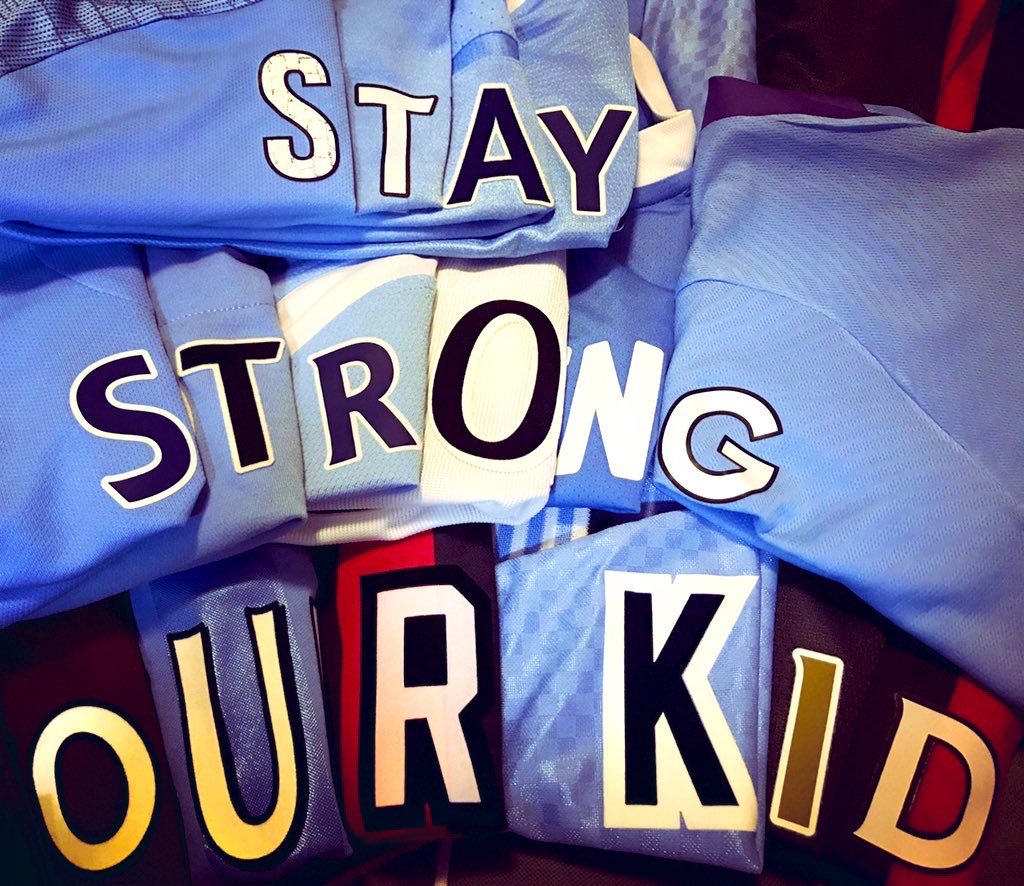
mmexport1585310090821

The above image was made by SZ Blues member Waits.

Luckily, City & Utd came togetherand supported local foodbanks. #ACityUnited

Unluckily, Bugzy Malone’s boredom led to a crash. Get well soon.

Bastard of the week: McDonald’s asked for help from customers. This was only a week after Ronald McDonald House evicted a ten year old boy. NB: While the fast food company provides funding and organisational support, Ronald McDonald House Charities is an independent charity.

Luckily, many medics returning to fight against the outbreak. The NHS is testing more workers than ever before. #StayHomeSaveLives

As COVID-19 almost doubles every five days or so, it isn’t all doom and gloom. People are recovering. That’s key. Hope.

I’d like to leave you with this:

“There is no such thing as society.” – Margaret Thatcher, Prime Minister (U.K.), 1979-1990

Hey, Maggie, we’re about to really find out… look up from Dante’s Inferno and see how we get on.


Personal Protection Equipment
I keep getting asked about how to buy masks from China. I can’t help, I’m in quarantine. If you need any masks, give Maria at Unique Dongguan a shout on Skype (+86)18122819259, 370105612@qq.com, or #wechat for info or help. #covid19UK #covid19 – and take a look at: dgsali.com

Identify yourself.

你好/ Ní hǎo / Nín hǎo / Hello / How do / S’mae / Namaste

Identity is a simple enough word. Defined as the fact of being who or what a person or thing is. It can also be used as a different noun to mean a close similarity or affinity. There are mathematical definitions, but I’ll leave that for someone else, and somewhere else. The words origin has evolved since early Latin to Late Latin and fits well within present day English. 

Late 16th century (in the sense ‘quality of being identical’): from late Latin identitas, from Latin idem ‘same’.

Identity is something that we all engage throughout life. We identify as being X, Y, or Z. Whilst those who study and compile dictionaries identify themselves as lexicographers, some of us who just love words, are more like word friends. Samuel Johnson Jr. was America’s first noted Lexographer. The former school teacher was around at the same time as a certain British lexicographer Dr. Samuel Johnson, yet they were not related. They were both teachers who shared a passion for words and have greatly influenced the modern landscape that we use. Two different Johnsons, each with versions of dictionaries that have lasted long into our times, in their effects and contents.

Social media sweeps over the internet now. Some would believe it to be positive, others like a rash. Some tribes embrace one platform such as Twitter, whilst others are wondering if MySpace is still around. With that we’re seeing more and more identity displays. Social groups can link together – or stand alone. These electronic identities can be seen, from outside, as dangerous, thrilling, friendly and/or useful. Personality can hide behind a mask or it can jump around, stamp its feet and make a song and dance. An age of electronic expression is sweeping from primary school kids with little phone-watches to adults with seemingly and endless amount of broadband allocation. Some revel in the labels of their electronic identity, whilst others find it disparaging and caustic.

Much is made of identity, whether it is gender identity, social identity or employment identity. Social castes, social levels and classes – they’re all going to influence you, right? Do you relate to those around you in a psychological level that is instinctive or free-thinking? How does nature and the weather affect you? What did you learn and did someone else learn this the same way? Are you idiosyncratic? Does your identity serve you good purpose?

What is an identity? Well, look inwardly. How do you see yourself? How do others view your self-image? How do they view you? How do you feel about your individuality? Are you a leader or a follower? Do you feel comfortable tucked away in the shadows or prefer an open stage with an audience? What condition is your self-esteem in? Intact, flagging, failing or absent? And, how do you adapt? Does your identity evolve with new interests or stay fixed on a one-way road? Do you tend to run against the flow of traffic? Do your aspirations tie in greatly to your character? Is your head full of dreams? What do you believe? What do they tell you to believe? What do they say and how does it affect you? Take a look at your ethnicity and those who surround you. Do you feel comfortable? Do you belong? Where do you fit in? Don’t forget your past.

Take some time to self-reflect. It isn’t always easy. So, why do so many people judge others? Only when you are fully self-aware and fully self-conscious can you understand yourself, but that doesn’t mean your parameters are copied and pasted onto someone else. Map and define what things are inside your head each day. Does it follow a pattern? How tall do you stand today? How did you get so confident? Why do you shy away? Who best represents you? Do circumstances call for you to be different? Or, should you run away screaming with hordes of like-minded fear-filled faces? How would you best end these sentences?

I am…; I want…; I need…; I must…; I have…; I cannot…; I like…; I hate…; I love…

How do you explore? Is not knowing something or not knowing how something will be, a sign of weakness? Is showing emotion a sign of self-confidence and strength of demonstration to others? Pride: an achievement or triumph that you have earned or something to be modestly squirreled away as a lonesome memory? Ready for flight or stand up and fight? A touch of foreclosure or hide away and show little interest?

For me I collectively identify myself as a Manchester City fan, a diehard but not someone as devout as those who travel to every away game or cup game. Logistics and life have dealt me a hand that does not allow such things. I’d also like to travel more but I am no traveller. Far from it. I like exploring and have ambitions to see Madagascar, Iceland, the Faroe Islands, Indonesia and New Zealand. Other places are on my to do lists, but not so concretely. It is what it is. I’ve travelled and some will say I have seen many places, but I know many more people who work and travel, yet here I stand, static in Dongguan, China. I’d say that I am political and have principles, but my notions can often find themselves silenced. Values and ideologies can take a backseat when dealing with bigger powers. We must all be pragmatic and a realist when the optimist and pessimist aren’t around on our shoulders.

With Murray’s F.C. and other expat groups, I float in and out like a butterfly as and when I feel comfortable – often welcome yet not sought after. I can be an outsider even amongst fellow outsiders. I will always help, when possible, and like people to know that I am available for consultation or small get-togethers but that doesn’t mean I’ll shy away from every barbecue or team meal. I can switch between hiking groups and reading clubs with ease, if I wish. I don’t try to be someone that I am not, and I try not to be anyone but me. There’s a touch of drifter, searcher and guardian in there somewhere. When needed the resolver and the refuser can enter the room. I dislike social stigmas, yet I can understand if someone perceives me as different.

I know my writing persona is like those of usernames in silent online virtual reality rooms. We can all blend, chop and change in our e-masks. Over the years my blog has slipped between diarist, weather reporter, psychological councillor, cry of help to essayists. My views may detract or add to wider discussion. For me expression is an outlet. This tapping on the keyboards is a vent. It is both constructive and freeing. I feel confident enough to write things that may be uncomfortable for family members of friends – but less comfortable when it comes to that of my employer and place of residence. Still, I am not preaching or trying to cause upset. Yesterday’s views may even change to tomorrow. I believe the Welsh call it Malw Cachu (to talk shit).

If I don’t misrepresent myself, or obscure my identity to win your bank account, then frantically hitting the keys on this laptop will serve reasonable purpose. I do, however feel, that offline my personality is less exciting than the one I can identify with on here: words – they really are beautiful things. Words mean something. They are to the writer as paint is to an artist. They’re endless unwritten poems, thoughts and ideas. Mind, body and self can escape through words – or words can equally help my mind, body and self. How do you identify with this interaction?

This last weekend, I joined Huizhou Blues for a one-day tournament at Bromsgrove School in Mission Hills. We lost to a Media Team on penalties in the final of the 8-a-side football competition. I’d managed ten minutes of football in the first game, before being subbed off. We won that game. Later I came on in one game, assisting the all important sixth and seventh goals in a 7-0 win. For the final I played just over 25 minutes. I couldn’t sprint too much, but my troublesome calf muscle didn’t hate me for the effort. Playing on a smooth grass field did help. Great food was had during lunchtime at a Hong Kong restaurant next to Mission Hills Eco-Park – and tucked behind their western restaurant, The Patio. Catching the sun on the final day of November and being slightly red on the head was the only drawback. It reached around 25ºC that day with quite high UV levels.

This week in Dongguan, you’d look at people and think that it’d snow here soon. One of my class students has three layers of jackets over his shirt and sweater. Some teachers are wearing scarves. I’ve seen woolly gloves and mittens already. Today’s low is 10ºC (at night). The morning temperature sits around 13ºC and the high today will be 19ºC. Whilst the day is sunny, there is certainly a lot of wind around. Humidity is really at its lowest at this time of year. For me, I think it is the most comfortable time of year here with regards to the weather.

In the last seven days, I’ve eaten at Japanese and Korean style barbecues. The Korean style barbecue edges it for flavours and combinations of food. The Japanese barbecue that I ate at with Cian and Leon, certainly had good meats and the Kirin beer wasn’t too bad. It certainly helped when watching Man City at Newcastle Utd. There has been Dongbei food, Guilin rice noodles and Hunan foods. Sometimes I look at my diet and think that it cannot get any more diverse. The lunchtime selection of toasties that I’m making certainly add to that.

In the last week, we’ve held sports days at school, involving countless practices of a routine for the opening ceremony which the students expertly forgot. They didn’t get it wrong. They just carried on marching by the tables of the school leaders and foreign teachers – and completely ignored what they’d practiced. In a way, I was proud. A good mistake is made better when they all collectively realised and instantly laughed about it. This week’s P.E. classes will involve kite flying and frisbee throwing. No set routines.

I’ve considered some evening walking up the odd small mountain here but it seems all park gates close and are locked at 6pm. Those without gates are much further away shich makes returning late at night a tad difficult.

再见/ Zài jiàn / Bài bài / Ta’ra / Goodbye / Hwyl Fawr / Dhanyabaad / Alavidā

Leave only footprints. 请只留下脚印

你好/ Ní hǎo / Nín hǎo / Hello / How do / S’mae / Namaste,

Run boy run sang by Bugzy Malone featuring Rag N Boneman is a soulful grime song. It shares its title with Woodkid’s Run Boy Run as featured on the album The Golden Age. There are so many songs that have the theme of escape or running away. Think Everybody’s on The Run, as belted out by former-Oasis man Noel Gallagher. You’ve got to love yourself these days. Bruce Springsteen sums it up with his song, Born to run. Either way, running right now feels as if a knife is embedded deep into my right calf. I’m certainly in no hurry to pick up the top 100 running songs albums or exercise megahit CDs that usually line the shelves in the run up to Christmas.

So, in order to occupy my recovery with a target, I’ve been digging around. And it all makes sense. Everywhere I look there are hints. In recent weeks I have seen shoes presenting the brand of Khumbu. A message appeared in my inbox from Srirang and Livia about their springtime plans. China had a recent movie release called The Climbers, focused on very early Everest expeditions. There was even an email in my junk email box from Everest Windows. On WeChat, I received a message from a Sherpa friend. But, above all that, my heart is longing for the glory of walking amongst the Himalayan mountain range. There is a deep-seething hunger that hasn’t gone away since the day I stepped from the bus onto the soil of the Jiri road in 2017. Seeing those mountains stretching west, east, north and climbing from the clouds of Nepal, on that bus journey has captured me. I read of many people, famous and unknown to the masses, that returned year after year – and everyone I met there had either returned or had immediate plans to come back. Whether it is the spirits of the mountains, the allure of the nature or the warmth of the people, Nepal gets into your skin. A small country with a big heart.

Deep down, my heart is torn. I want to go home and see family for Christmas, yet circumstances have worked against me. My sister Astrid will probably be most disappointed, but she’ll be the first one I’d like to take away in the summer holidays of 2020. I wish I could be there for all my family but I’m selfish. I want to see and do more whilst I still can. There should be plenty of time to make good memories in the future. You can’t have it all. The world is too big and too diverse for one lifetime.

So, Makalu, Manaslu or a trek near to Annapurna called are now on my radar. Makalu is a serious beast and February is noted as being too cold to attempt that trek. Plus, it has an offshoot trek that can get you back onto the path to Lukla – the famous Everest trail. However, that’s proper mountaineering actually – and rope climbing. Not quite the rambling I wish to do, right now. As a route it looks amazing, with diverse tropical valleys, temperate zones and then some serious Himalayan tundra. Plus, you get to see the world’s highest mountain range from a new angle – and all those glorious peaks in between there an India’s Sikkim.

Tumlingtar 285m – Mane Bhanjyang 1440m  – Chichara 1980m – Num 1851m – Sheduwa/Sedua 1500m – Tashi Gaon 2100m – Khongma/Kauma 3760m – [REST/ acclimatisation] – Dobato 3700m – Jark(Yak) Kharka 4800m – Hilary Base Camp 4800m – Makalu Base Camp 4870m – and back again…

Manaslu really seems inviting. There is need for a Restricted Area Permit (RAP) [USD50-100 +15/day over 7 days] because it touches the sensitive regions of the Tibetan-Chinese border. You also need the Manaslu Conservation Area permit [NPR2000] and the Annapurna Conservation Area Project (ACAP) entry fee [NPR3,000]. There are quoted trekking times of 14-22 days, depending on fitness and whether you explore the Tsum Valley. If that is the case then this area could allow time to fly to Meghauli Airport and get over to Chitwan national nature reserve. Rhinos and mountains. Tempting, very tempting.

Soti khola (710m) – 14km Machha Khola (900m) – 22km to Jagat (1340m) – 20km to Deng (2095m) – 19km to Namrung (2900m) – 10.5km to Lho Gaun (3180m) – 8km to Samagaun (3500m) – [REST/ acclimatisation: Pungyen Gompa or Manaslu Base Camp ] – 8km to Samdo (3690m) excursion to Tibet border – 6km to Dharmasala (4450m) – Larkya La Pass (5220m) 24km to Bhimphedi (3590m) – Gho (2515 m), 26km to Tilje (2300m) – 19km to Chyamche  (1410m) – Besisahar – and back again…

The third option is Dhaulagiri’s base camp trek which a friend has recommended highly. Highly being an appropriate word because it will be quite amongst the clouds. Ranked 7th globally, Dhaulagiri (धौलागिरी) stands at a dramatic 8,167m. The massif is the highest mountain within a single country’s borders. Dhawala (धवल) translates to dazzling, white, beautiful and giri (गिरि) is mountain. Its parent peak is K2. From 1808 until 1838 it was listed as the world’s highest point until Kangchenjunga was surveyed. Dhaulagiri I’s peak has a sudden rise. In just 30km of distance it juts up a staggering 7000 metres from the Kali Gandaki River to the southeast. The south and west face have equally dramatic 4000m rises too! The climbing history is dramatic and marked with deaths. The south face has never been completed. Plenty of contours on the trekking routes too. Might be worth further consideration and research

Trek Beni to Babichaur ( 1000m / 3280ft ) 6-7 hrs; Babichaur to Dharapani ( 1565m / 5134ft ) 7 hrs; Dharapani to Muri ( 1850m / 6068ft ) 6.5 hrs; Muri to Boghara ( 2050m / 6724ft ) 7.5 hrs; Boghara to Dhoban ( 2630m / 8626ft ) 6 hrs; Dhoban to Italian Base camp ( 3500m / 11,480ft ) 6-7 hrs; Rest and Acclimatization day; Italian Base camp to Glacier camp ( 4250m / 13,940ft ) 5 hrs; Dhaulagiri Base camp ( 4650m / 15,252ft ) 4 hrs; Acclimatization day; Dhaulagiri Base Camp to French Col 4 hrs; Hidden Valley Camp ( 5000m / 16,400ft ); Hidden Valley to Yak Kharka (4200m / 13,776ft) 6 hrs; Yak Kharka to Jomsom ( 2,715m / 8,910ft ) 7-8 hrs


Yesterday, as part of the recovery from my calf muscle tear, I hobbled up Baiyunzhang (白云嶂) in Huizhōu (惠州). It is 1003m tall, and in warm sunshine it certainly felt every metre as high, as we’d started from about 150m. Nick, Milly and Almog made good company on the dry walk upwards. The golden meadow at the summit was worth the wander having stumbled up dry dirt paths and tested my aching calf muscle beyond that of what I should have done. Around the uneven loose sands and slippery pathways birds tweet away and snakes slither through the undergrowth, oblivious to those who walk the well-defined path upwards. Unlike the sun-exposed first and last sections of the path, the middle section is under canopy. Here mosquitoes dart in front of your eyes, more keen on your warm blood than your desire to trek upwards.

Leave only footprints.  [ 请只留下脚印 qǐng zhǐ liú xià jiǎo yìn ]

The trail up Baiyunzhang (meaning ‘white cloud sheer ridge’) is sadly surrounded by so much discarded litter and rubbish. It is sad to see. Passing fellow hikers on the route, they all had bags and pockets. There is no excuse for trail waste. Perhaps we should all greet each other along the route with a phrase, “Leave only footprints.”  [ 请只留下脚印 qǐng zhǐ liú xià jiǎo yìn ]

Huizhou’s other mountains for hiking are: Luofu Mountain (罗浮山), Nankun Mountain (南昆山), Xiangtou Mountain (象头山), Jiulongfeng (九龙峰), Lotus Mountain (莲花山), Baima Mountain (白马山), Wumaguicou (五马归槽), Baiyunzhang (白云嶂), Honghuazhang (红花嶂), Xieyan Top (蟹眼顶), Pingtianzhang (坪天嶂), Wuqingzhang (乌禽嶂), Axe Stone (斧头石), Xianren Village (仙人寨), Guifeng Mountain (桂峰山) and Sanjiao Mountain (三角山).

Next weekend I am looking for a hike in the Shenzhen area. Perhaps Maluan Shan Mountain (马峦山, address: 深圳市区东北方向约50公里的龙岗区坪山街道马峦村 – Xinxiu metro statio) or Dananshan (大南山) or the pretty looking peak of Wutong Shan Mountain (梧桐山, address: 深圳羅湖區梧桐山村 – bus 211 from Cuizhu metro station exit B2). So, with this all in mind, I’m going for a walk now and a little think…


再见/ Zài jiàn / Bài bài / Ta’ra / Goodbye / Hwyl Fawr / Dhanyabaad / Alavidā